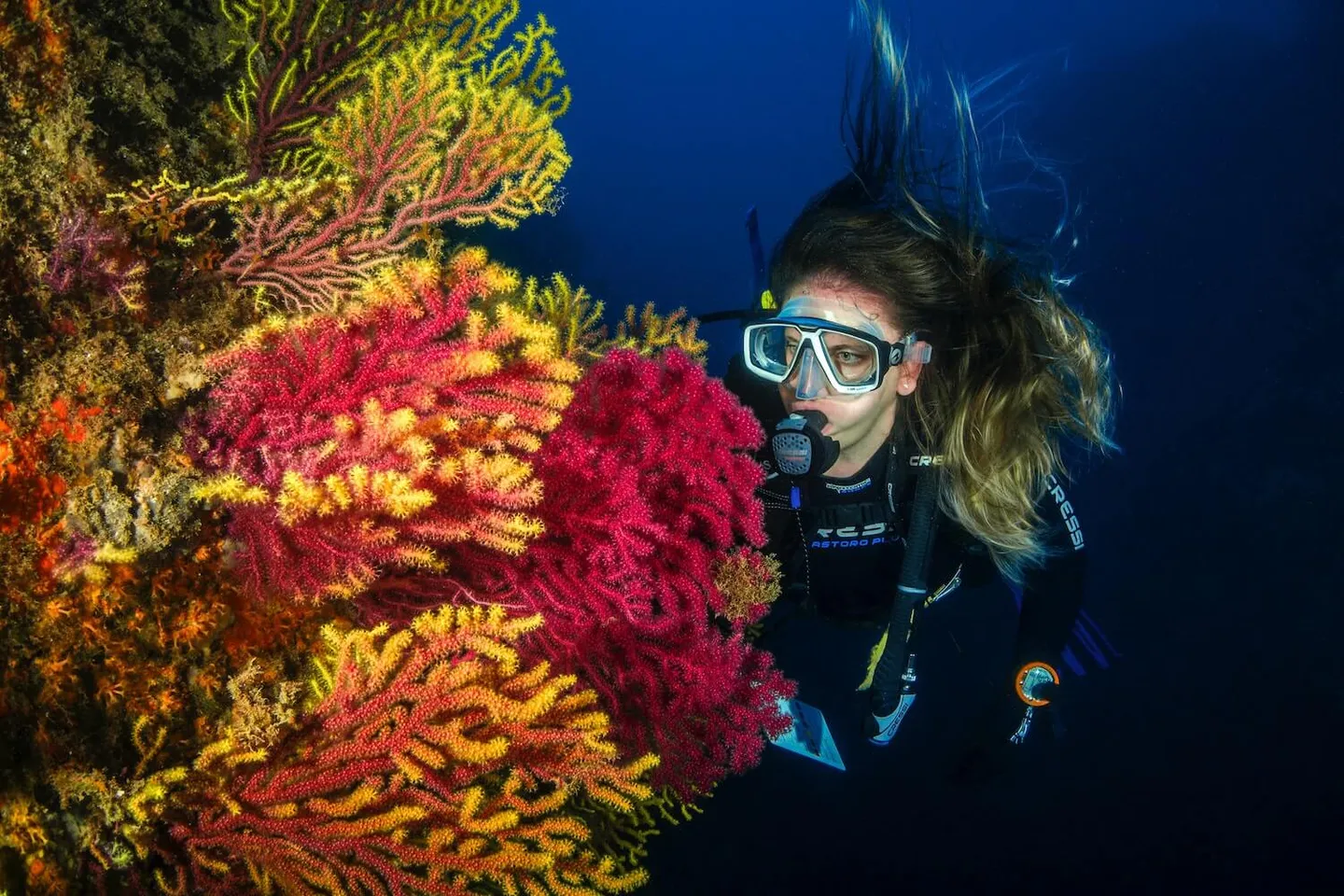


the Editor says: Every diver goes through a beginner phase, but newcomers often feel too shy to ask questions openly — and end up missing out on the true joy of diving. This article is fully reprinted from the 国际潜水爱好者聚集群 administrator Zhuichisha John Goh, who compiled these 18 common beginner diver questions. We hope everyone can fall genuinely in love with diving!
18 Common Questions from Beginner Divers
This article isn't aimed at anyone in particular — these are mistakes almost every beginner makes. If you feel like I'm talking about you, go back and discuss it with your instructor and get more practice. You'll definitely improve. You're also welcome to come find us to talk it through — we get it, we've all been there.
1. Slow to react underwater — totally zoned out.
This is incredibly common. No matter how many times the instructor taps the tank or shakes a rattle, there's zero response. Ask them on the surface if they heard it, and the answer is always yes. Then they look at you with wide innocent eyes and say, "Instructor, have you been calling me for a while?" Yes — we've been calling and swimming after you for nine blocks. No gender bias intended, but this happens more often with women. As I always say, women are just more focused.
2. Not kneeling down — how do you start controlling buoyancy?
Because confined water practice is done kneeling while performing underwater skills, suddenly having to control your buoyancy on the descent in open water feels very unnatural. The result looks like a stone sinking to the seafloor — legs flailing uselessly, the tank eventually dropping flat on the sand, hands helplessly clawing at the water, like a beetle stuck on its back on a coral reef. This is especially true for people who aren't comfortable in the water. Beyond managing the air volume in the BCD bladder, you can also use your fins to control your descent speed when going straight down.
3. Drifting up to the surface without realising it, then being unable to sink back down — this is something many people encounter.
Your BCD needs air added when moving deeper, and air released when moving shallower. Many beginners can't tell the difference between deeper and shallower, and they don't get into the habit of watching their depth gauge. Add an upright, head-up swimming style into the mix, and you end up swimming toward the surface. The further you drift from the group, the more anxious you get — unconsciously breathing faster, inhaling huge lungfuls of air that inflate your chest to several times its normal size. Even dumping all the air from your BCD won't get you down. At this point, stop all movement, hold your body vertical or lean back slightly (don't raise your head, but look up toward the surface), fully exhale the air from your BCD, breathe out and hold briefly without inhaling, and you should be able to sink again just as before.
4. Having to constantly paddle your hands to avoid sinking is the same as being overweighted — at this point you should use your BCD or your lungs to control buoyancy.
Before your next dive, let your instructor or dive guide know you'd like less weight so they can be prepared. Otherwise, if several people are all asking the dive guide for weights underwater at the same time, where exactly are they supposed to conjure them from?
5. Swimming non-stop without naturally waiting for your dive buddy — because in everyday life there's no habit of actively using a buddy system.
Dive buddies should swim side by side, about 2–3 metres apart. Combined with BCD-controlled buoyancy that sends you bobbing up and down, you unconsciously discover that swimming a bit faster helps you maintain depth — but then you can't stop, because the moment you do, you start to sink. This is a style of diving that relies entirely on forward motion rather than buoyancy control, and eventually every beginner realises it's no fun.
6. High air consumption.
Feeling embarrassed about being the first one back on the surface every time — but there's no need to envy women for their smaller lung capacity and lower air consumption. Underwater, any unnecessary movement should be eliminated. Even your fin kicks should be calculated to achieve maximum forward movement with minimum effort. Use your compressed air for breathing, not for constantly adding to and dumping from your BCD.
7. Not instinctively checking the dive computer's readings, and not understanding what they mean.
As a general guide: on descent, watch your depth and equalise your ears. Once you're past about 10 metres, your no-decompression limit (NDL) will appear — keep an eye on your current depth and begin your ascent before the NDL drops below 3 minutes. Ascend no faster than the maximum rate shown on your dive computer, or an alarm will warn you that nitrogen bubbles may be forming. For your 3-minute safety stop at 5 metres, stay between 3 and 5.9 metres — if you drift outside that range, the 3-minute countdown will pause. Different dive computers may use slightly different depth ranges.
8. Knowing you're prone to seasickness but not taking medication.
Or not getting enough rest beforehand — being on a rocking boat on the surface will be misery. Anti-seasickness medication is an essential item to have on hand before setting out.
9. Sinusitis or nasal congestion can make ear equalization impossible.
See a doctor before your trip and get it under control with medication. Otherwise you could be the one who has to cancel a dive because of ear pain.
10. Clean out your ear wax before heading out.
Especially if you have wet ears. It has happened before and will happen again — divers unable to dive, or in persistent discomfort, because of ear wax build-up.
11. Some divers who only dive once or twice a year think they don't need to buy their own gear.
Some don't even bother wearing a dive computer. How exactly does that diver know their depth? How do they perform ear equalization? How do they monitor depth changes to control buoyancy? Wasn't this covered in the certification exam?
12. Ear equalization must be done before your eardrums start to hurt.
Once the pain sets in, it won't go away immediately. For equalization, you just need to feel both eardrums gently pop outward. What's actually dangerous is being so fixated on equalizing continuously during the descent — because you're afraid of the pain — that you ignore everything else around you.
13. Controlling direction is difficult for beginners.
And most won't naturally think to look around — left, right, above, below — for other divers nearby. Bubbles exhaled from below can push another diver upward toward the surface, so learning to move out of someone's bubble stream is important.
14. Although Open Water Diver (PADI/SSI cert) training covers the fact that you should never breathe through your nose underwater —
doing so not only risks inhaling water but also causes your mask to fog up. Already feeling tense underwater, this creates a vicious cycle of not being able to see clearly, which can escalate into panic.
15. Whether your primary second stage regulator falls out of your mouth or you have any other problem —
remember you still have an octopus / alternate second stage you can use. There's no need to panic!
16. Being so anxious that you feel the need to stay glued to your instructor or dive guide underwater.
To avoid kicking you, they'll swim a little faster — so you speed up to stay close — and then they go even faster. The whole group formation starts to stretch out, and the people behind may end up getting separated.
17. Don't be afraid to urinate underwater.
Drinking plenty of water and urinating on every dive actually reduces the risk of decompression sickness (DCS).
18. If you tend to get cramps underwater, eat a banana before every dive.
There's more I could write, but someone's already told me I ramble on too much. Go back to your instructor — there will definitely be ways to help you improve. Or come find us; we'll sort it out together. Thank you!
Cover image source: Photo by Juanma Clemente-Alloza on Unsplash
Related links:
![[Freediving] Someone Almost Died in the Ocean](/_astro/%E8%87%AA%E7%94%B1%E6%BD%9B%E6%B0%B4bo-scaled_2ms8Tx.webp)