Contents(3)
World's First Underwater Gymkhana (GKN DPV Racing) Open
On December 18, 2022, the world's first Underwater Gymkhana (GKN DPV Racing) Open was held at the Taichung City North District Public Sports Center. A total of 9 teams entered, with each team leader bringing a combined field of 21 elite divers to compete on the same stage. The event also invited GKN international judges Jason Park, Brian Kim, and Munhong Kim to Taiwan to officiate, lending the competition a high level of professionalism and international prestige.
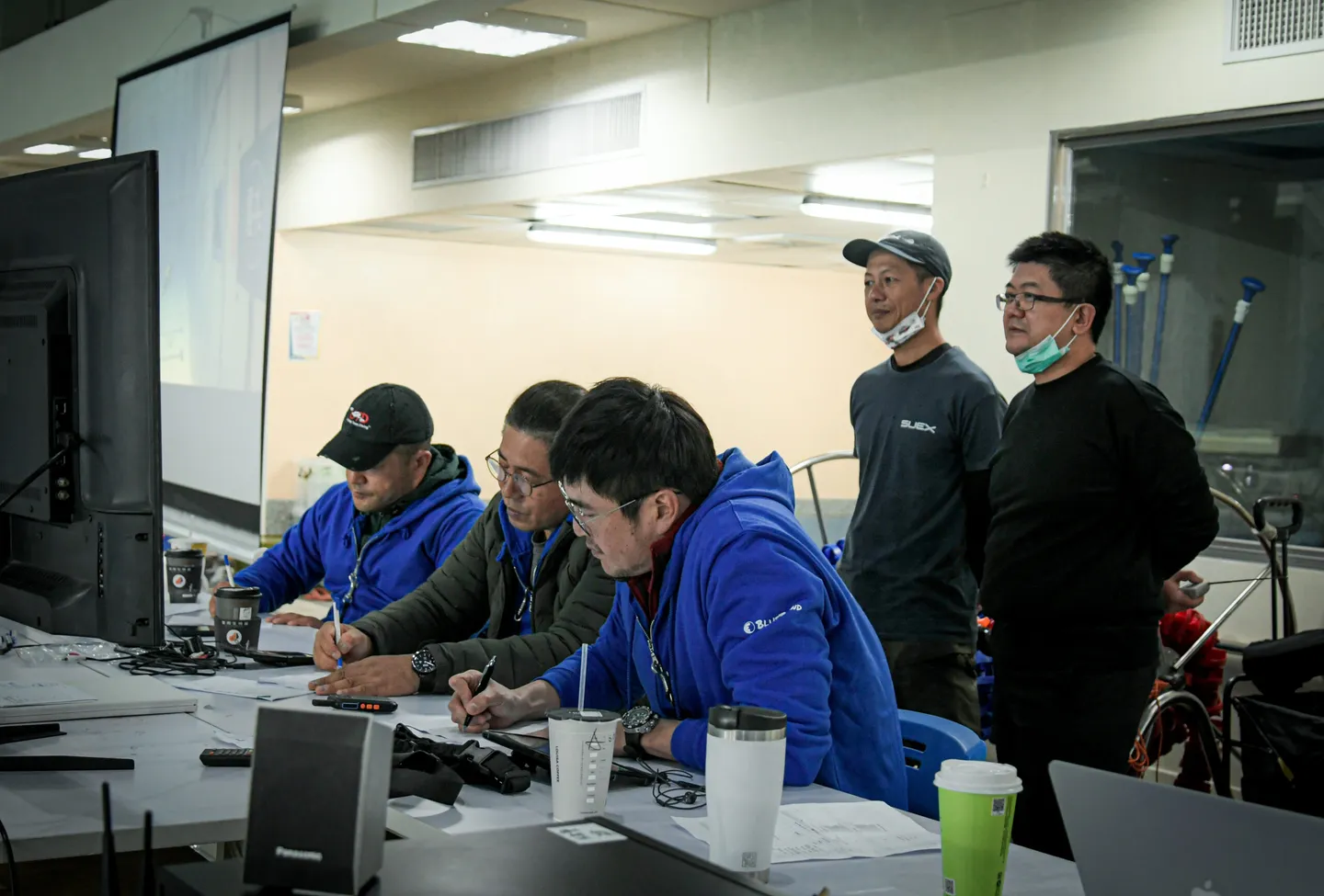
The three professional judges from South Korea carefully observed every detail of each competitor's run. photo credit:Gary
Gymkhana is a form of motorsport in which cones and obstacles are used to test a driver's skill and speed to the limit. The first international Gymkhana Grand Prix was held in Taiwan, and now the first Underwater Gymkhana has also been held in Taiwan — a true source of pride for the country.
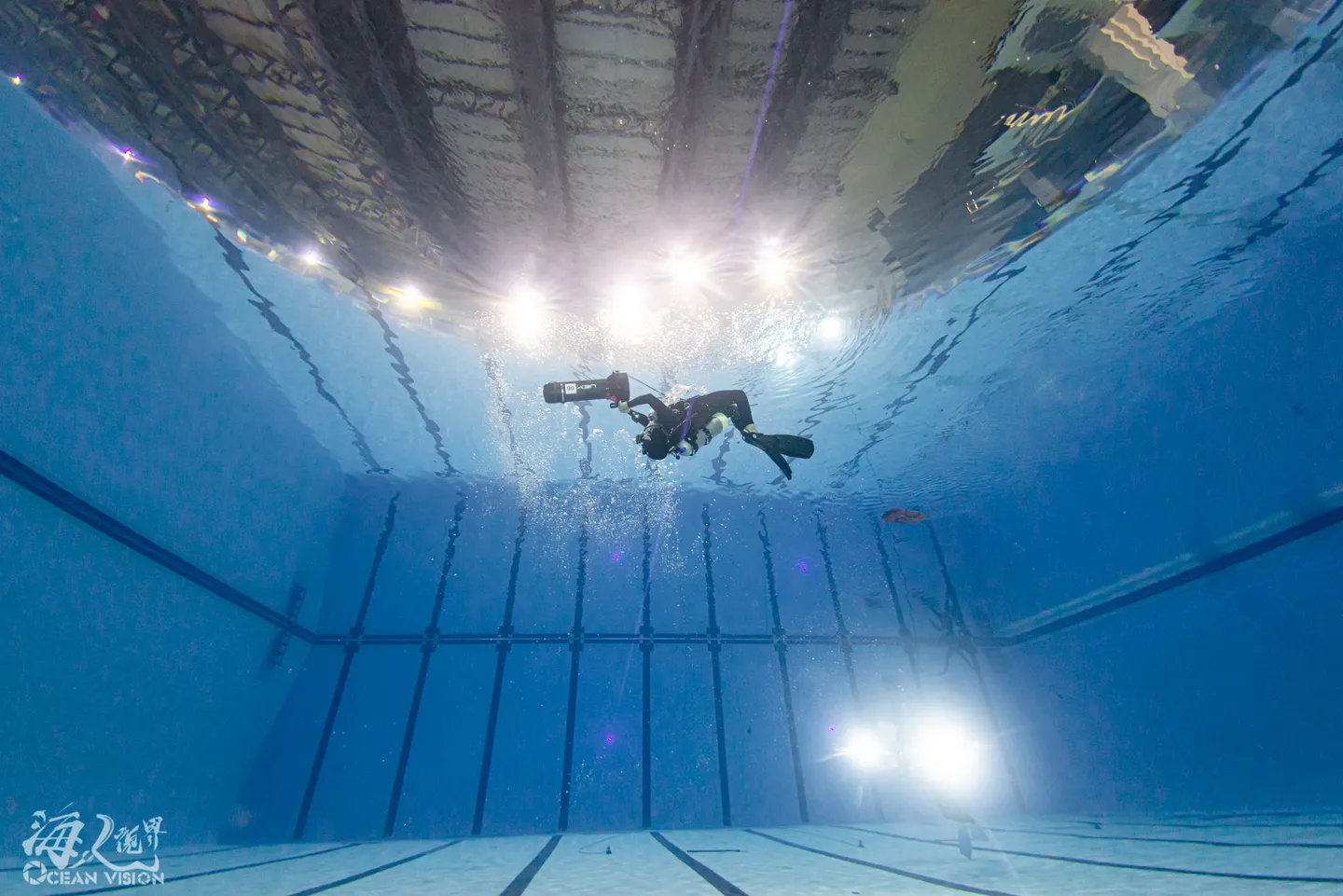
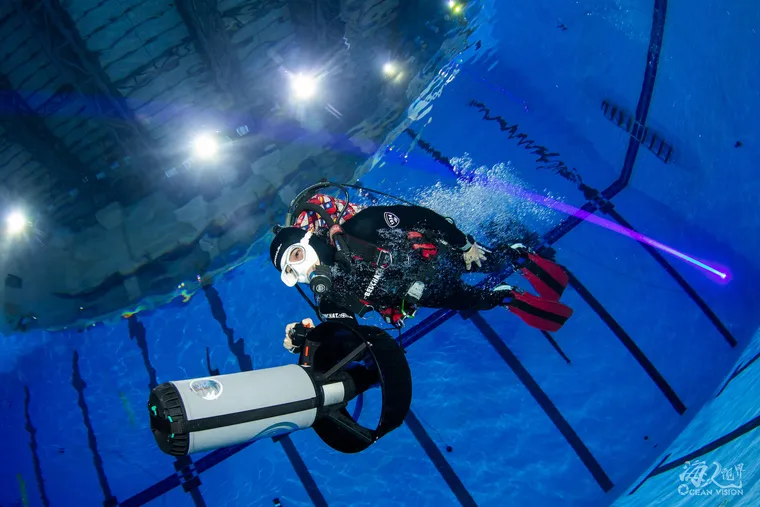
Green Island Filling the Sea — competitor Li Zhen-hao giving it everything underwater. photo credit:京太郎
The competition was divided into two categories: handheld and tow. The course featured seven challenges: forward tunnel, inverted tunnel, consecutive slalom poles, Gate 1 – forward somersault, Gate 2 – backward somersault, tornado spin, and right-angle turn (course connector).
Each competitor had 15 minutes in which they could choose to go straight into competition or practice first. Once ready, they pressed the underwater stopwatch to begin their run. During the run, competitors had to follow the course set by the organizers, passing each obstacle in the correct posture. Straying beyond the laser-marked boundaries was not permitted; failing to meet the required posture standard incurred time penalties of varying severity depending on the infraction. Each competitor had 3 attempts, with their best time counting as their final result.
BlueTrend also provided comprehensive technical support for the event, including an underwater broadcast system to help divers hear instructions more clearly, as well as 6 underwater camera rigs and a director's control console for Taiwan's first live above-water broadcast of an underwater competition. In addition to a demonstration livestream the day before the event, the underwater competition footage was simultaneously displayed on a projection TV wall at the venue on race day, allowing spectators to watch the underwater action in real time. Throughout the event, team leaders, family, and friends could be seen cheering at the TV wall, while competitors watched each other's performances on the screen to reflect on how they might improve.
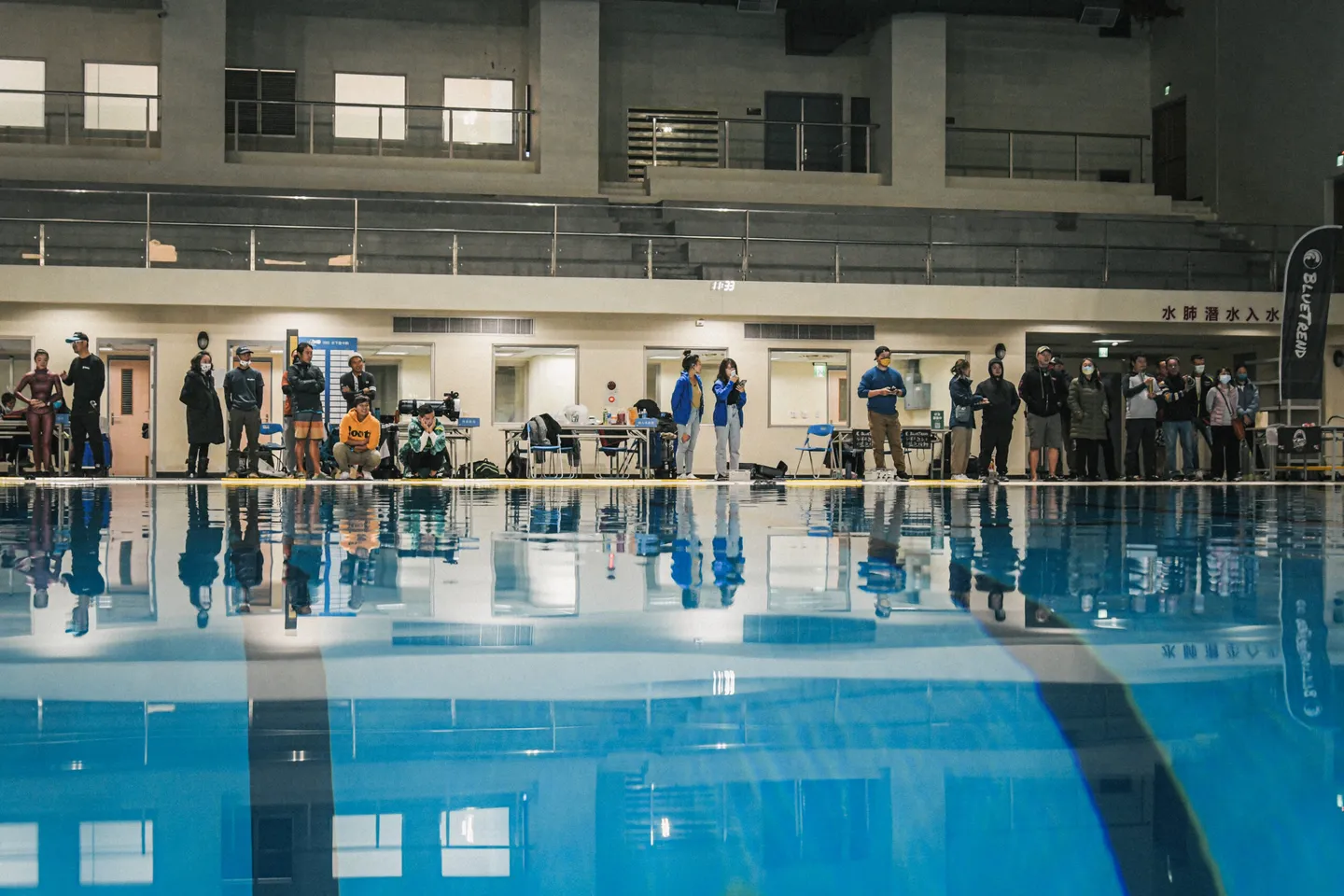
Spectators at the poolside intently watching the real-time underwater competition broadcast on the opposite wall. photo credit:Gary
It is understood that competitors generally found Gate 4 — the backward somersault gate — to be the most challenging, as it is impossible to see the laser boundary lines while rolling backward, making it easy to accidentally cross them. Handheld category champion Chen Yi-wen noted that the backward somersault is not only prone to accidental touches, but the faster you go, the harder it is to maintain correct posture — the slightest instability in momentum sends you veering off course.


Tow Category Champion
Tow category champion Liu Bang-zhi added that compared to the previous invitational competition he participated in, the DPV (diver propulsion vehicle) he used this time was significantly faster, which made the backward somersault even more difficult. Unlike other competitors, he had to perform a much wider arc to avoid touching the laser lines, which meant his roll sometimes looked to cheering spectators on the sidelines as though he was about to break the surface — adding plenty of excitement to the race.
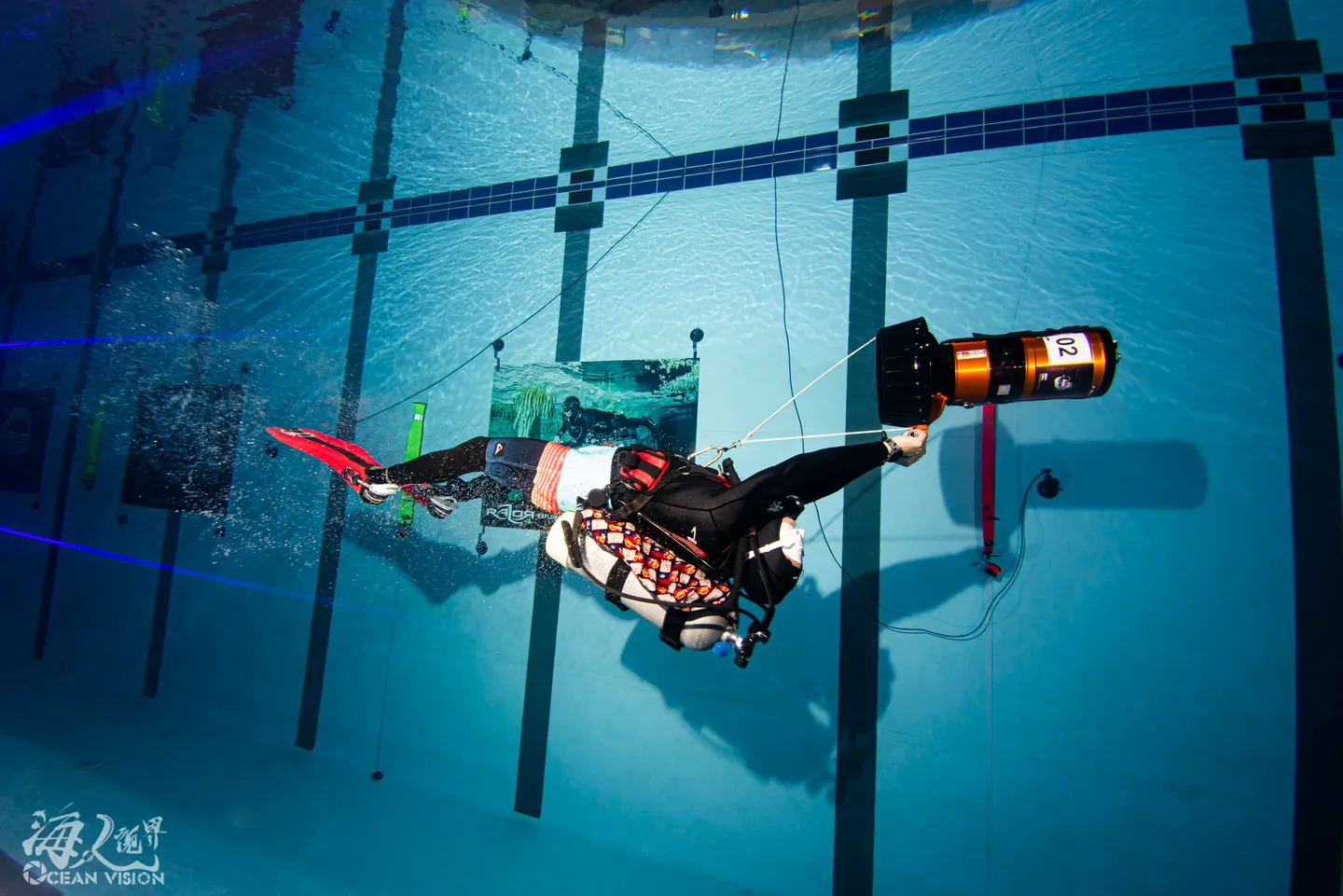
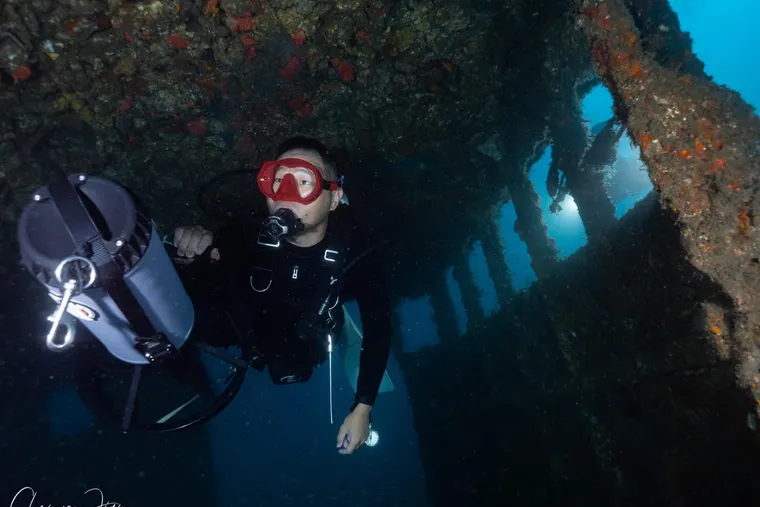
The DPV (Cuda-X) used by tow category champion Liu Bang-zhi. photo credit:京太郎
The DPV (Cuda-X) used by tow category champion Liu Bang-zhi delivered what could only be described as a sports-car-in-the-water experience — his speed was visibly higher than that of the other competitors. Liu noted that a faster DPV is indeed a major advantage, but because of the greater speed and increased water resistance, it demands far more refined control technique and a more streamlined underwater posture to perform consistently.
In the handheld category, Chen Yi-wen took first place with a time of 2 minutes 19 seconds, while Zhang You-zhen finished second with 2 minutes 45 seconds. In the tow category, Liu Bang-zhi claimed the championship with a time of 1 minute 26 seconds; Shi Pin-zheng earned the silver with 1 minute 48 seconds, while Huang Shi-xuan and Lin Feng-yi took bronze and fourth place with times of 1 minute 57 seconds and 1 minute 58 seconds respectively.
Handheld Category Champion
Handheld category champion Chen Yi-wen also competed in the tow category. She noted that both types of equipment have their own advantages — the handheld unit is light and convenient, while the tow unit is faster and more powerful. Chen Yi-wen said she owes her victory in part to her parents for giving her such a petite frame: a smaller, lighter body genuinely helps when piloting a DPV, allowing the unit to realize its full speed potential. Tow category champion Liu Bang-zhi, meanwhile, said that this competition represented a major breakthrough for him both in terms of DPV handling and diving technique. Although individual performance is what determines the results, the support and help of the team really matters.
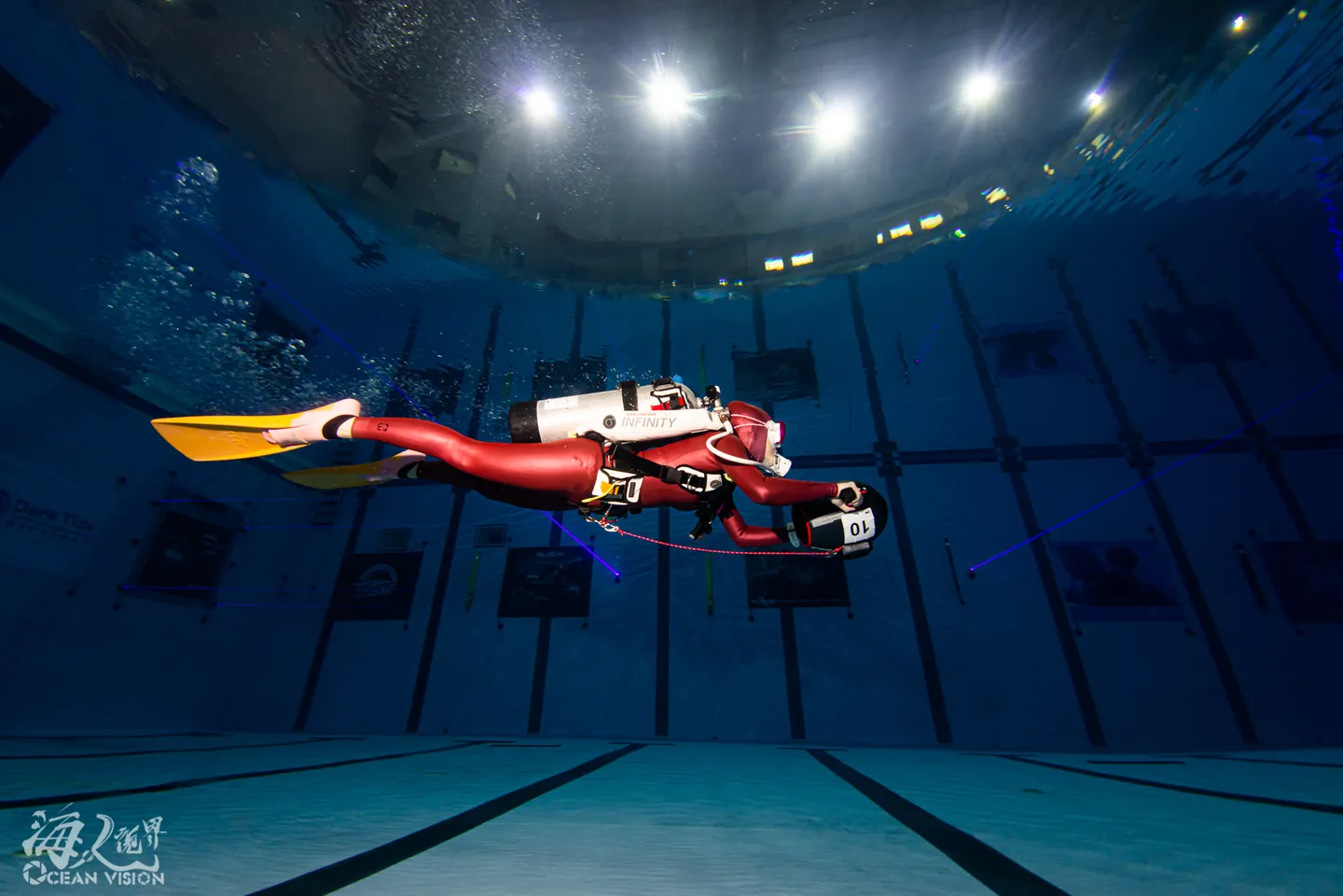
Handheld category champion Chen Yi-wen focused on her underwater run. photo credit:京太郎
Of course, the most important thing is that the organizers put together such a professionally run event — without them, we would never have had the chance to take part in such an incredible competition. They are the ones who worked the hardest, and that's why both champions expressed a desire to become team leaders in future GKN DPV Racing events, to help more people experience the joy and sense of achievement that underwater competition brings.
Setting out from Taiwan, making waves on the world stage — letting the world see Taiwan.
Liao Yi-hong, Section Chief of the Taichung City Government Sports Bureau, attended in person to present the awards, demonstrating the Taichung City Government's strong support for the world's first GKN Gymkhana. GKN DPV RACING Competition Chairman Max Wang also expressed his hope that Underwater Gymkhana (GKN DPV Racing) will take off from Taiwan and shine on the world stage, letting the world see Taiwan. GKN DPV Racing will also be taking its Pan-Asia tour to Shanghai, Beijing, and other cities. Divers everywhere are welcome to follow the official website and the BlueTrend website and sign up to compete.
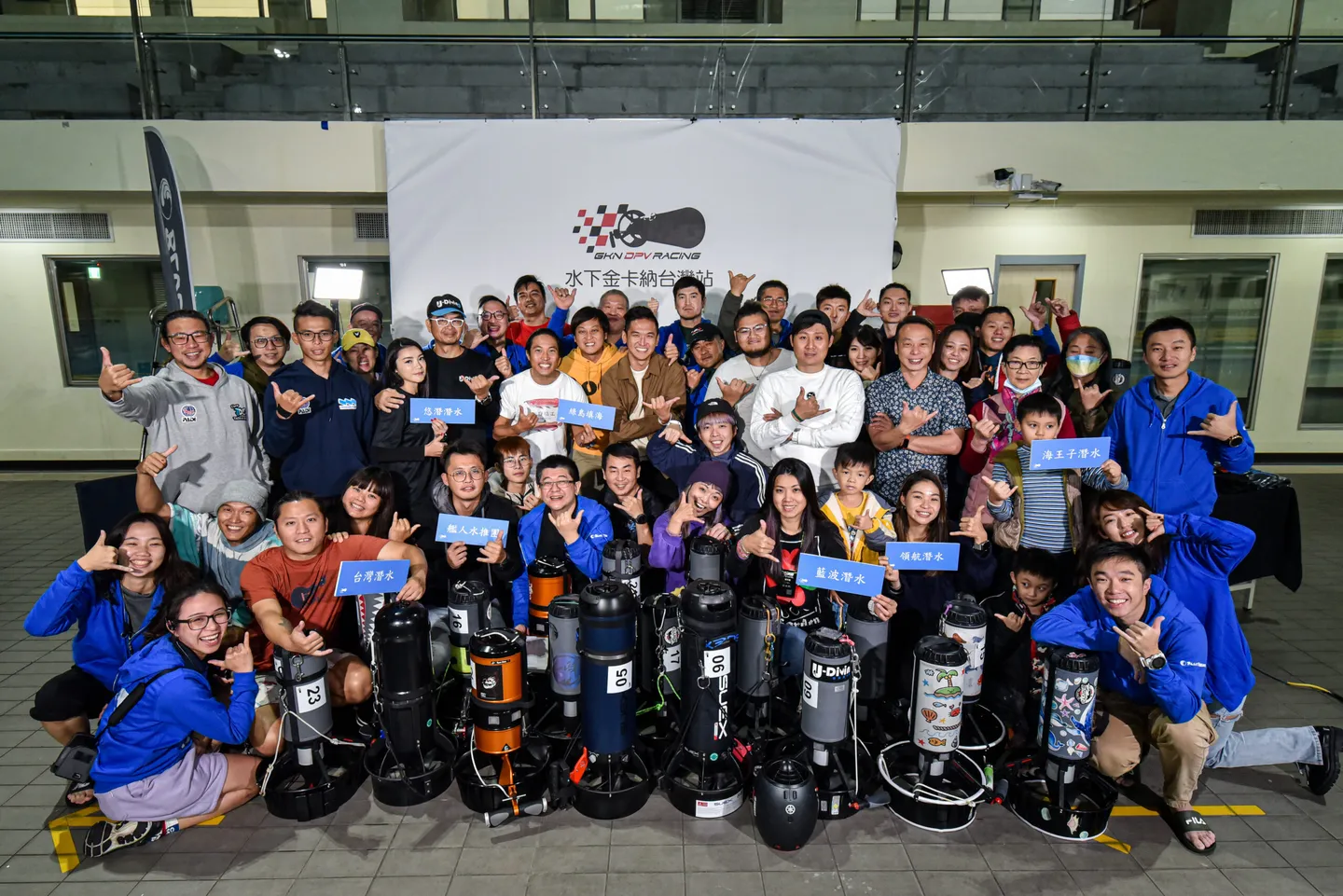
2022 World's First Underwater Gymkhana — all participants. photo credit:Gary
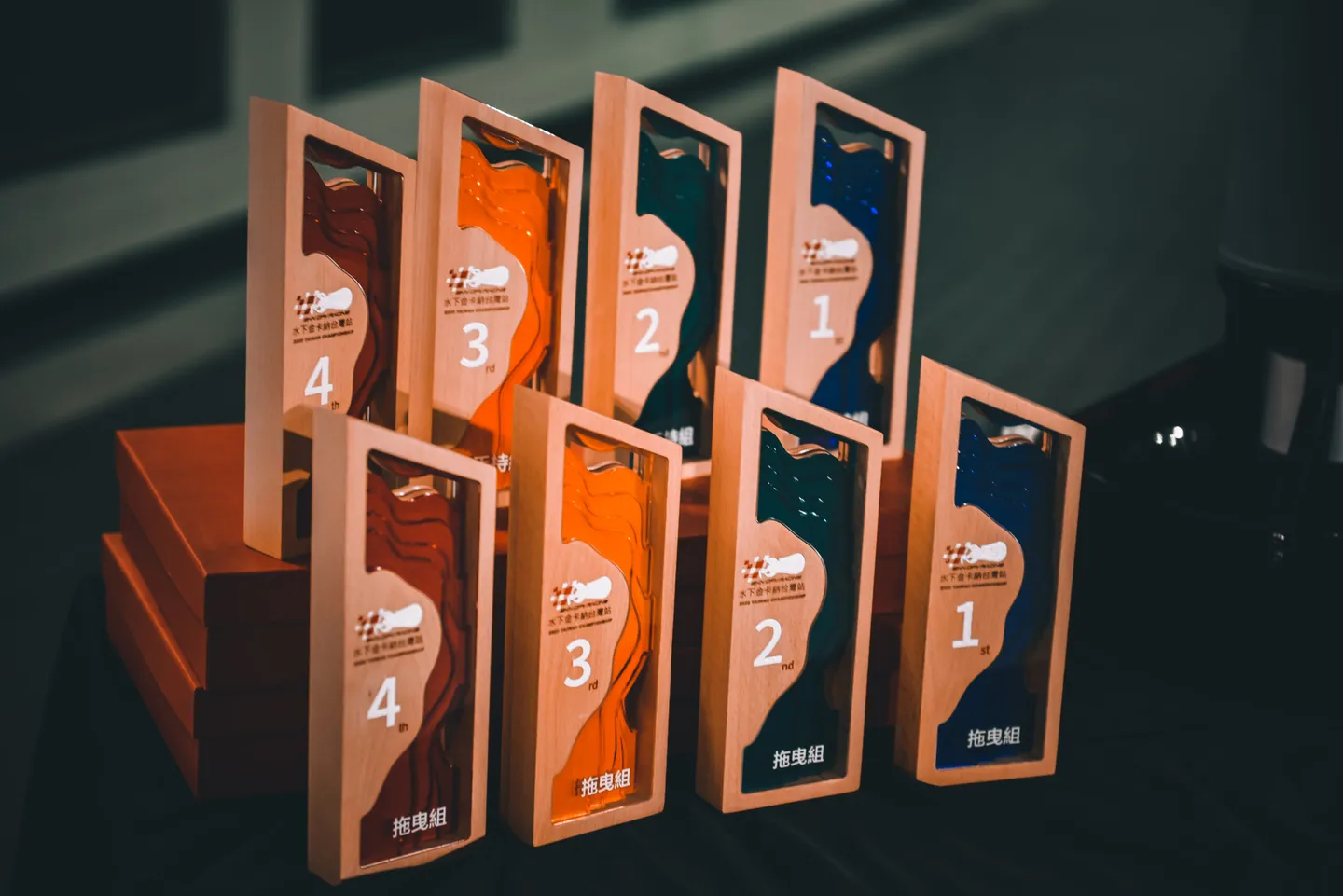
2022 World's First Underwater Gymkhana — handcrafted trophies for the top four finishers. photo credit:Gary
Related links:
- GKN DPV Racing Official Website
- GKN DPV Racing Facebook Fan Page
- GKN DPV Racing Competition Rules
- 【What's This Gear #12】Underwater Gymkhana DPV Competition Format Introduction|GKN DPV Racing Competition Introduction
- World's 1st GKN DPV Racing — Exclusive Player Interview: Liu Bang-zhi
- GKN DPV Racing Underwater Gymkhana, 2022 Taiwan Invitational Tournament, Concludes Successfully
- Underwater photography: 海人視界