Contents(12)
- What Is Dive Research?
- Defining the Survey Methods
- Common Survey Mistakes to Avoid
- How the GARMIN Mk3i Enhances Dive Safety
- Lost Your Buddy? Can't Find the Survey Site?
- How Do You Communicate When You Can't See Each Other?
- No More Lying About Your Tank Pressure!
- How Far Can the SubWave Sonar Transmit?
- Is the Transmitter Actually Practical?
- Who Is the GARMIN Mk3i For?
- Related Links
- Further Reading
What Is Dive Research?
The BlueTrend team has been conducting ecological surveys in Keelung's Wanghaijuan Chaojing Bay Aquatic Flora and Fauna Breeding Conservation Area (hereafter referred to as the Chaojing Marine Protected Area) for several years. The primary goal is to quantify ecological changes within the Chaojing marine protected area (MPA) through a variety of survey methods. Research approaches can be broadly divided into quantitative and qualitative methods; below is a brief overview of the differences between the two.
Quantitative surveys in marine research refer to the use of data and statistical methods to quantify marine phenomena and the relationships between variables — such as fish population counts, biomass, and water quality indicators. Qualitative surveys, on the other hand, focus on exploring the deeper meanings and contexts of marine-related phenomena, collecting textual and visual data through interviews or observation to understand community perceptions of and behavior toward the marine environment. The two approaches complement each other and together provide comprehensive insights into marine research.
Quantitative surveys:
Studying changes in fish and invertebrate communities within the Chaojing MPA. Through quantitative surveys, researchers can conduct field sampling, count the numbers and biomass of various fish species, and analyze the potential impacts of different factors — such as human activity, water temperature, salinity, and pollutants — on fish community structure.
Qualitative surveys:
By embracing a citizen-science spirit, visitors and divers to the Chaojing MPA are encouraged to upload photographs of biological species taken with their cameras, maximizing the collection of marine life observed within the bay. For example, the Japanese eagle ray recorded in 2022 marked the first ever underwater documentation of this species in Taiwan — a truly precious find.
What we carried out this time was a quantitative biological survey within the bay, collecting data on fish, invertebrates, and substrate conditions separately, with statistical analysis to be completed by year's end. This allows us to understand the annual fluctuations in the MPA since its establishment. In particular, this year's abnormally high sea temperatures and crowd-control measures implemented at Chaojing are environmental factors that could all contribute to ecological changes — and it is precisely through "data" that we can objectively reveal them.
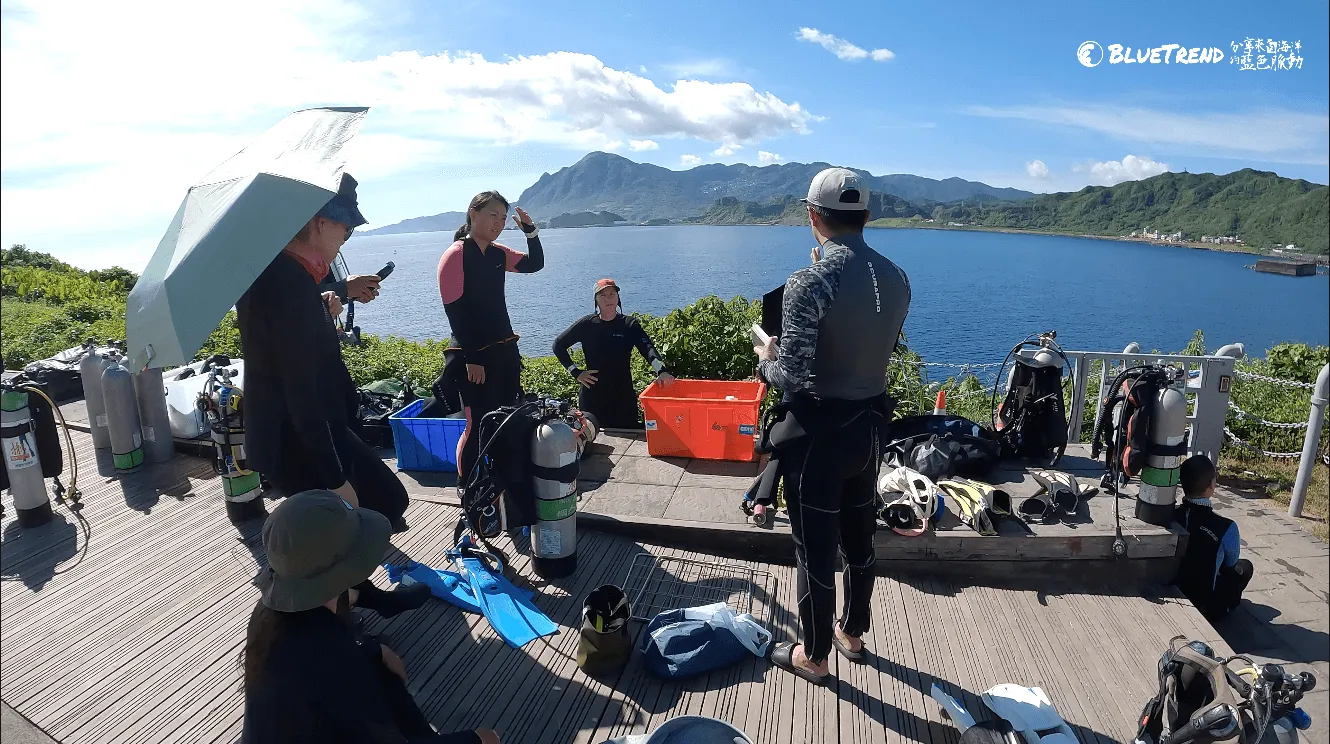
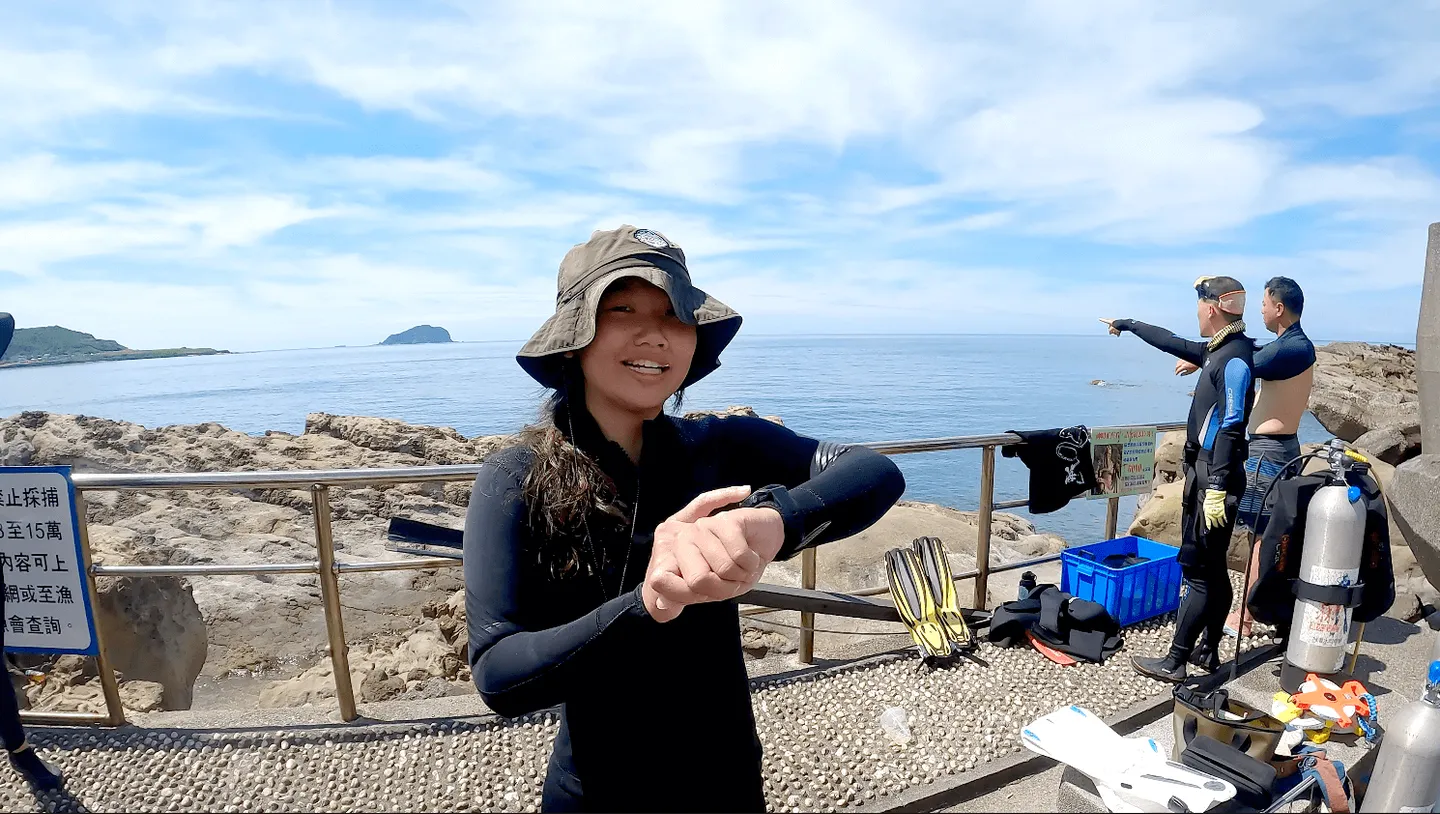
A dive team briefing must be completed before entering the water


Defining the Survey Methods
The most important aspect of quantitative research is establishing fixed survey protocols. In addition to keeping survey sites, timing, and frequency consistent, the team has been continuously monitoring several sites within the Chaojing MPA and the Shen'ao MPA since 2015 to build long-term datasets.
Transect lines: At each site, the team sets up 3 transect lines of 30 metres each and maintains a consistent depth while collecting data. Substrate quadrat frames are placed and photographed every 5 metres along each transect line to document the substrate environment.
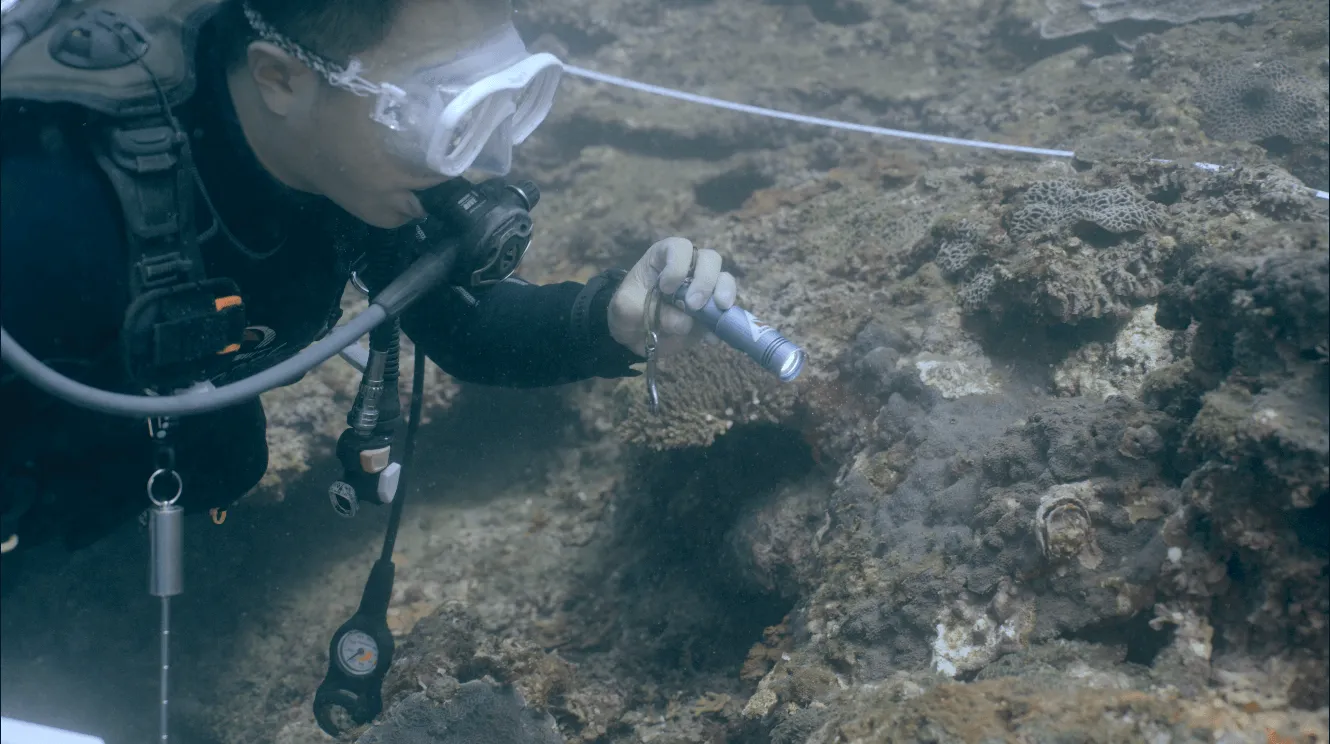
A researcher conducting an invertebrate ecological survey
Fish: Research team members move along the transect lines and record the species and numbers of fish appearing within 1 metre to either side of the line. This is an incredibly demanding task, as researchers capable of identifying species directly underwater in Taiwan are genuinely rare. For this reason, some teams now use GoPro footage to record and return to the laboratory for identification afterwards.
Invertebrates: Research team members move along the transect lines and record the species and numbers of invertebrates appearing within 1 metre to either side, including triton trumpet snails, sea urchins, sea cucumbers, lobsters, slipper lobsters, and certain shrimp species. These are all indicator species that can reflect whether an area faces pressure from human collection and how its biodiversity is faring.
Substrate: Research team members move along the transect lines, placing quadrat frames on both sides of the line every 5 metres and photographing the results. By tallying the distribution across the frames back in the laboratory, we can determine the distribution of algae, sandy substrate, and coral in that section of sea. When algae-grazing fish (such as parrotfish) decline due to human fishing pressure, algae proliferate rapidly and reduce coral coverage.
Common Survey Mistakes to Avoid
Fish and invertebrate identification truly relies on the underwater identification skills of the survey team members. If identification is genuinely impossible at the time, the protocol is to photograph the subject and consult an expert after surfacing (laughs).
The NG situations we most frequently encounter — and can correct on the spot — mainly involve the placement of substrate quadrat frames. If frames are placed incorrectly, it creates difficulties in downstream data processing or causes data gaps, which directly impacts the final research outcomes.
How the GARMIN Mk3i Enhances Dive Safety
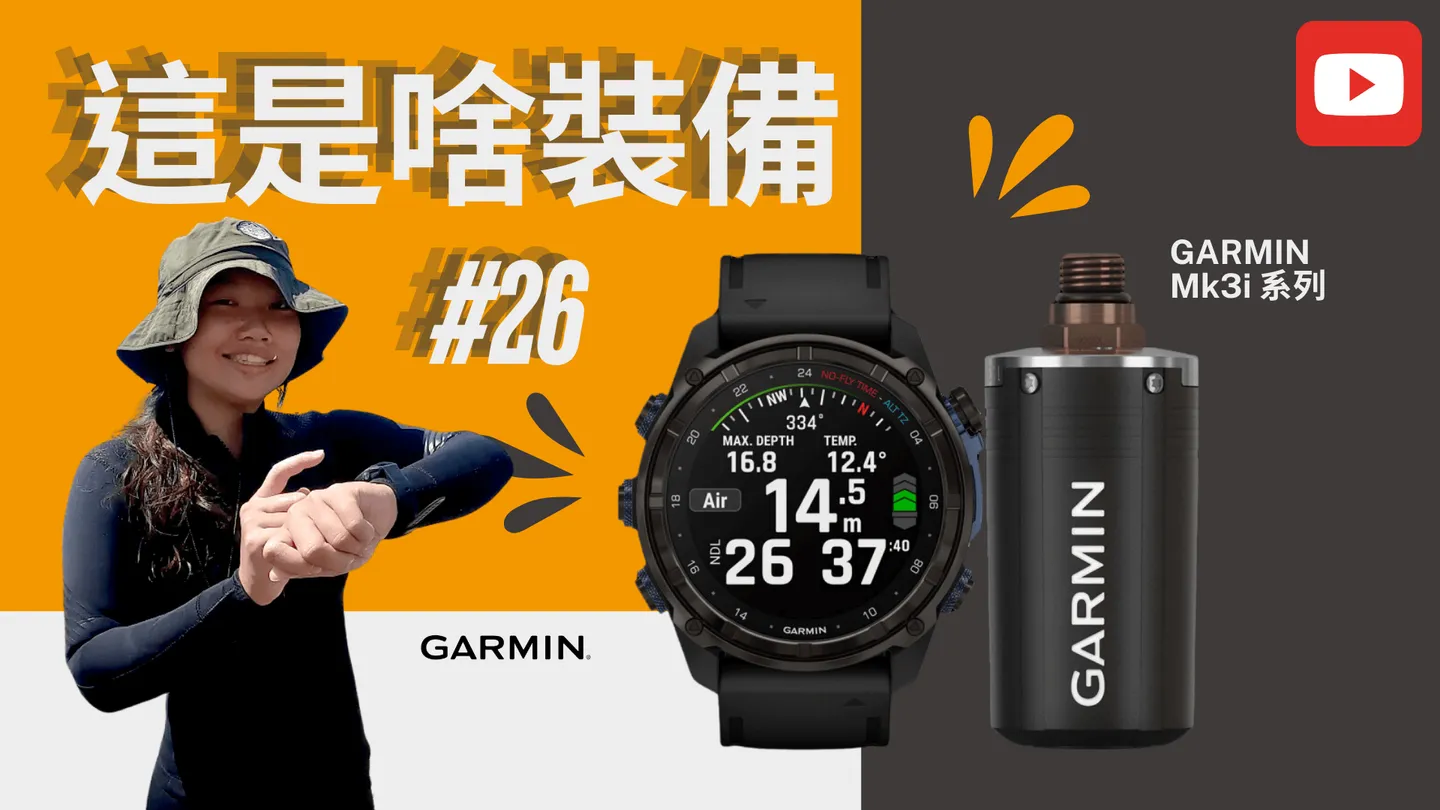
The GARMIN Mk3i series dive computer paired with the T2 transmitter became a benchmark in dive computers from the moment it launched, thanks to its exclusive patented SubWave sonar technology. Beyond enabling underwater messaging, it can simultaneously monitor the tank pressure and depth of up to 8 dive buddies — a capability that significantly enhances safety for research teams. We'll use real-world scenarios from this research dive to illustrate how it works in practice.
Lost Your Buddy? Can't Find the Survey Site?
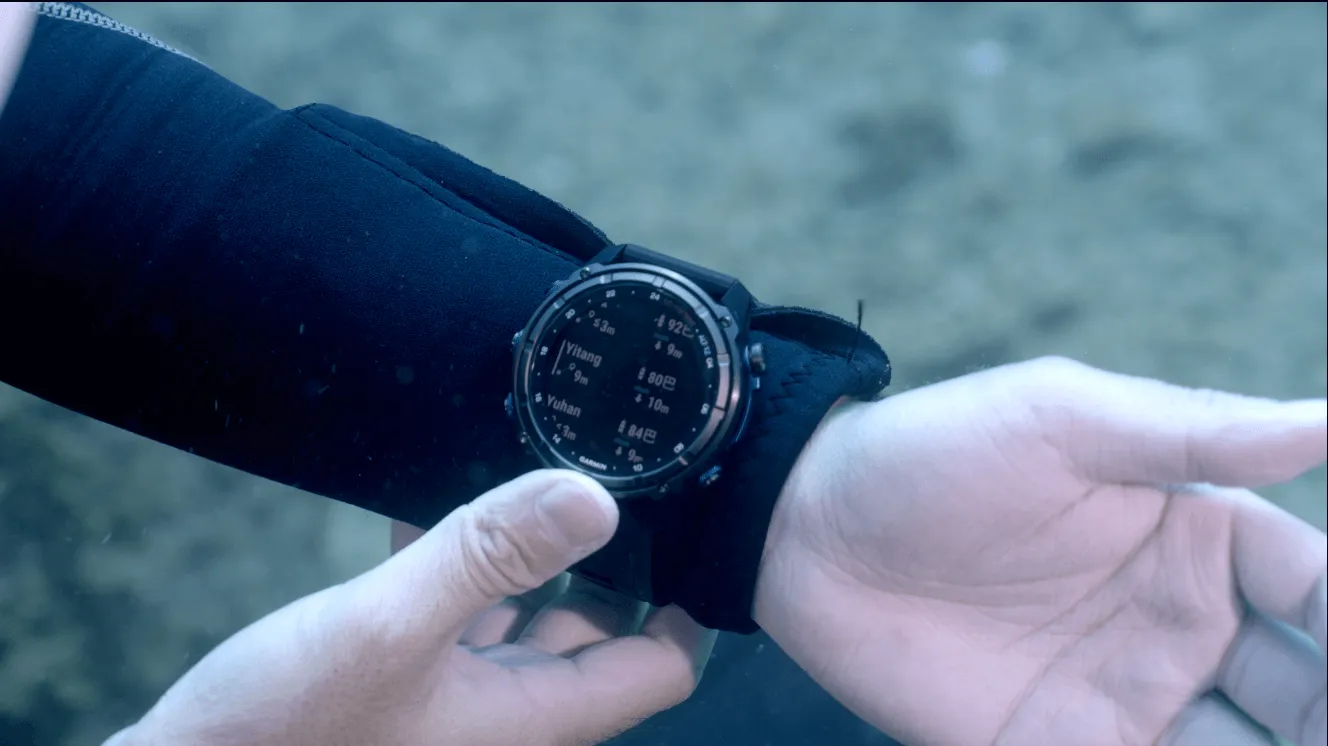
During this research dive, one of our team members forgot the location of the survey site and became separated from the main group. Using the GARMIN Mk3i's 2024 updated features, she was immediately able to see the horizontal distance between herself and every other dive buddy, as well as everyone's depth. Armed with this practical information, she combined it with terrain navigation to locate her teammates with ease.
For example, if you know a cliff is on your left at a current depth of 10 m — shallower to the left and deeper to the right — and your watch shows a buddy at 8 m, you can move left toward the shallower area and use the horizontal distance reading to determine whether to head forward or back. This provides extremely useful reference information for relocating a buddy, and is far safer than the old approach of blindly searching through open water.
How Do You Communicate When You Can't See Each Other?
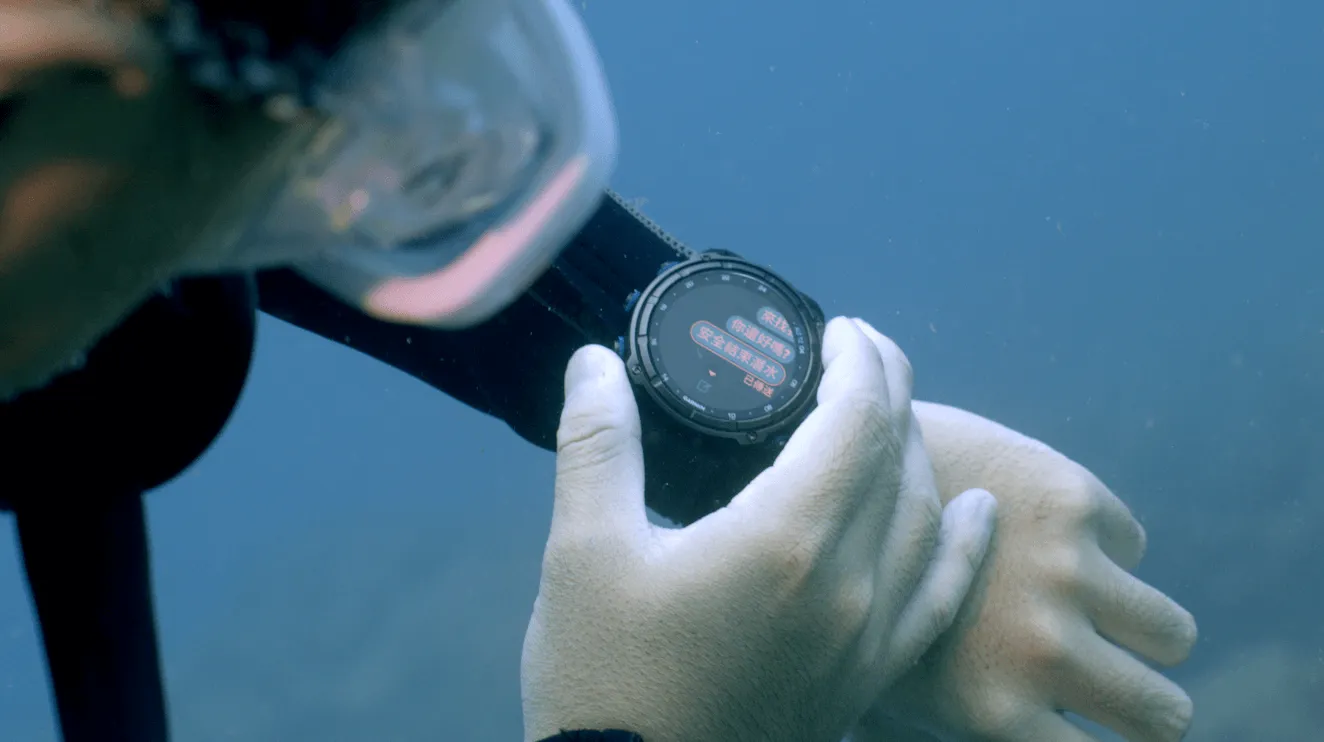
The Northeast Coast typically offers only 3–5 m of visibility, and researchers frequently find themselves diving alone during underwater surveys. Team members are often spread across the two ends of a transect line, and when an urgent situation arises — or when the survey is complete and it's time to ascend — the old approach was to first gather all the dive buddies before any hand-signal communication could take place. With the GARMIN Mk3i, underwater messaging makes it possible to communicate quickly and efficiently. The one limitation at present is that the GARMIN Mk3i only supports preset canned messages, and the selection is fairly limited — we hope there will be an opportunity in the future to increase the number of preset messages, or even allow fully customizable messages.
No More Lying About Your Tank Pressure!
Many dive instructors will be familiar with this scenario: you turn to ask a student how much air they have left, and they say around 100 bar — similar to your own reading — so you carry on diving without a second thought. Then, when you surface and check everyone's pressure gauges (SPG), everyone is around 60 bar, except for that one student who is down to 20 bar. This is the classic case of a novice diver misreporting their tank pressure. With the GARMIN Mk3i, every team member's tank pressure is visible at a glance, making misreporting a thing of the past.
When executing a research or filming project, it's easy to become so focused on the task at hand that you lose track of your air supply. If the team designates a safety officer, that person can monitor everyone's tank pressure at any time, boosting overall safety.
How Far Can the SubWave Sonar Transmit?
Everyone is curious about the actual transmission range of the SubWave sonar technology. During this research dive, we found a flat, open area with a completely unobstructed line of sight and ran a real-world test: buddy tank pressure monitoring, horizontal distance, and depth detection cut out at approximately 27 m, and the last message received was sent from a buddy at 24 m away.
According to GARMIN's official website, the monitoring function is effective within 10 m, while messages can be transmitted up to 30 m. Based on our six months of actual use, the effective range for both monitoring and messaging varies each time. We suspect this is because the SubWave sonar technology radiates sound waves in a 360-degree sphere from the T2 transmitter — if there are obstacles between dive buddies, transmission efficiency and range will be affected.
Is the Transmitter Actually Practical?
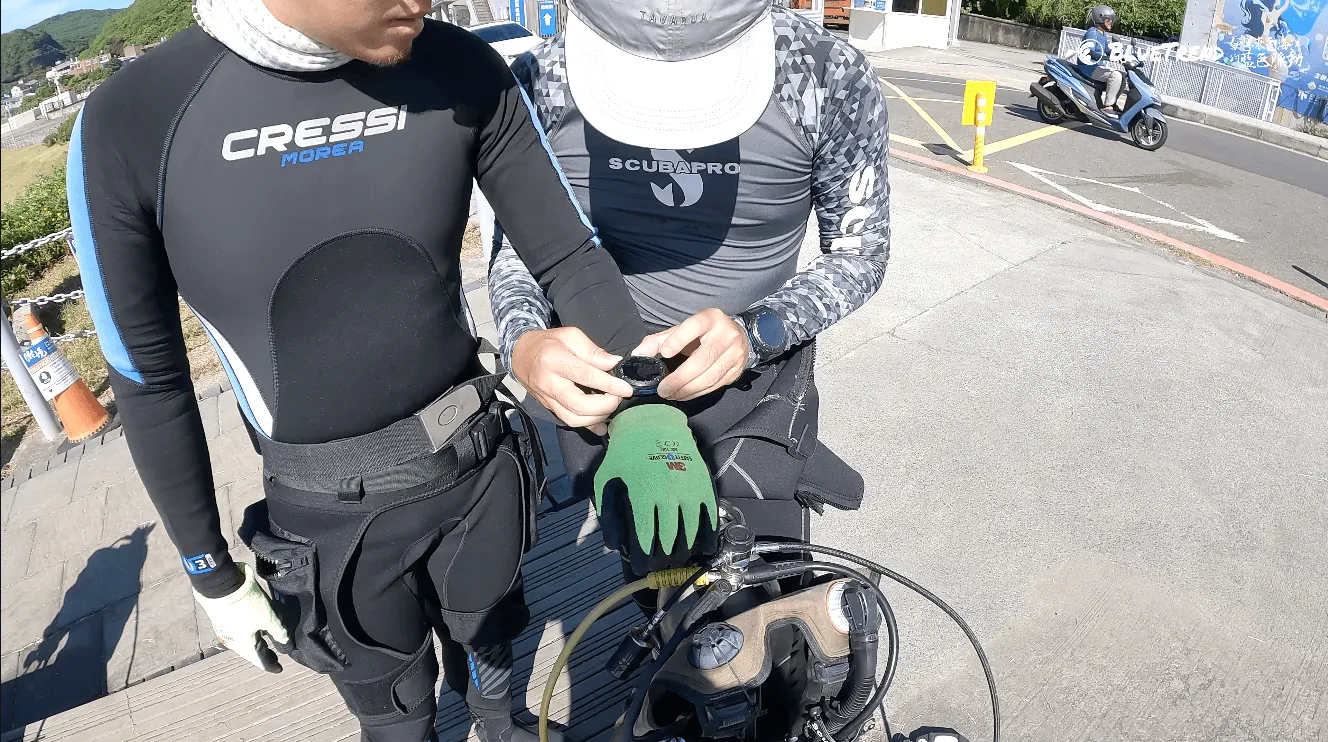
Understanding your product's features before entering the water is extremely important
This is a question the Editor gets asked by fellow divers almost every dive. Some people feel that even with a transmitter, you still need to carry a pressure gauge (SPG) for safety — so isn't that just doing the same job twice?
But based on my own experience using it for over a year, the convenience the transmitter brings can only be summed up in one sentence: "Once you've used it, there's no going back." During a dive, we're often scanning the water column for marine life, and constantly glancing down to check a dangling pressure gauge (SPG) becomes a real inconvenience. When we're holding up a camera and concentrating on filming, all it takes is a slight turn of the wrist to see the tank pressure on the watch face — meaning we never have to interrupt our filming.
Does the transmitter have drawbacks? Of course every product has its downsides. Some people cannot tolerate the sonar sound emitted by the transmitter (though the sonar intensity can be adjusted in the settings). The batteries required by the transmitter must always be removed before boarding a flight, and we have occasionally found ourselves abroad having forgotten to pack spare batteries.
A groundbreaking product, when it arrives, must not only possess the ability to change established user habits — more importantly, it must be built entirely around the needs of users. Taking all of the above into account, the GARMIN Mk3i series dive computer undoubtedly satisfies both of these criteria.
the Editor Team
Who Is the GARMIN Mk3i For?
Based on the hands-on experience of the Editor team, the GARMIN Mk3i is ideally suited for use by "teams" — such as research teams, photography teams, or regular dive travel groups heading on domestic or international dive trips. Because every member of the team can monitor each other's dive status at any time, the watch naturally encourages mutual reminders, quietly and continuously raising the overall safety coefficient of the dive.
We also look forward to GARMIN building on its existing SubWave sonar technology as a core foundation, gradually expanding into different application scenarios — such as customizable text messages and deeper integration with other GARMIN products — to progressively construct a GARMIN diving product ecosystem that fundamentally transforms the diver's experience.
Related Links
- GARMIN Mk3i Official Website
- GARMIN Dive Watch New Product Launch: MK3 New Features — Torch, Underwater Messaging? We Unbox It Straight Underwater
- GARMIN Mk3i + T2 Transmitter — The World's Most Powerful, Now Evolved Further! Underwater Messaging and Tank Pressure Monitoring Solution
Further Reading