Contents(4)
The 16th Conference of the Parties to the UN Convention on Biological Diversity (COP16) was held in late October 2024 in Cali, Colombia, South America. At this COP16 meeting, marine ecosystem conservation drew widespread attention — particularly the increasingly frequent occurrence of mass coral bleaching events. The world is currently experiencing the fourth global mass coral bleaching event, with bleaching cycles growing progressively shorter and the scale and severity of impacts continuing to intensify. Ocean warming not only poses a grave threat to coral reef ecosystems — the cradle of marine life — but may also lead to a reduction in global marine biodiversity and alterations to habitats. As divers, is there anything we can do?
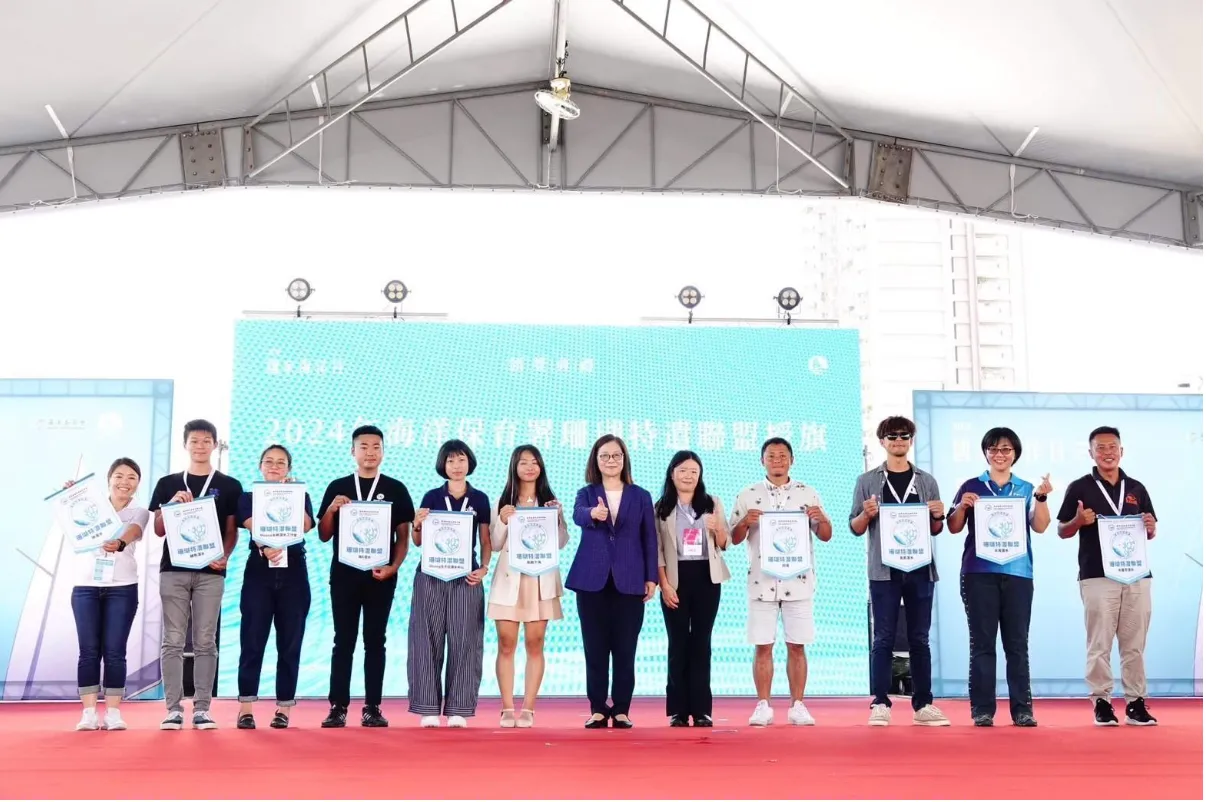
On World Ocean Day, June 15 of this year, the Ocean Conservation Administration invited 20 alliance operators to gather together and receive a ceremonial flag from Ocean Affairs Council Minister Kuan Pi-ling, with the hope that cross-sector collaboration between industry, government, and academia will drive collective efforts to improve the marine environment.
The Coral Special Dive Alliance is Established! The OCA Brings in Expert Instructors to Train Dive Operators
In 2024, the Ocean Conservation Administration (OCA) launched the "Coral Special Dive Alliance" initiative, achieving outstanding results in its inaugural pilot year. The OCA established partnerships with dive operators across northern, southern, and eastern Taiwan as well as outlying island regions, and organized three professional training courses, each lasting 16 hours, with a total of 64 dive instructors participating. These courses were taught by subject-matter experts from various fields, giving dive instructors an in-depth understanding of coral reef ecosystems, how to conduct coral reef ecological monitoring, identification of coral, reef fish, and invertebrates, as well as coral conservation knowledge.
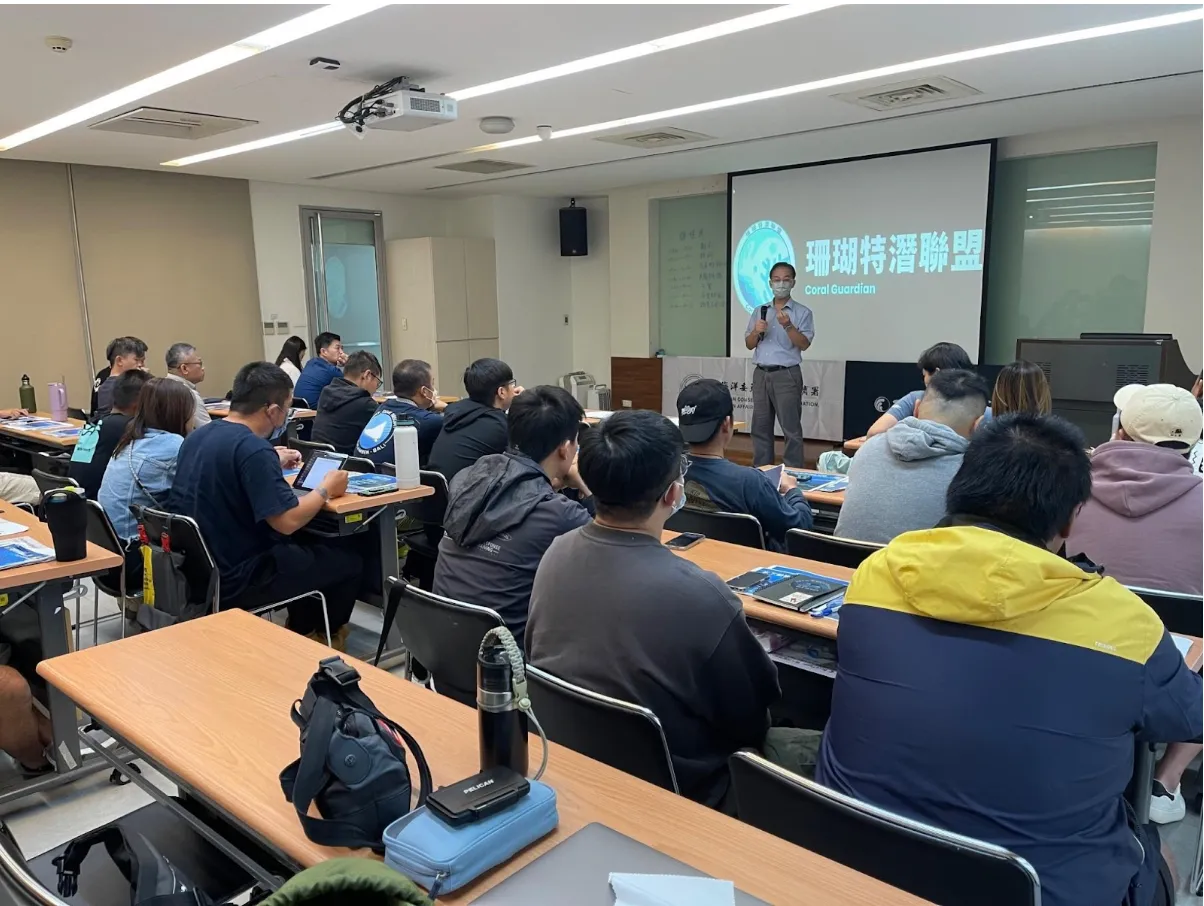
Three professional coral reef ecological monitoring courses were held this year, with a total of 64 instructors taking part.
Over the two-day courses, instructors had the opportunity to take part in hands-on coral reef ecological survey exercises, then return to their local waters to conduct on-site marine ecological monitoring. A total of 40 survey sites across Taiwan were completed, yielding 120 valuable transect records (3 transects of 30 metres each per site), laying the groundwork for a future source of marine data for Taiwan.


Monitoring Coral Reef Ecosystems Through the Coral Special Dive Alliance
Of the 40 survey sites examined across Taiwan this year, the majority were hard-substrate environments dominated by rocky reef habitats. Stony coral cover varied greatly between sites and regions; overall, the Hualien, Orchid Island, and Green Island areas recorded the highest stony coral cover, at approximately 40% or above. Xiaoliuqiu had the lowest stony coral cover of all sites (17%) and the highest algae cover of any site (11%). Survey results for most other sites this year were assessed as "stable," while Xiaoliuqiu had comparatively the most sites rated "declining" and was the only area with sites rated "dysfunctional." This suggests that Xiaoliuqiu may be suffering from the effects of intensive recreational activity, fishing and harvesting pressure, and coastal development, all of which are contributing to the degradation of its coral reef ecosystem.
Among indicator fish species, butterflyfish and parrotfish were the most commonly recorded indicator fish on coral reefs across Taiwan's regions. However, in most areas, parrotfish were predominantly small-bodied individuals, reflecting the current pressure of fishing and harvesting on their populations. Other carnivorous fish such as Grouper, snappers, and sweetlips were generally scarce, with only sporadic records at certain sites. Notably, the humpback grouper (Cromileptes altivelis) and the bumphead parrotfish (Bolbometopon muricatum) were not recorded at any survey site this year.
Among invertebrates, the diadema sea urchin was the most commonly recorded indicator invertebrate on coral reefs across Taiwan's regions. At sites where diadema density was relatively high, there is the potential for impacts on coral recruitment. Giant clams were mainly distributed in the southern and eastern regions, with low numbers and predominantly small individuals. Other indicator invertebrates were present at very low densities overall; many economically important species such as lobster and the longspine sea urchin may be affected by both environmental constraints and fishing pressure. The overall results indicate that, while variation exists between individual sites, coral reefs throughout Taiwan are broadly subject to anthropogenic disturbance and fishing pressure, resulting in generally low animal abundance.
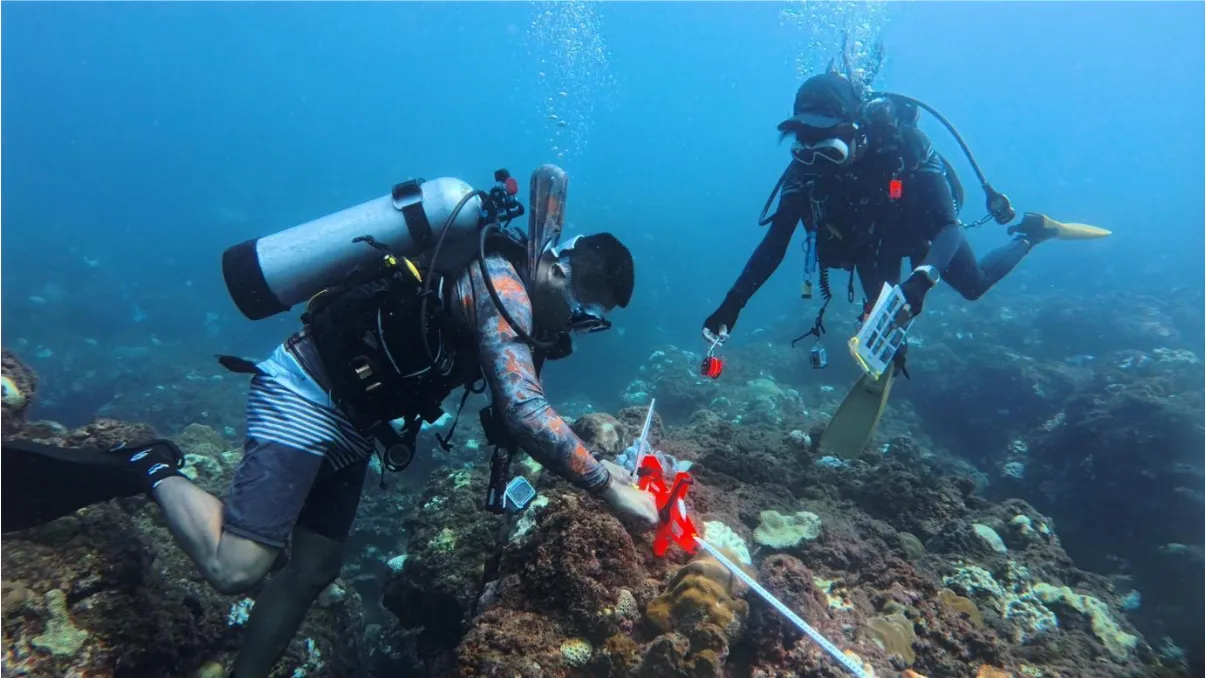
With the assistance of Coral Special Dive Alliance member shops, a total of 40 sites across Taiwan's waters were monitored, strengthening marine monitoring capacity.
Citizen scientists are members of the general public who, while not professional scientists, actively participate in scientific research activities by helping to collect data, conduct analyses, or make observations. Although they typically lack formal scientific backgrounds, the foundational data they contribute are of significant value in expanding the scope of scientific research and raising public awareness of and engagement with science. Through this kind of participation, citizen scientists can help fill data gaps in professional research and play a pivotal role in bridging science and society.
This year, the Ocean Conservation Administration invited industry alliance members and the broader public to jointly participate in a coral bleaching reporting programme. The programme aims to gather coral bleaching report data from across the country with the help of participants, enabling real-time monitoring of coral reef conditions.
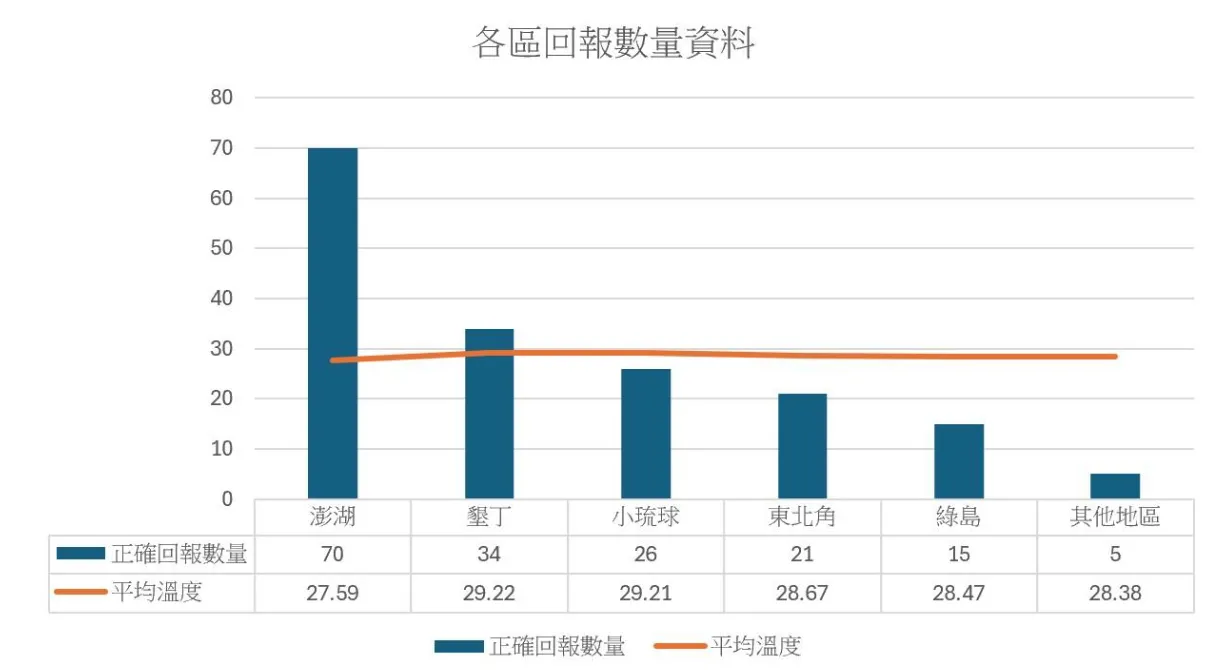
Analysis chart of coral bleaching report data for this year.
Since the programme launched, the first bleaching report submitted by the public appeared on May 6, 2024, recorded from the Shanfu waters of Xiaoliuqiu. Through to October 31 of Year 113 of the Republic of China calendar, a total of 171 report records were collected from around Taiwan, with an average recorded water temperature of 28.59°C. The data show that the shallowest coral bleaching record came from the Magang intertidal zone in New Taipei City, while the deepest bleaching record came from Doli Reef in Green Island waters, Taitung County, at a depth of 18 metres. These data indicate that Taiwan's corals are facing unprecedented challenges as the effects of global climate change continue to intensify.
The Ocean Conservation Administration hopes that this programme will further embed the spirit of citizen science and call on more members of the public to participate in coral bleaching data reporting. As more people join this effort in the future, it will provide increasingly precise and real-time data support for coral reef protection, in turn laying a more solid foundation for marine life conservation and research.
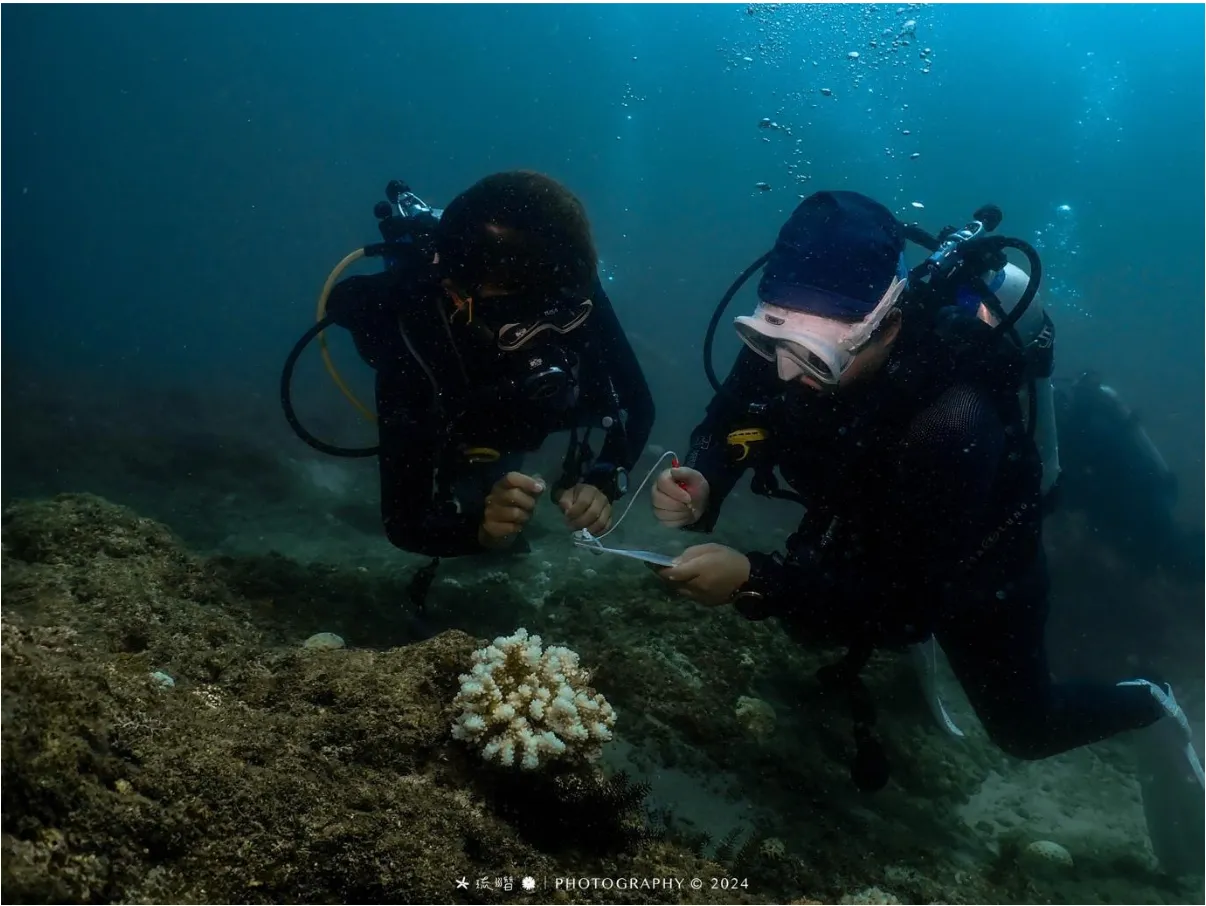
Data reports submitted by citizen participants have the potential to be referenced and used by research institutions.
2024 has been a year of particularly grave coral bleaching conditions worldwide, and such cycles may shorten further in the future. As an island nation, we should view the changes occurring in our oceans with a broader and more comprehensive perspective. This is both the responsibility and the mission of us as divers. We look forward to the "Coral Special Dive Alliance" continuing to make an impact in the years ahead, working hand in hand to protect the ocean — the mother that sustains us all.
Related Links
Further Reading