Contents(7)
- Singapore: Coral Restoration Under Urbanisation Pressure
- Florida, USA: Large-Scale Restoration in the Face of Severe Degradation
- Bali, Indonesia: Community-Led Restoration at a Biodiversity Hotspot
- Community Engagement: The Driving Force Behind Coral Restoration
- Conclusion: Working Together to Meet a Global Challenge
- Further Links
- Further Reading
Coral reefs are often called the tropical rainforests of the ocean — critical habitats for global biodiversity that sustain the livelihoods and economic activities of hundreds of millions of people. Yet climate change, urbanisation, overdevelopment, and pollution are accelerating reef degradation at an alarming rate. According to United Nations reports, coral reefs worldwide face severe threats, and without decisive action, they could lose most of their ecological function within the coming decades.
The pre-symposium workshop of the 2025 Delta International Symposium on Coral Restoration (DISCR) brought together coral restoration case studies from five countries — Singapore, Florida in the United States, Bali in Indonesia, and Okinawa in Japan — to explore local reef conditions and challenges, restoration strategies, outcomes achieved, and the pivotal role of community engagement. These cases demonstrate not only the power of science and innovation, but also the indispensable role that local communities play as the foundation of lasting success. In this article, the Editor highlights three coral restoration case studies to share with our readers, in the hope of inspiring more people to care about marine biodiversity.
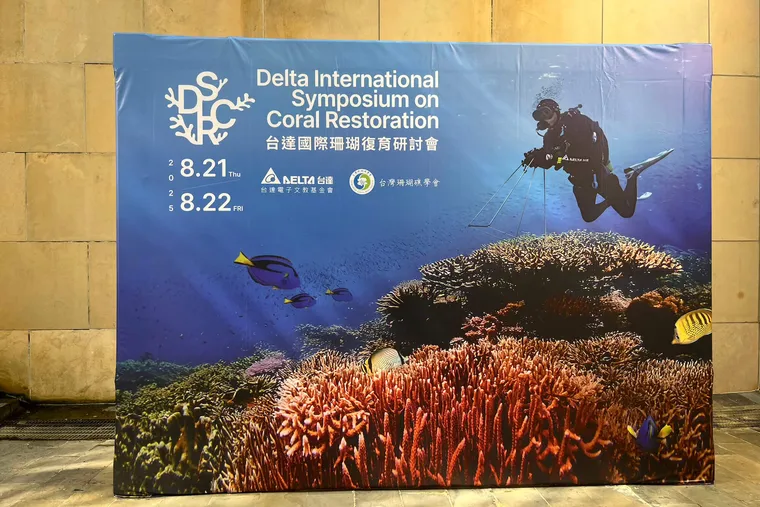
2025 Delta International Symposium on Coral Restoration
Singapore: Coral Restoration Under Urbanisation Pressure
Over the past five to six decades, Singapore has undergone rapid urbanisation, with its land area expanding by more than 20% since the 1950s. Busy port activities and coastlines dominated by wharves and dockyards have turbid waterways laden with sediment, severely impacting coral ecosystems. Sediment smothers coral and inhibits growth, while deteriorating water quality makes survival increasingly difficult. As a result, Singapore's coral reef area has shrunk by more than 60% since the 1950s, leaving only about ten tidal zones — roughly the size of a single island.
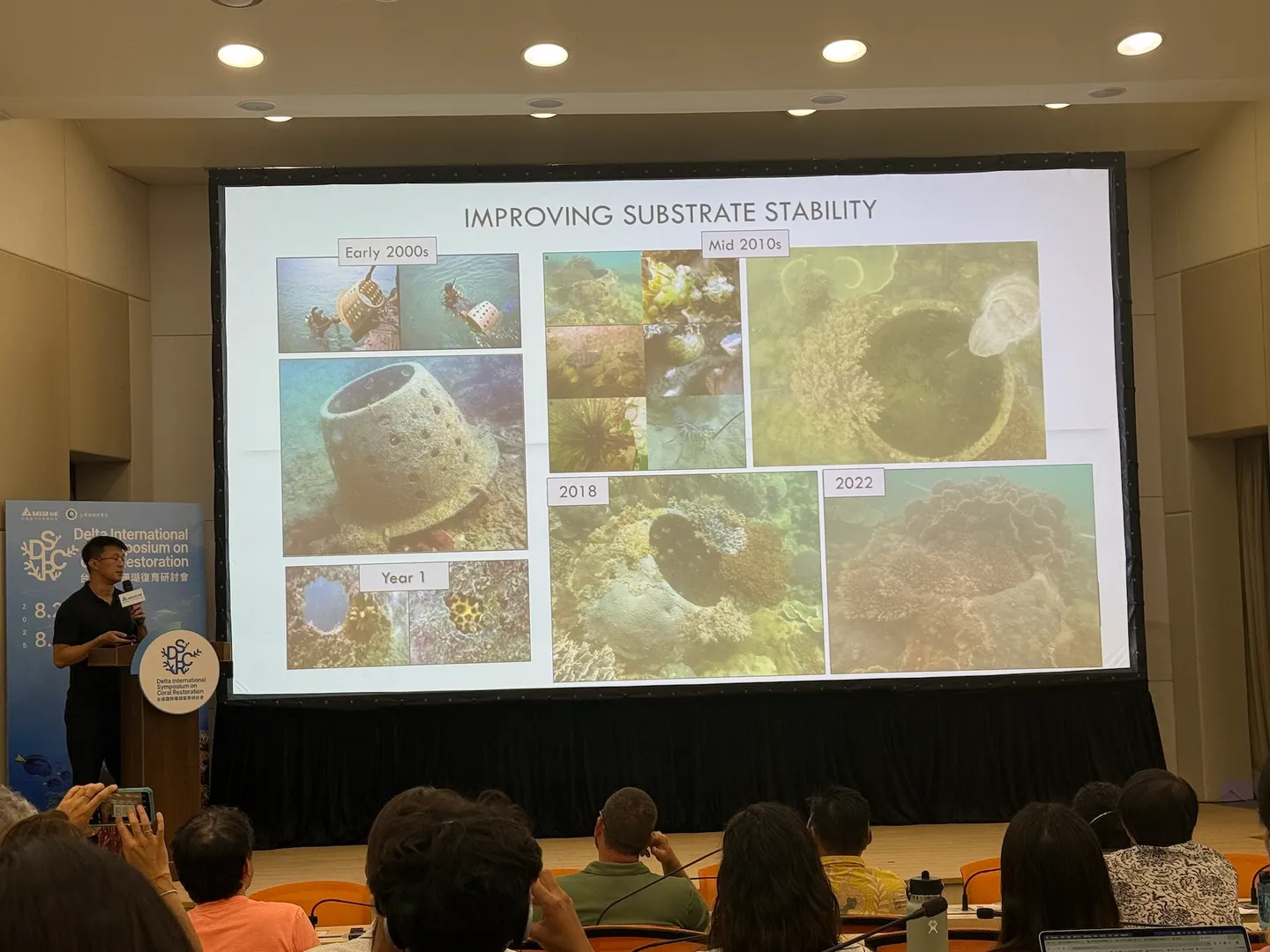
A speaker shares Singapore's success stories in coral restoration
To overcome these challenges, Singaporean scientists have deployed a range of innovative strategies. First, artificial reef structures — including flower-shaped fibreglass modules designed at an angle to prevent sediment accumulation — are installed to encourage coral attachment. Second, a vertical nursery system has been established at the St. John's Island National Marine Laboratory, where coral fragments are cultivated using fishing lines and toy building blocks; a single tank can raise 1,300 fragments, far exceeding the 300 achievable with traditional methods. Once mature, corals are transplanted to shallow areas or low-coverage zones at depths of 6 to 7 metres, secured with metal mesh frames. The "100,000 Corals Project," launched last year, aims to transplant 100,000 coral fragments within ten years to enhance reef resilience.
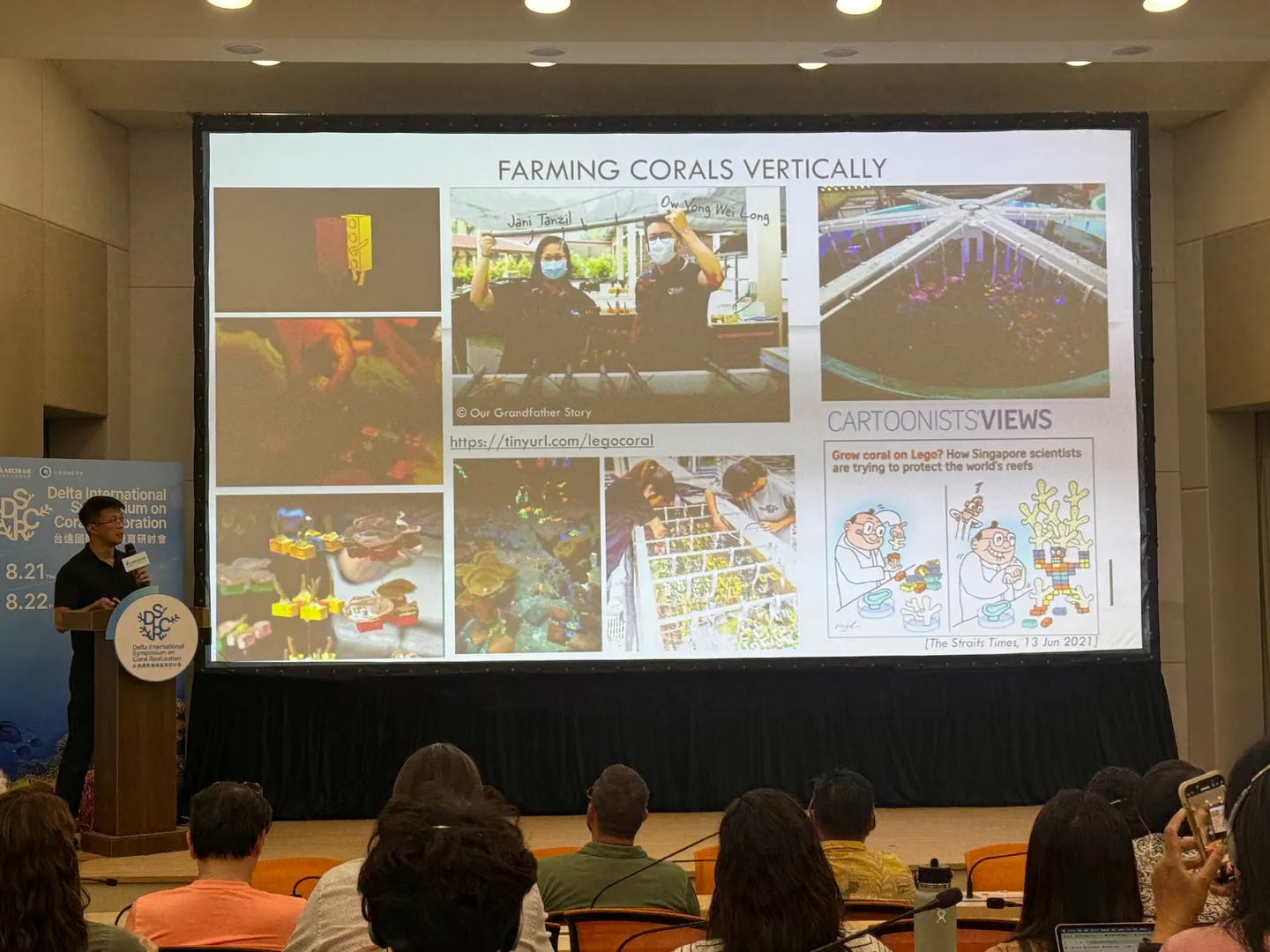
Raising coral using building blocks enables rapid transplantation into the wild in the future
The results have been impressive: within one year of artificial reef deployment, corals begin to grow; after ten years, sexually mature colonies form and attract fish and other marine life; and after twenty years, the structures integrate naturally into the surrounding ecosystem. Transplanted coral survival rates are high, and coverage has steadily improved.
Community engagement is a defining feature of the Singapore model. Surveys of public opinion revealed that most residents support restoration efforts and favour stress-tolerant coral species. The programme frames coral as "a shared public asset," and through education initiatives and corporate sponsorship, invites citizens to participate in cultivation and transplantation — fostering a sense of long-term commitment.


Florida, USA: Large-Scale Restoration in the Face of Severe Degradation
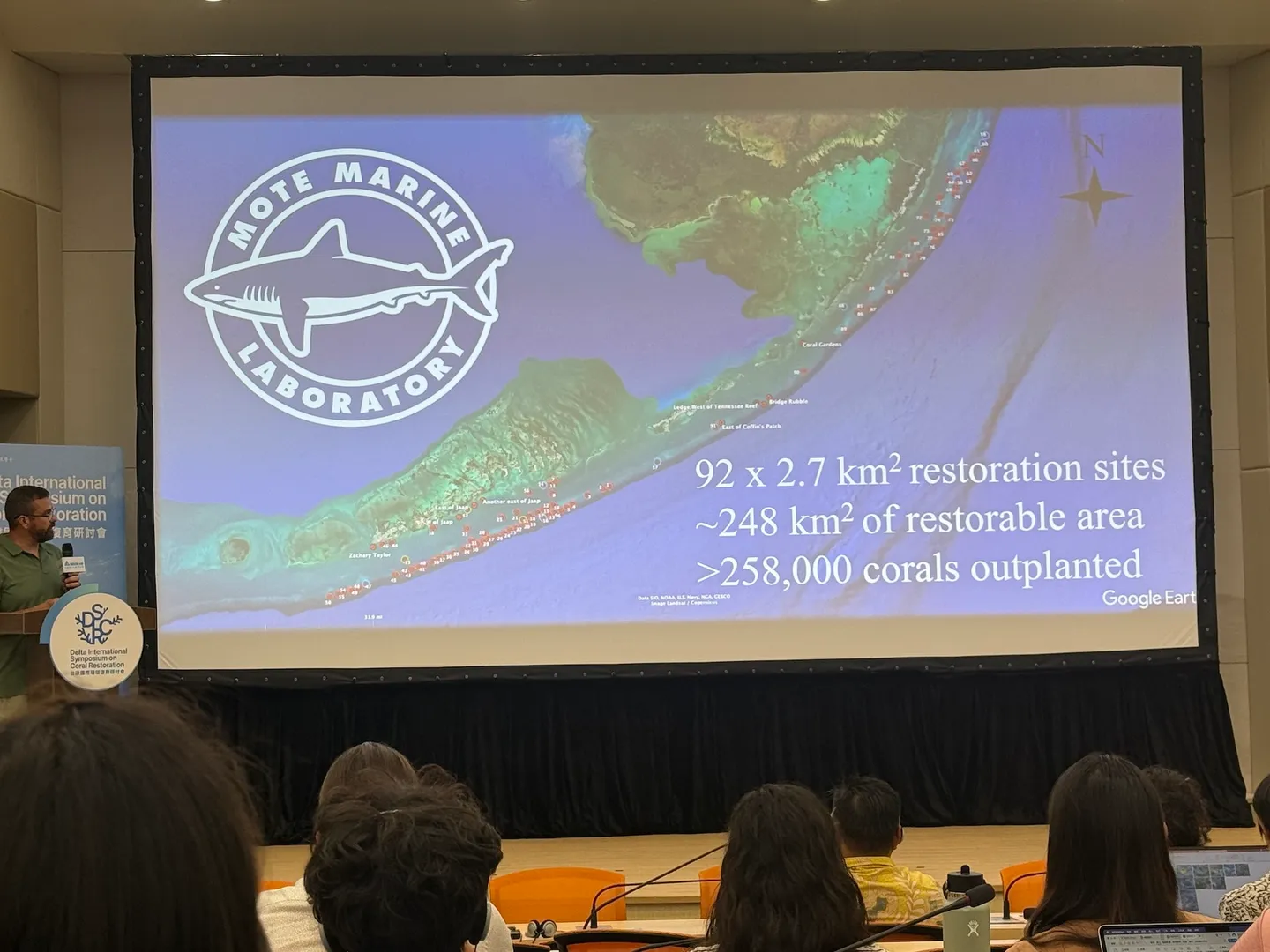
Florida's waters are vast, yet face equally daunting coral biodiversity challenges
The Florida Reef Tract is the third-largest coral reef system in the world, stretching 563 kilometres. Historically, live coral cover reached 40% to 60%, supporting 70,000 jobs in South Florida and generating billions of dollars in economic output. Over the past half-century, however, climate change, disease, and erosion have reduced live coral cover to less than 2%; reef surfaces have eroded by nearly one-third of a metre over the past 17 years, threatening both ecological function and coastal protection.
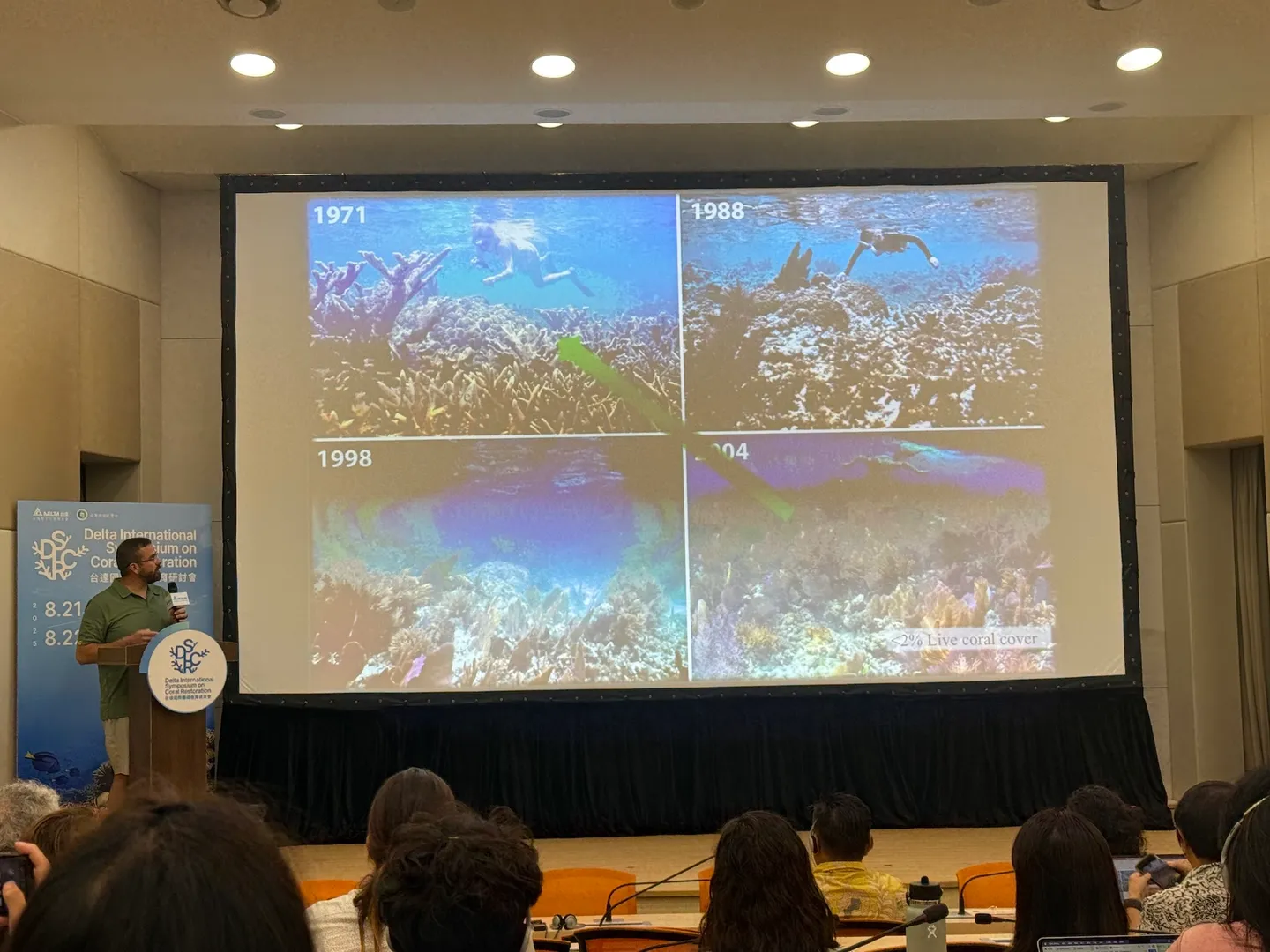
The team's mission is to restore reefs to the thriving condition they were in before 1971
The restoration team employs a multifaceted approach, including three land-based and four ocean-based nurseries, with plans to expand facilities further. Over the past 15 years, more than 250,000 coral fragments have been transplanted. Teams screen for heat-tolerant and disease-resistant genotypes, conduct assisted reproduction and cross-site hybridisation to enhance genetic diversity, and introduce herbivorous marine species — such as the Caribbean king crab (Maguimithrax spinosissimus) and longspine sea urchin (Diadema setosum) — to reduce algae competition. Trials show that within 10 months, algae cover decreased by 85%, fish abundance increased three to fivefold, and juvenile coral density doubled.
Our restoration work relies on large-scale monitoring and data analysis. Using wide-area imaging technology, we collect vast quantities of ecological data. Combined with genetic tracking and coral cultivation pipelines, we have developed digital tools to manage coral inventories and transplantation workflows. The application of artificial intelligence, machine learning, and computer vision not only optimises restoration strategies, but also helps us predict the best locations and timing for coral transplantation, ensuring long-term effectiveness.
Bali, Indonesia: Community-Led Restoration at a Biodiversity Hotspot
Bali sits within the Coral Triangle — a region spanning six countries that hosts more than 600 coral species and 3,000 fish species and supports the livelihoods of 150 million people. However, overfishing, destructive fishing practices, and tourism pressure have caused widespread degradation, with low coral diversity and intense algae competition even within protected areas.
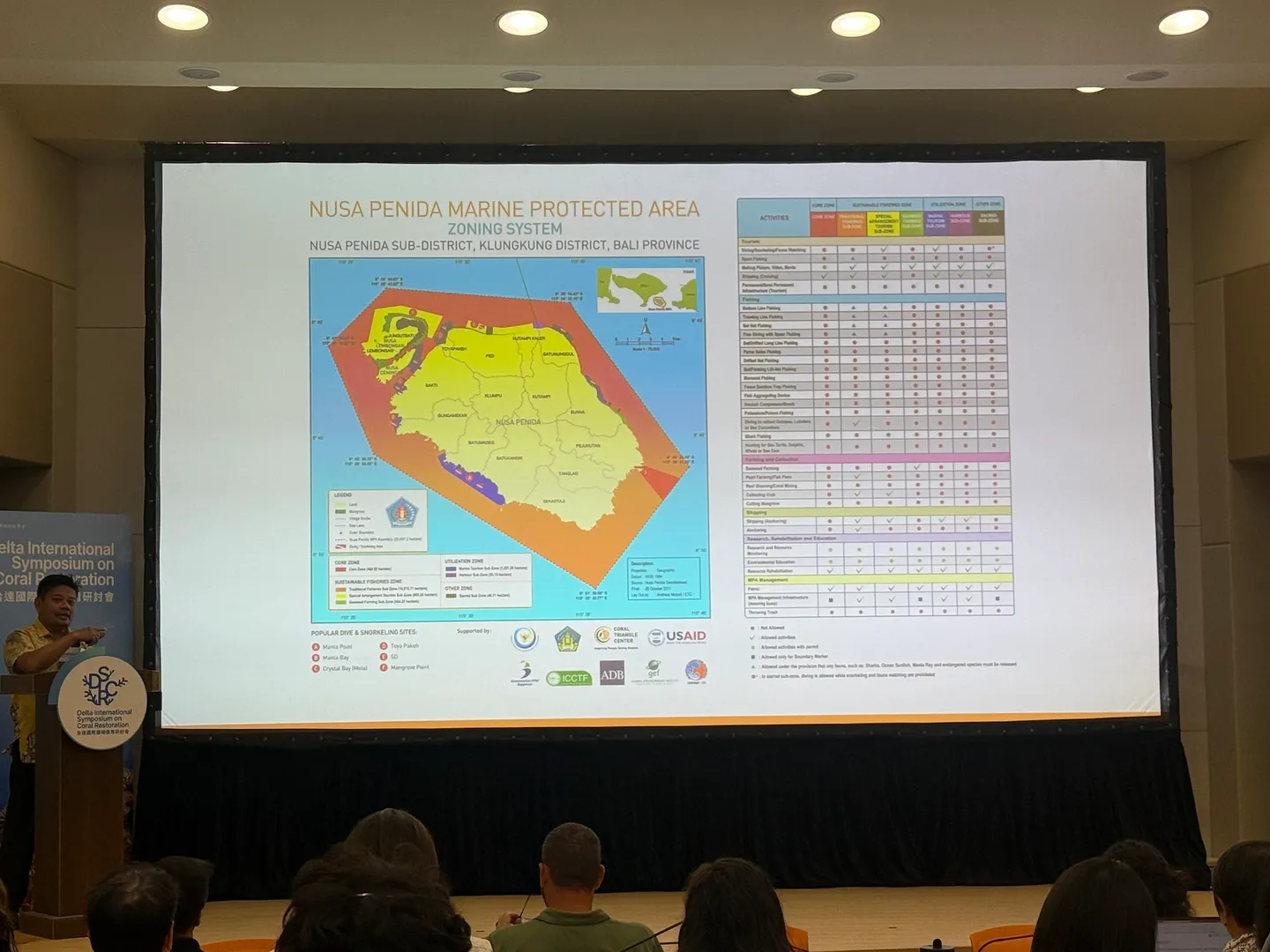
The marine protected area at Nusa Penida enforces strict regulations
Our coral restoration programme is centred on Bali's marine protected areas, particularly Nusa Penida — a diver's paradise. We employ a zoning management strategy: brown zones allow fishers to use non-destructive fishing methods, while blue zones are designated for tourism activities. By integrating protected area management with coral restoration, we are accelerating ecological recovery.
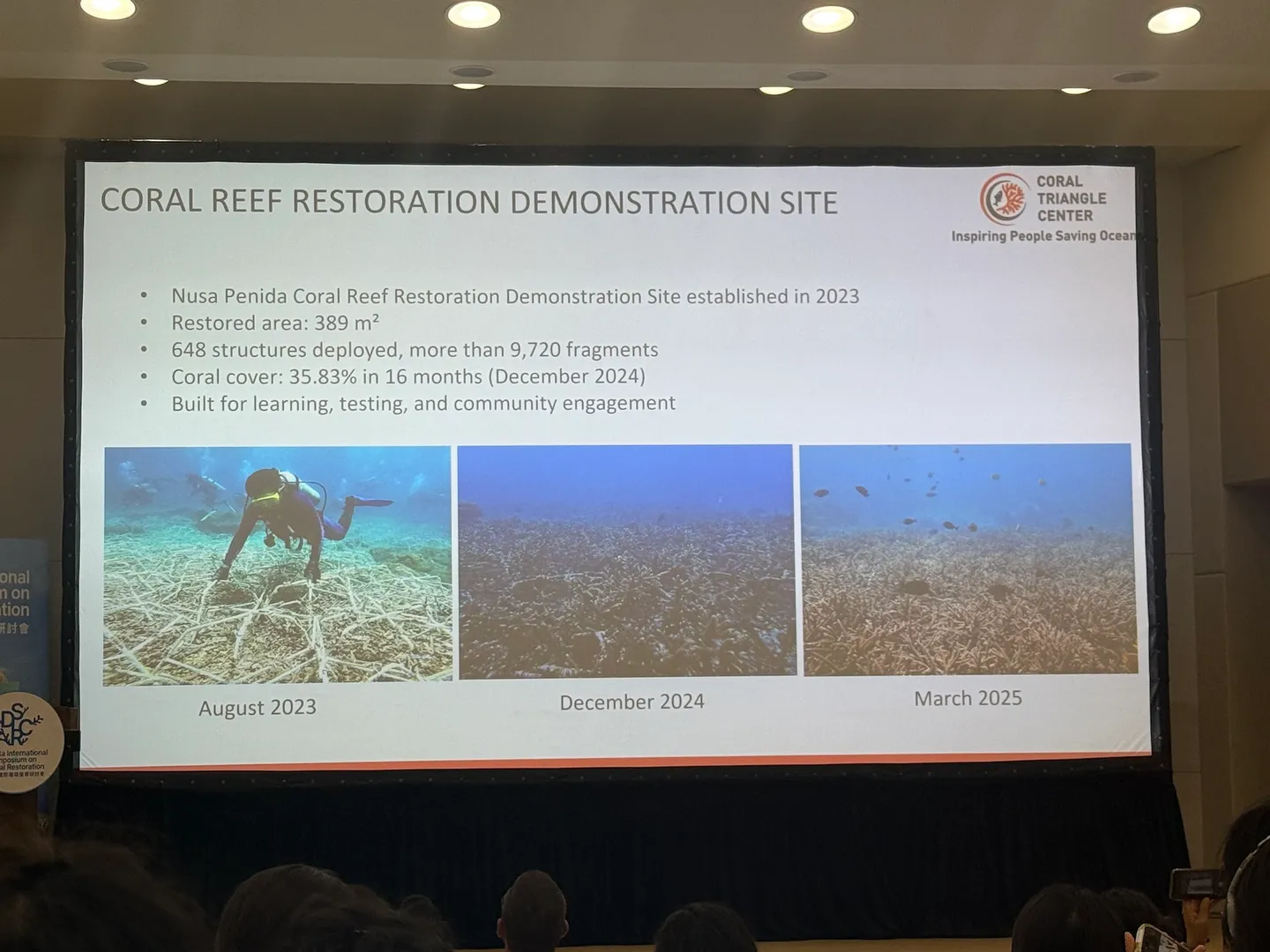
Since 2015, we have worked with local communities using concrete modules and mesh structures for coral restoration. After three years, coral growth was healthy, but species diversity remained low, with most growth consisting of branching corals. These structures are heavy and time-consuming to deploy, prompting us to seek simpler solutions. In 2021, we partnered with two organisations to develop the "Reef Star" module — a lightweight hexagonal steel frame structure that is easy to deploy, stabilises rubble on the seabed, and promotes coral attachment and growth.
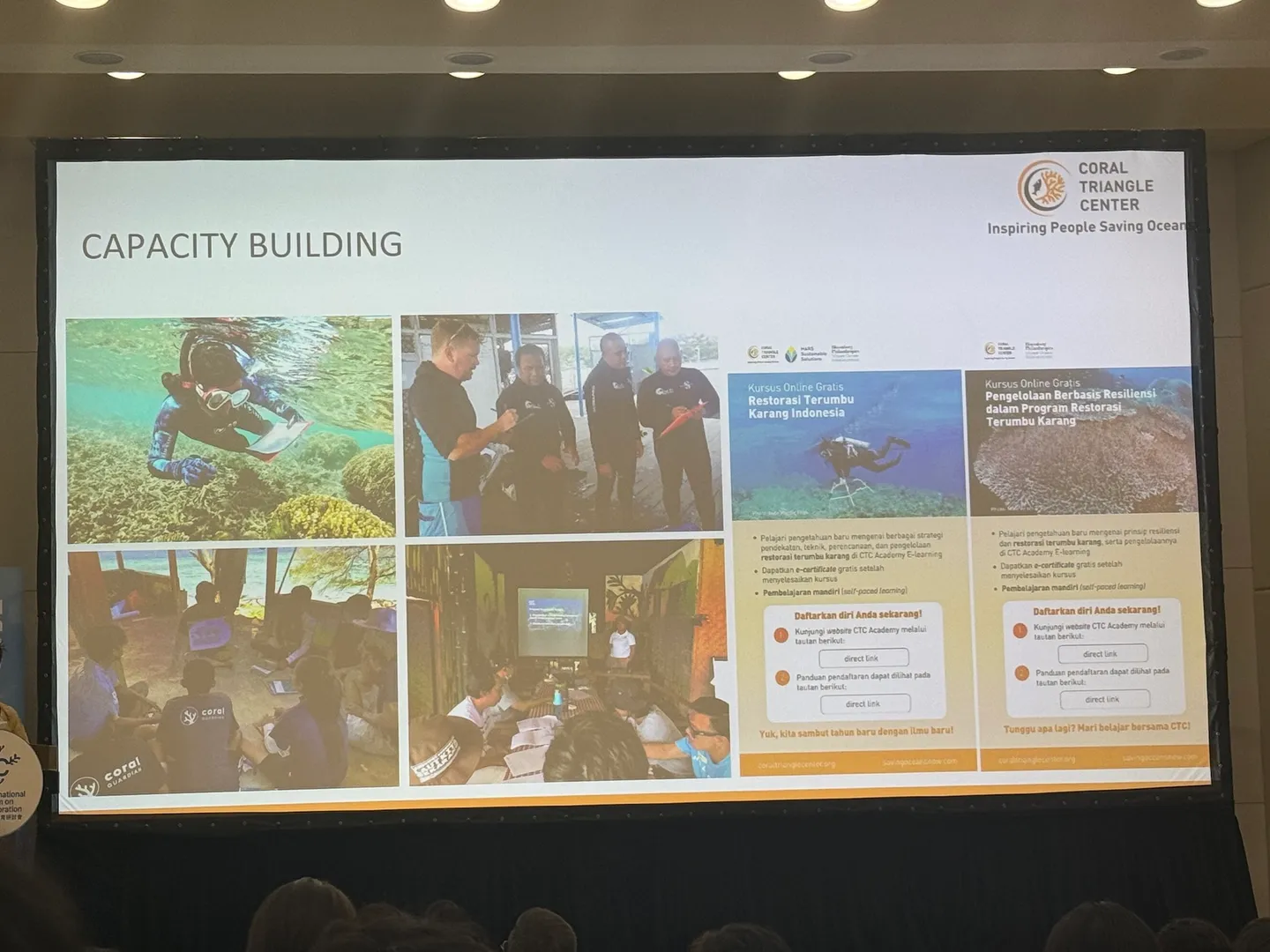
Online courses encourage communities and operators to participate in coral restoration
To ensure the programme's sustainability, we developed an innovative financing model: visitors pay US$25 to plant coral and US$20 to support community maintenance, generating US$100,000 in economic benefit. Outcomes include: 600 structures deployed; 7,000 coral fragments planted; one-year monitoring showing a 35% growth rate for branching corals; and a network linking 21 organisations to share experiences. We have also developed online courses and exhibitions, and engaged schoolchildren, fishers, and dive operators in the programme — integrating restoration into tourism operations to create a sustainable model.
Community Engagement: The Driving Force Behind Coral Restoration
The involvement of local communities and indigenous peoples plays a crucial role in the success of coral restoration
No coral restoration effort can succeed without community participation. Communities provide not only manpower and local knowledge, but also ensure the long-term continuity of programmes. Singapore uses public surveys and education to frame coral stewardship as a collective responsibility, inviting residents to take part in cultivation and transplantation. Florida engages veterans through therapeutic programmes, trains volunteer divers, and disseminates knowledge through aquariums. In Bali, innovative financing and networks are used to train local residents, children, and operators, weaving restoration into the local economy and education system — creating jobs and enabling the sharing of experience. These approaches demonstrate that empowering communities can transform challenges into opportunities and strengthen ecological resilience.
Conclusion: Working Together to Meet a Global Challenge
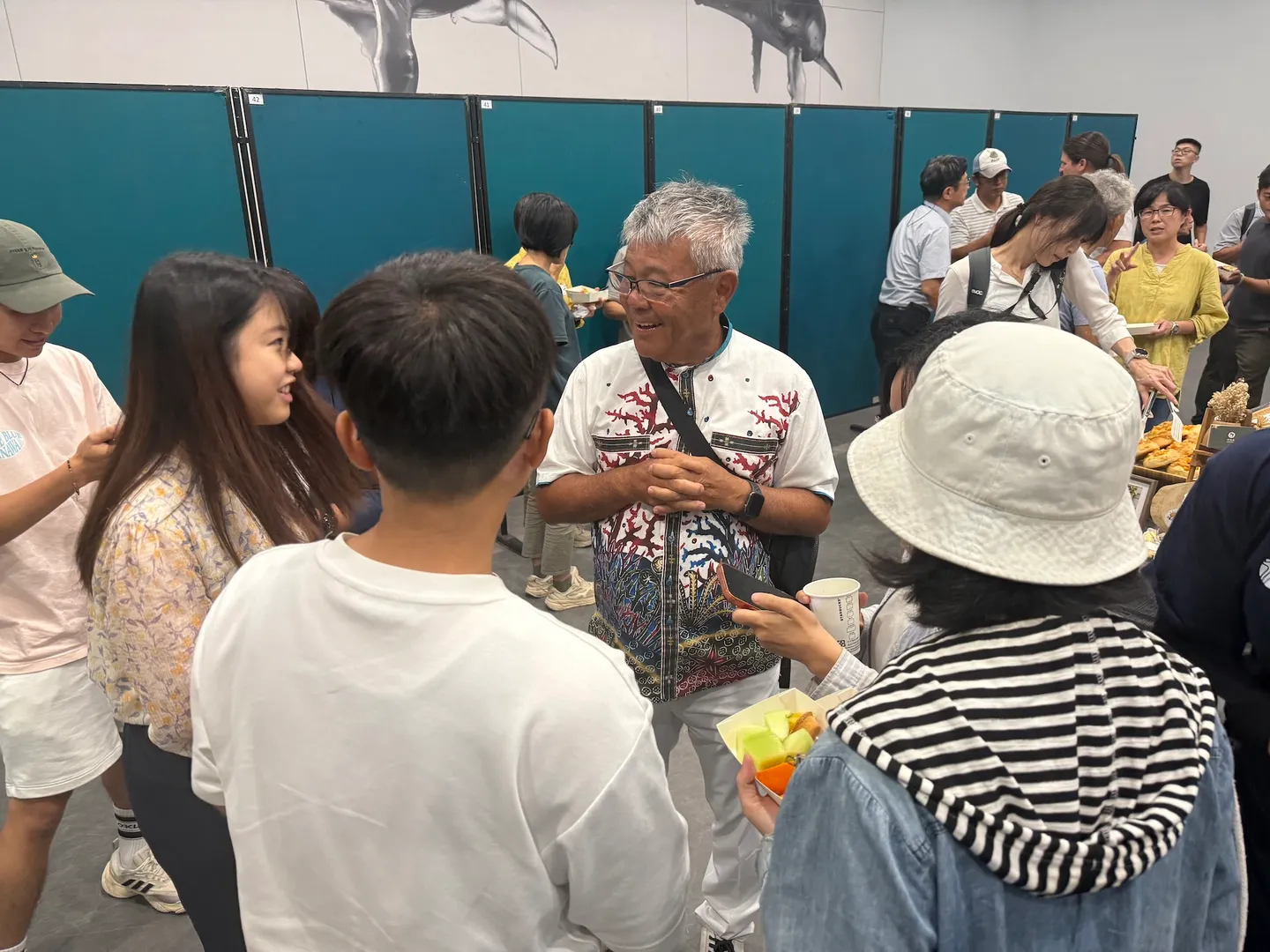
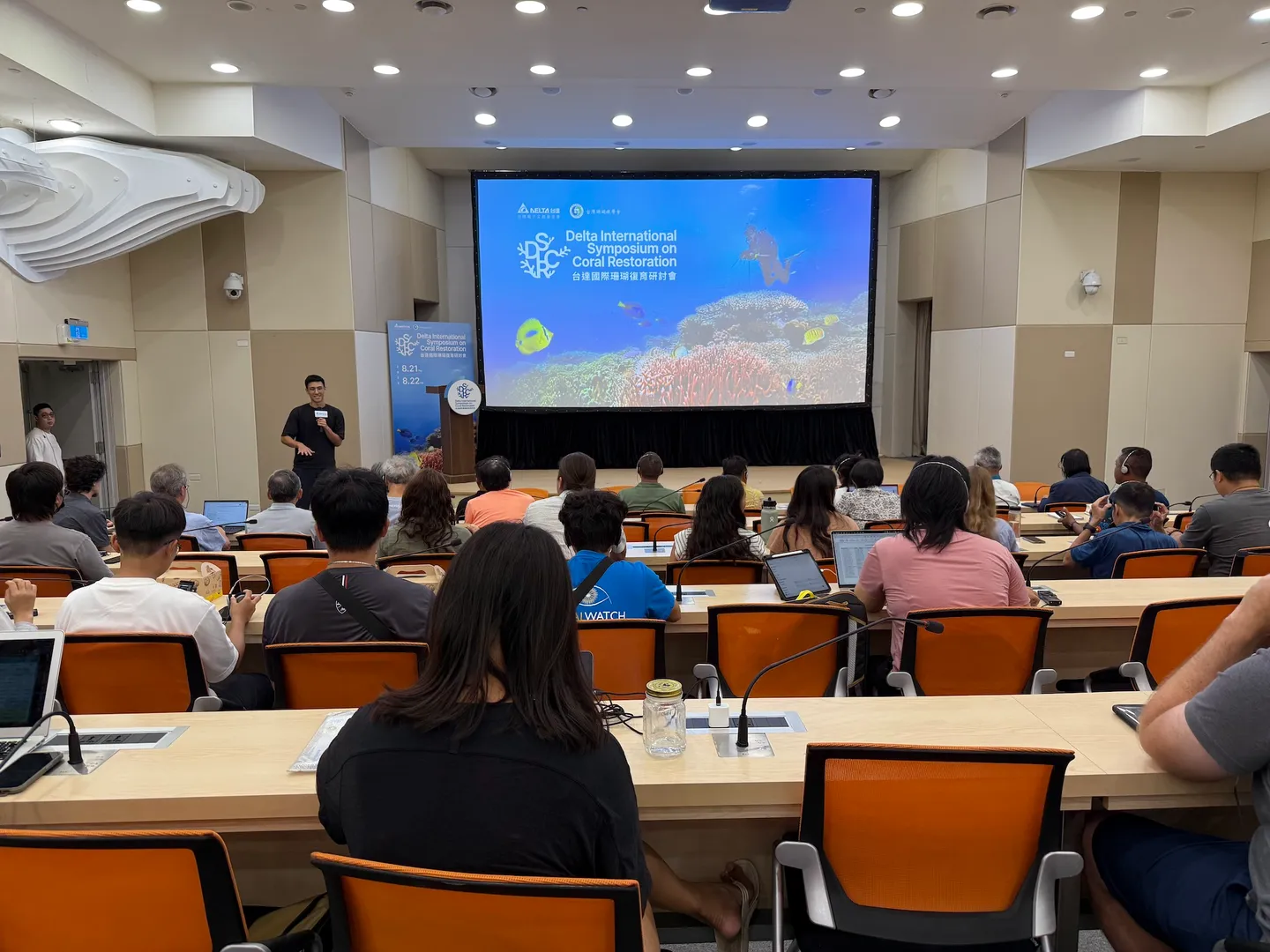
The 2025 Delta International Symposium on Coral Restoration creates opportunities for cross-national exchange; pictured here, a presenter from Okinawa, Japan, sharing restoration insights with Taiwanese partners
Coral reefs will face increasingly severe threats from climate change, ocean acidification, and pollution — with profound consequences for global marine biodiversity and human wellbeing. Without action, an estimated 90% of coral reefs could disappear by 2050. The 2025 Delta International Symposium on Coral Restoration, hosted by Delta Electronics, is emerging as a critical hub connecting scientists, communities, governments, and businesses — sharing experiences, technologies, and resources to drive coral restoration forward on a global scale. Through this platform, we are not only protecting local ecosystems, but also breathing new hope into the world's oceans. Let us draw strength from these case studies, and act together.
Further Links
- 2025 DISCR Delta International Symposium on Coral Restoration
- Delta Electronics Hosts Inaugural International Coral Restoration Symposium, Targeting Conservation of 300 Coral Species Over the Next Five Years
Further Reading