Contents(8)
There are many water-activity distress signalling devices on the market — but which one is right for you, and what are the operating characteristics of each? Many people purchase one without fully understanding how to use it correctly, only to find that when an accident occurs, it's already too late. Diving safety is a fundamental concept that every water-activity operator and enthusiast should have. In this article, we share how to choose among the 4 most common marine rescue distress devices in Taiwan!
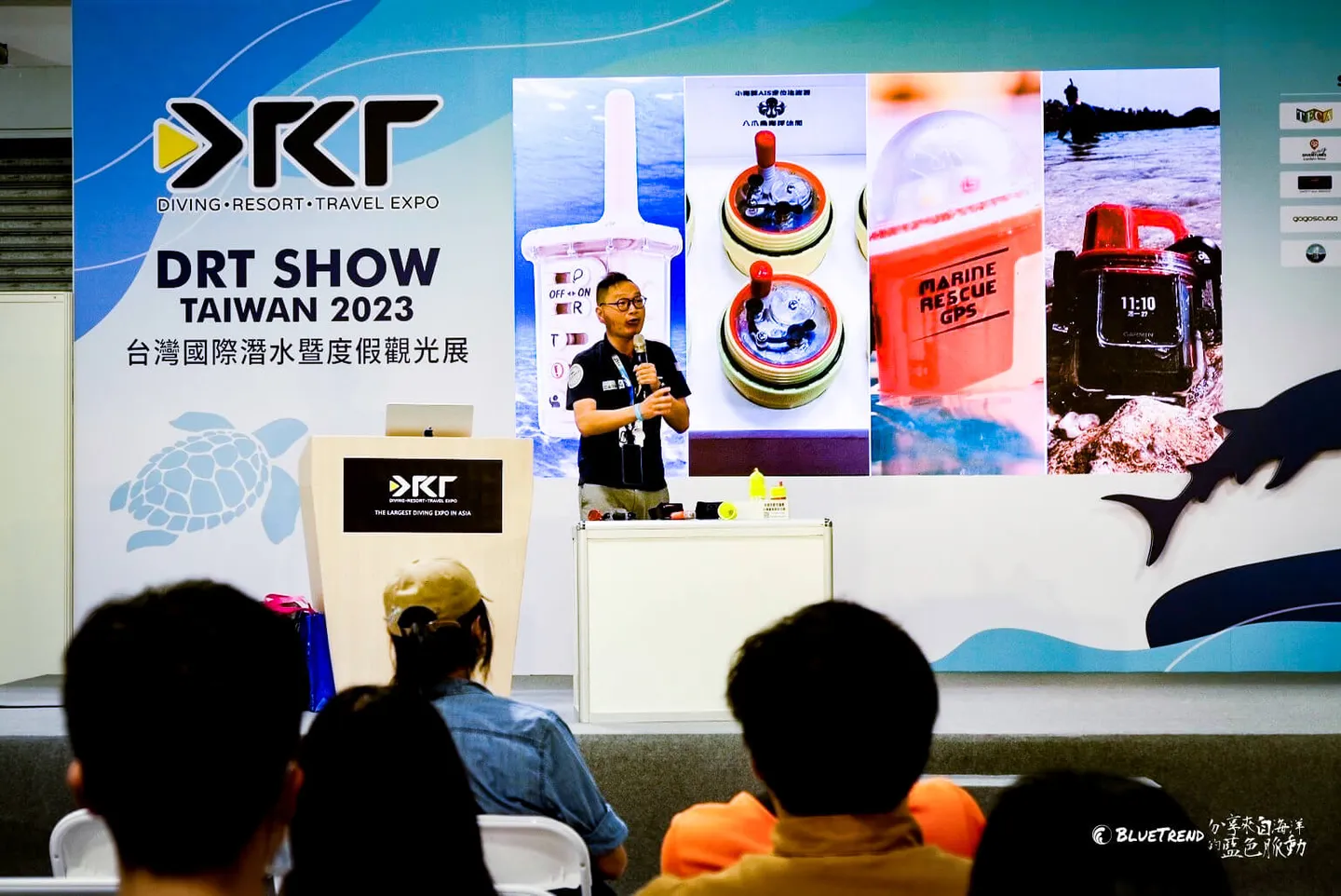
How to choose among 4 distress signalling devices — so you can respond calmly when an accident happens
What Does It Feel Like to Be Swept Away by a Current?
Whether you're scuba diving or freediving, being carried away by a current is something that can happen to anyone. Since the Editor primarily dives scuba, the following is shared from personal experience of being swept away while scuba diving — and we'd love to hear from freedivers who have experienced drifting too. Some might wonder: isn't drift diving just a perfectly normal diving activity? Every trip to Penghu or an overseas drift site is a thrill — are we overreacting?
What we mean by "being swept away" here refers to drifting in a direction that was not defined in the dive briefing. Because it falls outside the boat crew's expected drift direction, you may end up moving in a completely opposite direction, making it difficult for the boat to pinpoint your location when you surface. You may even be swept into a strong current zone, further increasing the difficulty of a surface search. In the Editor's relatively short diving career, there have been two instances of being swept away in a direction not defined in the dive briefing.
One was in the Maldives. The dive briefing described a Channel Dive — the Maldives consists of isolated islands in the open ocean, and the channels (canals) within the atolls generate powerful currents during tidal flow and ebb, attracting large numbers of predatory species. After the dive, we were supposed to be "pushed" by the current into the relatively calm waters of the atoll to wait for the boat.
But that day the current was weak. Instead, we ended up trapped around the island at the channel entrance, and it took nearly 30 minutes floating on the surface before the dive boat found us. Fortunately, the sea inside the atoll was relatively calm, and everyone was happily taking in the scenery of the Maldivian islands.
But the other drift experience was truly the kind where your life flashes before your eyes. That dive took place in the waters west of Eluanbi on Taiwan's southern tip. According to the dive plan, we were supposed to drift northward — but after entering the water, a powerful current pulled us south. Along the way we experienced the thrilling "washing machine" current, and the Editor even spotted a gathering of sharks for the first time in Taiwanese waters — though the excitement lasted only a few seconds before the fierce current yanked us back to reality.
Everyone knows Eluanbi is one of Taiwan's notorious current zones. Even on a clear, sunny day, rolling swells kick up white foam on the surface — and we were unfortunately swept right into that area. It was the first time in my life that diving genuinely frightened me.
Three-metre swells swallow divers between wave crests, turning them into tiny invisible black dots on the surface, almost impossible to spot from a distant vessel. The powerful current carries you at high speed to positions utterly beyond imagination, vastly expanding the search area for the boat. When that familiar scene from the movies — "a fishing boat appears in the distance, you shout until your voice gives out, to no avail" — actually happens to you, you will be very grateful to have a distress signalling device in your hand.


How to Choose Among 4 Distress Signalling Devices
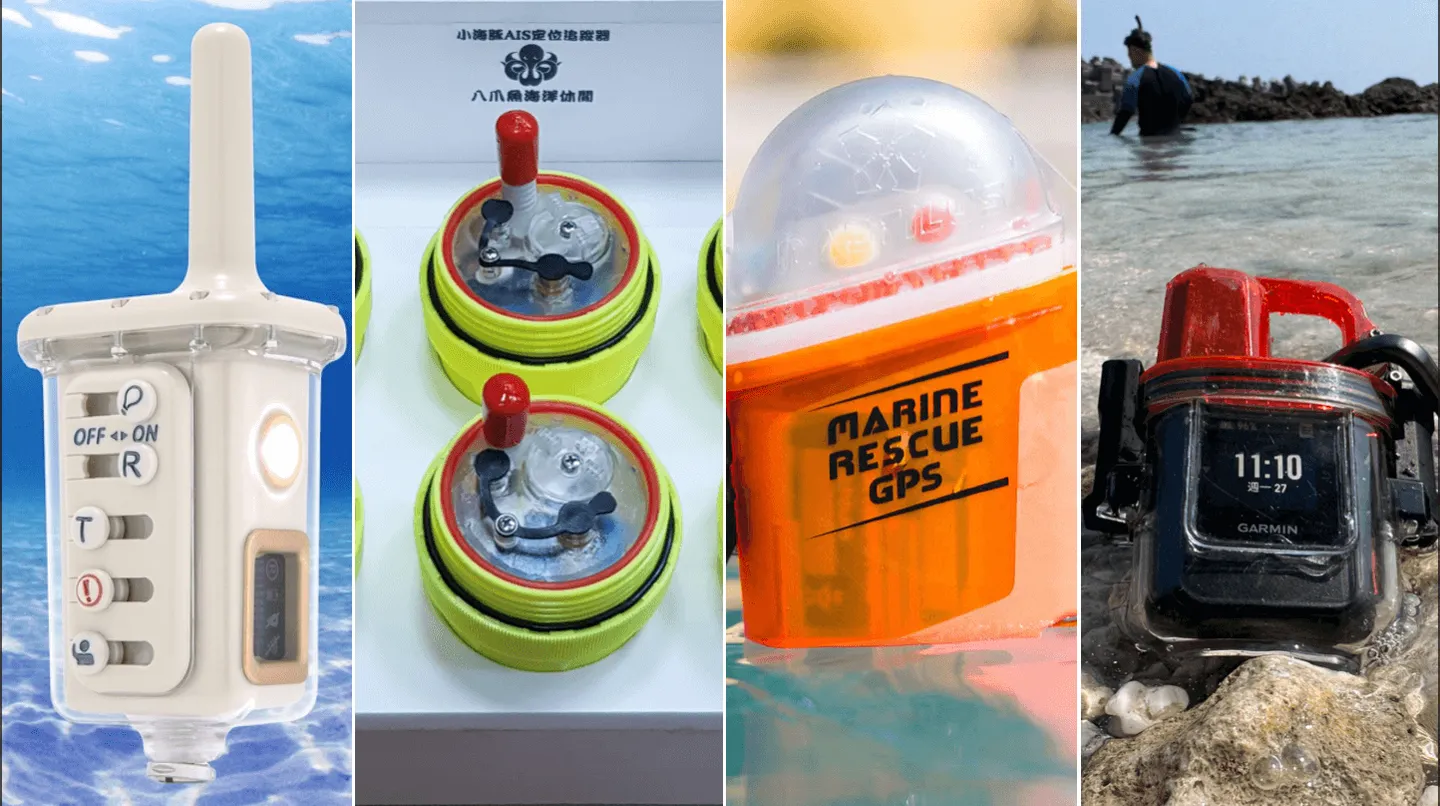
There are currently 4 common types of water-activity distress signalling devices in Taiwan
There are currently 4 common water-activity distress signalling devices in Taiwan: the Poseidon System (海神系統), the Little Dolphin Tracking Locator (小海豚追蹤定位器), the Nautilus Lifeline GPS, and the Garmin inReach. Many people don't know how to choose, or buy one without understanding the correct way to use it — and if an accident happens, that's a truly heartbreaking situation. The Editor will give a brief overview of these four devices; experienced divers who wish to add information are very welcome to get in touch!
Poseidon System (海神系統)
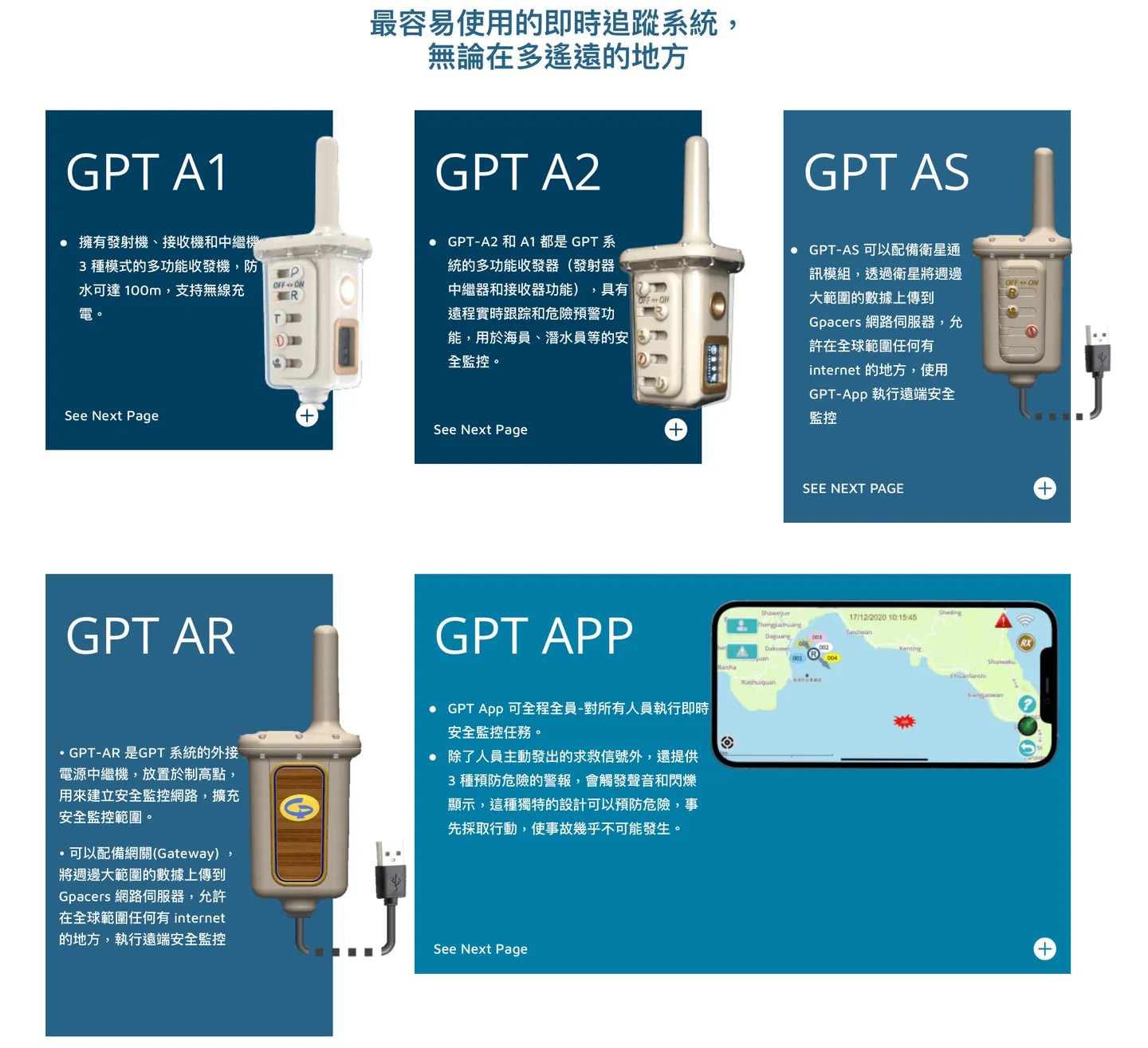
Unlike the Little Dolphin and Nautilus — which use the AIS transmission protocol and will be introduced shortly — the Poseidon System uses Low Power Wide Area Network LoRa transmission technology. Simply place a receiver on the boat and have the diver wear a transmitter; the boat crew can then use an APP at any time to track the diver's movements underwater.
2023.3.22 Update — After the Poseidon System manufacturer contacted the Editor, the following was added: The Poseidon System also offers a relay station solution, which functions similarly to an AIS land-based base station and can locate surface devices from shore. The manufacturer has already installed relay stations at the White Lighthouse on Xiaoliuqiu and at Guanshan in Kenting, Pingtung. According to the manufacturer's data, the coverage range can extend from Qixing Rock to the waters off Kaohsiung. We look forward to the manufacturer continuing to install more relay stations at high-elevation points across Taiwan, to expand the Poseidon System's range of application.
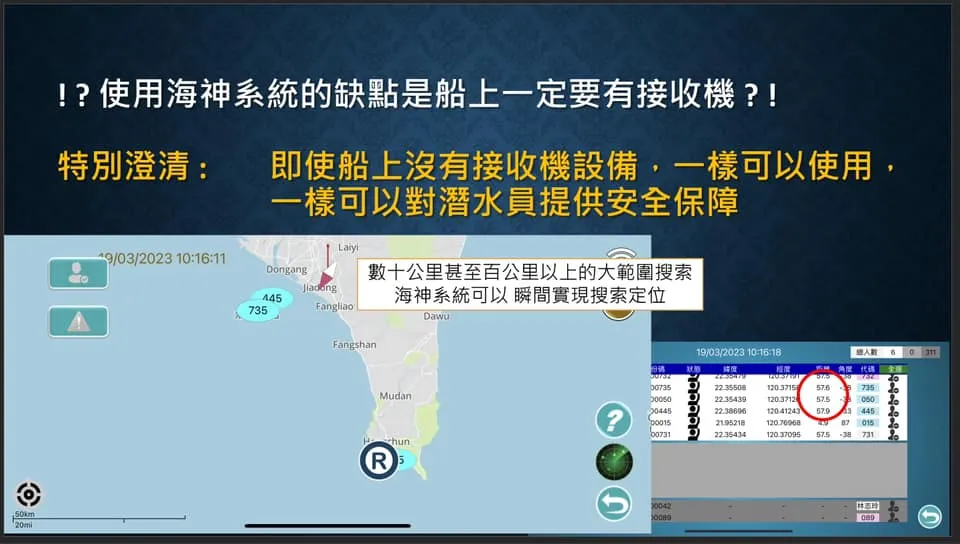
Supplementary information from the Poseidon System manufacturer: ground relay stations can be installed to extend the positioning range
Setup cost: Please refer to the official website.
Pros: Easy to use — all you need is a receiver and a transmitter for the full system to work. The diver's position can be checked in real time via a mobile APP.
Cons: It is unlikely that an individual diver would purchase both the receiver and the transmitter. If the boat operator does not already have this system, additional communication with the boat is required, and a designated person may need to monitor the APP onboard.
Best for: Water-activity operators looking to install it as a value-added service for clients. Dive groups or research teams operating in groups can implement the Poseidon System by dividing into sub-groups.
Little Dolphin Tracking Locator (小海豚追蹤定位器)
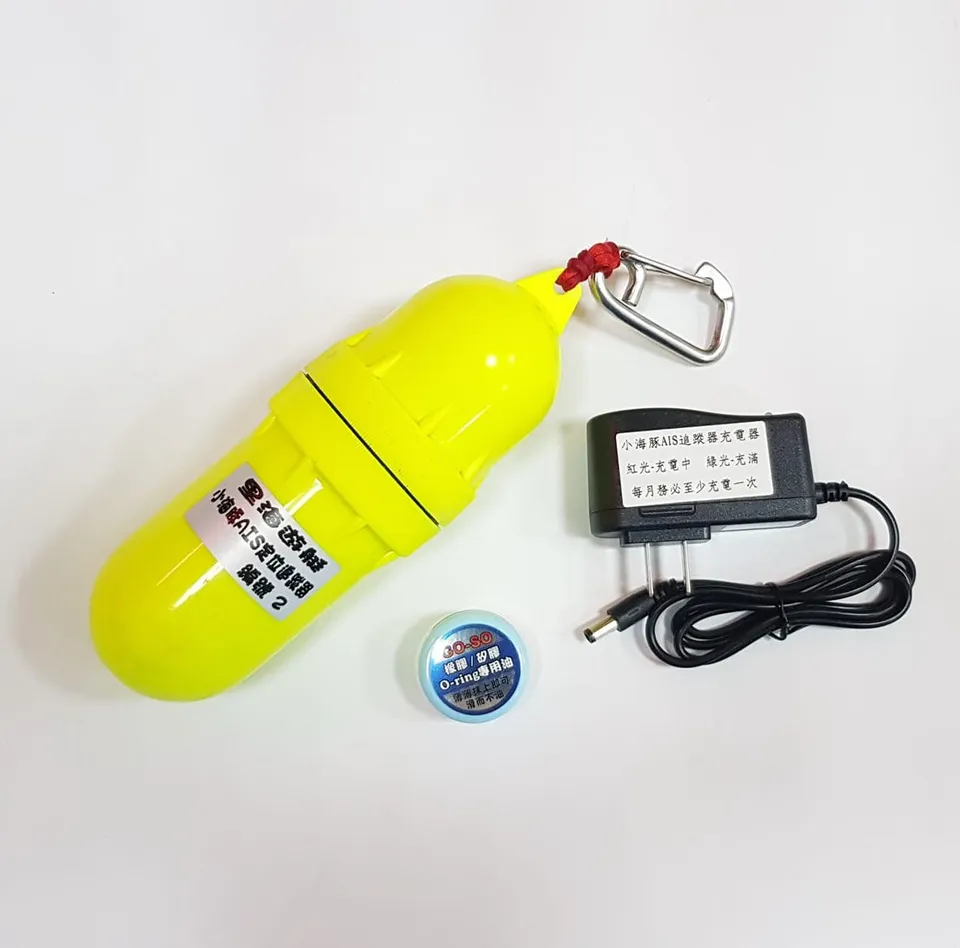
Little Dolphin Tracking Locator
The Little Dolphin was developed by veteran diving coach Huosai (活塞教練) — a true pioneer of Taiwan's diving community — drawing on his many years of hands-on experience in water search and rescue. It is an improved product based on the AIS (Automatic Identification System) transmission protocol. AIS is an automatic tracking system primarily installed on vessels; once the device receives positioning information via satellite, it can share the vessel's location, heading, speed, and bearing with nearby ships and maritime authorities via the AIS protocol.
The key feature of the Little Dolphin Tracking Edition is that the moment you surface, the receiver onboard the boat can begin tracking your position — you effectively become a small dot on the radar of all nearby vessels and maritime authorities. The manufacturer has also developed the Little Dolphin Rescue Edition, whose functionality is similar to the Nautilus Lifeline: when you press the distress button, vessels and land-based stations within the AIS signal reception range will receive the distress signal.
However, AIS has one blind spot: not all foreign vessels are equipped with an AIS receiver — for example, the Philippine outrigger boats (bangka) that many divers are familiar with — or those vessels may use other signalling tools. In such cases, the Little Dolphin would have no effect.
AIS transmission range is affected by weather, wave height, and even the curvature of the Earth. At very long distances, the signal may still fail to reach its destination. Therefore, never assume that holding an AIS distress device means you are 100% safe — always layer your safety precautions when diving!
Setup cost: NT$3,900
Pros: Easy to use. With the Little Dolphin Tracking Edition, the boat receives the signal the moment the diver surfaces — no need to trigger a distress call to be located. Commercial vessels in Taiwan are required by regulation to have AIS installed, so it can theoretically be used immediately upon boarding.
Cons: With the Little Dolphin Tracking Edition, you appear as a small dot on the vessel's navigation display — when you are actually swept away, others won't know an accident is occurring. Foreign vessels may not have AIS systems.
Best for: Individual divers who can purchase the Little Dolphin Tracking Edition and communicate with the boat crew before entering the water about the code that will appear on their navigation display. Dive shops can equip their dive guides with one to monitor the team's exit positions.
Nautilus Lifeline GPS
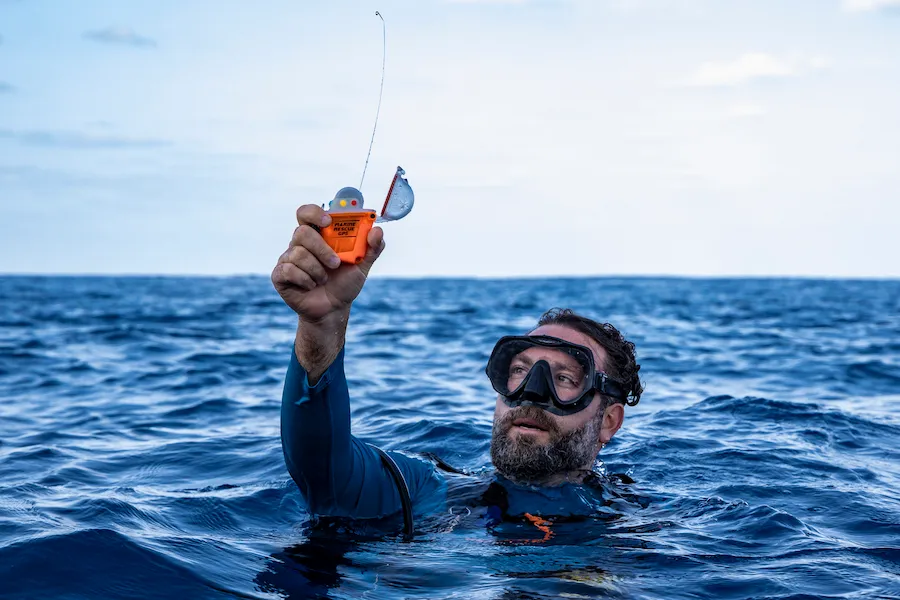
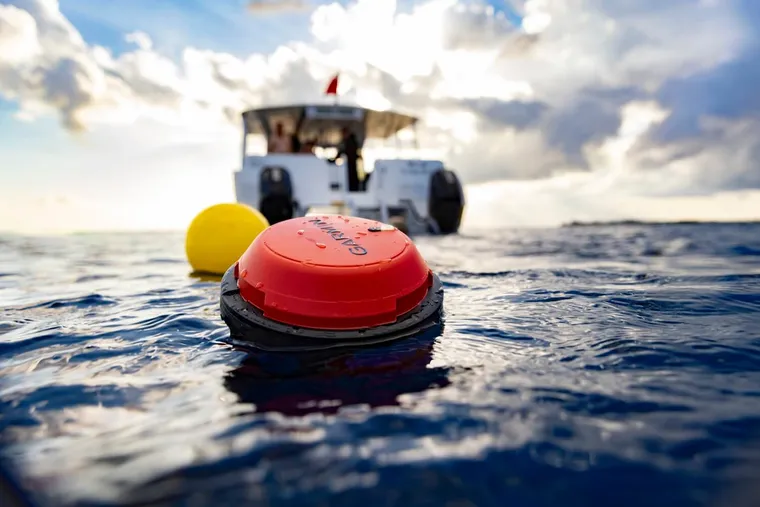
Nautilus Lifeline GPS in use (image source: official website)
Like the Little Dolphin, the Nautilus Lifeline also transmits via the AIS protocol. It has a considerable reputation in Taiwan, and multiple divers have been rescued thanks to it — a track record with real-world proof. (Line Today: AIS Nautilus — Not a Shellfish, But a Life-Saving Distress Device) However, some users have not operated it correctly: at best this results in the device taking on water and being damaged; at worst, accidental activation of the distress alert wastes national search-and-rescue resources.
Both the Nautilus Lifeline and the Little Dolphin Rescue Edition are intended strictly for emergency use. Boat operators should communicate with divers in advance: do not activate these devices while still within visual range of the vessel, because once you press the switch, the vessel's navigation display and rescue units across the country will receive the distress signal and initiate a search-and-rescue operation. In the past, there have been cases where a diver activated the Nautilus for testing while still on the boat, causing the Coast Guard to mobilise a rescue — a very costly false alarm.
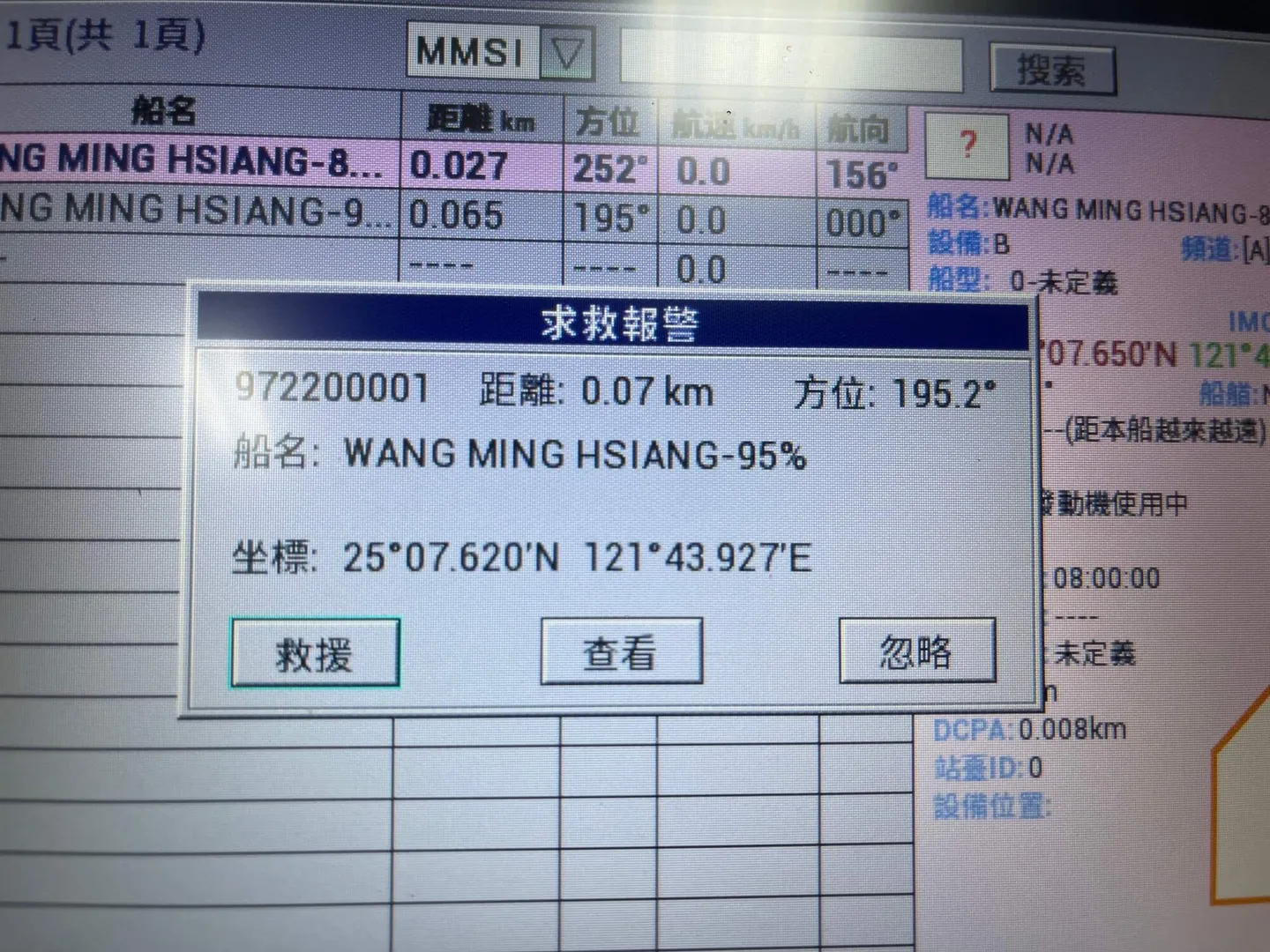
Once the Nautilus or Little Dolphin Rescue Edition is activated, a distress signal appears on vessel AIS receivers and land-based stations
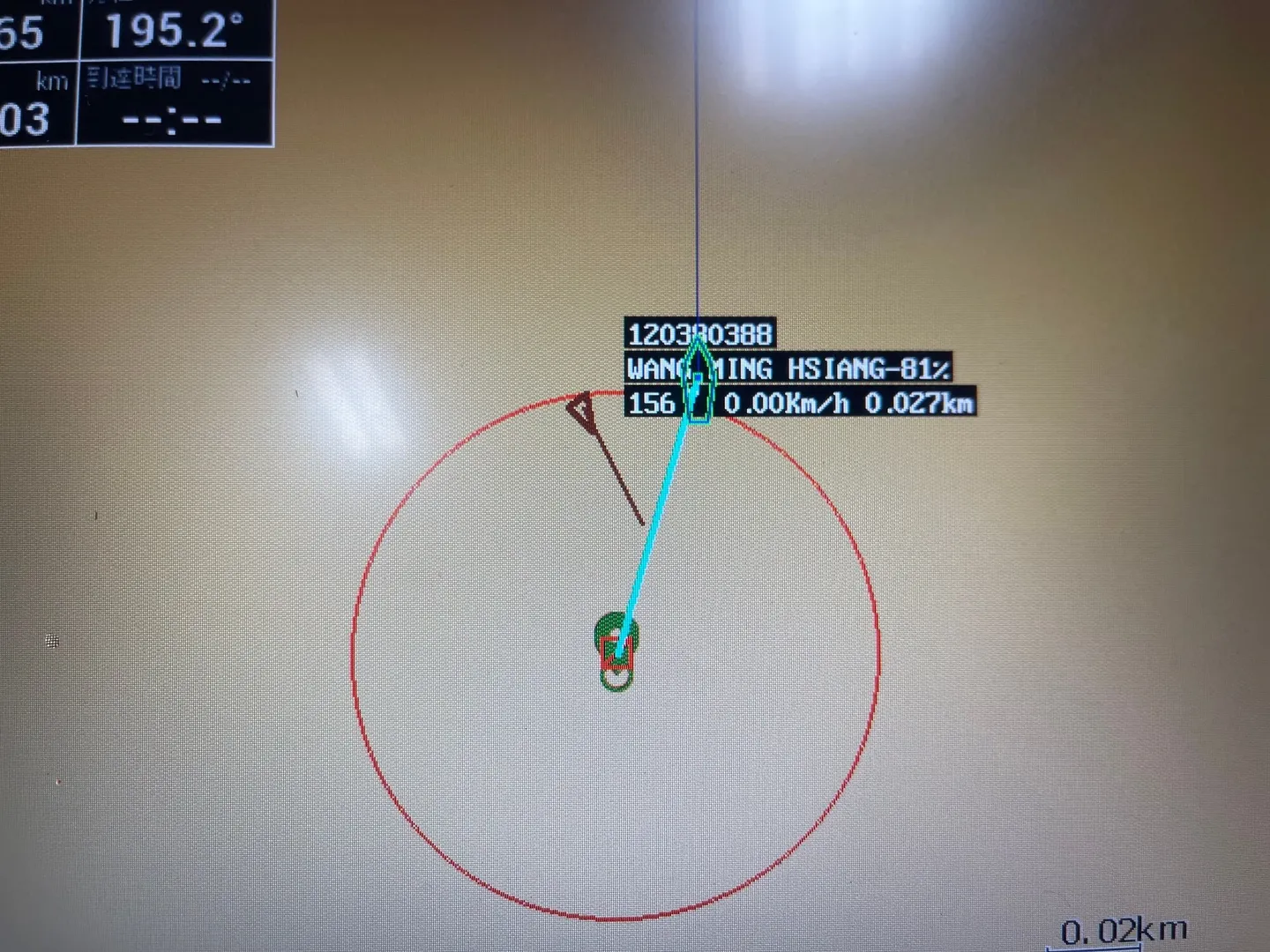
Once a vessel accepts a rescue mission, the AIS system displays the location of the unit being rescued and the rescue route
Just like the Little Dolphin — which also uses the AIS protocol — the Nautilus Lifeline faces the same blind spot: if a foreign vessel is not equipped with an AIS receiver, or if it uses other signalling tools, the Nautilus will have no effect.
Setup cost: NT$6,200 (reference price from Scuba Warehouse official website)
Pros: Commercial vessels all carry AIS, so the barrier to adoption is low; the device is easy to use.
Cons: The housing is prone to water ingress — according to dive shops that have adopted it, the annual damage rate is approximately 20%. Foreign vessels may not have AIS systems. Accidental activation is common; some users trigger the distress function while the boat is still clearly in sight, causing national rescue units to initiate a search-and-rescue operation.
Best for: Individual members of the public who can purchase one and activate the distress signal if they are unfortunately swept away.
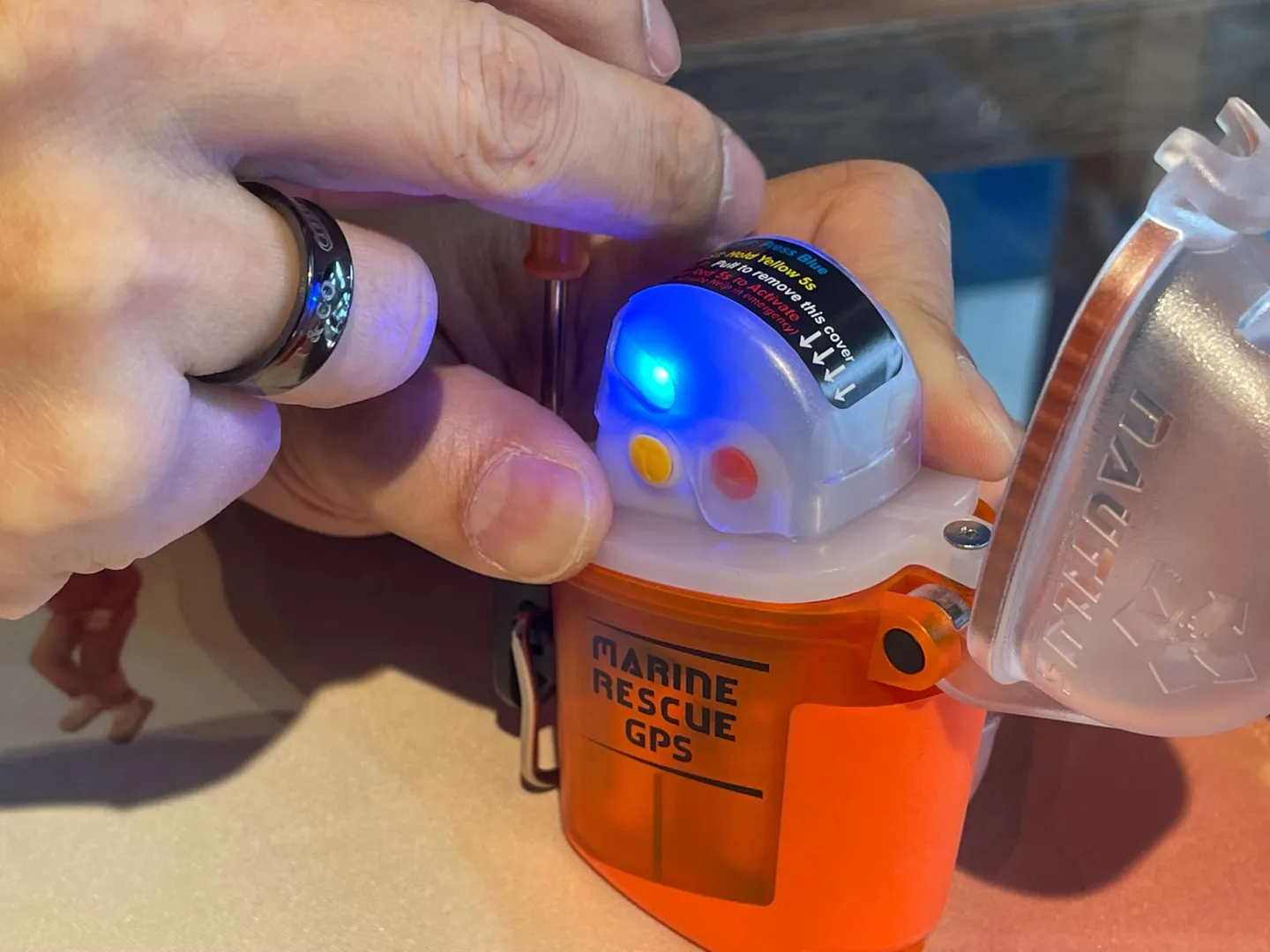
Bonus Tip: How to Prevent the Nautilus from Taking on Water
- The Nautilus O-ring does not require "breaking in," but still check for debris or salt residue and clean it regularly
- When loosening or tightening the screws, alternate between the two sides to distribute force evenly across both screws
- When tightening the screws, do not force them — tighten only until you feel resistance, then gently turn a little further
Garmin inReach
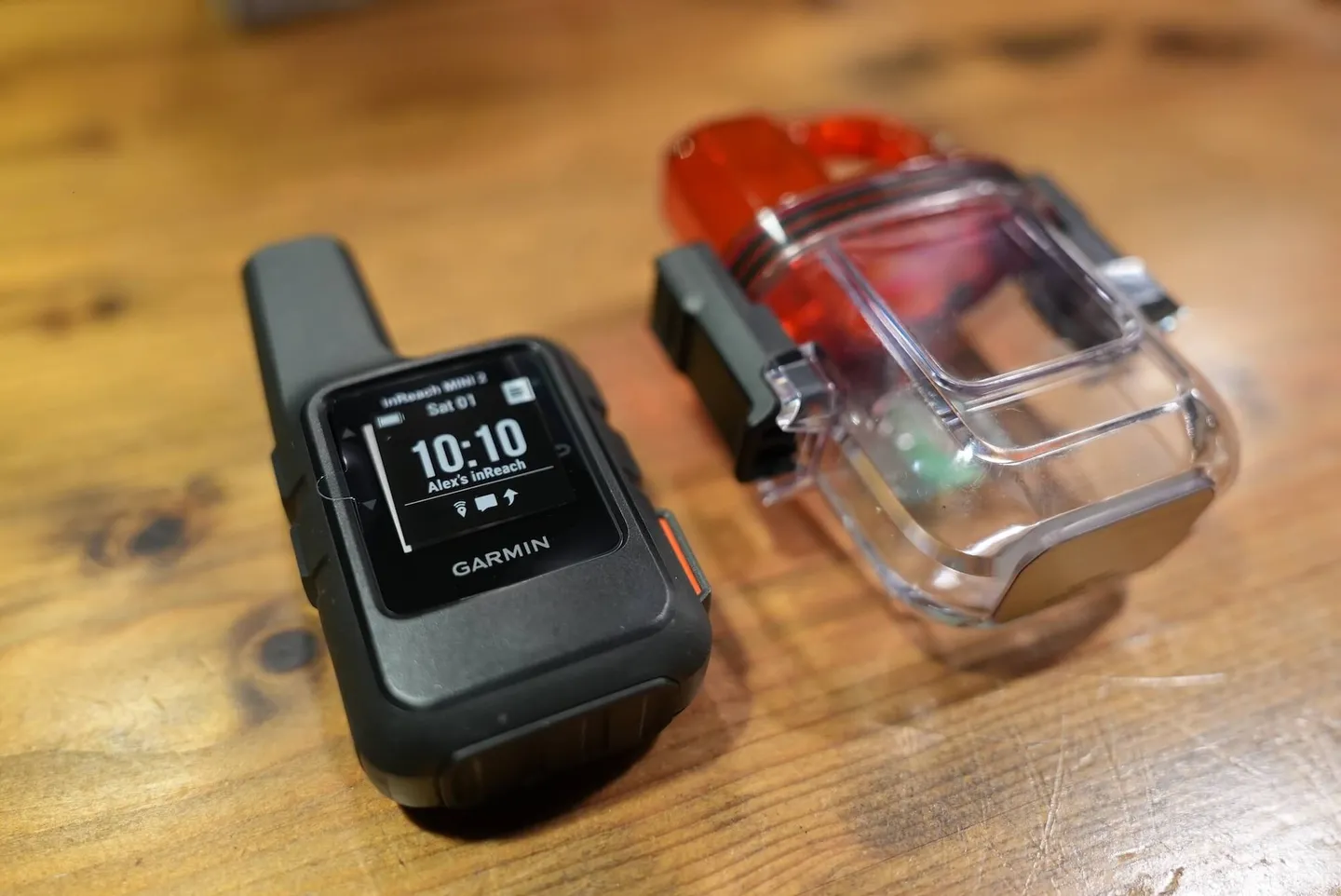
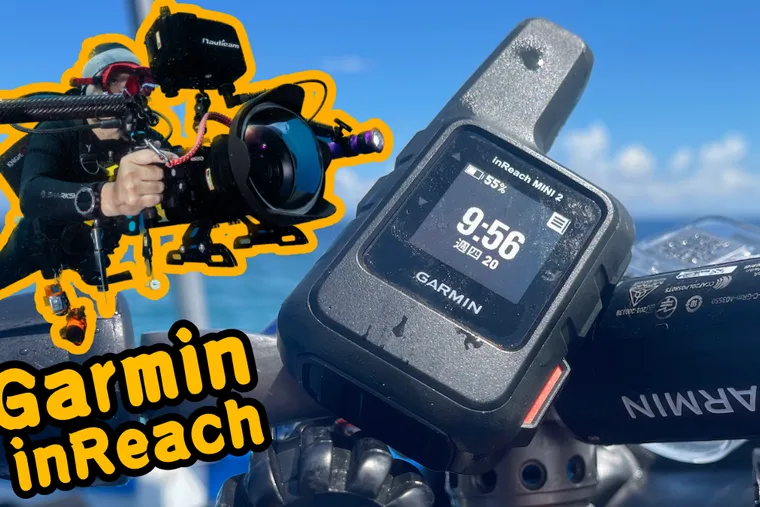
Garmin inReach and underwater housing
The Garmin inReach uses the Iridium satellite network — which provides 100% global coverage — to send distress signals via satellite communication. When you press the SOS button in an outdoor environment, the distress signal is transmitted via satellite to Garmin's 24/7 International Emergency Response Coordination Centre (Garmin Response).
The centre will first attempt to contact you using the contact method you set up in advance, to confirm your safety. If contact cannot be established, it will simultaneously notify your designated emergency contacts; and if a genuine distress event is confirmed, it will immediately contact the local search-and-rescue unit where the signal originated to initiate rescue procedures.
According to a Garmin engineer's account, when they accidentally triggered the SOS button, they received a call from the International Emergency Response Coordination Centre in approximately 5 minutes.
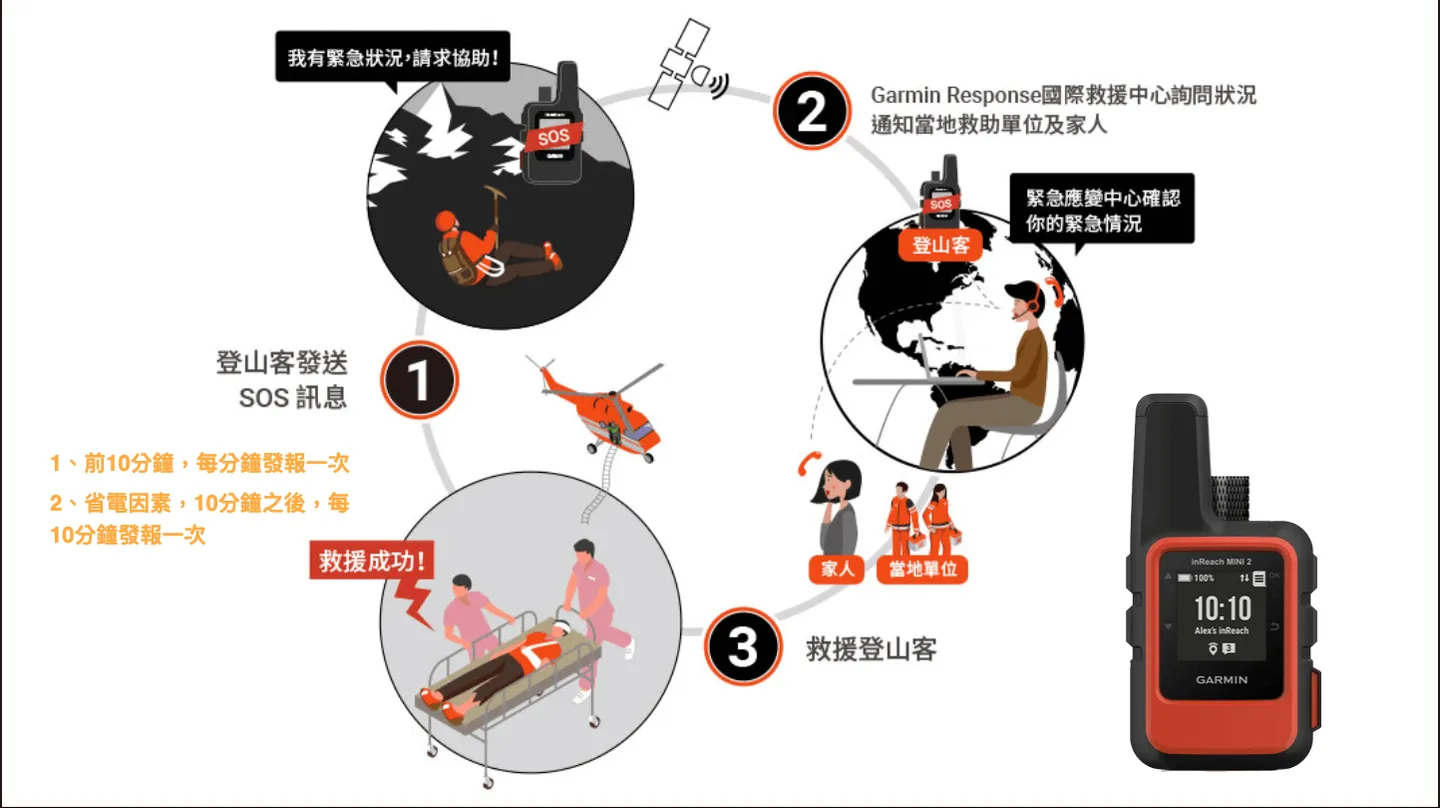
The Garmin Response search-and-rescue procedure
In addition to SOS distress signalling with no dead zones worldwide, you can also send messages via the Garmin inReach. You can pre-set canned messages, or even send key information directly to your contacts. According to the most recent Garmin Response report on a diving-related rescue event, in late May 2022 a dive boat near the Galápagos Islands struck an uncharted reef; the distress caller managed to find the Garmin inReach before the vessel sank and activated a rescue. Throughout the ordeal, the caller continued to exchange messages with the emergency services station via the Garmin inReach, sharing critical information — such as the number of people needing rescue and the location of a potentially safe area nearby.
During the drift, the caller also stayed in continuous contact with his wife, who was back in Florida, USA. Reflecting on the experience afterwards, he said:
"If I hadn't been able to communicate with my wife that night, it would have been a terrifying ordeal. That was truly priceless."
But every product has its pros and cons. The purchase cost of the Garmin inReach is higher than the other devices, and since using satellite services requires additional registration and a subscription plan, that represents an ongoing expense. However, since divers tend to use relatively little data, the current rate listed on the official website — the Standard Personal / Safety Plan (SAFETY) — should be sufficient.
Furthermore, Taiwan's satellite regulations are relatively strict. Currently there are no friendly enough provisions to allow companies to offer rental services, and every device must be registered under an individual's name. This is an area where the NCC would need to relax its rules to encourage wider adoption.
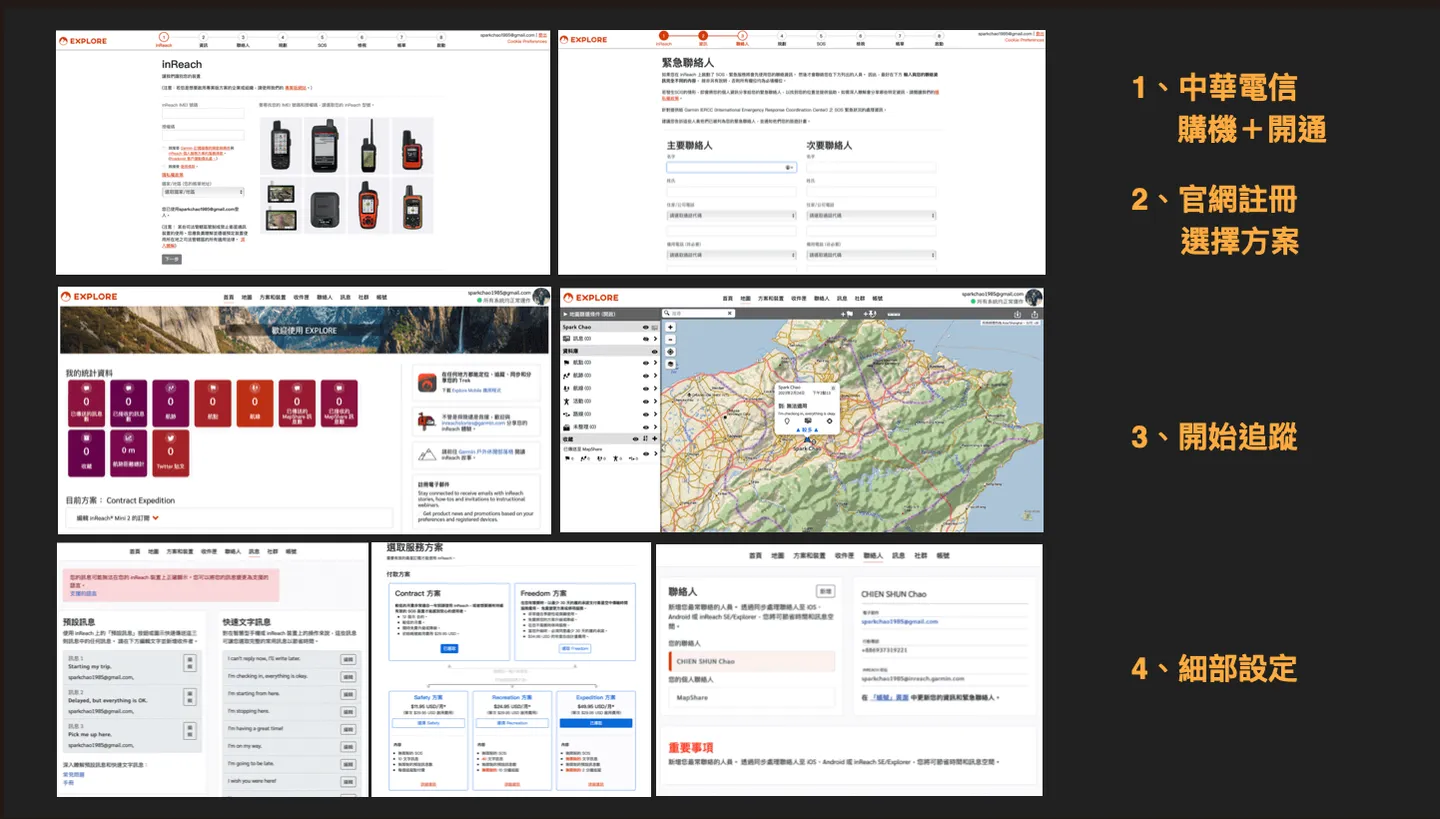
The Garmin inReach must be set up in advance to enjoy the full rescue service
Setup cost: NT$12,990 (as published by Chunghwa Telecom)
Pros: Compact device. Usable worldwide (excluding North Korea, China, India, Russia, Iran, Thailand, Vietnam, etc.). Active distress signalling increases the probability of a successful rescue. Messaging capability lets you share rescue information and reassure family members.
Cons: Higher purchase cost; requires a monthly subscription fee. Currently not available through Taiwanese dive retail channels — must be purchased via Chunghwa Telecom or the Garmin official website.
Best for: Divers planning dives at higher-risk sites, frequent overseas divers, and divers who want to maximise their ability to actively call for rescue.
Conclusion:
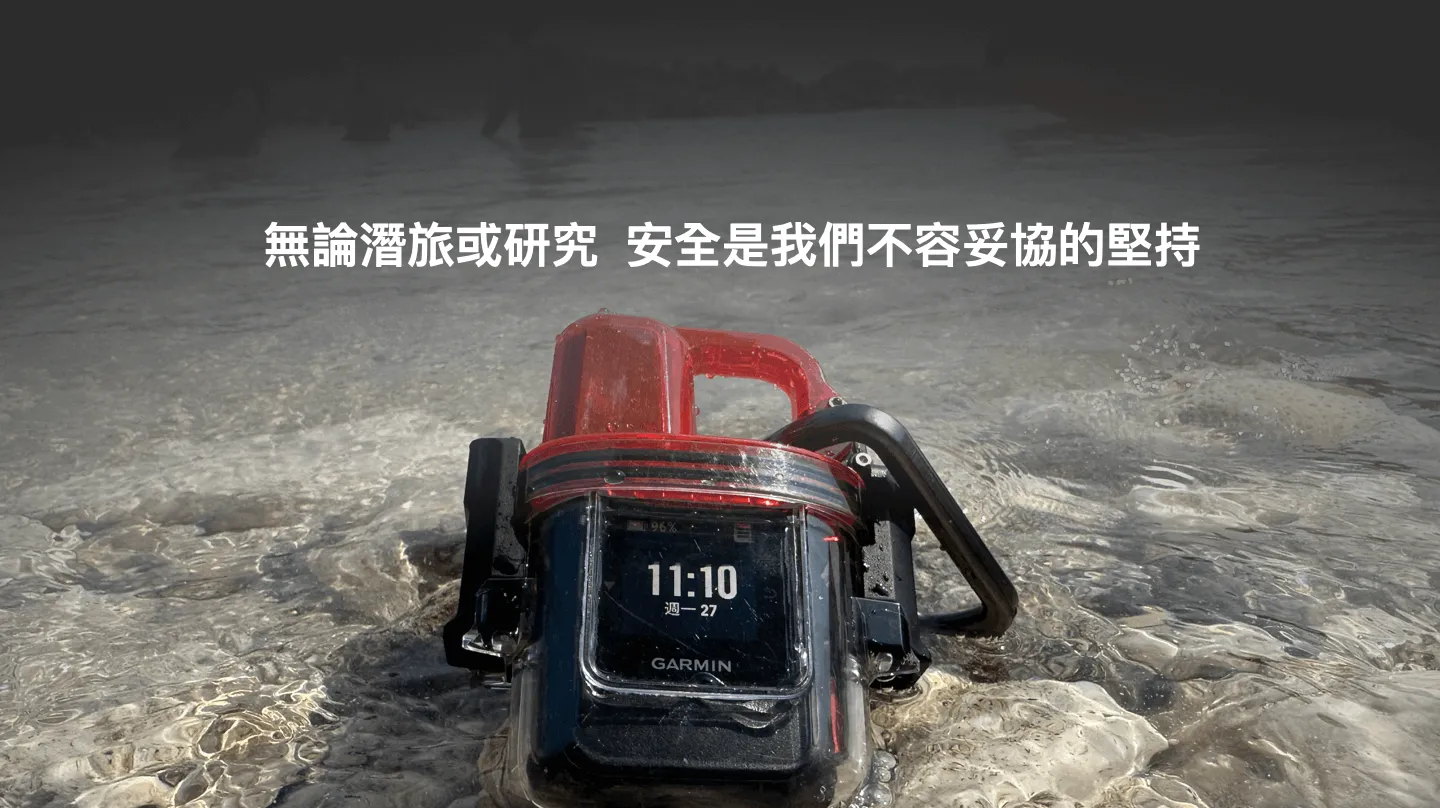
Getting home safely is the one thing every water-activity participant can never compromise on
This article has introduced four of the more common water-activity distress signalling devices available in Taiwan. Every product has its own characteristics, and users should fully understand those characteristics before purchasing and using one — otherwise you spend the money but the device fails you at the critical moment it's needed most. That would be a genuine shame.
There is also one key point that must never be forgotten: throughout this article, when describing each distress device, the words surface were always emphasised. No matter which device you use, you must surface before you have any chance of sending a distress signal. So when an accident occurs, stay calm on the surface, take out your distress signalling device, and follow the instructions to call for help correctly! Dive safe, everyone!
The following conclusions are the Editor's usage recommendations based on personal diving habits and limited experience. Experienced divers are very welcome to share their valuable insights.
- If you are a boat operator: The Poseidon System, Little Dolphin, and Nautilus Lifeline are all suitable — choose based on the specific scenario. If your vessel already has AIS, the Little Dolphin and Nautilus can be integrated directly.
- If you are a casual diver: The Nautilus Lifeline and Little Dolphin Rescue Edition are good options — but stay close to your dive guide, and if something goes wrong, follow the correct procedure to call for help.
- If you are an intermediate diver: Use the Little Dolphin Tracking Edition together with the Nautilus Lifeline. On the surface, the Little Dolphin Tracking Edition helps the boat see you; activating the Nautilus lets the rescue team see you.
- If you are an advanced/heavy diver: Take any of the above options and add a Garmin inReach, enabling active distress signalling so you can explore secret dive sites worldwide with complete peace of mind.
Finally, one more reminder worth repeating: "Maintaining your safety equipment regularly is essential — don't skimp on O-rings and battery replacements."
Related links:
- Poseidon System Official Website
- Little Dolphin Official Facebook Page
- Nautilus Lifeline Official Website
- Garmin inReach Official Website
- Diving the Maldives on a Liveaboard — A Beginner's Complete Guide to Big Animals and a Home-Away-from-Home Feel
- Encountering Currents While Diving! Caught in a Washing Machine Current, Downwelling, or 3-Knot Flow — What Should You Do? 6 Diving Safety Points You Must Know