Contents(5)
On summer nights, I am Peggy, one of the sea turtle beach patrol volunteers with the Taiwan Lookoo Association (社團法人台灣咾咕嶼協會). I stroll along the various beaches of Xiaoliuqiu, giving brief educational talks to tourists I encounter — reminding them not to use white lights on the beach — and, more importantly, recording all kinds of data when a mother sea turtle comes ashore to lay her eggs. The vast majority of sea turtles we encounter on Xiaoliuqiu are Green Sea Turtles.
Sea turtles have a natural instinct to return to the place where they were born to lay their eggs. They take more than 20 years to reach sexual maturity, and the mother turtles that come to Xiaoliuqiu to nest may have traveled from Penghu, the Philippines, Orchid Island, or Okinawa — journeys of hundreds of kilometers.
Sea Turtle Nesting: A Random Performance by Nature
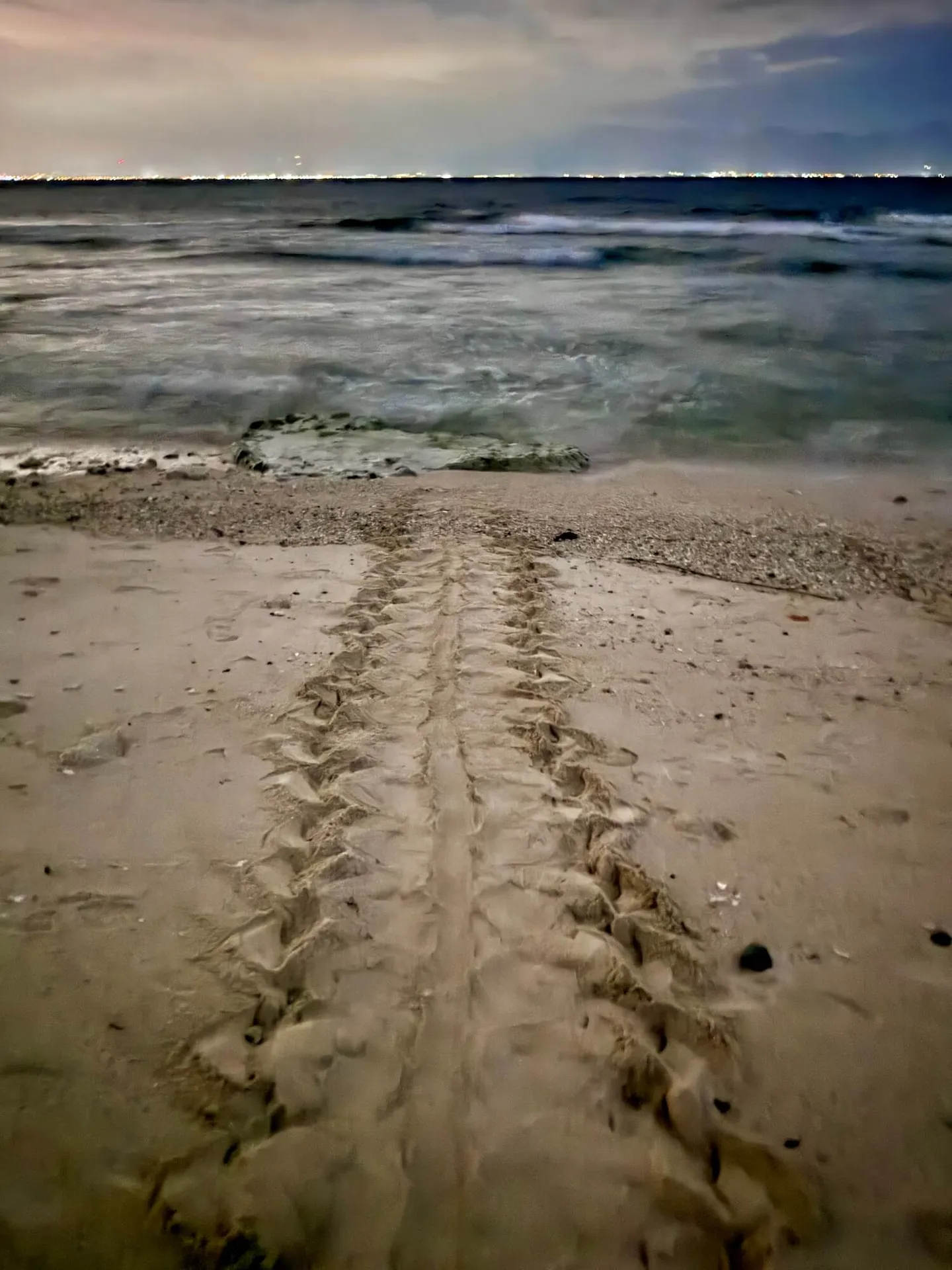
The crawl tracks left by a nesting sea turtle — every nesting attempt is an exhausting challenge for them. photo credits 社團法人台灣咾咕嶼協會 海龜志工 Peggy
Green Sea Turtles come ashore to nest on average every 2 to 4 years. During a nesting season, a mother turtle can lay one clutch of eggs roughly every 10–18 days, producing up to 7–8 clutches in a single year, with an average of 60–130 eggs per clutch. As plentiful as that sounds, the reality is quite different. Sea turtle eggs take approximately 55 days to hatch, and unlike chicken eggs, turtle eggs have soft shells — before the embryos have fully developed, they can be pierced and eaten by snakes.
Successful hatching is very much a matter of luck. Not every egg successfully develops and hatches. According to hatching rate data compiled by Taiwan Lookoo Association volunteers, clutch success rates have ranged from a high of 99% all the way down to 0% due to natural disasters or extreme heat from climate change. And even after hatching, baby sea turtles face all manner of predators before they even reach the ocean — crabs, seabirds, and more — and once in the water, countless marine life can swallow those tiny, soft little hatchlings. From egg to adulthood, a sea turtle's survival rate is just 1 in 1,000.
From egg to adulthood, a sea turtle's survival rate is just 1 in 1,000.
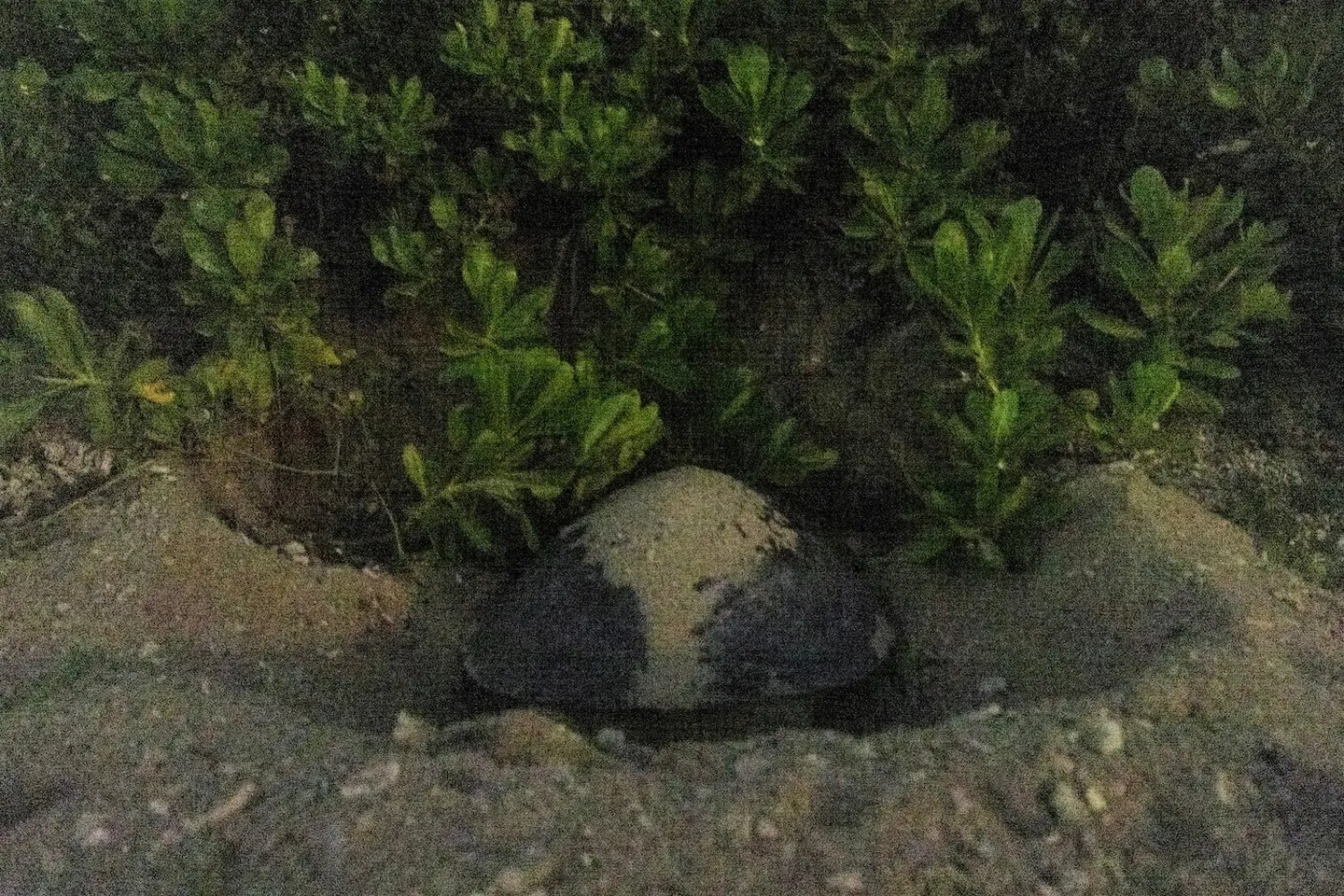
A sea turtle must continually search for a suitable nesting spot. photo credits 社團法人台灣咾咕嶼協會 海龜志工 Peggy
When a sea turtle comes ashore to nest, her first step is to find a spot and begin excavating a large pit with her front flippers, burying herself inside. Next, she uses her rear flippers to dig a smaller, 60–80 cm deep chamber — the actual egg chamber.
Once finished, she begins laying her eggs, then uses her rear flippers to knead the sand and fill in the small chamber, before using her front flippers to spread sand over a wide area. After completing the entire process, she returns to the sea. The whole nesting process takes at least around 2 hours and often much longer — finding a suitable spot alone can take a considerable amount of time. The nest site is usually located well above the tideline to prevent waves from washing the eggs into the sea; it is often found at the boundary between sand and coastal vegetation.
A spot with shrub cover providing shade is an excellent choice, because a sea turtle's sex is determined by the sand temperature around the nest: above 28°C produces males, above 30.3°C produces females, and anything in between results in a random mix.


2024: The Nesting Story of a Sea Turtle Named Liàngliang
The overwhelming majority of sea turtles we encounter on Xiaoliuqiu are Green Sea Turtles, and they almost always come ashore at night. One turtle, however, made her very first landing in the still-bright afternoon — just after 5 p.m. — earning herself the nickname "Liàngliang" (亮亮, meaning "bright").
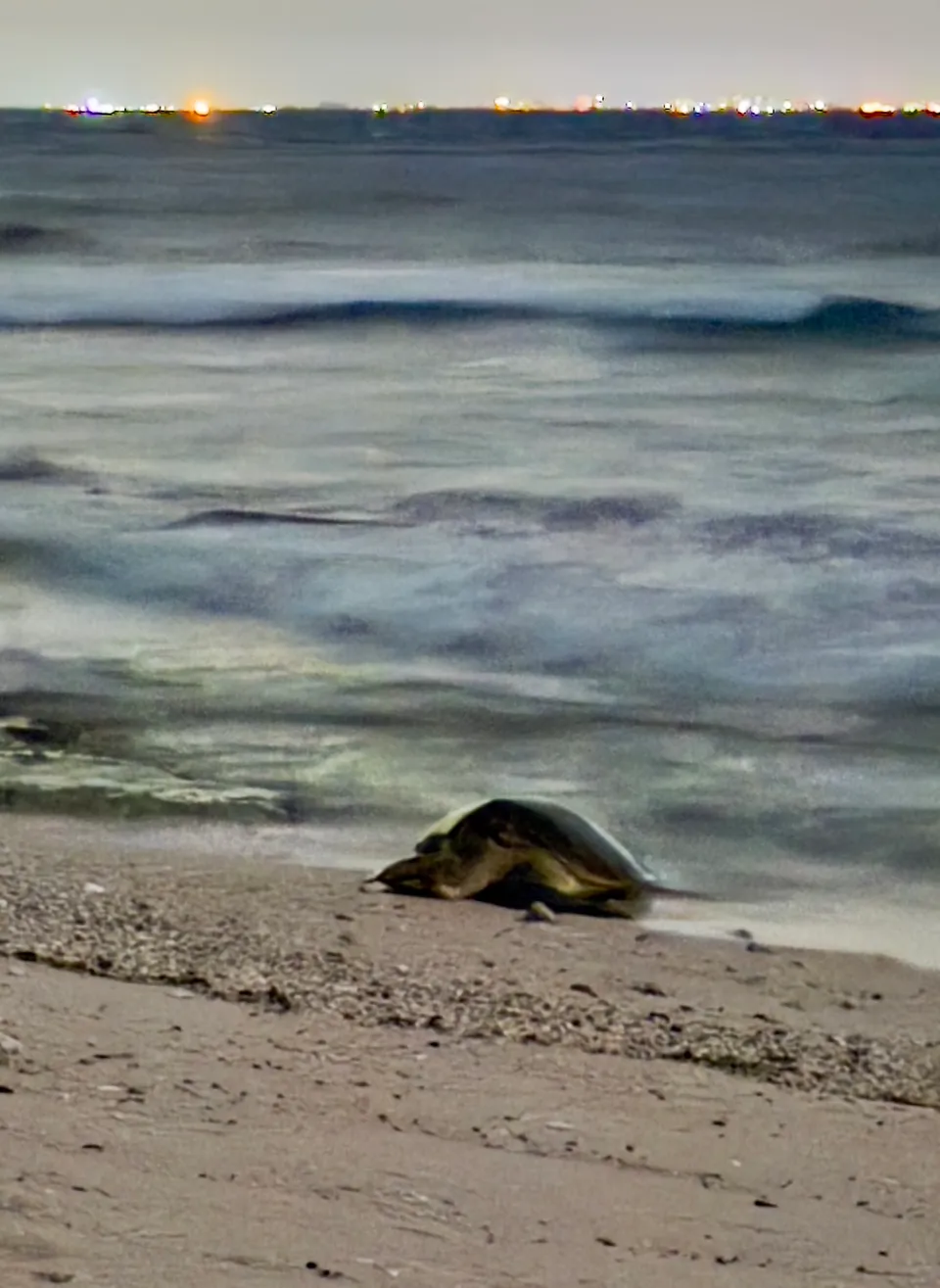
The nesting record of Liàngliang, a sea turtle documented on Xiaoliuqiu in 2024. photo credits 社團法人台灣咾咕嶼協會 海龜志工 Peggy
That evening, just after 7 p.m., we spotted her crawl tracks — meaning she had already come ashore but had abandoned the attempt without laying eggs and returned to the sea. Mother turtles coming ashore to nest often can't succeed on their first try. She might be digging away only to hit a large rock, a tree root, or debris blocking her; or she simply doesn't like the spot, moves on to try somewhere else, gets tired, gives up, and heads back into the water — only to come ashore again a little while later.
Liàngliang was exactly that kind of turtle: quick to give up at the slightest obstacle, yet incredibly persistent about coming back to try again — sometimes coming ashore 3 to 4 times in a single night. During four consecutive nights of beach patrol, I encountered her on three of them. Other volunteers told me she had been coming ashore repeatedly for nearly a week before I arrived, also without success. On the three nights I saw her, she didn't succeed either, and it was only a few days later that she finally managed to lay her clutch of eggs.
It was truly a hard-won achievement. After all of Liàngliang's painstaking searching and selecting, Typhoon Gaemi arrived just a few days later — dramatically increasing the difficulty of the eggs hatching. We can only hope that all the nests on the beach come through safely!
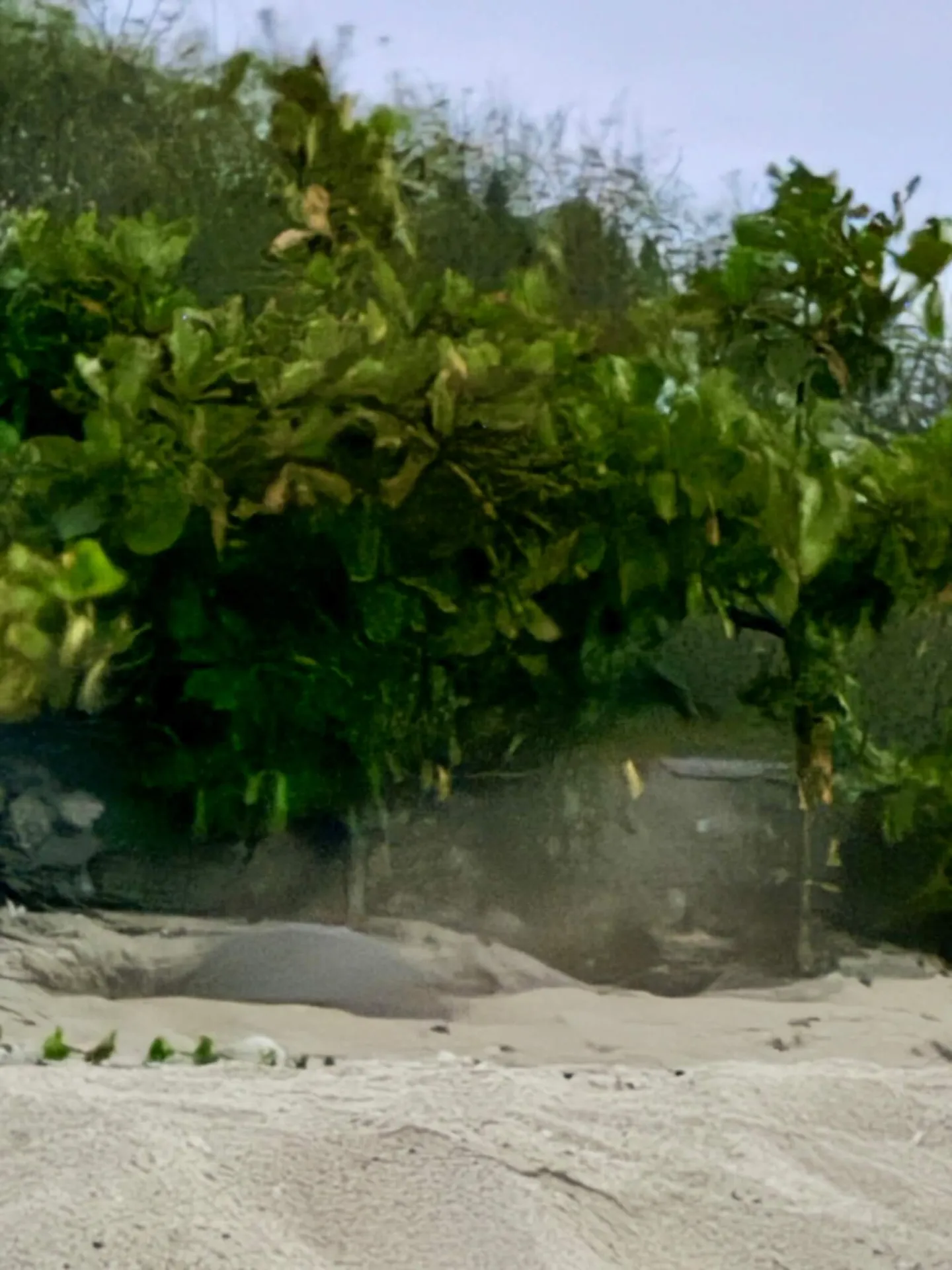
The moment Liàngliang flung sand out of her large pit as she dug. photo credits 社團法人台灣咾咕嶼協會 海龜志工 Peggy
During those nights, whenever I could see the large boulders inside the pit that had thwarted Liàngliang, I so badly wanted to help her dig the egg chamber. But in practice, all we can do is stay far away and avoid disturbing the turtles at all. When she comes ashore, we have to "become a rock" — always mindful of which way her head is turned, staying in her blind spot at the relatively lower side, making sure she never catches sight of us. It's a bit like an elaborate game of hide-and-seek.
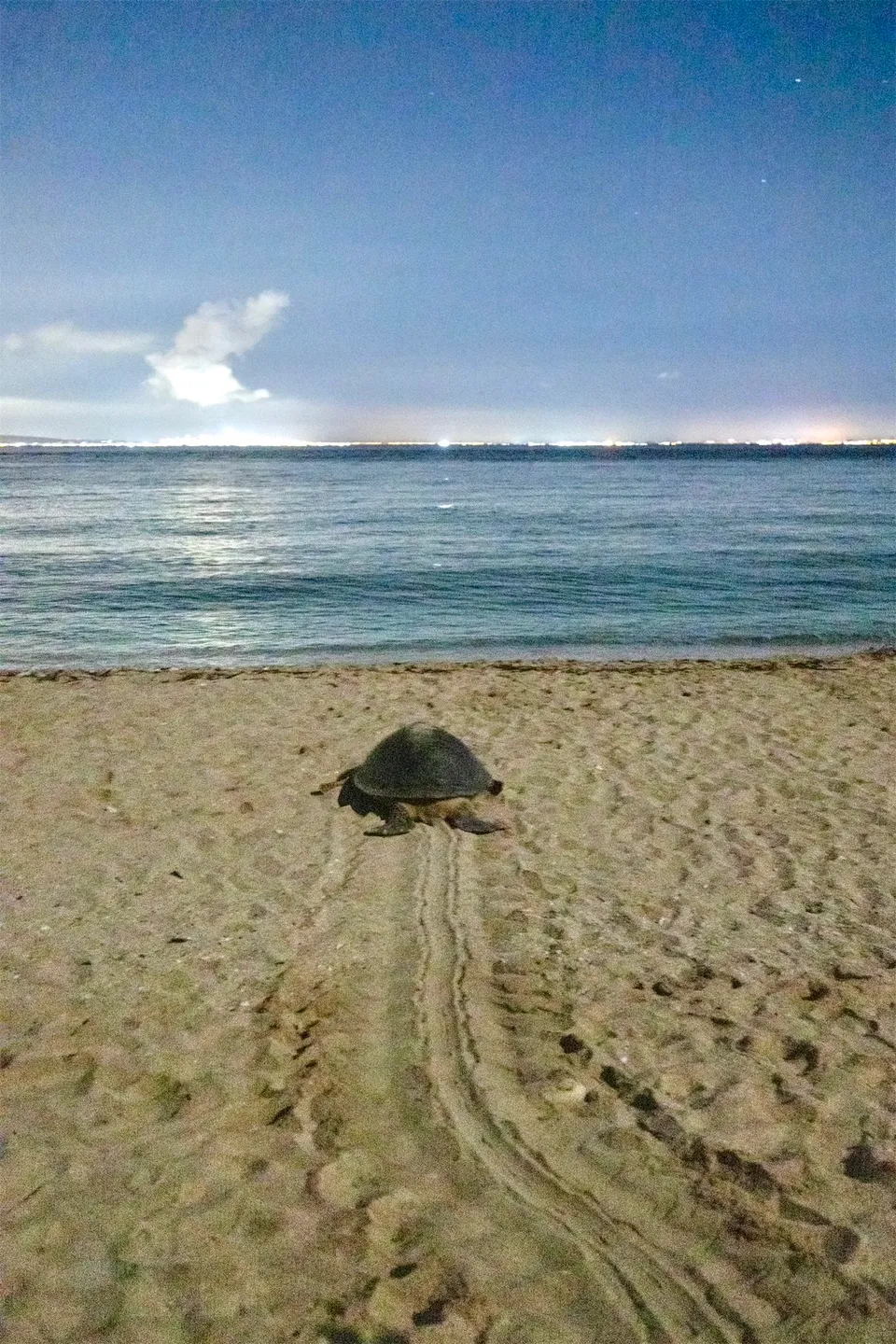
Her mission accomplished, Liàngliang finally heads back into the water to prepare for her next nesting cycle. photo credits 社團法人台灣咾咕嶼協會 海龜志工 Peggy
So What Can We Humans Do?
- Minimize visits to the beach at night.
- Never use white lights or flash photography on the beach.
- If lighting is absolutely necessary, use red light.
- If you happen to encounter a sea turtle, stop moving immediately — become a rock.
- Pick up any litter you see on the beach; you just might spare a baby sea turtle from having to climb over one more obstacle.
- Reduce single-use waste by bringing your own water bottle and utensils. Small islands have no capacity to process large volumes of garbage — trash piled at disposal sites can be blown straight into the ocean by a gust of wind.
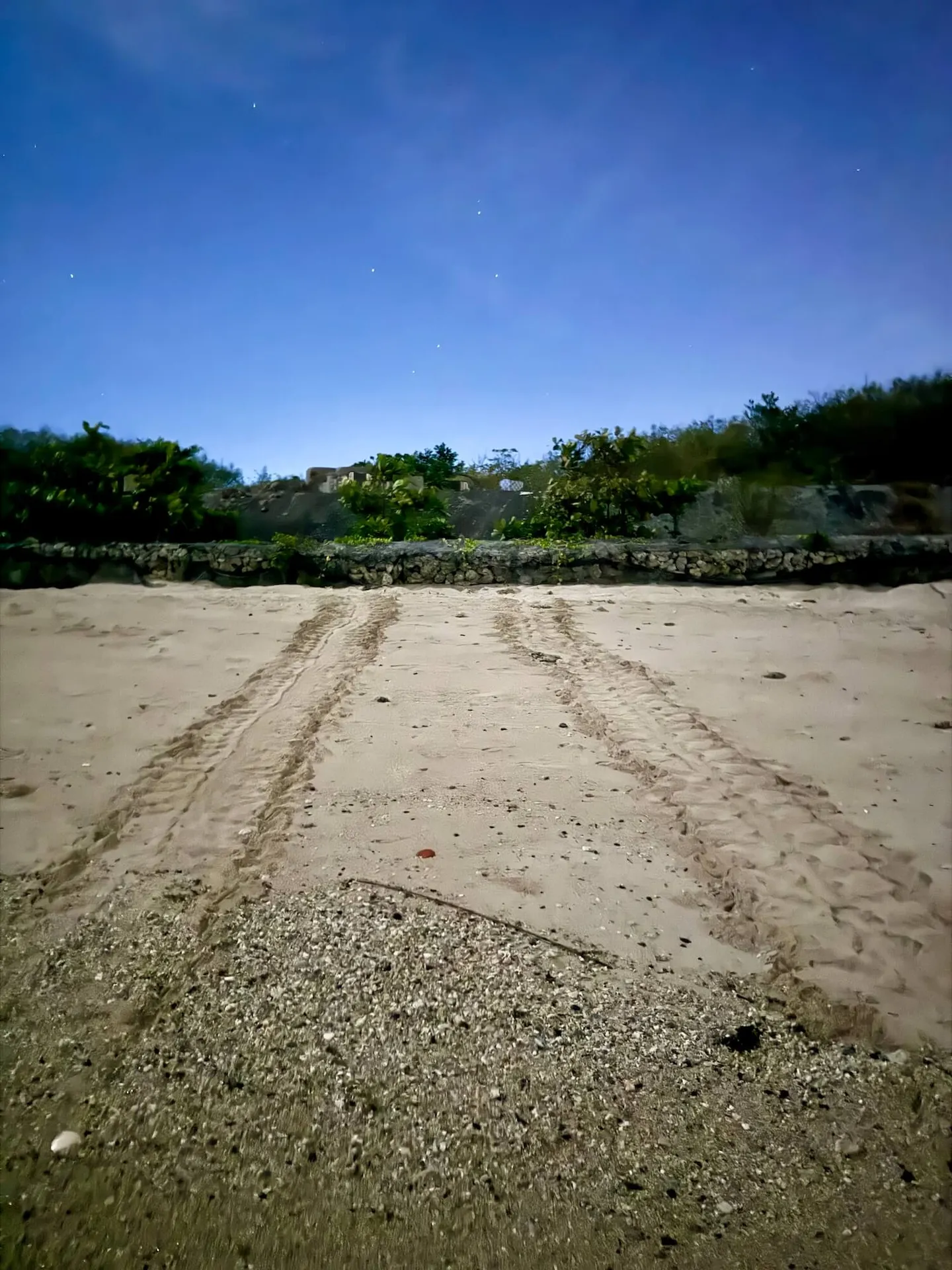
Let's work together to protect the nesting beaches that sea turtles return home to. photo credits 社團法人台灣咾咕嶼協會 海龜志工 Peggy
Related Links
Further Reading