Contents(10)
- Quality Determines Price — A Law That Has Never Changed
- Let's Use Oyster Vermicelli as an Analogy for Learning to Dive!
- Take a Closer Look — Has the Discounted Vermicelli Gotten Thinner?
- (1) What Is a Reasonable Course Fee?
- (2) Choose a Location Close to Where You Live
- (3) Don't Restrict Yourself to a Fixed Course Timeline
- (4) Class Size
- (5) Qualifications of Teaching Assistants
- (6) Whether Ongoing Support Is Available
- (7) Logistical Equipment Support
Quality Determines Price — A Law That Has Never Changed
Scuba diving is a service, and it is a product. It is not a non-profit organization or some mysterious religion. Many instructors and dive shops depend on the diving industry for their livelihood. If diving is a product, ordinary business logic applies — but if we were to invoke economic theories from the Editor's university major, such as supply and demand, marginal utility... blah blah blah, most people's eyes would glaze over before long.


Let's Use Oyster Vermicelli as an Analogy for Learning to Dive!
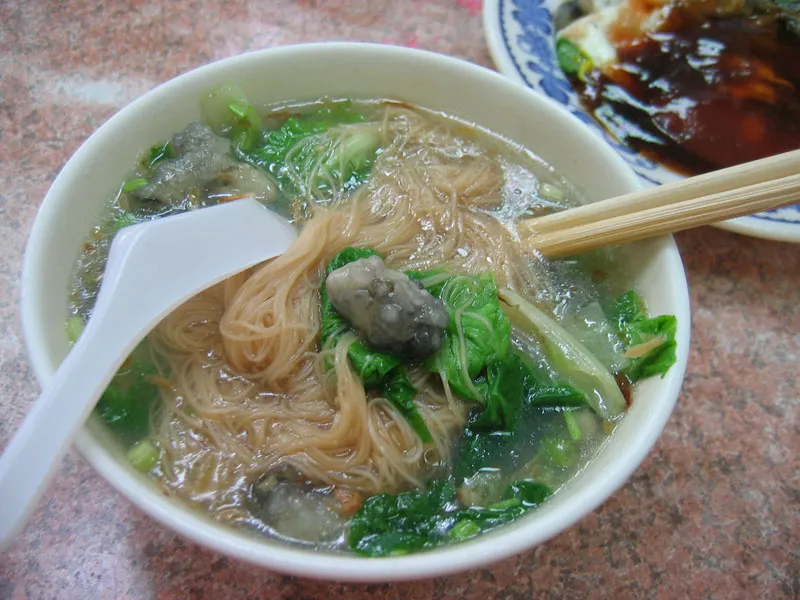
Image used under CC License: Wikipedia
Take that humble street food — oyster vermicelli — as an example. NT$25 might get you a plain bowl of vermicelli; NT$45 might get you a bowl with intestines and oysters, yet they're all still called vermicelli. The same intestine-and-oyster vermicelli can range from NT$45 to NT$60, with differences in toppings and flavor — but you can't possibly expect lobster and abalone in a NT$60 bowl.
The other key point is "value vs. quality." If a customer simply needs to fill their stomach, spending NT$50 on two bowls of plain vermicelli is a great deal. But if you're chasing flavor, perhaps an NT$80 bowl will give your taste buds a richer experience. Of course, whether it tastes good is something you can only know after eating it — before that, doing a little research and going by other customers' word-of-mouth reviews is the way to choose. But in recent years, Taiwanese consumers have become overly obsessed with high cost-performance ratios, and this has quietly strangled many industries that work hard to provide quality service.
Will vermicelli shops lower their prices? If they want to maintain the same quality of ingredients, the only thing they can cut is their profit margin. The ever-popular "Brand X Vermicelli" shops won't drop their prices; only struggling hole-in-the-wall places might use discounts to lure customers — but are they cutting ingredients or profit? If it's profit, they need far more customers just to break even. Even doubling foot traffic might only maintain the original income, and whether there's enough seating or capacity to handle that volume is a whole other problem.
Take a Closer Look — Has the Discounted Vermicelli Gotten Thinner?
All this talk of vermicelli has made us hungry, but what does any of this have to do with choosing a diving course?! Beginners facing this decision don't fully understand what's in a course, so word-of-mouth from those who have gone before is naturally the best reference — but there are also a few factors worth considering.
The suggestions below are not absolute rights or wrongs. They are simply insights the Editor has gathered over a modest diving career, through conversations with many veterans and dive shops. Many instructors and shops provide intangible services that can't be summed up in a short article — for example, an instructor thoughtfully offering hot tea or a towel after getting out of the water, or giving a student a nudibranch charm on their birthday. These are unquantifiable hidden services! So before deciding on an instructor or dive shop, take some time to do your research online or ask friends for recommendations — that's the essential homework for finding the learning style that suits you best!
(1) What Is a Reasonable Course Fee?
What a diving course sells is the instructor's teaching experience and content — your tuition fee equals the instructor's value. Why would an instructor with a fully booked schedule ever undersell themselves? While expensive doesn't always mean better, good quality will never fall below market rate — and may well exceed it. After all, a top instructor must invest far more effort to maintain their teaching quality.
(2) Choose a Location Close to Where You Live
Learning to dive is like learning to drive: once you have your license, you still need to practice. You might plan a trip north or south to take a diving course, but you can't possibly make that journey every weekend to keep practicing. And without familiar dive buddies or an instructor nearby, it's all too easy to let diving fall by the wayside without a group to dive with.
That said, if you're going with a group of friends, it can be fun to try learning at an outlying island or overseas — not only to bond with your friends, but also to experience what it's like to get certified somewhere different. Of course, the risks mentioned above still need to be factored in; the Editor knows plenty of people who went abroad to get certified and came back with no local diving community, becoming what you'd call a "diving orphan."
There are always exceptions, though. The "Gap Year" beloved by young people today — a break between jobs or between graduation and employment — offers a chance to travel solo to a foreign place and pursue a personal life goal. If that's your personality type, perhaps this is a perfectly valid alternative path to certification!
(3) Don't Restrict Yourself to a Fixed Course Timeline
Many courses on the market advertise "N-day certification programs." But ocean conditions change daily, and every student learns at a different pace. If things run slightly behind, an instructor with no buffer time has no room to remediate — and it's your right to complete instruction fully that gets sacrificed. There's no such thing as having it both ways. Plan to give yourself more time to learn thoroughly, and don't fall into the trap of thinking that paying the fee guarantees you a certification!
For those who absolutely must get certified within a short window due to work schedules or limited vacation time, let your instructor know in advance so the course can be condensed. You'll also need to put in significantly more effort than other students. Continuing to dive regularly after certification is equally important — after all, your safety underwater is ultimately your own responsibility. A dive guide or instructor should never be your babysitter!
(4) Class Size
One-instructor-to-many-students group classes have the lowest cost, but it's hard to accommodate individual learning differences. Sometimes having to wait for everyone else creates its own psychological pressure. And especially underwater, can one instructor really ensure the safety of all students at once? An instructor only has two hands — unless you're learning from an octopus (just kidding).
One-on-one or one-on-two instruction allows the instructor to pay very close attention to the student's progress, but this arrangement can also create more learning pressure. Group classes, on the other hand, can build a sense of camaraderie through shared struggle. It's worth thinking about which style suits you better.
(5) Qualifications of Teaching Assistants
Teaching assistants are an essential part of the learning process, but according to the standards of diving certification agencies, only a Divemaster or Assistant Instructor is qualified to assist in scuba diving instruction. These individuals have received professional training and are instructor candidates. Some courses, however, simply assign previously graduated students as assistants — and that is a risk worth noting.
(6) Whether Ongoing Support Is Available
The most universally fair thing in the world is that everyone gets 24 hours a day. Most people can only attend classes on weekends. If a private instructor is busy teaching new students, will they have time to take certified students out for follow-up dives? More often than not, the solution is to have certified graduates tag along during tourist dives while the instructor tends to new students — which makes for a less-than-satisfying experience and raises safety concerns. A larger-scale dive shop will typically have more Divemasters or Assistant Instructors available to lead certified students on practice or leisure dives.
That said, many independent instructors are now beginning to offer value-added professional services beyond certification. For example, the well-known Taiwanese dive guide Instructor Lin Music is renowned for providing underwater macro search and photography services. If your reason for learning to dive is to advance your underwater macro photography, then Instructor Lin Music is the one to find.
(7) Logistical Equipment Support
Some instructors may only have a limited set of training equipment, meaning that certified students must purchase their own gear in order to keep diving — no small expense for most people. Ideally, an instructor should be able to provide an adequate supply of quality equipment for certified students to use. That's the truly cost-effective arrangement.
Above are seven reference points to consider. Given that any activity carries risk, prioritize safety first, then choose an instructor or dive shop based on your own needs — one that will guide you step by step. Beginners should listen widely and compare carefully to find the instructor or shop that suits them best.
Finally, never let an ill-fitting diving course extinguish your belief in exploring the ocean.
If this article resonates with you, share it with the people around you and bring them along to dive into the sea!
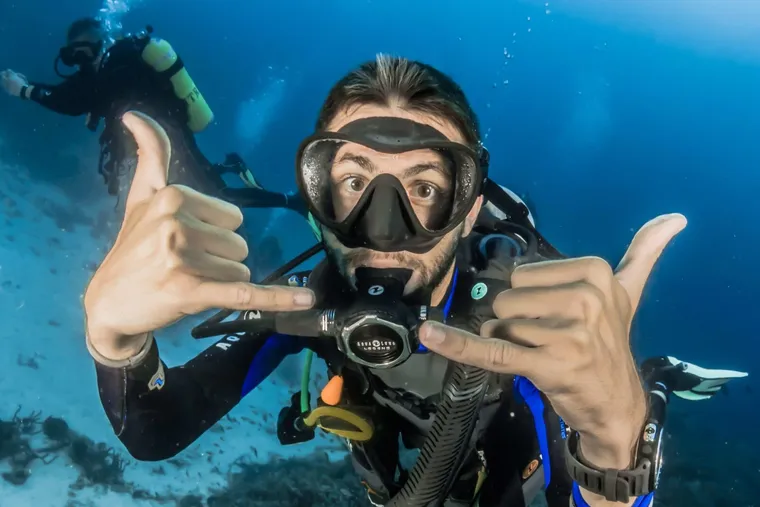
Cover image: Photo by Anurag Harishchandrakar on Unsplash
Related links: