Contents(9)
- 1. Does the Photographer Respect the Client and the Team?
- 2. Shooting Success Rate and Guidance Approach
- 3. On-Time Delivery and File Delivery Methods
- 4. The Photographer's Freediving Skills and Safety Awareness
- 5. Respect for Professional Dive Guides and Safety Supervisors
- 6. Understanding Client Ability Assessment and Grouping
- 7. Shooting Style, Portrait Photography Expertise, and Post-Processing Skills
- Related Links
- Related Links
The Editor says: Underwater photography is a highly specialized skill. Yet many consumers are misled by bad practices in the market — you often see people online organizing group shoots with free photos as a perk, only to find that after paying for the trip, the photos fall far short of expectations, leading to no small number of disputes. We need to understand that underwater photography is absolutely not as simple as pressing a shutter button. Just as you would hire a professional photographer to capture precious moments at a wedding or major event on land, why would you settle for an ordinary diver to serve as your photographer underwater? This article is adapted from a sharing by Audrey, a freediving and mermaid instructor at Mermaid Ocean.
With nearly eight years of teaching and running programs in freediving, mermaid swimming, and aquatic dance, Fishman Freediving and Mermaid Ocean have worked with countless underwater photographers — going through the beginner phase of land photographers transitioning to underwater work, moving from casual documentary shooting to photography-driven productions, and evolving from stills to video and short-form content. Setting aside a technical breakdown of photography itself (that's not our area of expertise), we serve as the bridge between photographers and students (clients) — handling planning, movement direction, instruction, and safety supervision. Here, we'd like to share how to choose an underwater photographer who is right for you, safe, and truly professional.
1. Does the Photographer Respect the Client and the Team?
Prioritize underwater photographers who communicate and make adjustments before, during, and after a shoot — not ones who only check in after everything is done (resulting in missed focus, incorrect settings that make post-processing harder, compositions or editing styles the client doesn't like, etc.).
Before publishing any work, they should do a final confirmation with the client, respect all co-creators, and credit the team members and clients involved.
After all, without a support team, skilled and professional subjects, and safety supervision, no work would ever be produced.
In the context of underwater portrait photography, subjects typically care more about their poses and expressions than about light, shadow, or scenery. Our experience is that some photographers consider the final images solely their own work and do not allow clients to do any editing themselves; others see the work as a collaborative creation and are fine with client edits; and some photographers will handle portrait retouching themselves.
Whether or not portrait retouching is offered — or needed — and whether clients are consistently happy with the results without any adjustments, are all factors that must be confirmed in advance and taken into consideration.


2. Shooting Success Rate and Guidance Approach
When photographing marine life or working with beginners (in a pool or the ocean), it's generally not possible to guarantee a specific number of shots or a success rate. Yet rarely do people think to ask: if the photographer lacks underwater expertise, or has poor shooting and editing skills, resulting in a very low success rate or no usable images at all — what recourse does the client have?
Before a shoot, an experienced underwater photographer will proactively ask about the client's specific needs. Based on the client's ability, requirements, and style preferences, they will prioritize safety throughout the shoot and "communicate effectively with the instructor and subject, guide and adjust as needed, accept professional input, and treat the client with positivity, encouragement, and respect."
There are many group shoots organized online, but looking at photos alone doesn't always reveal a photographer's true skill level — polished images can be achieved through heavy editing. We recommend asking dive shops, instructors, and past clients about their experience with a photographer before joining any group.
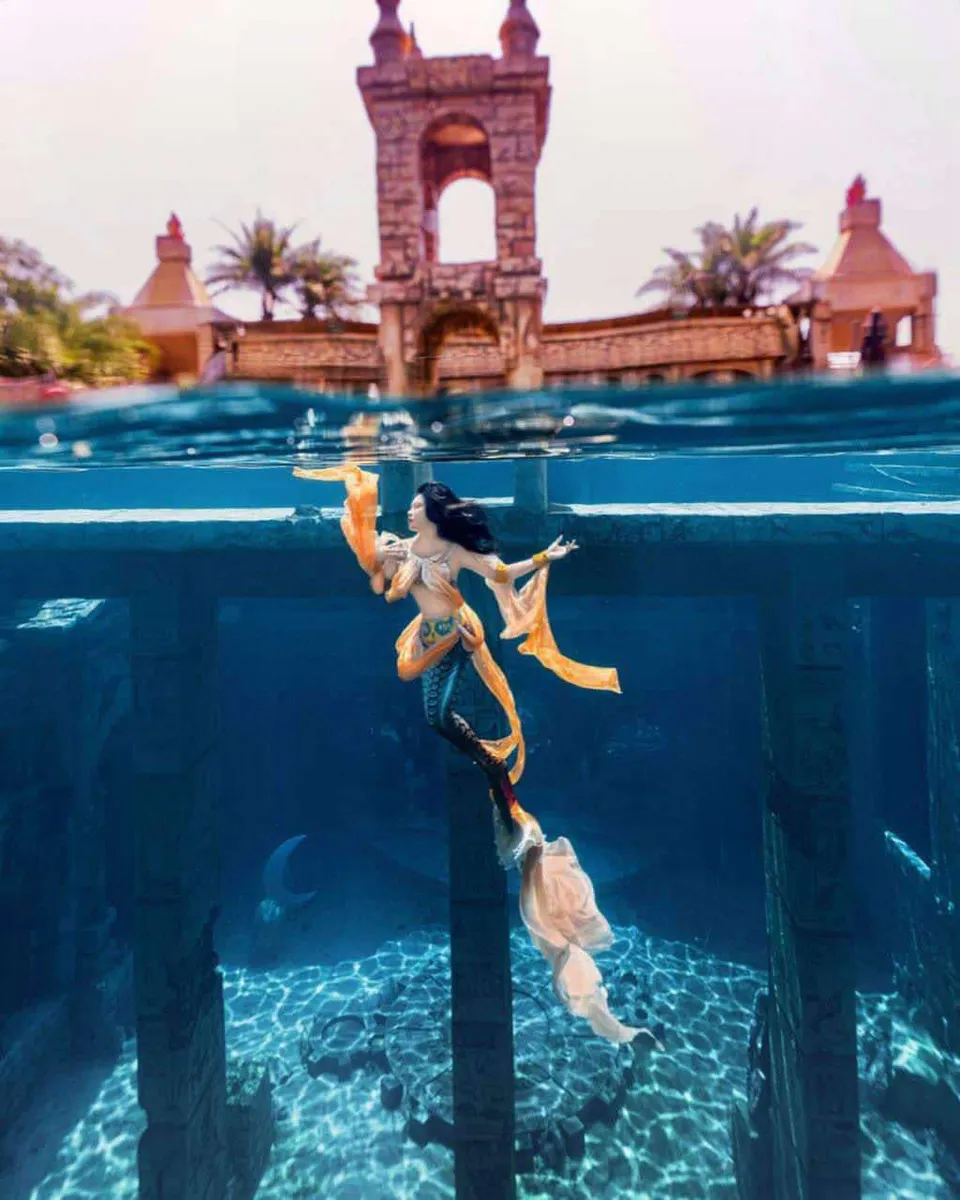
Model: Audrey. Photography: 大俠. Photo credit: Mermaid Ocean
3. On-Time Delivery and File Delivery Methods
Key considerations include: file format (photo or video), number of fully edited shots or total video duration, delivery deadline, final output quality, whether all raw files are provided or only a selection (or none at all), number of revision rounds allowed, and whether the timeline is reasonable.
For dive trips, being able to review footage and photos on the same day provides a basis for reviewing and adjusting the following day. For beginners, receiving raw files (at minimum, a curated selection) increases the chances of getting usable shots. It's also best to choose a photographer who lets clients select their preferred photos before proceeding with detailed editing — because what the photographer likes isn't necessarily what the client likes.
Finally, choose an underwater photographer who delivers on time — one who won't withhold or delay delivery because you're not a social media influencer or because you're not female, and who won't disregard their professional integrity or refuse to communicate. This point is especially important. "No matter how talented a photographer is, it means nothing if the photos are never delivered, the client never receives their work, or the gap between what was promised and what was delivered is too wide."
Generally, there will be informal accommodations or mutual give-and-take between clients and underwater photographers. Even in cases of delay or additional revisions, both parties should remain respectful and keep each other informed.
4. The Photographer's Freediving Skills and Safety Awareness
If the underwater photographer shoots via freediving, do they hold a professional certification? Do they have solid freediving technique and buoyancy control? Do they have a strong understanding of ocean safety, real ocean experience, and a rescue and safety supervision team in place? "Underwater photography is a combination of underwater expertise and photographic skill — it's not just about being a great photographer."
5. Respect for Professional Dive Guides and Safety Supervisors
If an underwater photographer also arranges appropriate professional movement coaching, instruction, and in-water safety supervision (with the right number of people, scope, and whether scuba or freediving is used) based on the shoot location, scale, and plan — and charges accordingly — that is a photographer well worth prioritizing. Just as we would hire a professional underwater photographer for our own shoots, different fields call for different areas of expertise.
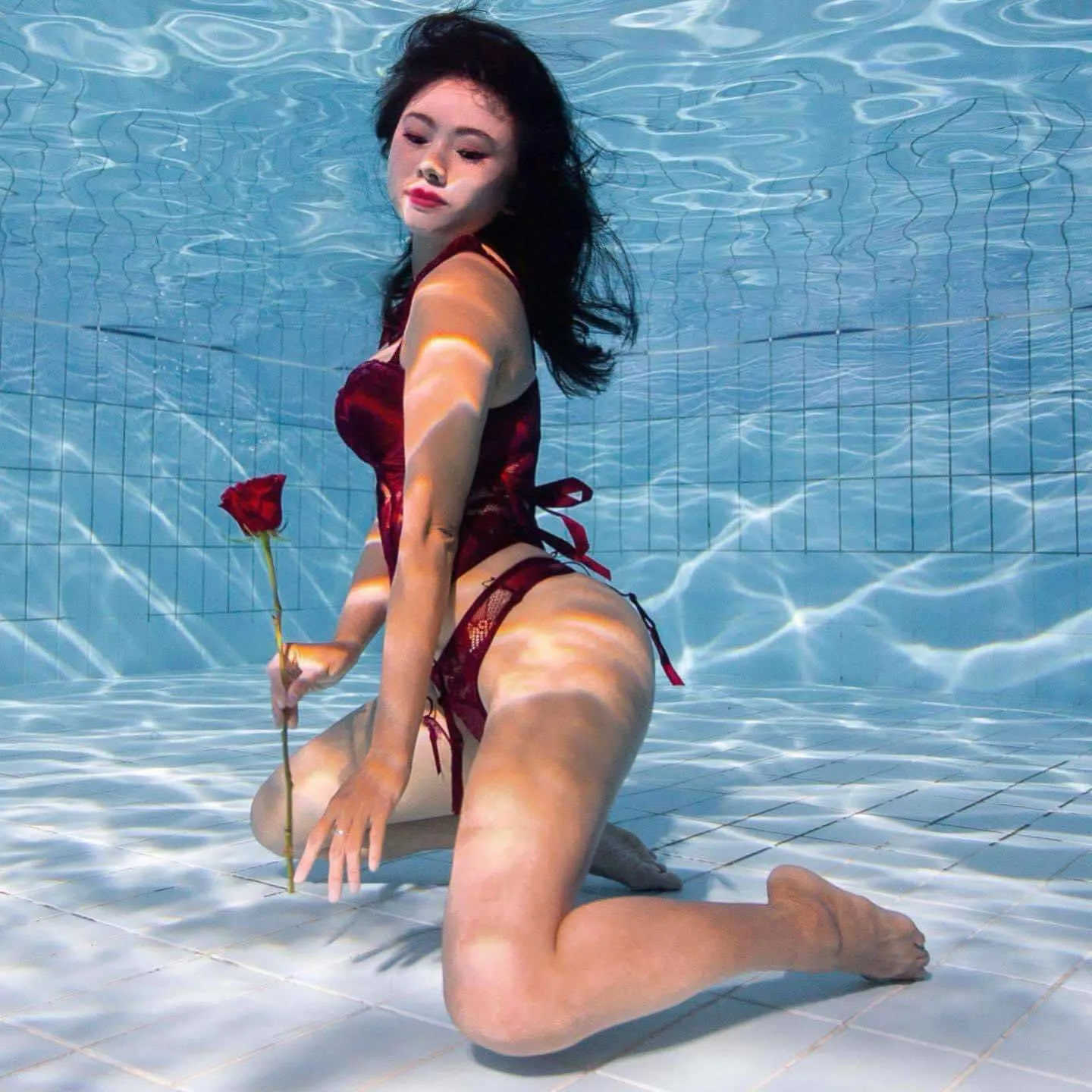
Model: Audrey. Photography: 哲豪. Photo credit: Mermaid Ocean
6. Understanding Client Ability Assessment and Grouping
For online group shoots, a responsible photographer will proactively ask about each client's ability and assign them to appropriate groups or levels. They should know when to screen and turn away clients, and should not accept everyone simply to maximize income. Regardless of who it happens to, if someone in the group goes missing or gets injured, every member carries a moral responsibility — and the entire group's itinerary is affected.
7. Shooting Style, Portrait Photography Expertise, and Post-Processing Skills
Underwater portrait photography is genuinely difficult. Think about what your shoot involves: video or stills? Mermaid or aquatic dance? Freediving? Do they have experience in water, on land, and in the air? Where possible, choose a photographer with a clear specialty, or one who has well-rounded professional experience across multiple disciplines.
We recommend choosing a photographer who continues to learn and grow. You can ask what camera equipment and editing software they use, and take a close look at the style and presentation of the finished work they publish — is it something you actually like? "After all, you can only make adjustments after the fact; you can't demand a completely different outcome."
For experience-sharing on swimming with cetaceans, please refer to the previous article. We hope everyone finds a group, professional training instructor, and underwater photography team that is genuinely excellent and right for them. — Mermaid Ocean Coach Audrey.
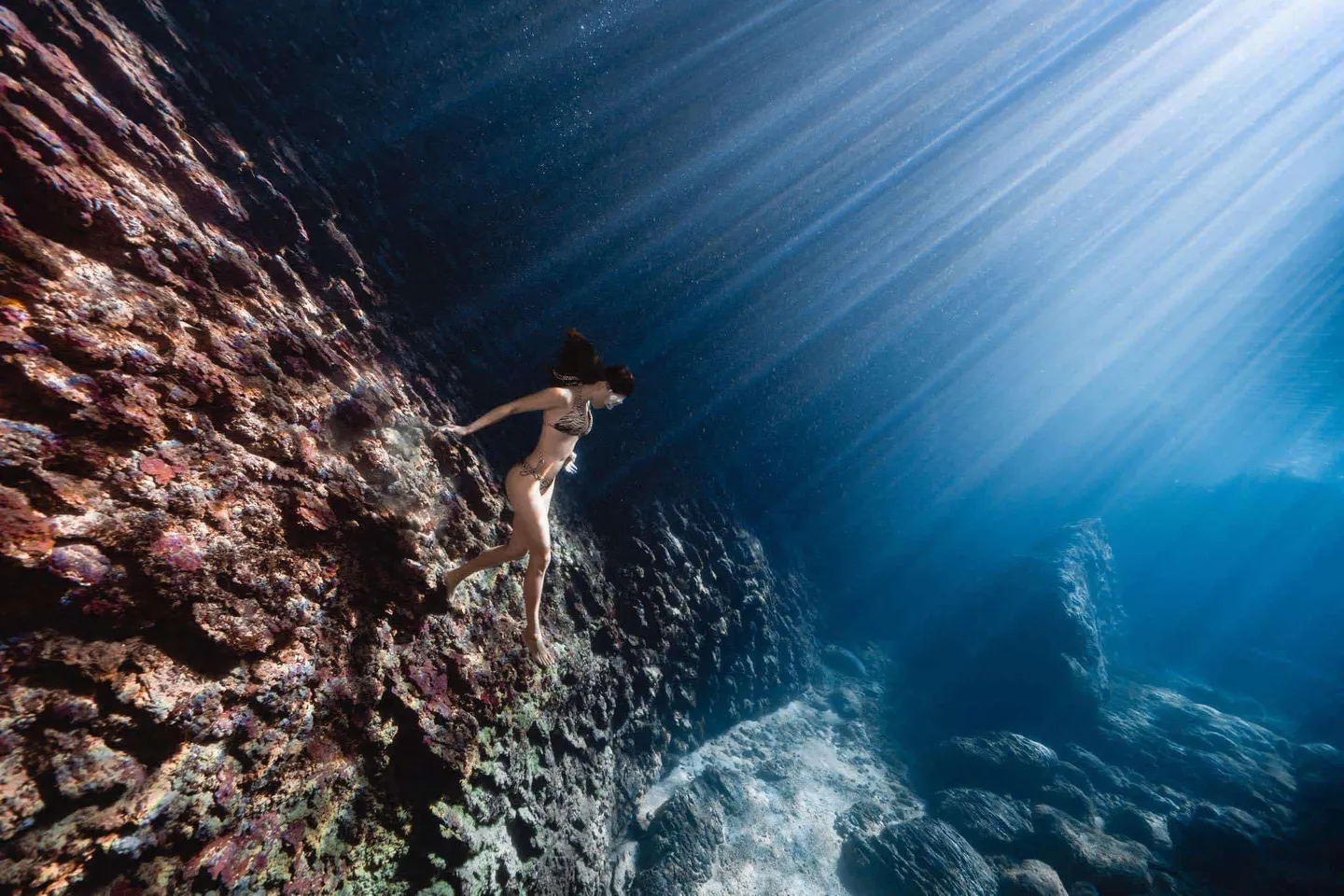
- Article cover photo: Model: Audrey
- Photography: bolin
- Photo credit: Fishman Freediving
Related Links
- Author: Fishman Freediving Instructor Audrey
- Swimming with Whales and Dolphins — 6 Rules You Should Know, by Audrey Lee
Related Links