Contents(7)
- Two Years Running at the Singapore Dive Expo — Why Is the Taiwan Pavilion Getting More Noticed?
- Four Scenic Areas × Four Local Dive Shops — Every Question Answered on the Spot
- Three Speakers × Three Sustainable Diving Sessions: Not Just Selling Dive Sites — This Was a Civic Education Class
- Three MIT Dive Brands: ATMOS, 123 Underwater Lab, and DIVEVERYDAY Putting Taiwanese Manufacturing in the Spotlight
- Over 1,000 Surveys: The Real Picture of What Singaporean Visitors Think About Dive Travel to Taiwan
- Closing Thoughts: Taiwan Dive Travel's Real Strength Is "Sustainability × Diversity" — All in One
- Further Links: Partners from This Year's Taiwan Pavilion
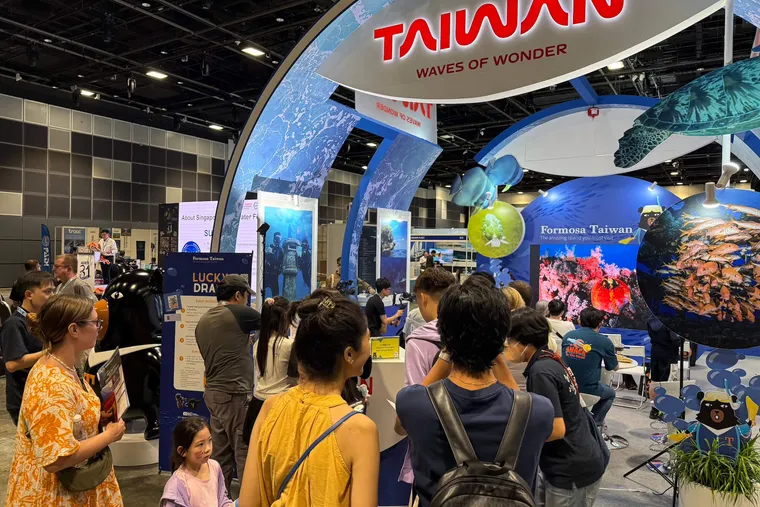
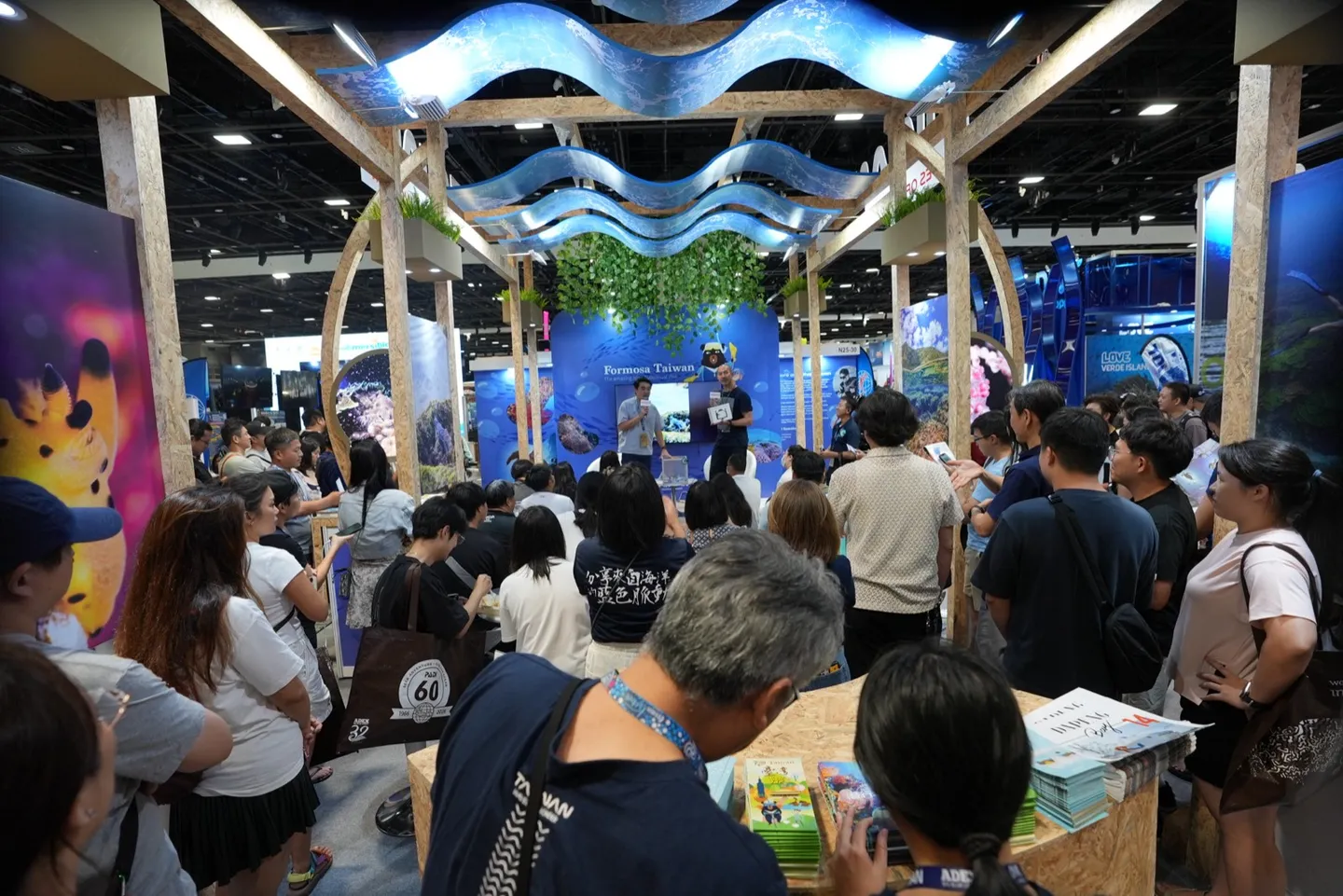
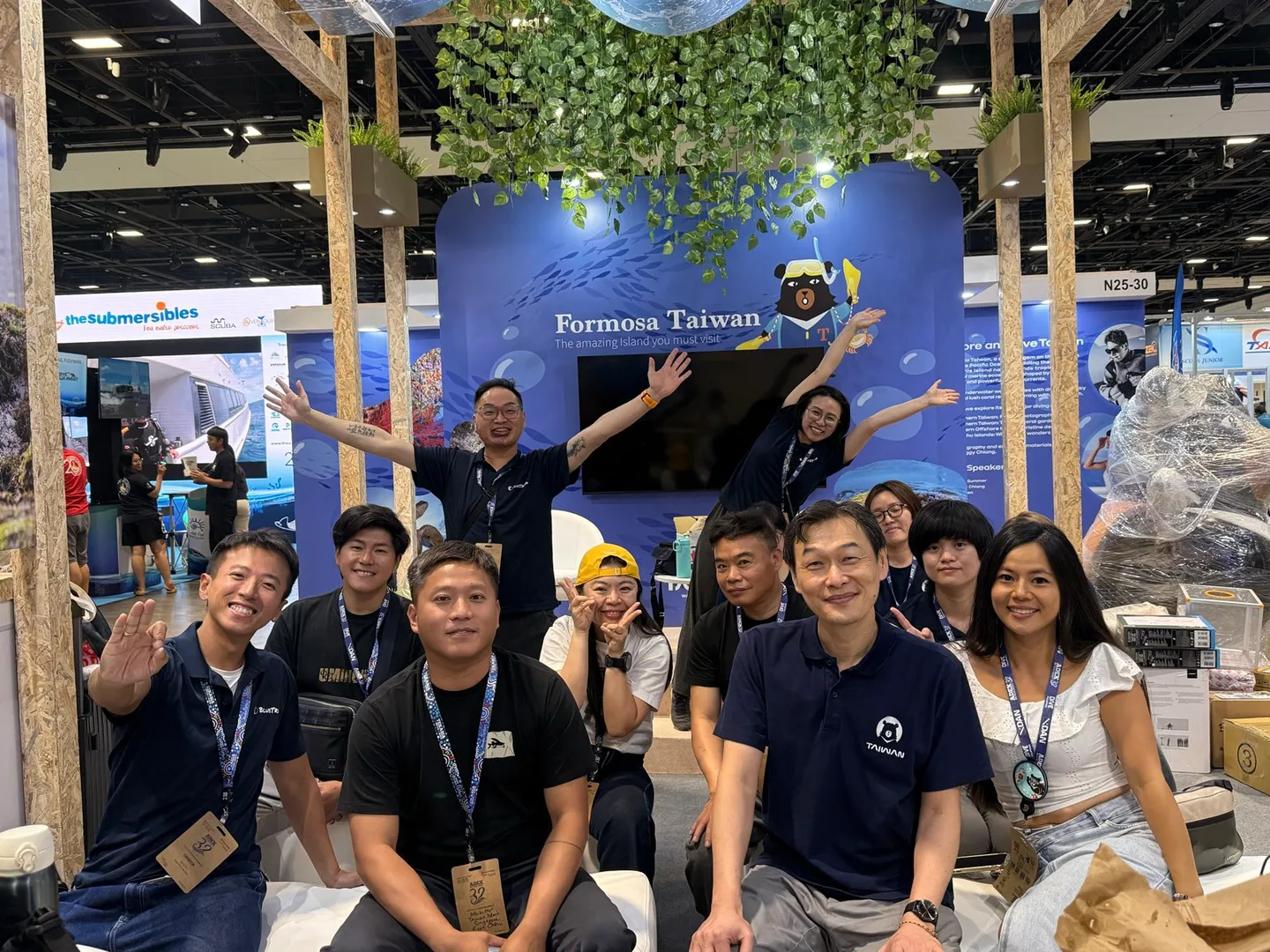
The pavement outside Suntec Singapore Convention & Exhibition Centre was already scorching by morning, and by the time the Editor walked from the hotel to the venue entrance — a matter of minutes — the T-shirt was quietly plastered to the back. Singapore doesn't need words to express its enthusiasm; it welcomes you with 30-something-degree heat and humidity. The moment you step through the main doors, you're greeted by a wall of blue: the ADEX 2026 Taiwan Pavilion has taken the stage at the Singapore dive expo for the second consecutive year.
A quick background for those who haven't heard of it: ADEX (Asia Dive Expo) is "The Largest and Longest-running Ocean Exploration and Trade Show Brand in Asia." In diving circles across the continent, it carries the weight of an annual pilgrimage — drawing not just buyers and industry players, but a sizeable crowd of seasoned divers who genuinely want to know where to go diving next year. Having a dedicated presence on a stage like this means something different for Taiwan.
This time, the Tourism Administration's Singapore Office didn't just bring information on four national scenic area dive sites — they loaded up dive shops, speakers, and MIT dive brands and shipped the whole operation to the Lion City, telling the story of "Taiwan dive travel" more completely than last year, and making visitors far more tempted to book a flight.
Even better: this year's Taiwan Pavilion wasn't just about "come dive in Taiwan." It wasn't until the Editor had listened to all three speakers that the fuller picture became clear — what the Office wanted to show Singapore visitors was a Taiwan that knows how to tell a story of sustainable diving.
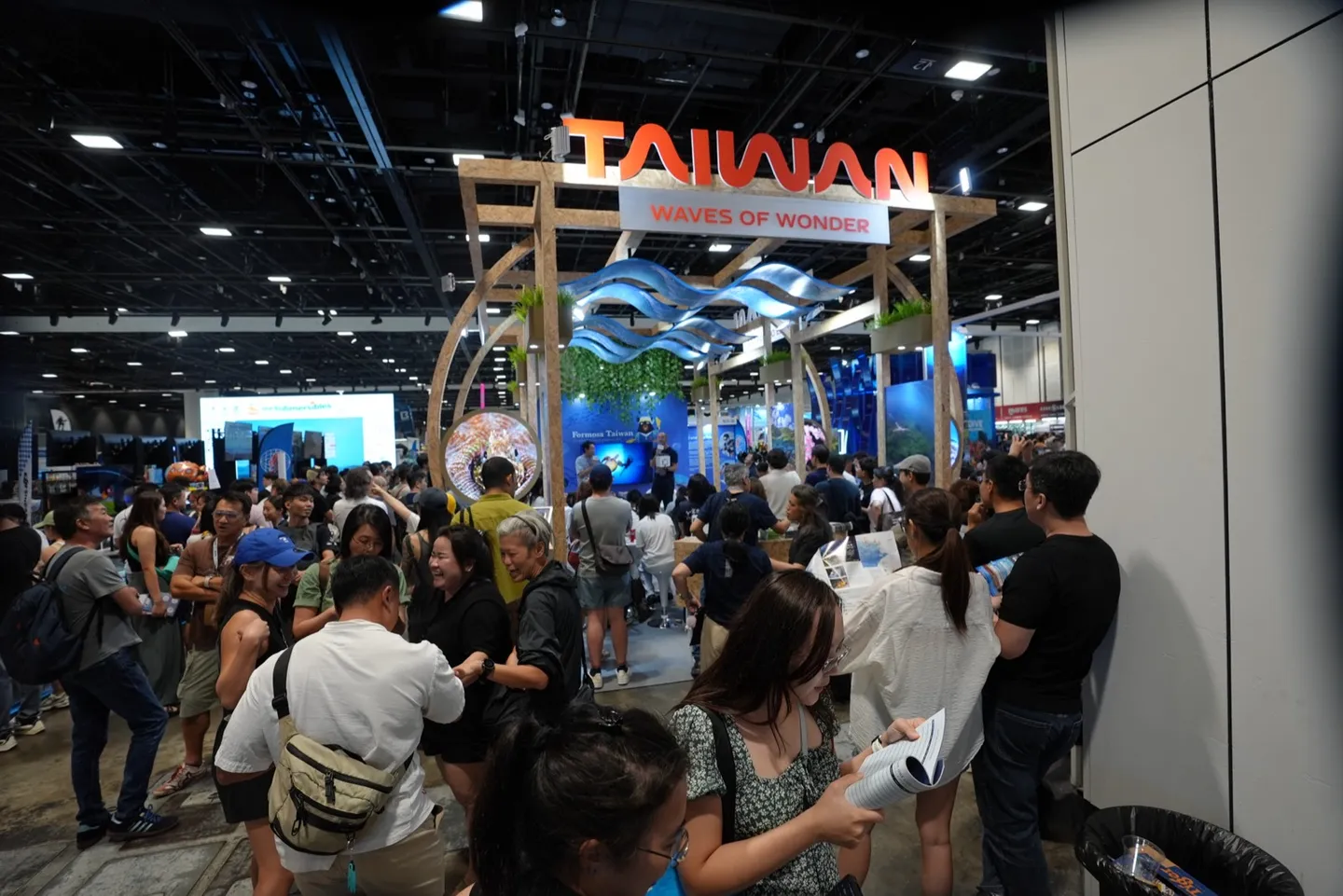
Two Years Running at the Singapore Dive Expo — Why Is the Taiwan Pavilion Getting More Noticed?
When the pavilion debuted last year, it was still in the "putting a face to the name" phase. Many Singaporean divers' impressions of Taiwan began and ended at night markets, xiaolongbao, and Alishan; hearing "you can dive in Taiwan too" typically produced a "really?" expression. But this year, the Editor could clearly feel the wind changing.
The Tourism Administration's Singapore Office went all out: four national scenic areas represented at once — the Northeast Coast waters of the Northeast Coast and Yilan Coast National Scenic Area, the Kenting and Xiaoliuqiu waters of the Dapeng Bay National Scenic Area, the Taitung and Green Island waters of the East Coast National Scenic Area, and the Penghu waters of the Penghu National Scenic Area. Four routes spanning Taiwan from top to bottom — and all the way out to the outer islands — laid out right there in Singapore for you to choose from.
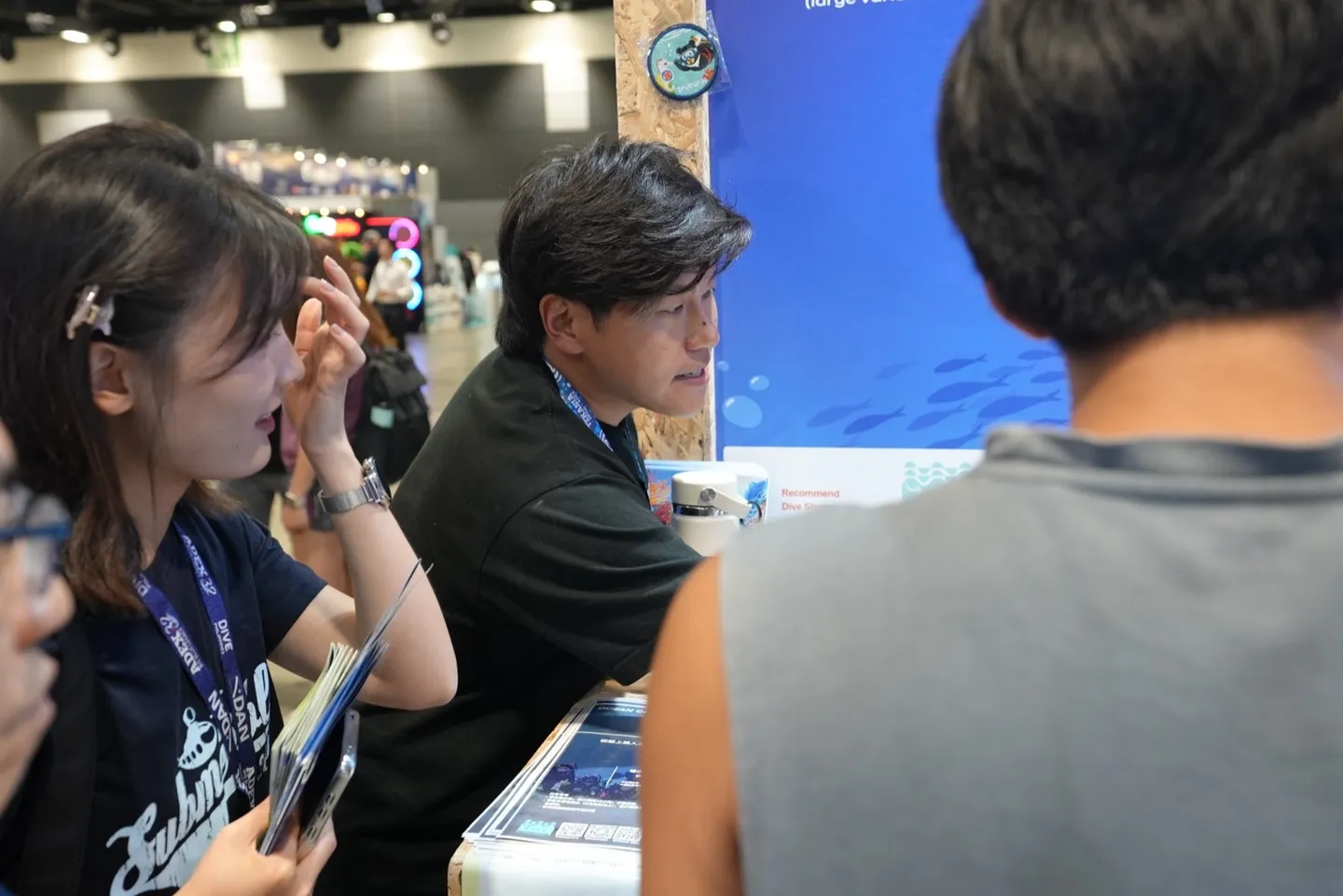
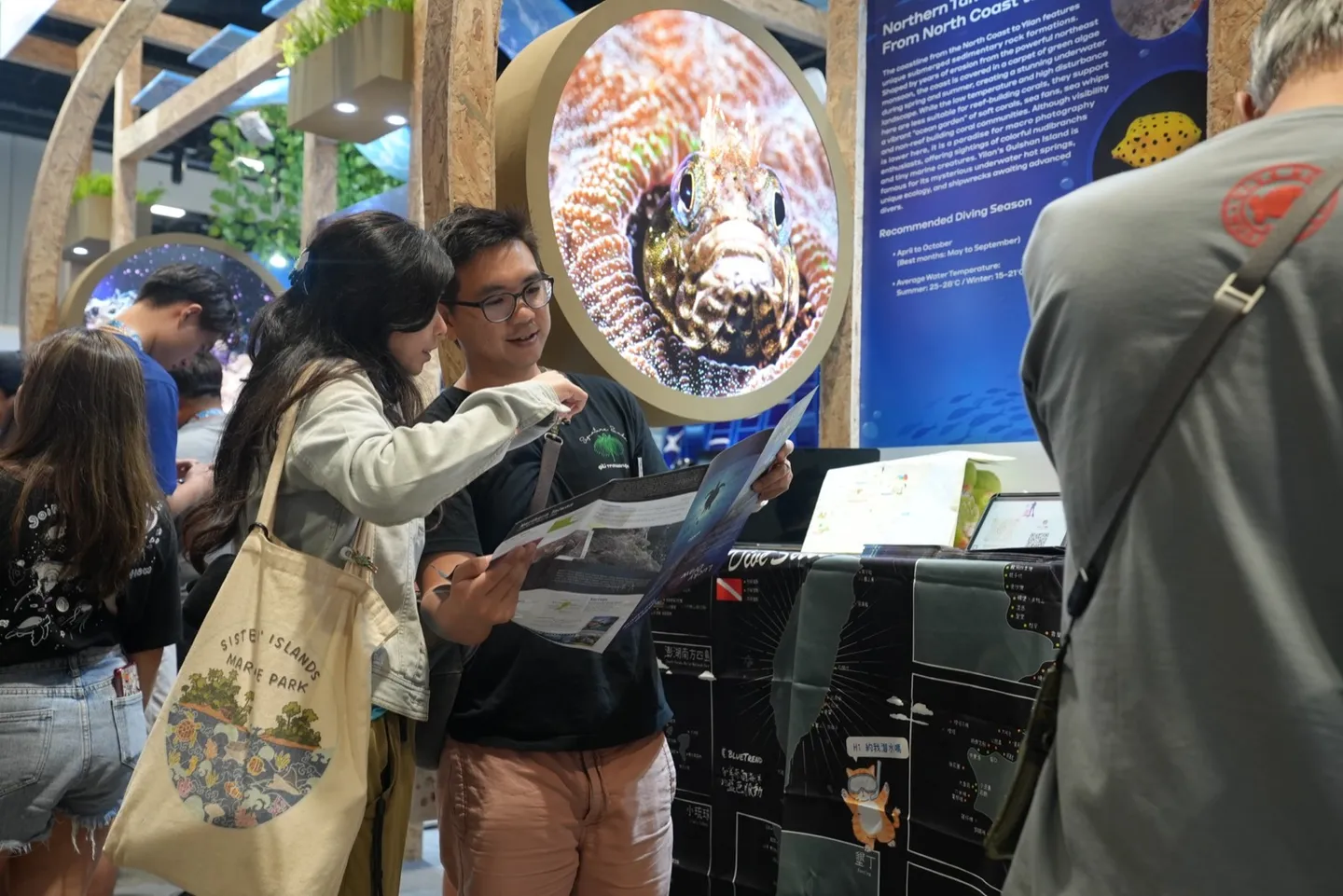
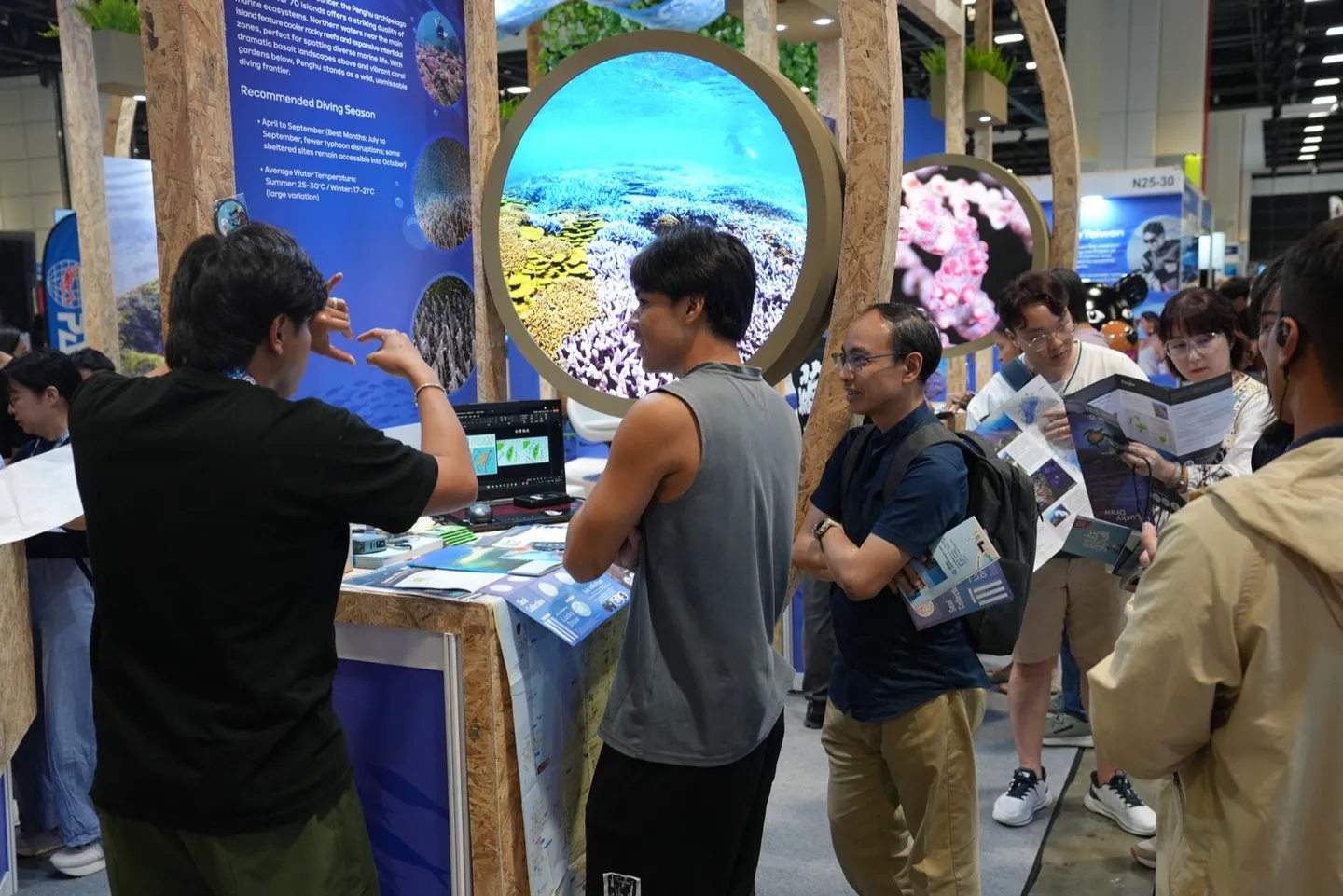
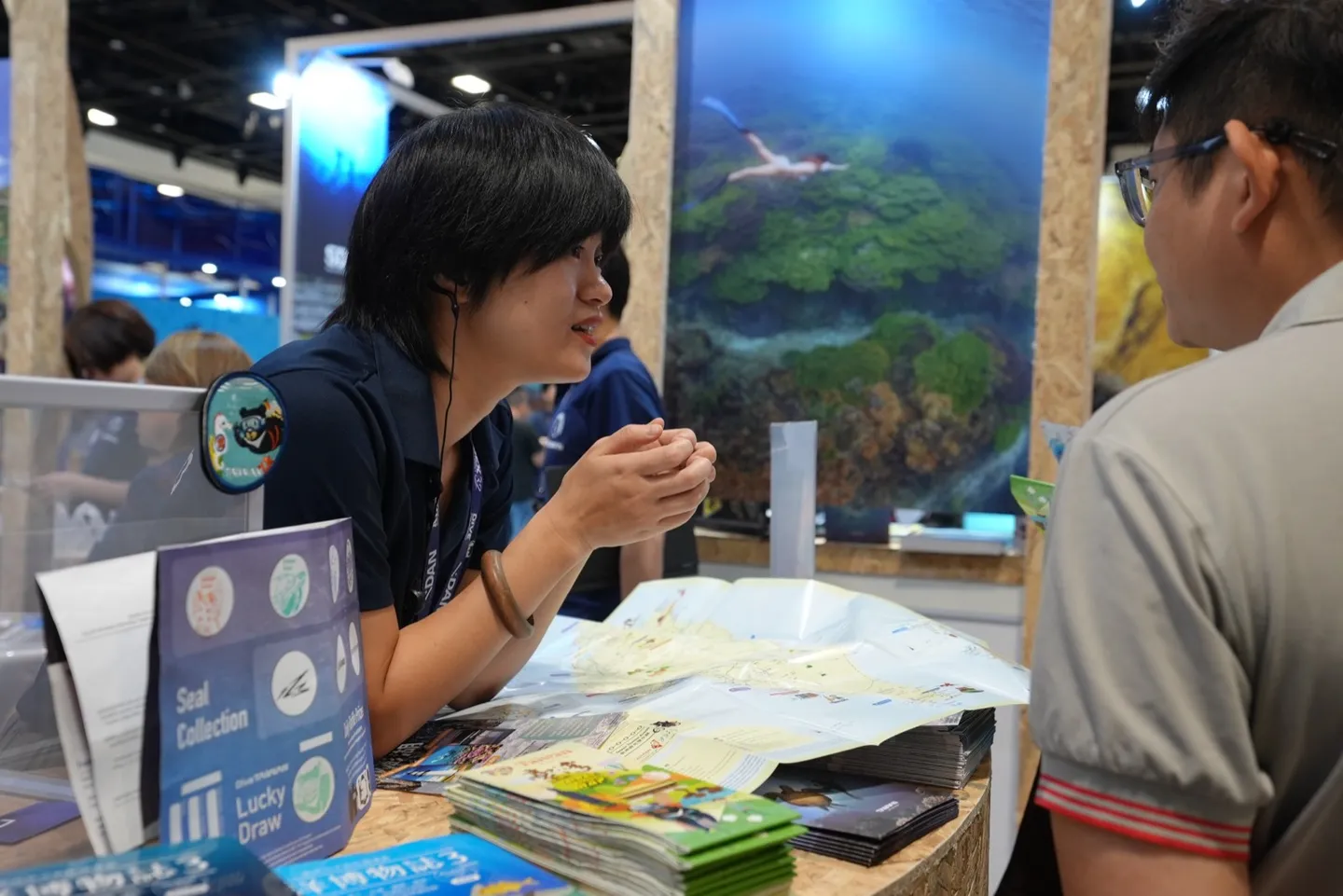
Crucially, this year each sea area invited a local dive shop to come along, so visitors at the booth weren't just looking at flyers or videos — they were talking face to face with instructors who actually guide dives in those spots. The Editor spent the day eavesdropping from the sidelines as questions at the booth ranged from "What month is best?" and "How do you get there?" to "How much does it cost?", "How many dives can you do in a day?", "What else can you do after diving?" and "Is it suitable with kids?" — Singaporean divers had done their homework more thoroughly than expected, and they weren't shy about asking.
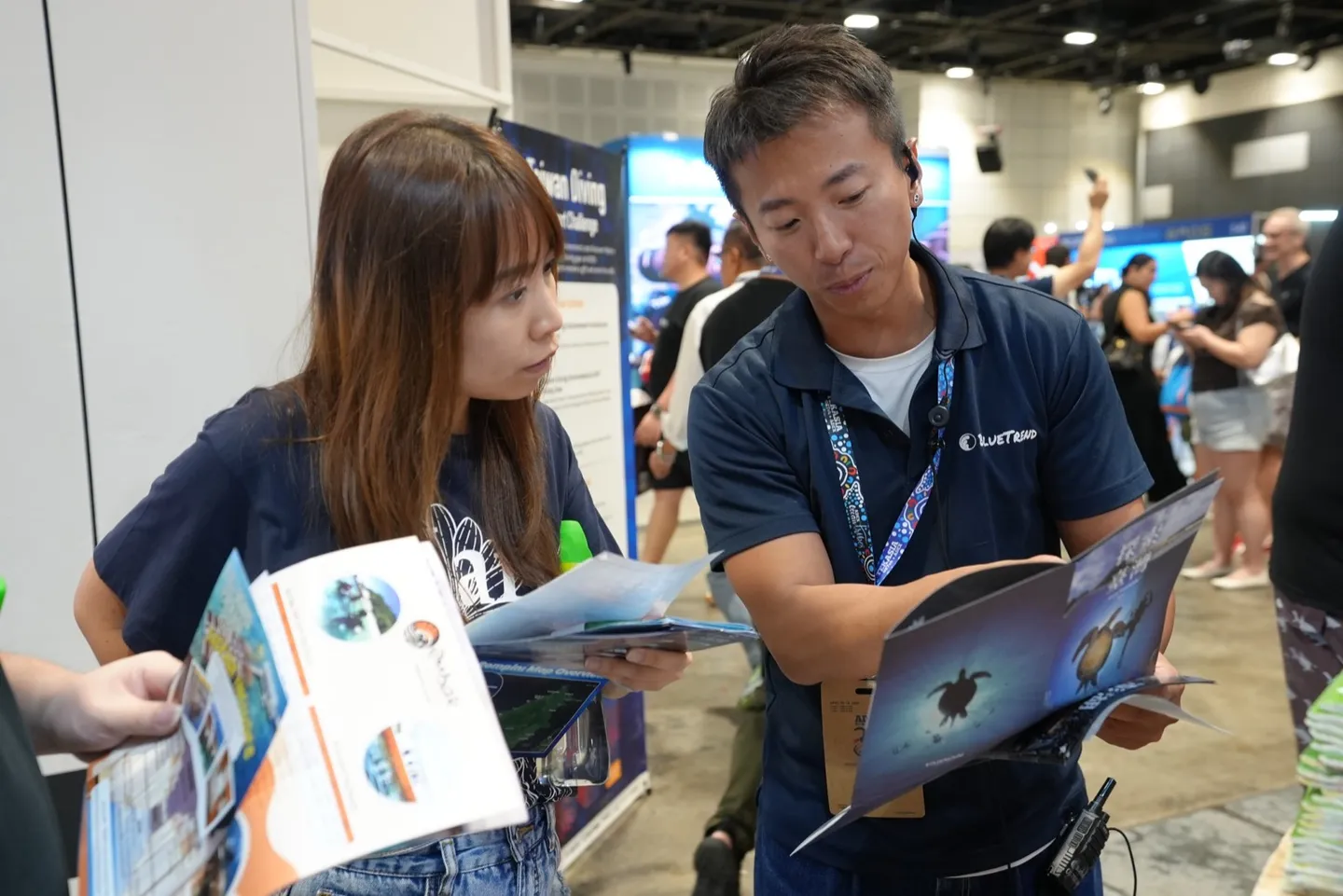


Four Scenic Areas × Four Local Dive Shops — Every Question Answered on the Spot
The real firepower of the Taiwan Pavilion this time was these four operators, one representing each sea area, taking turns fielding questions at the booth all day long — the Editor felt thirsty just watching.
Diving the Northeast Coast: DiveMate Brings the "One Hour from Taipei" Convenience Abroad
First stop was the Northeast Coast, represented by DiveMate. Many Singaporean visitors' eyes lit up the moment they heard "just one hour by train from Taipei city and you're at the dive site." For Taiwanese divers, spots like Longdong and Bitou Cape are "after-work, one-tank" distances — but for Singaporeans accustomed to six-hour-minimum flights, the value proposition of "land and dive" is simply explosive. DiveMate's headline offering was the half-day itinerary beloved by urban divers: dive in the morning to see bobtail squid, pygmy seahorses, and all manner of wonderfully soothing small creatures; come up for seafood noodles at noon; then head back to Taipei for shopping in the afternoon.
The Editor overheard a Singaporean gentleman asking with complete sincerity: "So I can fly over, dive, and then be back in Taipei for Michelin that same evening?" DiveMate just nodded: "Yes, and plenty of people do exactly that." The man immediately pulled out his phone to add them on LINE.
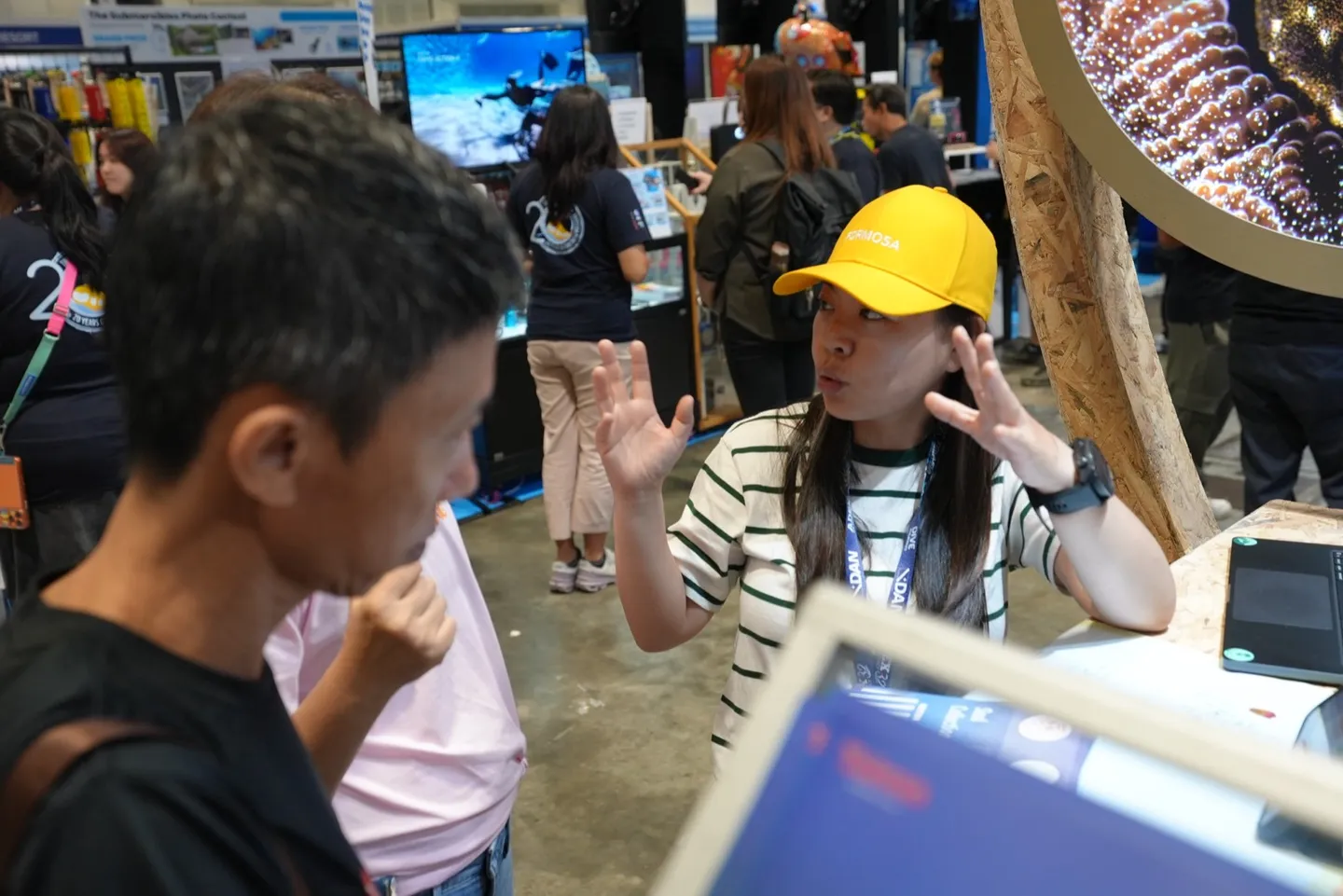
Kenting & Xiaoliuqiu Diving: Taiwan Dive Packages Up Southern Taiwan
Second stop, heading to southern Taiwan — Kenting and Xiaoliuqiu diving, represented by Taiwan Dive. A veteran dive shop from the south, Taiwan Dive brought both of its major routes to Singapore: Kenting headlining with coral ecosystems — a full lineup of classic dive sites including Houbihu, Chushui Exit, and Wanlitong — while Xiaoliuqiu offered sea turtles that are perhaps the world's most sociable, at a density so staggering you can spot Green Sea Turtles standing on the shore at high tide.
What many Singaporean divers care about most is "Will I see a sea turtle?" and "One or ten?" Taiwan Dive's answer was iron-clad: "Come to Xiaoliuqiu — ten is on the low side." The Editor can vouch: that's not a sales pitch, it's a fact.
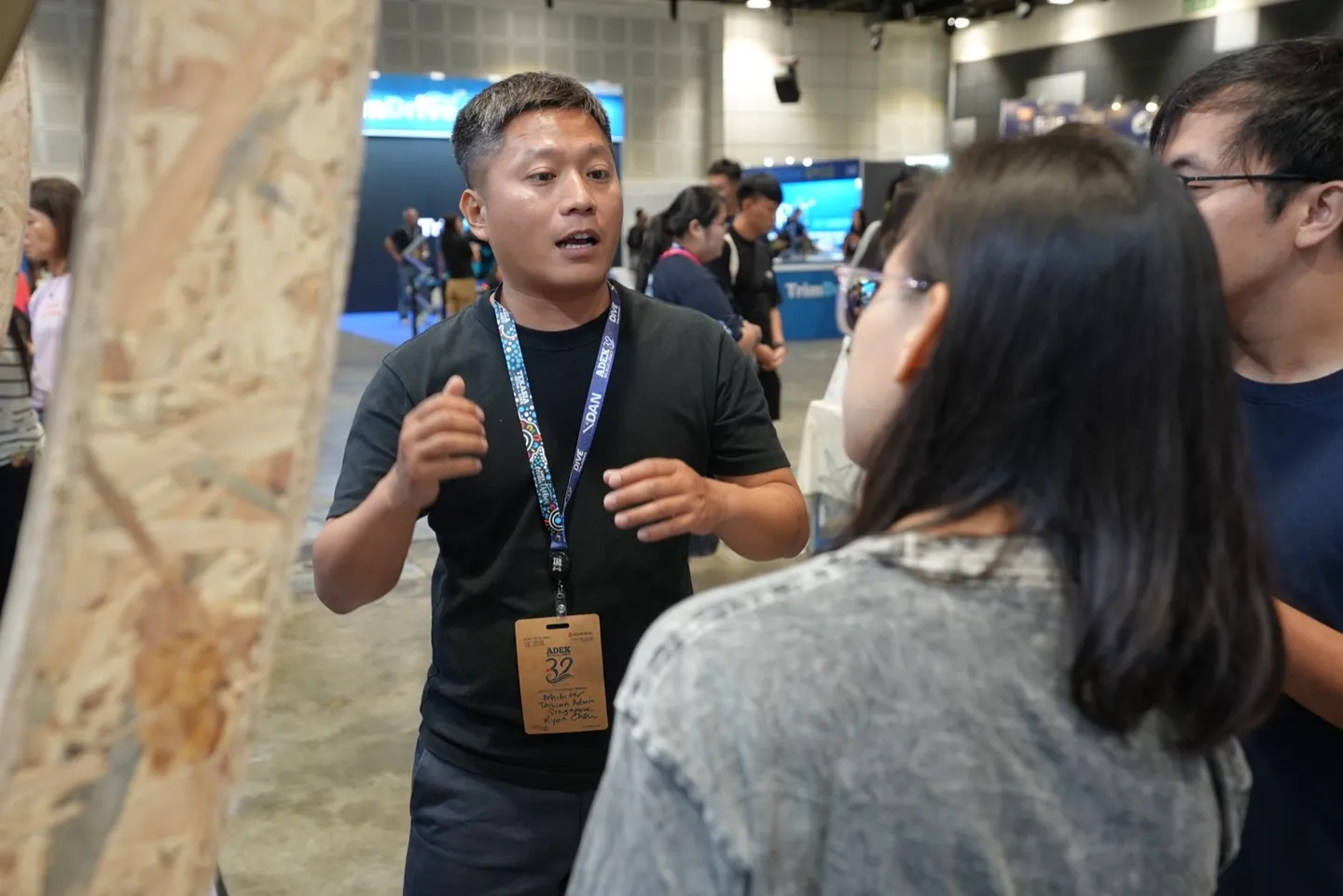
Green Island Diving: Hide N Sea Delivers the "You Think It's Far, But It's Actually Close" Surprise
Third stop jumped to Green Island diving, represented by Hide N Sea. Green Island is already holy-ground status for Taiwanese divers, but it remains largely unknown to Singaporeans. Hide N Sea made a smart call this time, laying out Green Island's trump cards: the dramatic artificial reefs of Steel Reef, the sweeping topography of Yixiantian (One Line of Sky), the everyday spectacle of batfish photobombing you, and the small creatures that only come out during night diving.
The Editor particularly liked a line on Hide N Sea's booth signage: "Thirty minutes by ferry from Taitung, but you'll feel like you've arrived in another country." That hit exactly what Singaporean divers are after — escaping the everyday. Green Island's visibility is world-class, with crystal-clear sightlines regularly exceeding 40 m, drawing divers from around the globe who make a point of visiting specifically for it.
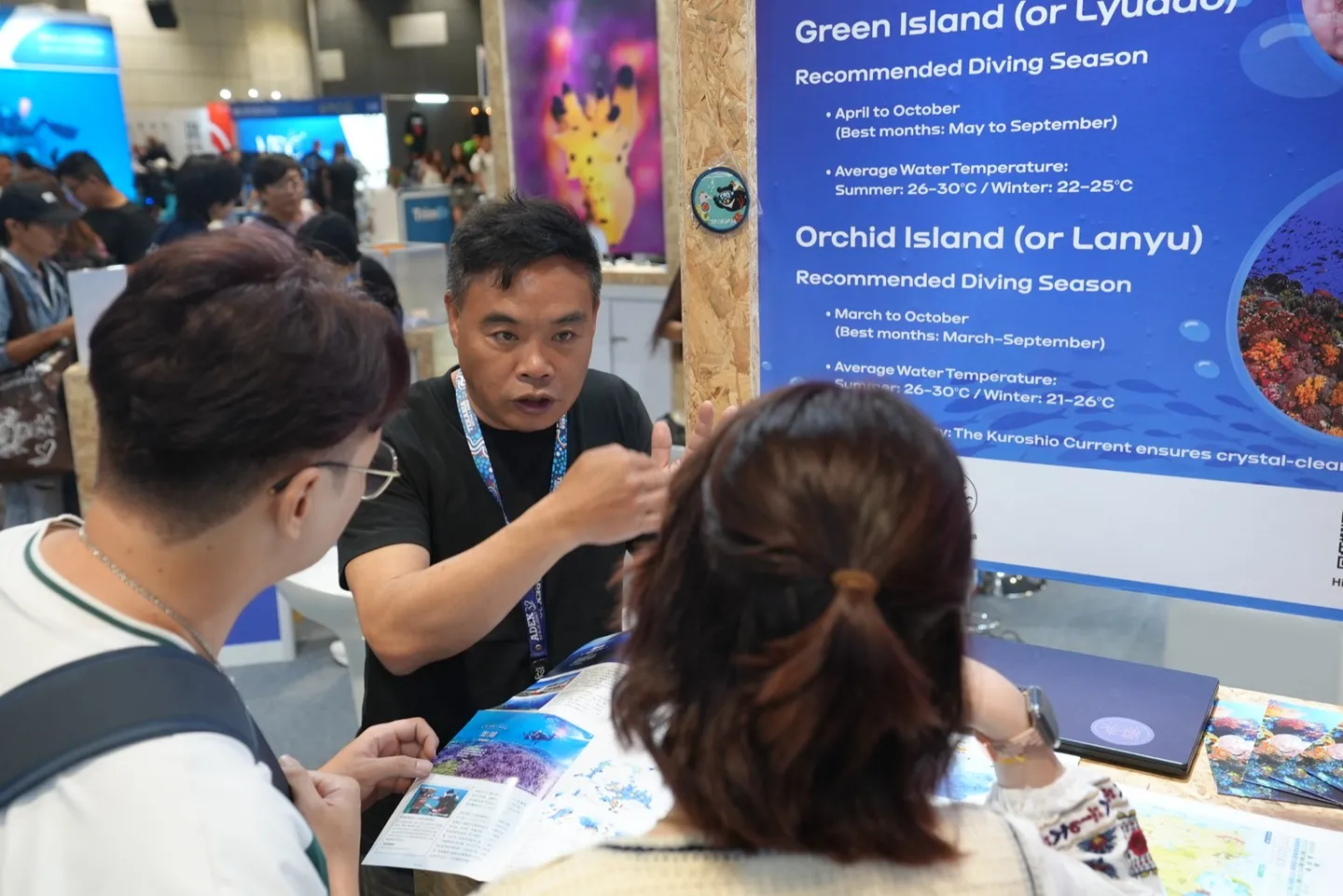
Recommended Penghu Diving: Ocean Channel Turns an Off-the-Beaten-Path Outer Island into a Must-Visit
The fourth stop handed things over to Penghu, represented by Ocean Channel — whose owner is NT himself, the speaker featured in the next section. Among Taiwan's domestic diving community, Penghu is an "in-the-know" route: those who know it know it, and those who don't tend to loop around other destinations first before discovering just how impressive Penghu really is.
Ocean Channel played a mixed hand this time: beaches + stone fish weirs + an underwater post box + coral restoration zones. Penghu's waters are a rare sight in Taiwan — coral clusters rising from a vast sandy seabed — and the visibility, light, and topography all have their own distinct character. One of the Editor's top reasons to recommend Penghu to beginners is that it's ideal for divers who love photography: the compositional space is clean and uncluttered, free from visual noise. When NT was sitting at the booth, Singaporean visitors frequently asked him about what makes Penghu special, and he would patiently share the island's unique sandy-bottom coral groves, its stone fish weir culture, and its tranquil pace of diving — giving everyone what they needed to choose the trip that suited them best.
Three Speakers × Three Sustainable Diving Sessions: Not Just Selling Dive Sites — This Was a Civic Education Class
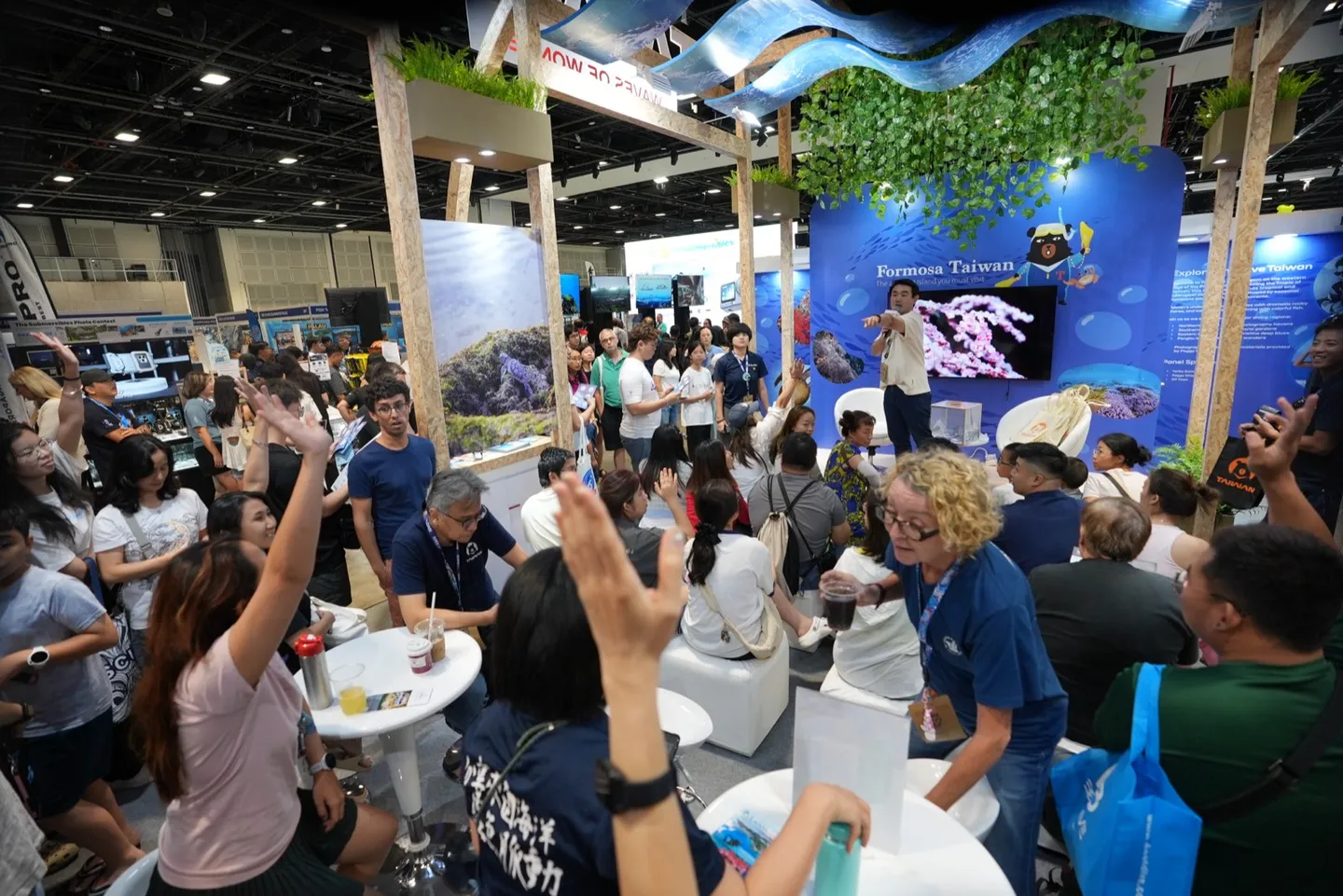
If the four dive shops were the firepower of the Taiwan Pavilion, the three speakers from Taiwan were its soul. The Office arranged three talks this time, and their themes converged without coordination on one thing: sustainable diving. The Editor had half-expected the standard "love the ocean, reduce rubbish" public service message — and instead walked away genuinely moved. Three speakers, three completely different angles, three stories that made it impossible to just sit still.
Peggy: The Matrilineal Migration of Xiaoliuqiu's Sea Turtles — Names, Fates, and Personalities
First up was Peggy — a dive instructor and a core volunteer at Turtle Spotting (海龜點點名), Taiwan's most important citizen science platform for sea turtle identification. The Editor knew from her very first slide that this was not a tourism advertisement. Peggy opened with a single aerial photograph: "See those black dots along the shoreline? Every one of them is a sea turtle — and almost all of them are Green Sea Turtles."
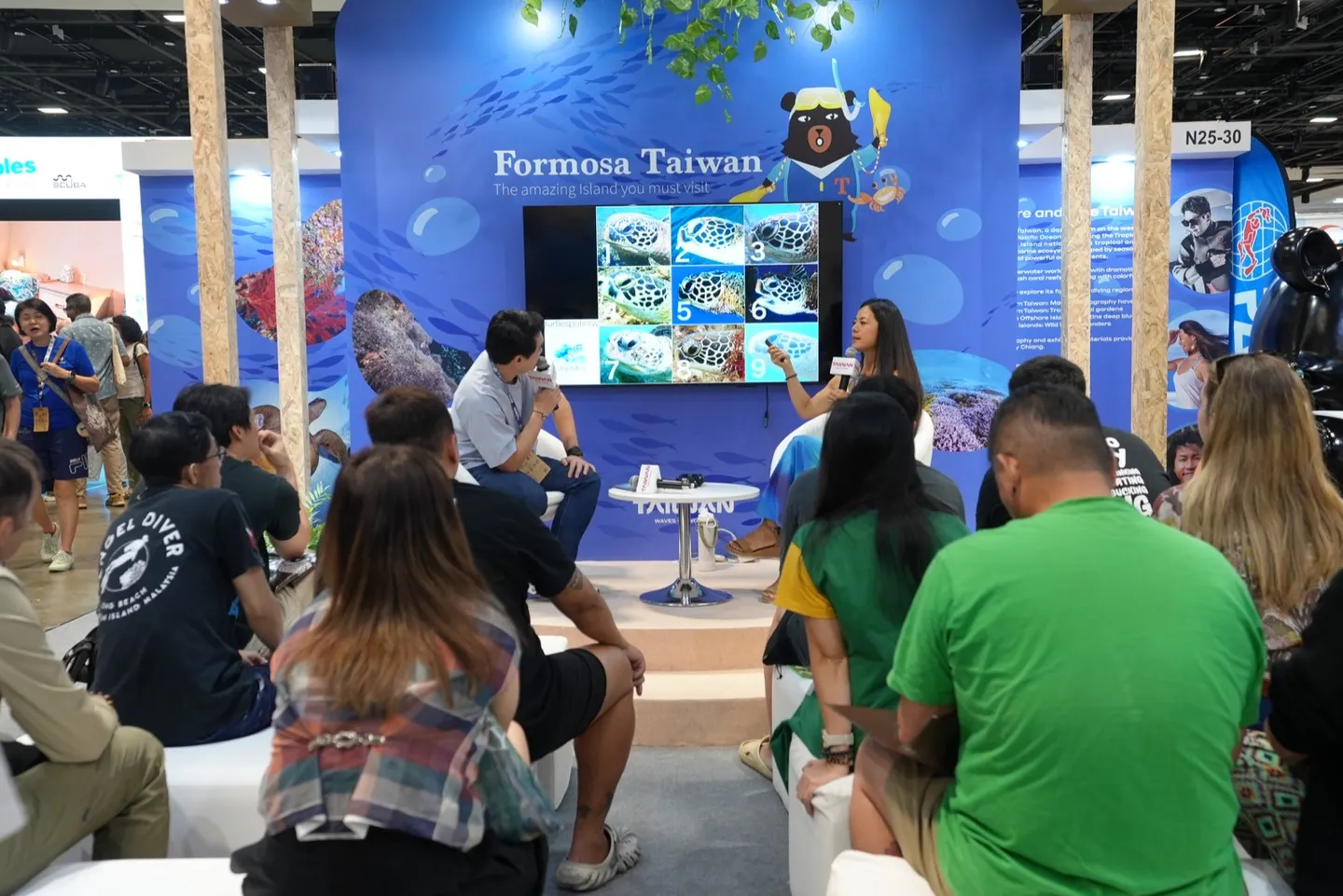
Her central message wasn't "there are a lot of sea turtles at Xiaoliuqiu" — it was how hard life is for a female sea turtle:
- The mating process for female turtles is closer to forced copulation: males use the hook on their front flipper to grip the female's carapace, forcing her to work twice as hard just to surface and breathe, and in severe cases multiple males can press her down until she drowns.
- Female turtles must return to their own birthplace to lay eggs — even if they've emigrated 3,000 km away to Taiwan, they still swim back. A turtle Peggy photographed at Xiaoliuqiu — tagged R36192 — was an "immigrant turtle" from Micronesia who had lived there for over a decade but still disappeared for half a year every two to three years to return home and nest.
- Coming ashore to lay eggs means running a "sea turtle Olympic hexathlon": finding a spot, digging a large pit, excavating the egg chamber, laying the eggs, covering and camouflaging them, and returning to the sea. A female named "Liangliang" came ashore again and again over two weeks — and failed every time.
- She also shared a photograph that silenced the room: a clutch of eggs painstakingly laid, then soaked by typhoon floodwater for more than four hours — the entire clutch dying in the sand at the same moment.
What stayed with the Editor most was Peggy's answer when asked why you shouldn't simply pick up a struggling hatchling and release it into the sea:
"Because sea turtles are designed to memorize their birthplace. We can't take away that memory — it's what will guide them back here to give their own offspring a home."
That line gave the Editor goosebumps. Sustainable diving — four words Peggy made entirely concrete: every time you choose not to touch a sea turtle, every time you take your rubbish with you, every time you choose ocean-safe sunscreen, you are helping one female turtle complete a nesting cycle she may have waited twenty years for.
Touching a sea turtle in Taiwan carries a fine of NT$60,000 to NT$300,000 (approximately SGD 2,500–10,000). Peggy dropped that figure in, and the whole room laughed with a hint of awkwardness. She added: "But if the turtle approaches you on its own, that doesn't count."
NT: Penghu's Coral Restoration Trilogy — From Concrete Blocks to 3D-Printed Oyster Shells
The second speaker was NT, owner of the Penghu dive shop Ocean Channel and the same person who had been sitting at the four-shop booth all day. When he switched to speaker mode in the afternoon, he transformed entirely from "operator" to "science evangelist."
He opened with a very plain analogy: "What colour is your chair? White. Coral is naturally white too — the colour comes from symbiotic algae." That single sentence cleared up the "bleaching ≠ dead" confusion that many divers carry their entire lives. He then laid out the three coral restoration methods Penghu has been using in recent years:
- Concrete triangle blocks: manufactured on land, loaded onto boats, dropped to the seabed, and arranged by divers. NT emphasized one critical detail: freshly submerged concrete releases toxins — you have to wait for algae to grow on it as a sign the toxins have cleared before transplanting coral; otherwise the coral dies and even fish won't come.
- Steel-rebar frames + concrete sculptures: to create three-dimensional structure, they weld rebar and pour 170 cm-tall sculptures, then use cable ties to fix coral fragments onto them — the ties must be pulled taut to give the coral a stable attachment surface. Coral that grows well eventually envelops the cable ties entirely.
- 3D-printed eco-building material (the latest breakthrough): the tens of thousands of tonnes of oyster shells left over from Penghu's grilled oyster industry, along with dead coral fragments, are ground down and 3D-printed into new ecological modules. The material is entirely natural — fish arrive to inhabit them on day one, with no toxin-clearing wait time required.
What the Editor found most humbling about NT was this: the coral he planted using first-generation concrete blocks successfully spawned — releasing both eggs and sperm — seven years later.
"Propagation by fragmentation (asexual reproduction) is like breaking off my hand and growing a second NT. But if conditions change, every single NT will die. Spawning is the mixing of DNA — it gives coral the chance to develop new traits: heat-resistant, or cold-resistant."
A dive shop owner was explaining evolutionary genetics. The Editor was not exaggerating.
NT also took a moment to explain a food chain issue most people would never think to consider: Penghu was home to a species of algae-eating expert called the sea urchin, responsible for clearing algae that would otherwise compete with coral — but sea urchins were eaten to local extinction, adding another layer of survival pressure on the coral. In 2025, Penghu also suffered an outbreak of crown-of-thorns starfish, because their natural predator, the giant triton, had been harvested nearly to oblivion for its beauty and flavour. The good news: during monitoring, a 45 cm triton was spotted returning on its own: "Because the crown-of-thorns numbers had grown, it followed the scent back to this dive site."
That got a laugh from the room — which cut off almost immediately. The entire ecosystem is interlinked like this; remove one piece and nothing works right.
Yorko Summer: Humans Need the Ocean, But the Ocean Doesn't Necessarily Need Humans
The third speaker was Yorko Summer — internationally renowned underwater photographer, ADEX Photo Ambassador, and heavyweight speaker with over 10,000 logged dives. The day before, he had taken Singaporean visitors on a breezy tour of Taiwan's six major dive destinations; opening his second talk, he gave fair warning: "What I'm going to share today might make you a little uncomfortable — but it's a very worthwhile education."
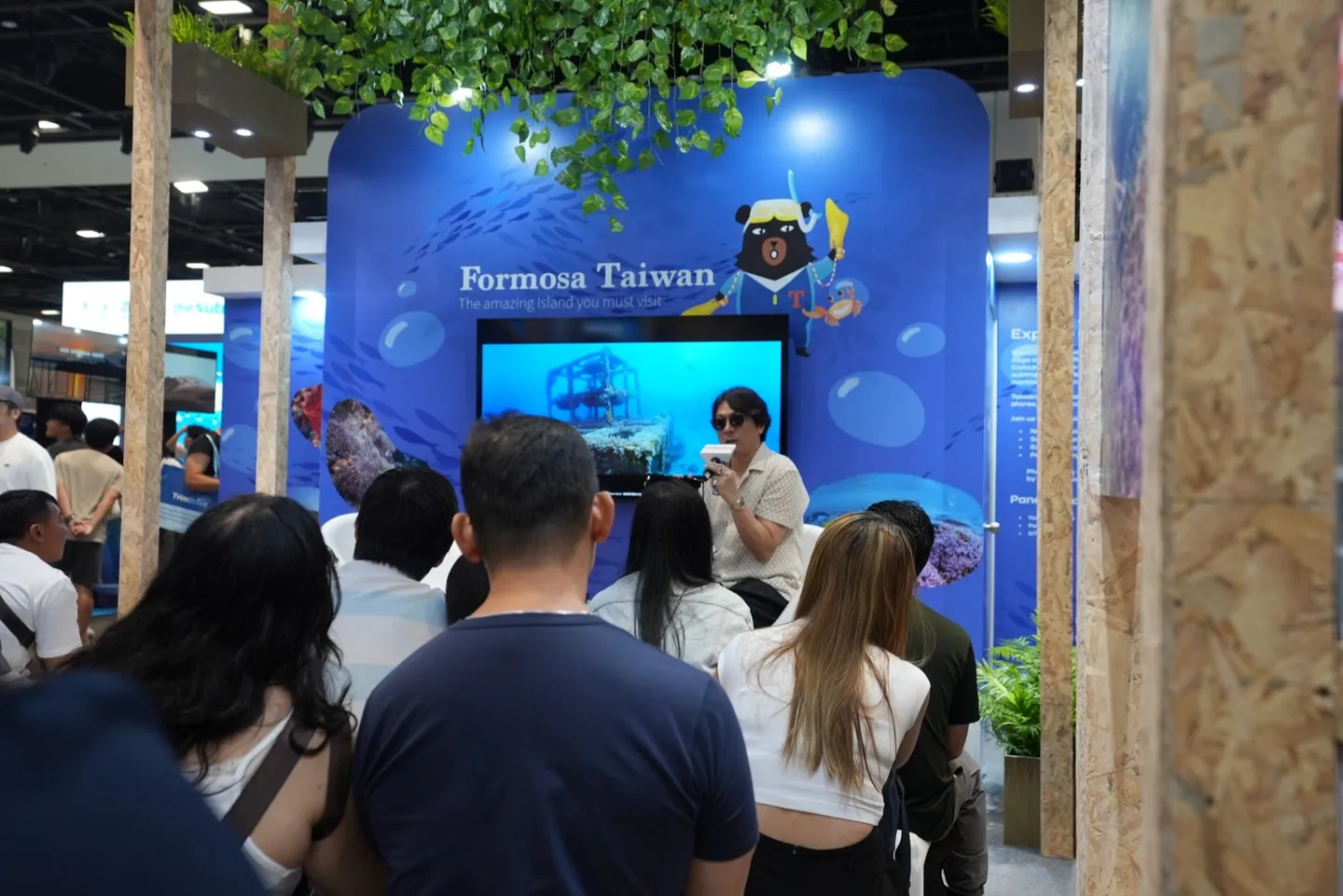
Yorko's narrative carried the heaviest and most painful weight of the entire sustainable diving theme. He moved from Whale Sharks to great white sharks, from the songs of humpback whales to the Morse-code-like clicks of sperm whales, from the observation that Clownfish are more dangerous than sharks ("I've never been bitten by a shark, but I get bitten by Nemo all the time") — and steadily into more sobering territory:
- Parasites on fish are visibly more numerous: shooting across the world over recent years, he has photographed abnormally large parasites even in the crystal-clear waters of Okinawa — possibly caused by water quality degradation, ocean eutrophication, and overfishing disrupting the food chain.
- Sea anemones bleach and recover; hard coral doesn't come back: growing less than 1 cm per year, decades-old coral dies when water temperature spikes, and rebuilding it takes decades more.
- A coral graveyard off the Seychelles, in the waters of Africa: he played a clip showing an area roughly the size of three football pitches — completely bleached and discoloured. "I kept thinking I'd come back next time. By the time I did, this place had become a coral graveyard — not just no coral, but no fish either."
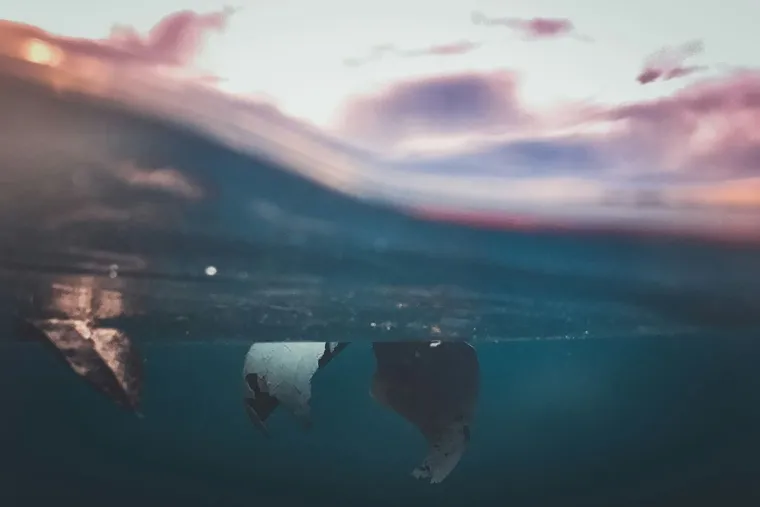
- Plastic itself is innocent: he photographed the hand of a plastic doll sticking out of sand on a remote beach. "I was genuinely frightened by what I saw. If things keep going this way, that could be my hand in the future."
Yorko closed with the most resonant line of the entire Taiwan Pavilion:
"Humans need the ocean, but the ocean doesn't necessarily need humans."
He wasn't standing on a moral pedestal, and he wasn't trading in grief. He simply laid out the footage accumulated across 10,000 dives and let you draw your own conclusions. His call to action was equally simple: choose ocean-friendly sunscreen, reduce single-use plastics, and pick up litter while you dive. "You have to love yourself before you can love the ocean — it's not about skipping sunscreen; it's about choosing the right kind."
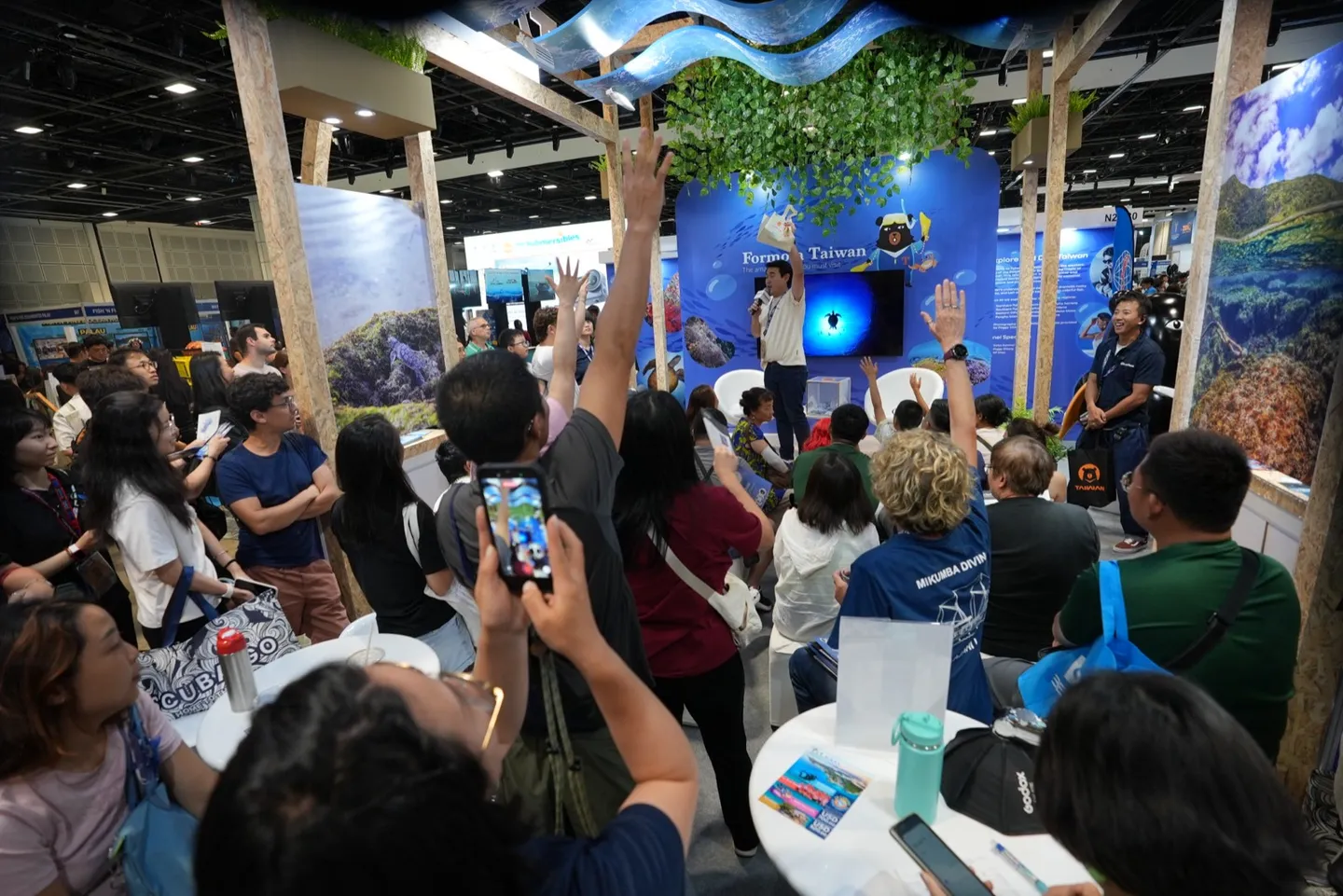
When the Editor turned around at the end of the session to look at the Singaporean audience: someone was wiping their eyes, someone else was bent over taking notes, and a father sitting with his child was nodding along. This was not a sales pitch. It was a civic education class — and it was Taiwan, on behalf of the ocean, teaching that class abroad.
Three MIT Dive Brands: ATMOS, 123 Underwater Lab, and DIVEVERYDAY Putting Taiwanese Manufacturing in the Spotlight
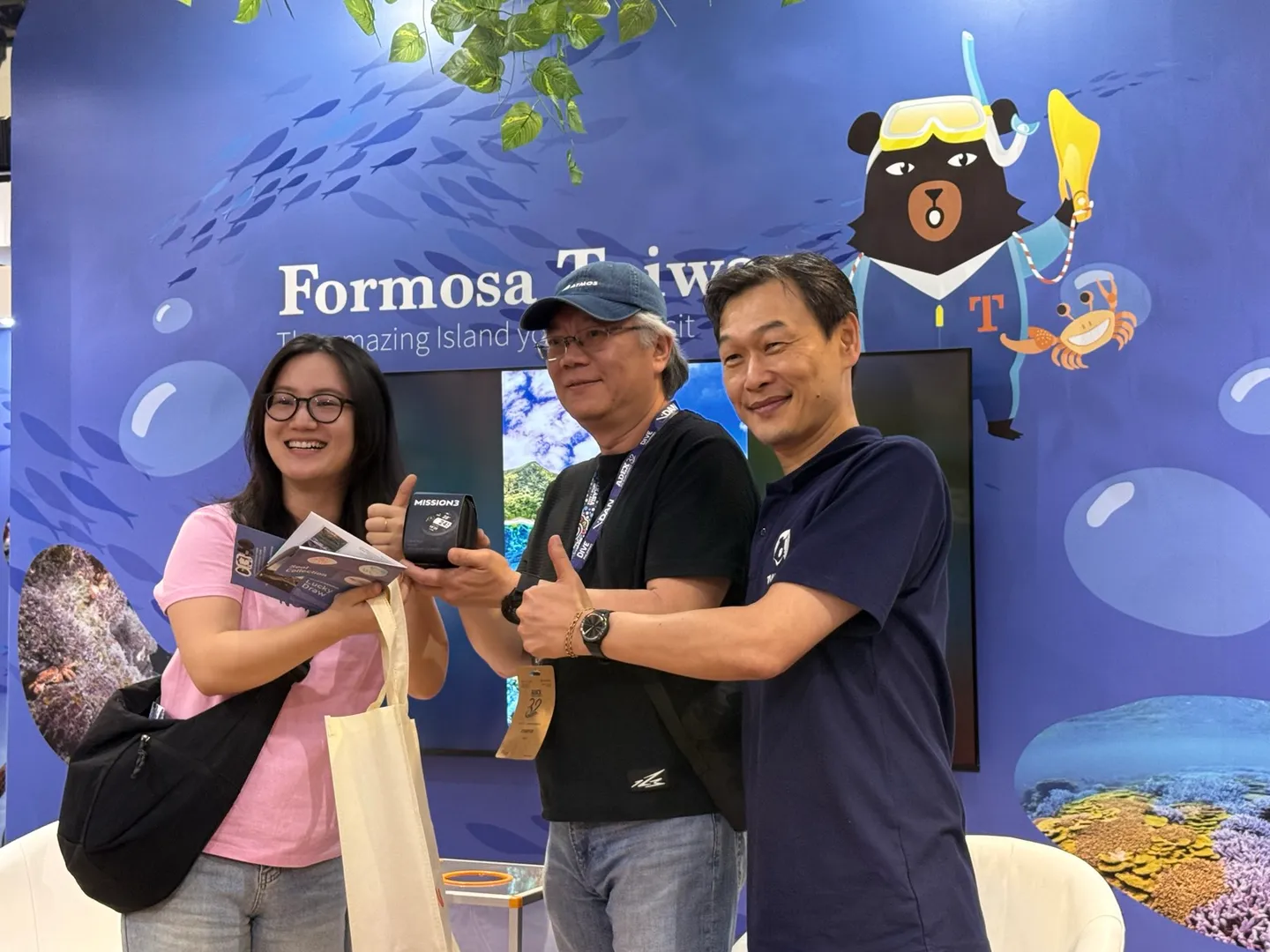
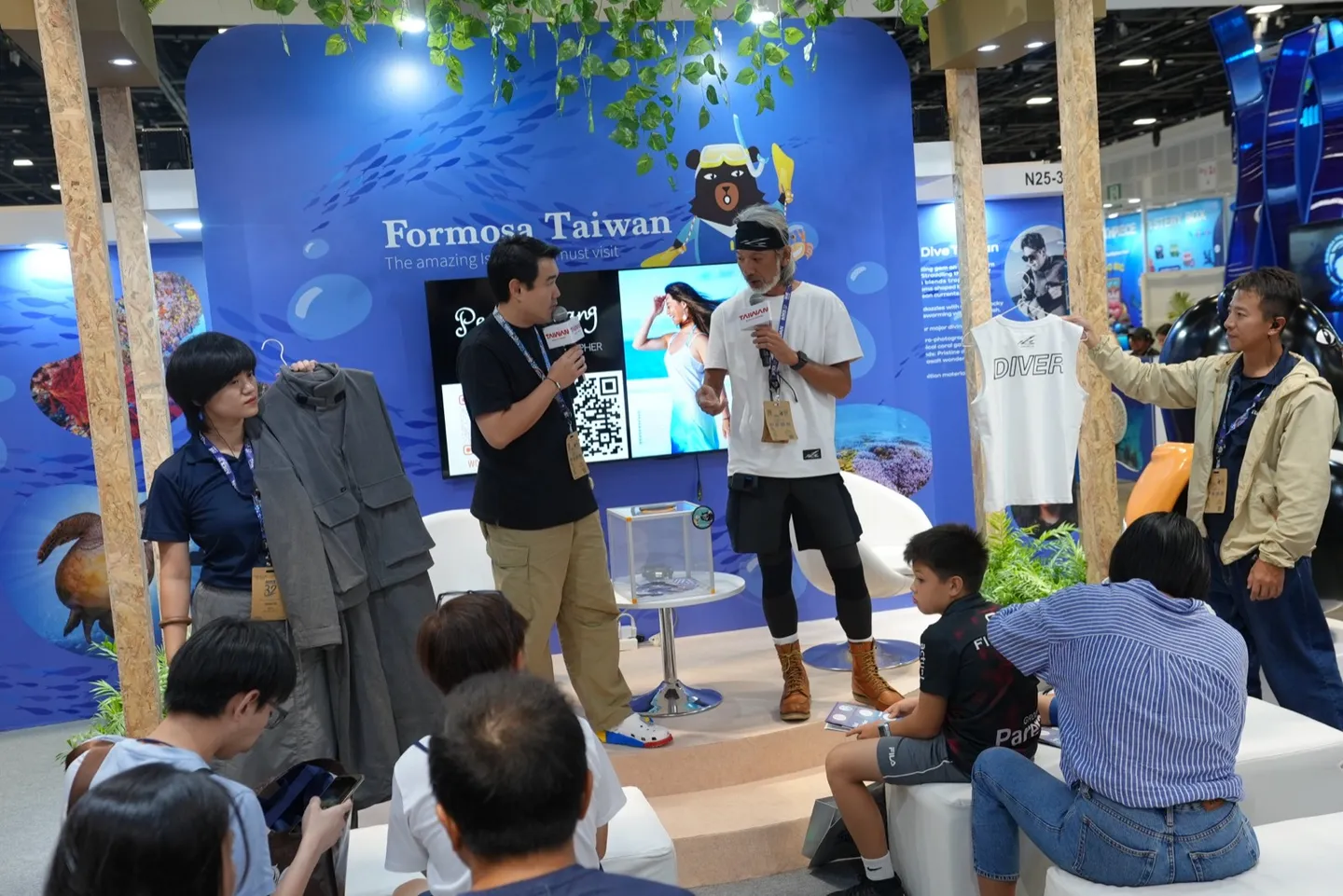
Alongside the dive sites and the speakers, the Office also brought three MIT brands — ATMOS, 123 Underwater Lab, and DIVEVERYDAY — to the Singapore dive expo. Making a loop through the booth area, the Editor found Singaporean divers picking up ATMOS dive computers and studying the interface; 123 Underwater Lab — billing itself as a design-forward dive apparel brand made from eco-friendly materials — had its cuts and fabrics surrounded the moment they were set out, with people trying pieces on and posing in the mirror; and DIVEVERYDAY was even more remarkable: their product line received such enthusiastic support from Singaporean visitors that everything sold out by the second day of the expo, prompting the owner to break into an ear-to-ear grin and announce on the spot: "We are definitely coming back to Singapore next year to contribute to Taiwan's GDP."
What all three brands share is Taiwanese design + Taiwanese manufacturing — quality and aesthetics that hold their own against international heavyweights, at a more competitive price point. Many Singaporean visitors arrived at the booth and discovered for the first time that Taiwan, beyond its excellent dive sites, has a fully developed ecosystem of gear, apparel, and equipment to match.
Over 1,000 Surveys: The Real Picture of What Singaporean Visitors Think About Dive Travel to Taiwan
When the three-day expo closed, the Taiwan Pavilion had collected over 1,000 completed surveys. For an overseas trade show, that number is remarkable — it means more than 300 Singaporean divers a day stopped, took the time, and genuinely filled in the form.
Those 1,000 surveys will become a key reference for the Tourism Administration's Singapore Office as it plans future "Singapore-to-Taiwan dive travel" initiatives — covering the most popular destinations, preferred seasons, ideal trip lengths, and budget ranges, all drawn from real, first-hand data. Glancing at the emerging trends on-site, the Editor noticed that southern Taiwan (Kenting, Xiaoliuqiu) and Green Island were the two regions generating the most interest. That said, "Taiwan as a dive destination" remains relatively niche among Singaporean divers — compared with household names like Bali and the Philippines, Taiwan's profile in the local market is still clearly a step behind. Flip that around, and it means the growth potential for dive travel to Taiwan in the Singapore market is enormous.
Closing Thoughts: Taiwan Dive Travel's Real Strength Is "Sustainability × Diversity" — All in One
After three days at the ADEX 2026 Taiwan Pavilion, what the Editor most wants to say is not about survey numbers, nor about which dive site was the most popular. It's this: the path Taiwan is charting for dive travel actually pairs perfectly with sustainability.
Why? Because Taiwan has three advantages that are very hard for other countries to offer simultaneously:
One: Mountains and Ocean in a Single Day — With a Night Market for Good Measure
This is Taiwan's most underrated superpower. At many popular dive destinations, diving is diving — and once you're back on shore, you either return to the resort or to the liveaboard, with very limited options beyond that. In Taiwan, you can dive Longdong on the Northeast Coast in the morning, head up into the mountains for oolong tea at noon, dash over to Jiufen for taro balls at dusk, and wrap up the evening browsing Raohe Night Market in Taipei — mountains, ocean, and city, all in one day. For Singaporeans accustomed to long-haul dive trips, this kind of "no need to choose — have it all" itinerary density is a genuinely irreplaceable experience.
Two: This Is Exactly What Sets Taiwan Apart When Promoting Dive Travel
After three days at the booth area, the Editor noticed that the question Singaporean visitors asked most often wasn't "How good is the visibility?" — it was "What can I do after diving?" That question is hard to answer at most dive destinations, but in Taiwan it's an easy win. Diving + cuisine + mountain scenery + urban life + culture — that combination is Taiwan's true differentiating weapon. The Office's decision to frame "sustainable diving" alongside this kind of multifaceted experience was, in effect, a message to the world: Taiwan isn't just a dive site — it's a complete package: one that lets you have a great time without harming the ocean.
Three: A Complete Dive Industry Ecosystem — End-to-End
From government-level resources tied to national scenic areas, to local dive shops (DiveMate, Taiwan Dive, Hide N Sea, Ocean Channel), to MIT gear brands (ATMOS, 123 Underwater Lab, DIVEVERYDAY), to the conservation end of citizen science (Turtle Spotting, Penghu coral restoration) — Taiwan's dive industry has all the pieces in place, and every piece is strong. What comes next is genuinely connecting those pieces so that international visitors can experience Taiwan — from underwater to on land — in the smoothest possible way.
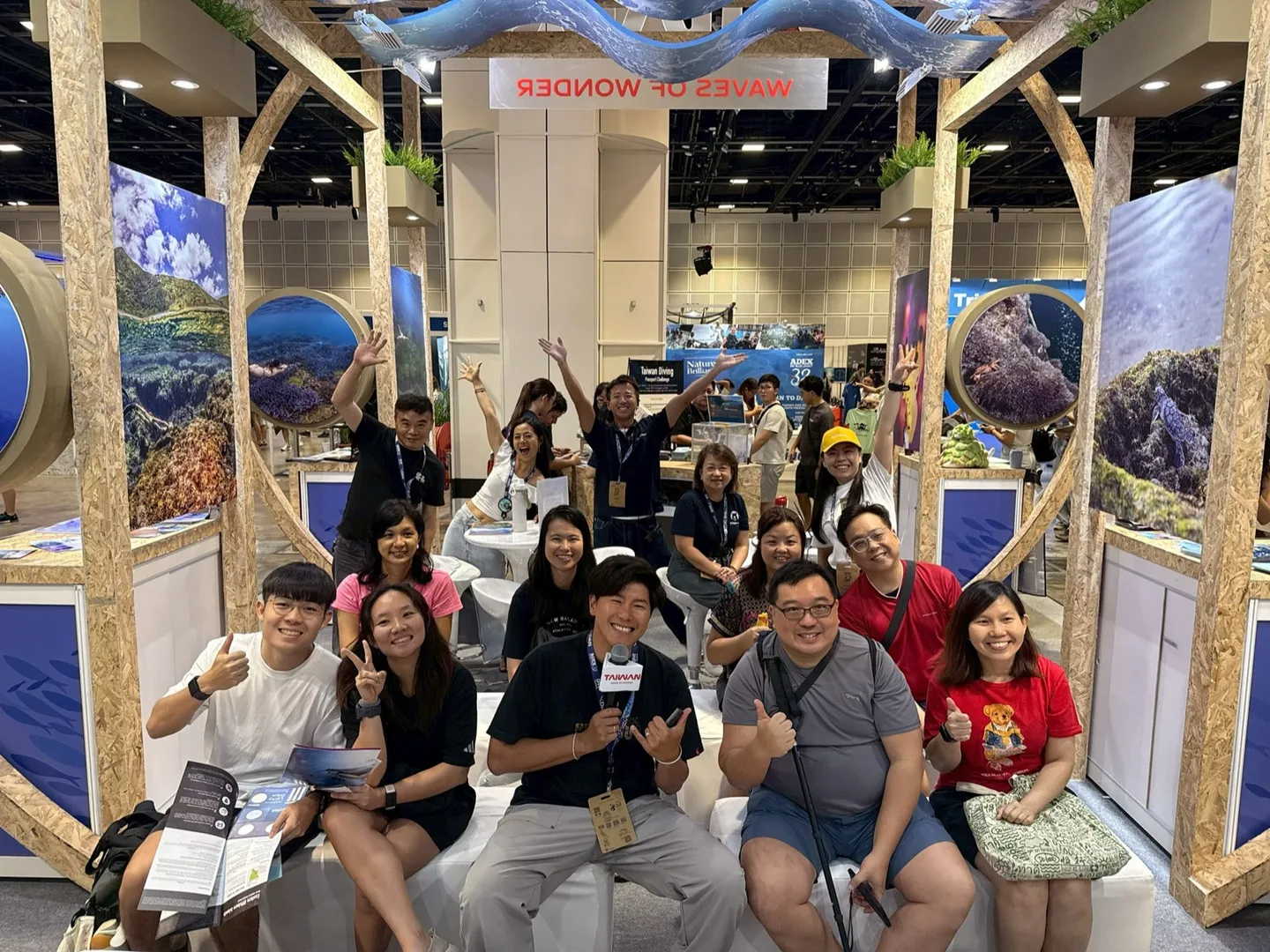
Bringing four dive shops, three brands, and three speakers together under one roof at the ADEX 2026 Taiwan Pavilion was itself a demonstration of what that connection looks like. The Editor hopes this kind of collaboration extends beyond the expo floor and back to Taiwan itself — so that international visitors who want to come and dive don't just glimpse isolated highlights, but experience a journey that is complete, cohesive, and full of genuine sustainable spirit.
And that is precisely why, when the Singapore Office packed four national scenic areas, four operators, three speakers, and three MIT brands into the ADEX 2026 Taiwan Pavilion, the Editor felt this was a genuinely pivotal demonstration:
The next step for Taiwan's dive travel isn't just selling dive sites — it's selling a whole "island lifestyle that's fun and doesn't harm the ocean," built on sustainability.
Walking out of the venue, the Editor glanced back at the Taiwan Pavilion's blue main visual. Three days of non-stop crowds. Singaporean visitors are beginning to know Taiwan's seas — and we're getting better and better at using our own language to tell the world the full story of diving in Taiwan.
Diving the Northeast Coast, Kenting and Xiaoliuqiu, Green Island, and Penghu — four routes, your pick, with a complete industry ecosystem backing every one of them. If the ADEX 2026 Taiwan Pavilion has fired you up, leave a comment and tell the Editor which destination you want to visit first — was it Mimi's story, the 3D-printed oyster shells, or Yorko's photo of the plastic doll that hit you hardest? See you by the sea.
Further Links: Partners from This Year's Taiwan Pavilion
Want to learn more about the operators, brands, and speakers who made the ADEX 2026 Taiwan Pavilion happen? The Editor has rounded up the relevant links here — feel free to follow along:
Four Local Dive Shops
- DiveMate (Northeast Coast): @divemateclub
- Taiwan Dive (Kenting · Xiaoliuqiu): taiwan-dive.com
- Hide N Sea (Green Island): @hide.n.sea
- Ocean Channel (Penghu): oceanchannel.com.tw
Three MIT Dive Brands
- ATMOS (dive computers): atmos.app
- 123 Underwater Lab (eco-material dive apparel): 123underwaterlab.com
- DIVEVERYDAY (diver-crafted gear): diveveryday.com
Three Speakers
- Yorko Summer (internationally renowned underwater photographer): @yorkosummer
- NT (Penghu coral restoration · Ocean Channel Dive): oceanchannel.com.tw
- Peggy (Turtle Spotting core volunteer): @wonderpeggy
Organiser
- Taiwan Tourism SG (Tourism Administration Singapore Office): @taiwan_tourism_sg