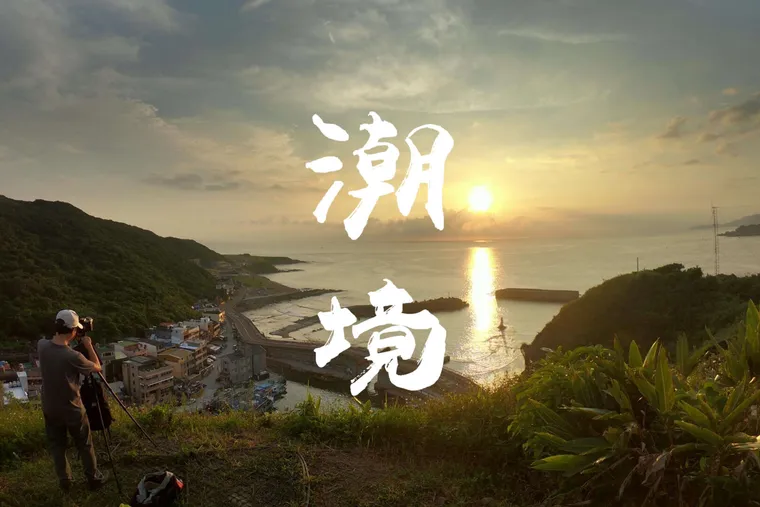
The Editor says: The BlueTrend team is honoured to have won first place in the 2019 Chaojing Bay Festival Tidal Ecology Underwater Documentary competition. Our original hope was simply to let more people see the stories hidden within this small bay, so we invested in expensive camera equipment to help the public better understand the ocean. We are deeply grateful to journalist Zhuang Xiaoping of Agriharvest, whose writing helped us express our feelings more fully. This article is republished in full with permission from Agriharvest. (Original link)
[fb_plugin video href="https://www.facebook.com/BlueTrend.Media/videos/646191225878401/" autoplay="true" ]
Three years have passed since the establishment of the Wanghaixiang (Chaojing) Bay Marine Resource Conservation Area. The Keelung City Government recently hosted the "Tidal Ecology — Underwater Footage Documentary Competition and ImageBay Underwater Photography Contest" to showcase the thriving underwater life within the Chaojing Conservation Area. The top prize in the documentary category was claimed by a scuba diving enthusiast from the Chaojing area. The film follows the perspective of young local residents who have become divers, highlighting not only the beautiful ecology of Chaojing but also sending a message to the relevant authorities: marine conservation should not be done halfway. Traffic management and regulations for diving activities still need to be planned in order to encourage local residents to participate in the tourism industry's transformation and allow the conservation area to operate sustainably.
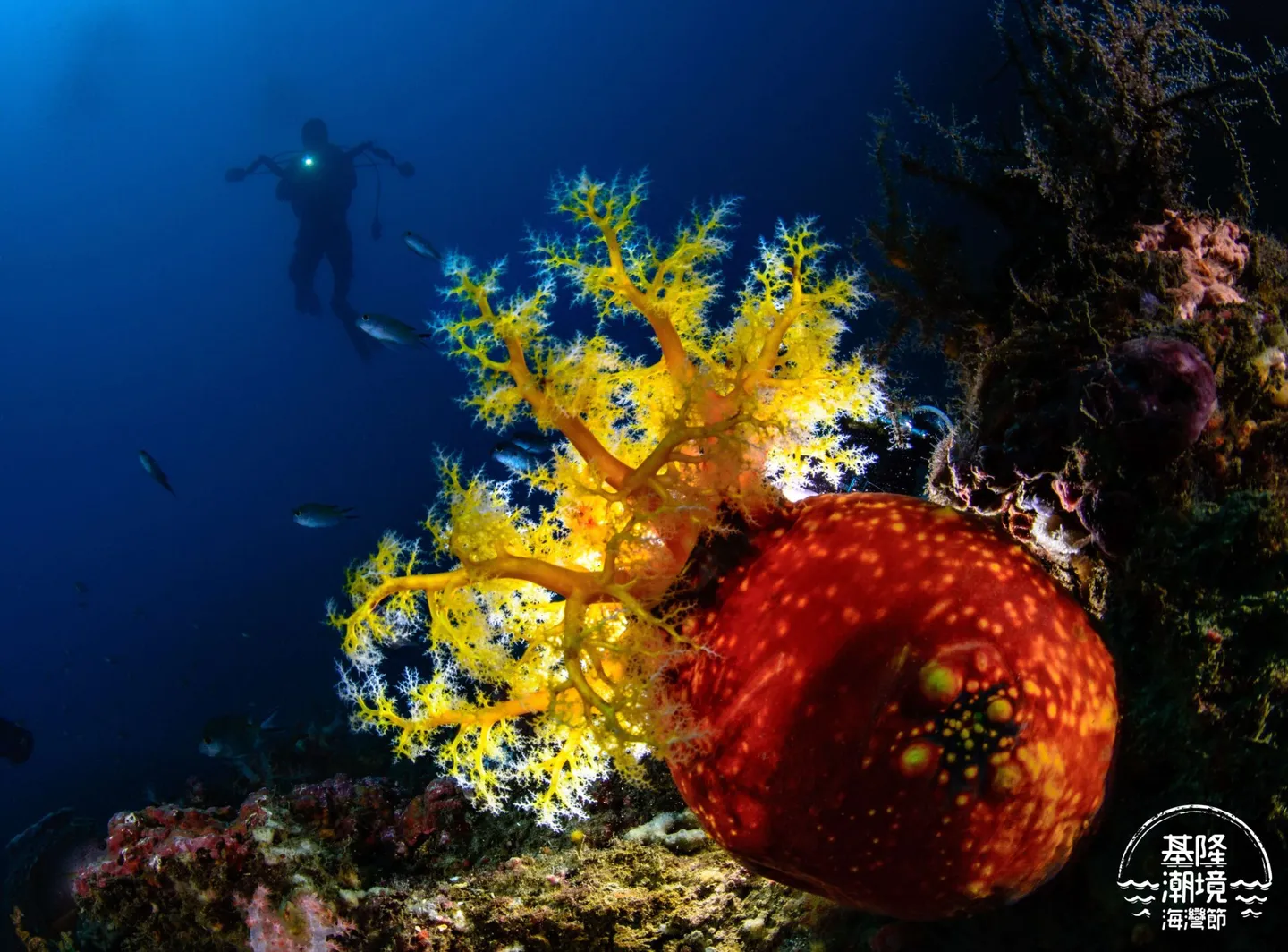
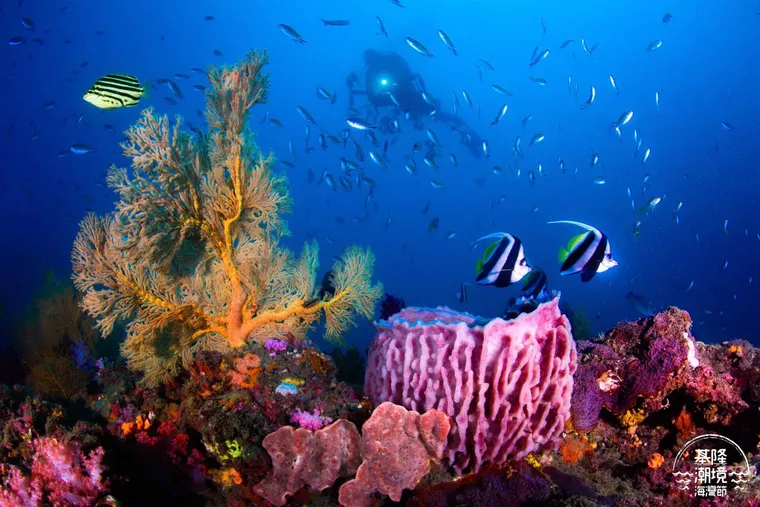
2019 Tidal Ecology [Wide-Angle] Merit Award — Qiu Maorui, Chaojing Superstar @ Sea Apple
Industry Transformation Falling Behind — Conservation Area Sparks Conflict Between Divers and Residents
Among diving enthusiasts, Chaojing Bay is regarded as an up-and-coming dive site. Designated as a marine resource conservation area by the Keelung City Government in 2016, it is the smallest fishery resource conservation area in Taiwan at just 15 hectares. With fishing and the harvesting of any aquatic animals prohibited throughout the entire area, recovery has been so effective that even neighbouring fishermen have noticed the difference. In the 2018 ecological survey Ecological Survey of Artificial Reef Zones and Aquatic Animal and Plant Breeding Conservation Areas in the Northeastern Waters of Taiwan, led by adjunct researcher Shao Guangzhao of the Biodiversity Research Center at Academia Sinica, the Chaojing Conservation Area was identified as having the highest algal biodiversity, the greatest species richness, and the highest individual population counts among the seven fishery resource conservation areas in the northeast. The return of the ecosystem has brought with it new challenges for the conservation area's sustainable management.
Zhao Jienshun, the award-winning director of this documentary, has been running a dive equipment shop in Chaojing with a diving instructor friend since late 2015. Looking back, he recalls that since the conservation area was established, at several review meetings, some fishermen would blame the fledgling diving industry for the losses caused by the fishing ban, claiming that "only outsiders can profit from the conservation area." In response, starting in 2017, they began collaborating with some local fishermen, involving them in scuba tank and dive equipment rental services, hoping to broaden the economic benefits generated by diving activities. Last year, they also recruited four students who had grown up locally, offering them jobs at the dive shop and diving training, with the hope that young people might find reason to stay and work in their hometown thanks to this emerging industry.
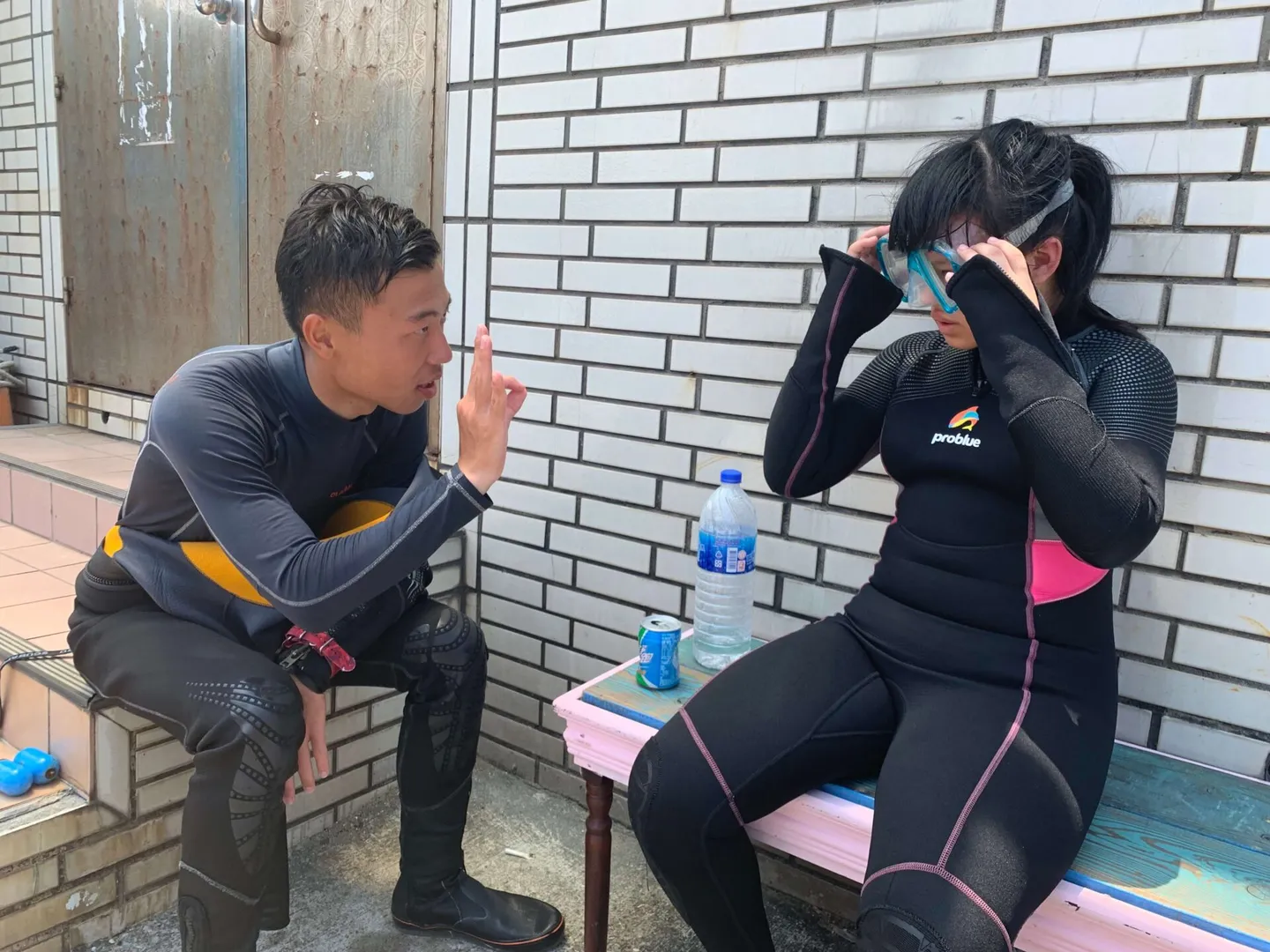
Local young resident "Datou" (Jian Chenyu) began teaching and leading guided dives at Chaojing in 2019


Designating a Conservation Area Is Just the Beginning — Sustainable Management Still Requires Broad Discussion and Adjustment
"Recently, friends who've seen me build something here want to come back and do it together," said Jian Chenyu. He is the only one of the four young people who worked part-time at the dive shop last year who has continued in the diving industry. In just one year, with the support of the dive shop, he earned his diving certification and became a fully qualified dive instructor in the water this year. As a local who grew up in Chaojing, he is glad to see new business opportunities emerging in the area thanks to diving activities — such as vendors selling grass jelly desserts, something he had never seen there before — yet he also suffers from the traffic problems that come with weekend crowds. The community's limited space struggles to absorb the vehicles of visitors to the nearby National Museum of Marine Science and Technology, Chaojing Park, and divers alike. Moreover, as diving activities have grown, he worries that divers with poor skills may damage the coral in these waters — but none of these issues have been properly acknowledged or discussed.
Zhao Jienshun believes that designating a conservation area is only the first step in environmental protection; the subsequent guidance and transformation of local industries is equally important. Because official bodies have limited understanding of diving tourism, they are unable to guide residents toward new economic activities. Beyond running food stalls, for example, residents who own fishing boats could participate in boat dive services. Furthermore, the conservation area currently has no entry fees and no carrying capacity controls. Some instructors take large groups into the water at once, which is not only dangerous but may also cause environmental damage — all of which is detrimental to the sustainable operation of the conservation area. "We strongly support the introduction of a 'diving tax.' The funds collected could serve as a conservation fund to maintain the environment," he said. He emphasised that managing a conservation area cannot be done halfway; relevant regulations must be discussed collectively by the authorities, divers, and residents in order to create benefits for all parties while preserving the hard-won marine ecosystem.
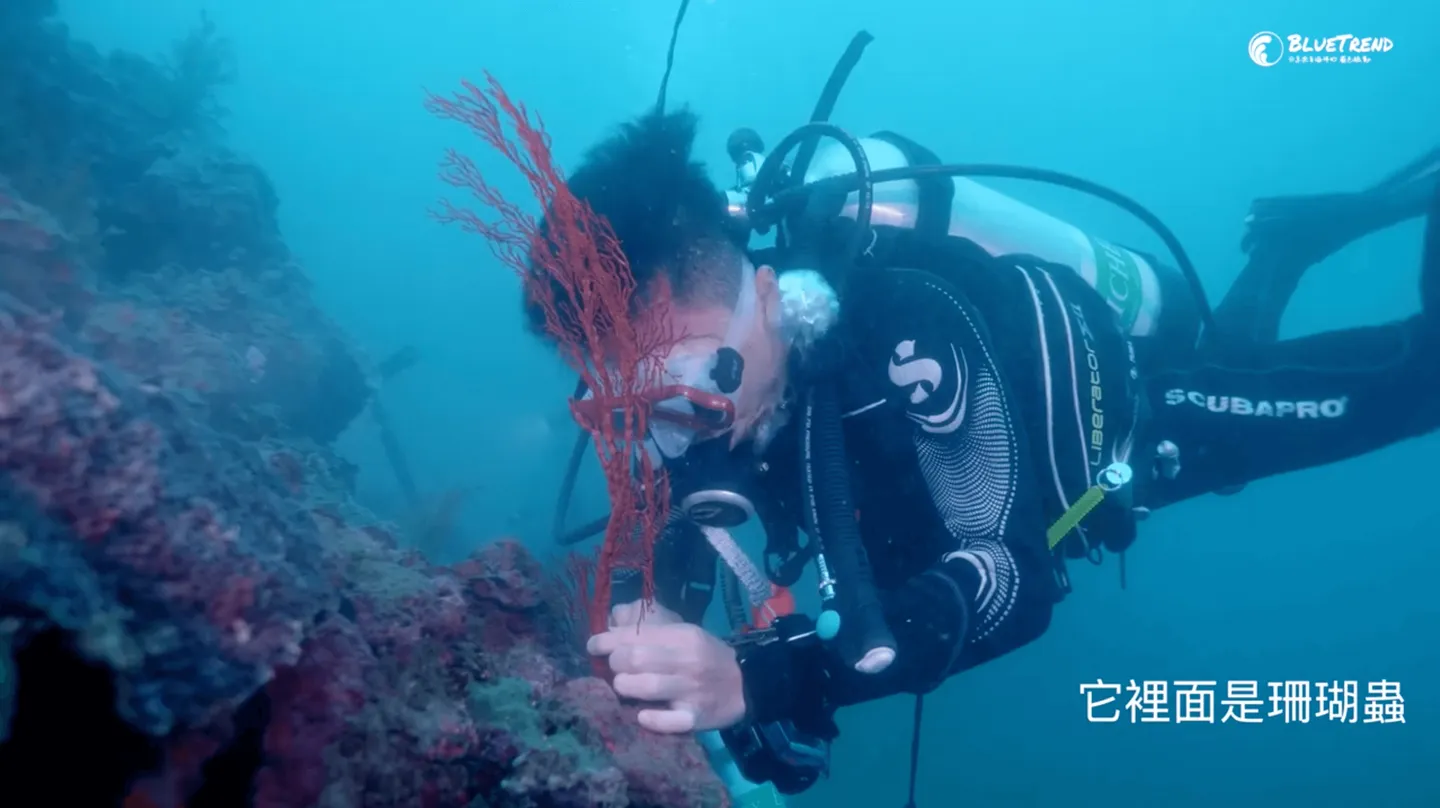
Jian Chenyu notes that divers regularly moving through the water also helps deter illegal fishing. In the documentary, he also mentions that whenever he sees broken coral on the seabed, he proactively helps put it back, doing his part to protect the precious underwater ecosystem.
This article is republished in full with permission from Agriharvest. Reporter: Zhuang Xiaoping. (Original link).
Related links:

![[Video] Change and Continuity in Chao Jing — A Fishing Village in Transition: First Prize Documentary, 2019 Chao Jing Bay Festival](/_astro/%E8%9E%A2%E5%B9%95%E5%BF%AB%E7%85%A7-2019-08-02-%E4%B8%8B%E5%8D%8812.56.29_ZGwc8e.webp)