Contents(7)
Hello everyone, I'm photographer Ishino. "Japan Underwater Odyssey" is a series that travels through Japan's coastal waters with the turning of the seasons, capturing the faces of marine life that can only be encountered in specific places at specific times of year.
June is the calmest period of the year in Japan's coastal waters. As water temperatures gradually rise, the sea enters conditions ideal for fish reproduction. This time, I left the main island of Okinawa — deep in its rainy season — and headed to Amami Oshima, situated between Japan's main island and Okinawa. In these waters, rich in natural resources and home to a unique ecosystem, I witnessed an extraordinary and unforgettable courtship behavior.
The star of this piece is the Amami Hoshizora Puffer (Torquigener albomaculosus), a small pufferfish found only in the waters surrounding Amami Oshima.
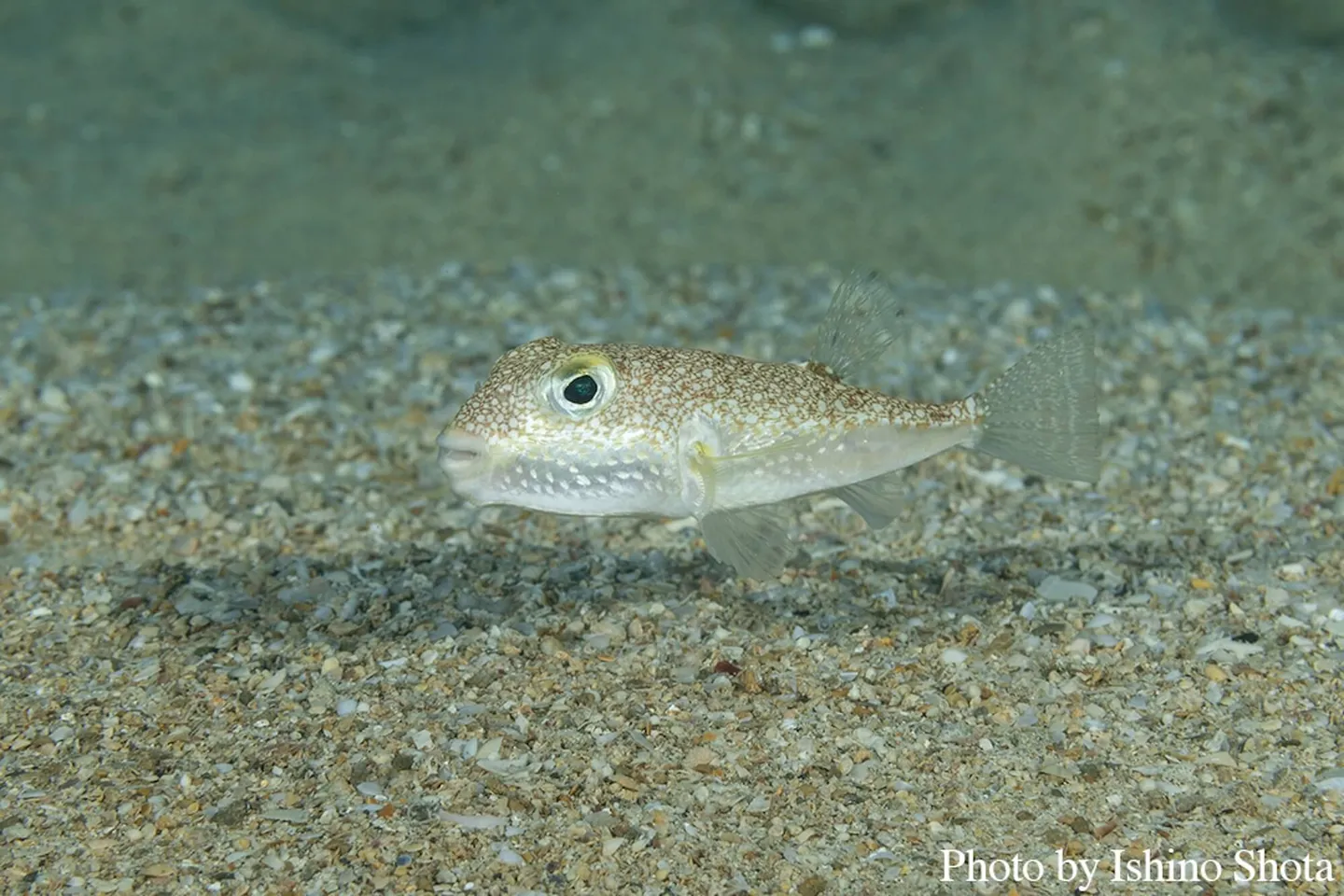
A Tiny Star of Amami Oshima
The Amami Hoshizora Puffer measures only about 10 cm in length. The first time I encountered one underwater, the impression it left on me far exceeded what its small size would suggest.
Why does such a small fish captivate so completely? The answer lies in its remarkably unique and delicate reproductive behavior.
I first heard of this fish around 2015. The species wasn't formally recognized as a new species until 2014, and what truly captured global attention was the astonishing structure that males build during the breeding season: a massive circular nest on the sandy seafloor.
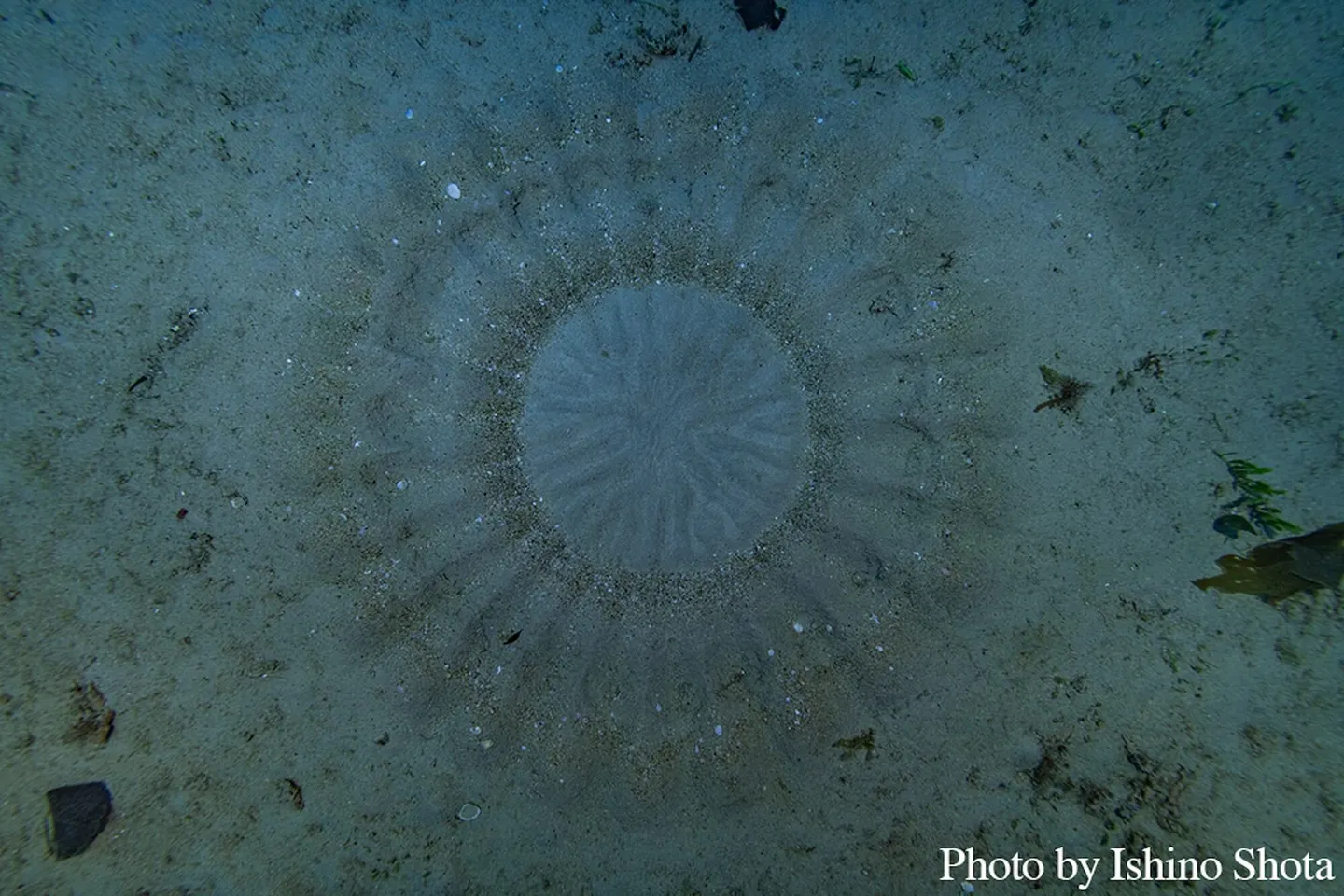


Geometric Art on the Sand
Once the breeding season begins, male Amami Hoshizora Puffers select sandy areas with good water flow and begin constructing circular nests that can reach up to two meters in diameter. Viewed from above, these nests display precise and elegant geometric patterns that are simply hard to believe.
At first glance, they look like carefully designed works of human art — yet these patterns are far more than decorative.
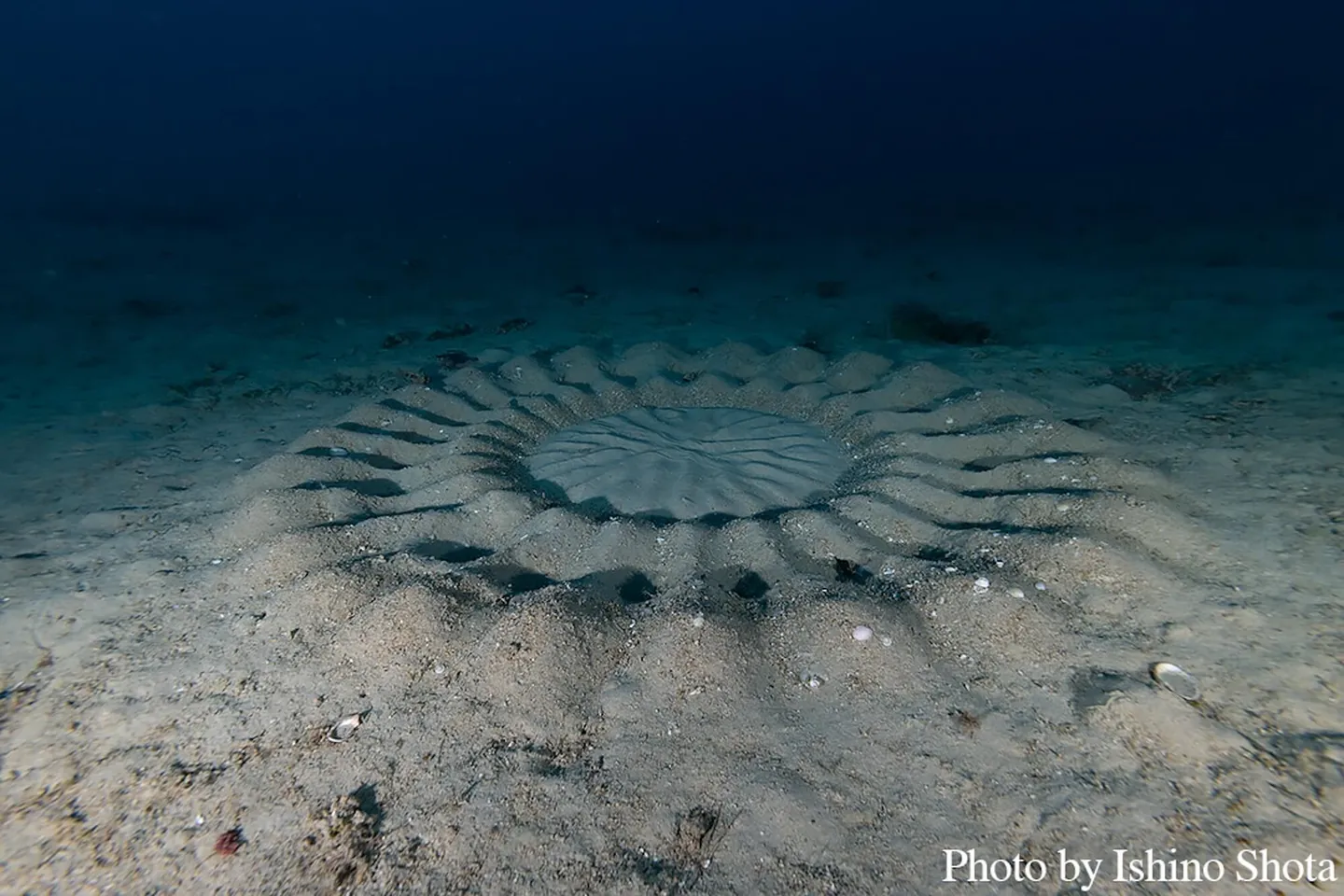
The outer ring is carved with radiating ridges, while the center is slightly concave, creating a zone of comparatively gentle current. This structure is thought to prevent fish eggs from being swept away by strong currents — an entirely rational design of remarkably high functionality.
That a fish measuring just about 10 cm would spend nearly a week constructing a structure dozens of times larger than its own body is, in itself, deeply moving.
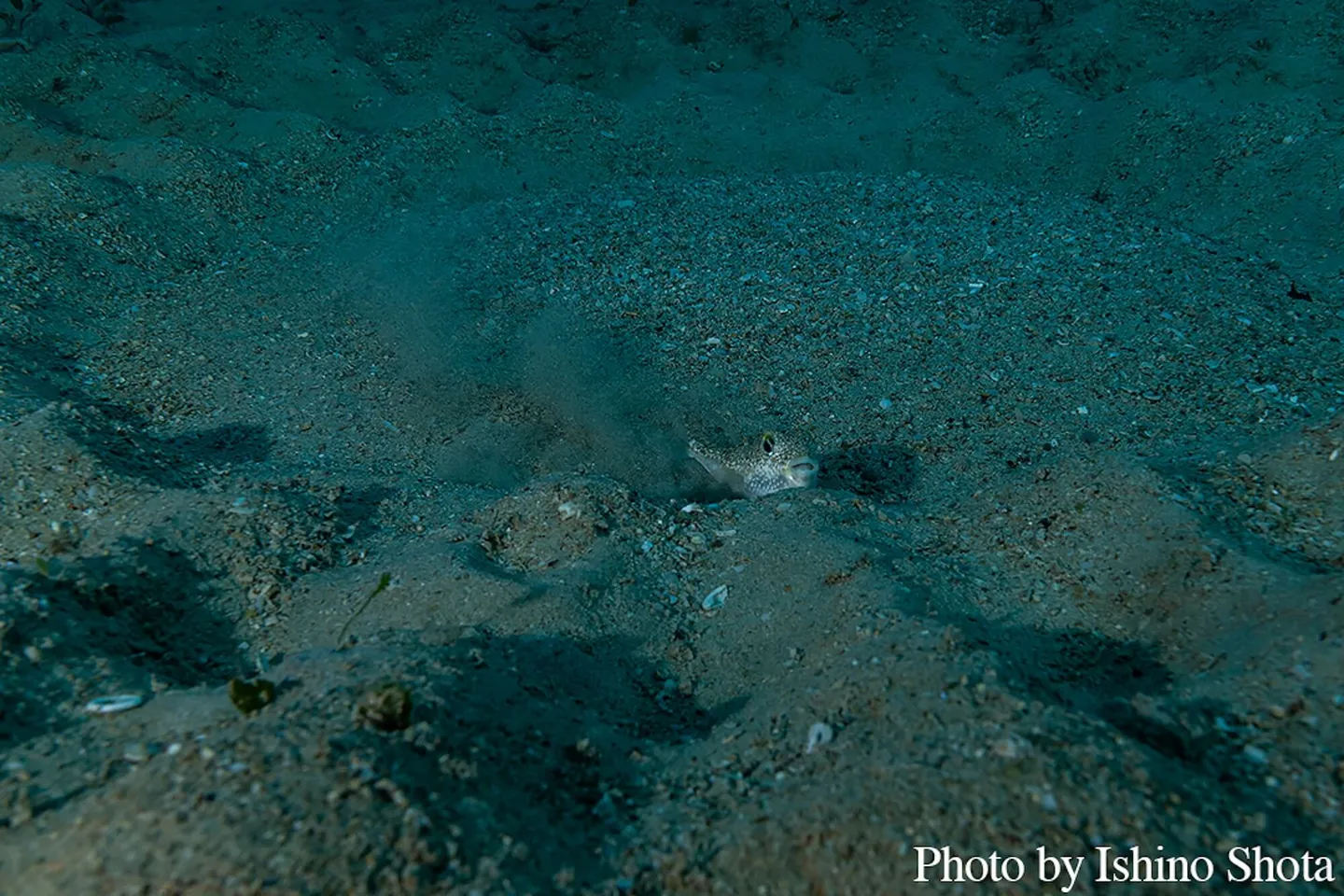
A Display of Life Through Nest-Building
Not every male succeeds in reproducing. The quality of the nest plays a decisive role in whether a female is drawn in to spawn.
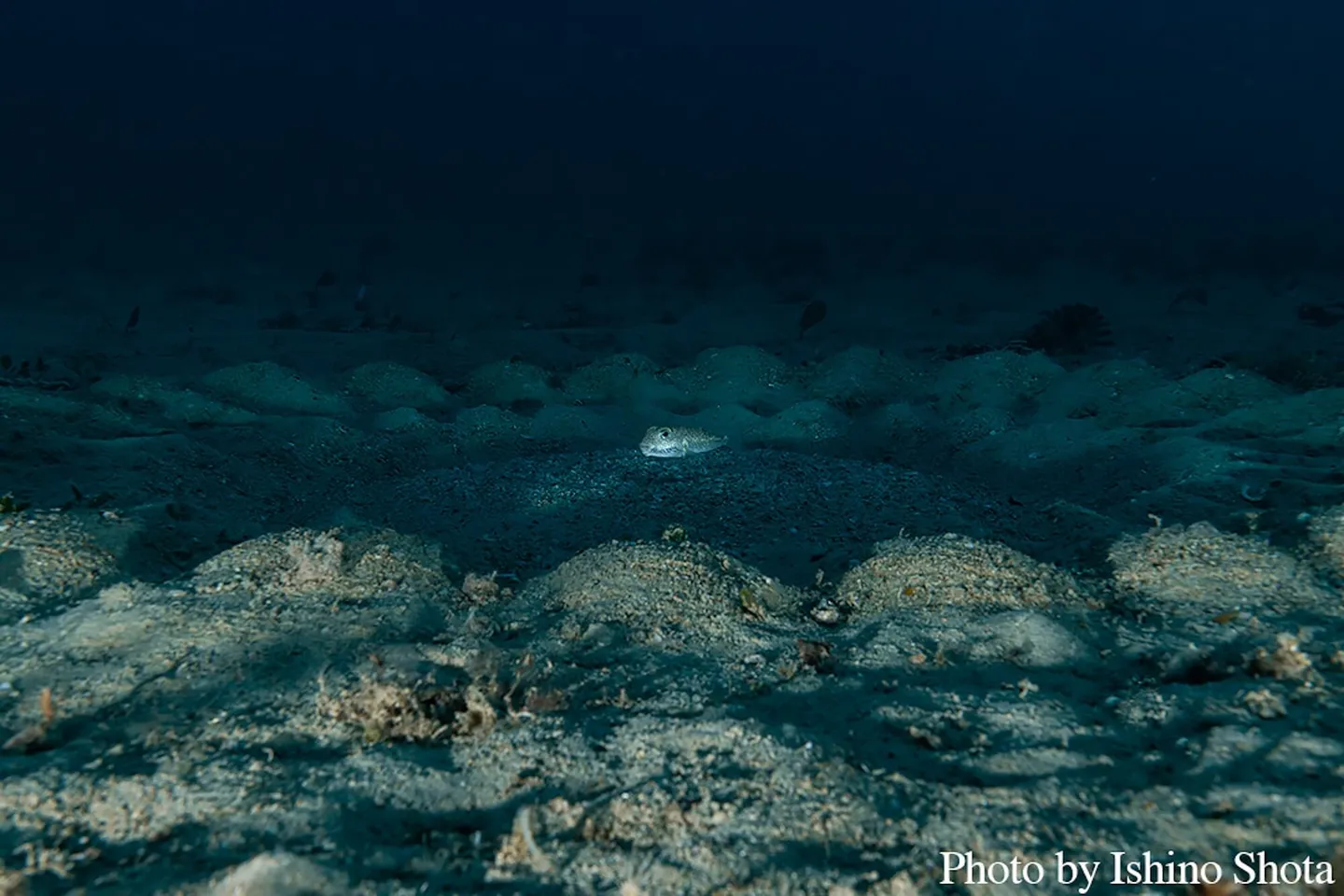
For this reason, males invest an enormous amount of effort in nest construction. To make the nest more appealing, they carefully arrange small shells and coral fragments — like adding the final touches to a work of art.
As the nest nears completion, the male continues to meticulously groom the central area until it reaches the ideal state, only then considering the nest truly finished.
Only when a female recognizes and approaches the nest does the opportunity to reproduce finally arrive.
A Silent Waltz at the Heart of the Nest
Once a female enters the nest and begins to spawn, the pair move close together in the circular center — slow and graceful, like a quiet waltz.
On the sand, life is gently and carefully entrusted to the next generation. It is not a showy scene, yet it is one of those rare moments that is both beautiful and fleeting.
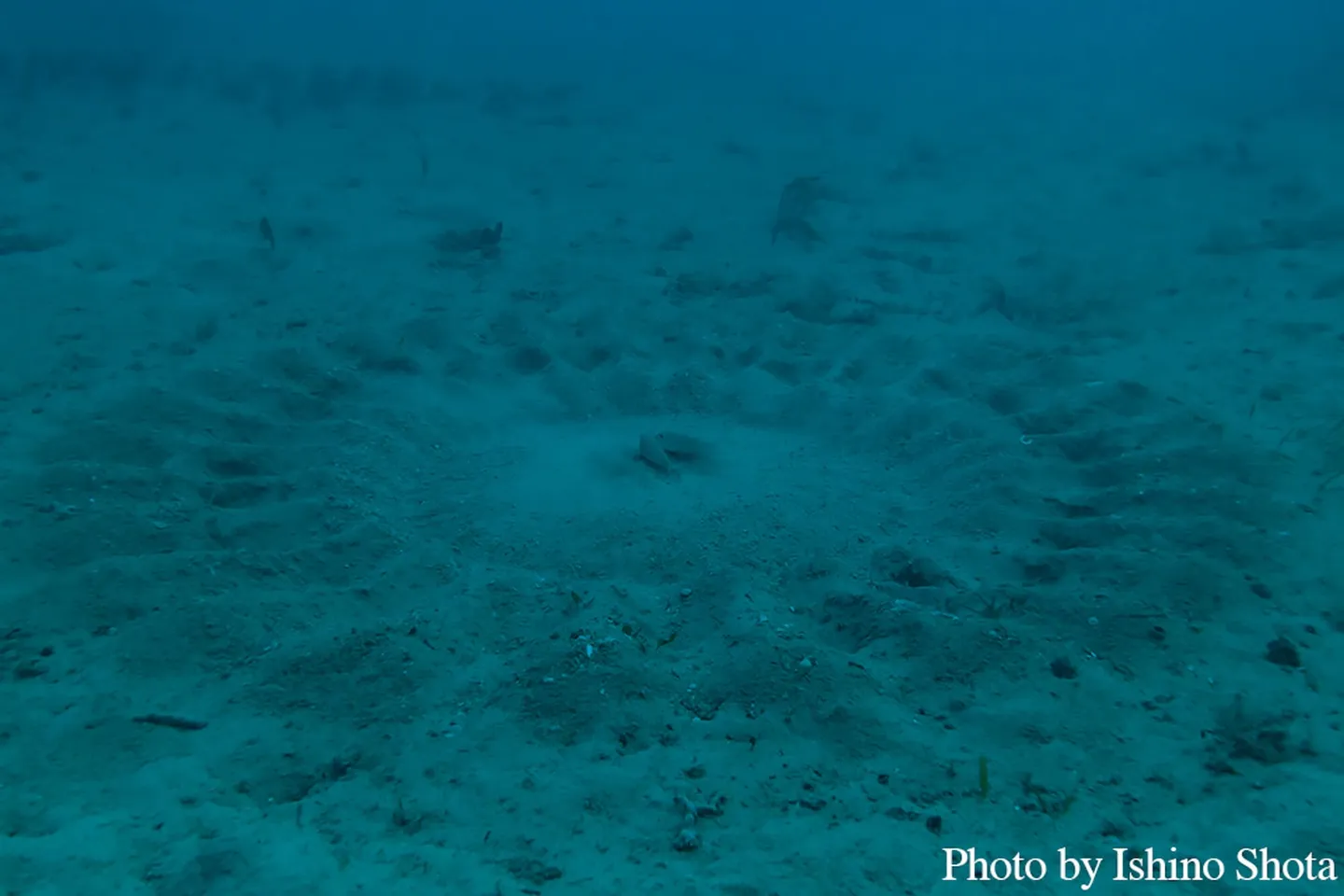
Nearby, however, I also spotted abandoned nests that had never attracted a single female. As time passed, those nests gradually blurred and faded, eventually returning to the sand — a silent testament to the harsh reality that accompanies this reproductive strategy.
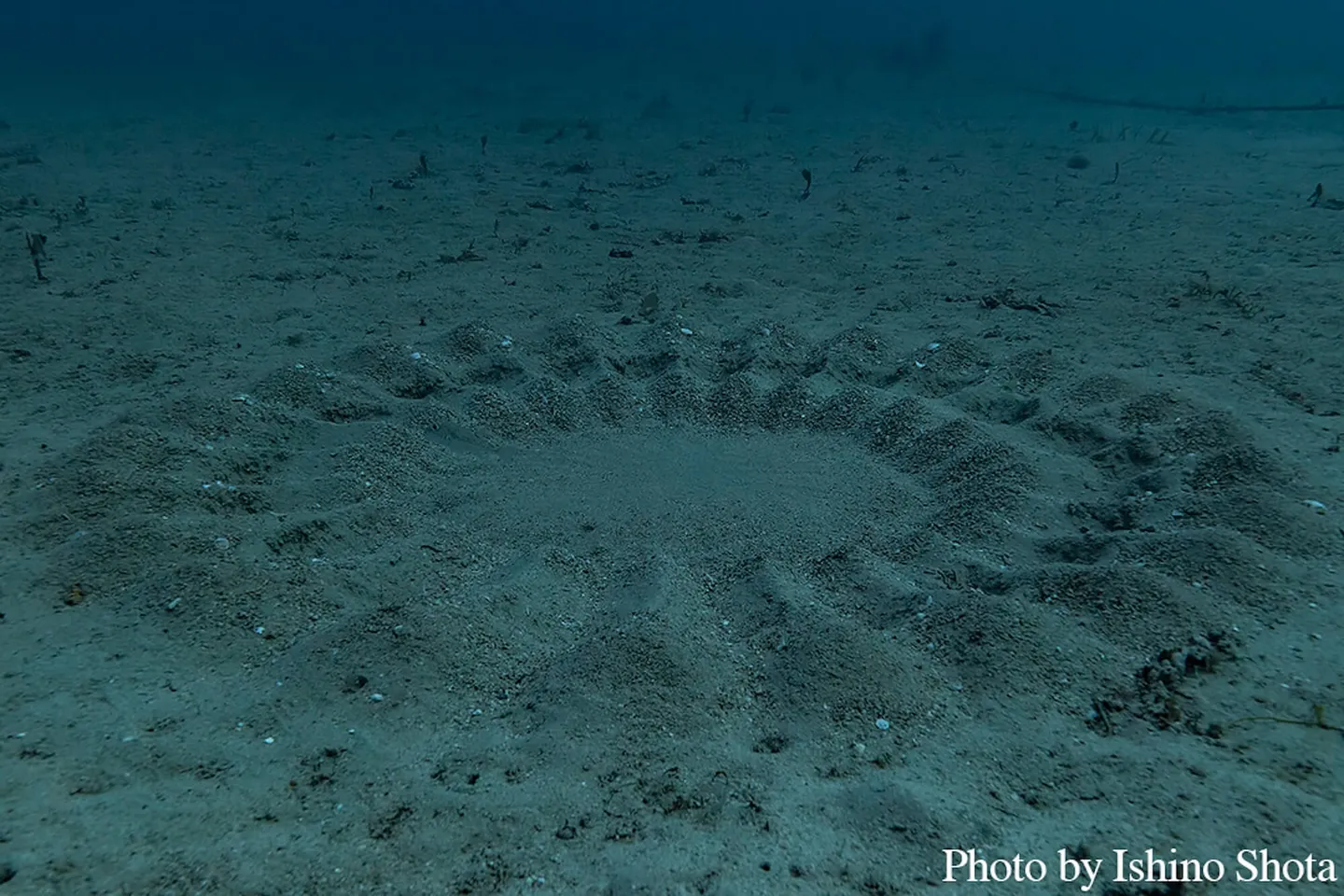
What Divers Should Know and Be Capable of as Observers
During the breeding season, the Amami Hoshizora Puffer becomes especially sensitive and alert. If a diver approaches too suddenly, or stirs up sand near the nest, the male may abandon the nest entirely and cease all reproductive activity.
Once a nest is abandoned, it will not be used again. For that male, it may mean losing an opportunity that comes only once in a lifetime.
Observing this phenomenon therefore requires good neutral buoyancy control and a genuine respect for the ocean. Avoiding sand disturbance, maintaining an appropriate distance, and keeping movements steady are all essential — and these behaviors are, in a very real sense, a crucial way of protecting the fragile thread of life unfolding before your eyes.
A Love Story Born of the Drive to Reproduce, in the Waters of Amami Oshima
The waters of Amami Oshima hold a quiet depth quite different from large schools of pelagic fish or vibrant coral reefs. The nest-building and courtship of the Amami Hoshizora Puffer is a symbol of all that is subtle and rich about these waters.
This sight — visible only in early summer, only at Amami Oshima — is precious not merely for its rarity, but because it is a drama of life that plays out briefly in a specific window of time and place.
If you wish to truly experience the depth and richness of the ocean, I invite you to visit the waters of Amami Oshima in early summer.
The geometric nests drawn upon the sand, and the love story woven by these tiny pufferfish, will surely leave a memory in your heart that lasts a lifetime.
Further Reading
-
Shota Ishino on Instagram: shota_gorillahouse
-
May in Aguni Island: The Spectacular Bigeye Trevally Tornado – Japan Underwater Odyssey
-
Japan Spring Dive Sites: Seaweed Forest Adventures in Kagoshima – Japan Underwater Odyssey
-
Where the Kuroshio Passes: Japan's Westernmost Island, Yonaguni – Japan Underwater Odyssey

![[Must-Read for Divers] Always Getting Turned Away When Joining Group Dives? How to Become a Self-Sufficient Diver](/_astro/71723046_2280349618943723_525180423337148416_o_aJHG.webp)