Contents(10)
Penghu is located to the west of Taiwan's main island and is Taiwan's largest outlying island. Volcanic basalt formations are found throughout, creating a diving environment unlike any other in Taiwan. The entire island group is shaped by the interplay of volcanic basalt and marine erosion, resulting in a rich and varied landscape that is one of Penghu's must-see highlights. Situated between mainland China and Taiwan, Penghu has been a strategically contested location since ancient times, and the island is consequently rich in historical remnants — artillery fortresses, tunnels, and ancient temples — all of which combine to make this a wonderfully surprising island where culture and nature collide. A visit is highly recommended.
How to Get to Penghu
There are many ways to reach Penghu, including by air and by sea. We have listed the available options in detail below:
By Air:
-
Taipei Songshan to Penghu: multiple daily flights operated by Uni Air, Far Eastern Air Transport, and Mandarin Airlines.
-
Taichung Ching Chuan Kang to Penghu: regular daily flights operated by Uni Air and Mandarin Airlines.
-
Kaohsiung: regular daily flights operated by Uni Air and Mandarin Airlines.
By Sea:
-
Chiayi: You can take a speedboat from Chiayi Budai to Penghu, with a journey time of approximately 80 minutes. When seas are rough, it is advisable to take seasickness medication before boarding. Ferry operators to choose from include Mantianxing, Kaishuan No. 6, Kaishuan No. 3, Taiji Star, Baili Ferry, and Happy Star.
-
Kaohsiung: You can take the Taiwan-Penghu Ferry (台華輪). Due to its large tonnage, you can even drive your car directly onto the vessel, and it is considerably less likely to cause seasickness. Departures are available in both the morning and at night, so you can choose according to your itinerary. Watching the sunrise from the deck at dawn is also a wonderful option.
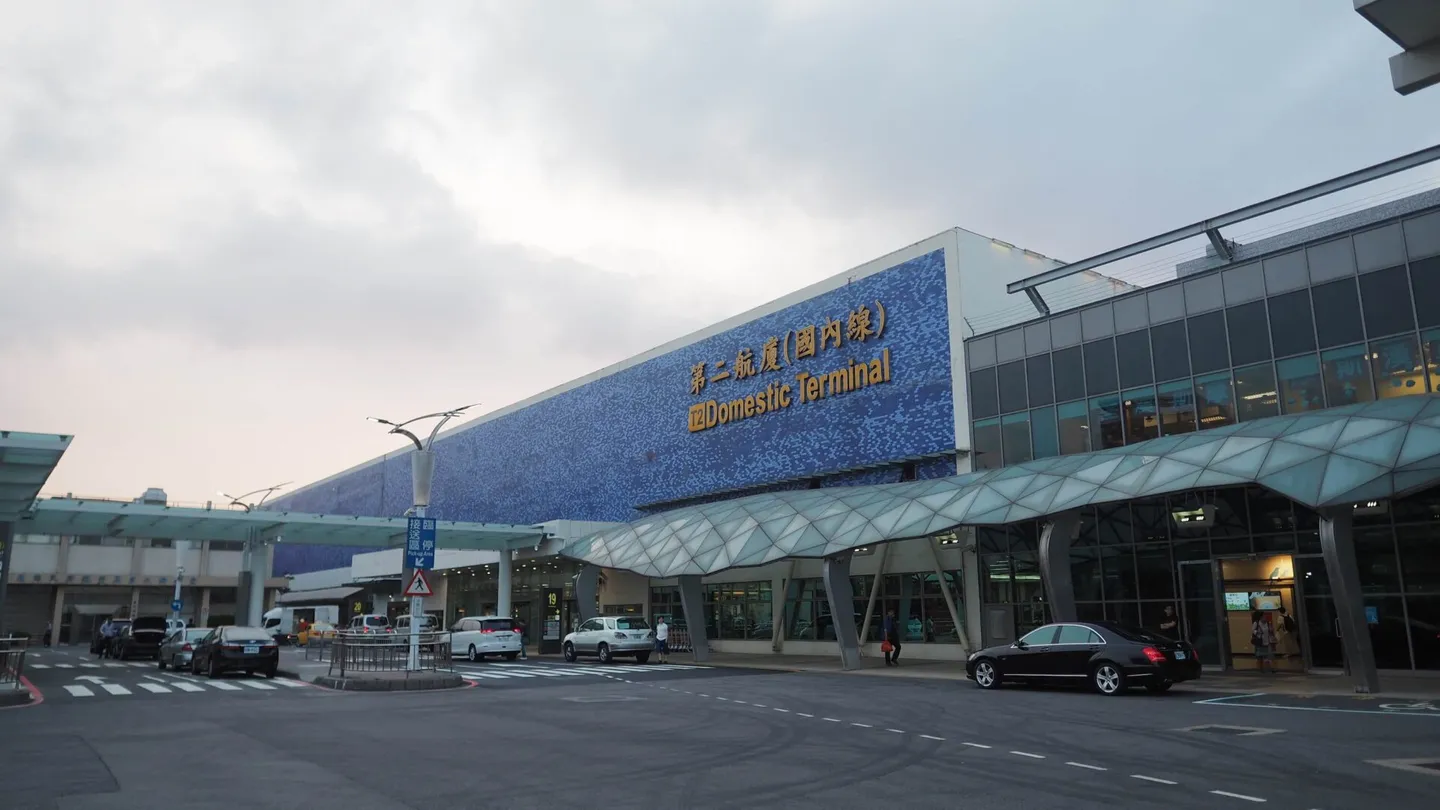
If you fly from Taipei Songshan Airport, remember to head to Terminal 2 to board
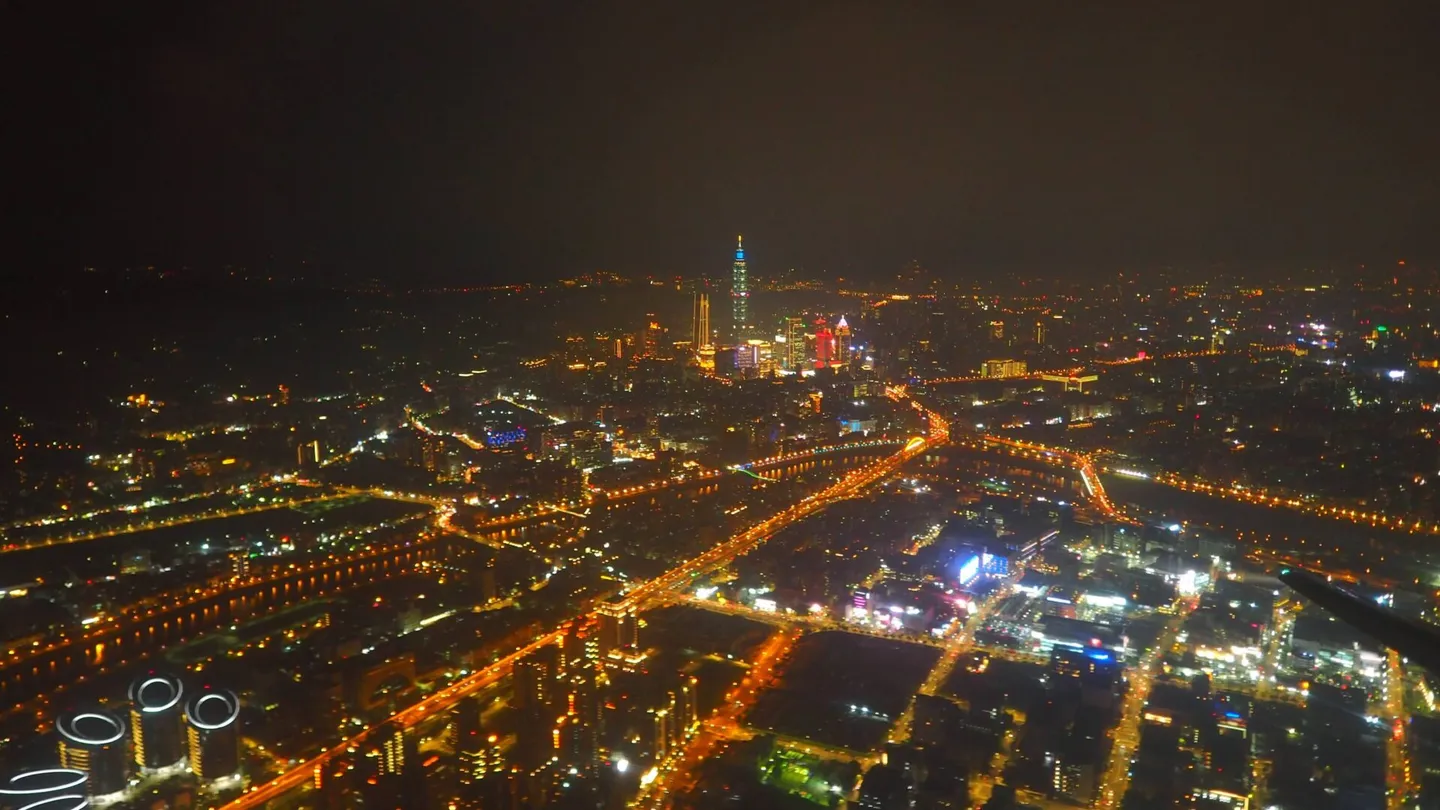
Don't forget to take in the nighttime view of Taipei's Xinyi District
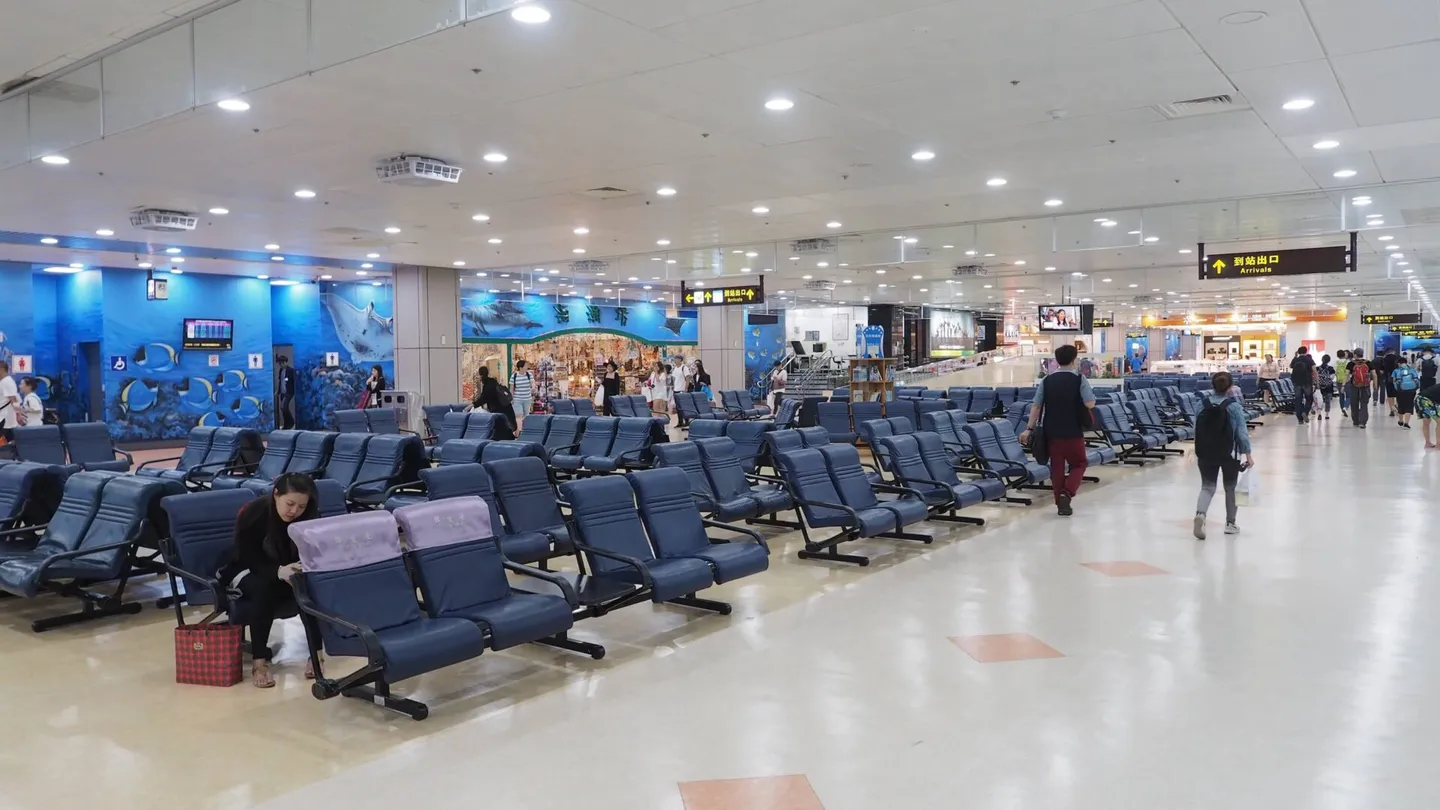
Penghu Airport is quite modern — you can arrange a taxi pickup with your guesthouse in advance


Getting Around Penghu
Penghu's main island is quite expansive, generally divided into the Northern Loop and Southern Loop routes. Each can be planned as a full day of sightseeing to fully savour Penghu's unique scenery. Although the Penghu County Government has arranged shuttle bus services, for the sake of travel convenience, getting around the main island by scooter is still the recommended approach. While riding a scooter along the sea breeze is one of Penghu's great pleasures, local police are strict about enforcing helmet laws — make sure you always wear one!
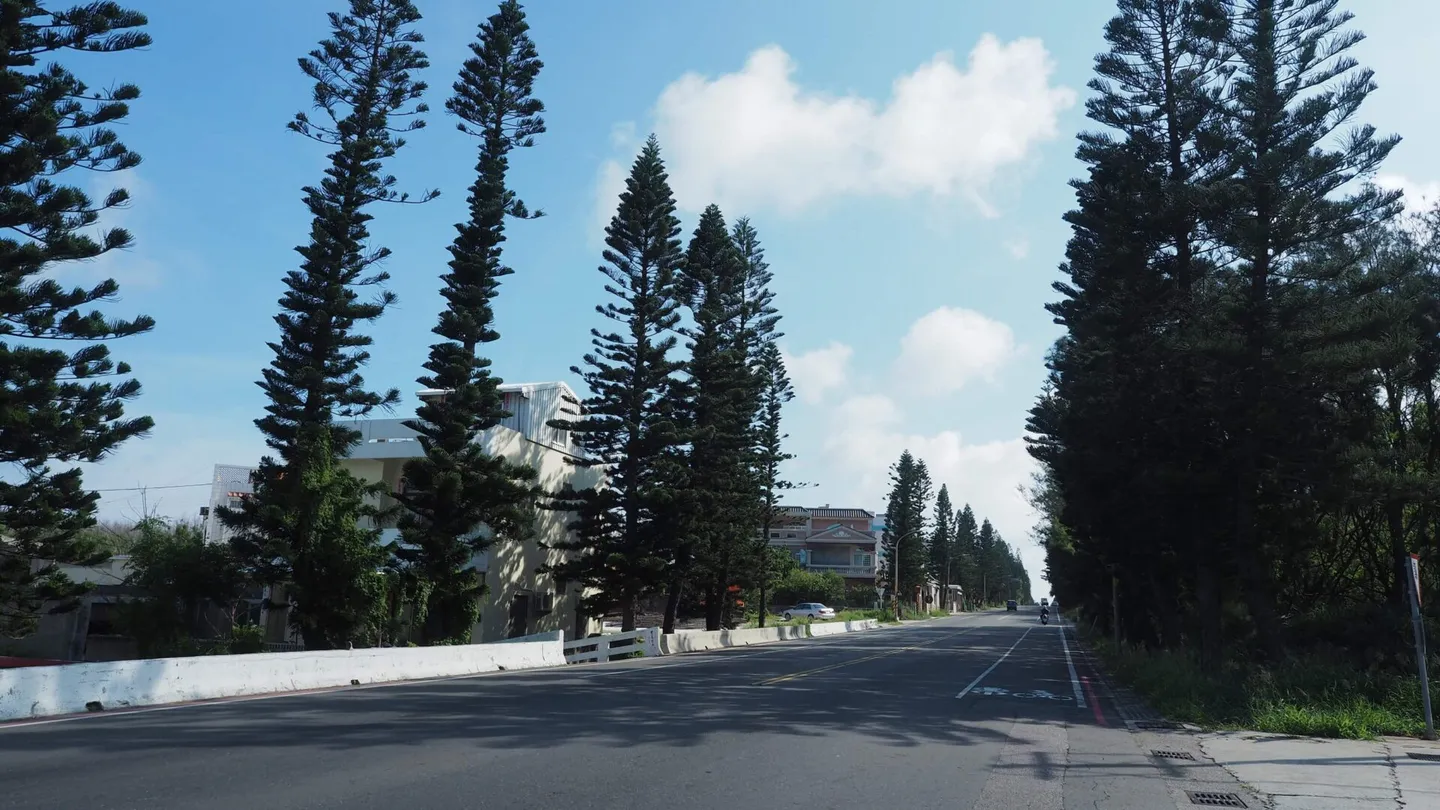
The roads on Penghu's main island are in excellent condition — with little traffic, riding is safe and enjoyable
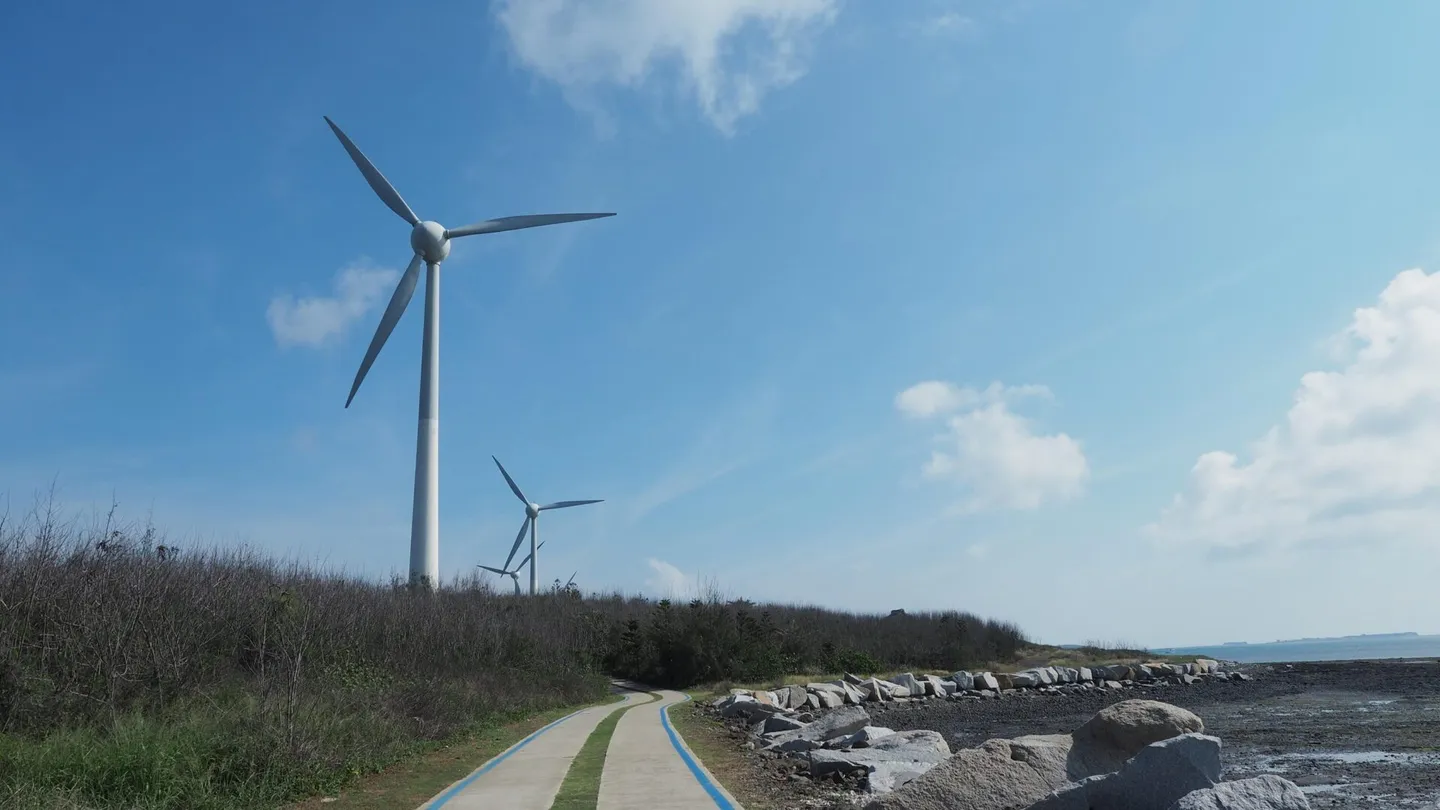
Turn down a small side road and you might just discover an unexpectedly beautiful view
Eating in Penghu
Penghu is extraordinarily rich in culinary offerings. As the island's economy is almost entirely based on fishing, the main catches differ between winter and summer, meaning you can enjoy incredibly fresh local seafood throughout your visit. Don't hesitate to ask your guesthouse host to recommend their favourite seafood restaurants. In addition, popular Penghu souvenirs such as brown sugar cake and XO sauce are well worth picking up to bring home. In short, when you come to Penghu, the only thing to do is dive into the local food scene with abandon!
Here we recommend two beloved local eateries — both long-established neighbourhood favourites where you can taste the natural sweetness of the food and feel like a true Penghu local. The first is Penghu Fishing Harbour Noodle Shop, recommended by Brother Ye of Island 77. Tucked away beside Penghu's yacht harbour, this unassuming little restaurant is almost always packed — and the fact that most of the customers are local residents and fishermen tells you everything you need to know. Order a bowl of noodles and some side dishes at an amazingly reasonable price (the pig tongue and tendon are must-orders), and the broth is full of depth and flavour. Highly recommended for first-time visitors to Penghu looking to fill up properly!
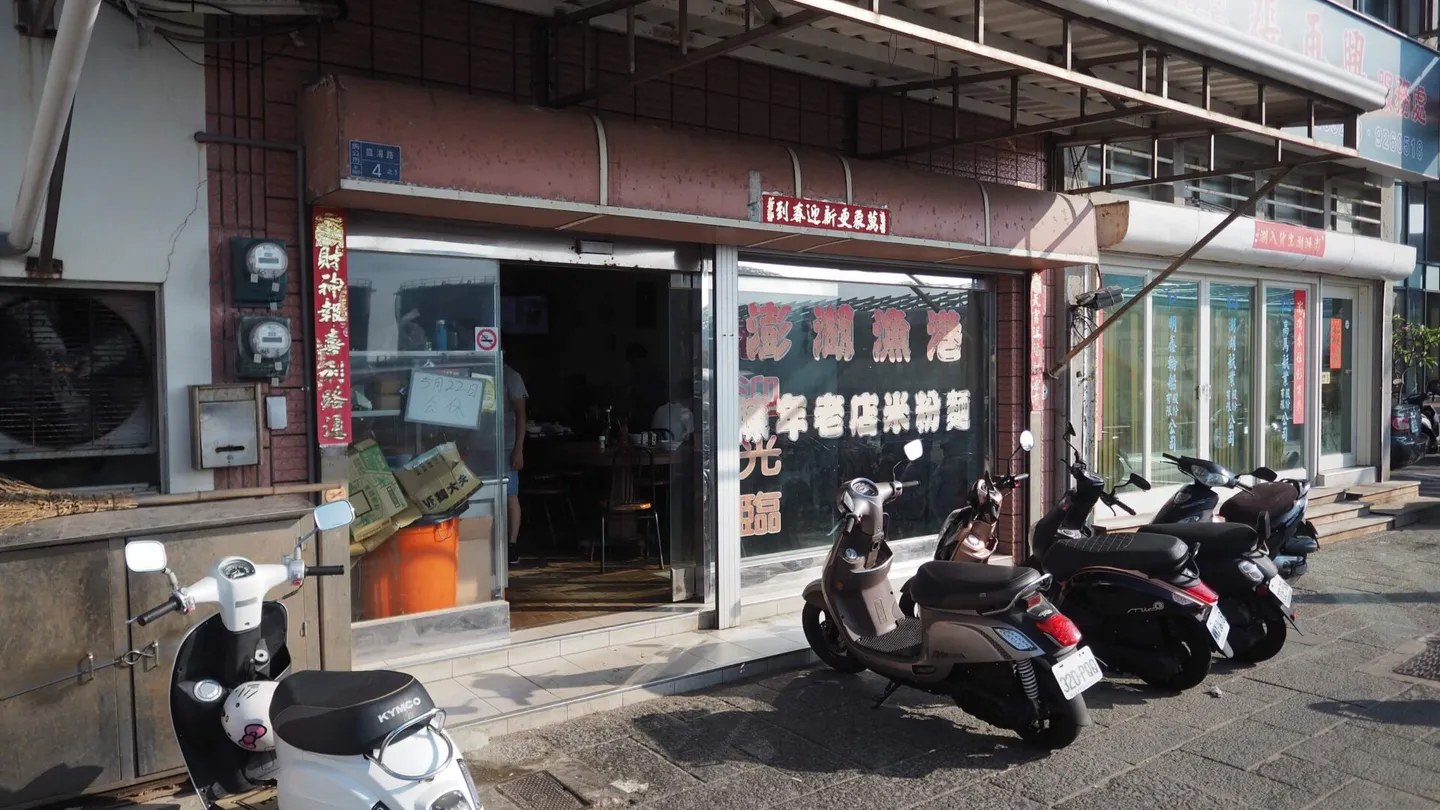
An unassuming storefront that serves up the most authentic Penghu flavours
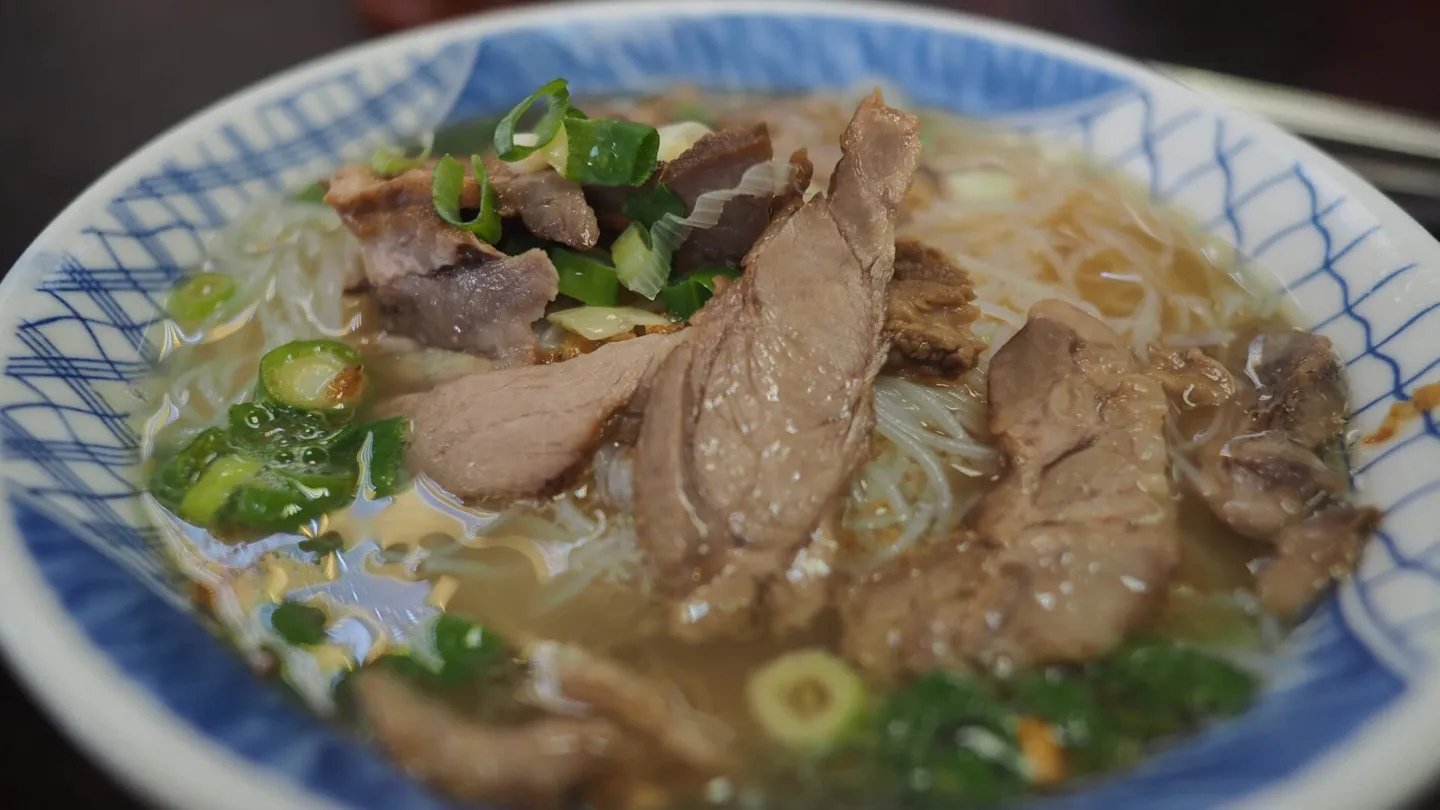
Rice noodle soup piled high with spring onions and sliced meat — the perfect fuel to power your travels
Penghu Fishing Harbour Noodle Shop
Address: No. 4-1, Linhai Road, Magong City, Penghu County 880
The second restaurant we recommend is Jinsuo Harbour Eatery, located in Suogang Village, about a 30-minute ride from Magong. It's best visited when you're doing the Southern Loop of the main island — combine it with a stop to admire the North and South Stone Towers of Suogang. The must-order dishes here are the glutinous rice cake and sticky rice dumplings, which are absolutely heavenly with the dipping sauce. The clear, delicate rice noodle soup made from locally caught fresh fish is another highlight, and all the side dishes are wonderfully well-seasoned. Since you've come this far, make sure you order everything that catches your eye and take your time savouring every bite!
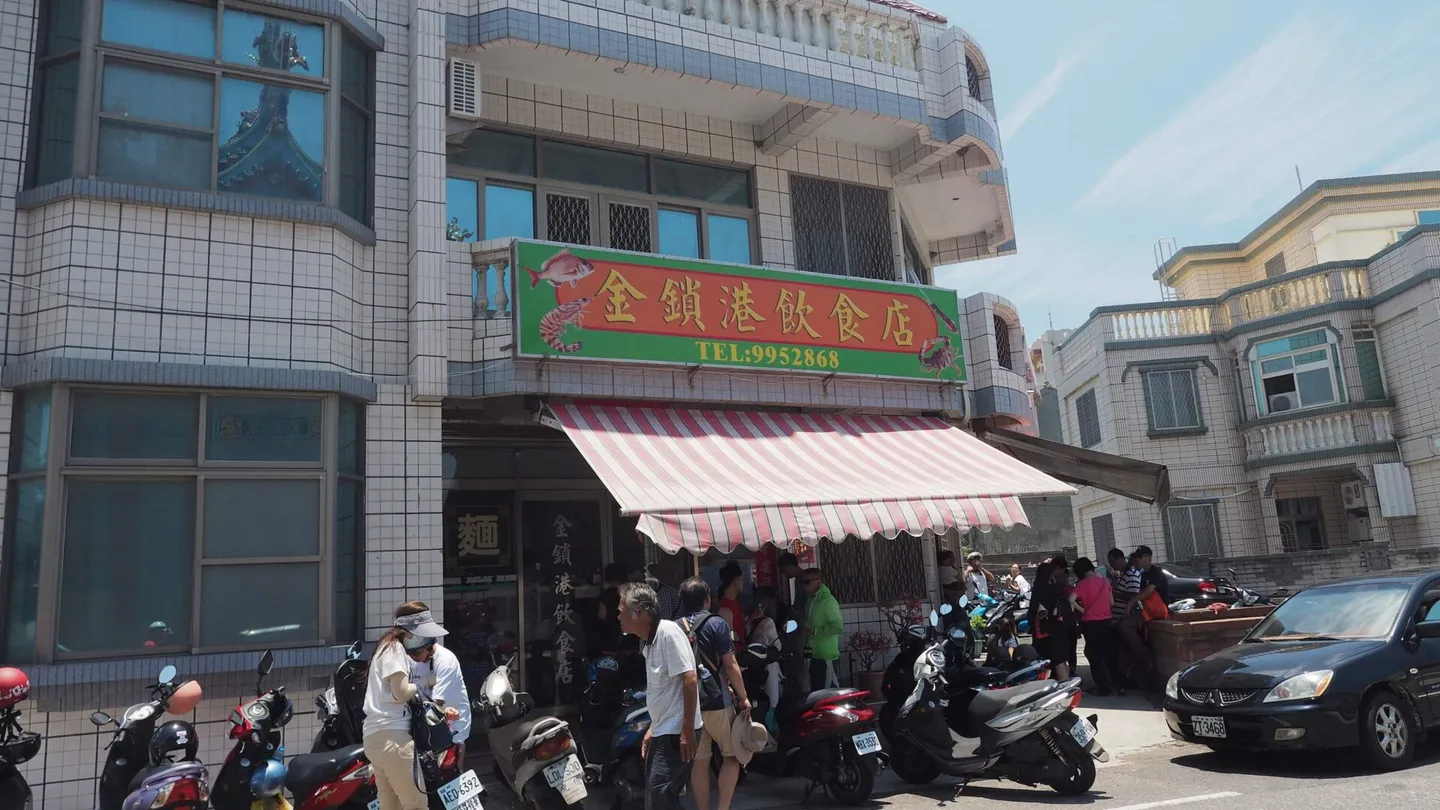
This restaurant is something of a local legend in Suogang Village
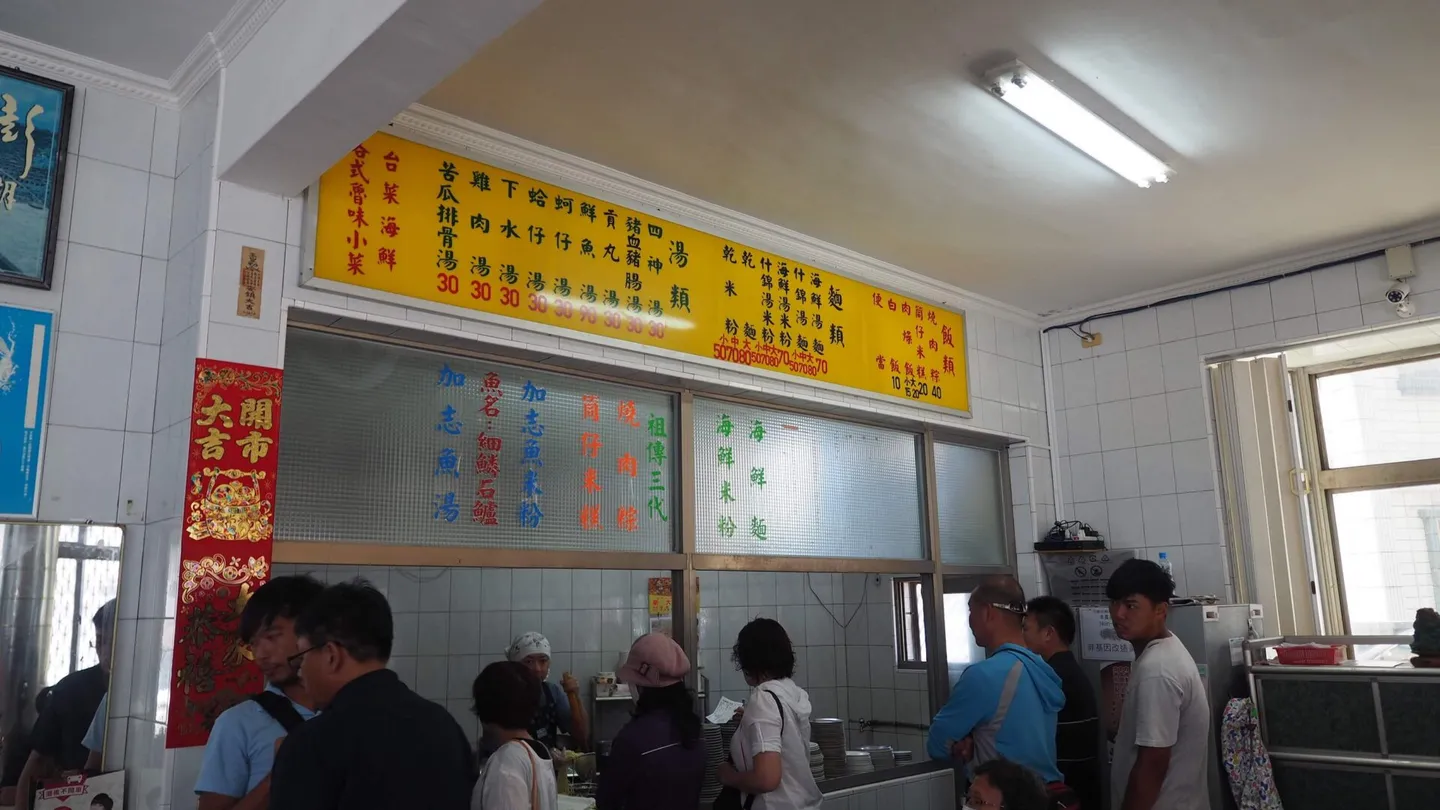
A simple, easy-to-read menu — just go ahead and order freely!
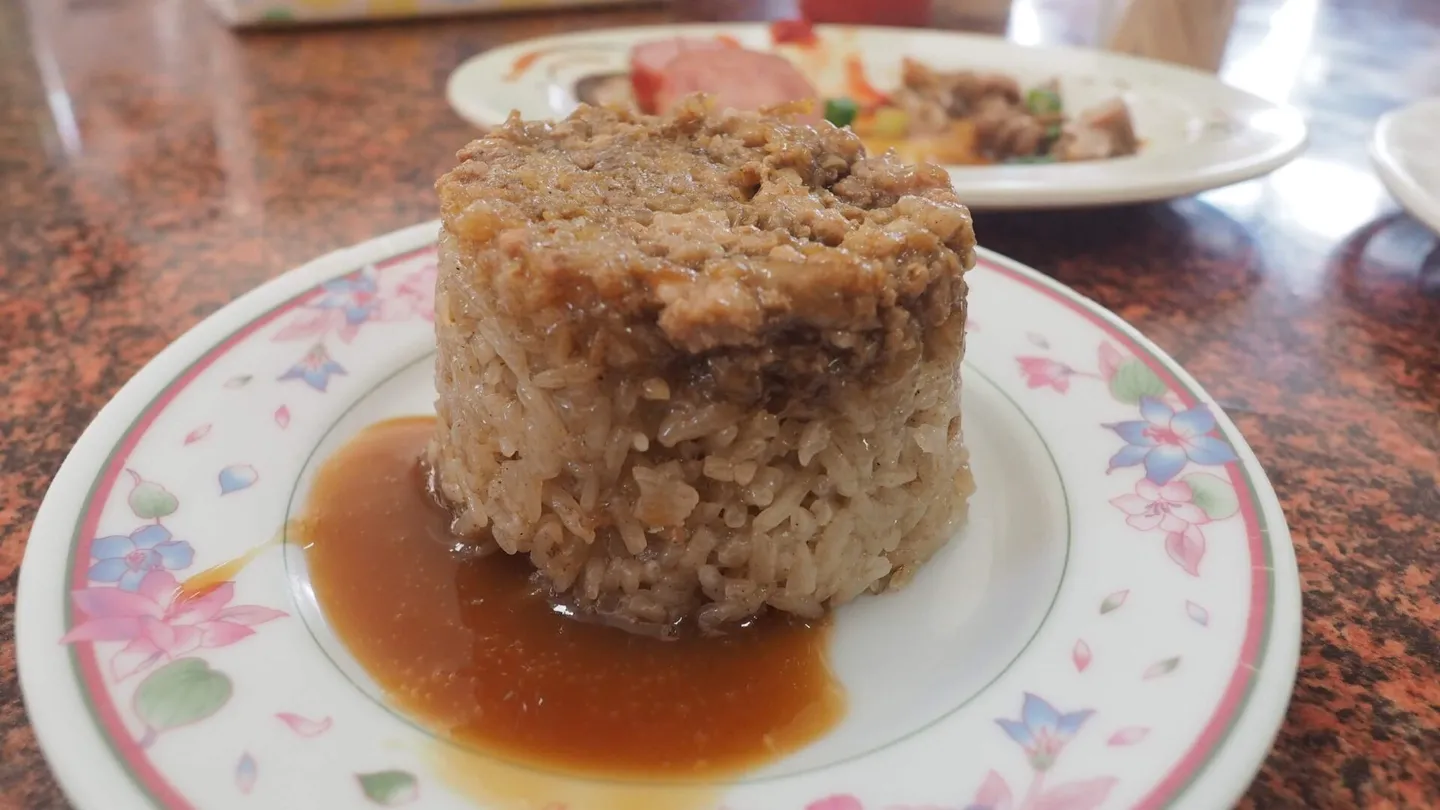
The must-order glutinous rice cake arrives fragrant and irresistible
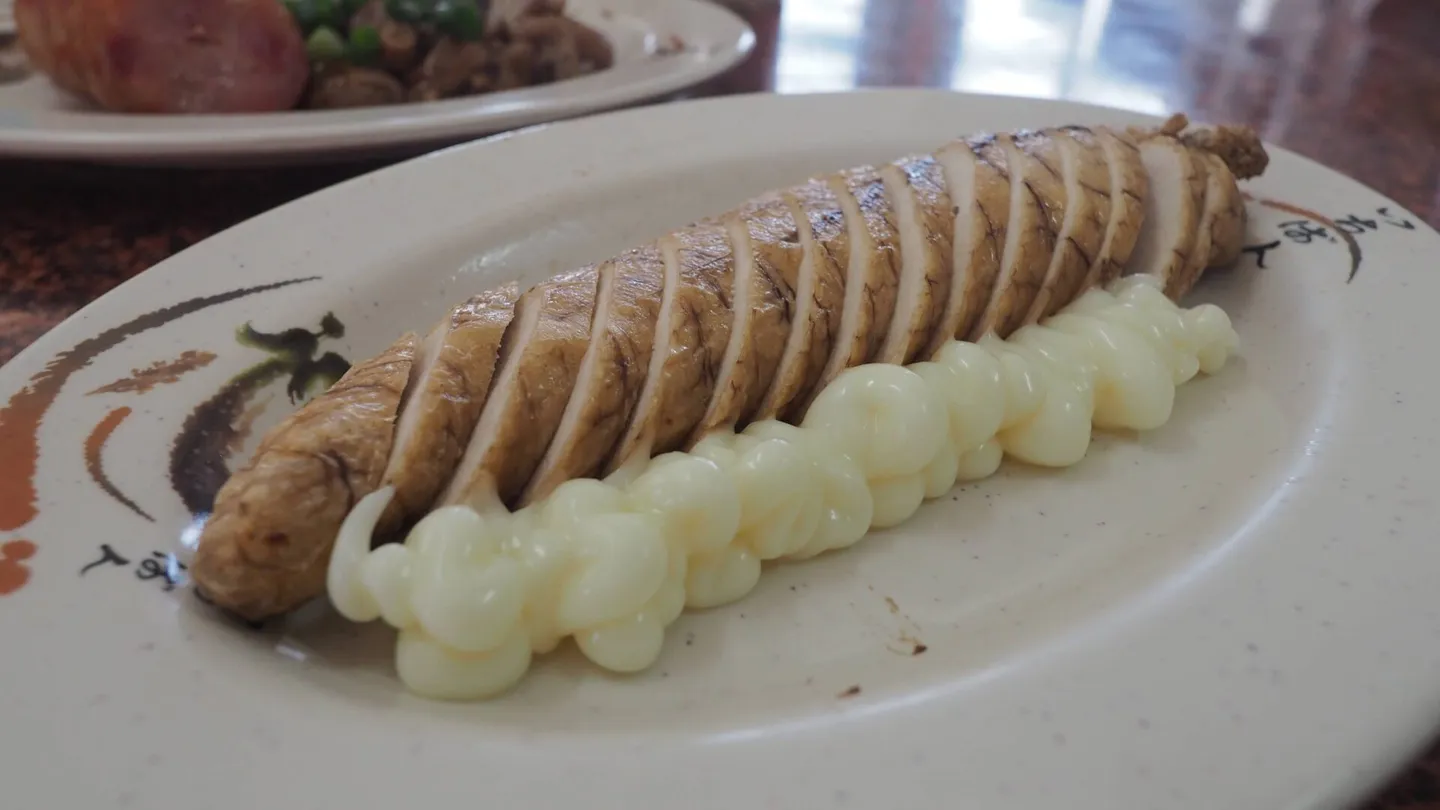
Penghu's signature fish roe is another local speciality worth trying
Jinsuo Harbour Eatery
Address: No. 1671, Suogang Village, Magong City, Penghu County 880
Penghu's Cultural Heritage
Because of its location between Taiwan and mainland China, Penghu has had recorded ties with the mainland since the Yuan Dynasty. From the Ming Dynasty onward, with the arrival of the Age of Exploration, Penghu stepped onto the world stage — visited and contested by the Dutch, the French, Ming Dynasty loyalists, the Qing regime, and Japanese colonial rule. On this, Taiwan's largest outlying island group of 90 islands, all these influences have woven together to create a remarkable tapestry of cultural sparks. When you come to Penghu, make sure to take the time to appreciate the great historical monuments left behind from each of these eras.
Military Heritage
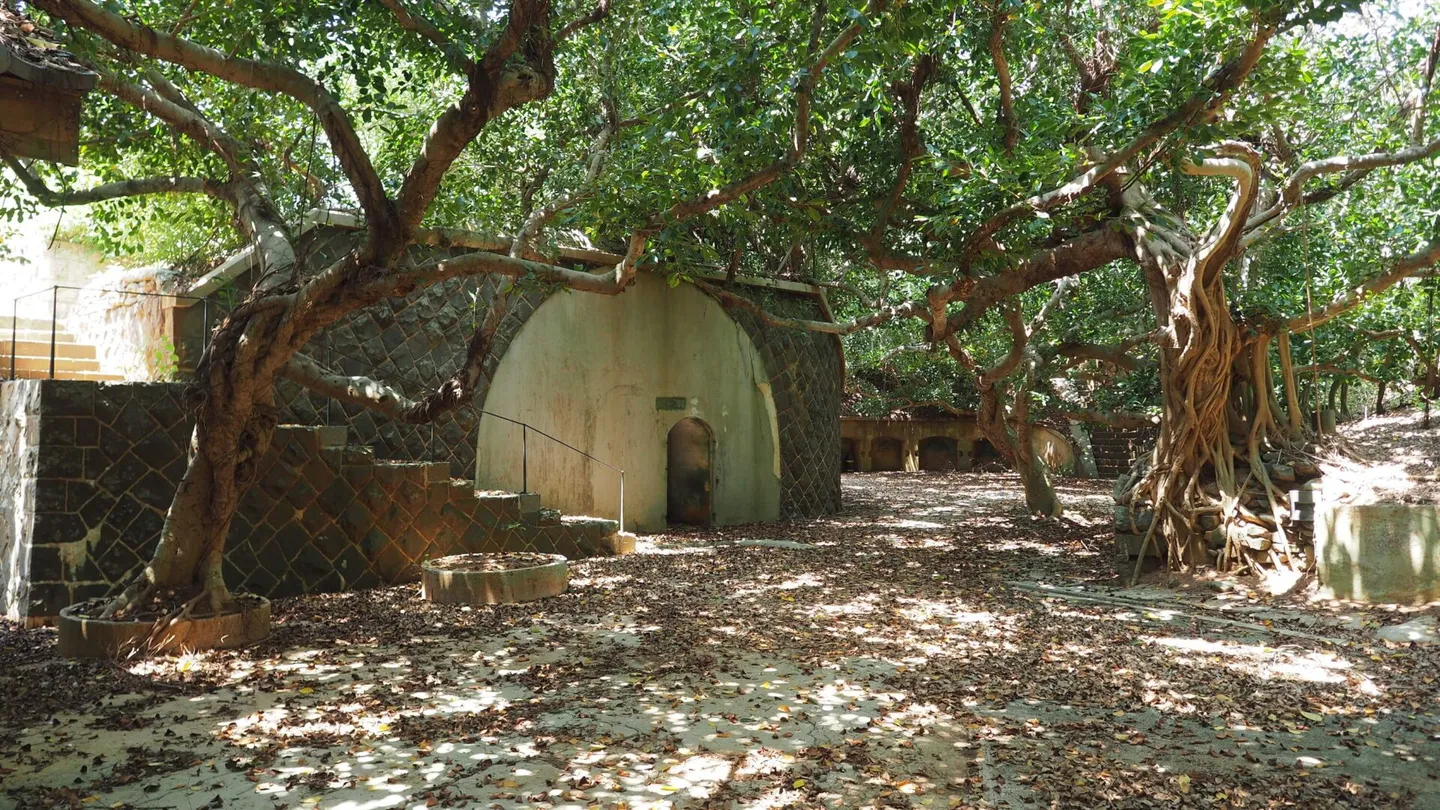
History has softened the once-forbidding atmosphere of these ancient fortresses
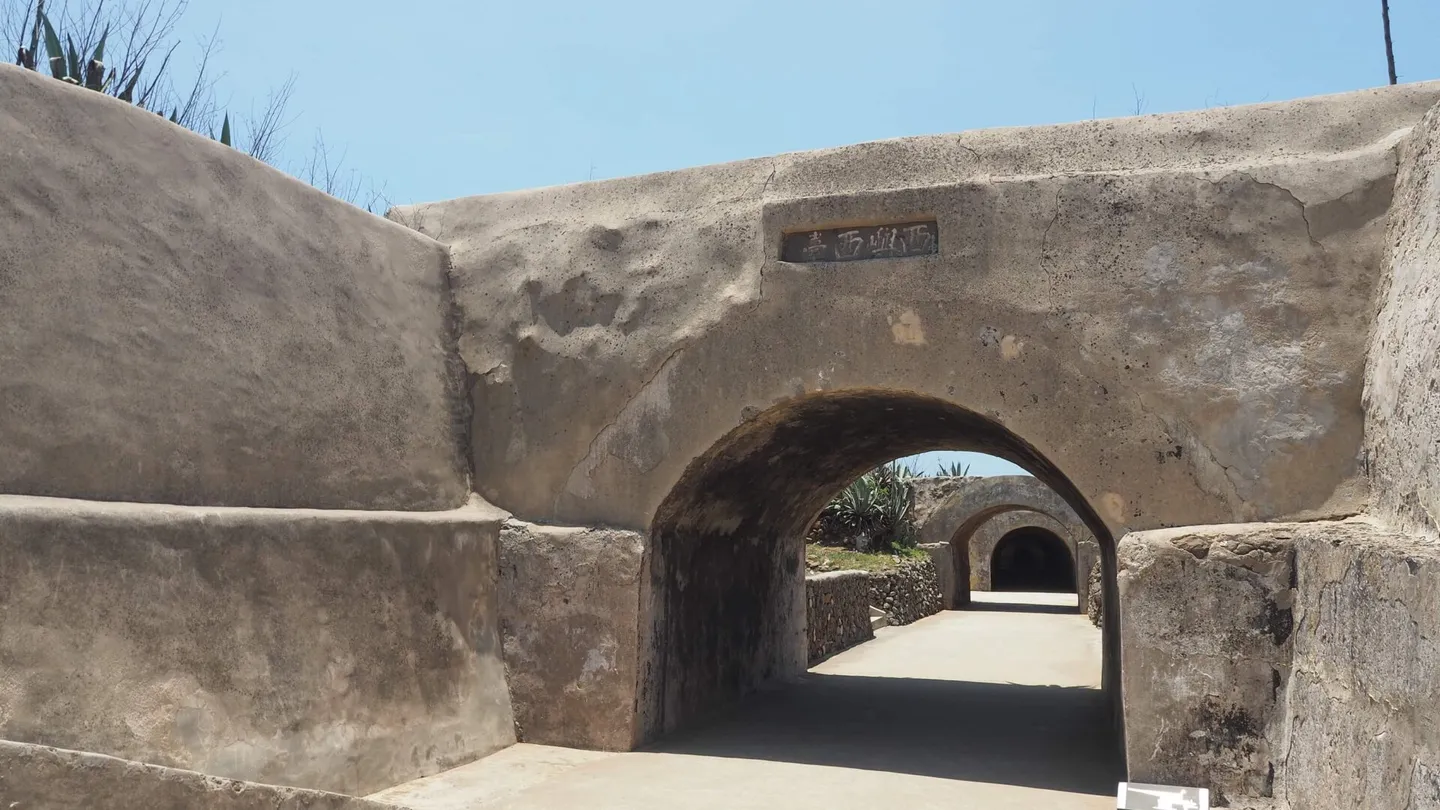
Each fortress has its own past and its own story to tell
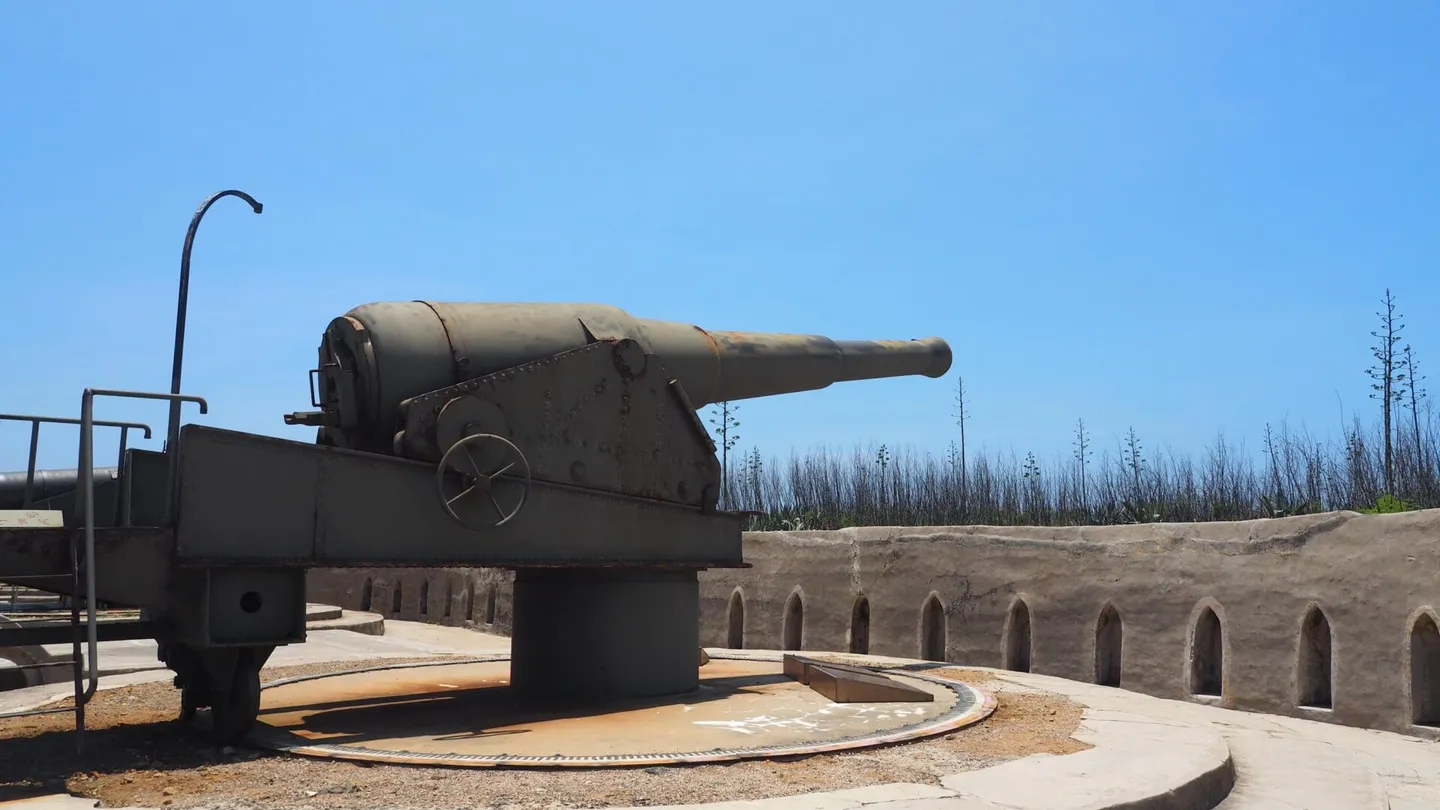
Xiyu West Fort is one of Penghu's most well-preserved fortifications
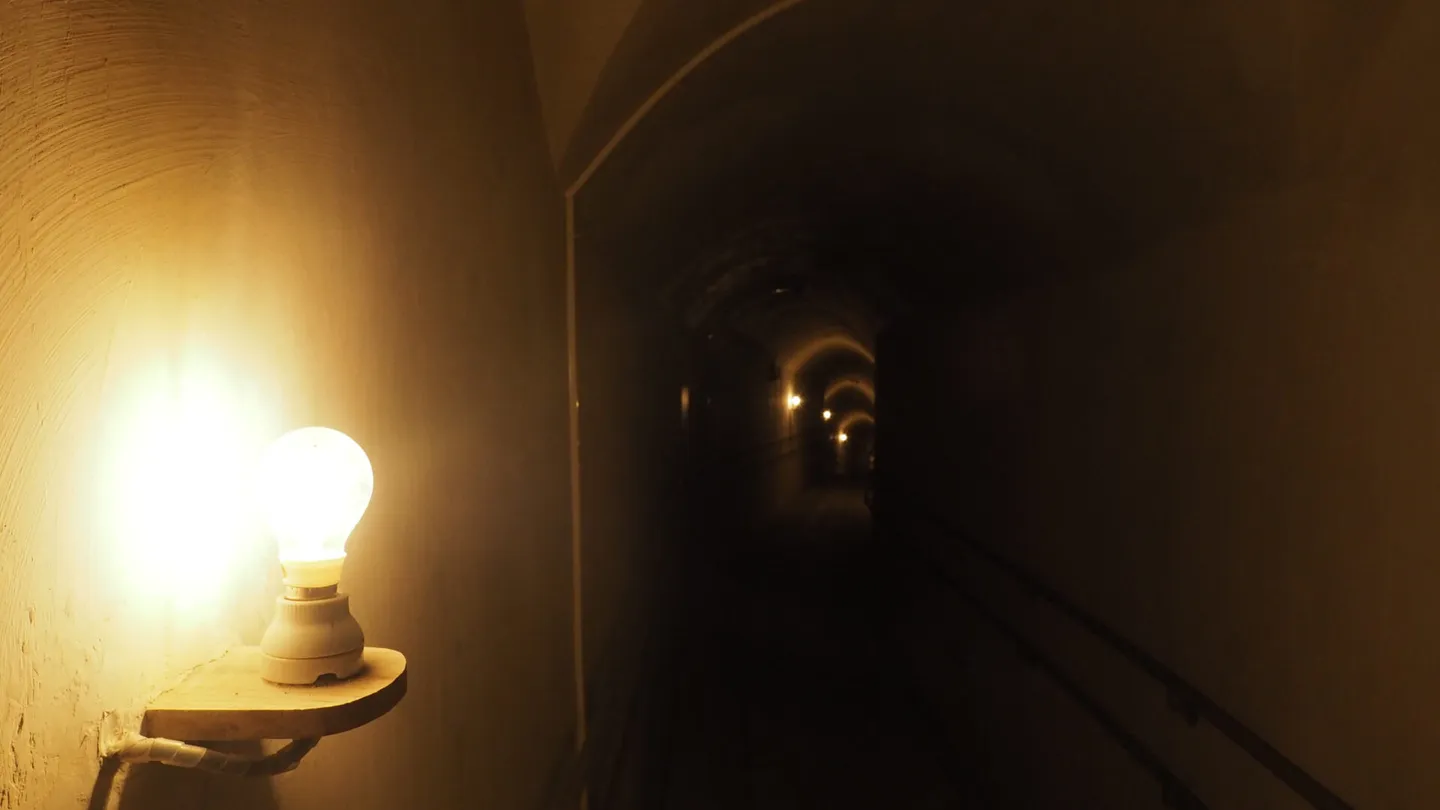
The military tunnels at Magong's Jinguitan Battery lead all the way to a hidden secret beach
Penghu's main island likely has the highest density of artillery fortresses in all of Taiwan. Beyond the well-known sites such as Xiyu East Fort, Xiyu West Fort, and Jinguitan Battery, many more fortresses are tucked away across the islands, waiting to be discovered by the curious explorer. Some of these fortifications were used across both the Qing Dynasty and the Japanese colonial period, and their architecture conceals a variety of clever defensive design features well worth examining closely. Unfortunately, the county government has yet to develop these sites comprehensively — if they were reorganised and restored to a standard comparable to Japan's approach to heritage preservation, they could become truly remarkable tourist attractions!
A Confluence of History
Beyond its fortresses, Penghu is home to many other historical sites well worth visiting. The most readily accessible today are the traces of daily life left behind by Han Chinese settlers during the Qing Dynasty era — including places of worship and traditional village clusters. Some distinctive structures, such as lighthouses, have been preserved in their original form due to restricted access, and have become favourite photography destinations for visitors.
Penghu is said to have three abundances: many elderly residents, many temples, and many nightclubs. Of Penghu's 90 islands, only 19 are inhabited — yet there are 180 temples, including 120 Wang Ye (Royal Lord) temples, while Mazu temples are actually in the minority.
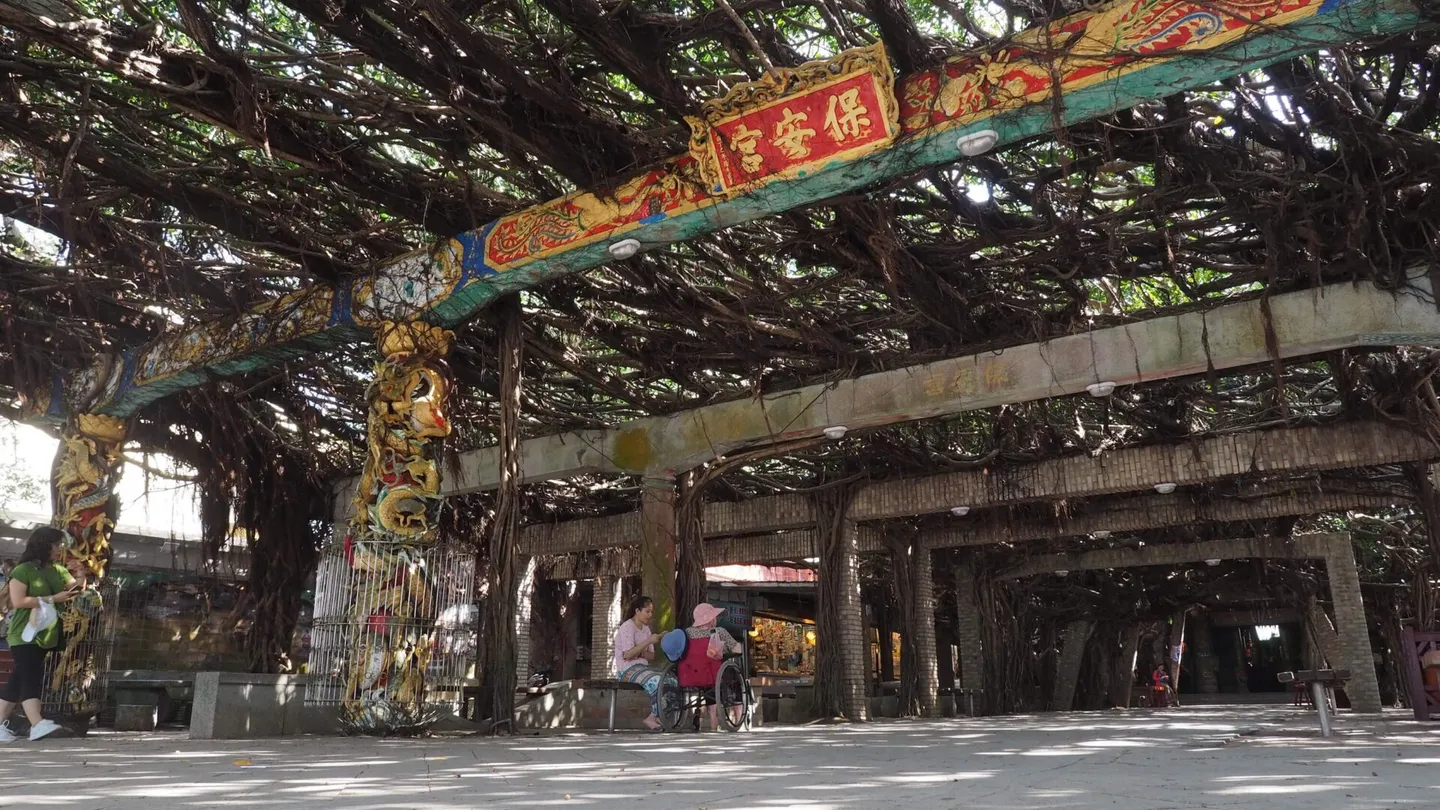
The ancient banyan tree at Tongliang is a truly unique attraction
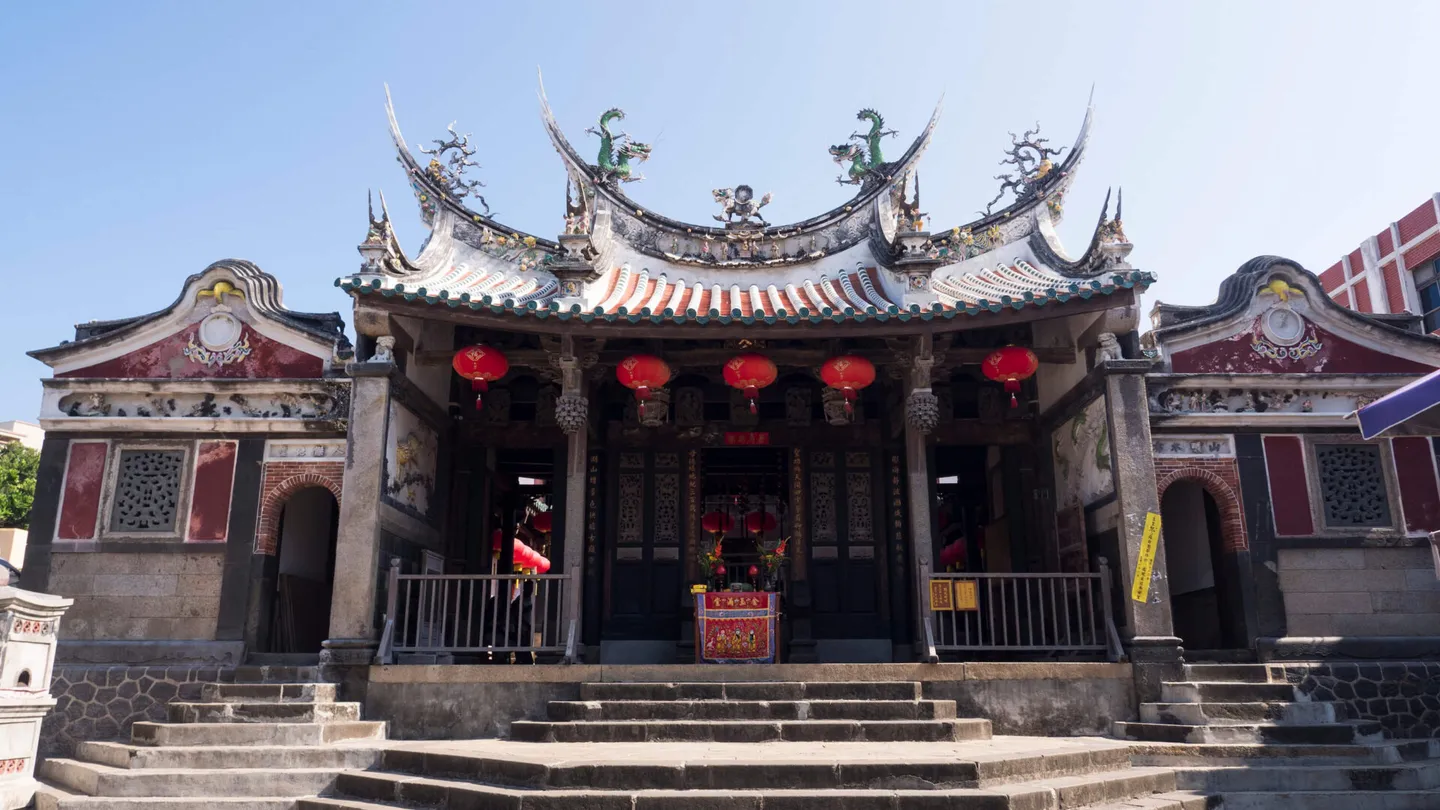
Magong Tianhou Temple is Penghu's spiritual heart, adorned with intricate carvings and paintings, and home to the stele known as "Shen Yourong's Decree Expelling the Red-Haired Barbarian Wiemart," said to be the oldest in Taiwan
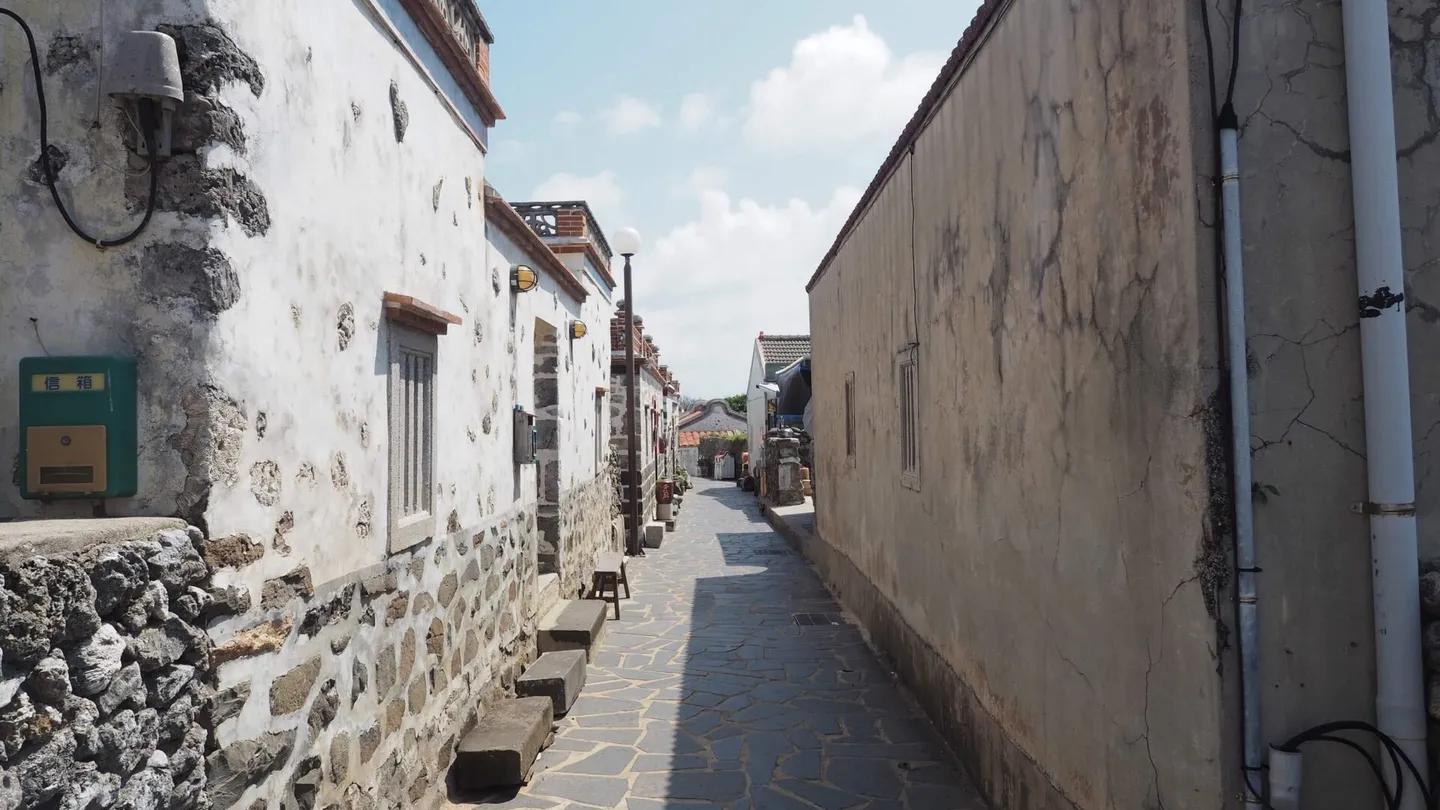
The Erkan Ancient Village on Xiyu Island bears witness to the pioneering history of Penghu's settlement
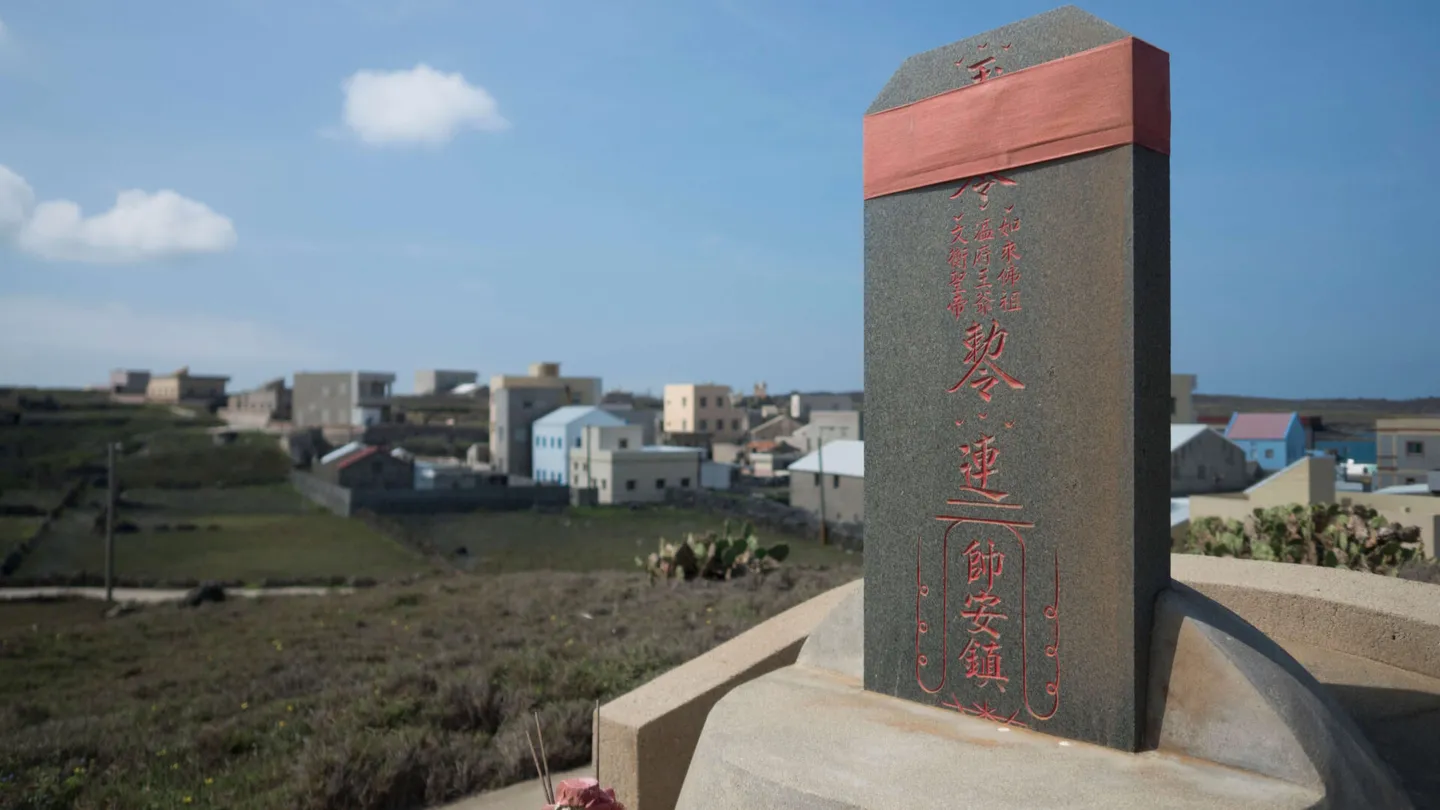
Penghu is famously windy, and shrines to various deities are scattered throughout the villages to watch over the residents
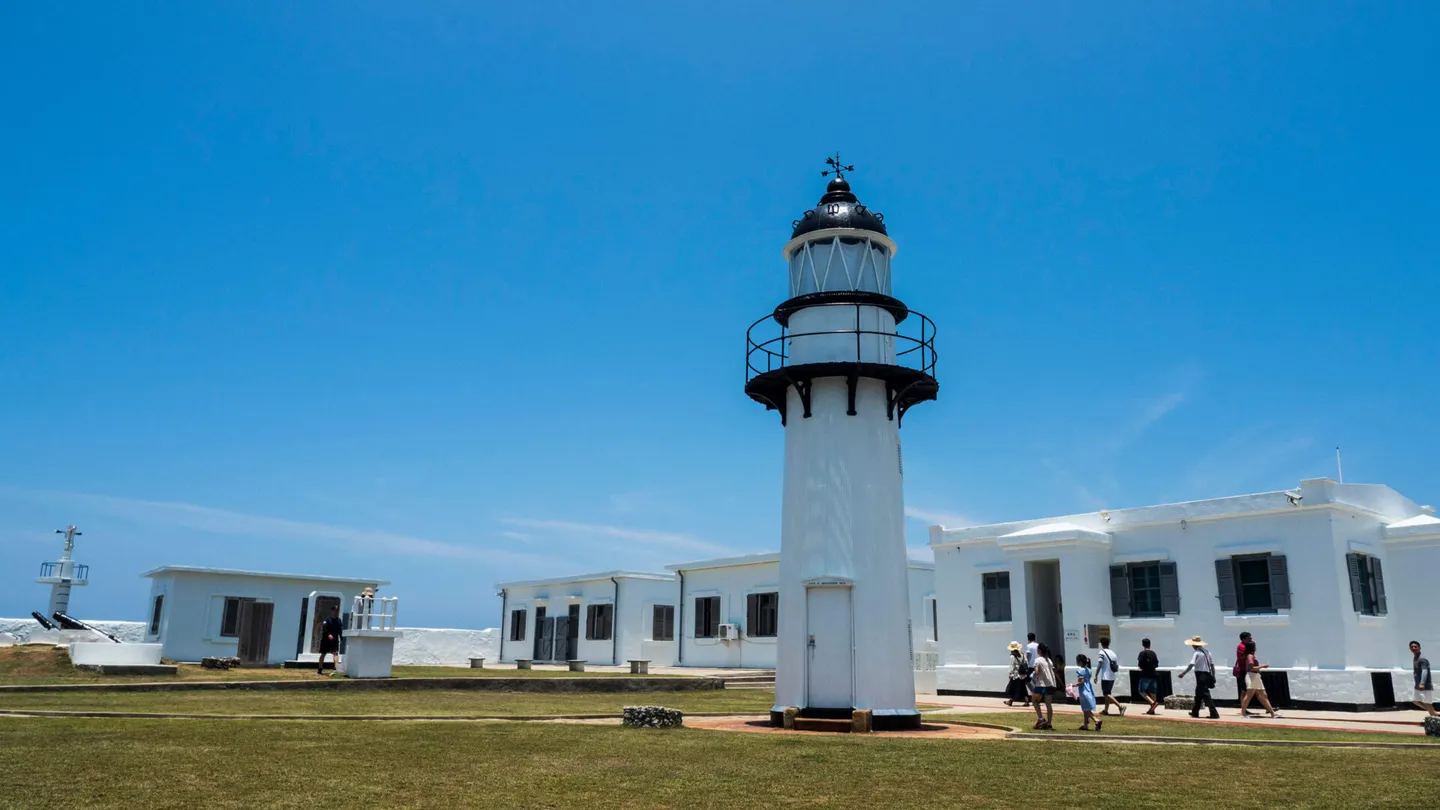
The Fisherman's Island Lighthouse is Penghu's most popular photography spot — one of the oldest lighthouses in Taiwan, still retaining the design built by the British in 1873
Penghu's Natural Landscape
Penghu is composed of basalt rock formed from cooled volcanic lava. The unique basalt structures, combined with the action of marine erosion, have created a remarkable variety of landforms scattered across both the main island and the outlying islets — another must-see highlight when visiting Penghu. Some of the outlying islands have even been designated as seabird sanctuaries, helping to preserve Penghu's rich biodiversity. When visiting any of the marine erosion landform sites, please stay on the designated paths to avoid accidental falls and injury.
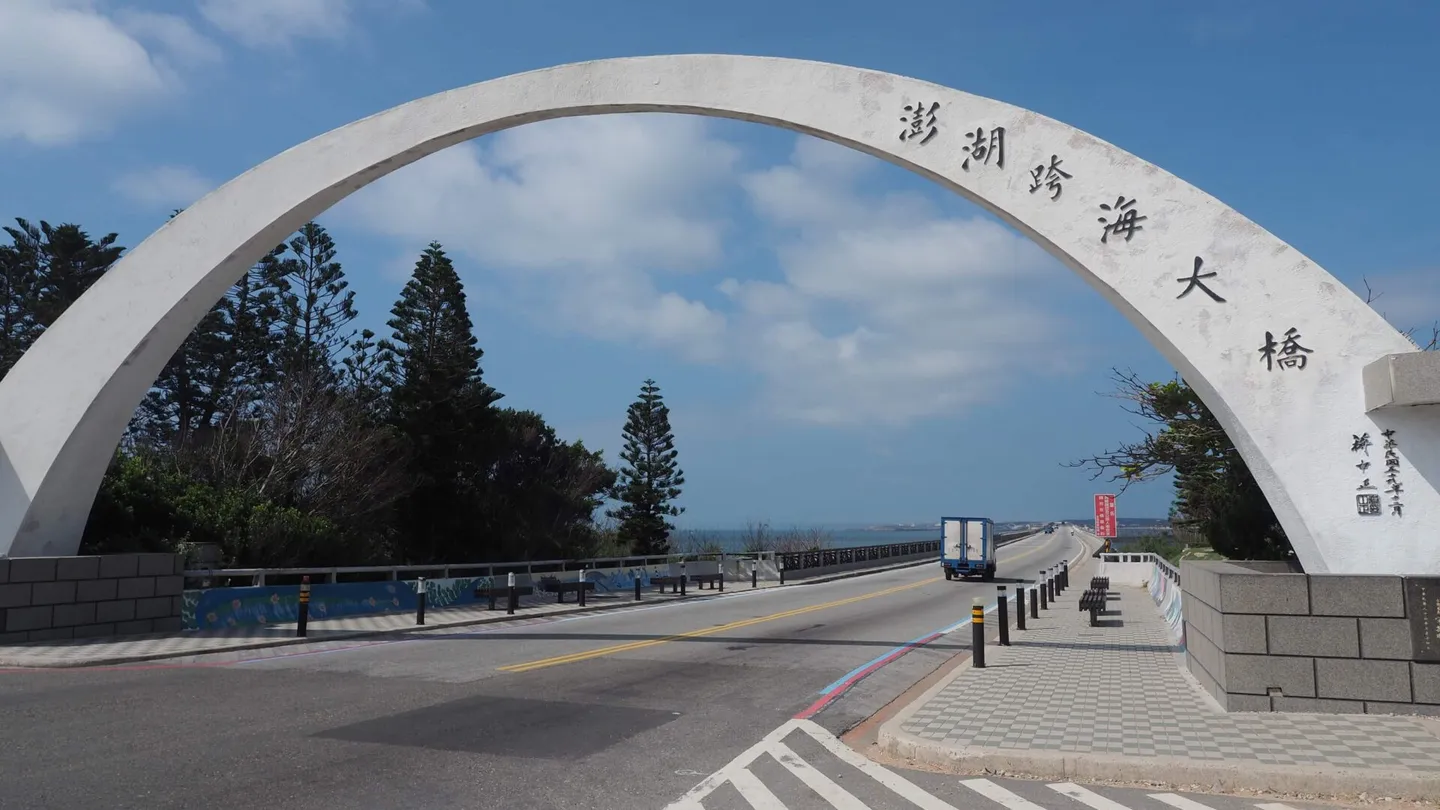
The Penghu Cross-Sea Bridge is one of the Northern Loop's must-photograph landmarks
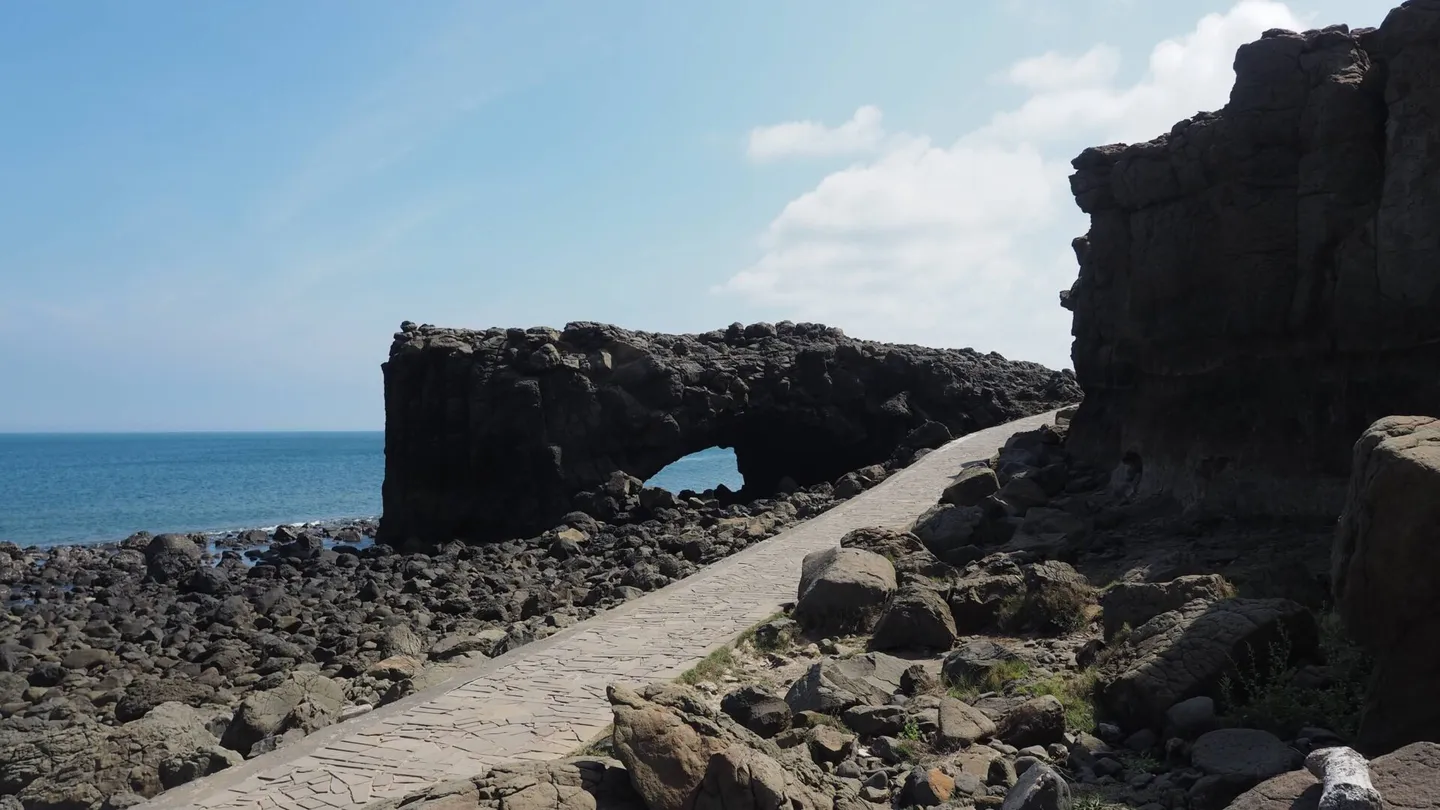
Whale Cave is a classic example of a sea cave formed by marine erosion
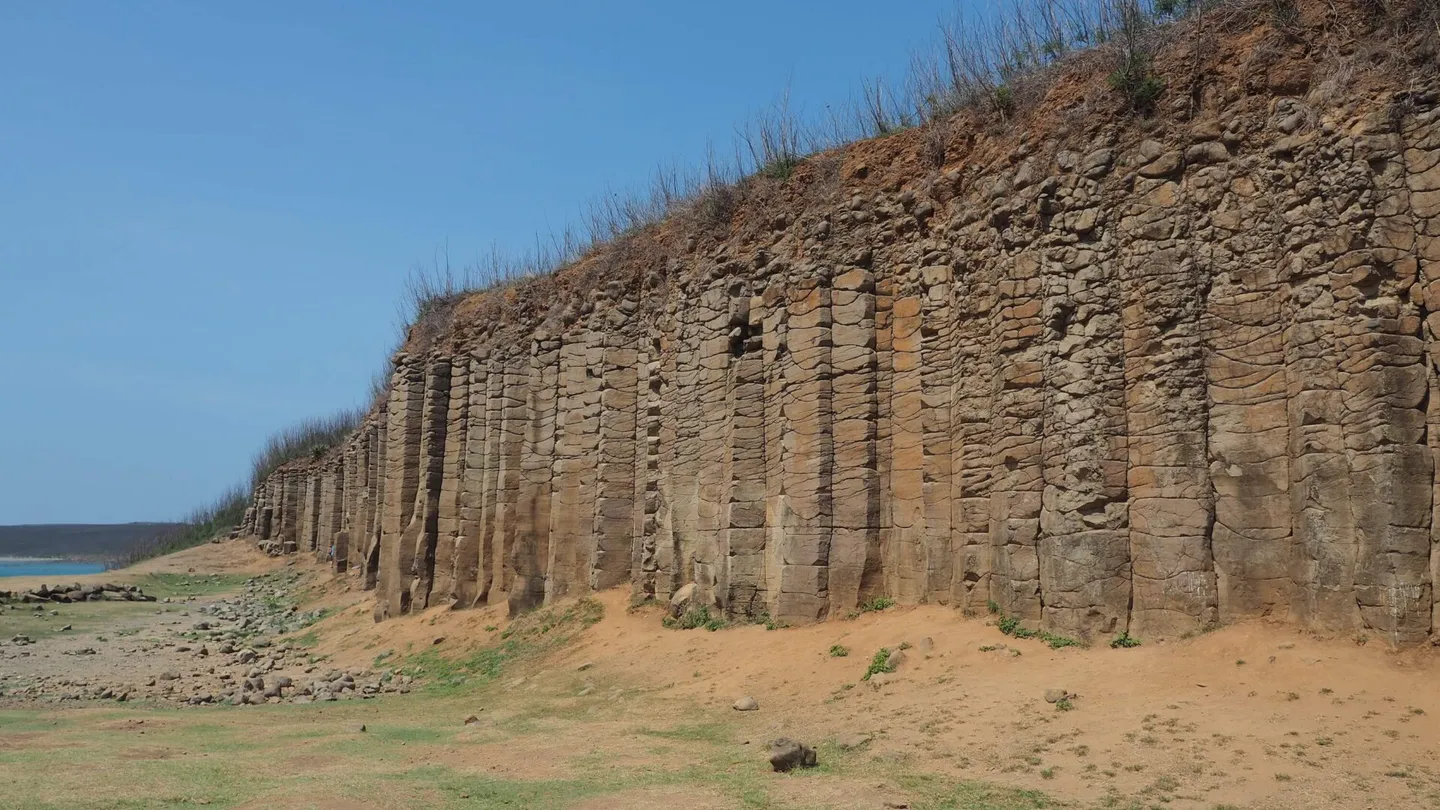
The Dakoye Basalt Formation at Chidong offers a spectacular view of ancient volcanic basalt geology
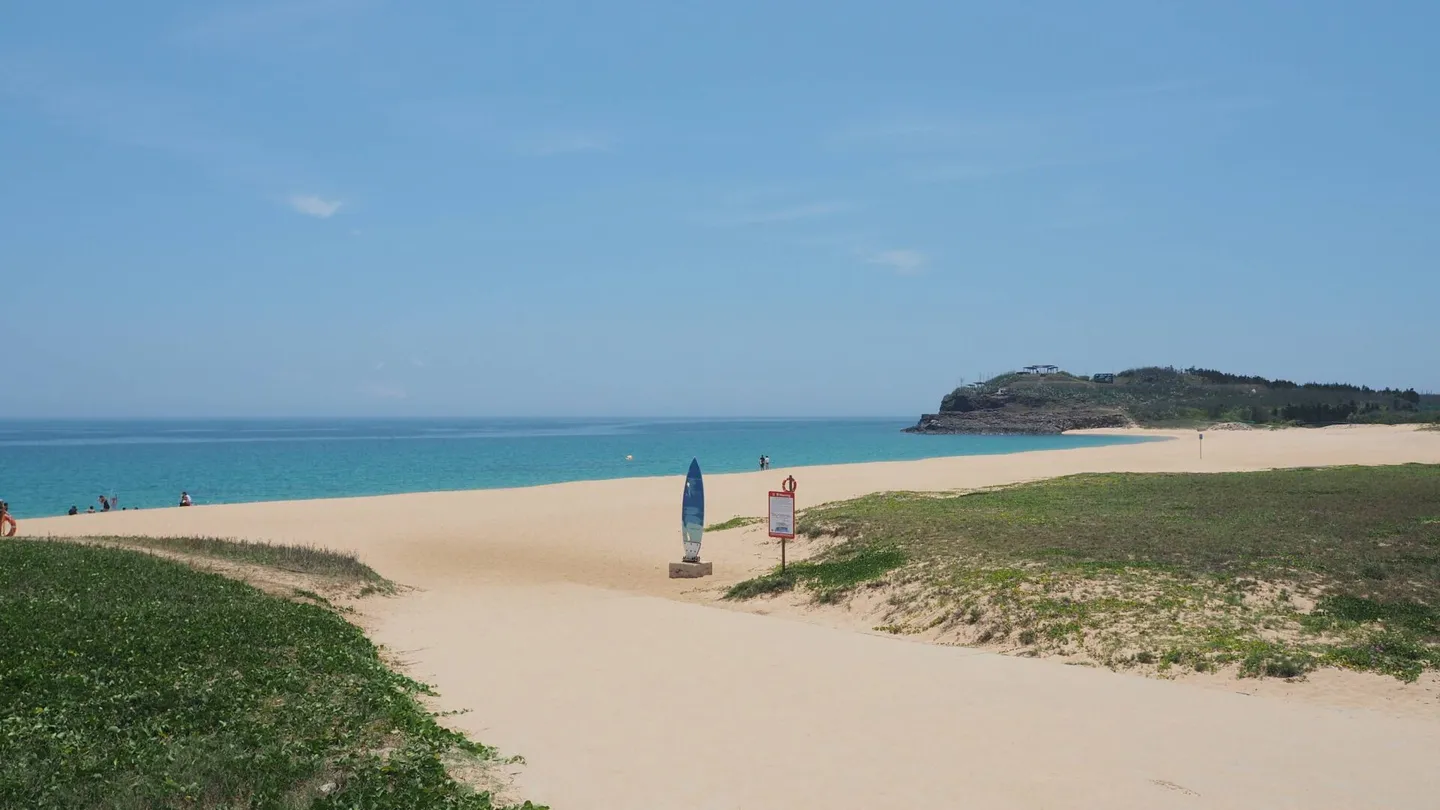
A splash in the surf at Penghu's beaches is an absolute must
Scuba Diving in Penghu
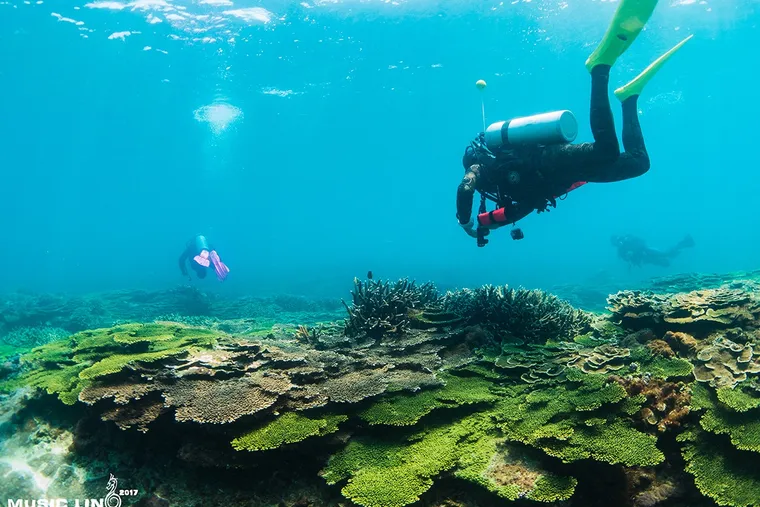
Penghu is located in the central Taiwan Strait, where the gently rising seabed allows warm Kuroshio branch currents and the nutrient-rich China Coastal Current to bring abundant nourishment to the surface layer. This supports thriving communities of both soft coral and hard coral, which in turn attract a wide variety of migratory fish. Penghu has been one of Taiwan's most important fishing grounds since ancient times. The fish species here differ considerably from those found around Taiwan's main island, meaning divers in Penghu can enjoy a distinctly different marine life experience.
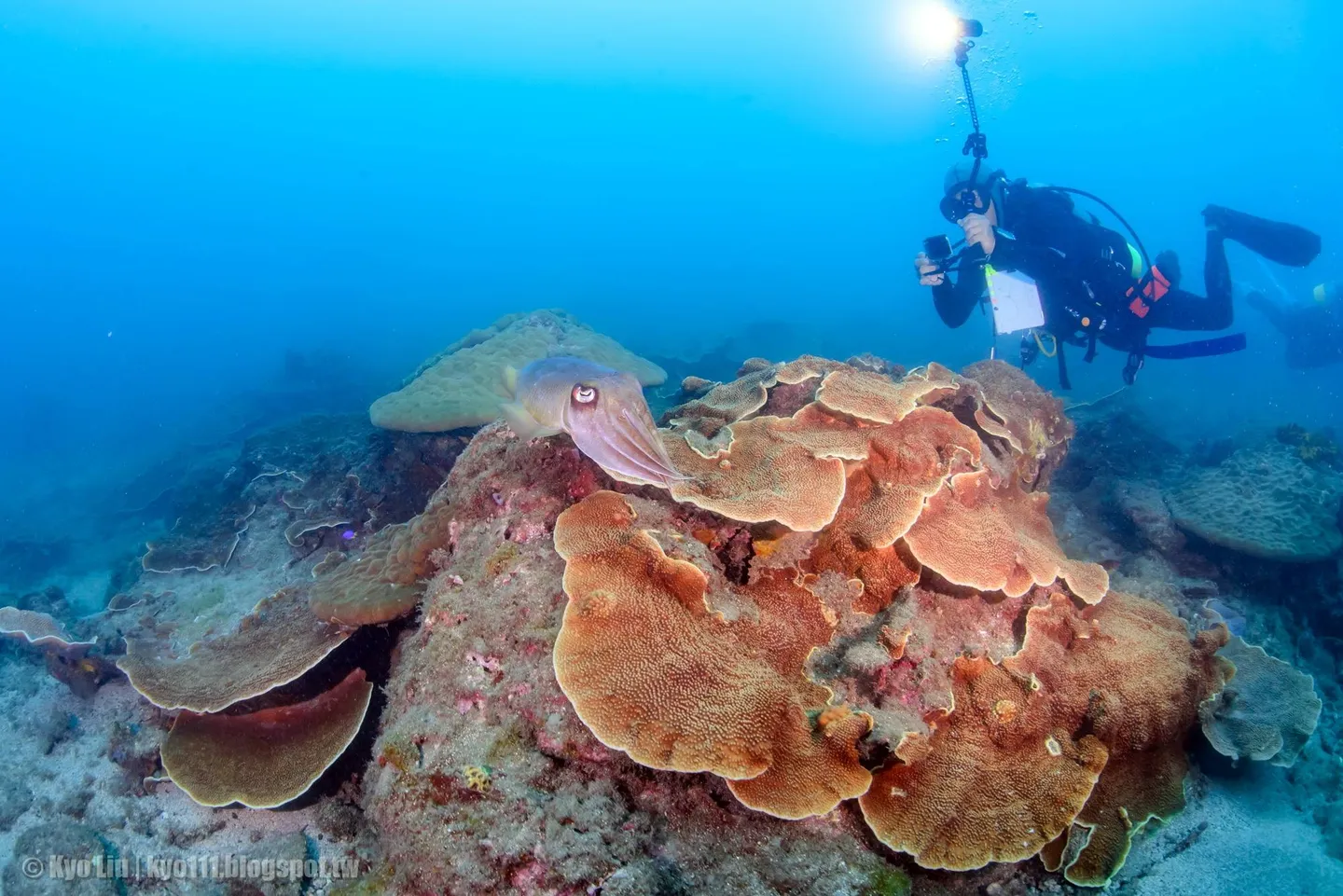
Photo credit 京太郎
The Penghu South Islands (南方四島) have in recent years been actively developed into a national park through government initiatives, and with the sustained attention of many ocean conservation advocates, their ecosystems have gradually recovered their former richness. This area is referred to as Taiwan's "seed bank," a title that reflects how well suited its environment is to nurturing marine life. The South Islands encompass the four main islands of Dongyu Ping, Xiyu Ping, Dongji Yu, and Xiji Yu, along with 13 surrounding smaller islets.
The northeast monsoon prevails over Penghu in winter (October through March of the following year), while the southwest monsoon takes over in summer. The annual number of strong-wind days reaches 223, leaving only 132 days suitable for marine activities. The recommended season for scuba diving is July, August, and September, and even then, sea conditions before and after typhoons can further reduce the number of suitable diving days. The annual average sea temperature is 23.7°C, with winter water temperatures ranging from approximately 12°C to 26°C and summer temperatures from 23°C to 31°C.
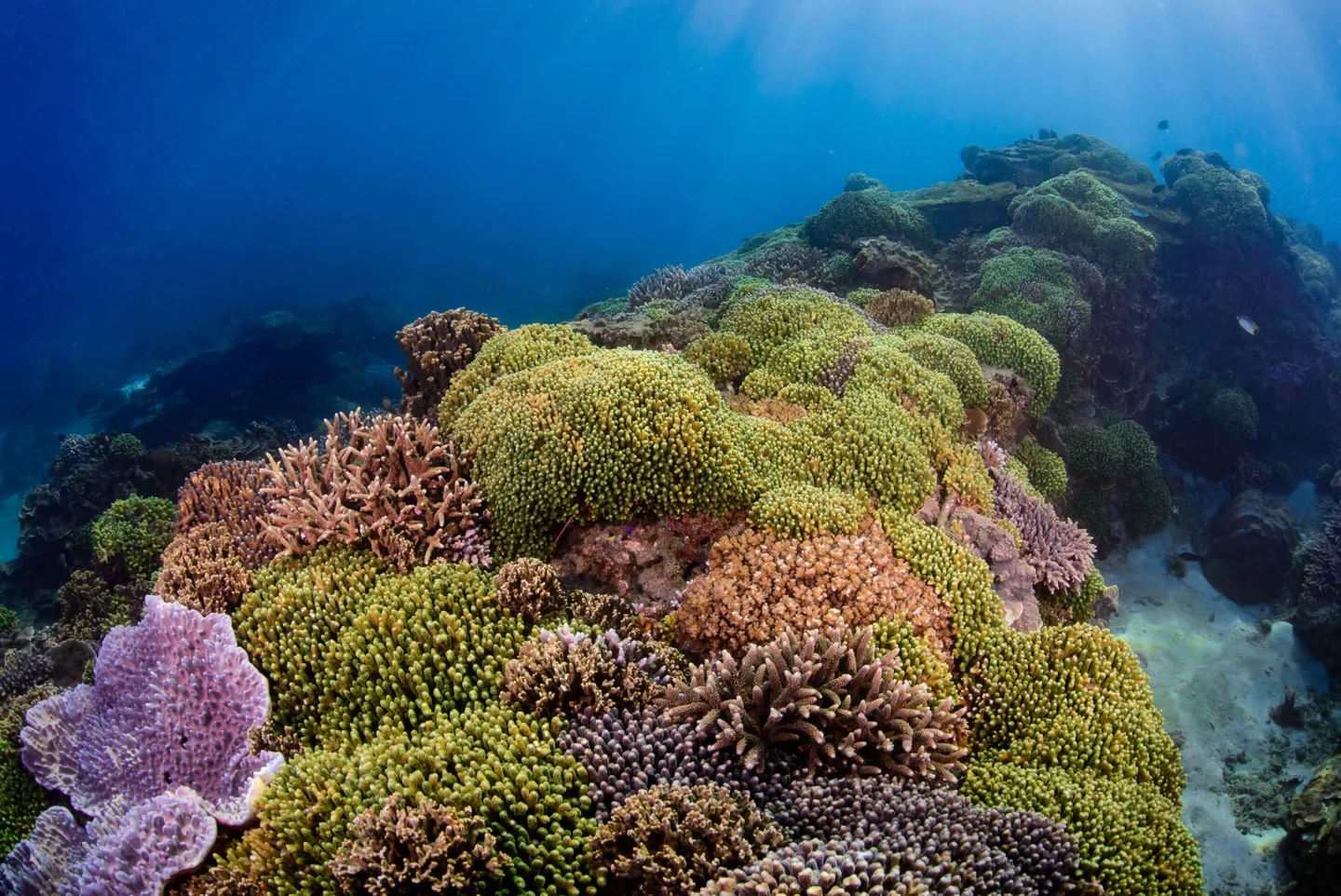
Photo credit 京太郎
Currents in the Penghu area are primarily influenced by the China Coastal Current and the Kuroshio. Except during extreme weather events such as typhoons or cold surges, currents flow steadily in a consistent direction. One area that does require special attention is tidal changes: in certain locations, the local topography can generate sudden whirlpool-like currents (known among divers as "washing machine" currents), and divers should take particular care. It is also strongly advised not to dive during periods of tidal change. When planning any dive activity, please contact a local dive shop or boat operator who is familiar with the waters, in order to minimise diving risks.
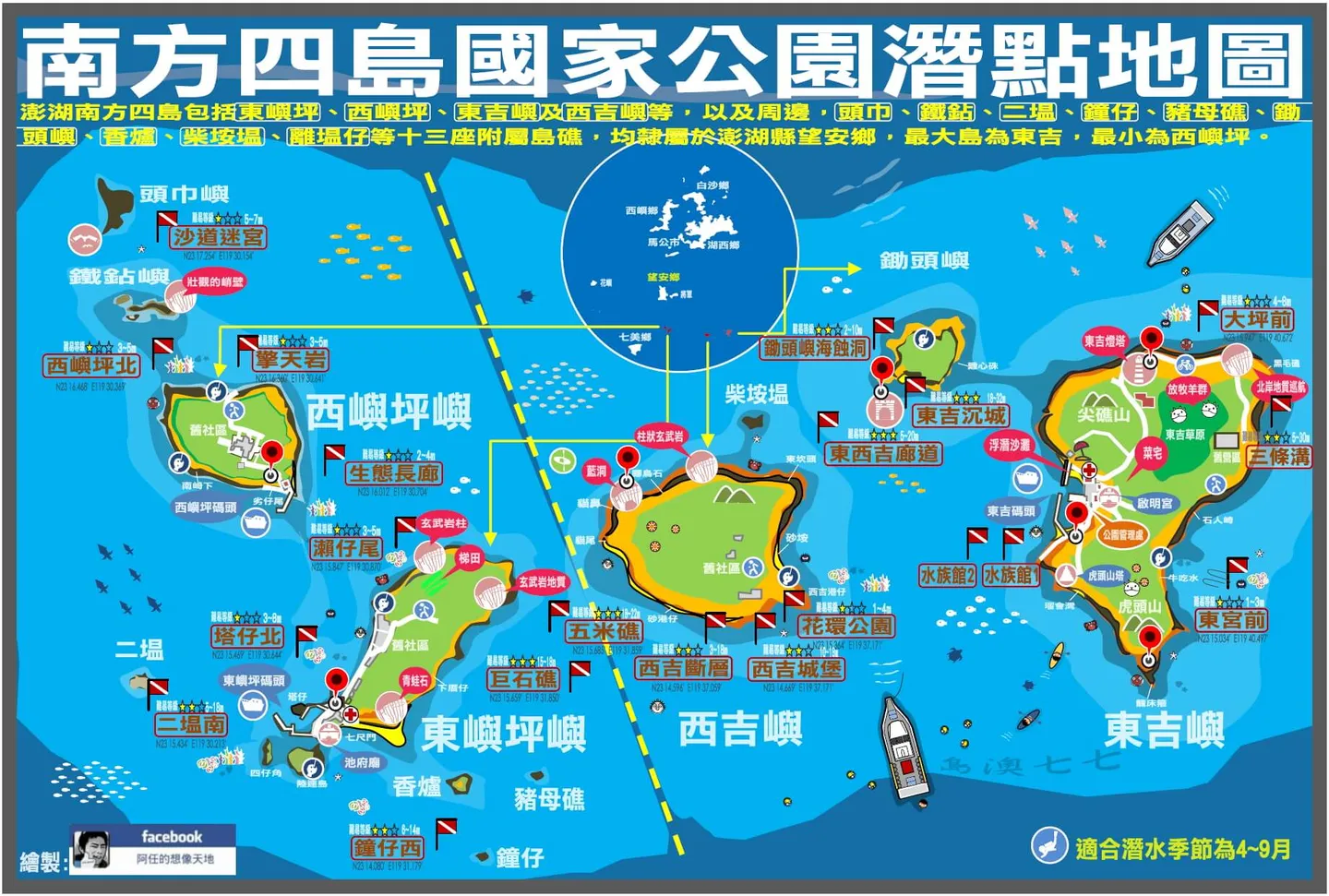
South Islands dive site map provided by Island 77
Dongji Yu & Xiji Yu Dive Sites
Dongji Yu is a basalt island, and apart from the sandy areas on either side of the harbour entrance, most of the coastline consists of sea cliffs and marine erosion features — shore diving is not recommended here. Coral reefs surround the island on all sides; the shallow eastern flat is a calm area suitable for snorkeling, while the northeast section, close to a marine abrasion platform, offers rich topography and abundant fish life ideal for recreational diving. The Lavender Forest area in front of Donggong Temple sits at a depth of just 3–5 m, and its magnificent purple coral gardens can be appreciated by snorkeling alone — making it an excellent wide-angle photography dive site.
Popular dive sites: Donggong Front, Daping Front
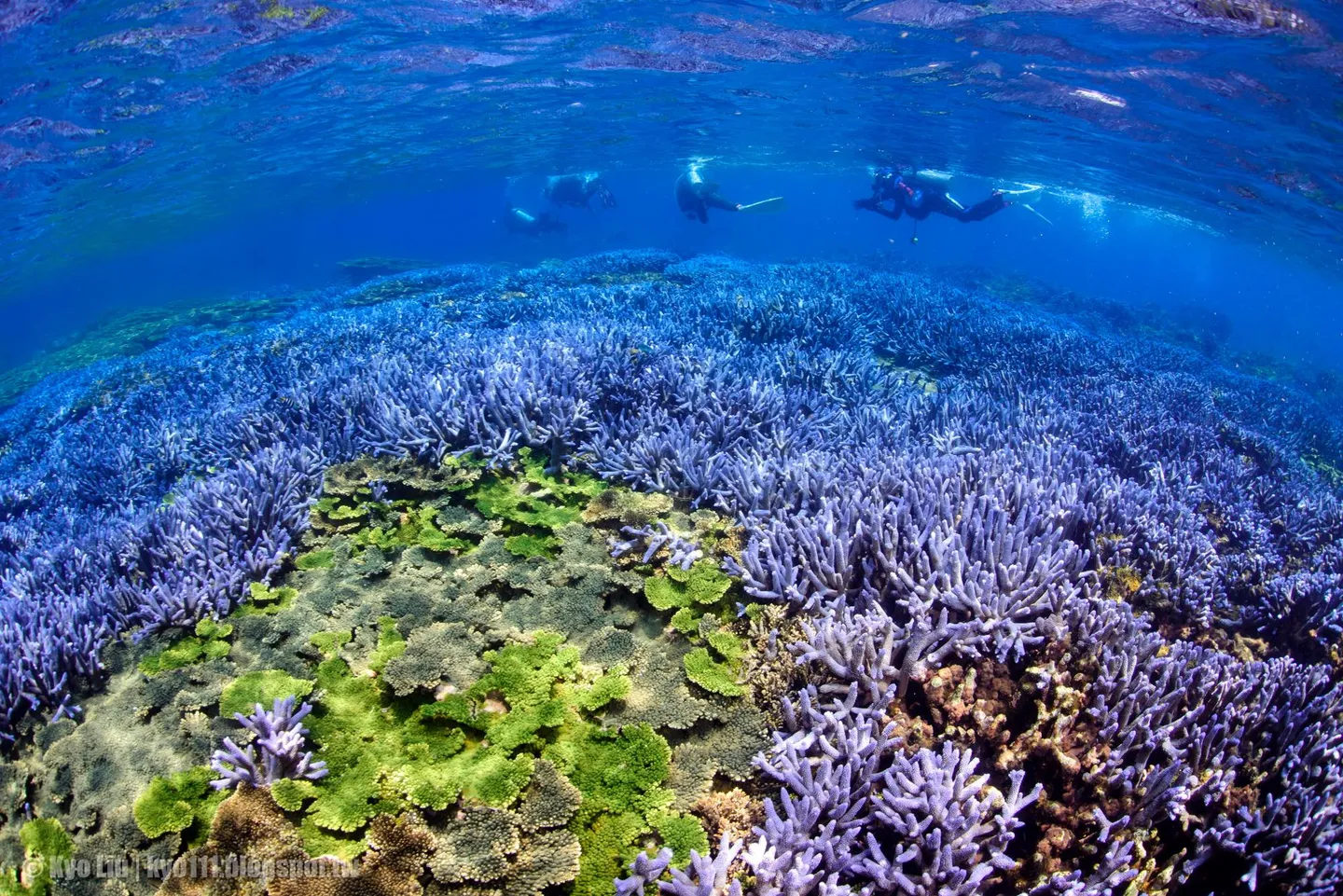
Photo credit 京太郎
Xiji Yu features coral reefs along its southern side, with abundant basalt formations in the surrounding waters. Large garland-shaped fleshy soft corals are widespread, with fish schools weaving through them — making it an excellent destination for a dive trip.
Popular dive sites: Huahuan Park, Xiji Castle
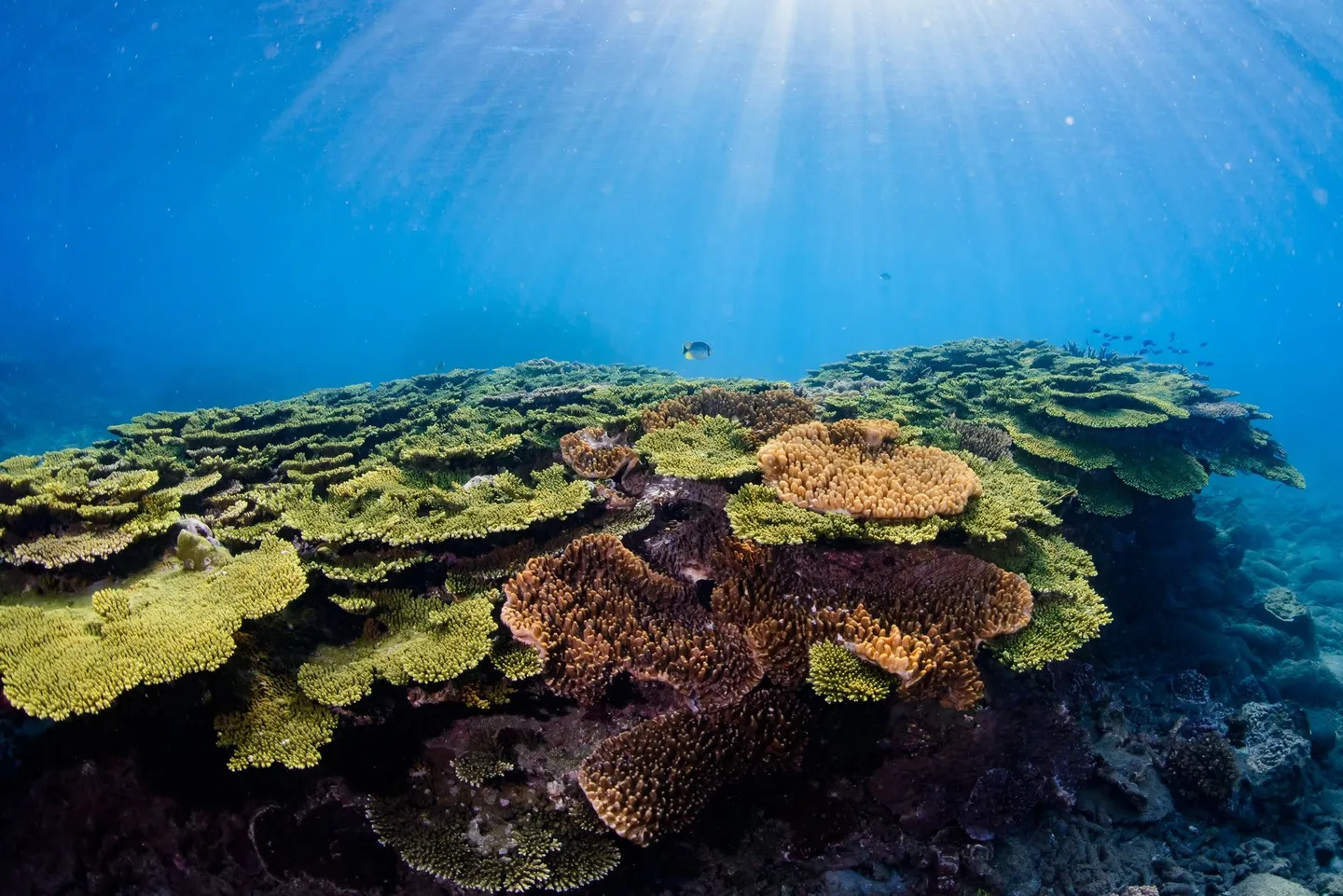
Photo credit 京太郎
Dongyu Ping & Xiyu Ping Dive Sites
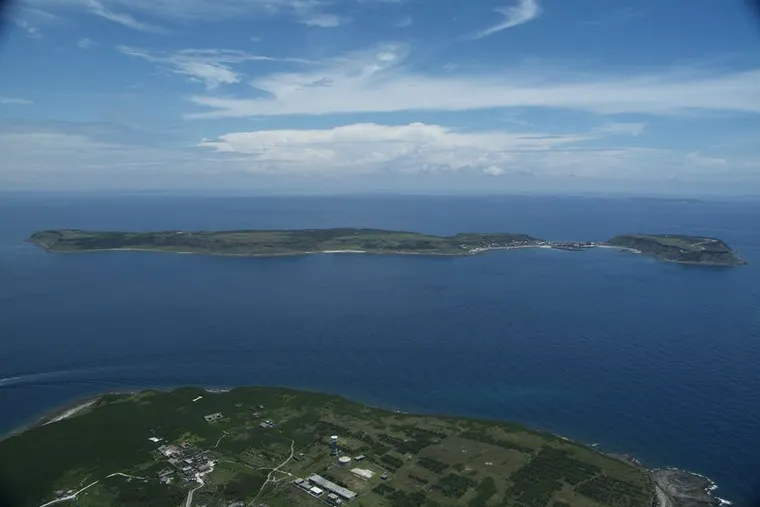
Dongyu Ping is a mesa-shaped basalt island. The coral here is dominated by Acropora, Montipora, and staghorn coral species. The eastern side of the island features formations such as Giant Rock Reef and Five-Metre Reef, where rocky outcroppings rise dramatically from the sandy bottom, creating rich and varied topography. Currents are relatively strong, flowing from southeast to northwest. Marine erosion channels and sea caves are prominent throughout this area, and marine life is abundant.
Popular dive sites: Tazai North, Laizaiwei, Five-Metre Reef, Giant Rock Reef, Zhongzai West, Erwen South
Xiyu Ping is a Penghu natural ecological reserve; landing on the island and diving in its surrounding waters is not permitted. However, its towering sea cliff formations and the surrounding islets make it a highly sought-after dive destination. According to a 2009 survey report, Xiyu Ping has the highest coral coverage rate among the South Islands, and as a result, its coral ecosystems and marine species diversity are relatively rich.
Popular dive sites: Ecological Corridor, Qingtian Rock, Xiyu Ping North, Sand Maze
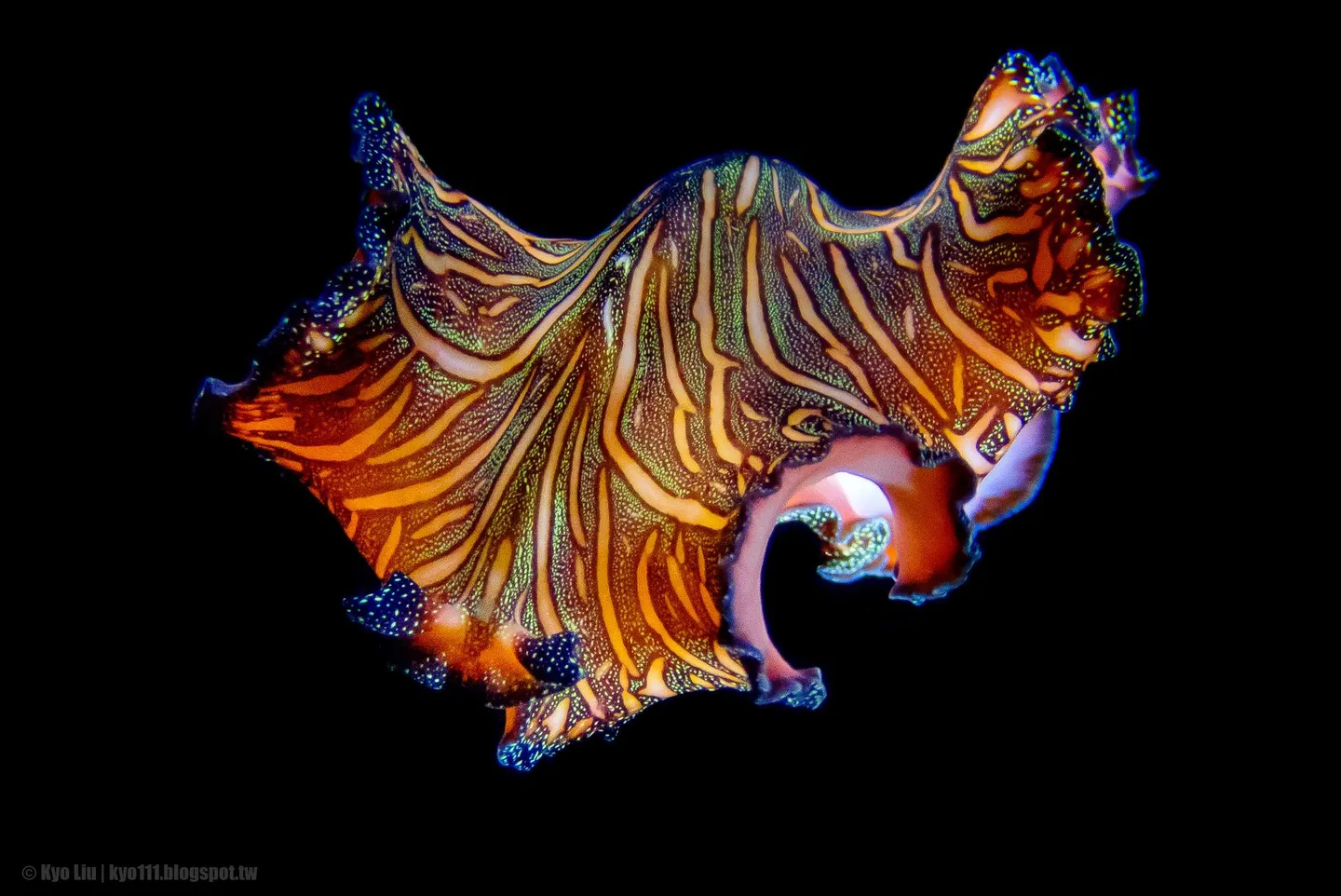
Photo credit 京太郎
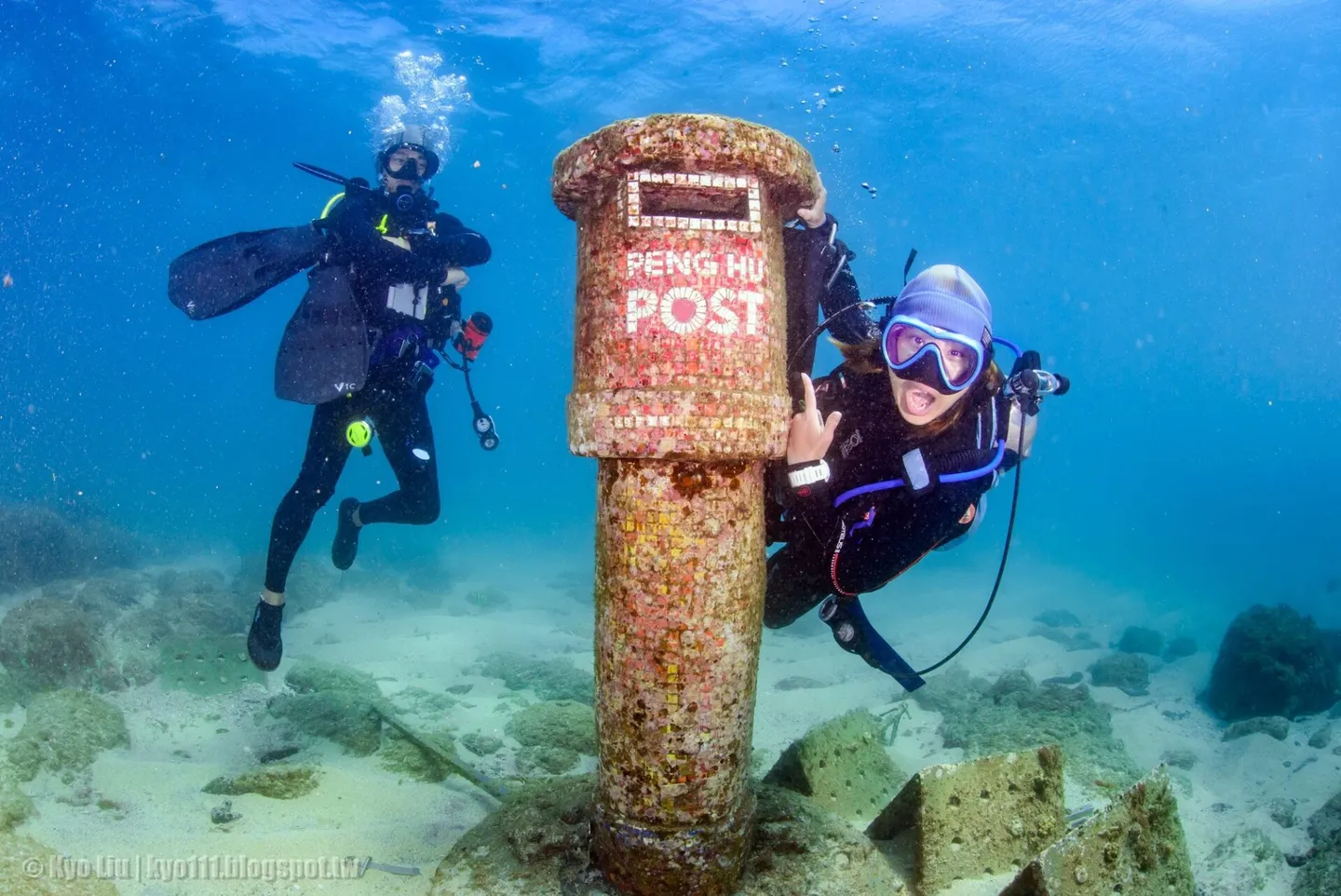
Photo credit 京太郎
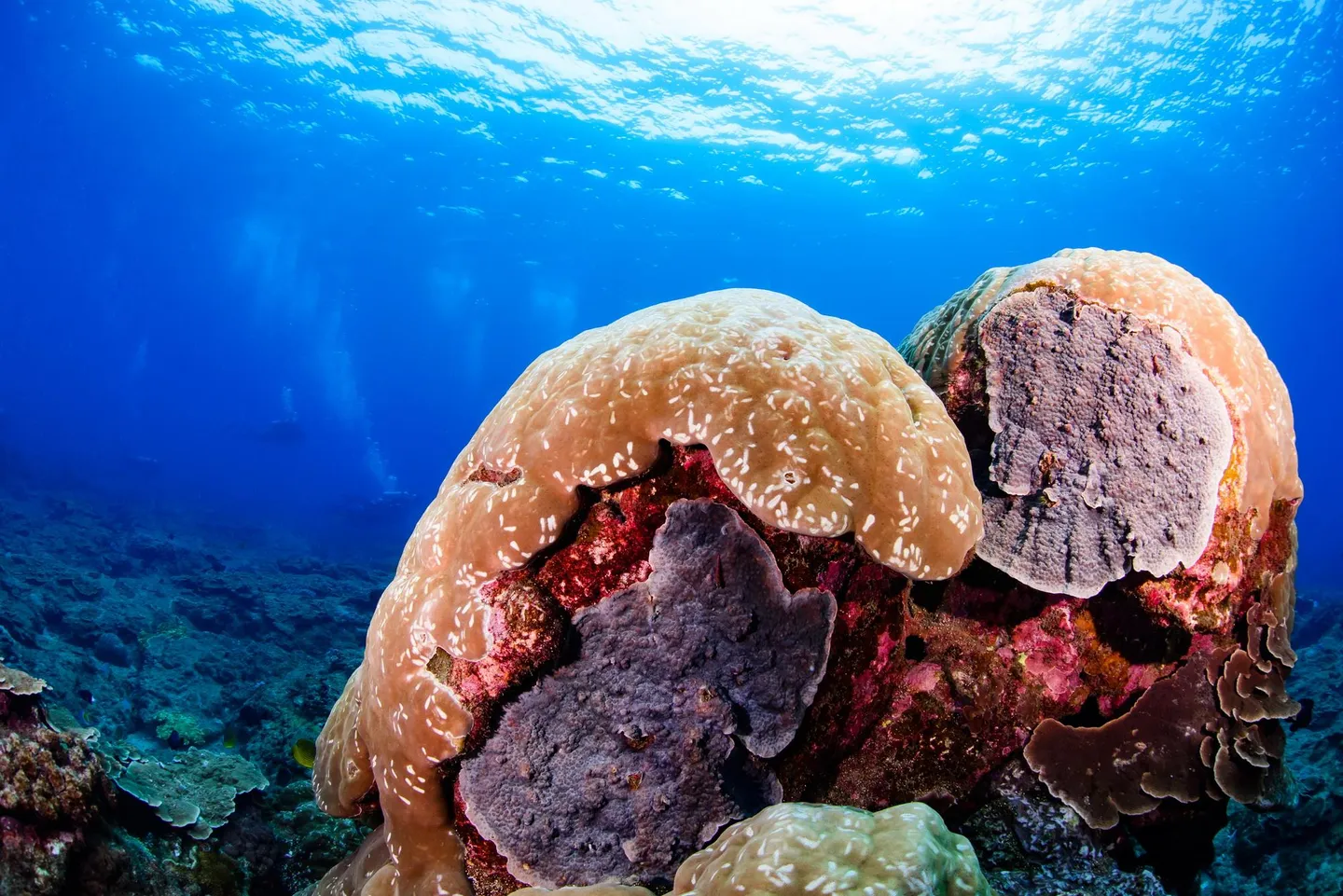
Photo credit 京太郎
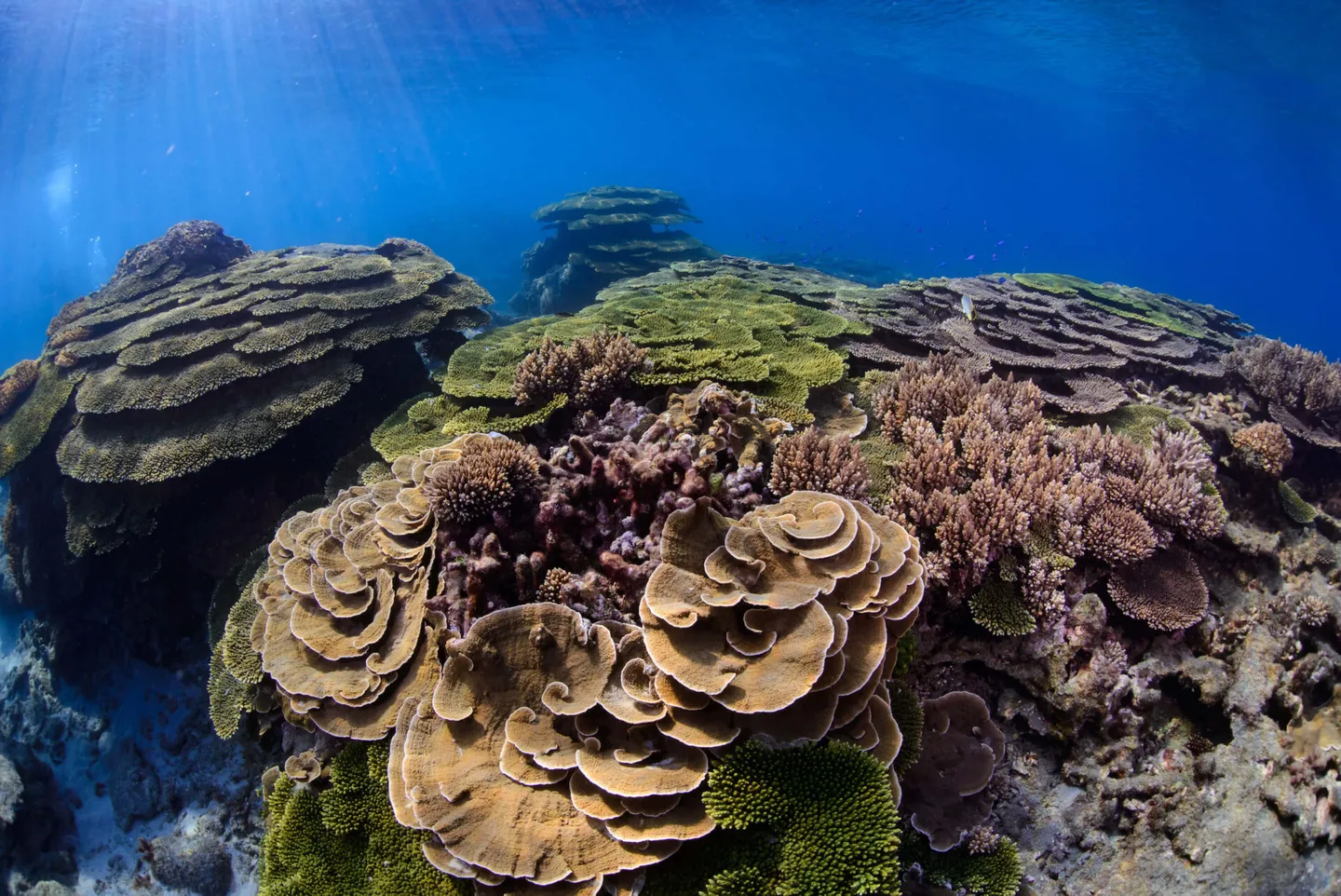
Photo credit 京太郎
Related Links:
Frequently Asked Questions
How is a BlueTrend dive trip different from an unknown, no-name dive group?
Choosing us means full peace-of-mind protection and a smooth experience from start to finish. Every trip we run holds to three things.
First, full legal protection and a professional dive leader: we strictly follow Taiwan's travel regulations and provide complete travel-agency liability insurance, travel insurance, trip-inconvenience insurance and dive insurance. Every group is accompanied by a certified, foreign-language dive leader who joins you on both the dives and the land itinerary, liaising seamlessly with local dive shops and operators on your behalf to keep things running smoothly — the person our travellers trust most.
Second, fully licensed with secure payments: every payment goes into a licensed travel agency's account, with multiple safe payment channels (bank transfer, credit card and more) and a legal collect-and-remit receipt, so every transaction is open, transparent and protected, avoiding the fraud and dispute risks of transferring money privately to an individual.
Third, hand-picked quality we vet in person: every trip, dive site and partner shop is scouted on the ground by our own team, from the guides' professionalism and safety standards to the food, lodging, environment and service details on land, all vetted by us so you don't get caught out.
I want to sign up for a dive trip. Are there certification-level or logged-dive requirements?
Each dive site is different, so the entry bar varies. 'Bali Tulamben', for instance, is relatively beginner-friendly. 'Malapascua in the Philippines' is also beginner-friendly, but since thresher sharks tend to cruise between 20 and 30 metres, we recommend AOW certification with 20+ logged dives to enjoy this trip comfortably. For 'the Maldives' or 'Palau', we suggest AOW with 50+ logged dives for a more relaxed experience. If you're not sure whether your experience fits the trip you want, message us and our dive editors will assess it and help you find the trip you'll feel safest on.
Can I join if I'm signing up alone? How are rooms arranged?
Plenty of our travellers sign up solo! For rooms and beds, we prioritise pairing you with a same-gender traveller, and if you'd rather have your own space you can pay the difference to upgrade to a single room. For the diving, our professional leader will pair you with a suitable buddy, and with the happy vibe on our trips you'll quickly make a great group of dive friends. Many people sign up alone, make new friends, and end up organising the next trip together!
Does the trip fee include dive insurance, gear rental, taxes and instructor tips?
It depends on the trip, the destination's regulations and the local operators. Every BlueTrend dive trip has a detailed web page with a clear 'included / not included' list, transparent and with no hidden charges. All payments are collected by a licensed travel agency, with a standard-form contract for your protection.
I'm a new diver / haven't dived in a long time — will I fall behind the group?
Before you complete your booking, our team assesses a suitable trip based on your certification level and experience. Before departure, we strongly recommend taking time to refresh in Taiwan with an instructor, or a fun dive to get your feel back. On the trip itself, our professional dive leader groups and pairs everyone by experience, keeps a close eye underwater on travellers who need extra care, and steps in to help right away.
Will the photos and videos taken during the trip be shared with us?
During the dives, 'safety' is always the leader's top priority, so whenever it's suitable and safe the leader will capture great shots and record the best moments. During or after the trip, we compile a cloud album for all travellers to download, so you go home loaded with memories!
Besides your scheduled trips, can you arrange a private group charter or independent travel for me and my friends?
Absolutely! Besides group trips, we also arrange private group charters and independent travel. We can communicate, enquire and coordinate services with local operators based on your needs, saving you time and effort and taking the language barrier off your plate, to tailor the smoothest, most reassuring dive trip just for you. Contact our LINE support and our editors will arrange it for you!

![[Fall in Love with Sailing with a Young Captain] Offshore Living — Sailing to Penghu Southern Four Islands National Park: Dongyu Ping](/_astro/%E5%B0%81%E9%9D%A2-1_Z6ryfN.webp)