Contents(6)
The Arctic is warming rapidly. Reorganised precipitation patterns, retreating sea ice, southward species migration, and rusting rivers all point to an ecosystem undergoing accelerated transformation. These changes will ripple across the globe through interconnected climate systems and ocean currents, making the Arctic a climate front line that the entire world must confront together.
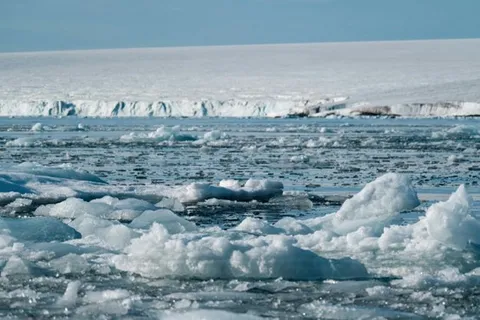
Climate warming is reorganising the Arctic ecosystem. Photo credit: Francesco Ungaro/Pexels
In 2021, I spent a winter in northern Canada and experienced firsthand the sheer volatility of the weather there — rain, snow, and sunshine switching places within hours, with extreme conditions becoming the new normal. These shifts reflect a broader reorganisation of the water cycle and seasonal rhythms across high-latitude regions. The Arctic is often treated as a distant concern, yet the National Oceanic and Atmospheric Administration (NOAA), in its Arctic Report Card — now in its 20th consecutive year of publication — makes clear that the Arctic is undergoing dramatic transformation whose effects have already reached high-latitude coastal communities, making it far less remote than we might imagine.
What Does the NOAA 2025 Arctic Report Card Say?
NOAA tracks critical changes in the Arctic environment through eight "Vital Signs":
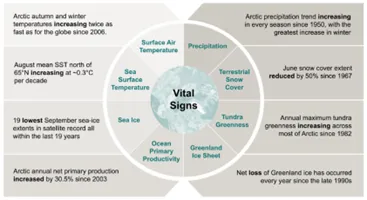
Arctic Report Card Vital Signs. Photo credit: Executive Summary - NOAA Arctic
1. Surface Air Temperature: Accelerating Warming
Arctic surface air temperatures from 2024 to 2025 reached their highest levels since 1900, with autumn and winter warming rates more than double the global average. This "Arctic amplification" is triggering a cascade of consequences, including glacial and sea ice loss, tundra greening, and shifts in ecosystem structure and species distribution.
2. Precipitation: An Intensifying Water Cycle
Arctic precipitation has reached record highs. Warming reduces sea ice cover, raises atmospheric moisture content, and alters storm tracks — creating an "intensifying water cycle" that increases the frequency of extreme precipitation events.
3. Snow Cover: A Weakening Reflective Shield
Spring snowmelt is occurring earlier and the snow season is shortening; June snow-cover extent is now only half of what it was in the 1960s. With less snow on the ground, heat that would otherwise be reflected back into space is instead absorbed by the surface, accelerating warming.
4. Tundra Greenness: A Transforming Landscape
In 2025, circumpolar tundra greenness reached its third-highest level in 26 years, continuing the "greening of the Arctic" trend that has persisted since the late 1990s. Warming extends the growing season and encourages shrub expansion; at the same time, wildfires and permafrost disturbance are causing localised browning. Changes to the tundra alter not only the landscape but also biodiversity.
5. Greenland Ice Sheet: Ongoing Mass Loss
Since 1990, the Greenland Ice Sheet has been losing mass every year, contributing to global sea-level rise and potentially disrupting regional ocean circulation and nutrient cycling in the North Atlantic.
6. Sea Ice: Historic Lows
In March 2025, Arctic sea ice extent reached only 14.12 million km², its lowest maximum in 47 years. Thinner ice is replacing multi-year ice, accelerating ecological change.
7. Sea Surface Temperature: Pronounced Regional Warming
In August 2025, sea surface temperatures in Atlantic-side marginal seas were approximately 7°C above average, accelerating sea ice loss.
8. Ocean Primary Productivity: A Reshaping Food Web
As Arctic sea ice retreats, more sunlight penetrates the water, boosting algal growth. This shift may disrupt established food-web relationships and could favour the proliferation of toxin-producing algal species, leading to harmful algal blooms that threaten marine life and the health of coastal communities.


More Rain, Less Snow: The Burning North
Taken together, these changes reveal that the Arctic's precipitation patterns and seasonal rhythms are being fundamentally reorganised. Natural Resources Canada has noted that climate change is creating drier, warmer, and less humid conditions, driving an increase in both the frequency and intensity of wildfires across Arctic and subarctic tundra regions that historically saw little fire activity. The 2023 Canadian wildfire season was the worst on record, burning more than 15 million hectares and forcing the emergency evacuation of communities on the Arctic fringe — a clear signal that high-latitude regions have become a new high-risk wildfire zone.
Ecosystem Disruption: Atlantification and the "Borealisation" of the Arctic
In the marine realm, NOAA has highlighted the alarming trend of Arctic "Atlantification" — the steady northward advance of warmer, saltier Atlantic water that suppresses winter sea ice formation while simultaneously driving nutrient upwelling and increased primary productivity, reshaping the marine food web. This transformation poses potential health threats to subsistence communities that depend on coastal resources.
NOAA also uses the term "borealization" to describe the broader reorganisation of Arctic ecosystems: southern species are expanding northward while Arctic species are declining in parts of their range. On land, tundra greening is gradually giving the Arctic landscape the appearance of boreal forest.
A New Phenomenon: Arctic Rivers Are Rusting
Under global warming, melting sea ice, shrinking Arctic habitat, and record-high Arctic temperatures are relatively easy to imagine — but another phenomenon is also unfolding across the Arctic: "rusting rivers." Waterways are turning a rusty orange-red, not because of industrial discharge, but because of the thawing of permafrost.
As the Arctic continues to warm rapidly, minerals and metals that have long been locked within the frozen ground are being released into river systems. When iron enters the water and oxidises, rivers take on that distinctive rust-orange appearance. More than 200 rivers across the Arctic region have already been affected. "Rusting" rivers are typically accompanied by deteriorating water quality — rising acidity and elevated concentrations of toxic trace metals — which can further damage freshwater ecosystems and fish habitat, disrupt food chains, increase ecological stress, and directly threaten the safety of Arctic communities.
Many Indigenous and northern communities still rely on local rivers as sources of drinking water and for subsistence fisheries — activities central to both basic survival and the continuation of traditional culture. Rusting rivers therefore represent a serious challenge to public health and community resilience.
Arctic Ecological Change Is a Global Issue
The Arctic is not a distant periphery — it is the front line of the world's climate future. When we talk about the Arctic, we are talking about far more than ice and snow in a remote corner of the map; it is more like a magic mirror that reflects what the global climate and ecosystem could look like in the years ahead. Arctic warming, shifting precipitation patterns, ocean warming, and rusting rivers are transforming climate change from an abstract set of data points into a concrete reality. Through the interconnected dynamics of ocean currents and atmospheric circulation, changes in the Arctic may influence Taiwan's rainfall patterns, typhoon intensity, and sea-level rise — turning a distant story of ice and snow into a climate reality we must all face together.
References
- NOAA (2025), Arctic Report Card 2025
- Natural Resources Canada (2026), Climate change and wildland fire
- KPMG (2024), City of Yellowknife After-Action Assessment: 2023 North Slave Complex Wildfires
- The Conversation (2025), From record warming to rusting rivers, 2025 Arctic Report Card shows a region transforming faster than expected
- The New York Times (2025), Arctic Warming Is Turning Alaska's Rivers Red With Toxic Runoff
※ This article is reprinted from the Delta Electronics Foundation Low-Carbon Living Blog: 〈史上最溫暖的十年,北極怎麼了?〉, co-produced with BlueTrend.