

Contents(6)
- Fish Stocking
- 1. Source fish from licensed hatcheries and select organisms with zero drug residue
- 2. Choose locally native species — below are commonly stocked species and their recommended release regions
- 3. Carefully evaluate suitable habitat for the species being released
- 4. Submit a release application form to the central Fisheries Agency and your local government
- Ocean Cleanup Activities
As conservation awareness continues to grow, we're delighted to see more and more divers getting involved in fish stocking and ocean cleanup activities. But when you take part in these events, are you truly being kind to the environment — or are you unknowingly causing harm to the ocean?
In this article, we share the essential concepts that every participant should understand before taking part in either fish stocking or ocean cleanup activities.
Fish Stocking
We often see news reports about certain Buddhist groups releasing animals, only for large numbers of them to perish shortly afterward. When the reasons behind these incidents are examined, the results are jaw-dropping.
-
Releasing freshwater fish into the sea
-
Tying the claws of crabs before throwing them into the ocean — reportedly because untied crabs would "commit the sin of killing" by eating small fish
-
Releasing non-native species, a common example being the artificially hybridized tiger grouper
-
Most outrageously, releasing cobras into the wild — simply because people believe the snake's form resembles a dragon and that doing so accumulates more karmic merit
From a bystander's perspective, all of the above amount to nothing short of an ecological disaster. Setting aside the question of faith and whether such releases truly accumulate karmic merit, aren't these actions causing immediate harm to the environment?
In fact, the Fisheries Agency, local fishermen's associations, and county and city governments have long allocated budgets for fish stocking activities as part of broader seed stock restoration programs. If these institutions could collaborate with Buddhist groups in the future — introducing scientifically sound fish stocking practices — it would not only help maintain the diversity of Taiwan's marine species, but also fulfil the mission of those religious groups. A true win-win-win.
So how does one plan a fish stocking activity based on the right principles? We've drawn on the operational guidelines from the Keelung City Government to offer some recommendations:
1. Source fish from licensed hatcheries and select organisms with zero drug residue
2. Choose locally native species — below are commonly stocked species and their recommended release regions
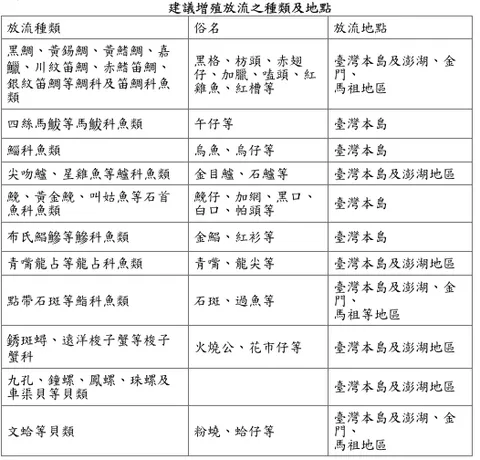
Recommended release organisms by region in Taiwan
3. Carefully evaluate suitable habitat for the species being released
For example, as shown in the video, abalone (Haliotis diversicolor) thrive on reef flats within 10 metres of the surface where sunlight is abundant; sandy terrain cannot provide appropriate habitat, whereas ample sunlight ensures a steady supply of algae for feeding. The season and timing of the release are equally important. It is recommended to release fish stocks in sync with the season when juvenile fish naturally appear in large numbers — for instance, along the Northeast Coast, juvenile fish emerge in abundance between March and May, making this an ideal window for releasing broodstock. Midday releases should be avoided, as intense sunlight lowers dissolved oxygen levels in the water and can cause the released fish to fail.
4. Submit a release application form to the central Fisheries Agency and your local government
Keelung City Government application form: https://reurl.cc/7XgrG9. Additionally, partnering with academic institutions allows their professional expertise to be used for tracking the outcomes of each release — transforming what might otherwise be a photo-op into an activity that delivers genuine, measurable benefits to the environment.


Ocean Cleanup Activities
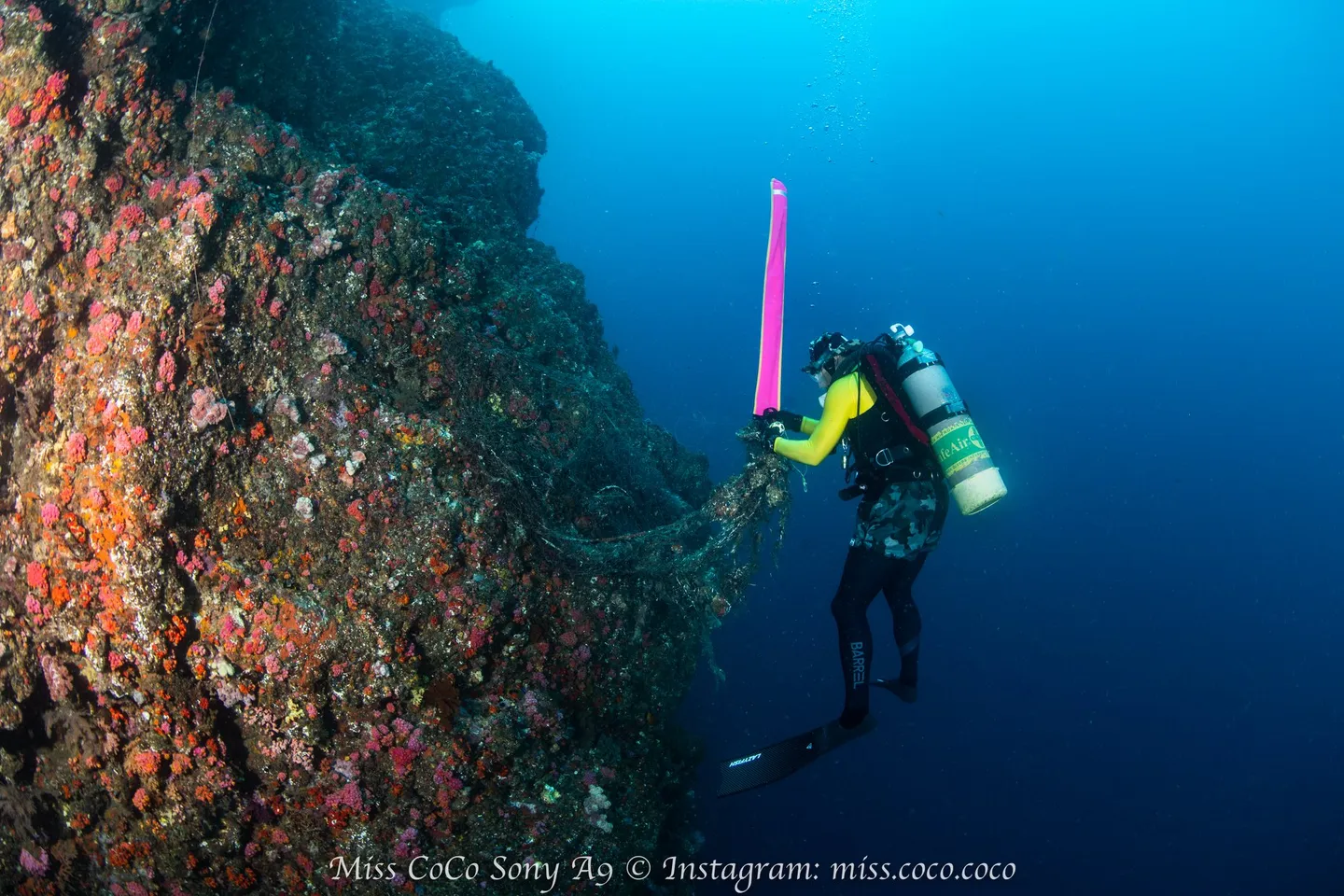
If you're interested in ocean cleanup events, check out this article: 【Diving with Datou】How to Organize a Safe Underwater Ocean Cleanup Event. Ocean cleanup activities aren't particularly complicated, but they do come with real challenges. The following three fundamental concepts must be established beforehand.
- Personal neutral buoyancy must be 100% solid
- Be familiar with local water conditions so you can return independently or ascend with a surface marker buoy (SMB) if separated from the group
- Confirm group assignments in advance and ensure at least one person is always monitoring all team members
Most importantly, a pre-event site survey is essential. Beyond confirming the safety of the dive area, it's equally critical to ensure there is enough marine debris for participants to collect. After all, in a voluntary activity like this, giving everyone a genuine sense of contribution matters — and the amount of debris available plays a bigger role than you might think!
Cover photo: CoCo
Further reading:

![[NCCU Diving Club] Reflections on a Beach Cleanup: A Little Inconvenience for Us, Infinite Opportunities for the Ocean](/_astro/94387669_2786902881408514_3988714893476888576_o_mQFSh.webp)
![[Marine Debris Special] 3 New Ways of Thinking About Plastic Reduction That Every Ocean Person Should Know](/_astro/%E5%B7%A5%E4%BD%9C%E5%8D%80%E5%9F%9F-1-6_ZNhXn8.webp)
![[Bending Down for 825] A Group of Divers Taking Action to Protect Taiwan's Macro Diving Mecca](/_astro/DSC_6308_M2oaq.webp)