Contents(6)
Diving Work-for-Certification
In recent years, work-for-certification programs have become increasingly popular in the diving world. Not only do they allow you to get certified with less money upfront, but if you're thinking about entering the dive industry, they also give you hands-on experience and a chance to learn how a dive shop operates. For both dive shops and divers alike, "diving work-for-cert" is a new, mutually beneficial learning model.
It's not just in Taiwan — dive shops all over the world offer work-for-certification programs. From the entry-level Open Water Diver (PADI/SSI cert) all the way up to dive instructor level, the duration of these programs ranges from a few days to several months depending on the country and region. If you're considering a work-for-cert program, it's best to evaluate what makes the most sense for you, clarify all the details with the dive shop, and make sure you have a proper contract before you commit!


A Pampered Diver
Unlike many experienced divers, I haven't been diving for very long. By the time I earned my Divemaster (PADI cert), the vast majority of my dive log had been completed in Southeast Asia. With warm waters and little experience guiding or taking care of divers, one instructor called me a "pampered diver" — not because I had a princess complex, but because I had always been diving in very comfortable, easy conditions.
When I decided I wanted to become a dive instructor, I was honestly a little scared. On top of feeling like my experience was lacking, I also doubted whether I could handle underwater situations. So I started looking into an "Instructor Development Course with an internship component."
In some regions, an Instructor Development Course allows you to take on students and teach after graduation, essentially giving you the opportunity to work and intern directly at a dive shop with the support of its instructors — helping new instructors get familiar with how the dive industry operates. Programs like this exist in the Philippines and Thailand, and they cost a little more than a standard Instructor Development Course. After spending a few days gathering information and emailing several dive shops with questions, I discovered that a dive shop in Australia was offering a work-for-certification program at the dive instructor level!
Their website laid out clearly how long you'd need to work for them, what the work involved, and any potential out-of-pocket costs. I happily wrote to them and received a reply quickly.
There's a funny twist of fate here: not long after I got my first dive certification, I bought a book called Paradise Diver. I read it and left it sitting at home for over a year. Then, at the Singapore dive expo, I got chatting with a veteran diver. When he found out I was heading to Australia for a work-for-cert program, he told me, "That's the very dive shop where the author of Paradise Diver did her work-for-cert!" I immediately dug the book out and reread it!
ITP (Instructor Training Program)
The company offering the work-for-instructor-certification program is called Divers Den, and they call it the Instructor Training Program (ITP for short). Their program overview stated that working for them for 45 days would earn you an Instructor Development Course. When I first read that, I wondered if my English had gotten rusty — 45 days in exchange for an Instructor Development Course was vastly different from the "several months" I had previously understood to be standard! (In hindsight, I think it's because wage levels in Australia are higher than in other countries, which is why fewer days are required.)
I wrote back with all my remaining questions and received a very friendly reply. On the agreed date, I bought my plane ticket and flew to Australia to begin my ITP internship.
Before the official internship began, the ITP coordinator checked my relevant certifications — including my Divemaster (PADI cert) qualification, dive liability insurance, dive medical insurance, and my dive medical certificate (a medical certificate confirming fitness to dive appears to be a Queensland requirement for all diving professionals). They then arranged a three-day trial period living aboard the boat.
I think this three-day trial period was extremely important. Working for certification here is no walk in the park, and it's crucial to use the trial period to honestly assess whether the program is right for you. On my very first day of the trial, I got seasick and threw up on the boat — but after carefully evaluating myself, I decided I could still handle it. I've heard of Divemasters who came for the interview and gave up after three consecutive days of vomiting during the trial! This trial system saves both the dive shop and the applicant from wasting each other's time.
After the trial, I confirmed once more with the ITP coordinator that I wanted to proceed with the internship, then signed a contract. Everything was explained to me item by item, including my responsibilities during the 45 days and exactly what training I would receive. All of this training was listed in a training manual, with set milestones each week. Once completed, a supervisor would sign off on each section, and at the end I would bring this fully signed manual in exchange for the Instructor Development Course materials!!
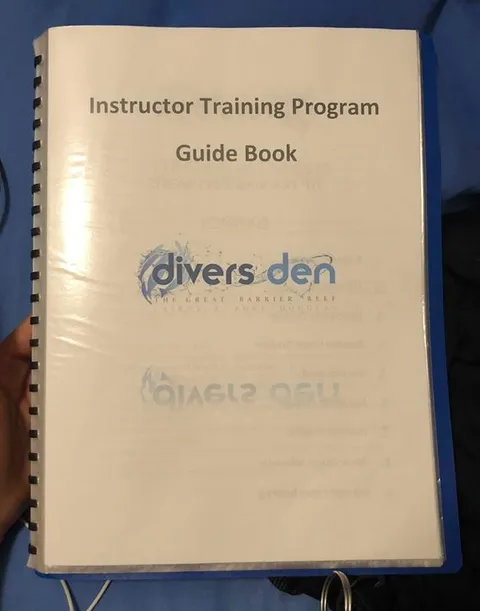
The internship manual you receive after signing the contract
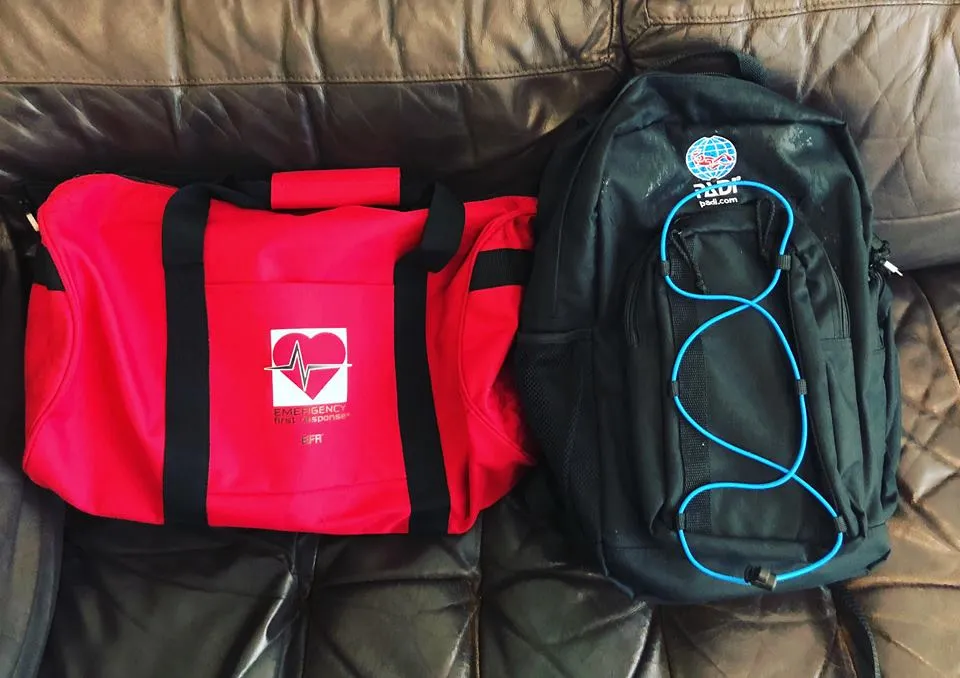
Once all the signatures are collected, you receive the Instructor Development Course materials
Life as an ITP
And so my 45 days began the moment I signed the contract.
Work took place either on the day boat or the liveaboard vessel. The actual tasks included cleaning, snorkeling guiding, scuba diving guiding, filling scuba tanks / cylinders, organising equipment, acting as a lookout, keeping dive records, and boat duties, among others. Learning boat duties was the most unique part of the entire internship. We learned how to tie mooring lines to keep the boat securely in place after moving to a new dive site, and how to connect two vessels so that passengers could move from the day boat to the liveaboard. We also learned to operate the dinghy — useful for ferrying supplies from the day boat, and essential in emergencies, such as when a diver swam too far out and needed to be picked up.
Each day for the crew ran from 5:20 a.m. to 8:00 p.m.
From the morning equipment checks to the Morning Call, the dive briefing, getting in the water with guests, cleaning the equipment area at the end of the day, and signing divers' dive logs — every crew member was well-versed in all of these duties! We came from almost entirely different countries, and working alongside so many people from different nations at the same time was truly a first for me, and something genuinely special.
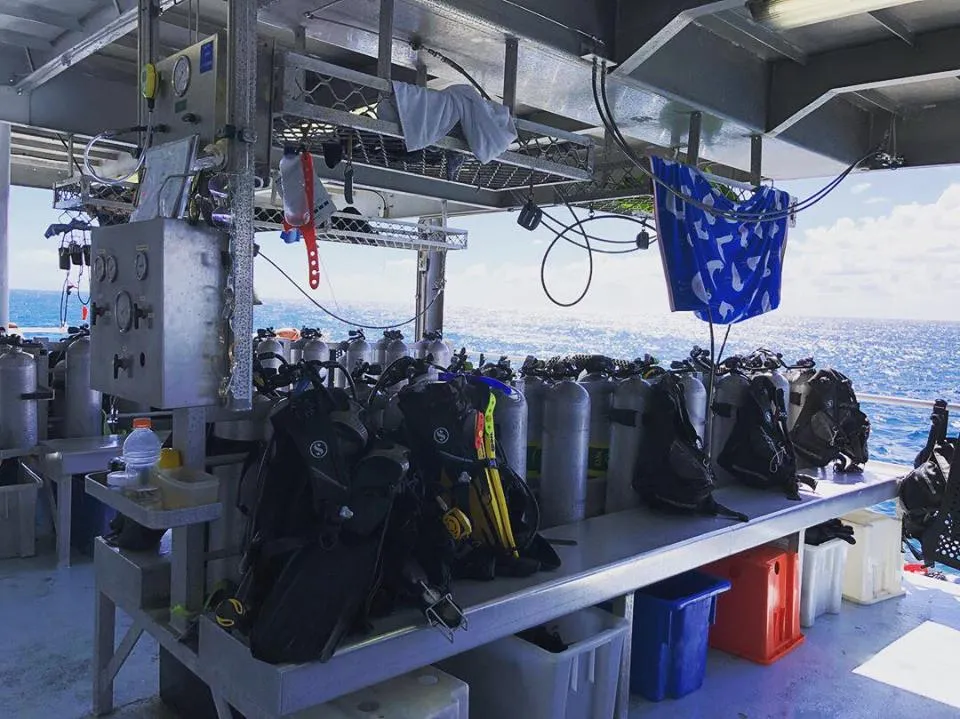
The day always starts in the equipment area
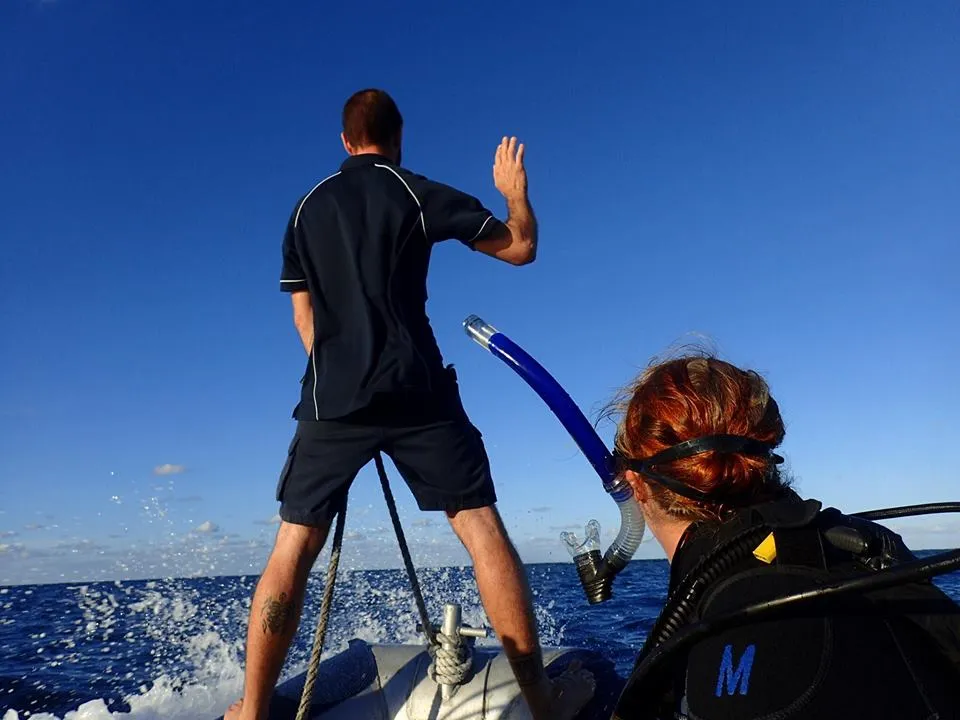
During the afternoon break, the Divemasters would seize the chance to squeeze in a dive
Just like the author of Paradise Diver, I got lost on a few occasions in the beginning. I also struggled to fully master certain boat duties and wasn't quite sure how to manage my divers — I lacked confidence because I had never truly worked in a professional Divemaster (PADI cert) capacity before. But with the patient guidance of the supervisors and instructors on board, by the time the internship ended, I had become a crew member who could hold my own.
One memory stands out vividly: I was never very good at handling the dinghy, so several instructors took turns taking me out to practice. We were out on the open water doing handbrake turns, spinning circles, and all sorts of manoeuvres. It never occurred to me in my entire life that I might actually be better at driving a dinghy than driving a car.
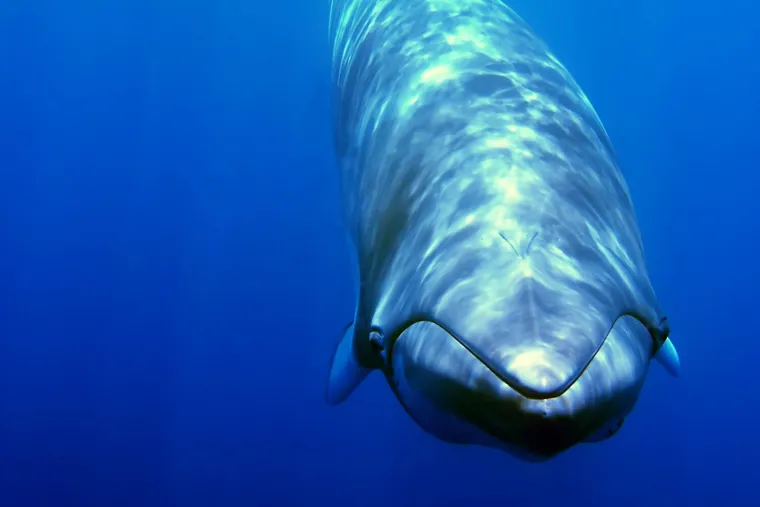
Over those 45 days I also learned how to connect with guests. On several occasions I received genuinely kind feedback from them, which gave me a real boost. Sometimes while guiding dives I felt I hadn't done a great job — like I hadn't found very much — but the divers would come up, shake my hand, and tell me they had a fantastic time. The passengers who came and went shared their stories with me; I met travellers from all corners of the world, and that positive energy kept showing up throughout the work. Even on the days when I was so exhausted I fell asleep the moment I hit the pillow, I still felt that I had made a truly wonderful decision. I was also very lucky that during those 45 days I happened to be there during Australia's whale season, and got to take part in two weeks of Minke Whale trips! (For more details about the Minke Whale trip, see the separate article.)
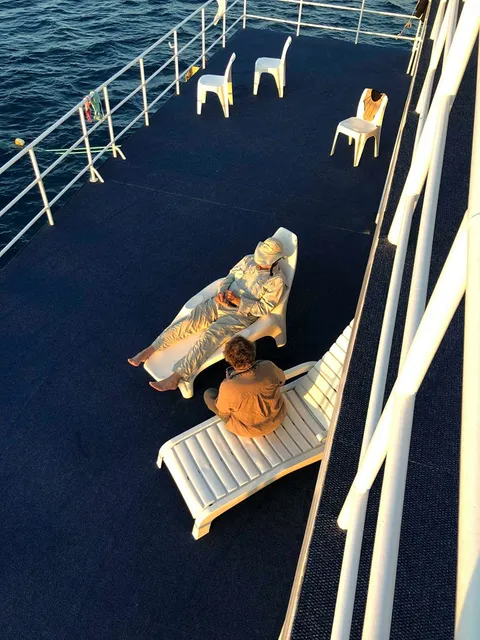
This American couple — a grandfather and grandmother — were my favourite guests. Due to health reasons they couldn't scuba dive, but after taking them snorkeling for several days in a row I found myself drawing a tremendous amount of diver energy from them
Apart from me, there were 8 ITP participants in my cohort — all Divemasters (PADI cert) — each from a different country. Sometimes we doubled as translators, so the boat would occasionally have dive briefings in 3 or 4 different languages. These fellow ITP trainees eventually became my classmates in the Instructor Development Course, where we learned together and had a great time.
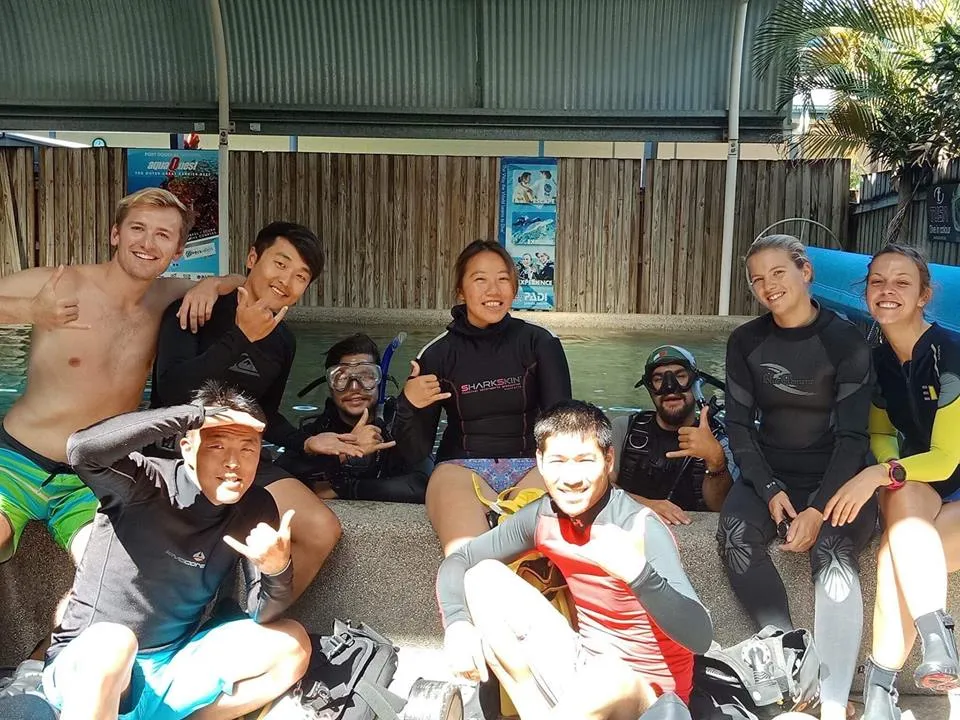
The Divemasters doing the internship together
A Few Personal Thoughts
Honestly, I don't think a work-for-cert program is necessarily the most cost-effective way to get certified. When you factor in flights and the fact that accommodation and food outside of the time spent living aboard the boat are your own responsibility, the total cost may not end up being significantly less than going to the Philippines or Thailand. A friend of mine once pointed out to me: "Wouldn't it make more sense to work an extra month in Singapore and then leisurely get your instructor cert in Thailand?" And thinking about it, that's actually a pretty valid point. That said, I genuinely believe that doing a liveaboard internship is a truly unique experience. Throughout the process I felt myself growing enormously — in dive skills, boat operations, and communication alike — so I'm still a firm advocate of this kind of internship program (purely a personal view).
My Instructor Development Course has already been underway for a week and a half, and my instructor examination is just around the corner!!!
If I get the chance, I'll share more about the Instructor Development Course here.
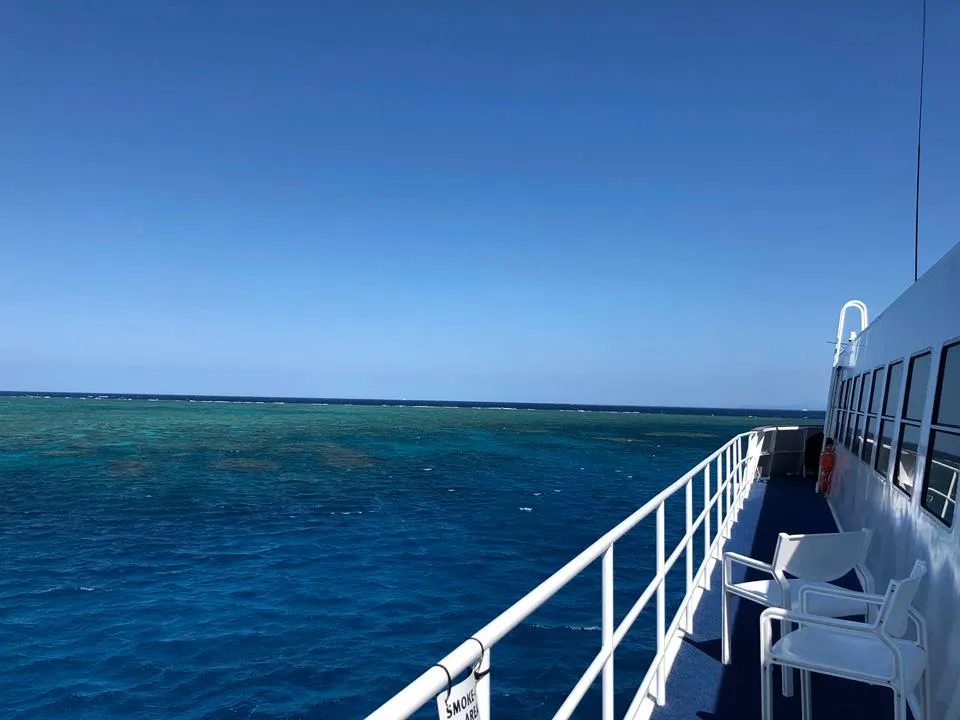
A quiet, relaxing corner of the boat

When an especially beautiful sunset appeared, the crew would all run up to the top deck to have dinner with a view
About Work-for-Certification in Australia
While writing this article, I did a quick search, and as far as I know, Divers Den is currently the only dive shop offering a work-for-instructor-cert program. If you're a Rescue Diver (PADI cert) looking to earn your Divemaster (PADI cert), there are quite a few shops that offer such internships — for example, Cairns Dive Centre, Down Under Cruise & Dive, Byron Bay Dive Centre, Whitsunday Dive Adventures, and others. The number of days and conditions vary from shop to shop, so if you're interested, take a look at their official websites or send them an email. (If you have detailed internship information about any of these dive shops that you'd like to share, please let me know and I'll add it here!!)
One final reminder: read your contract carefully, confirm the working arrangement with the dive shop before signing, and avoid disputes down the track.
Related links:
Frequently Asked Questions
How is a BlueTrend dive trip different from an unknown, no-name dive group?
Choosing us means full peace-of-mind protection and a smooth experience from start to finish. Every trip we run holds to three things.
First, full legal protection and a professional dive leader: we strictly follow Taiwan's travel regulations and provide complete travel-agency liability insurance, travel insurance, trip-inconvenience insurance and dive insurance. Every group is accompanied by a certified, foreign-language dive leader who joins you on both the dives and the land itinerary, liaising seamlessly with local dive shops and operators on your behalf to keep things running smoothly — the person our travellers trust most.
Second, fully licensed with secure payments: every payment goes into a licensed travel agency's account, with multiple safe payment channels (bank transfer, credit card and more) and a legal collect-and-remit receipt, so every transaction is open, transparent and protected, avoiding the fraud and dispute risks of transferring money privately to an individual.
Third, hand-picked quality we vet in person: every trip, dive site and partner shop is scouted on the ground by our own team, from the guides' professionalism and safety standards to the food, lodging, environment and service details on land, all vetted by us so you don't get caught out.
I want to sign up for a dive trip. Are there certification-level or logged-dive requirements?
Each dive site is different, so the entry bar varies. 'Bali Tulamben', for instance, is relatively beginner-friendly. 'Malapascua in the Philippines' is also beginner-friendly, but since thresher sharks tend to cruise between 20 and 30 metres, we recommend AOW certification with 20+ logged dives to enjoy this trip comfortably. For 'the Maldives' or 'Palau', we suggest AOW with 50+ logged dives for a more relaxed experience. If you're not sure whether your experience fits the trip you want, message us and our dive editors will assess it and help you find the trip you'll feel safest on.
Can I join if I'm signing up alone? How are rooms arranged?
Plenty of our travellers sign up solo! For rooms and beds, we prioritise pairing you with a same-gender traveller, and if you'd rather have your own space you can pay the difference to upgrade to a single room. For the diving, our professional leader will pair you with a suitable buddy, and with the happy vibe on our trips you'll quickly make a great group of dive friends. Many people sign up alone, make new friends, and end up organising the next trip together!
Does the trip fee include dive insurance, gear rental, taxes and instructor tips?
It depends on the trip, the destination's regulations and the local operators. Every BlueTrend dive trip has a detailed web page with a clear 'included / not included' list, transparent and with no hidden charges. All payments are collected by a licensed travel agency, with a standard-form contract for your protection.
I'm a new diver / haven't dived in a long time — will I fall behind the group?
Before you complete your booking, our team assesses a suitable trip based on your certification level and experience. Before departure, we strongly recommend taking time to refresh in Taiwan with an instructor, or a fun dive to get your feel back. On the trip itself, our professional dive leader groups and pairs everyone by experience, keeps a close eye underwater on travellers who need extra care, and steps in to help right away.
Will the photos and videos taken during the trip be shared with us?
During the dives, 'safety' is always the leader's top priority, so whenever it's suitable and safe the leader will capture great shots and record the best moments. During or after the trip, we compile a cloud album for all travellers to download, so you go home loaded with memories!
Besides your scheduled trips, can you arrange a private group charter or independent travel for me and my friends?
Absolutely! Besides group trips, we also arrange private group charters and independent travel. We can communicate, enquire and coordinate services with local operators based on your needs, saving you time and effort and taking the language barrier off your plate, to tailor the smoothest, most reassuring dive trip just for you. Contact our LINE support and our editors will arrange it for you!