

Swimming with Minke Whales in Australia — Every Diver's Dream
From late June to early August each year, the Great Barrier Reef launches its minke whale expedition season. Researchers believe this is the period when minke whales migrate en masse, and encountering minke whales at the Great Barrier Reef during the Australian winter is the only predictable minke whale behaviour of the year — making it the perfect opportunity for scientists to conduct their research! Australia's dive industry has partnered with minke whale research teams to offer whale-watching trips where guests can observe minke whales underwater alongside researchers, while onboard screenings and research presentations give travellers a deeper understanding of these remarkable animals beyond the close encounters alone.
I was lucky enough to be interning at Australian liveaboard company DIVERS DEN, which gave me the rare opportunity to board the whale-watching vessel twice and join in the search for whales.
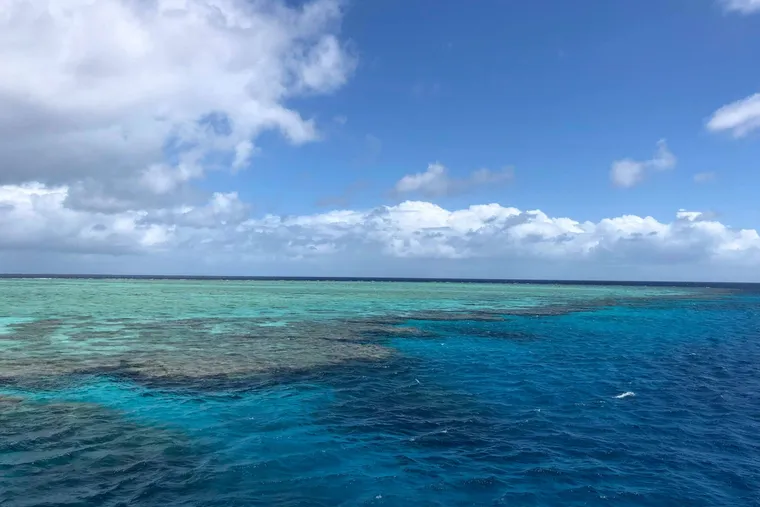
A minke whale expedition runs for five days and four nights, departing from Cairns. On day one, after completing three dives at Norman Reef or Saxon Reef, the vessel heads north through the Great Barrier Reef to Ribbon Reef.
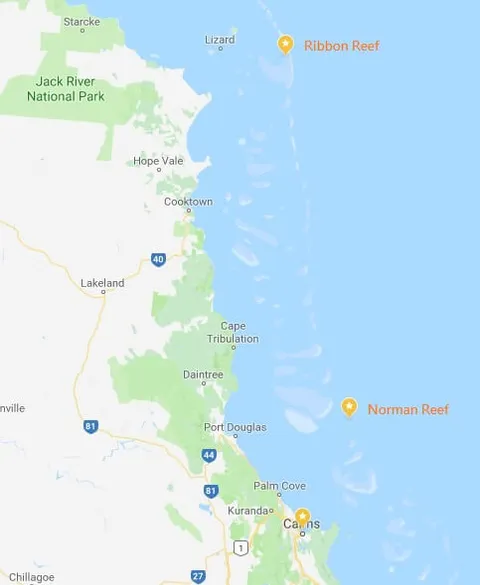
Image sourced from Google Maps
Diving
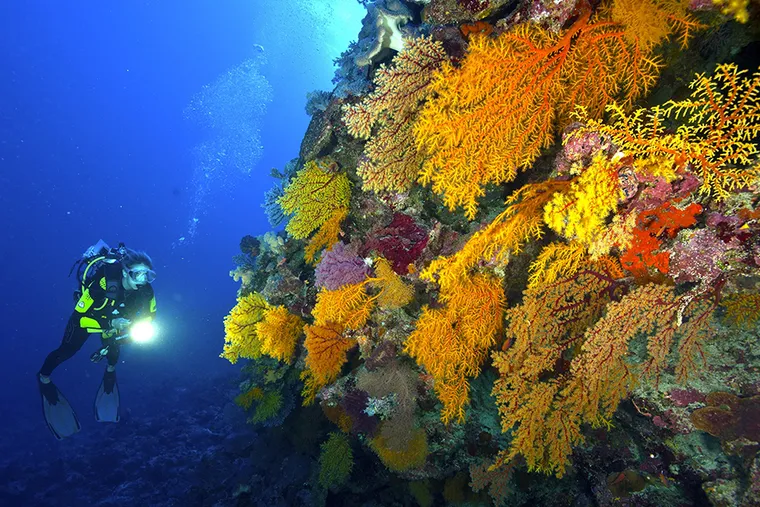
Although this is billed as a whale-watching trip, the stunning dive sites are every bit as much of a highlight! The minke whale expedition's dive sites include: Steve's Bommie, Gorgonian Wall, Lighthouse Bommie, Challenger Bay, Crack A Jack, and Clam Garden.
The scheduled itinerary includes four dives per day (including a night dive or Fluorescent dive), with two dives at each site. Lunchtime and the early hours of the morning are the usual transit windows between sites — though in practice the schedule is adjusted based on whether minke whales are sighted and on weather conditions. On one particular day, a minke whale lingered around the vessel for at least six hours, so the captain decided not to move the boat to the next site until dinnertime. These are some of the most renowned dive sites on the Great Barrier Reef, and because few dive operators make it out this far — and the whale expedition runs during winter — the sites remain relatively undeveloped and undisturbed. Divers can encounter an enormous variety of fish schools, and those who love hunting for small critters will find plenty to keep them busy here.
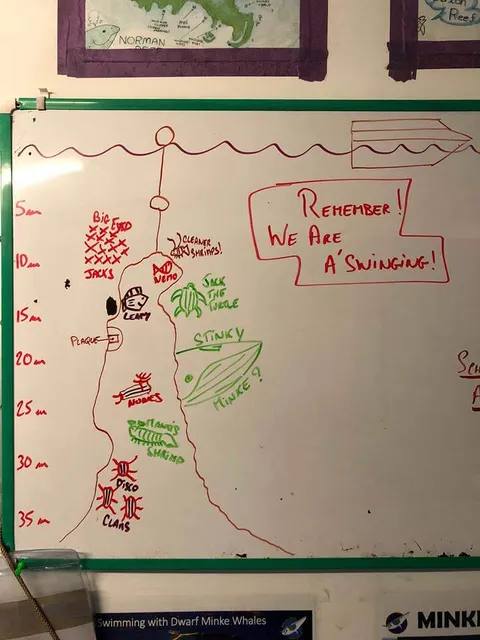
A hand-drawn dive site map on the whiteboard
"Here you can simultaneously see entire schools of fish, beautiful coral reefs, sea turtles, sharks, sea snakes, leafy scorpionfish, stonefish, and sea hares — and a minke whale might just swim past you at any moment! I honestly never know where to look!" — this is what the French instructor told guests, and once you're underwater, you'll find every word of it is true.
When diving in Australia, you have the option of diving independently with your dive buddy. As long as you pay close attention to the pre-dive briefing, you'll find navigation straightforward and won't need a dive guide. In addition to a briefing at each new dive site, a team of instructors called "Spotters" would enter the water early and use glow sticks to mark out particularly interesting creatures, ensuring everyone had a chance to spot the harder-to-find marine life and helping less experienced divers locate these special residents. Divers who were less confident in their skills could still request a guided dive — those of us doing internships at the company worked mainly as Divemasters, essentially acting as dive buddies to ensure everyone had a fun and safe experience.
At several of the whale expedition's dive sites, the vessel anchored rather than mooring on a line in the usual way, which meant the boat swung and drifted continuously from side to side. Divers had to pick their moment carefully before jumping in or climbing back aboard — and it was not uncommon to see a diver furiously swimming to catch up with the boat, which was rather entertaining to watch.
In addition to regular night diving, guests also had the option of doing a Fluorescent dive (Fluo dive for short). A Fluo dive uses a specialised blue Torch and a yellow mask filter to transport divers into a completely different underwater world, focused on observing fluorescent organisms and coral across a small patch of reef.
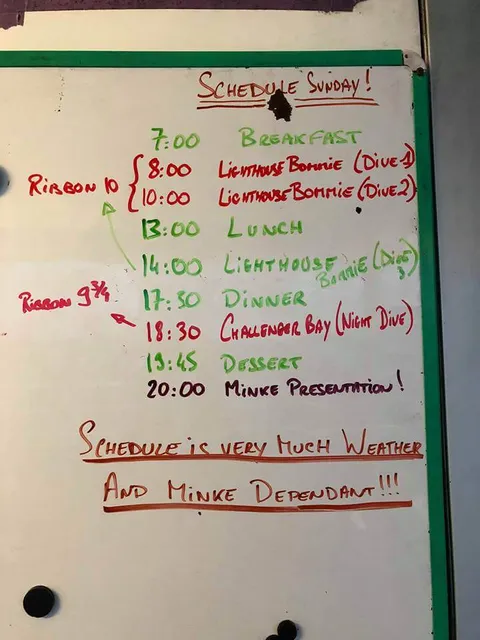
The schedule board, updated after each night dive to show the next day's itinerary
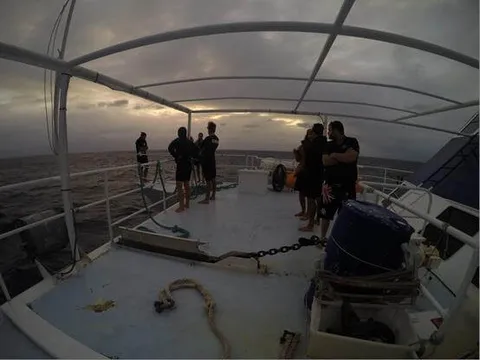
Crew members preparing to drop anchor in the early hours of the morning
Whale Watching
The best way to watch the whales is from the deck or by snorkeling. Once guests board the liveaboard, a video explains the rules and key points for snorkeling whale watches — essentially: follow crew instructions, enter and exit the water with minimal movement, hold the snorkel line at all times, and avoid making large swimming movements. Three minke whale researchers travelled onboard, so guests could direct any questions about minke whales to them at any time.
The morning of day two marked the official start of the whale-watching portion of the trip. We had anchored the vessel, finished breakfast, and the instructor had begun the dive briefing when the whale professor pushed open the door to signal that he had spotted a minke whale about sixty metres from the boat. I was assigned to snorkeling duty that morning, so my supervisor told me to quickly suit up in my wetsuit, grab the snorkel line, and be the first one into the water as the snorkeling safety officer.
Essentially, my job was to float on the surface like a sea turtle. If I spotted a minke whale within visual range, I had to raise my hand to signal the number of whales I could see to the crew on deck. For the first half-hour, not a single minke whale appeared. Just as I was starting to feel cold, I caught a glimpse of a minke whale slowly swimming towards me. I excitedly raised my hand, the entire vessel erupted with excitement, and only then did guests start suiting up in their wetsuits, taking the snorkel line one by one into the water while the research team entered to begin their documentation.
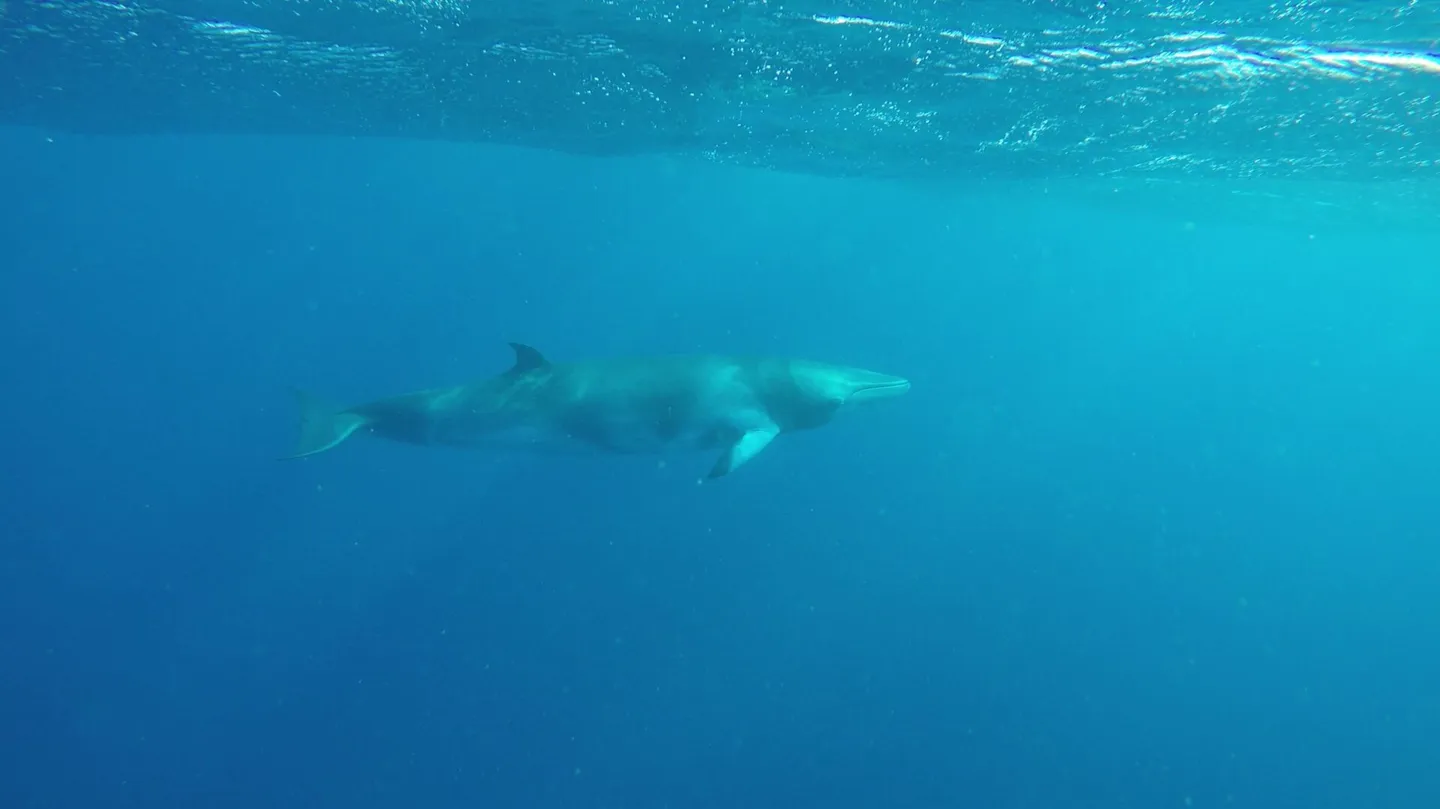
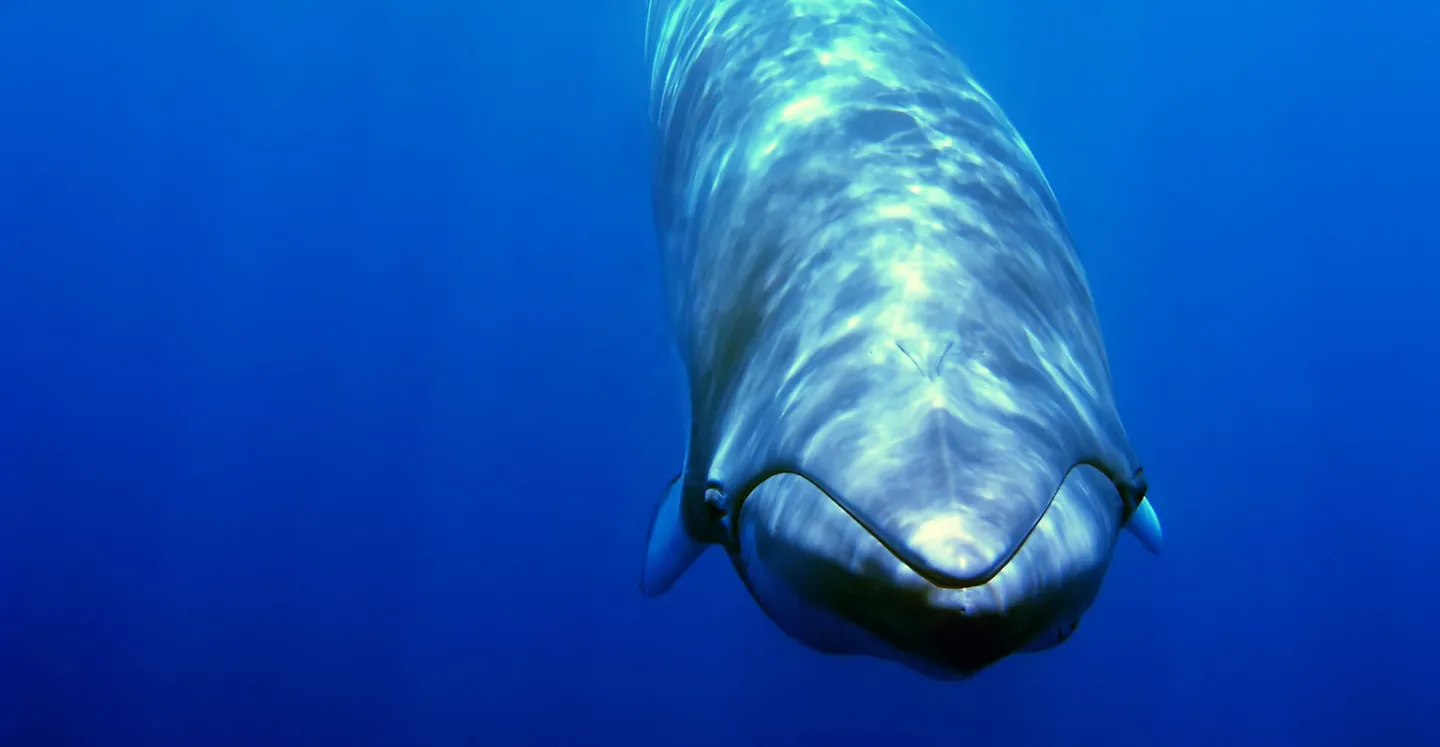
A captured glimpse of a minke whale
Minke whales were spotted every single day over the following days. On one occasion, I counted seven minke whales gliding gracefully underwater — and the whale professor later told me he believed there were at least ten at the time! Guests could choose to observe the whales either by scuba diving or snorkeling. Some of the more enthusiastic travellers would finish a dive and immediately jump in for a snorkel, then return to the boat for sufficient surface interval time before suiting up again with their scuba tank for another dive!
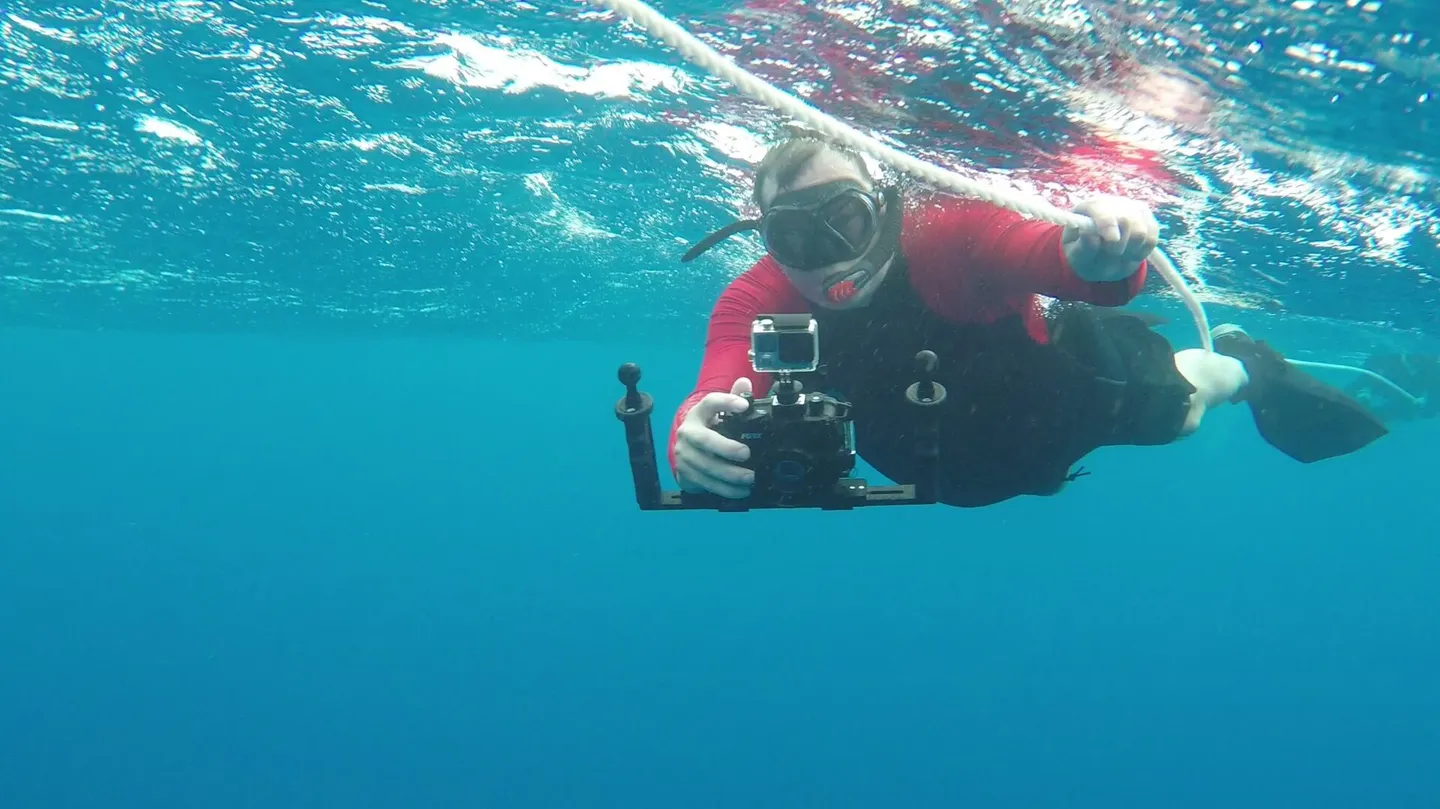
Guests holding the snorkel line to watch the whales
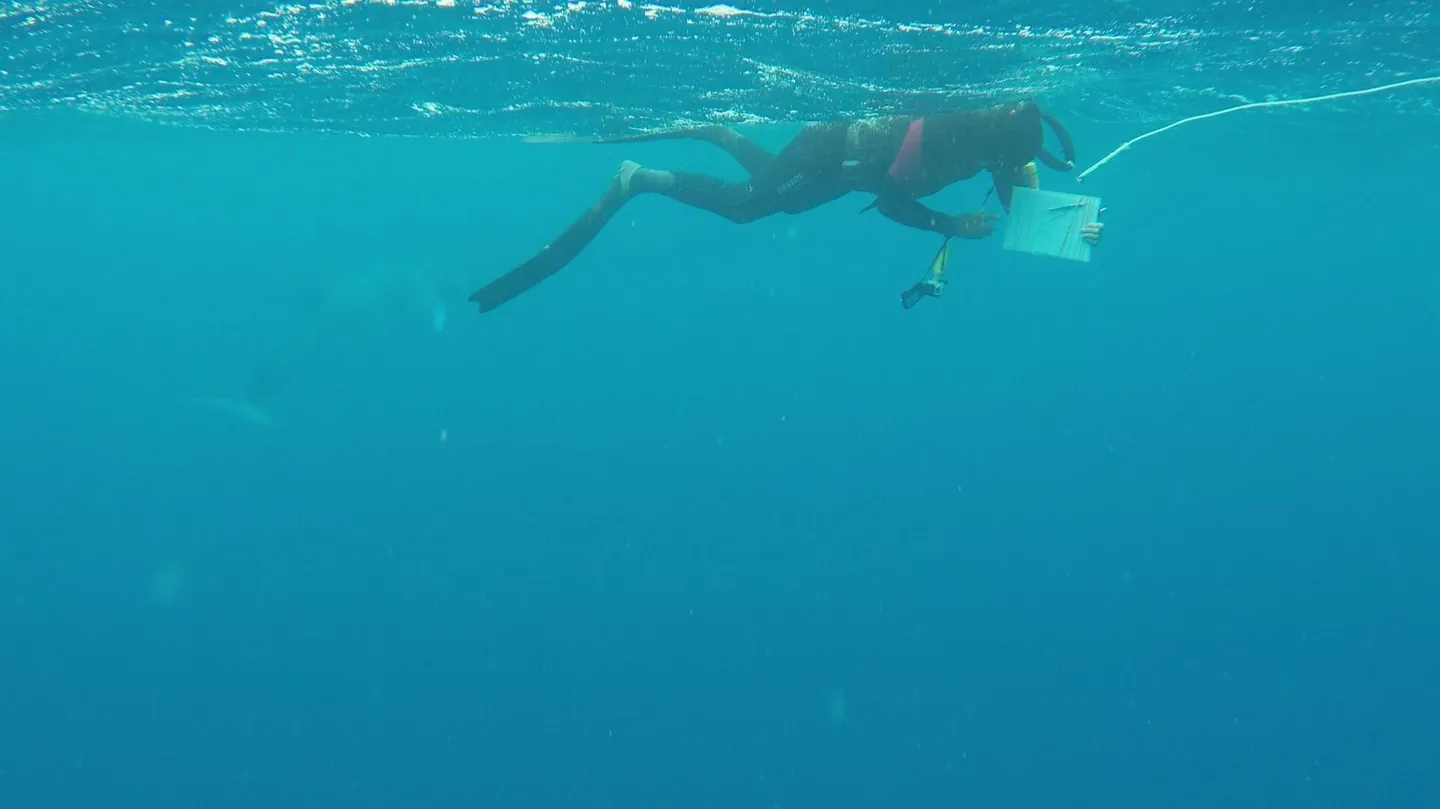
The whale professor using specialised waterproof recording sheets to log every minke whale sighted
Minke Whale Seminars
Beyond seeing minke whales in person, every evening the onboard bar hosted a minke whale seminar led by the accompanying research team, covering topics from minke whale physiology to current research projects and video presentations. Whale facts and information were also posted throughout the ship, giving guests even more opportunity to learn about minke whales.
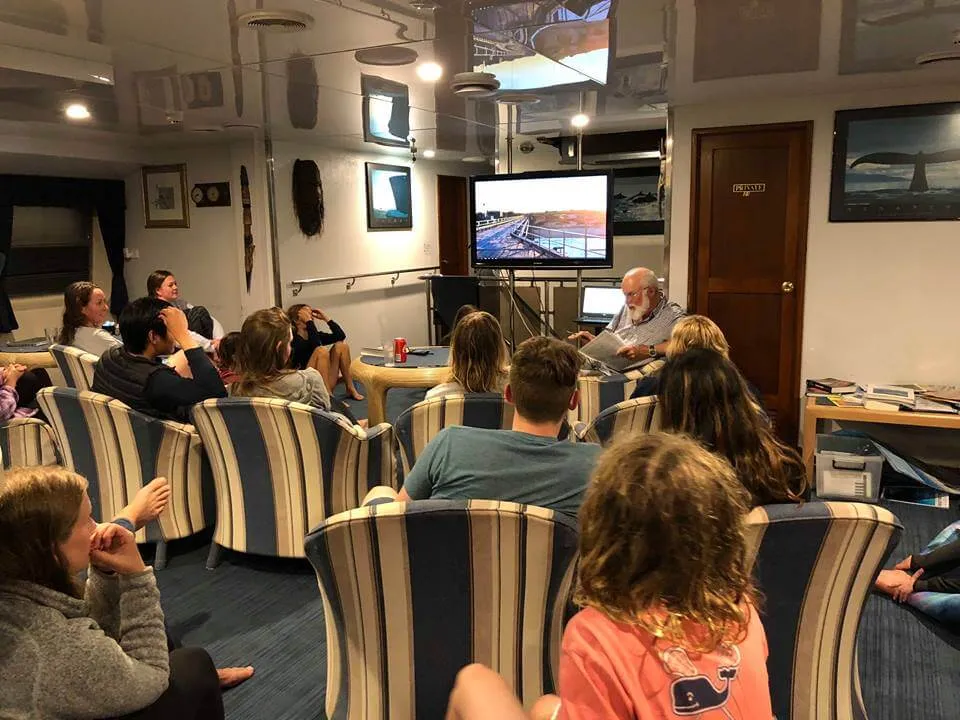
The whale professor sharing his research findings
Because annual research funding for minke whales is limited, the research team joins the whale-watching vessel to conduct their work. What's particularly cool is that every passenger can effortlessly become part of the minke whale research — simply share the photos of minke whales you've taken each day with the researchers, and you'll help them build an identification profile for each individual whale, and receive a small souvenir in return!
*If you're interested in minke whales, you can search for Friends of the Minke Whale Project on Facebook to follow the latest research updates.
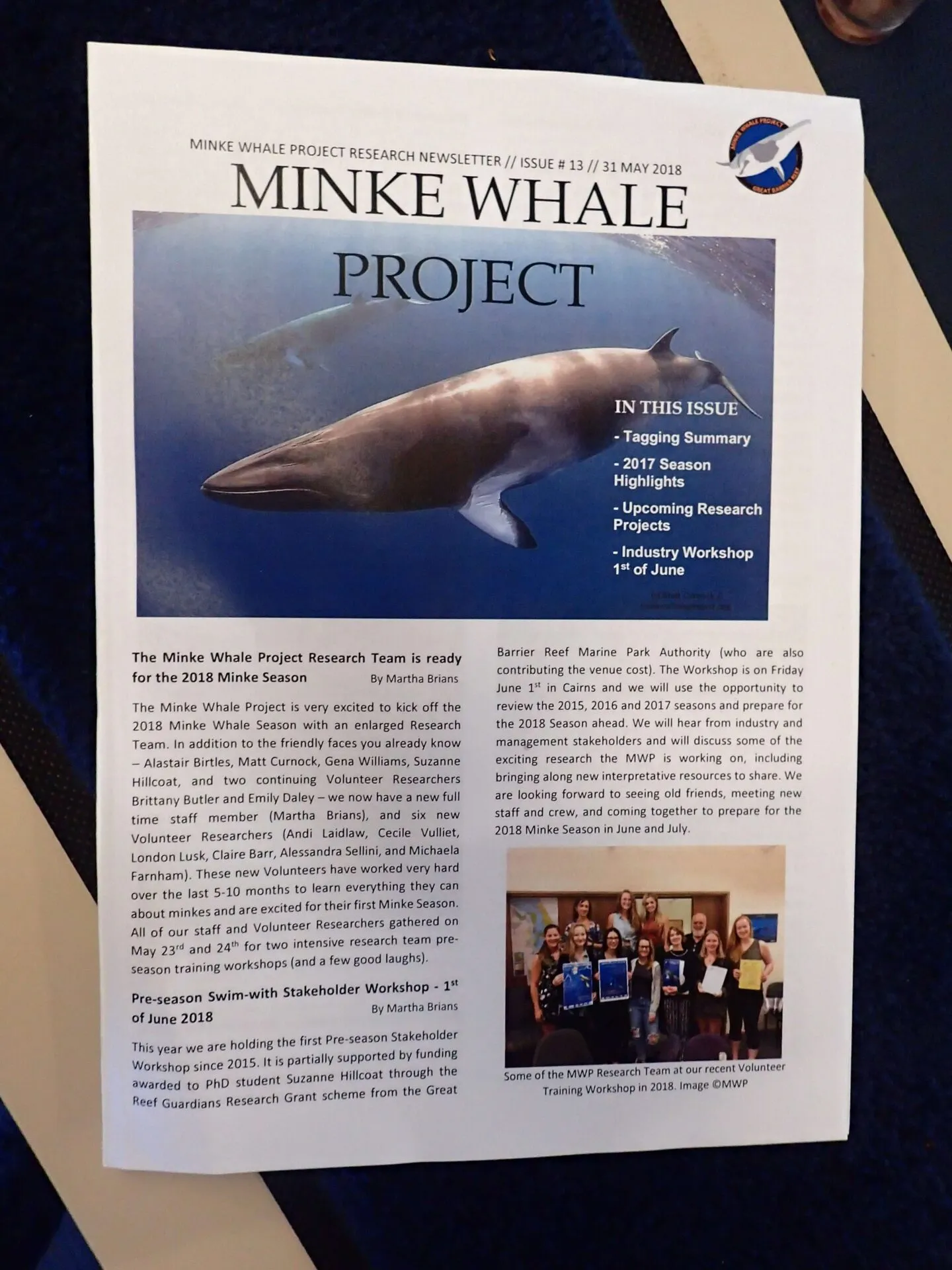
Pamphlets produced by the research team
Life as a Crew Member
Being a crew member on the whale-watching vessel was a truly special experience. Beyond the spectacular underwater scenery, spending five days with the same group of travellers was incredibly rewarding — watching guests who had journeyed from different countries just for the chance to see a minke whale up close was deeply moving. Among the divers were some very young children who would rush over to share their excitement with us every time they saw a whale. The research team's knowledge presentations also added a whole new layer of depth to the entire whale-watching experience! If you ever get the chance, I'd highly encourage you to come to Australia and join one of these minke whale liveaboard expeditions!
July through September brings Australia's humpback whale season — here's hoping I get to see them too.
Fingers Crossed!
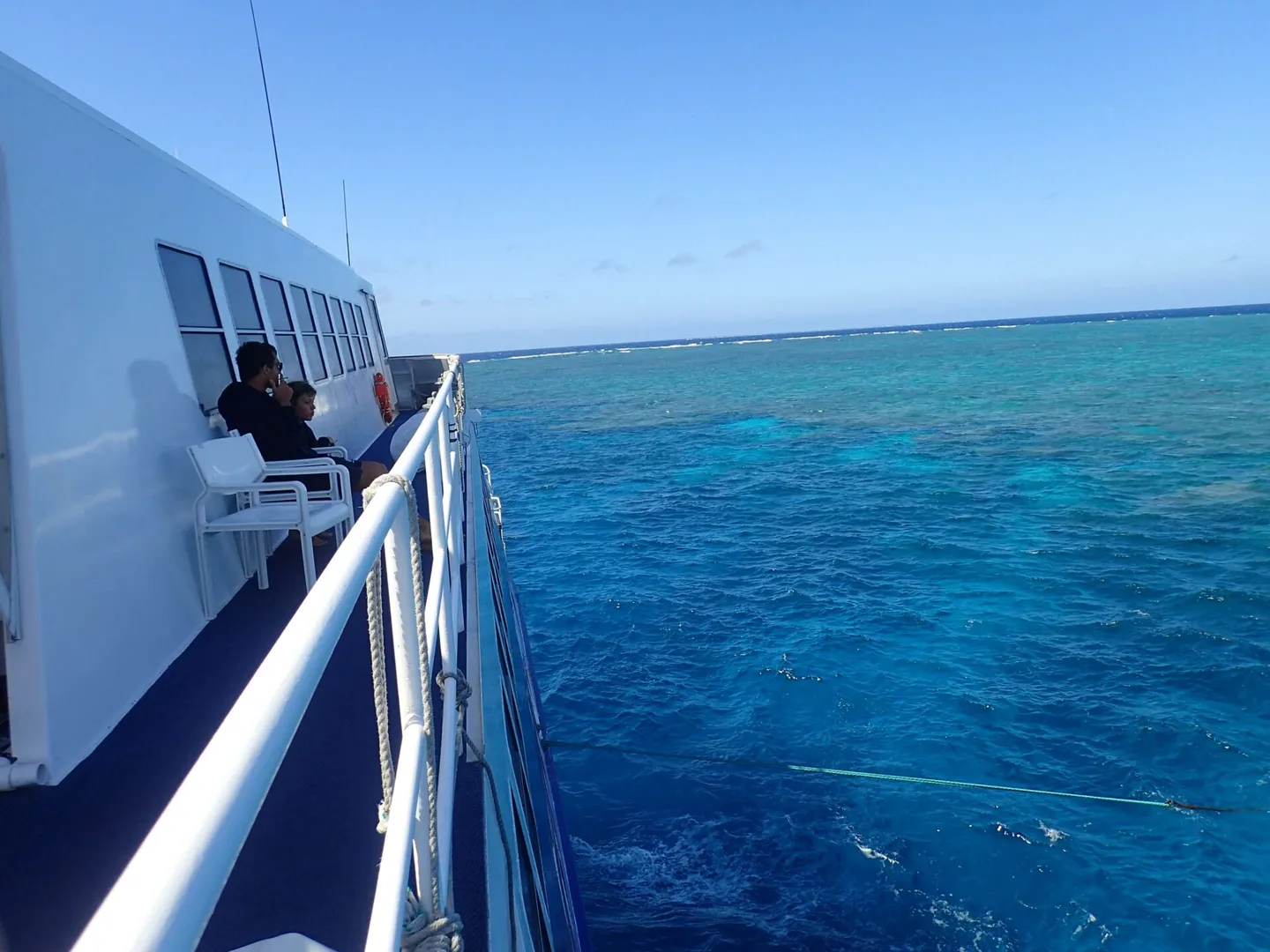
Life onboard as a crew member
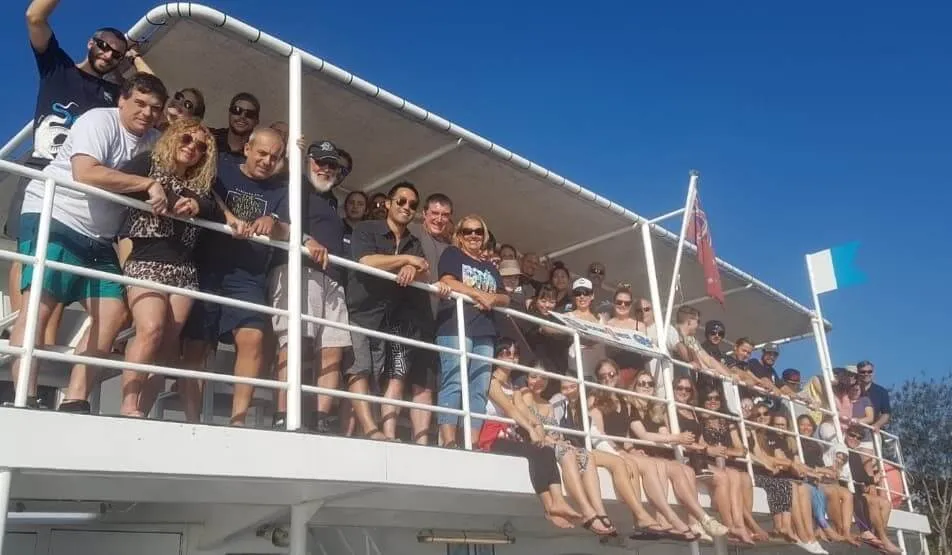
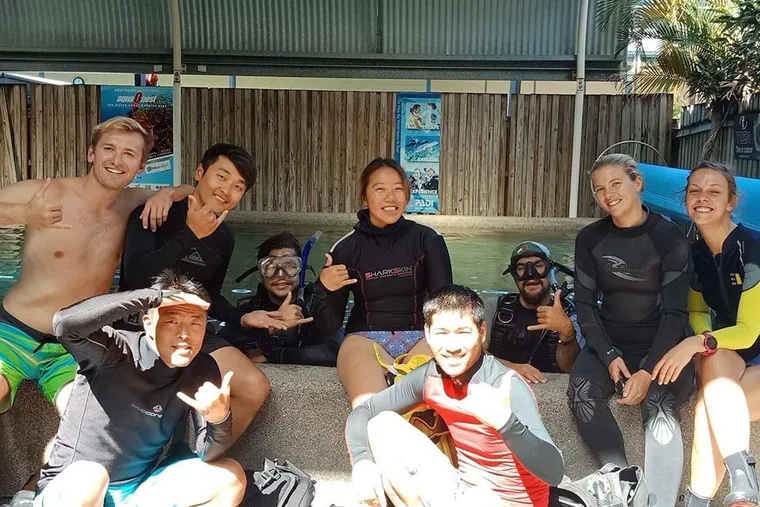
Group photo from the minke whale expedition
Note: The cover photo was provided by photographer Wade Lehmann and is used in accordance with the CC License.
Further reading:
Frequently Asked Questions
How is a BlueTrend dive trip different from an unknown, no-name dive group?
Choosing us means full peace-of-mind protection and a smooth experience from start to finish. Every trip we run holds to three things.
First, full legal protection and a professional dive leader: we strictly follow Taiwan's travel regulations and provide complete travel-agency liability insurance, travel insurance, trip-inconvenience insurance and dive insurance. Every group is accompanied by a certified, foreign-language dive leader who joins you on both the dives and the land itinerary, liaising seamlessly with local dive shops and operators on your behalf to keep things running smoothly — the person our travellers trust most.
Second, fully licensed with secure payments: every payment goes into a licensed travel agency's account, with multiple safe payment channels (bank transfer, credit card and more) and a legal collect-and-remit receipt, so every transaction is open, transparent and protected, avoiding the fraud and dispute risks of transferring money privately to an individual.
Third, hand-picked quality we vet in person: every trip, dive site and partner shop is scouted on the ground by our own team, from the guides' professionalism and safety standards to the food, lodging, environment and service details on land, all vetted by us so you don't get caught out.
I want to sign up for a dive trip. Are there certification-level or logged-dive requirements?
Each dive site is different, so the entry bar varies. 'Bali Tulamben', for instance, is relatively beginner-friendly. 'Malapascua in the Philippines' is also beginner-friendly, but since thresher sharks tend to cruise between 20 and 30 metres, we recommend AOW certification with 20+ logged dives to enjoy this trip comfortably. For 'the Maldives' or 'Palau', we suggest AOW with 50+ logged dives for a more relaxed experience. If you're not sure whether your experience fits the trip you want, message us and our dive editors will assess it and help you find the trip you'll feel safest on.
Can I join if I'm signing up alone? How are rooms arranged?
Plenty of our travellers sign up solo! For rooms and beds, we prioritise pairing you with a same-gender traveller, and if you'd rather have your own space you can pay the difference to upgrade to a single room. For the diving, our professional leader will pair you with a suitable buddy, and with the happy vibe on our trips you'll quickly make a great group of dive friends. Many people sign up alone, make new friends, and end up organising the next trip together!
Does the trip fee include dive insurance, gear rental, taxes and instructor tips?
It depends on the trip, the destination's regulations and the local operators. Every BlueTrend dive trip has a detailed web page with a clear 'included / not included' list, transparent and with no hidden charges. All payments are collected by a licensed travel agency, with a standard-form contract for your protection.
I'm a new diver / haven't dived in a long time — will I fall behind the group?
Before you complete your booking, our team assesses a suitable trip based on your certification level and experience. Before departure, we strongly recommend taking time to refresh in Taiwan with an instructor, or a fun dive to get your feel back. On the trip itself, our professional dive leader groups and pairs everyone by experience, keeps a close eye underwater on travellers who need extra care, and steps in to help right away.
Will the photos and videos taken during the trip be shared with us?
During the dives, 'safety' is always the leader's top priority, so whenever it's suitable and safe the leader will capture great shots and record the best moments. During or after the trip, we compile a cloud album for all travellers to download, so you go home loaded with memories!
Besides your scheduled trips, can you arrange a private group charter or independent travel for me and my friends?
Absolutely! Besides group trips, we also arrange private group charters and independent travel. We can communicate, enquire and coordinate services with local operators based on your needs, saving you time and effort and taking the language barrier off your plate, to tailor the smoothest, most reassuring dive trip just for you. Contact our LINE support and our editors will arrange it for you!