Contents(4)
The Editor says: In recent years, backplate BCDs have become many divers' first choice when purchasing new gear. Their sleek appearance and minimalist design perfectly suit the style-conscious diver — but when it comes time to actually buy one, a flood of technical terms like "backplate" and "bladder lift capacity" can leave you thoroughly confused. So how do you choose a backplate BCD that's right for you? Let the technical diving experts at Dark Tide show you the way!

About the Author: Phil Hsieh Kun-Lin — Dark Tide Tech Dive Expedition Base
Link: Dark Tide Tech Dive Expedition Base http://www.halcyon.net
Phil began diving in 2001, became a Divemaster in 2003, and started his technical diving journey in 2005, earning a Trimix diver certification to 100 m. He became a technical diving instructor in 2006. Between 2007 and 2013, he served as one of the lead instructors for the National Museum of China's technical dive training program and as the Chinese-English interpreter coach for the overall training. From 2006 to 2016, he dove across Southeast Asia and the United States, continuing his education to become a technical wreck diver, open-water diver propulsion vehicle (DPV) diver, and technical cave diver. In 2015, with the support of IANTD's US headquarters, he not only fulfilled his dream of becoming a cave diver but also obtained multiple instructor and instructor-trainer ratings.
Look around you today and you'll notice that nearly half of all divers — whether technical or recreational — are wearing a backplate BCD (known as a "back mount" in mainland China). Why has this earliest form of scuba buoyancy compensator made such a striking comeback in the 21st century, capturing a significant share of the market and even prompting major recreational BCD jacket manufacturers to start producing them? As technical divers, we should have a thorough understanding of the advantages a backplate BCD offers. Let's dive in.
A backplate BCD, in its most basic form, consists of a metal or plastic plate fitted with a harness system, connected to a bladder. Some brands and models also include a tank band for securing a single cylinder. Of course, as backplate BCDs have entered the recreational market, you'll find models made with softer materials for the backplate — but those fall outside the scope of this discussion. So let's keep it simple and break things down into two main categories — the backplate and the bladder — plus a few notes on other components.
How to Choose a Backplate BCD Backplate
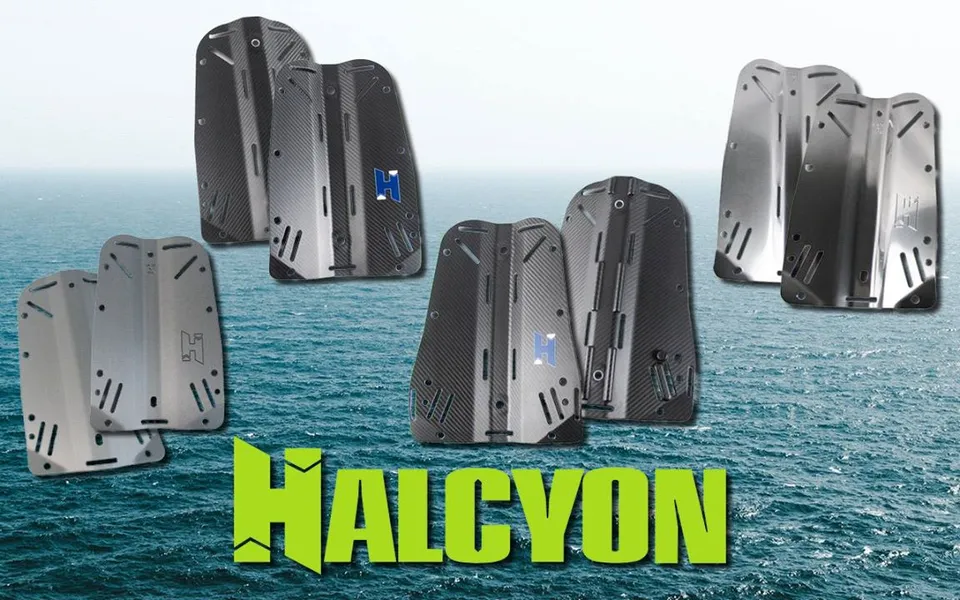
The backplate is the critical foundation that supports all of your equipment (yes, it's what you use to carry everything on your back!). Whether you're carrying one cylinder, a DPV, a Torch, or a camera, they all attach to you via bolts, webbing, and D-rings — securely and reliably.
1. Strength: The first priority is choosing a backplate with sufficient structural strength. Whether it's aluminium alloy, stainless steel, carbon fibre, titanium, or engineering-grade plastic, you need to consult the manufacturer's specifications and select a backplate that matches the equipment you plan to carry. For example, the Halcyon Traveler nylon plastic backplate is not rated for use with double tanks.
2. Weight: Halcyon, for instance, provides detailed weight specifications for each of its backplates, which helps divers select the appropriate plate when determining their weighting. In general, Dark Tide recommends that Asian recreational and technical divers using wetsuits and aluminum tanks opt for an aluminium backplate, then add a trim weight pouch or a waist weight belt to help achieve a horizontal trim in the water. Many divers choose a stainless steel backplate to avoid carrying extra weights, but an overly heavy backplate may require you to add more air to the bladder to compensate, making neutral buoyancy harder to control. On top of that, when you travel, you're essentially carrying 2 kg of extra weight with you everywhere you go.
3. Harness: The most common configuration on the market today uses a single continuous webbing that runs from the shoulder down to the waist, with a separate crotch strap that passes between the legs. The advantage of this design is that it can bear very substantial loads — even when carrying heavy equipment, the harness continues to provide stable support, which is a fundamental safety requirement for a backplate setup. There are also harness systems with quick-release buckles, which make donning and doffing faster and allow for easier length adjustment; they can also be quickly and efficiently removed during a rescue. However, plastic quick-release buckles have lower load-bearing capacity and may snap under heavy loads, potentially causing equipment to drop and injure nearby divers. The crotch strap is something many divers are reluctant to use, yet it is an essential component of a backplate BCD. When properly adjusted, it causes no discomfort whatsoever, and together with a well-fitted shoulder strap and waist strap, it keeps the entire backplate securely anchored to your body.
4. Shape: Most backplates share a similar overall profile. Some manufacturers offer smaller sizes, while others cut holes into the plate for styling, weight reduction, or to accommodate trim weight pouches. Regardless of style, every backplate has a set of two — or sometimes several — holes spaced 11 inches apart in the centre, through which the bolt rods for double tanks pass. Multiple sets of holes allow you to adjust the height of the cylinders on your back, helping you maintain a horizontal posture in the water or enabling you to reach the tank valves (though raising your head at that point may result in it knocking against the valves).


How to Choose a Bladder
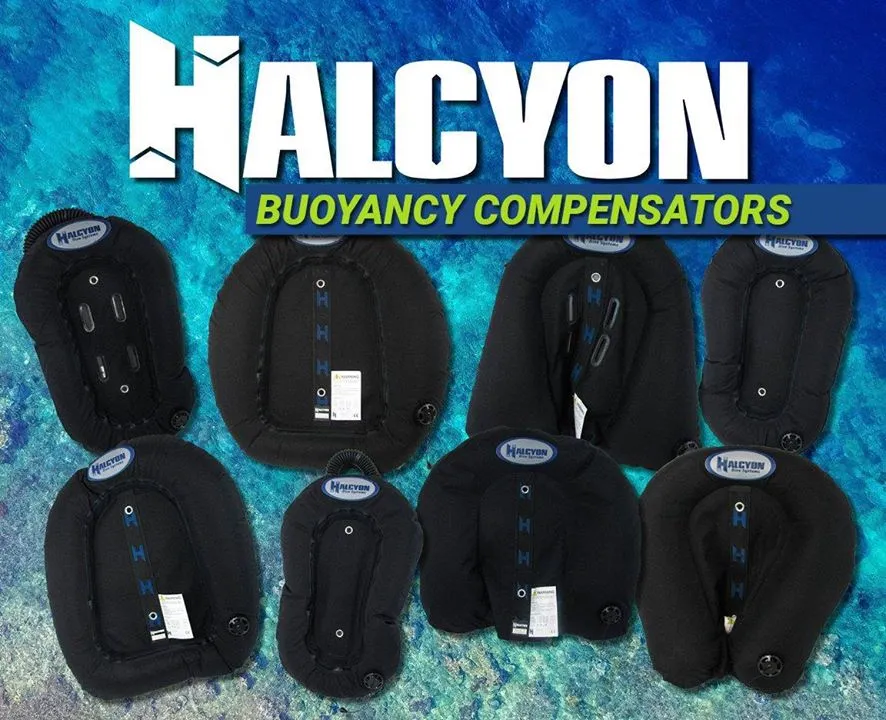
The bladder is your buoyancy control tool. You'll find bladders in a variety of shapes and lift capacities. As always, what matters most is your diving purpose and the equipment you plan to carry — choose accordingly.
1. Shape: There are currently two main types: horseshoe-shaped and donut-shaped.
1-1: A horseshoe-shaped bladder is not connected at the bottom (see the second from the right in the bottom row of the photo above). This inverted-U bladder allows you to direct air toward the heavier side when your left and right sides are carrying different loads, helping you maintain lateral trim in the water. However, if you're not yet proficient with it, air can easily become trapped on one side, causing you to list to one side or making it difficult to fully vent the bladder.
1-2: A donut-shaped bladder is a fully connected, circular bladder. This design prevents you from listing to one side, and air flows through it more smoothly. Additionally, with more volume at the lower portion of the bladder, some brands claim this helps you maintain a horizontal trim — meaning air can pool at the bottom of the bladder to lift your lower body into a level position.
2. Single-tank bladder vs. double-tank bladder
As the names imply, these are designed for single-cylinder recreational diving or double-cylinder technical diving respectively. Choosing the correct bladder for the type of diving you're doing is critical, because using the wrong one creates the following problems:
2-1: Using a single-tank bladder with double tanks — Double tanks are two cylinders joined together, making them considerably wider than a single cylinder. If you mount a single-tank bladder on top, the bladder will be pinched between the double-tank assembly and the backplate, partially preventing it from inflating and therefore reducing its actual lift capacity below its rated figure. This could leave a diver with insufficient buoyancy for safe diving.
2-2: Using a double-tank bladder with a single tank — Conversely, a single cylinder is narrow while a double-tank bladder is wide. Underwater, as the bladder inflates, it will wing upward and wrap around the cylinder; a bladder that is too wide will fold completely over the back of the cylinder, pushing all the exhaust ports to a lower position and making it very difficult to vent. A diver who cannot vent properly during ascent faces a serious safety hazard.
3. Bladder lift capacity: Lift capacity is not a competition — bigger is not better. A higher lift rating naturally means a larger bladder, and a larger bladder creates more drag as you move through the water, while also being harder to vent. Finding the right lift capacity for your needs is important. Discuss your planned diving type and the equipment you'll be carrying with your dive shop or instructor, and choose a lift capacity that's appropriate.
Other Features of Backplate BCDs
1. Single-tank cam bands: Some brands offer stainless steel cam bands that not only secure the cylinder firmly but also allow trim weights to be added on top. Critics argue that the band positions the cylinder farther from the diver's back, making the centre of gravity more susceptible to shifting — but speaking from seven years of experience using single-tank BCDs without cam bands followed by five years using BCDs with them, I personally haven't noticed a significant difference. That said, single-tank BCDs without cam bands often have the cylinder pressing directly against the bladder, preventing it from inflating fully.
2. Metal hardware on the harness: The most common materials today are aluminium alloy and stainless steel. Stainless steel is more durable and harder, making it well-suited for carrying heavy cylinders and equipment. Aluminium alloy has the advantage of being lightweight and available in a range of colours, but its relative softness and lower hardness do compromise its durability somewhat.
Finally, here is the question I've been asked most often in my 12 years of selling backplate BCDs: "Will those two screws on the back that secure the single-tank cam band, or the bolt rod for double tanks, dig into my back...?"
My answer: Don't worry — absolutely not!
Further reading: