Contents(9)
- Where Is Tulamben? Why It's a Must-Visit Dive Destination in Bali
- USAT Liberty Wreck: A World-Class Wreck Dive You Can Walk Right Into
- Drop Off Diving: Drifting Along a Wall of Fish
- Japanese Wreck and Coral Garden: Drifting Soft Coral and a Forest of Staghorn
- House Reef Day Dive + Night Dive: The Luxury of Living Right on the Dive Site
- Not Just Diving! Tulambubu's Food Will Genuinely Surprise You
- Tulambubu Accommodation Experience: A Dive Shop That Cares About the Details
- How to Plan Your Bali Diving Itinerary: Season Tips and Beginner's Guide
- The Editor's Tulamben Diving Verdict
Where should you dive in Bali? This time, the Editor headed straight to Tulamben — four days, three nights, and five tanks in total. From the world-class USAT Liberty wreck and sheer drop-off walls to night diving right at the resort's doorstep, we covered it all. The conclusion? This place is an absolute paradise for beginner divers. Every dive site is a shore dive — no boat, no seasickness, just slip into your flip-flops and walk into the water. The pleasant surprise was Tulambubu, the dive shop where we stayed: the food quality was ridiculously good. In a place like Tulamben where "finding a decent meal outside is a real hassle," they take care of your diving, accommodation, and food all in one package. This complete Tulamben wreck diving guide covers everything from dive sites to where to eat and sleep — read it and you're ready to go!
Where Is Tulamben? Why It's a Must-Visit Dive Destination in Bali
From the Airport to Tulamben: Head Straight to the Northeast
Tulamben is located on the northeast coast of Bali, roughly a two-and-a-half to three-hour drive from Ngurah Rai International Airport. The Editor arrived in Bali in the afternoon and spent the journey watching the scenery gradually shift from city streets to quiet country roads. The further northeast we went, the cleaner the air, the fewer the people, and the slower the pace of life. By the time we reached Tulamben, night had fallen — but just catching that salty ocean breeze in the air made it clear: the next few days were going to be all about relaxing.
Bali's Shore Diving Heaven: Dive Sites You Can Walk Into
When diving in Bali, everyone knows there are two places you can't miss: Tulamben and Nusa Penida. Tulamben's biggest draw is that almost all of its dive sites are shore dives. You heard that right — no boat, just walk straight from the shore into the water and start diving. For anyone prone to seasickness, this is basically a godsend. And these aren't just "making-do" shore dives — genuinely world-class dive sites are right at your feet. The USAT Liberty wreck is only about thirty metres from the shoreline; you simply walk in and you're there. In the global world of wreck diving, that level of accessibility is practically unheard of.


USAT Liberty Wreck: A World-Class Wreck Dive You Can Walk Right Into
Hull Scale and Underwater Scenery: Sea Fans, Coral, and Fish Schools All Included
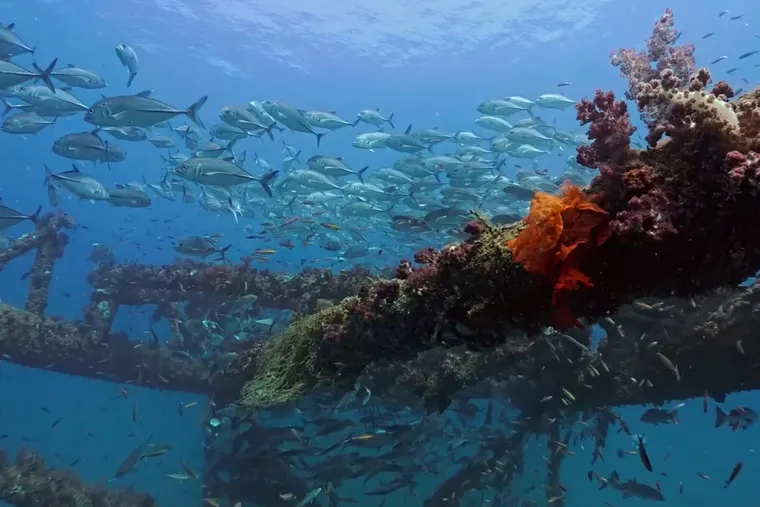
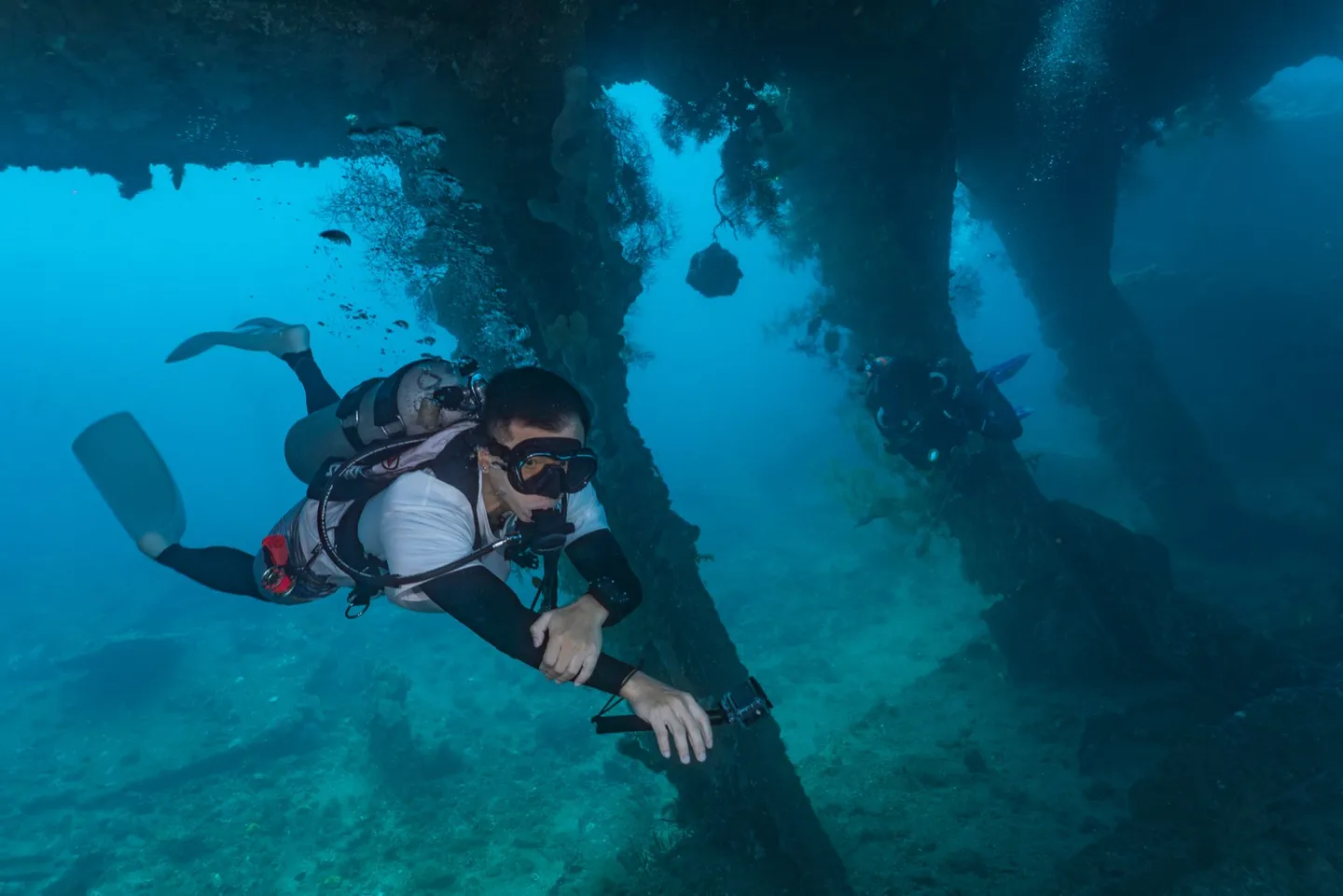
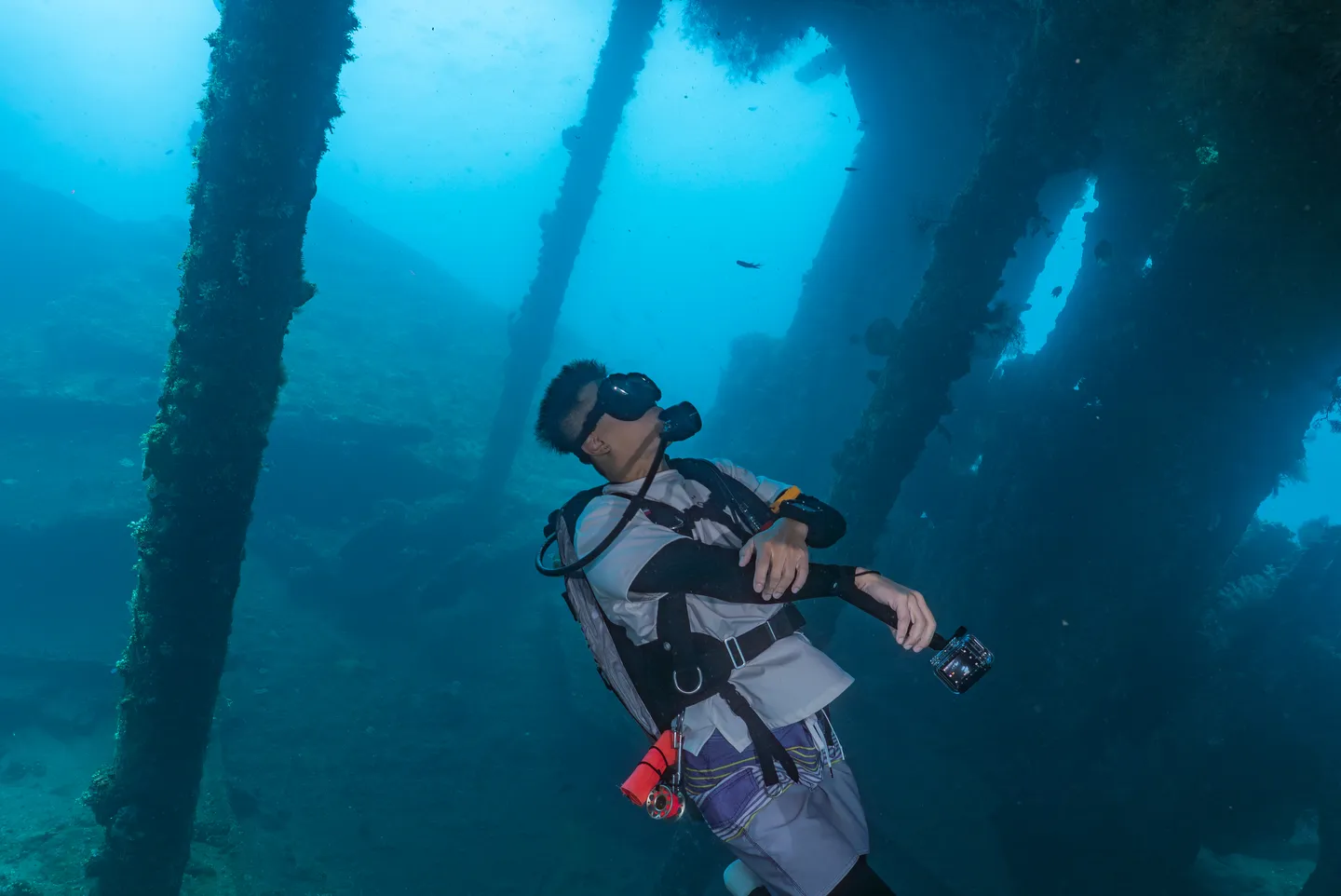
The first tank went to the legendary USAT Liberty wreck. This World War II US Army cargo ship was torpedoed by a Japanese submarine and ran aground on the shore. When Mount Agung erupted in 1963, the ship was shaken into the sea, and it has since become one of the most accessible wreck dive sites in the world. The hull stretches approximately 120 metres in length; the deepest point is around 30 metres, while the shallowest is only about 5 metres — making it suitable for divers of all levels, from Open Water to advanced.
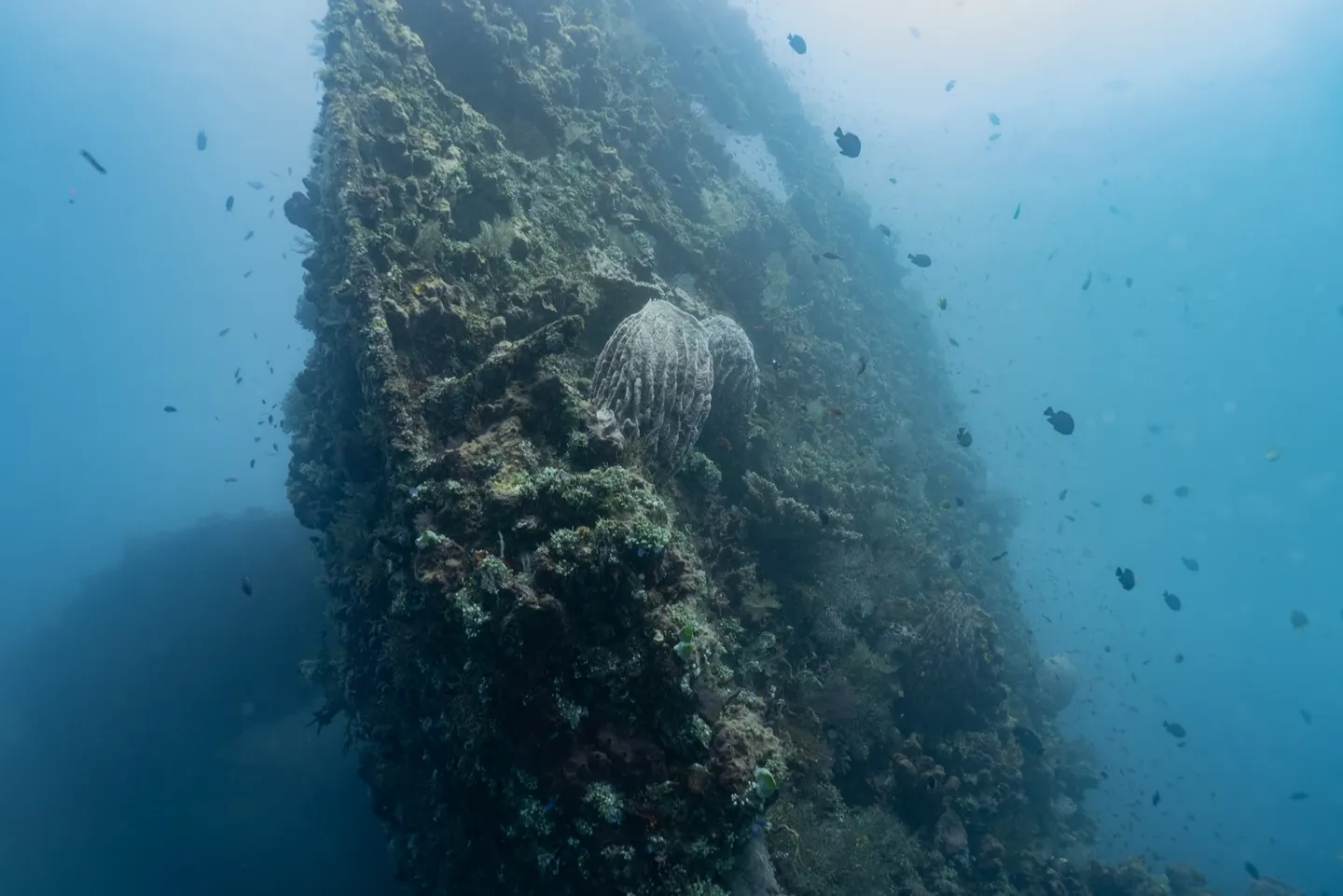
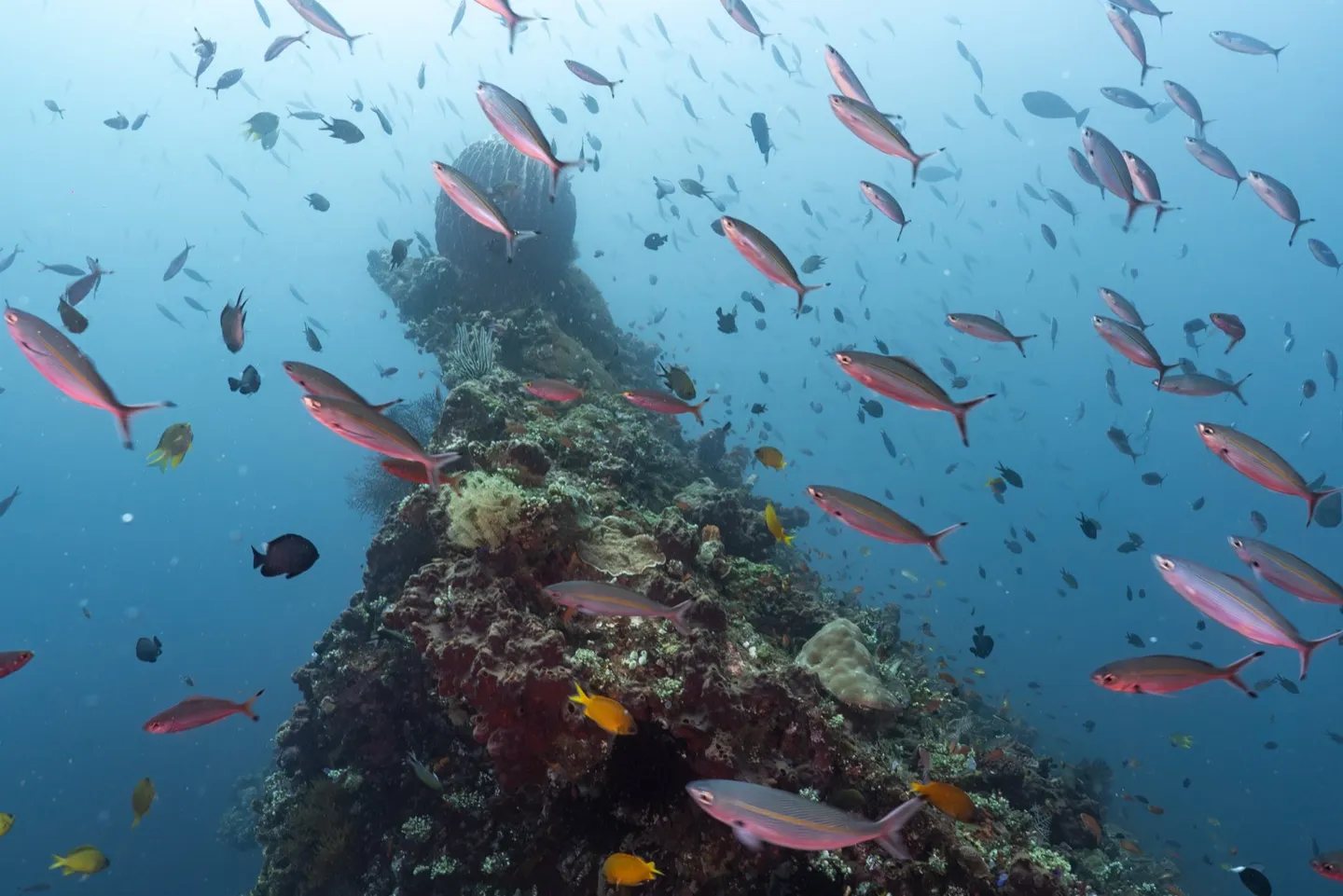
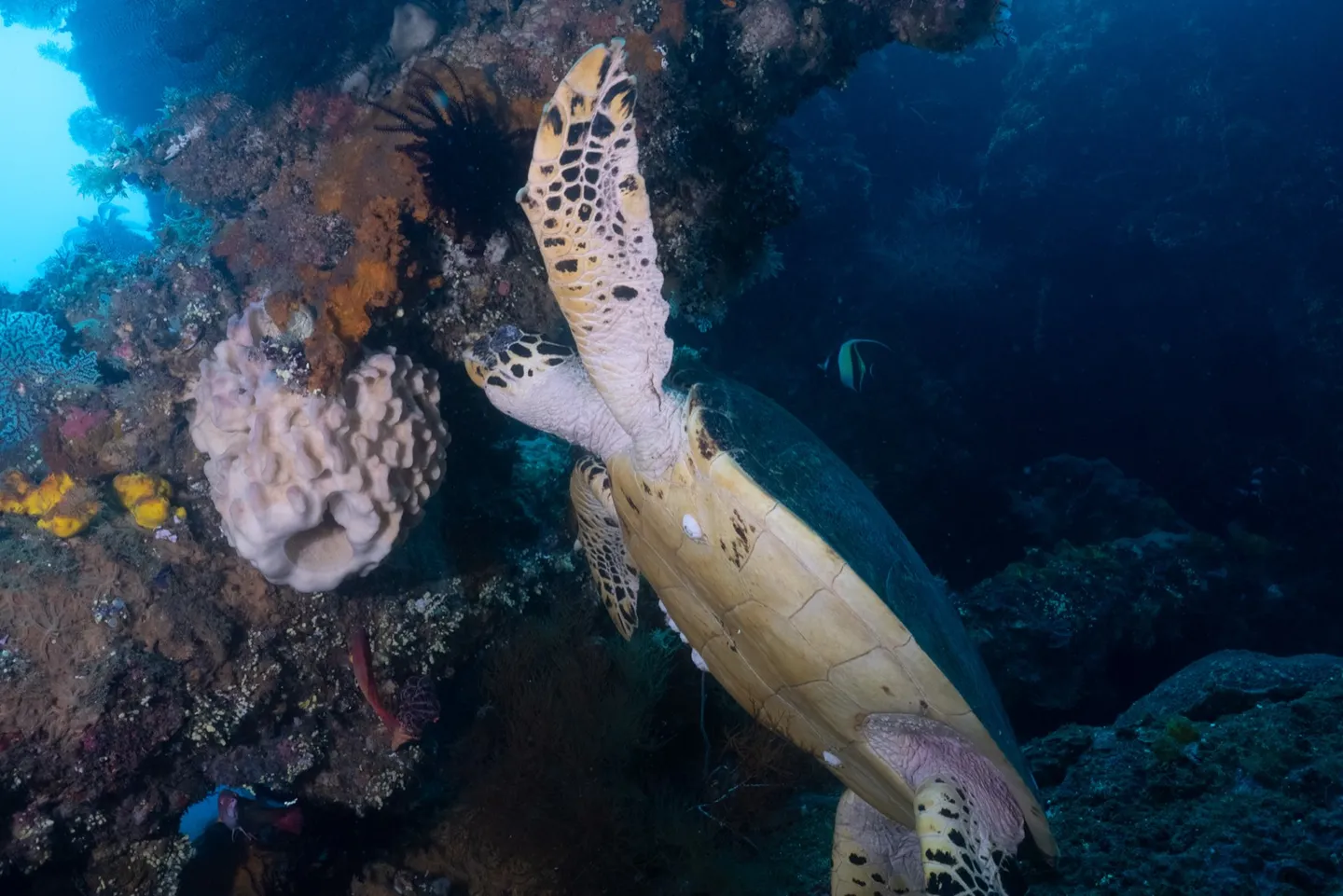
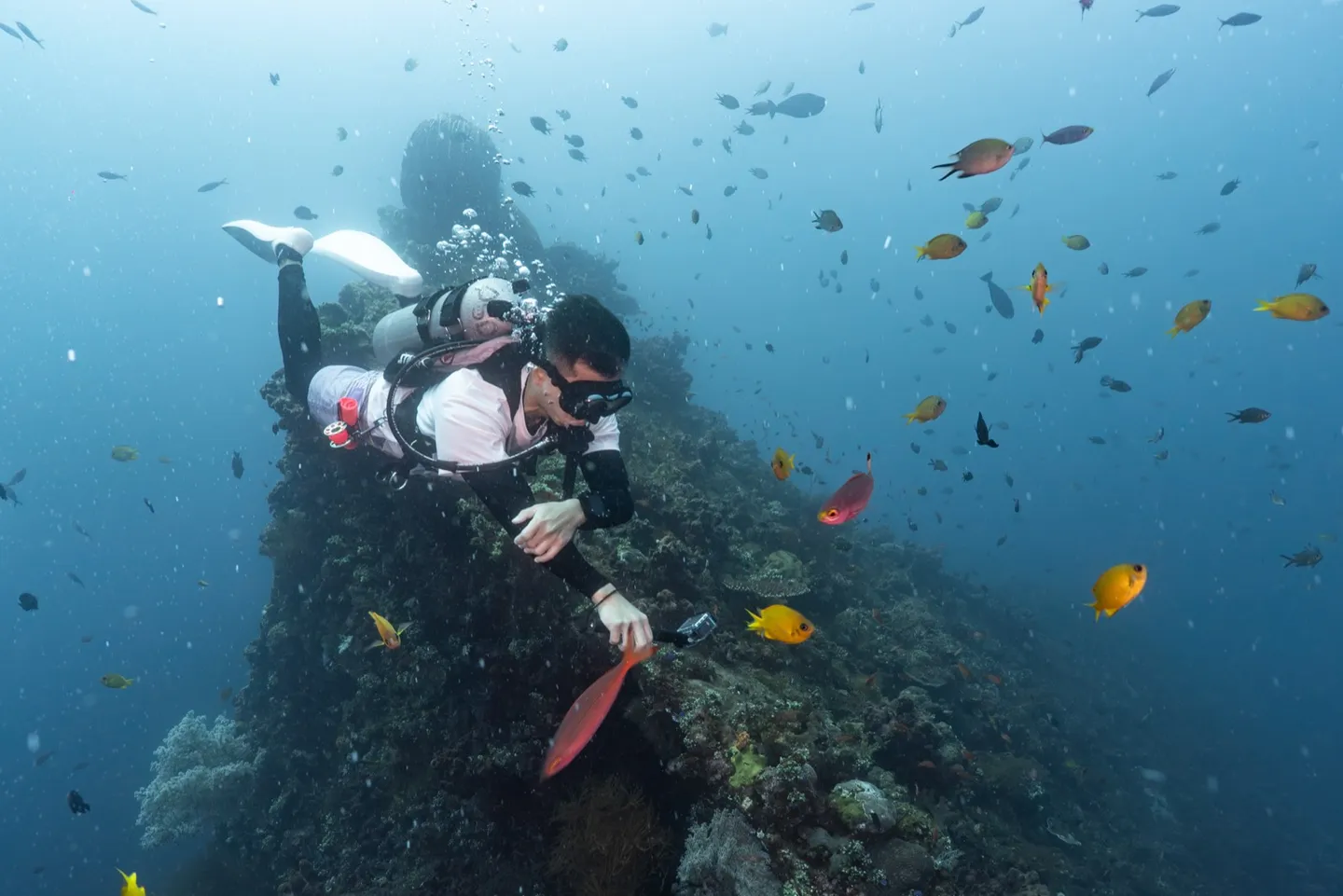
Every time the Editor dives the Liberty in Tulamben, it's still a jaw-dropping experience. The entire exterior of the ship is blanketed with an incredibly rich array of coral, with huge gorgonian / sea fans spread wide across the hull in colours so saturated it looks as if someone deliberately decorated the place. The fish schools are another matter entirely — jacks circle the hull in dense formation, bumphead parrotfish mill about as if they own the place, and you simply glide along the ship's exterior, rounding each corner to find a new surprise waiting.
Penetrating the Wreck: Spacious Openings That Even Beginners Can Handle Comfortably
Another thing the Editor loves about the USAT Liberty is the opportunity to actually penetrate the hull and explore inside. The idea of "penetrating a wreck" might make some beginners nervous — but don't worry. The structural openings of the Liberty's interior are very large, with plenty of room to move in and out. There's none of that claustrophobic feeling of getting stuck inside. Just follow the dive guide: swim in, swim out — the whole experience flows smoothly.
Visibility and Light: The Dream Imagery of Sunlight Streaming Through a Wreck
Visibility on this particular dive was better than on previous visits. Sunlight filtered down from the surface and played across the wreck, creating layers of light and shadow that were genuinely mesmerising. In particular, at the mid-section of the hull where large openings let in the most light, beams streamed down from above and illuminated the coral-covered walls — the kind of shot your friends back home will swear you edited in post, when in reality you used no filter at all. It's just that beautiful straight out of camera.
Drop Off Diving: Drifting Along a Wall of Fish
How to Dive the Drop Off: Effortless Drifting Along the Wall
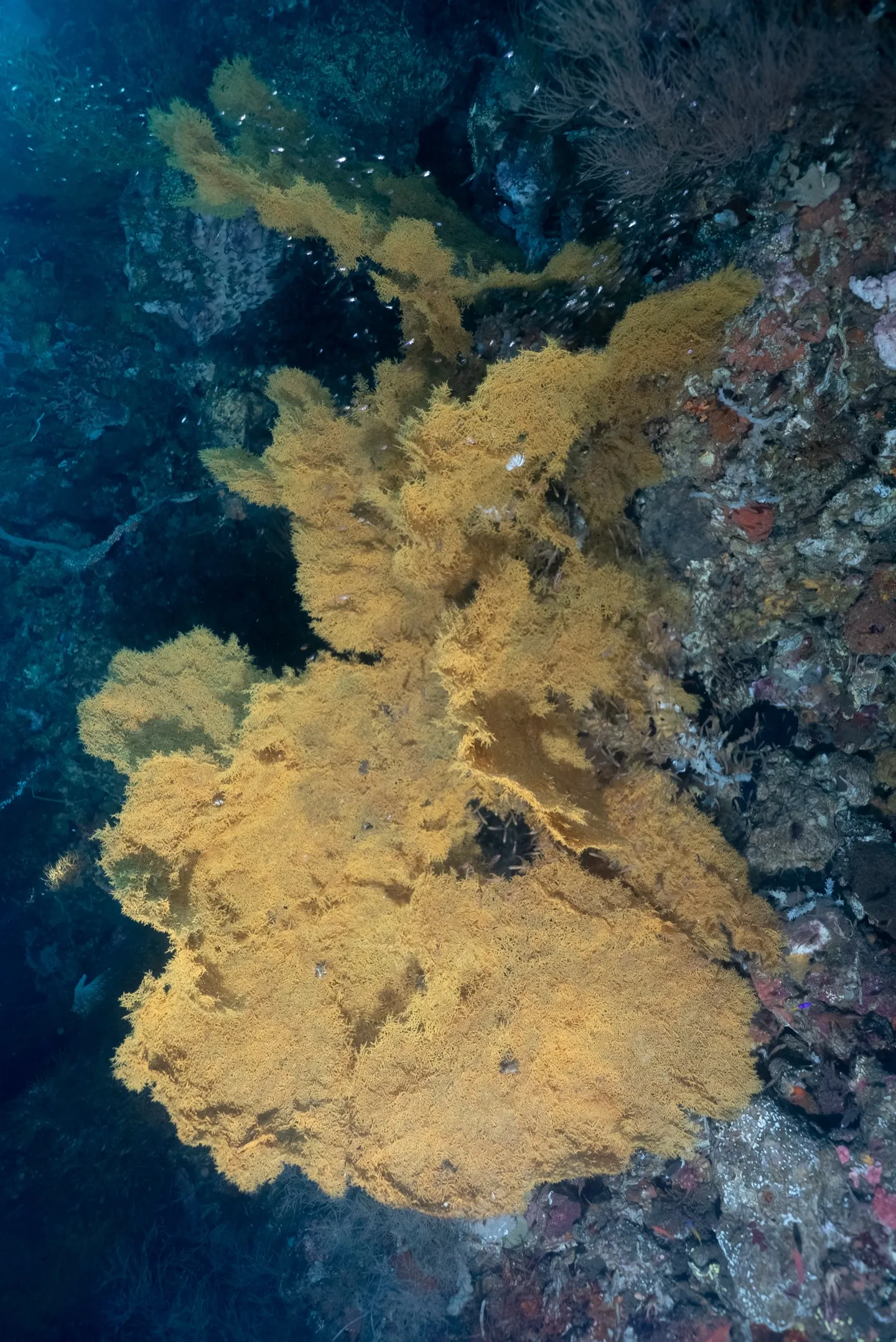
For the second tank, the Editor headed to the Drop Off — a sheer underwater cliff face that plunges straight down. There's no complicated manoeuvre required; you essentially just drift slowly along the outside of the wall and let the scenery unfold before you. For beginners, wall diving has a reassuring clarity to it — the wall is right there beside you, your depth is always visible, and it's hard to get disoriented or accidentally go too deep.
Diverse Marine Life: An Underwater Zoo Along the Wall
What the Editor enjoyed most about the Drop Off was that sense of not knowing what would come around the corner next. Schools of butterflyfish and triggerfish claimed their own patches of the wall, while groupers lurked in rock crevices peering out at you. Compared to the sheer awe of the Liberty wreck, diving the Drop Off is more like a leisurely underwater stroll — completely chill, completely enjoyable.
Japanese Wreck and Coral Garden: Drifting Soft Coral and a Forest of Staghorn
Japanese Wreck: A Soft Coral Show on a Broken Hull
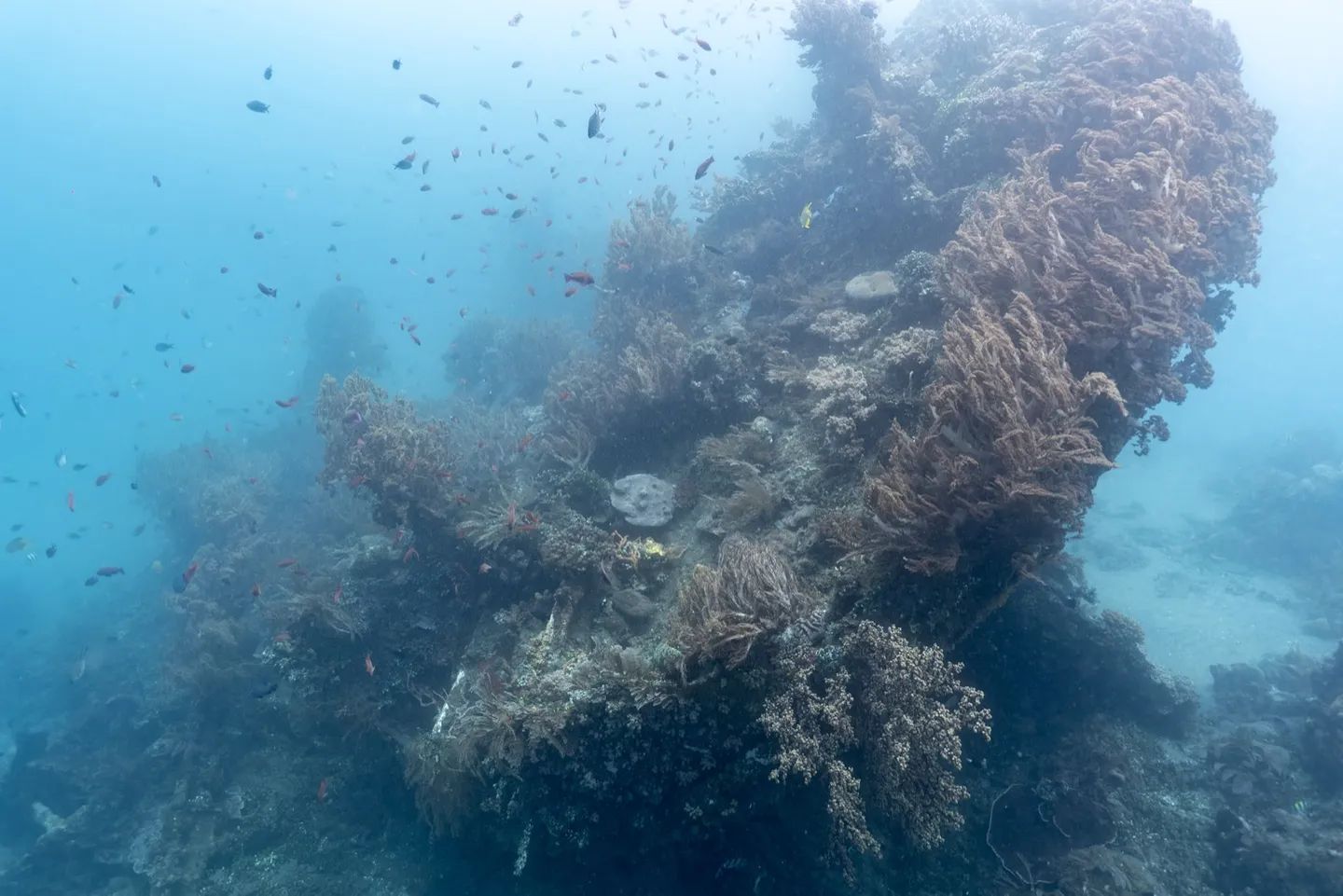
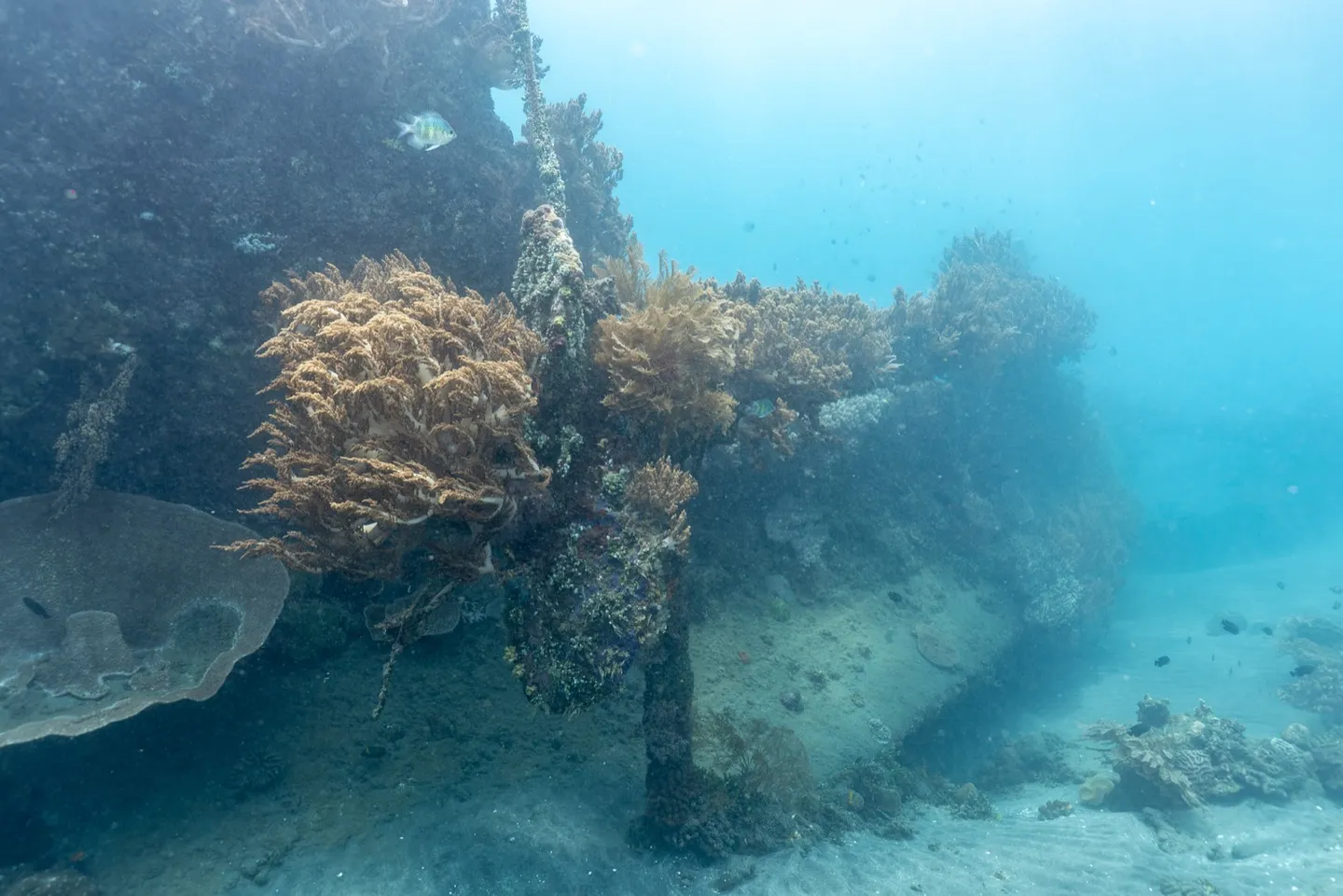
On the second morning, the Editor made the trip over to the Japanese Wreck in Amed Bay. Compared to the Liberty, this wreck is far more fragmented — you can't make out any complete ship form — but that's not really the point. What genuinely amazed the Editor here was the abundance of soft coral attached to the remains of the hull. The soft coral swayed gently with the current, like a field of underwater flowers stirred by the wind. The scene was so beautiful the Editor stopped shooting altogether and simply stared.
The Shallows: Staghorn Coral Gardens Like an Underwater Forest
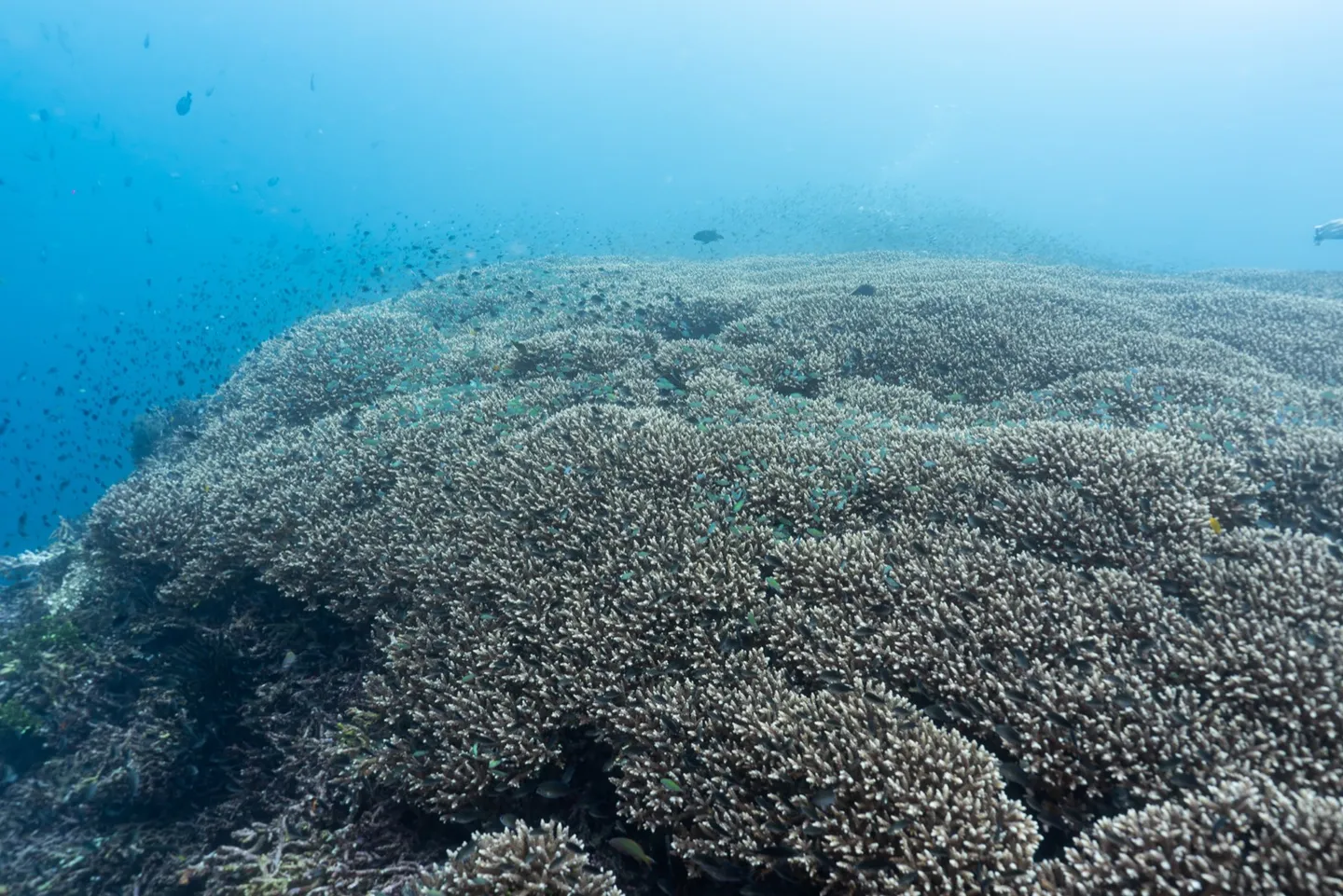
Ascending into the shallows, the Editor stopped dead at the sight: a vast expanse of staghorn coral, stretching out in every direction like a genuine underwater forest. The coral density was high, the coverage enormous, and small fish wove their way through the branching formations — a scene so soothing it made surfacing feel like a reluctant decision. The Editor can honestly say the value-for-money on this dive is exceptional: within a single tank you get a broken wreck, a soft coral display, and a coral forest — three completely different underwater landscapes, all in one dive.
House Reef Day Dive + Night Dive: The Luxury of Living Right on the Dive Site
Day Dive: A Reassuring Practice Ground for Bali Diving Beginners
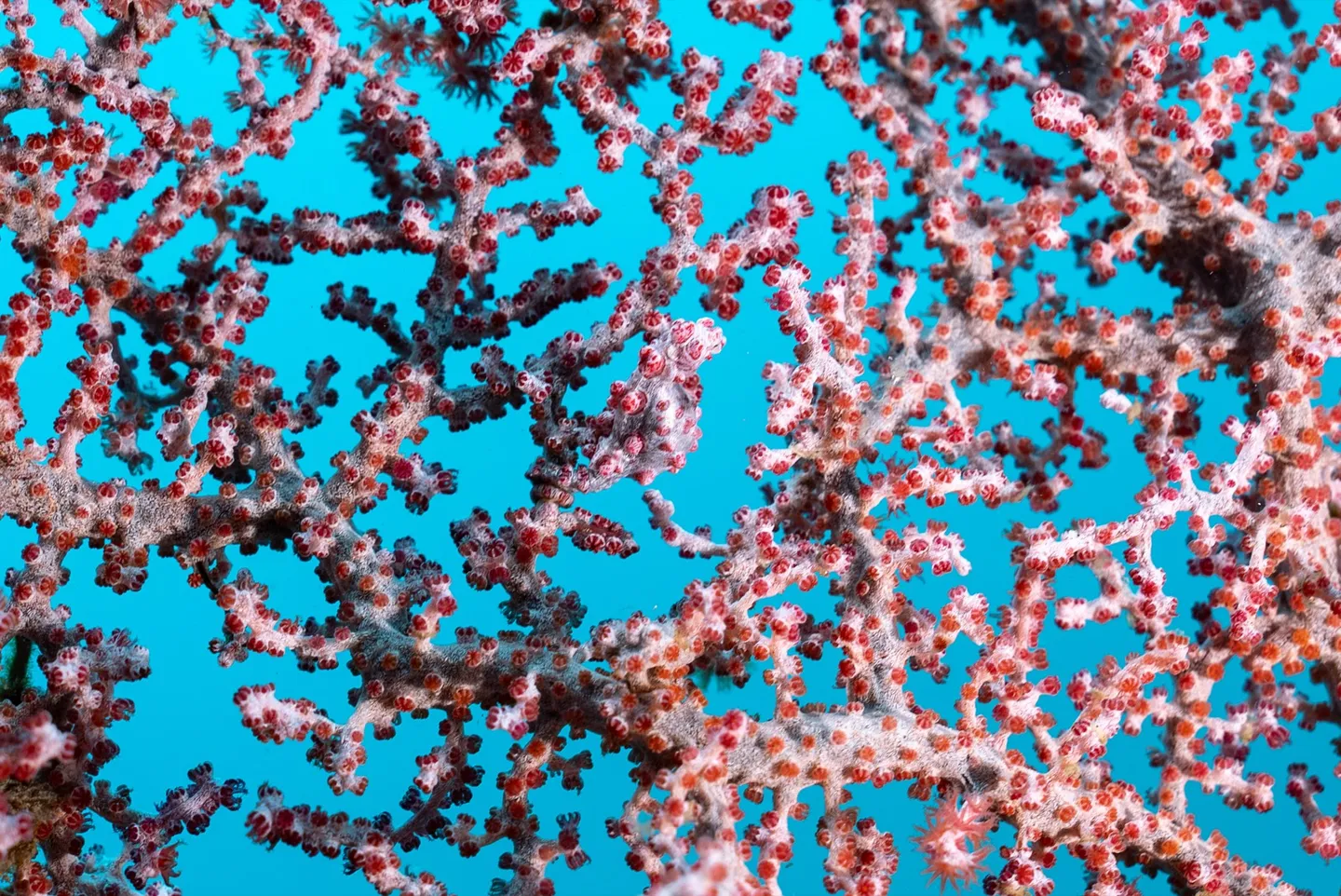
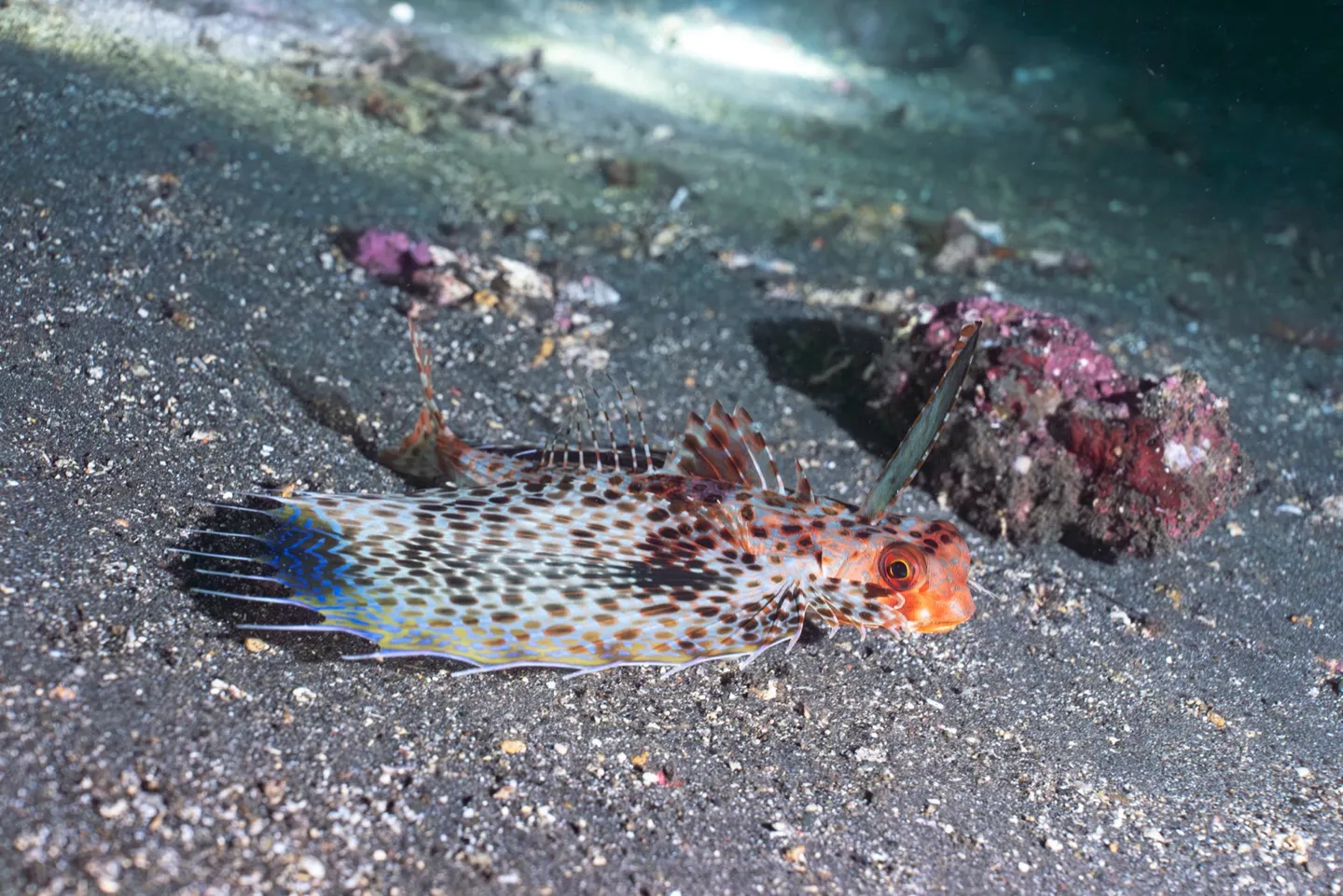
Tulambubu's House Reef sits right in front of the resort — walk out the door and you're in the water. That level of convenience is almost unfair. Because the wind and swell picked up on the second afternoon and made staying in Amed Bay impossible, the dive guide brought the Editor back to the House Reef for an extra day dive. The difficulty level here is low, the current is gentle, and entry and exit are easy — ideal for beginners just getting into the sport. But don't let the beginner-friendly rating fool you: coral cover is genuinely impressive and fish numbers are solid. Even experienced divers will find a satisfying dive here.
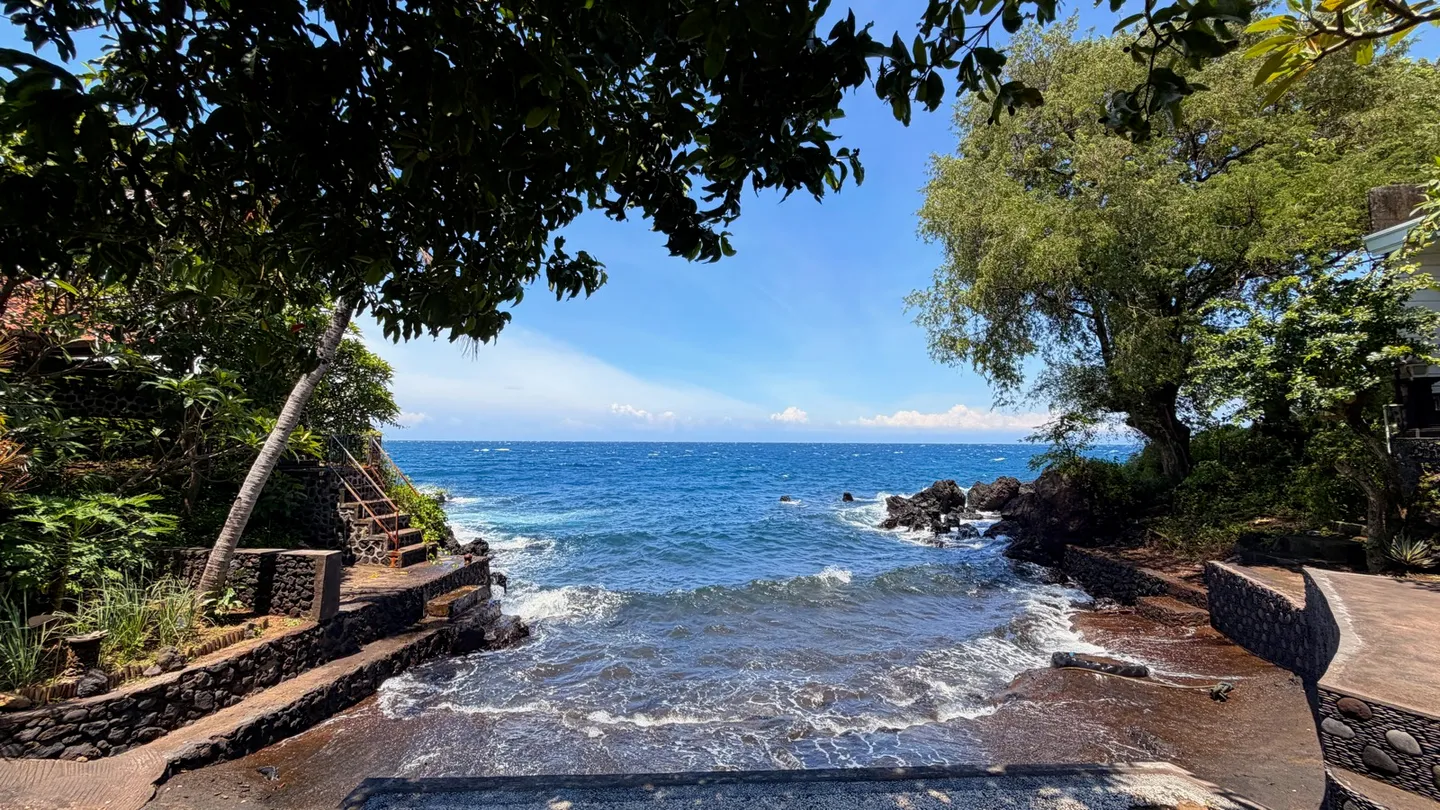
First Night Dive: Exploring the Underwater World After Dark Right at the Resort's Doorstep
On the first evening, as darkness fell, the Editor slipped in for a night dive straight off the House Reef. A few steps from the resort door, into the water — then back out, a quick rinse in the shower, and straight to dinner. Could a dive itinerary get any smoother? The environment at night is completely different from daytime — wherever your Torch points, that's your entire world. There were no big creatures on this particular dive, but doing your first night dive in a House Reef environment you already know is wonderfully reassuring, and it makes a perfect introduction to night diving. When you surface, a table of hot food is already waiting for you. The Editor can only say: this is exactly the right way to live a diver's life.
Not Just Diving! Tulambubu's Food Will Genuinely Surprise You
Tulamben's Dining Challenge: Few Good Restaurants, Inconvenient Transport
Let's be honest about something: Tulamben is not a tourist hotspot. Nearby restaurant options are genuinely limited, and what exists is spread out. If your dive shop doesn't include meals, just finding somewhere to eat will cost you significant travel time — never mind the ordeal of hunting for food after a late night dive when you're hungry. The Editor firmly believes that when choosing a dive shop in Tulamben, food quality is a factor that absolutely deserves serious consideration.
The In-House Restaurant Exceeds All Expectations: Satay, Fried Noodles, and Coconut Rice Porridge All Delivered
The good news is that Tulambubu doesn't disappoint on this front at all. Every meal the Editor ate at the dive shop over four days and three nights was different — and the quality was emphatically not the "dive shop meal" kind that feels like an afterthought.
On the first evening, the Indonesian fried noodles being cooked in the kitchen drew the Editor out of their seat with the aroma alone. The chicken satay skewers were equally impressive — the chicken was perfectly tender, and dipping it generously in peanut sauce is the only way to eat it. Fans of spice are well catered for too: Indonesian chilli paste goes with everything.



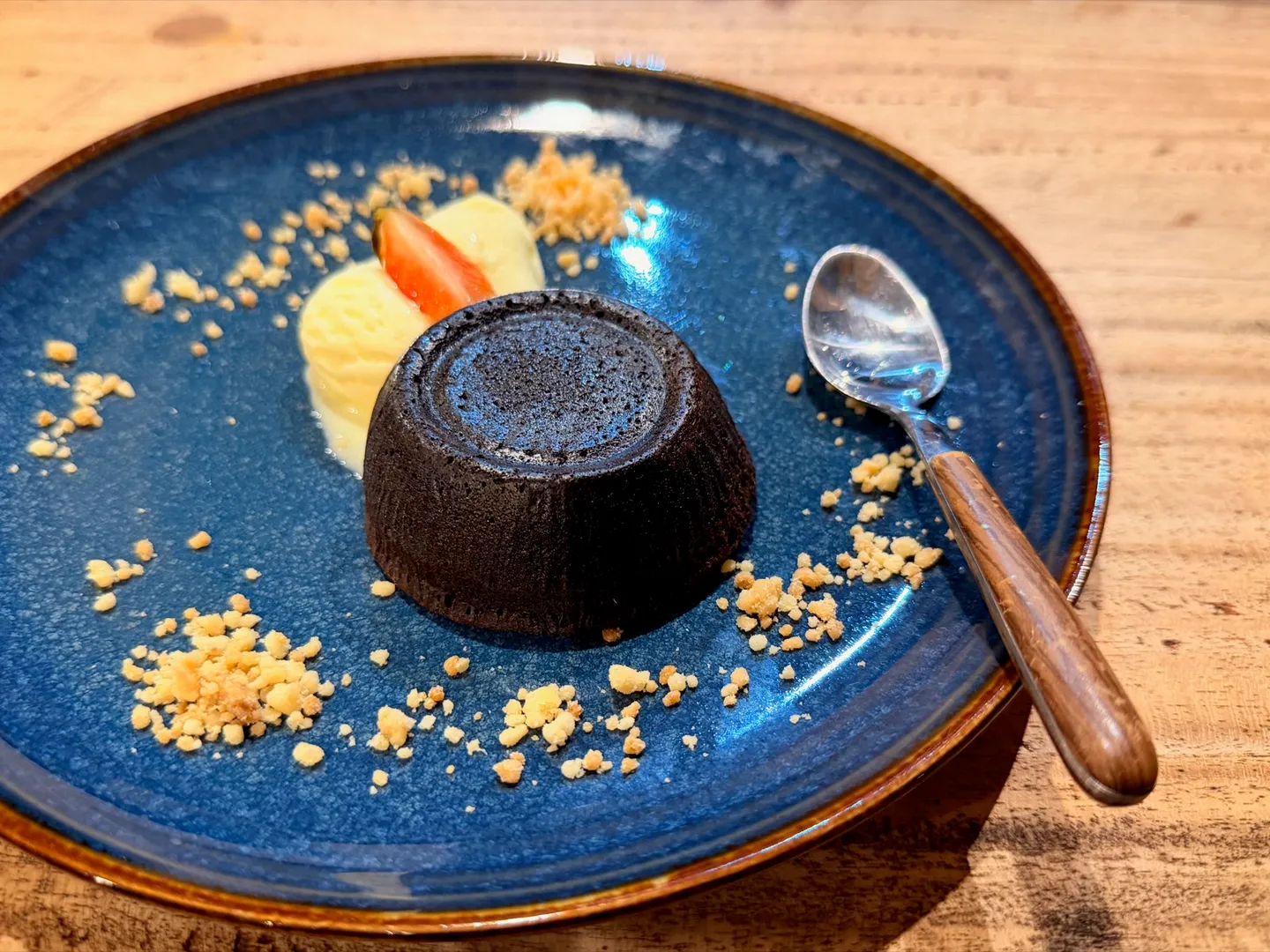
What caught the Editor completely off guard, though, was the coconut rice porridge at breakfast. A plain white bowl, utterly unassuming in appearance — but the moment it hit the palate, the fragrance of coconut milk exploded in the mouth, silky-smooth beyond belief. The Editor genuinely wondered whether the owner was a potential Michelin-starred chef held back by a diving career. The avocado toast served alongside was also well above par, and paired with a specially blended coffee made with kopi luwak beans — uniquely aromatic and beautifully smooth — it woke you up for the entire day.
The Editor genuinely feels that Tulambubu's food and beverage standard does a great deal for Tulamben as a destination. Simply not having to think about where to eat saves an enormous amount of mental energy, leaving you free to focus entirely on the diving.
Tulambubu Accommodation Experience: A Dive Shop That Cares About the Details
Room Comfort and Balinese Design
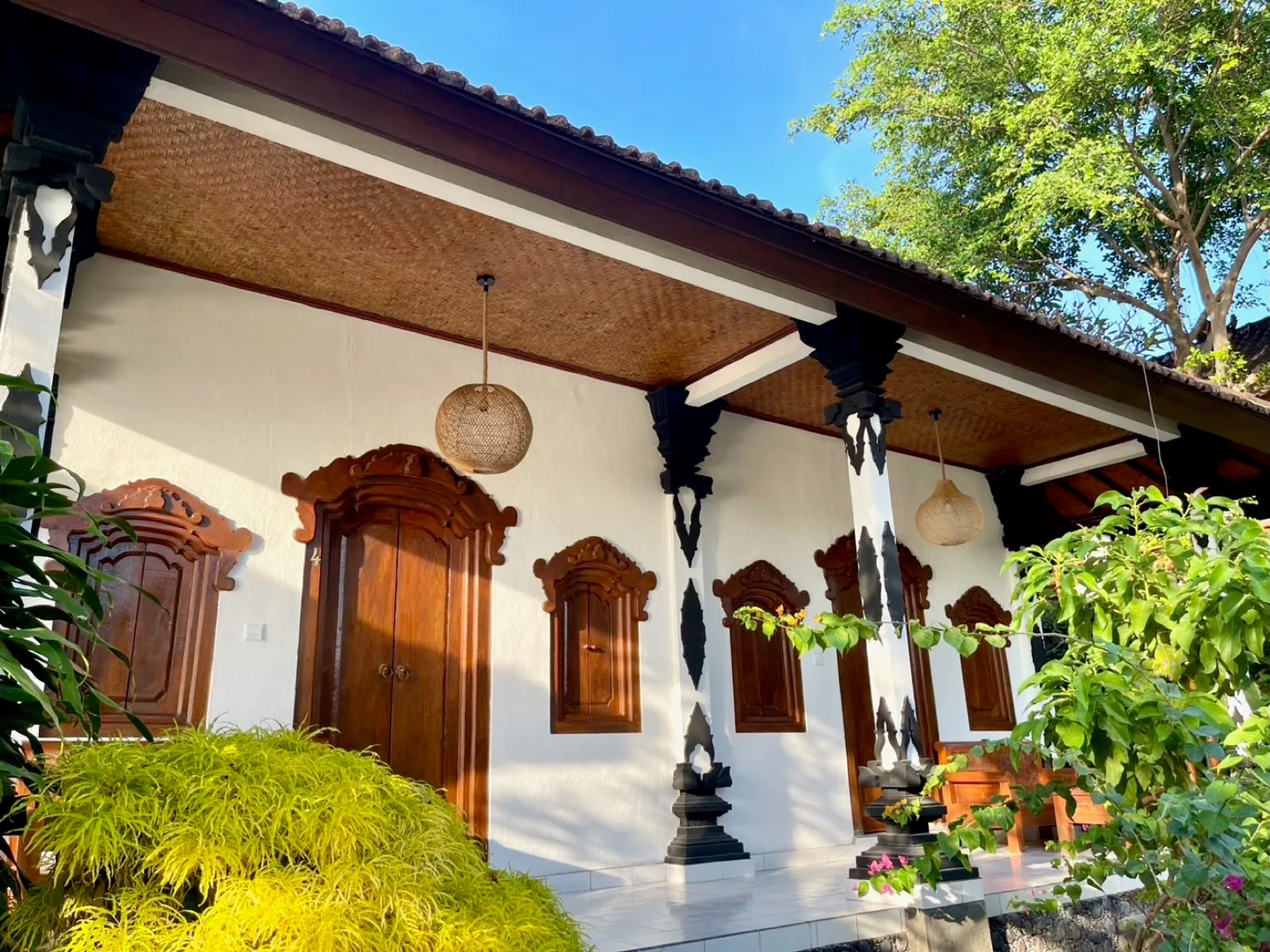
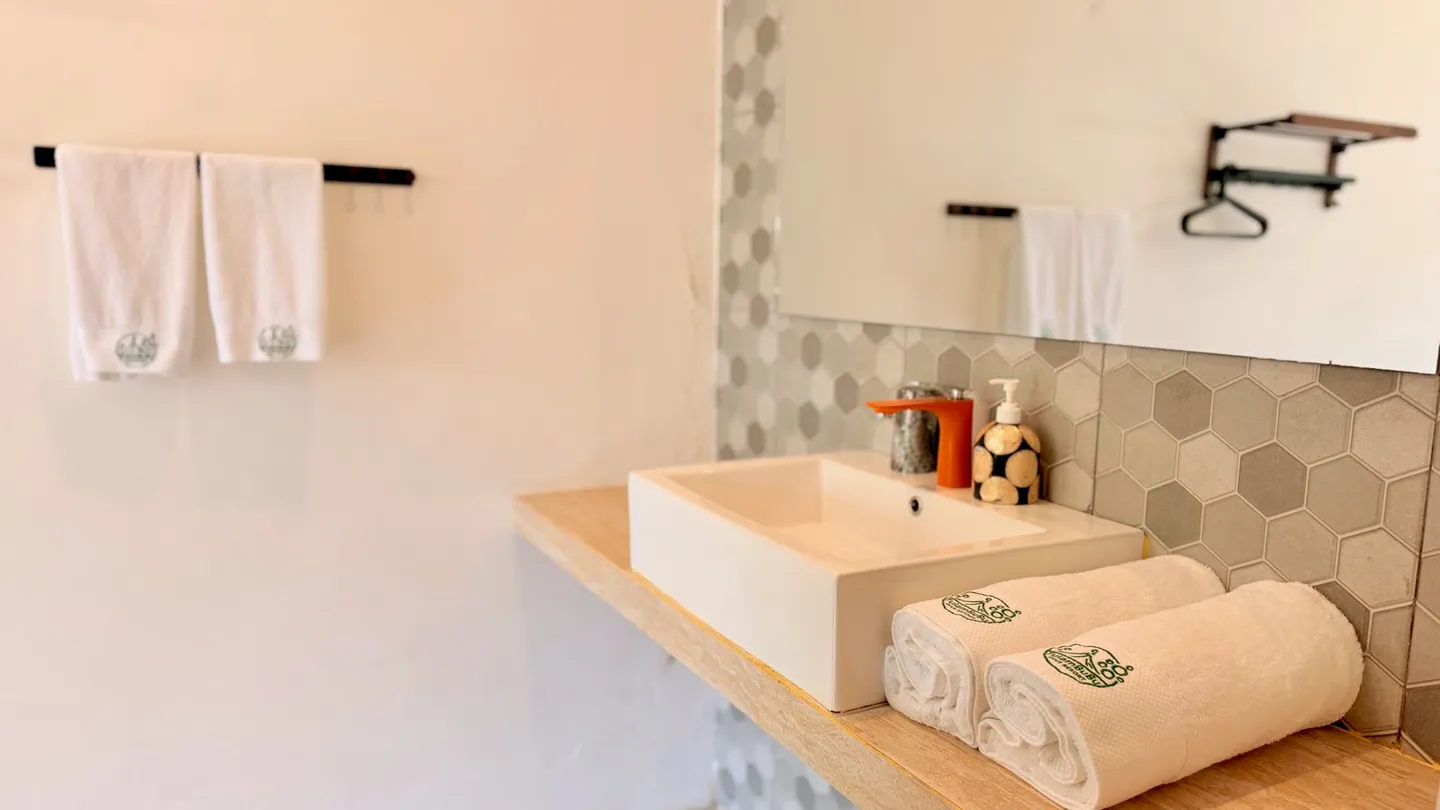
Tulambubu's rooms follow a Balinese design aesthetic, and the overall space is generous and comfortable for a solo occupant. The Editor pushed open the window to a view of blue sky and ocean that instantly switched the brain into vacation mode. Cleanliness in the room was impeccably maintained — it was clear that real effort had gone into upkeep.
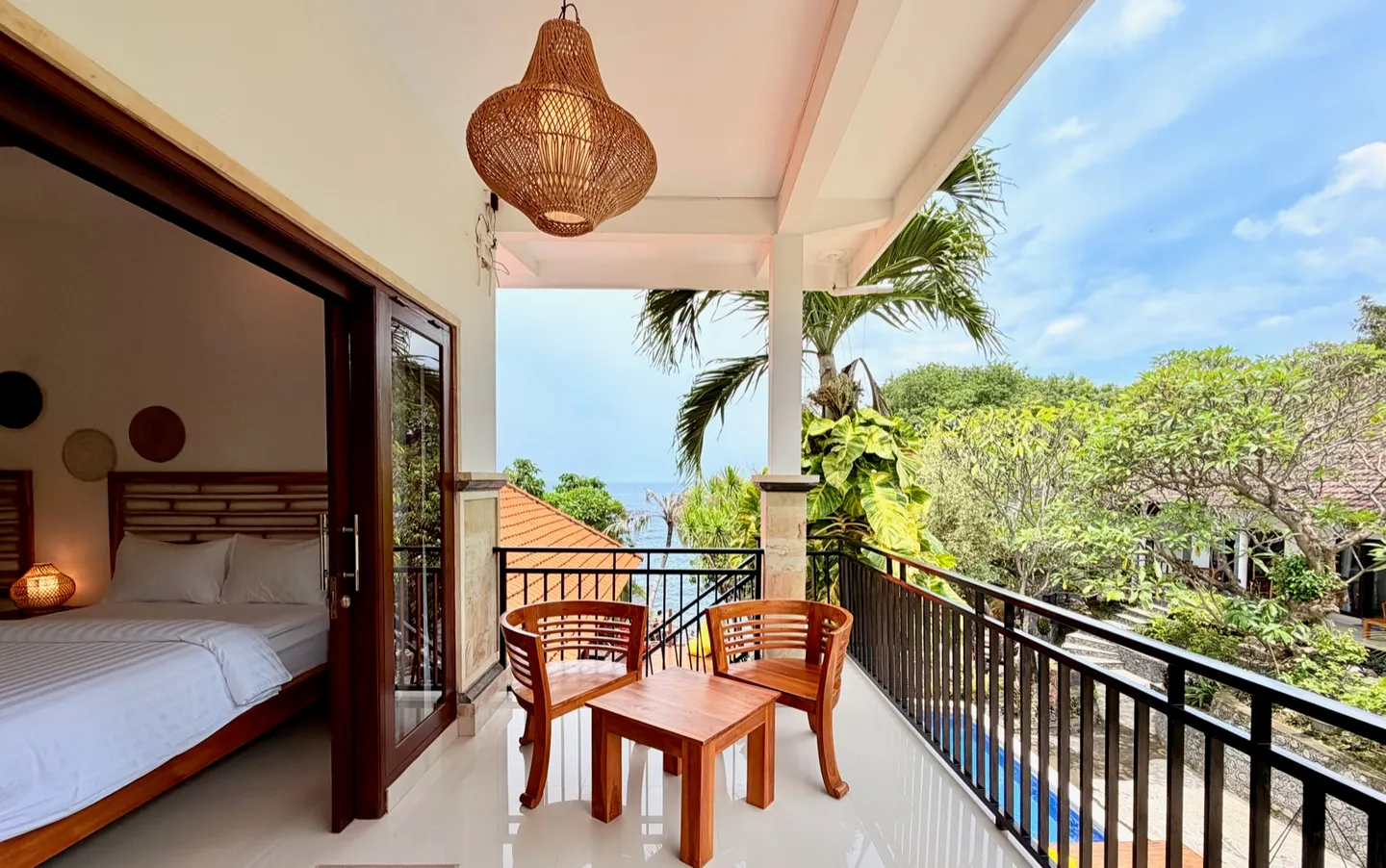

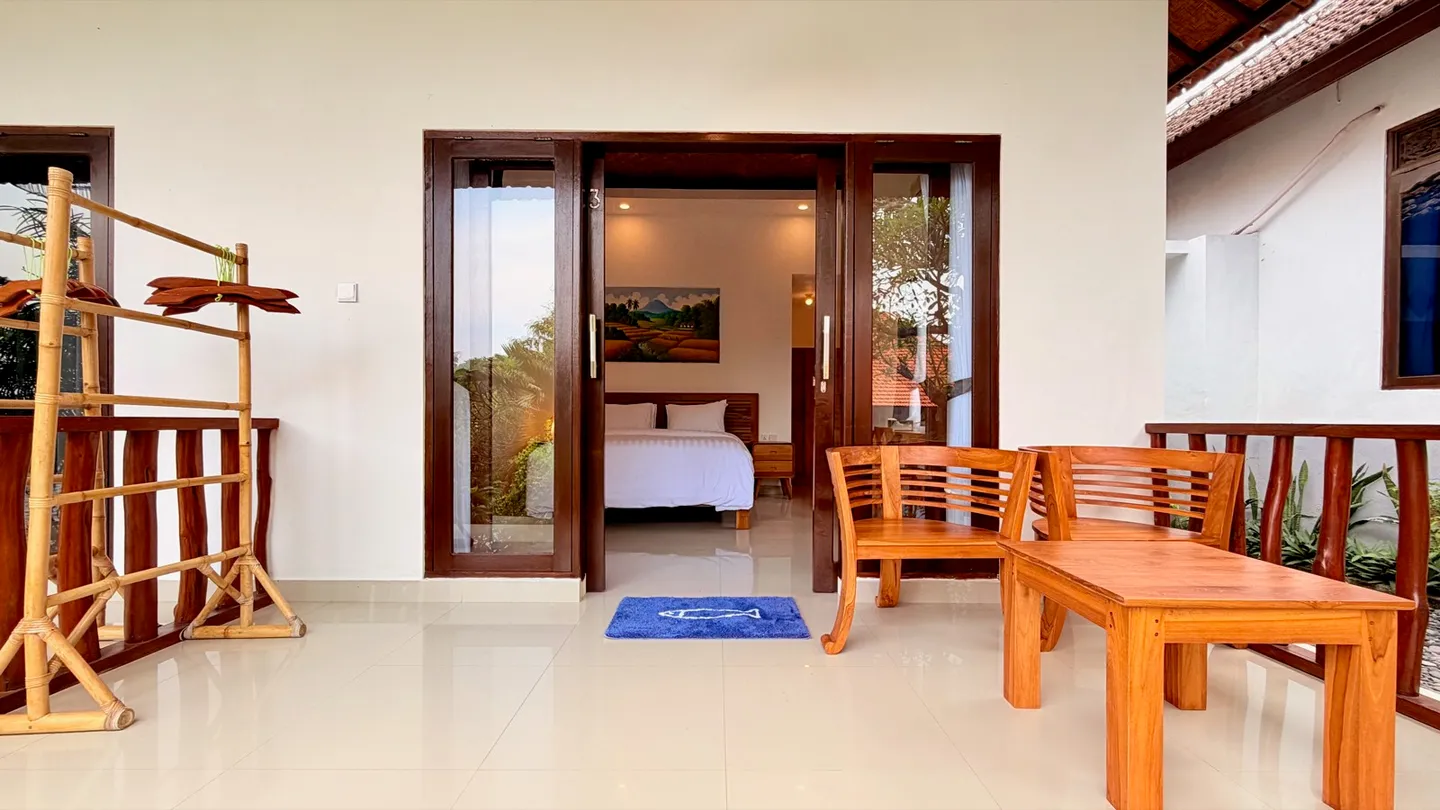
Pool, Ocean Views, and Thoughtful Service Details Everywhere You Look
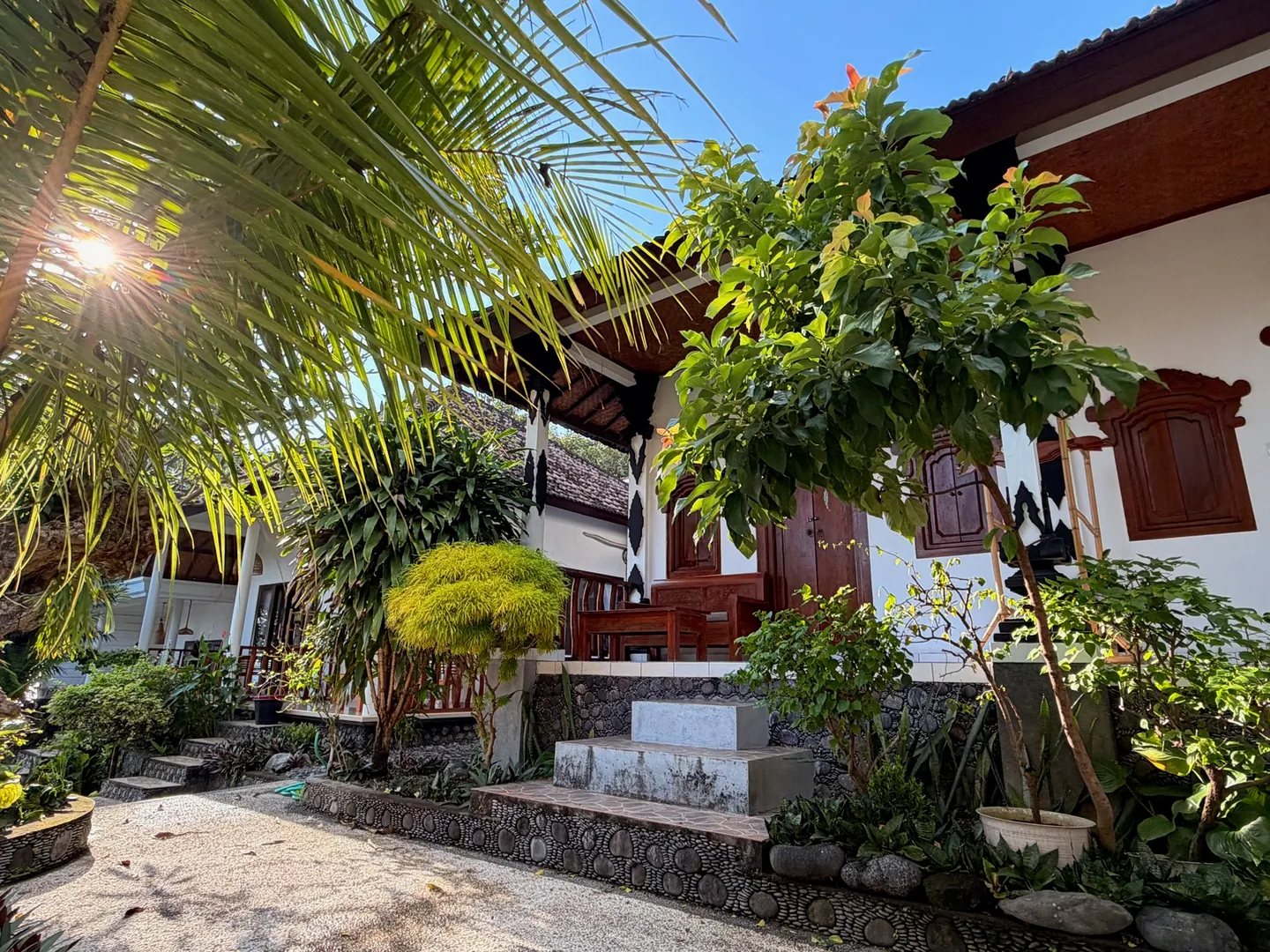
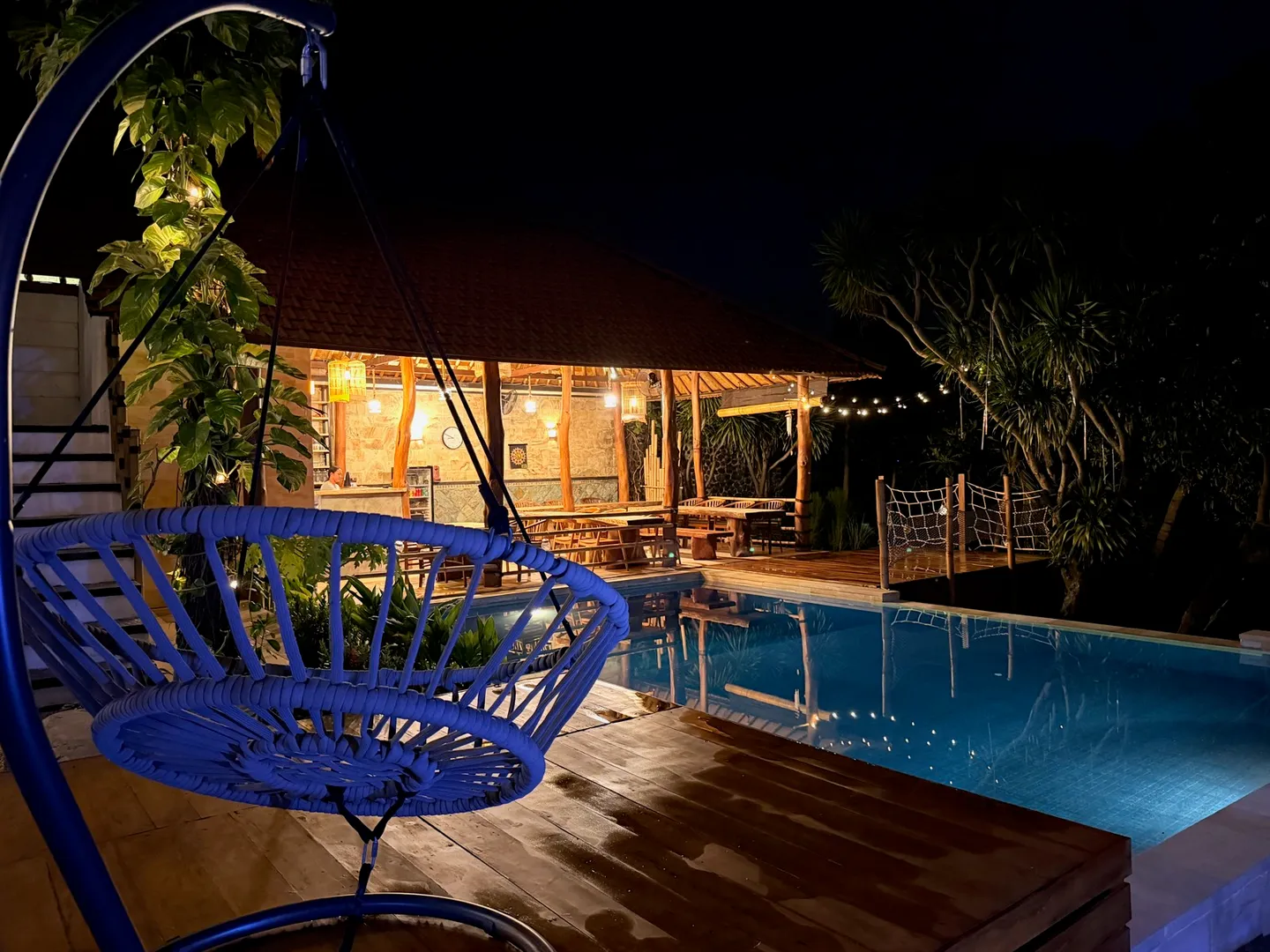
Stepping out of the room, the resort's communal spaces also left a strong impression — a clean pool directly in front, the dining area alongside it, and just a few steps further, the sea. The entire property is kept immaculately, and for a dive resort, the Editor felt the standard was genuinely sincere.
But what earned the most brownie points were the small details. During shore dives, when you walk into the water in your flip-flops, a staff member carries your sandals back up the shore and sets them down neatly so that when you surface, they're right there waiting for you. Then there are the local ladies who help carry the equipment — balancing a full set of gear on their heads, another set slung across their shoulders, without using their hands at all. The Editor's jaw nearly hit the floor. These seemingly minor gestures accumulate into a feeling that you were genuinely well taken care of on this trip.
How to Plan Your Bali Diving Itinerary: Season Tips and Beginner's Guide
Best Diving Season: Skip the Rainy Season and Head Out in the Dry Season
Bali's dry season runs roughly from April to October — stable weather, better sea conditions, and the best visibility, making it the recommended time for diving in Bali. The Editor departed in March, still at the tail end of the rainy season; news reports of flooding before departure caused no small amount of anxiety. As it turned out, we were lucky to get sunny weather — but it really was down to luck.
The Editor's advice: if you have flexibility over your travel dates, try to avoid the rainy season from November to March. Bali's rainy season is not the kind of drizzle you might get in Taipei — when it comes down, it comes down hard enough to make an umbrella useless. Sea conditions are also unstable during the wet season, and some dive sites may be unreachable due to heavy swell — as happened to the Editor on the second day, when conditions forced a retreat from Amed Bay back to the House Reef. The dry season is simply the safest choice.
Tulamben + Nusa Penida: The Golden Combination for Bali Diving
If your holiday allows enough days, the Editor strongly recommends combining Tulamben and Nusa Penida into a single trip. Tulamben specialises in wreck diving and shore dive experiences, while Nusa Penida is big-animal territory — manta ray and mola mola / sunfish are both potential encounters there. The two destinations offer completely different diving styles, and combining them gives you the full Bali diving experience.
Who Is It For: Fun for Everyone from Beginner to Advanced
The Editor's single biggest takeaway from this trip is that Tulamben is genuinely, thoroughly beginner-friendly. Every dive site is a shore dive, currents are mostly gentle, depth options are flexible, and the dive guides are attentive and professional. If you've just earned your Open Water Diver certification and want a place that lets you get in the water easily with a real sense of accomplishment, Tulamben belongs firmly in your top three. But don't let the beginner-friendly reputation make you think it's "too easy" — the scale of the Liberty wreck, the coral of the Japanese Wreck, and the wall of the Drop Off all have what it takes to impress even experienced divers.
The Editor's Tulamben Diving Verdict
Four days, three nights, five tanks, and a dive shop whose food you genuinely don't want to leave behind — this Bali diving trip delivered more than the Editor had hoped for. Tulamben is that kind of place: understated, unpretentious, but the moment you drop below the surface you know the ocean here has real substance. The awe of the Liberty wreck, the graceful drift of the soft coral, the quiet serenity of the night dive, and that coconut rice porridge at Tulambubu that the Editor can't stop thinking about — every one of these moments is a memory that defines this trip.
If you're planning your next Bali diving trip, the Editor sincerely recommends putting Tulamben on your list. It's not just a place for beginners to cut their teeth — it's somewhere experienced divers will want to return to. Want to find out more about diving itineraries? Head to tourify now and search for the perfect dive trip for you.
Frequently Asked Questions
How is a BlueTrend dive trip different from an unknown, no-name dive group?
Choosing us means full peace-of-mind protection and a smooth experience from start to finish. Every trip we run holds to three things.
First, full legal protection and a professional dive leader: we strictly follow Taiwan's travel regulations and provide complete travel-agency liability insurance, travel insurance, trip-inconvenience insurance and dive insurance. Every group is accompanied by a certified, foreign-language dive leader who joins you on both the dives and the land itinerary, liaising seamlessly with local dive shops and operators on your behalf to keep things running smoothly — the person our travellers trust most.
Second, fully licensed with secure payments: every payment goes into a licensed travel agency's account, with multiple safe payment channels (bank transfer, credit card and more) and a legal collect-and-remit receipt, so every transaction is open, transparent and protected, avoiding the fraud and dispute risks of transferring money privately to an individual.
Third, hand-picked quality we vet in person: every trip, dive site and partner shop is scouted on the ground by our own team, from the guides' professionalism and safety standards to the food, lodging, environment and service details on land, all vetted by us so you don't get caught out.
I want to sign up for a dive trip. Are there certification-level or logged-dive requirements?
Each dive site is different, so the entry bar varies. 'Bali Tulamben', for instance, is relatively beginner-friendly. 'Malapascua in the Philippines' is also beginner-friendly, but since thresher sharks tend to cruise between 20 and 30 metres, we recommend AOW certification with 20+ logged dives to enjoy this trip comfortably. For 'the Maldives' or 'Palau', we suggest AOW with 50+ logged dives for a more relaxed experience. If you're not sure whether your experience fits the trip you want, message us and our dive editors will assess it and help you find the trip you'll feel safest on.
Can I join if I'm signing up alone? How are rooms arranged?
Plenty of our travellers sign up solo! For rooms and beds, we prioritise pairing you with a same-gender traveller, and if you'd rather have your own space you can pay the difference to upgrade to a single room. For the diving, our professional leader will pair you with a suitable buddy, and with the happy vibe on our trips you'll quickly make a great group of dive friends. Many people sign up alone, make new friends, and end up organising the next trip together!
Does the trip fee include dive insurance, gear rental, taxes and instructor tips?
It depends on the trip, the destination's regulations and the local operators. Every BlueTrend dive trip has a detailed web page with a clear 'included / not included' list, transparent and with no hidden charges. All payments are collected by a licensed travel agency, with a standard-form contract for your protection.
I'm a new diver / haven't dived in a long time — will I fall behind the group?
Before you complete your booking, our team assesses a suitable trip based on your certification level and experience. Before departure, we strongly recommend taking time to refresh in Taiwan with an instructor, or a fun dive to get your feel back. On the trip itself, our professional dive leader groups and pairs everyone by experience, keeps a close eye underwater on travellers who need extra care, and steps in to help right away.
Will the photos and videos taken during the trip be shared with us?
During the dives, 'safety' is always the leader's top priority, so whenever it's suitable and safe the leader will capture great shots and record the best moments. During or after the trip, we compile a cloud album for all travellers to download, so you go home loaded with memories!
Besides your scheduled trips, can you arrange a private group charter or independent travel for me and my friends?
Absolutely! Besides group trips, we also arrange private group charters and independent travel. We can communicate, enquire and coordinate services with local operators based on your needs, saving you time and effort and taking the language barrier off your plate, to tailor the smoothest, most reassuring dive trip just for you. Contact our LINE support and our editors will arrange it for you!