

Contents(9)
- Diving in Belize — Witness the World's Largest Underwater Cave: The Great Blue Hole
- Option 1: Charter a Plane and Fly Over the Great Blue Hole
- Option 2: Dive Into the World's Largest Underwater Stalactite Cave
- Uncovering Belize's Dive Sites and Unique Marine Life
- Spear a Lionfish — and Summon the Nurse Shark Patrol
- The Toadfish — A Mysterious Species That Makes Sounds
- Sharks While Snorkeling?
- Wide-Angle and Macro — All in One Place
- Uncovering Belize's Travel Highlights — From Rainforest Adventures to Underwater Stalactite Ruins, Let's Go!
When it comes to Belize, the most famous attraction is undoubtedly the Great Blue Hole — widely acclaimed as one of the world's top ten dive sites. But beyond the Great Blue Hole, Belize is home to a seemingly endless array of dive sites. Whether you want to shoot sweeping wide-angle shots across coral reefs or hunt for tiny critters with a macro lens, diving in Belize has something for everyone. In Belize, you can even spear Lionfish — and then cook and eat them — all in the name of restoring balance to the marine ecosystem! Join BlueTrend as we explore what other dive sites Belize has to offer, what megafauna you can encounter, and what this Lionfish-spearing activity is all about! *Cover photo courtesy of Aggressor Fleet, used with permission.
Diving in Belize — Witness the World's Largest Underwater Cave: The Great Blue Hole
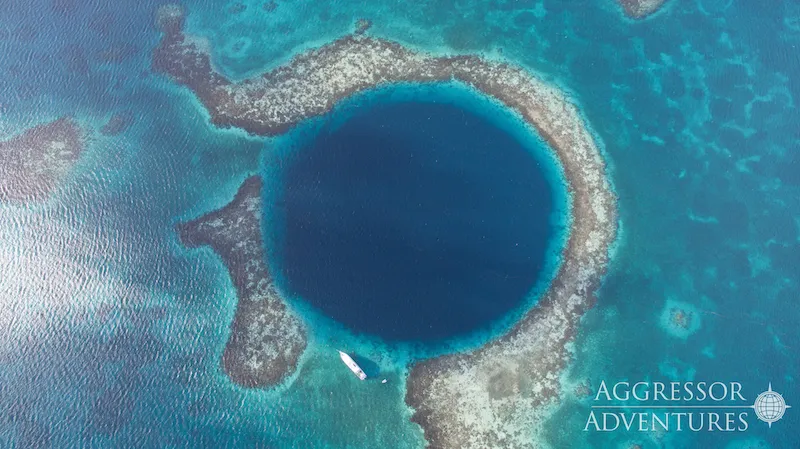
A full aerial panorama of the Great Blue Hole, captured from the sky. photo credit: Aggressor Fleet
Belize's most iconic attraction is, without a doubt, the Great Blue Hole — one of the world's top ten dive sites. It is the world's largest underwater limestone sinkhole, formed from porous limestone geology. Originally a subterranean cave system created during the Ice Age, it was flooded and collapsed as sea levels rose, giving birth to the legendary Great Blue Hole we know today.
No diving certification? Don't worry — the Great Blue Hole isn't only for divers. Let's take a look at the different ways to experience it!
Option 1: Charter a Plane and Fly Over the Great Blue Hole
Belize has an abundance of small propeller aircraft available to fly you over the Great Blue Hole. You can charter one with as few as two people — it's about as commonplace as hailing a taxi in Taiwan. Gazing down at the magnificent Great Blue Hole from above reveals its full splendor: from the deepest, most intense blue at the center to the soft, gradual gradient of the surrounding atoll's shallower waters. It resembles the eye of the ocean itself, and a sense of reverence washes over you. The pilot will circle above the Blue Hole for a while, giving passengers plenty of time to capture this precious moment.
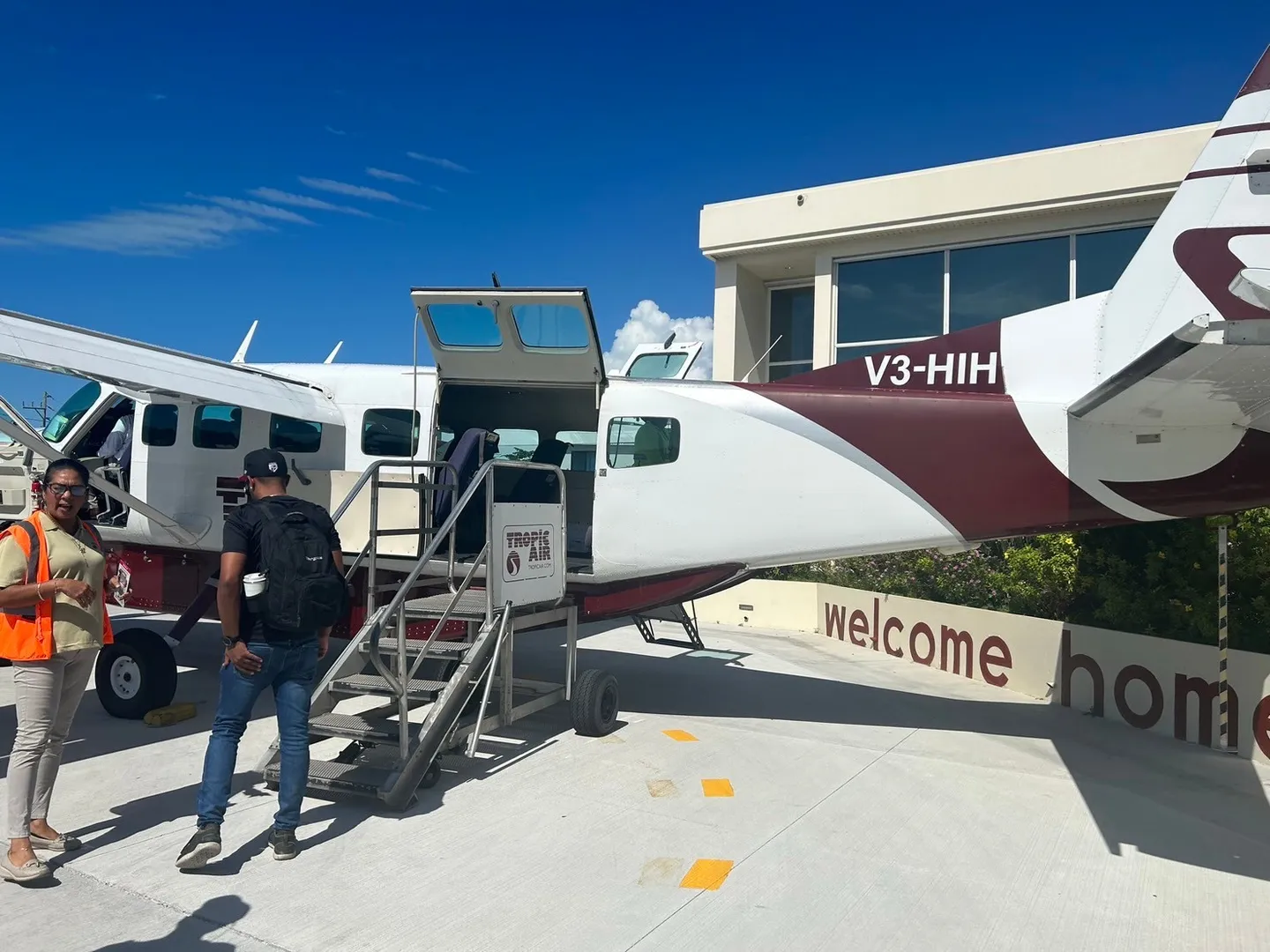
The entire plane, including the pilot, seats fewer than ten people. photo credit: 海島瘋
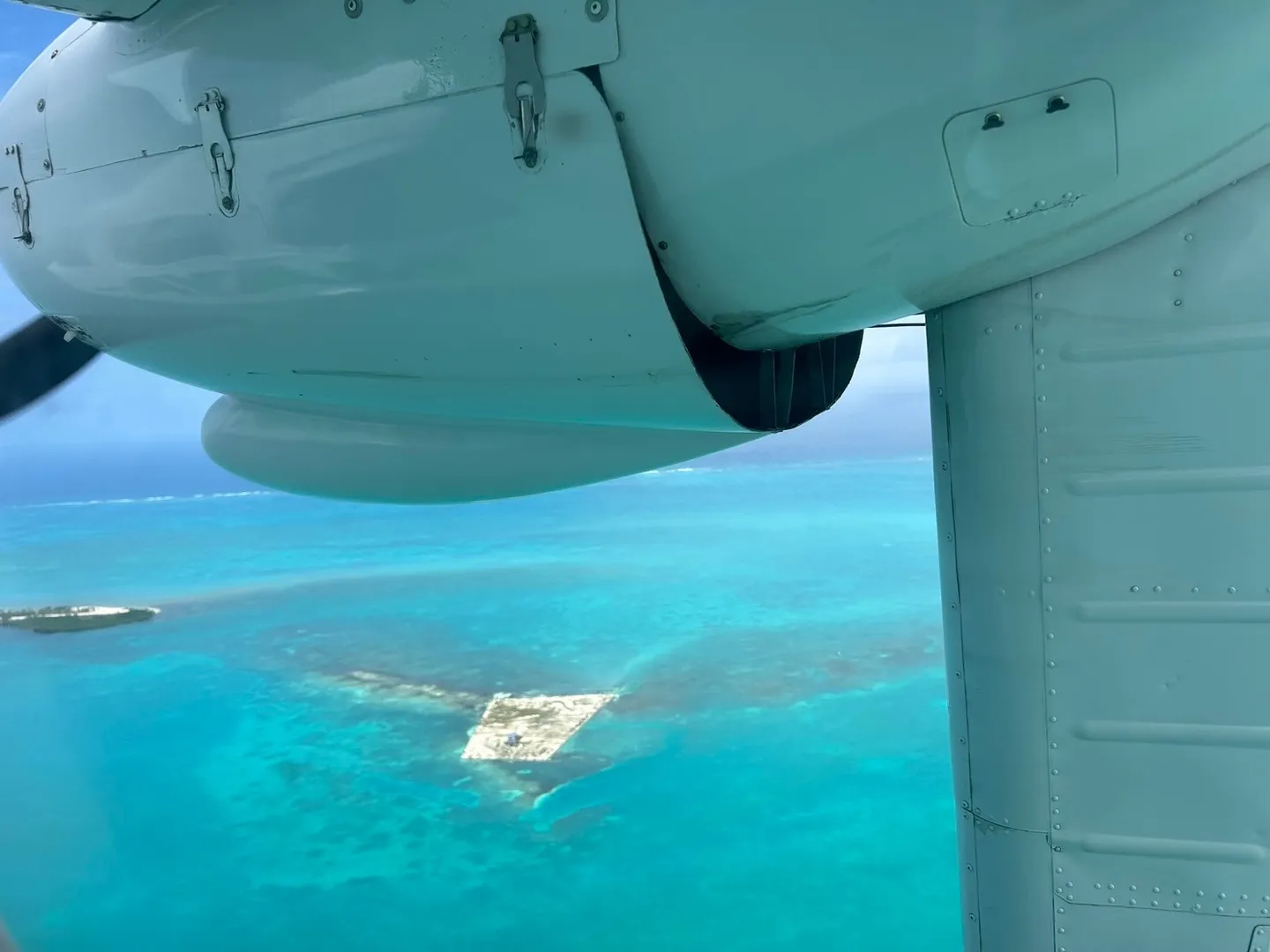
Looking down from above, an endless ocean stretches to the horizon. photo credit: 海島瘋
Option 2: Dive Into the World's Largest Underwater Stalactite Cave
To dive the Great Blue Hole, you'll need to take a speedboat — approximately a 2.5-hour journey. Boats depart daily from various resorts and cays, carrying divers to the site. The only reason trips are cancelled is an unfortunate encounter with a hurricane (an extremely rare occurrence).
The Great Blue Hole reaches a maximum depth of over 100 m, though recreational divers are typically taken to around 40 m. As a result, an Advanced Open Water Diver certification is required to descend into the Blue Hole. Underwater, the Blue Hole boasts truly unique geological formations — stalactites, stalagmites, and more — that will captivate you the moment you descend. The crystal-clear, impossibly deep blue water, the unfathomable stalactite cave, the abyss below — it feels like stepping into outer space and setting out on an adventure. Due to the Blue Hole's unique conditions, marine life inside the cavern itself is relatively sparse; the surrounding atoll is actually where you're more likely to encounter large animals such as sharks.
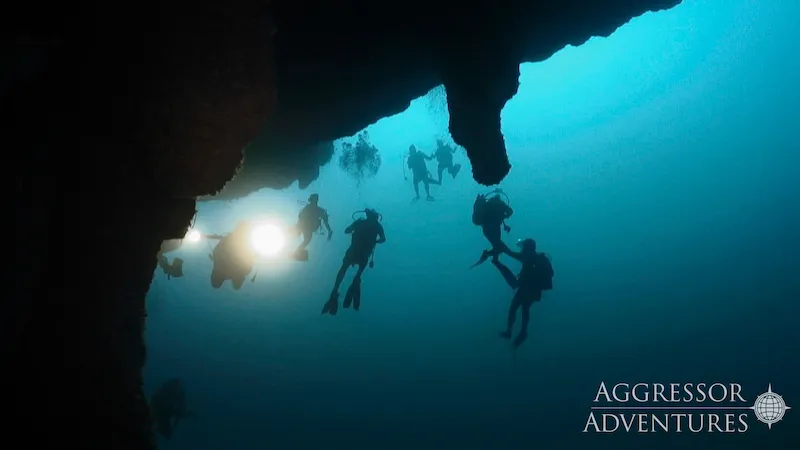
Beneath you lies a bottomless ocean. photo credit: Aggressor Fleet
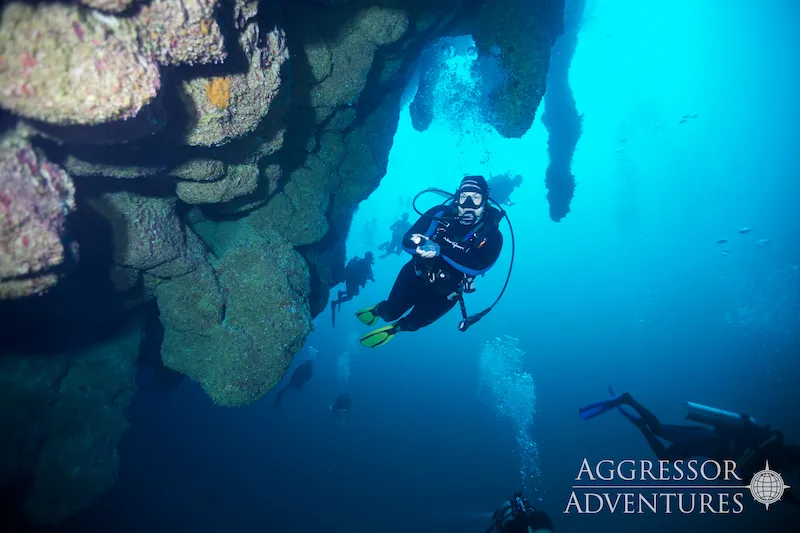
The underwater stalactite formations are a world-class geological wonder. photo credit: Aggressor Fleet


Uncovering Belize's Dive Sites and Unique Marine Life
Situated in the Caribbean Sea, Belize's underwater ecosystem and diving atmosphere are worlds apart from those of Southeast Asia. While Taiwan's reefs are dominated by vibrantly colored soft coral, Belize's reefs are characterized mainly by branching hard coral — the kind that, from a distance, makes you feel as though you're adventuring through an underwater jungle, adding an extra layer of mystery. In Belize, it's summer all year round, with only dry and wet seasons to distinguish the months. Aside from the higher chance of hurricanes in August and September, every season is excellent for diving. Conditions are consistently stable, visibility is excellent, and the marine life is abundant — making it a destination we recommend for both beginners and experienced divers alike.
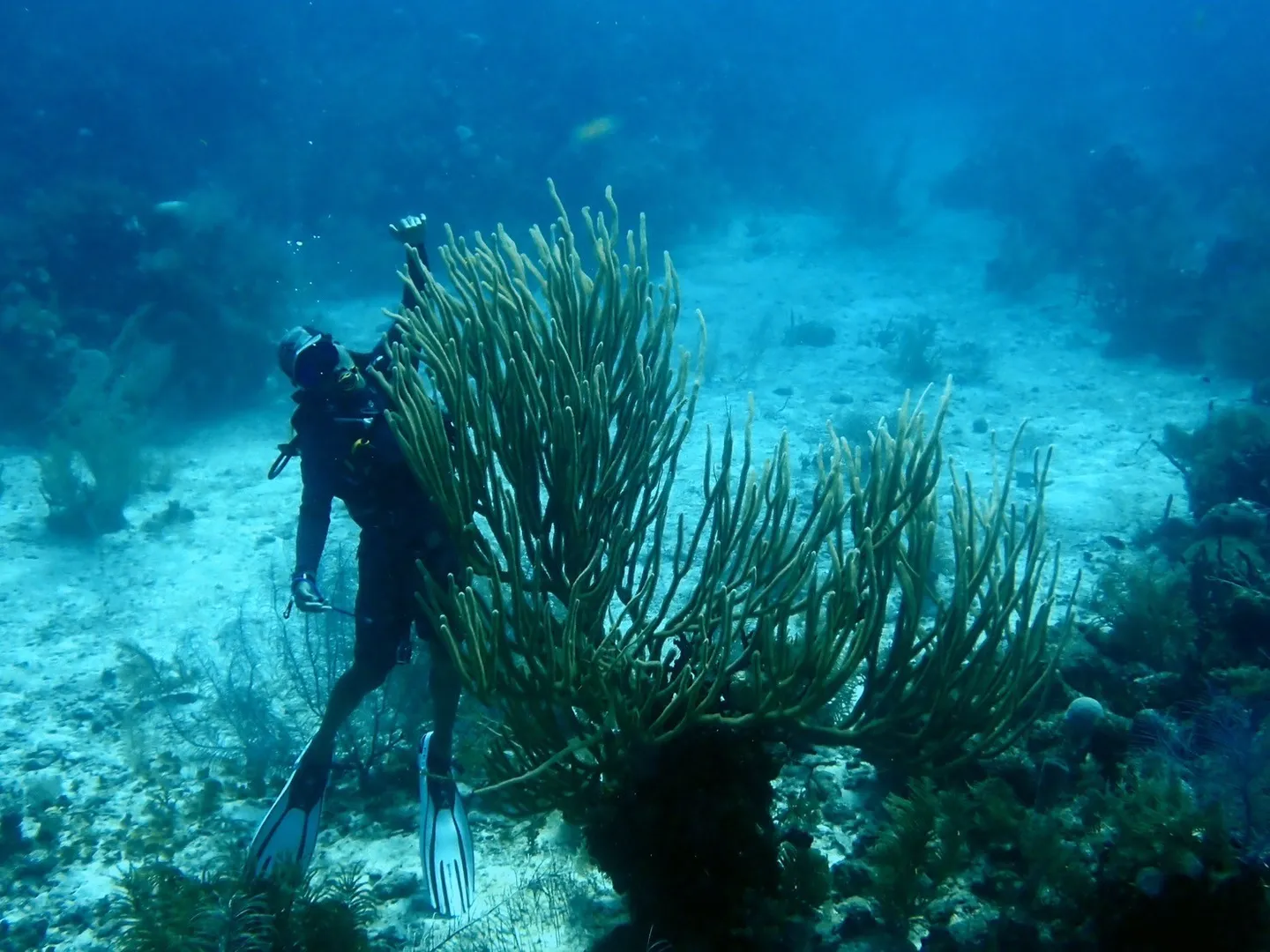
A coral formation even larger than a person. photo credit: 海島瘋
Spear a Lionfish — and Summon the Nurse Shark Patrol
Belize offers a very special diving activity: Lionfish spearing. It might sound cruel at first, but it's actually carried out to restore balance to the marine ecosystem and food chain. Let BlueTrend tell you the story behind it.
As the tale goes in the Americas: the flamboyant Lionfish is a species native to Asia, with no natural presence in the Americas. At some point, locals began keeping them in aquariums in Miami for display. Then, in 1992, Hurricane Andrew devastated the area with catastrophic damage — and among the casualties were those aquariums. The Lionfish escaped into the open ocean. Like aliens landing on Earth, no local creature had ever encountered them before. With their venomous spines, they found themselves with no natural predators, and their population exploded, throwing coral reef ecosystems completely out of balance. To address the problem, humans began actively promoting Lionfish hunting — pairing the catch with local restaurants that turned them into a culinary delight. The initiative has proven effective in curbing the Lionfish population, allowing coral reefs to return to their former vitality.
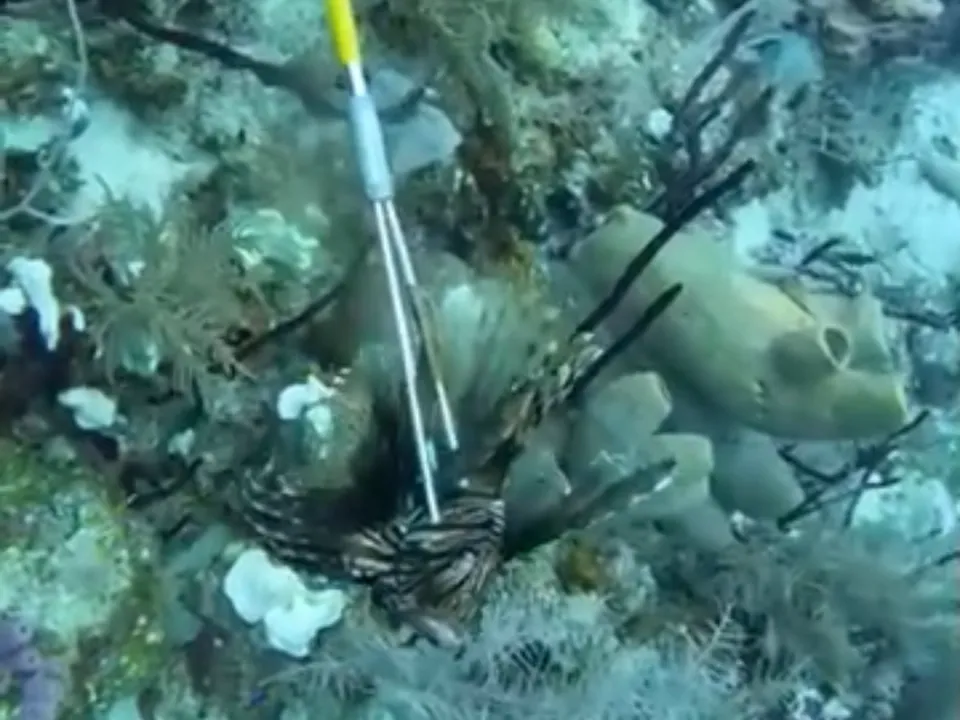
The dive guide carries a spear on every dive. photo credit: 海島瘋
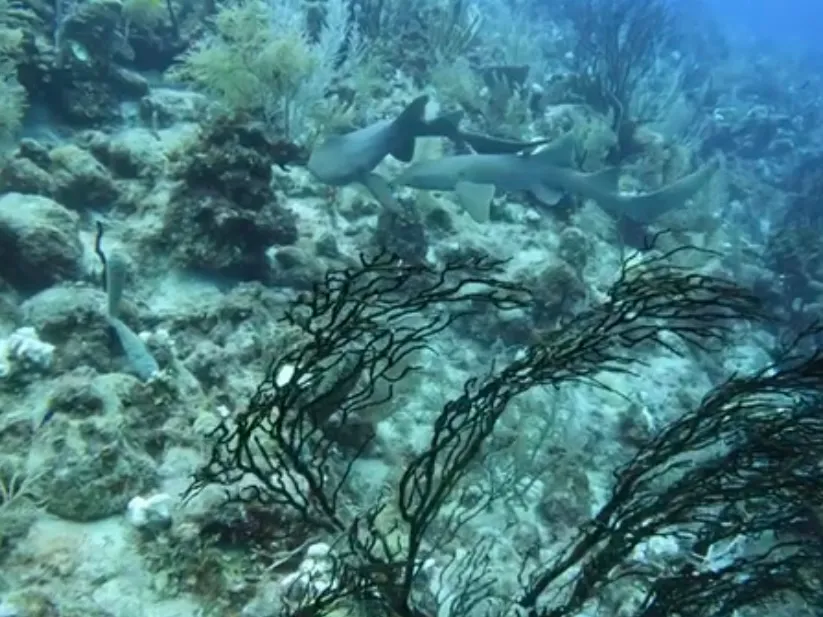
A Nurse Shark shows up hoping to snag a taste of the delicious Lionfish. photo credit: 海島瘋
Xiaoying (小瑛姐) from 海島瘋 also shared: "When the dive guide spears a Lionfish underwater, the scent of blood attracts adorable Nurse Sharks — sometimes three or four of them — hovering around us like a personal escort squad." At the end of the dive, the guide would hand the Lionfish over to the Nurse Sharks as their "wage" for accompanying the group that day!
The Toadfish — A Mysterious Species That Makes Sounds
You've heard of toads on land, but have you ever encountered one in the sea? Xiaoying shared that in Belize she came across a species she had never seen before, hiding deep inside a cave. It has a flattened body, looks like a cross between a toad and a Whiskery Shark, and sports markings reminiscent of a Whale Shark. So how do you find one deep inside a cave? The dive guide explained: "We locate them by the sounds they make — and sometimes we use the aroma of food to lure the toadfish out to feed."
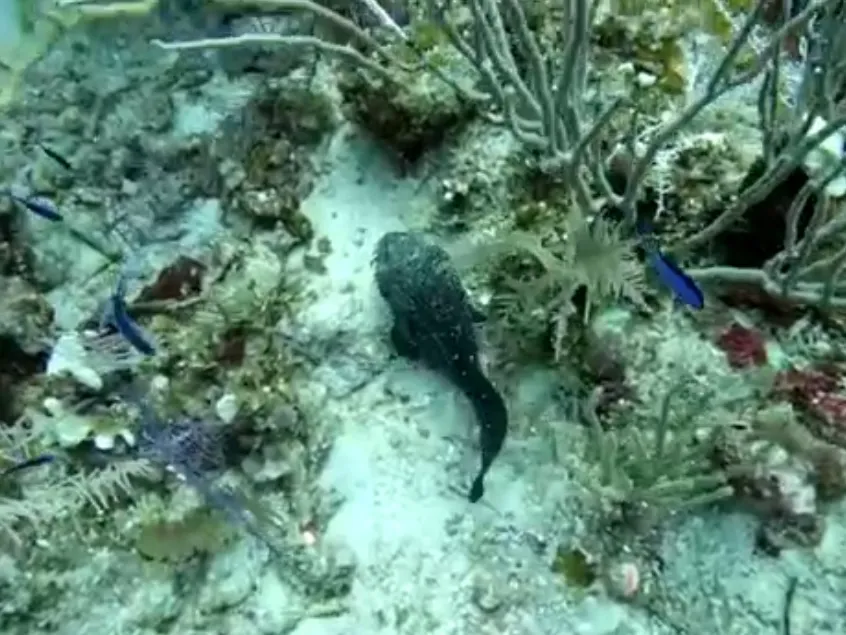
From a distance, the patterning really does look a bit like a Whale Shark. photo credit: 海島瘋
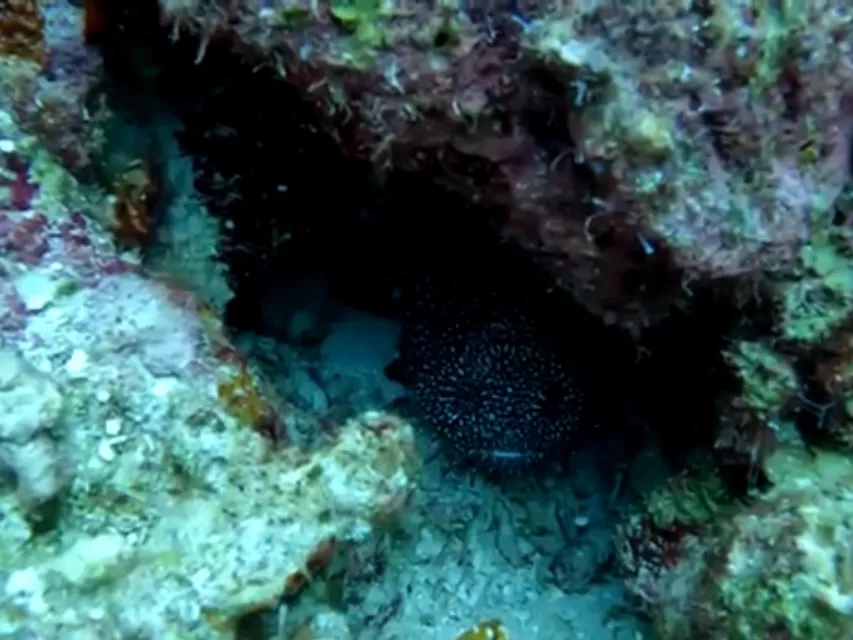
Shy by nature, the toadfish hides deep inside caves. photo credit: 海島瘋
Sharks While Snorkeling?
The most famous snorkeling spot is located at the southern end of Ambergris Caye — the "Hol Chan Marine Reserve," which contains a dive site simply known as Shark Ray Alley. This site is less than 5 m deep, making it perfect for snorkeling. From the surface, you can already see countless sharks and Stingrays waiting for the food in your hands — each shark easily bigger than a 175 cm adult male. The sight is truly breathtaking.
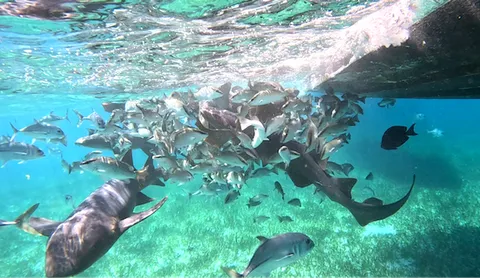
Snorkeling at Shark Ray Alley. photo credit: 海島瘋
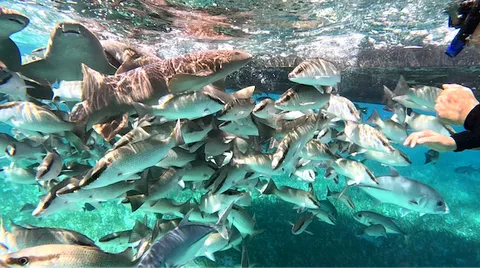
Sharks and fish as far as the eye can see. photo credit: 海島瘋
Wide-Angle and Macro — All in One Place
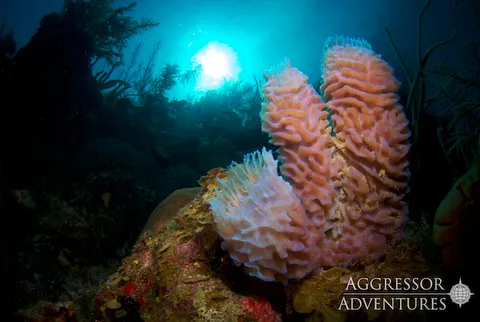
In Belize, you'll find every variety of coral imaginable. photo credit: Aggressor Fleet
With extraordinary biodiversity, Belize offers an inexhaustible supply of marine life and stunning photography opportunities — whether you're shooting wide-angle landscapes or macro details. The unique topography and coral formations make for especially dramatic images. They say "clear water means no fish, and current means big animals" — but in Belize, every dive comes with schools of fish as a given. "Clear water with fish, big animals without the current" is Belize's true motto! Common megafauna encounters include Nurse Sharks (Ginglymostoma cirratum), Eagle Rays, Caribbean Reef Sharks (Carcharhinus perezi), and large Giant Trevally (Caranx ignobilis).
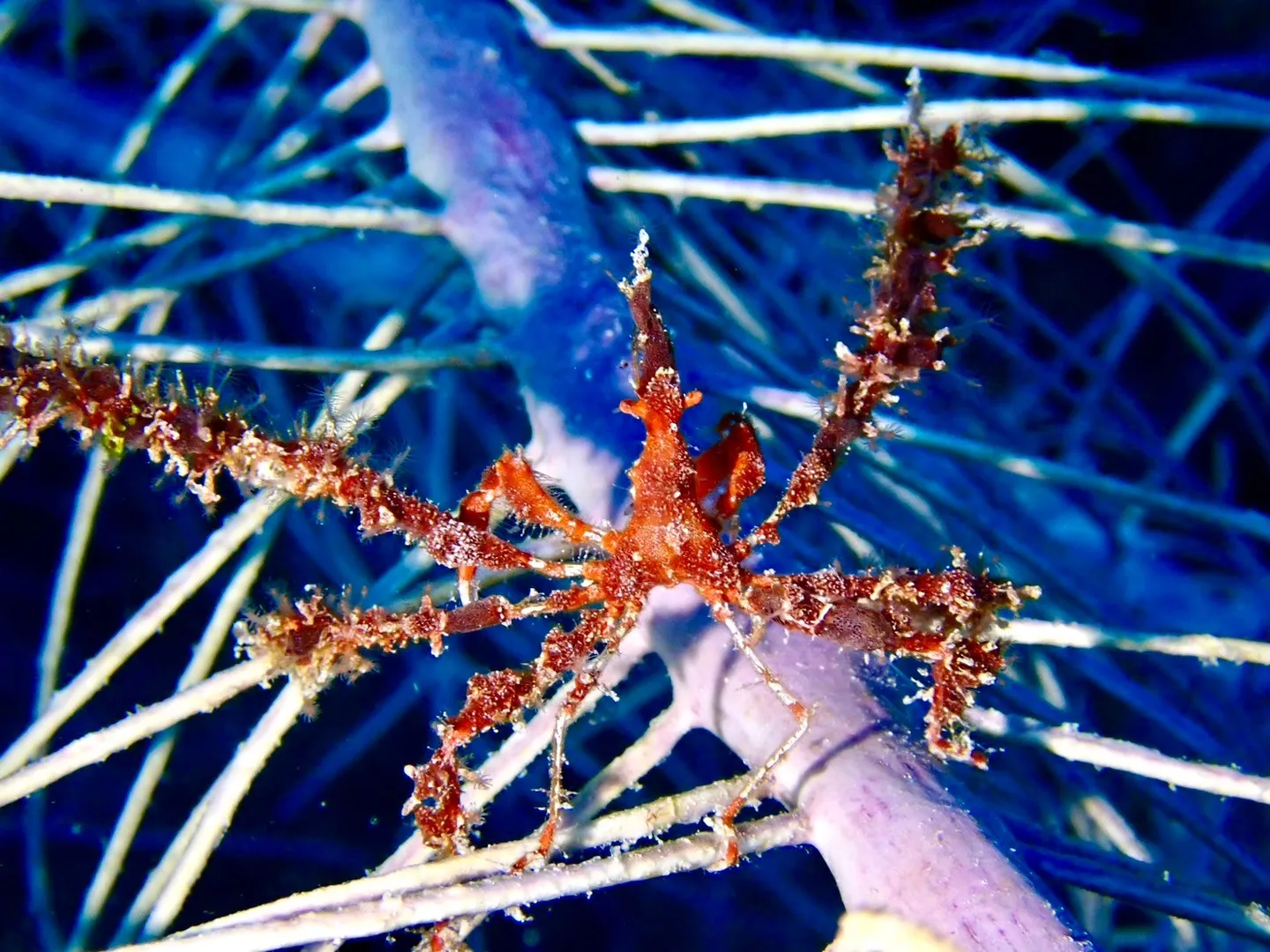
Belize's macro marine life is equally impressive. photo credit: 海島瘋
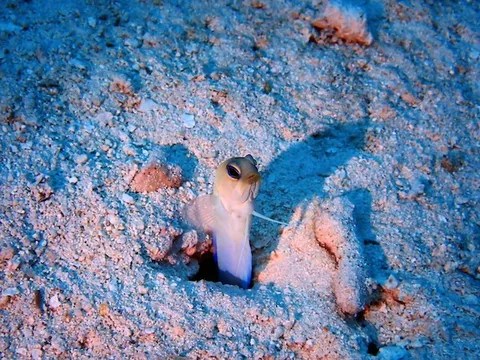
A cute blenny pokes its head out to say hello. photo credit: 海島瘋
Belize's seafloor is also home to many barrel sponges, inside which a variety of cleaner shrimp and coral shrimp take up residence. On the coral, you'll spot spider crabs of various colors — identifiable by their long, spindly legs — making it a fun challenge to see who can spot the most critters! Don't forget to peek into caves and crevices, where you may find large lobsters lurking inside — enough to make anyone's stomach growl!
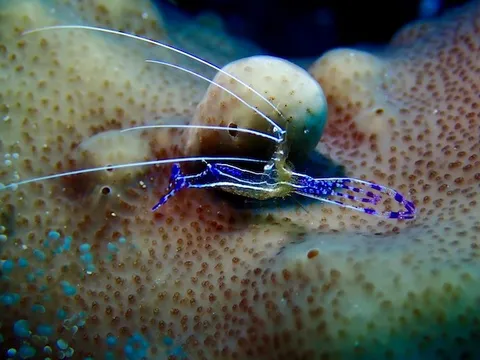
Tiny cleaner shrimp hidden among the coral. photo credit: 海島瘋
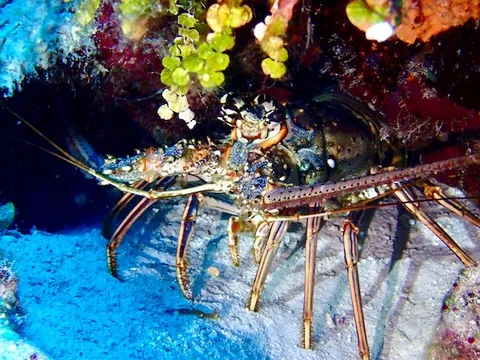
Peek into a cave — a lobster is staring right back at you! photo credit: 海島瘋
Uncovering Belize's Travel Highlights — From Rainforest Adventures to Underwater Stalactite Ruins, Let's Go!
Don't think for a second that Belize is only about diving — there are also rich cultural relics, rainforest adventures, and stalactite cave river tubing tours to be enjoyed on land!
>>Full article: Uncovering Belize's Travel Highlights — From Rainforest Adventures to Underwater Stalactite Ruins, Let's Go!
Editor: Jenny Tsai
Further Reading:
Frequently Asked Questions
How is a BlueTrend dive trip different from an unknown, no-name dive group?
Choosing us means full peace-of-mind protection and a smooth experience from start to finish. Every trip we run holds to three things.
First, full legal protection and a professional dive leader: we strictly follow Taiwan's travel regulations and provide complete travel-agency liability insurance, travel insurance, trip-inconvenience insurance and dive insurance. Every group is accompanied by a certified, foreign-language dive leader who joins you on both the dives and the land itinerary, liaising seamlessly with local dive shops and operators on your behalf to keep things running smoothly — the person our travellers trust most.
Second, fully licensed with secure payments: every payment goes into a licensed travel agency's account, with multiple safe payment channels (bank transfer, credit card and more) and a legal collect-and-remit receipt, so every transaction is open, transparent and protected, avoiding the fraud and dispute risks of transferring money privately to an individual.
Third, hand-picked quality we vet in person: every trip, dive site and partner shop is scouted on the ground by our own team, from the guides' professionalism and safety standards to the food, lodging, environment and service details on land, all vetted by us so you don't get caught out.
I want to sign up for a dive trip. Are there certification-level or logged-dive requirements?
Each dive site is different, so the entry bar varies. 'Bali Tulamben', for instance, is relatively beginner-friendly. 'Malapascua in the Philippines' is also beginner-friendly, but since thresher sharks tend to cruise between 20 and 30 metres, we recommend AOW certification with 20+ logged dives to enjoy this trip comfortably. For 'the Maldives' or 'Palau', we suggest AOW with 50+ logged dives for a more relaxed experience. If you're not sure whether your experience fits the trip you want, message us and our dive editors will assess it and help you find the trip you'll feel safest on.
Can I join if I'm signing up alone? How are rooms arranged?
Plenty of our travellers sign up solo! For rooms and beds, we prioritise pairing you with a same-gender traveller, and if you'd rather have your own space you can pay the difference to upgrade to a single room. For the diving, our professional leader will pair you with a suitable buddy, and with the happy vibe on our trips you'll quickly make a great group of dive friends. Many people sign up alone, make new friends, and end up organising the next trip together!
Does the trip fee include dive insurance, gear rental, taxes and instructor tips?
It depends on the trip, the destination's regulations and the local operators. Every BlueTrend dive trip has a detailed web page with a clear 'included / not included' list, transparent and with no hidden charges. All payments are collected by a licensed travel agency, with a standard-form contract for your protection.
I'm a new diver / haven't dived in a long time — will I fall behind the group?
Before you complete your booking, our team assesses a suitable trip based on your certification level and experience. Before departure, we strongly recommend taking time to refresh in Taiwan with an instructor, or a fun dive to get your feel back. On the trip itself, our professional dive leader groups and pairs everyone by experience, keeps a close eye underwater on travellers who need extra care, and steps in to help right away.
Will the photos and videos taken during the trip be shared with us?
During the dives, 'safety' is always the leader's top priority, so whenever it's suitable and safe the leader will capture great shots and record the best moments. During or after the trip, we compile a cloud album for all travellers to download, so you go home loaded with memories!
Besides your scheduled trips, can you arrange a private group charter or independent travel for me and my friends?
Absolutely! Besides group trips, we also arrange private group charters and independent travel. We can communicate, enquire and coordinate services with local operators based on your needs, saving you time and effort and taking the language barrier off your plate, to tailor the smoothest, most reassuring dive trip just for you. Contact our LINE support and our editors will arrange it for you!

![[Indonesia] The World's Largest Archipelago Nation, Home to 17,000 Islands — A Must-Visit for Every Diver. Indonesia's Top Dive Sites Revealed!](/_astro/20231201-PC012700_0_ZpOzBL.webp)