Contents(4)
The Editor says: As scuba diving grows increasingly popular, more and more divers are choosing boat dives to reduce physical exertion and reach mysterious dive sites that shore diving simply can't access. However, boat dives involve far more variables, and divers need not only solid boat diving skills but also a thorough understanding of each vessel's specific characteristics and rules — otherwise accidents can easily happen. That's why the dive briefing, so often overlooked, becomes all the more critical! We'd like to thank The Siren Athena for their professional insights, helping us understand how the international diving community views the importance of the boat dive briefing.
Safety Briefing Before a Boat Dive
The pre-dive safety briefing matters enormously — but how many divers actually take it seriously? As a matter of course, for every group that checks in, we insist that all divers sit down and listen to Instructor Athena deliver a nearly one-hour briefing covering dive safety and procedures (not the dive site briefing itself). A condensed version of the content is presented below:
What We Call the 'Arrival Briefing' Abroad
- Introduction to the dive boat's layout and facilities
- How to board and disembark from the liveaboard's inflatable tender
- Use of shared spaces and storage of personal items — for example, sunglasses, face masks, and towels must be secured so they don't fly overboard
- Locations of life jackets, fire extinguishers, the CO2 room, and pure oxygen cylinders (just like an airline, passengers should be shown how to put on a life jacket)
- Toilet paper must not be flushed — dispose of it in the waste bin
- How to use the stairs on larger dive vessels — this should be demonstrated to passengers
- Seasickness management: never stay in the bathroom, as odours will worsen nausea; do not stand alone at the stern, as you risk falling overboard
- During night passages on a liveaboard, never be alone at the stern or along the side rail (in the worst case, a missing person may not be noticed until roll call the next day)
- Location of camera rinse tanks and important reminders (never use the same bucket to rinse your mask — camera enthusiasts will mind)
- Fresh water is limited; if you shower between dives, please conserve water, since you'll shower again back in your cabin
- Avoid smoking near the compressor; designated smoking areas will be indicated, and cigarette butts must not be thrown into the sea
- Daily dive schedule and meal times: Dive–Eat–Sleep–Repeat
- Introduction of Instructor Athena
- Introduction of all crew members and the dive team
(During the briefing, divers, the dive team, and all crew members — including the captain — are present throughout.)
Briefing Divers as if They Were Complete Beginners — Boat Dive Briefing
Our Ukrainian supervisor often says: No Briefing. No Diving. If you haven't attended the boat dive safety briefing, you don't get in the water. This briefing is typically held on the first morning of the liveaboard, before dive activities begin, and takes about an hour — the same as the Arrival Briefing. If anyone arrives late, everyone waits until the full group is present. After all, a dive trip spans several days, and everyone must observe the group's schedule. Spending money doesn't make you the boss — let's start with punctuality.
- Informing divers of national marine park regulations and fines (for example, in Thailand's Similan Islands, tickle sticks and gloves are prohibited)
- Promoting marine conservation and how to interact with marine life
- Geographic introduction to the dive sites
- Compensation for lost rented weights and scuba equipment
- How to assemble scuba equipment and verify that the scuba tank reads 200 bar or 3,000 psi
- Completing the enriched air nitrox (EANx) use log
- Review of the PADI (certification agency) buddy check
- Entry methods from the dive boat (liveaboard vessels generally install a screen on the jump deck level, connected to the wheelhouse so the captain can give the signal — divers enter the water upon hearing the boat horn), descent procedures, and air consumption
- Buddy distance and dive guide positioning
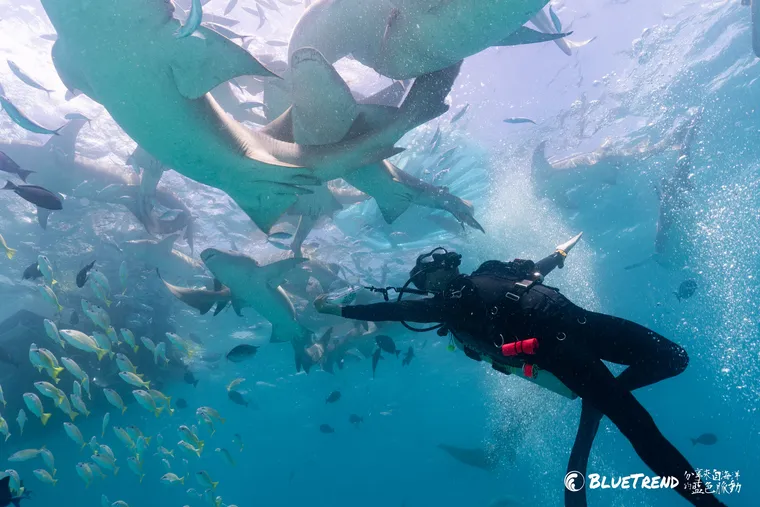
- Photography etiquette (watch where your fins are)
- Air check (unified hand signals); begin the return ascent when below 100 bar
- NDL (no-decompression limit) hand signals; begin ascending to shallower depth with 10 minutes remaining
- Deco stop hand signals, and the reminder that once a decompression obligation is incurred, divers are required to rest for a mandatory 24 hours before diving again
- Air changes during ascent and how to respond
- Five-metre, three-minute safety stop
- Protect your head during ascent; the first thing to do upon surfacing is to fully inflate your BCD
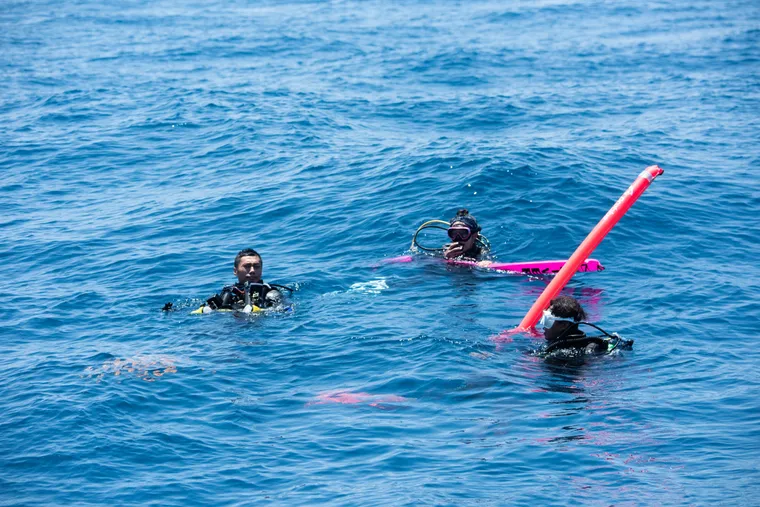
- The entire group congregates near the surface marker buoy (SMB) so the captain can clearly see where divers are surfacing
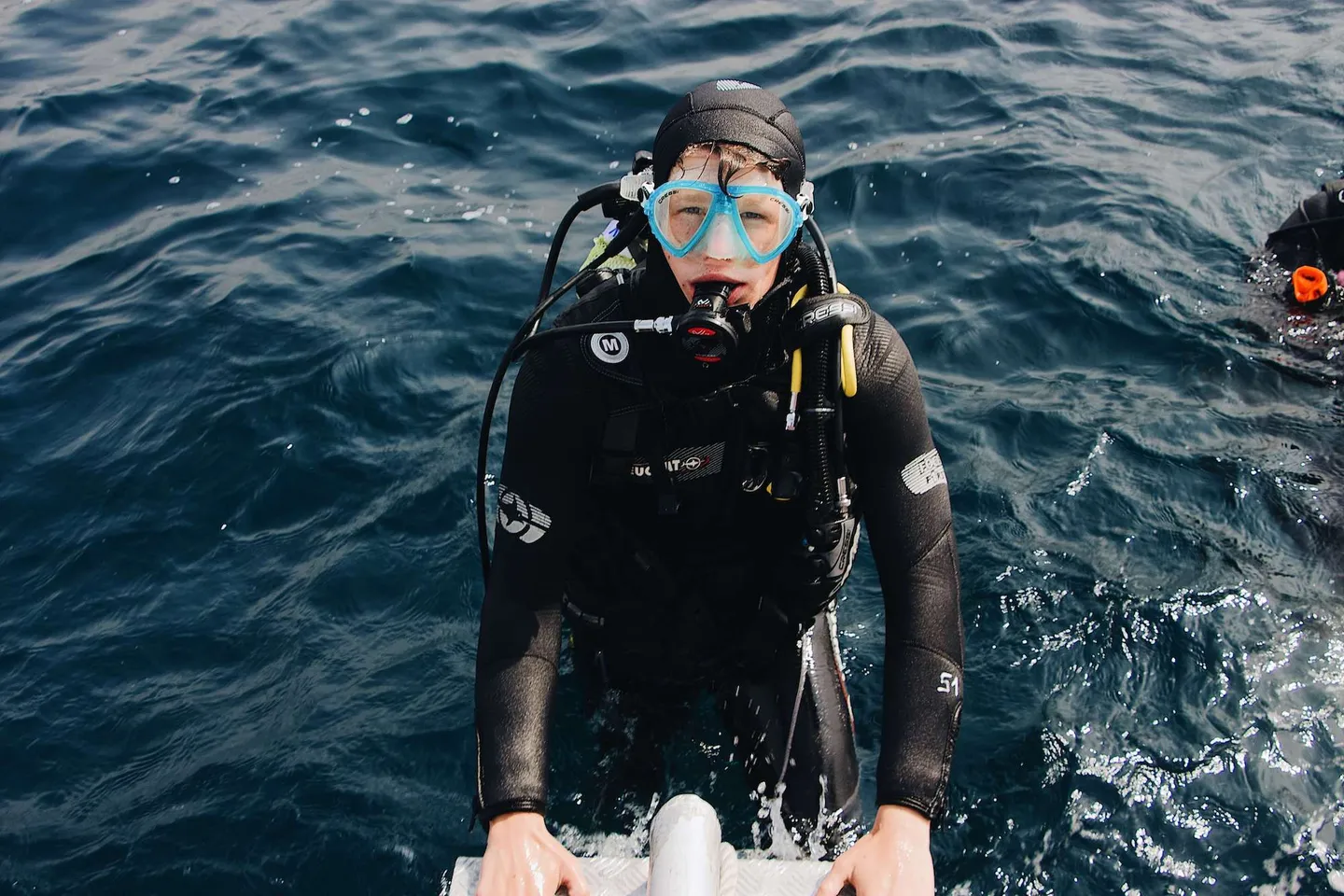
- Technique for climbing the ladder in full scuba gear: hand up the camera first, then remove fins
- Hold the railing and return to your original seat; weights should be stowed under the seat
- Underwater hand signal review (current signals and how to handle currents are rarely covered in Taiwan)
- One-minute emergency procedure
- Emergency recall signal while underwater: three knocks on the ladder, pause, three more knocks, repeated three times
- Drinking alcohol between dives is treated as forfeiting your dives for the remainder of the day
- For 24 hours after diving, avoid jumping into water, freediving, hot spring soaking, and strenuous exercise
(The briefing covers a great deal of ground; content is added or removed based on local regulations. The above is a partial list. If you'd like to hear the full version, you're welcome to join one of our dive trips.)
Some dive shops in Taiwan feel that doing all of this isn't cost-effective in terms of time, but as the leading instructors, if we don't cover something and an incident occurs, the responsibility falls on us. That's why we'd rather spend the extra time laying out the rules clearly — and enforcing them strictly.
Above: Instructor Athena with the captain on one of the liveaboard vessels she worked on abroad.
A recent example: when divers collected their equipment, every diver was reminded to check that their BCD pocket contained a surface marker buoy (SMB). When boarding and assembling gear, each diver was reminded again. Yet at the end of the trip, one diver reported never having received an SMB and was therefore unable to return it. We were sorry to do so, but we still had to charge the loss fee. The briefing had explained everything clearly — if the SMB was never received, why wasn't it raised at the time? The other divers all heard the same briefing, and the fact remains that we were short one SMB.


Real Incidents That Occurred on Instructor-Led Boat Dives:
-
On the surface, divers habitually press down on the dive guide's surface marker buoy (SMB) — and this happens both in Taiwan and abroad, much to Instructor Athena's frustration. While the boat is moving to pick up divers, if your position isn't spotted immediately, everyone ends up waiting longer on the surface. In a worst-case scenario, this poses a genuine threat to life — you could be struck by the hull. A reminder: with your BCD fully inflated, you won't sink, so please do not press down the SMB. Touching the water with your hand won't cause oxygen deprivation or drowning either, so please do not hold down the SMB.
-
When moving around the boat in full gear, always hold the railing — demonstrate this for divers. Never carry a camera while moving around the boat; ask a crew member to help carry it. A diver from Dubai, on the very first dive of his trip, excitedly carried his brand-new large camera housing toward the stern. He lost his footing and, unfortunately, broke his leg. He had to receive medical treatment immediately and ended up flying back to Dubai for surgery the very next day — not having completed a single dive on his first liveaboard.
-
The giant stride entry is something that has to be reinforced again and again. During the briefing, we demonstrate it over and over; on the jump deck, we remind divers once more: "BCD half-inflated, right hand securing the mask, palm protecting the regulator, left hand securing the hose and weight belt, lean your body forward and downward, and take one big stride out." Even so, some divers still don't follow through — leading to a mask falling off upon entry, or divers spreading their arms wide and jumping in like skydivers, increasing the risk of injury.
-
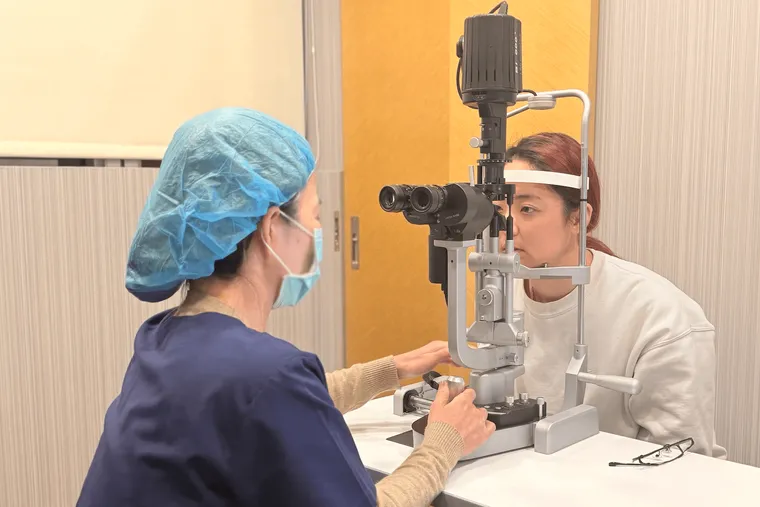
Dive instructors are not doctors. Divers frequently ask instructors whether someone with a detached retina can dive, or why a diver with epilepsy — who has "always been fine in the water before" — needs a doctor's certificate. A common human failing: not leaving specialised questions to specialised medical professionals... and then when a professional (the instructor) offers advice, it's received as shown in the next case.
-
On one boat dive in Kenting, divers were repeatedly reminded not to walk around the boat while wearing their weights, to avoid accidentally dropping them and injuring their feet. Unfortunately, the warnings went unheeded. At least everyone heard the reminder being given — it cannot be said the instructor failed to address it.
-
Divers were reminded that before deploying a delayed surface marker buoy (SMB), they should have the instructor check their steps first before inflating it — this prevents getting tangled in the reel line or rocketing to the surface. Somehow, a diver managed to inflate their SMB far away from the group and shot up to the surface at dolphin speed.
-
On the ladder coming out of the water, if a diver is above you, never position yourself directly below. Yet some divers still cannot follow the instructor's guidance. Seriously — if a falling scuba tank were to crack your skull open, how could Instructor Athena ever make it up to the mother who worked so hard to bring you into this world? Every time, the instructor risks their own safety to pull people to safety.
-
On one occasion at Green Island, it was strongly emphasised — repeatedly — that divers must never grip the ladder and remove their fins when there are waves. One particular diver insisted this posed no danger and that it was actually a more stable way to remove their fins. A wave came, and the surge brought the ladder close enough to nearly strike the diver's shoulder. Instinctively pulling the diver back caused Instructor Athena to suffer a pelvic injury. What was most upsetting was that the diver not only offered no word of thanks but went on to accuse the instructor of lacking boat diving experience and knowing less about exit procedures — claiming that was the reason she had been "hit by the ladder."
-
Propellers are dangerous. Even so, there are still divers who, upon hearing a boat passing overhead, show no situational awareness and don't release a little air from their BCD to descend slightly. Watching from beside them is enough to make your blood run cold.
Overseas, a dive guide is neither a babysitter nor a bodyguard — they are ocean guardians who lead divers on an underwater tour. If a diver's skill level isn't up to standard, the responsibility lies with the certifying instructor. If a diver floats upward, the guide's job is to deploy the SMB to prevent the diver from being struck by a boat — the guide has no obligation to chase after them and haul them back down. This situation even prompted one British liveaboard supervisor to write to PADI (certification agency) QA, questioning why an instructor had issued a certification to a diver whose skills were clearly below the required standard.
This article is not written to blame anyone, but rather to encourage the entire diving community to reflect together on how Taiwan's diving culture can keep pace with international standards — and to discuss how boat dive risk management can be improved to avoid danger and minimise harm.
Special thanks to the liveaboard operators in the Philippines, Thailand, and Palau for giving Instructor Athena such invaluable work experience, and to all the divers and dive shops who were patient enough to accept our insistence on skill-based grouping for boat dives and the requirement to attend a safety briefing before entering the water. With everyone's cooperation and shared commitment to following dive protocols — we dive easy.
Related links: