Contents(4)
Bob Hollis is a legend in the history of diving. Many of the products and concepts that divers take for granted today can be traced back to him. Yet many newer divers know little about this pivotal figure. BlueTrend hopes that through this article, more people will come to understand the man who helped steer modern scuba diving — Bob Hollis.
The Life of Bob Hollis
Bob Hollis was born in California and grew up in Orland, where he spent his early years. From a young age he was fascinated by all things mechanical — he built his own motorcycle at twelve and bought his first car at fourteen. But when did he first encounter diving? In early 1956 he read an article in a popular mechanics magazine describing how to build an underwater motorized vehicle, and from that moment on he was captivated by the idea of constructing devices for use underwater. As luck would have it, a few weeks later he spotted an advertisement in a newspaper for a Healthways double-hose regulator. He immediately called the shop (Howard Steel), struck up a friendship with the owner, and went on to purchase a mask, fins, and the other gear he needed to get started. Divers were a rare breed back then, and Howard Steel suggested he explore freediving before moving on to scuba diving. So Hollis headed to northern California to go fishing and harvest abalone, forging some lasting friendships along the way. A few months later he began diving in Monterey — without having taken a single formal training course. All he remembered being told was:
Diving is easy; you need to see, breathe and move.
In the autumn of 1956 he and a group of friends traveled to Mexico for a dive trip — his first time venturing beyond the familiar waters of Monterey and Carmel. They rented a small boat in a town called San Carlos, where a local air compressor could fill their scuba tanks / cylinders. He even built an underwater housing for his 8mm video camera specifically for the trip. He spent three months in San Carlos. On one particularly memorable dive, he and his dive buddy pushed their personal limits, freediving to beyond 70 feet and successfully spearfishing a yellowtail — a very different experience from the bottom-dwelling catch he was used to in northern California. And throughout those dives, his homemade camera housing performed exactly as intended. After that trip, he was more determined than ever to make diving a serious pursuit.


The Rise of Diving Equipment
After his first dives in 1956, Hollis developed a deep passion for underwater photography. The books of Hans Hass became a source of inspiration for his own shooting and adventures, as he wanted to share the underwater world as he saw it through the lens of a camera. He later dived alongside underwater photographers Helmut and Karl Stellrecht in San Jose, and together they designed a wide variety of underwater housings, external strobe configurations, and other accessories. Bob Hollis later described this as "an exciting period of time for me," because they could experiment continuously with different types of camera equipment and keep pushing the boundaries of development. It was during this time that they began exploring the use of O-rings and Plexiglas to construct their own housings. It was also during this period that Hollis came to realize just how extraordinarily difficult it is to successfully develop electronic equipment that can interconnect and function reliably in seawater. As they produced more and more housings and strobe accessories, inquiries poured in from people wanting to know where they could buy these specialized devices. So Hollis and his partner Helmut Stellrecht began helping other divers build housings and accessories.
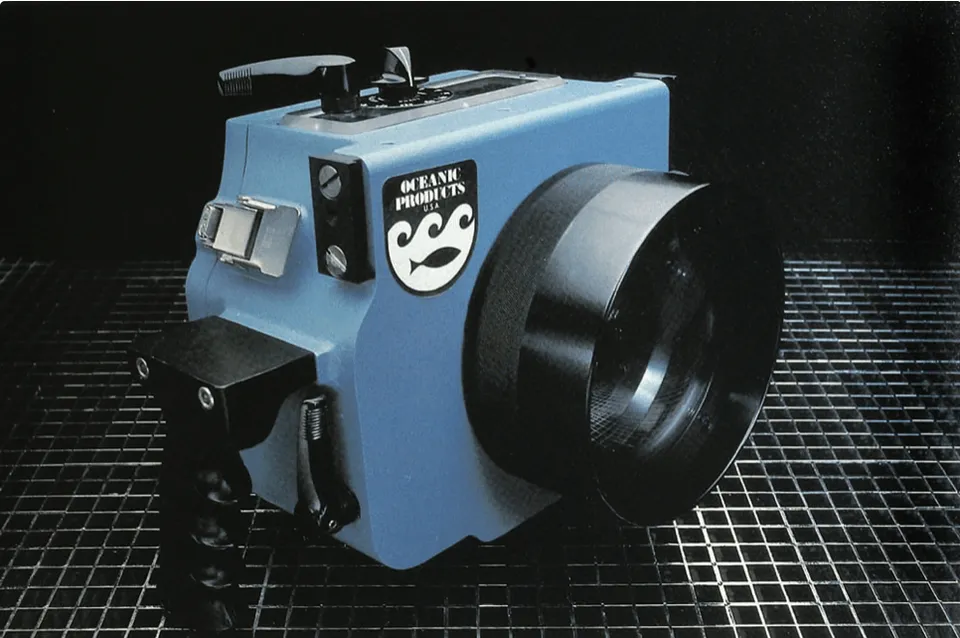
His love of underwater photography led him and Ed Cummins to co-found the Northern California Chapter of the Underwater Photographic Society (NCUPS) in 1962, an organization that remains very active to this day.
The spirit of exploration, however, never stopped stirring inside him. One particularly memorable tale from a dive trip to Mexico's Yucatán Peninsula is the accidental discovery of cannons from a sunken ship. After local fishermen in Mexico's Chinchorro reported spotting wreckage, Hollis and his team spent a full day searching those shark-filled waters. They finally located signs of man-made structures, and after carefully searching for 30 minutes, they discovered six 15th-century cannons resting on the seafloor — an astonishing find for any diver.
In 1964, Bob Hollis decided to turn his passion for diving into a commercial venture. His first shop was called Anchor Shack and operated primarily as a surf shop, with dive equipment sales as a secondary revenue stream; it formally opened in 1965. He later set up a small workshop at the back of the store, taking orders for custom-built underwater housings. As his development capabilities grew, so did his sales, and in 1969 he opened a second location in Concord.
The World's First Dive Computer
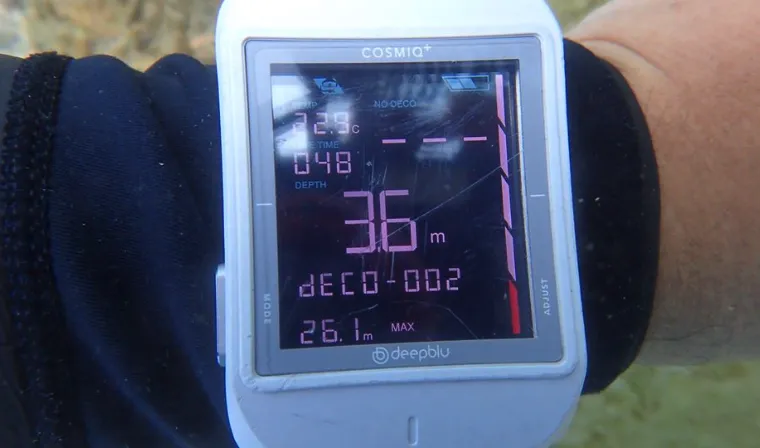
As the business expanded, Bob Hollis grew his small operation into a vast diving empire, encompassing brands well known to divers everywhere — Oceanic, Hollis, and Aeris — producing all manner of dive equipment. Bob Hollis was personally involved in the development of the world's first dive computer, which was delivered to NASA in 1987 and commercially launched the following year.
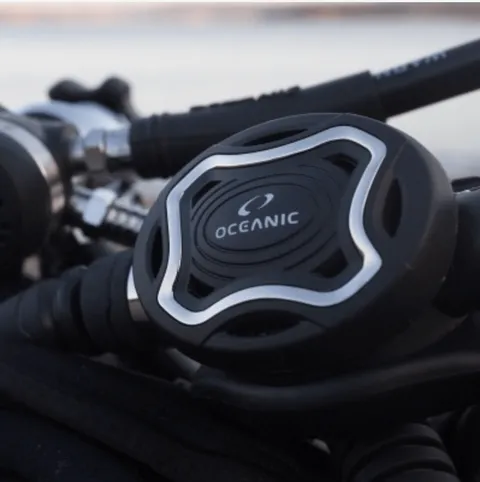
Oceanic is renowned for its high-quality, highly reliable regulators
Beyond his industry-leading expertise in hardware manufacturing, Hollis also devoted his later years to developing the dive travel market, including the operation of exotic island resorts and premium liveaboards. His vast experience earned him multiple terms as a board member and chairman of DEMA SHOW — the world's largest annual dive trade exhibition, held each year in the United States.
Bob Hollis's Experience Visiting Taiwan
For more of Bob Hollis's remarkable diving stories and the business adventures he encountered while building his diving empire, refer to TDI/SDI's dedicated feature. We were delighted that Bob Hollis visited Taiwan in early 2019, and the Editor had the privilege of a brief meeting with him to discuss the opportunities and challenges facing Taiwan's diving industry. We hope to draw on his wealth of experience to help the Chinese-speaking world's emerging dive industry develop in a positive direction.
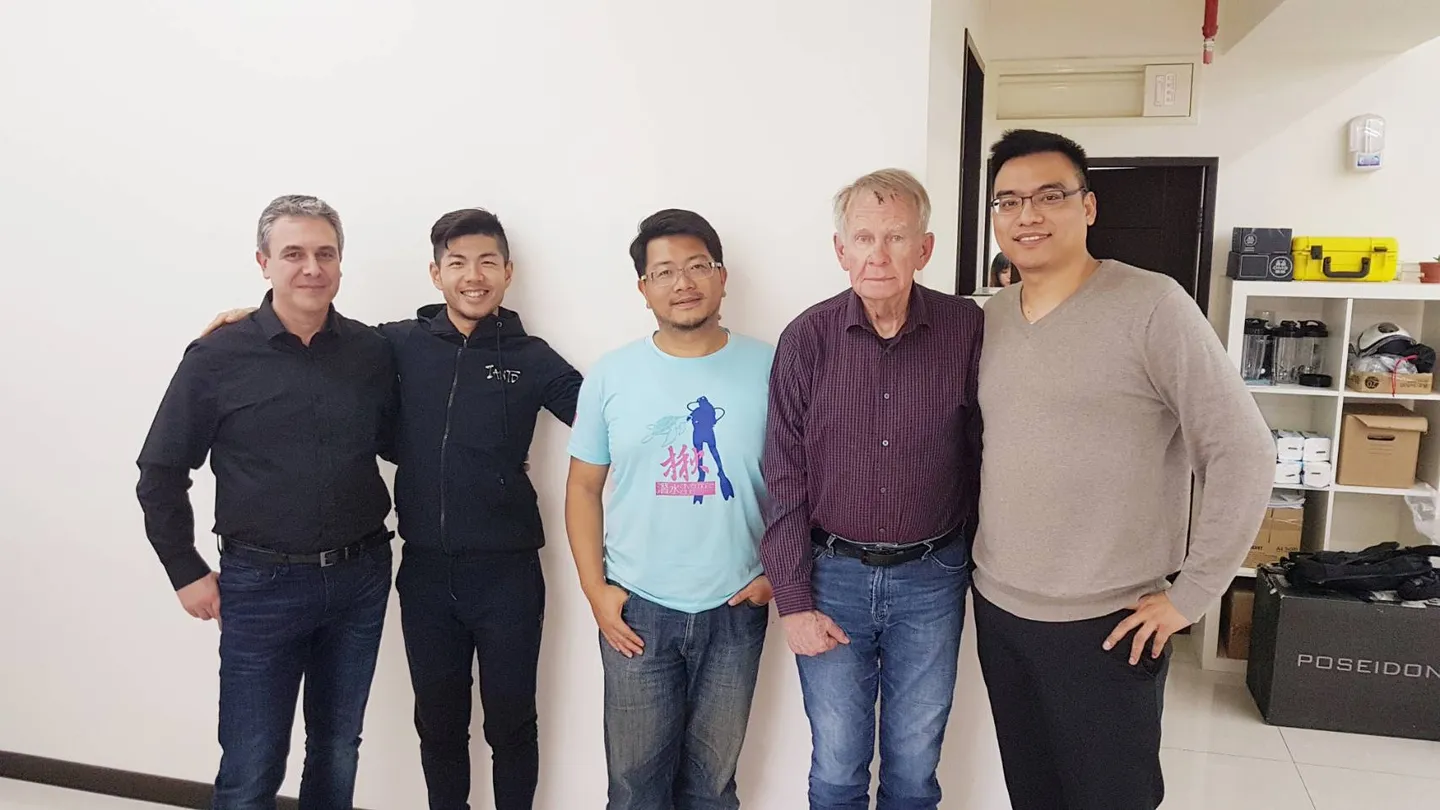
The Editor, along with other industry veterans, meeting with Bob Hollis in 2019
Bob Hollis noted that Taiwan actually has decades of OEM manufacturing experience in dive equipment — including wetsuits, regulators, and BCDs — and that Oceanic itself has worked with Taiwanese manufacturers for 30 years. The accumulated craftsmanship and quality standards are world-leading, and Taiwan is well-positioned to begin building its own brands sooner rather than later. Looking at the explosive dive equipment market of the next decade, Bob Hollis believes that on the hardware side, the focus will be on the integration of dive gear with electronics — for example, Scubapro has developed a mask with a heads-up display that projects dive computer data directly onto the lens. In terms of derived functionality, many dive computers can now be paired with a smartphone's GPS and interact with apps, turning individual dive data into something systematic and digital — and extending the dive experience into online communities for further reach. The integration of BCDs with electronics may also be a future possibility. Another hardware frontier is the rebreather: although the price point still places it out of reach for most recreational consumers, it will undoubtedly carve out its own niche and offer divers a fundamentally different experience.
Beyond hardware manufacturing, the dive travel market is also set to flourish. Before people learn to dive, most only plan conventional tourist itineraries (most Taiwanese, for instance, tend to visit Japan or Korea). Through diving, you have the opportunity to visit exotic islands you would never otherwise discover — and once you venture into technical diving, you can add wreck diving, cave diving, ice diving, and other milestones to your life's list of achievements. Bob Hollis therefore believes that within the next decade, many more undiscovered resorts and liveaboard itineraries will be developed and added to travellers' bucket lists worldwide.
Bob Hollis also observed that diving, unlike sports such as baseball or golf, cannot be easily broadcast to create fan engagement. This is a fundamental weakness: the sport cannot generate stars or generate public buzz in the same way, which is why the diving industry has never expanded as rapidly as other sports. At the same time, the reality of watching the underwater environment slowly lose its vitality due to human destruction is undeniable. Bob Hollis therefore hopes that in the future, influencers can be cultivated to raise public awareness of environmental issues. With social media platforms such as Facebook and Instagram now reaching enormous audiences, anyone who puts in the effort can become a voice of influence — but never forget to keep the ocean at the heart of the message.
When it comes to promoting marine conservation, few industries are as effective as dive tourism, because it can genuinely improve fishing-village economies, raise local living standards, and inspire people to care more deeply about the ocean — though it also carries the risk of damaging the very ecosystems it celebrates, and that balance must be carefully managed. Bob Hollis believes that governments play a critical role in advancing marine issues. Egypt's Red Sea possesses outstanding natural resources, yet the local government needs to step up and champion its protection. The Ecuadorian government faces serious financial constraints, yet holds stewardship over the Galápagos — diving's holy grail. And the notorious Asian shark-finning fleets, if granted government permission to operate, could devastate a local marine ecosystem in the blink of an eye. So the pathway forward may be for influencers to lead the call, build social pressure, and ultimately move governments to legislate for marine conservation — perhaps the guiding principle for ocean protection over the next decade. Beyond marine ecosystem conservation, Bob Hollis is also deeply concerned about the issue of plastic marine debris. This, however, is a transnational problem that no individual or single country can fully resolve alone. Perhaps the most urgent priority right now is simply to awaken the public's concern for the ocean.
Bob Hollis has entered his eighties. His businesses — including Hollis and the Tawali liveaboard — have been handed over to his children to run, yet he insists he has no intention of retiring. For him, diving has always been one endless, unceasing adventure.
Bob Hollis: There is much to do and so little time.
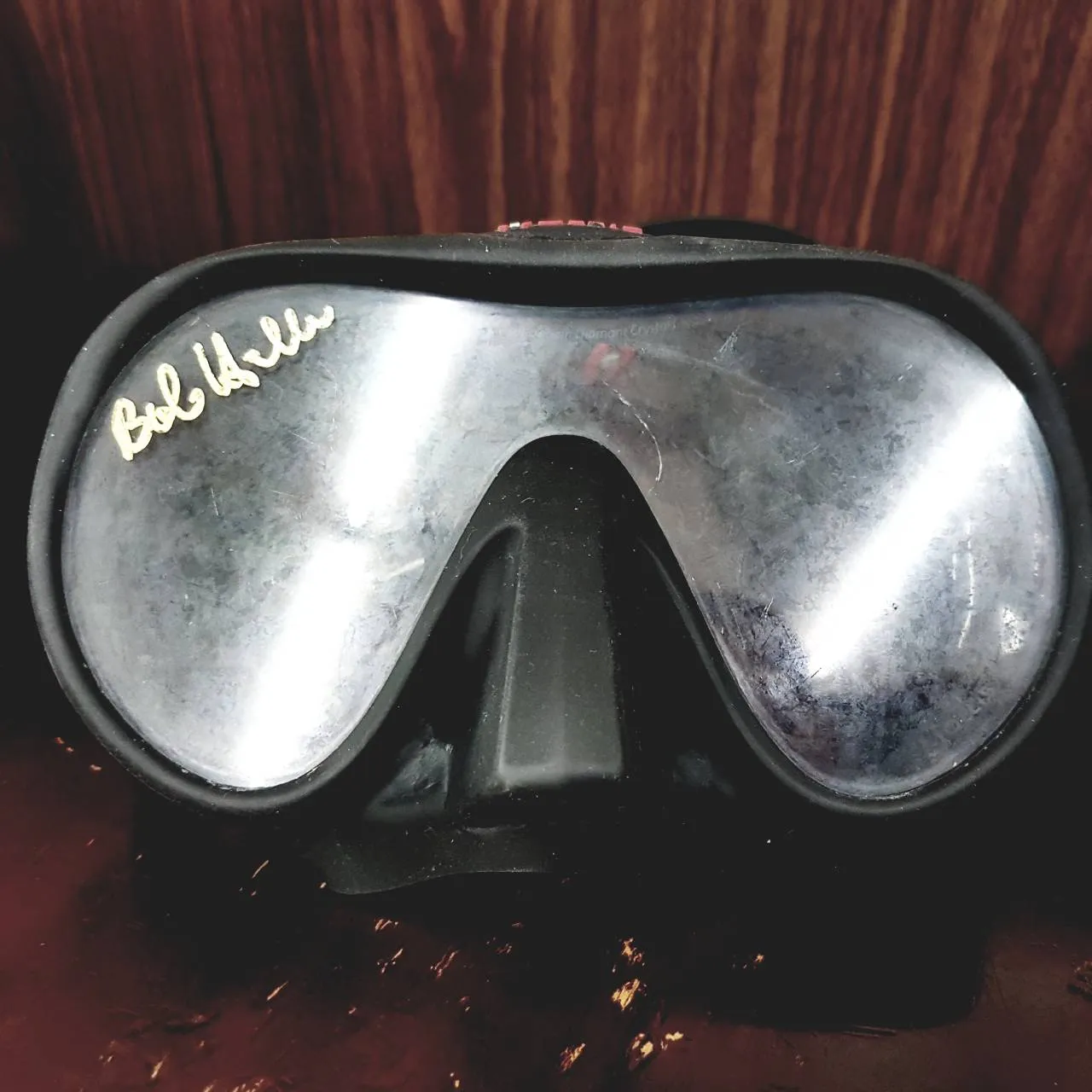
The Editor was thrilled to receive a mask personally signed by Bob Hollis — may it carry his blessing forward as we continue working for the ocean!
Article references:
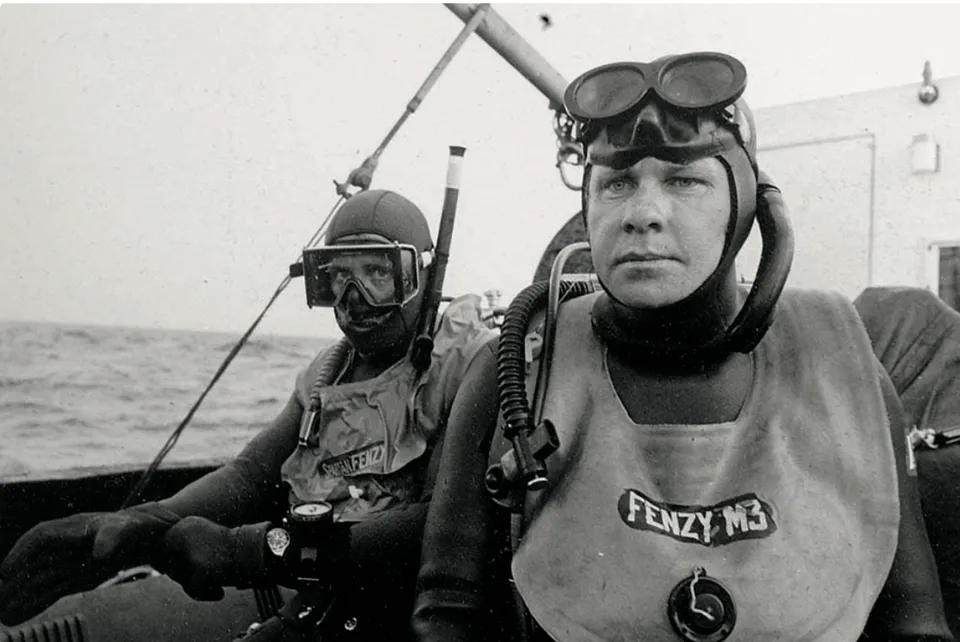
Cover image source: TDI/SDI : Bob Hollis - Founder of OCENIC, Andrea Doria pioneer and resort innovator.(by Bret Gilliam) photo by Bernie Campoli