Contents(4)
- The EU's PPWR Becomes Law: Global Food Packaging Moves from Voluntary Targets to a Compliance Era
- Taiwan's First Civil Society Task Force for Food Packaging Circularity Launches — 30 Organisations and KOLs Respond to the Call
- Taiwan Bottle to Bottle Annual Work Report Released — Two Key Milestones and Three Action Plans Unveiled
- Further Reading
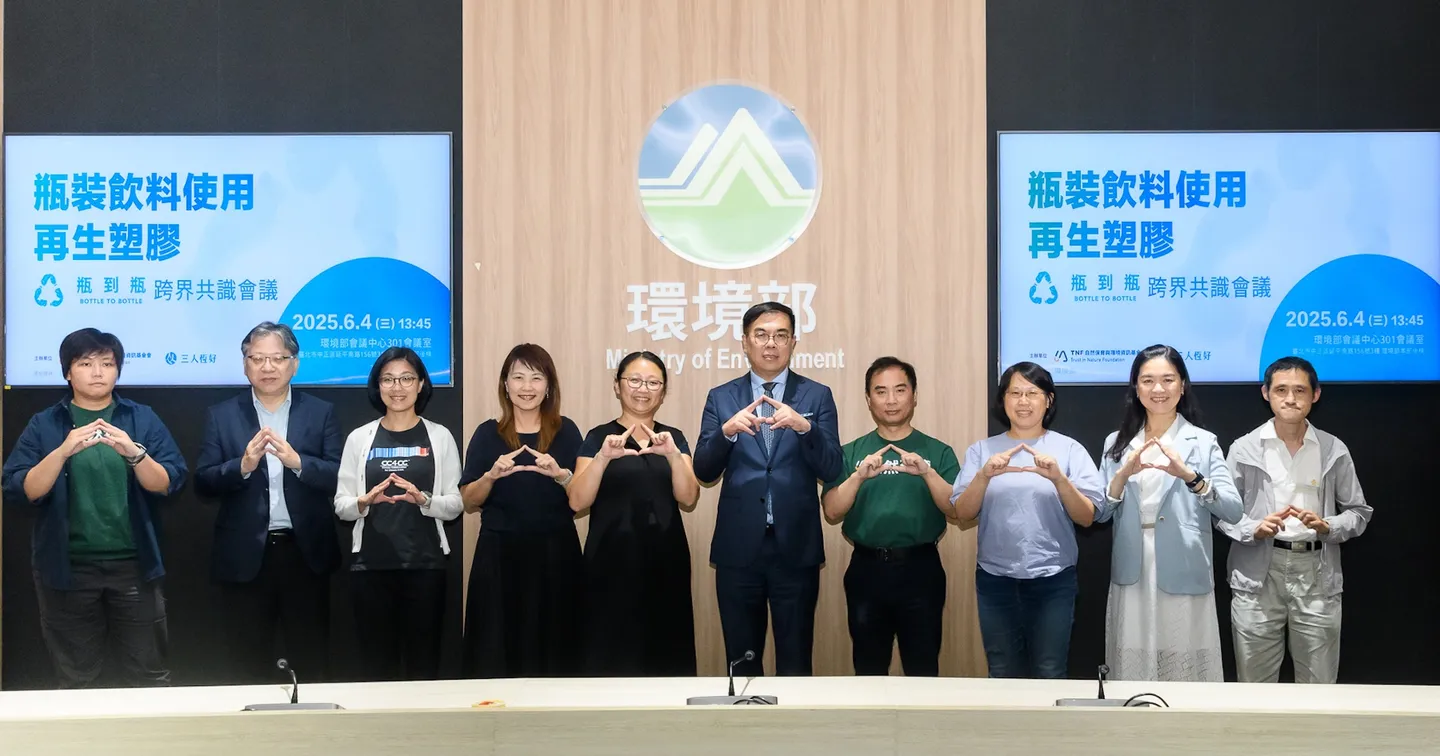
The "Bottle to Bottle Cross-Sector Consensus Forum" brought together the Environmental Protection Administration's Resources Circulation Administration, the Ministry of Health and Welfare's Food and Drug Administration, and four participating organisations to jointly share insights on "rPET: Taiwan's Current Landscape and Practice." Through retail-channel implementation, advocacy strategies, and cross-sector collaboration, the forum aims to accelerate the real-world application of rPET in everyday consumer goods, building social consensus and an actionable roadmap for the development of circular packaging.
Taiwan's PET bottle recycling rate stands at a remarkable 95%, placing it among the global leaders. Coupled with mature processing technology for recycled PET plastic (rPET), Taiwan has the capacity for mass production of food-grade recycled packaging materials. To drive the beverage industry toward a faster circular transition, the "Bottle to Bottle" task force — co-initiated by the Foundation of Nature Conservation and Environmental Information and San Ren Heng Hao — officially launched on the eve of World Environment Day. It is Taiwan's first civil society task force dedicated to promoting circular food packaging. Simultaneously, the group released the Taiwan Bottle to Bottle Annual Work Report, setting a concrete target: to push Taiwan's beverage producers to achieve 30% recycled plastic content in PET bottles by 2030, putting into practice the social mission of "reducing virgin plastic and realising circular recycling."
The EU's PPWR Becomes Law: Global Food Packaging Moves from Voluntary Targets to a Compliance Era
As plastic pollution worsens globally, the European Union confirmed and published the draft text of the Packaging and Packaging Waste Regulation (PPWR) in February 2025. The new rules stipulate that PET bottles must contain at least 25% rPET from 2025, rising to 30% by 2030 and further to 65% by 2040 — a clear signal that the EU has enshrined rPET use as a long-term statutory requirement. Beyond PET bottles, other single-use plastic packaging such as boxes and bags will also be brought under the regulation, marking the formal transition of food recycled packaging from voluntary adoption to legal compliance.
In fact, globally renowned mineral water brands such as evian, FIJI Water, and Volvic, as well as beverage and food industry giants including Coca-Cola, Nestlé, PepsiCo, and Japan's Suntory Group, have been progressively launching rPET commitments and targets since as early as 2018 [Note], demonstrating that the shift from virgin plastic to circular recycling requires long-term preparation. If Taiwan is to align with international trends and realise a circular economy centred on reducing plastic and waste, it must accelerate the production transition of food and beverage packaging.


Taiwan's First Civil Society Task Force for Food Packaging Circularity Launches — 30 Organisations and KOLs Respond to the Call
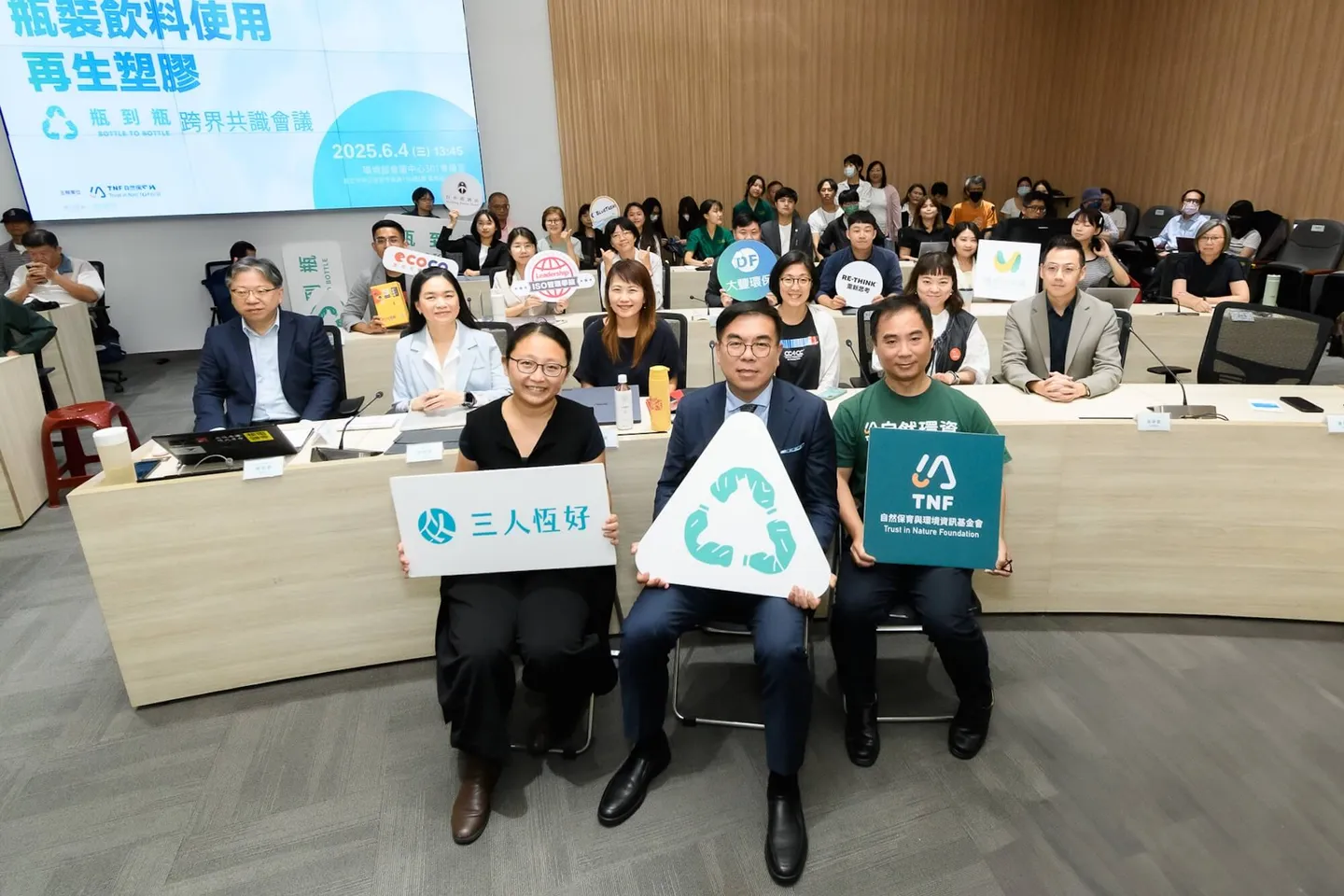
The Bottle to Bottle project received over 300 individual signatures and advocacy support from 30 organisations and KOLs. Representatives from multiple sectors gathered together, demonstrating the cross-sector resolve of Taiwan's civil society to unite and drive plastic-reduction transformation.
In response to the global trend toward plastic reduction, the "Bottle to Bottle" task force — co-initiated by the Foundation of Nature Conservation and Environmental Information and San Ren Heng Hao — officially launched on the eve of World Environment Day. It is Taiwan's first civil society advocacy platform dedicated to promoting circular food packaging, providing momentum for the 2030 plastic-reduction target. Project lead Chen Ruei-bin stated: "The Bottle to Bottle Task Force will be committed to pushing Taiwan's beverage producers to achieve 30% recycled plastic content in PET bottles by 2030." The hope is that industry will take concrete action to reduce environmental pollution and ecological crisis.
The "Bottle to Bottle" project had no sooner launched than it received over 300 individual signatures and advocacy support from 30 organisations and KOLs. Participants included celebrity KOLs (Wu Yi-pei, Lin Yi, Wang Xuan-ru), civic organisations (Citizen of the Earth Foundation, RE-THINK, 5% Design Action|Earth Solution, Accelerate Plastic Reduction, Hai Yong Studio, Taiwan Environmental Protection Union), expert institutions (KPMG, Circular Taiwan Foundation, CRIF, YouOK Sustainability, Leadership Management, the Social Enterprise Center of the College of Management at National Taichung University of Education, Chien Hsin University of Science and Technology Marine Sustainability Environmental Education Studio), industry and retail partners (Carrefour, Taichung Port Hotel, Dafeng Environmental Protection, Muli mooni, Badou Eco-Friendly Restaurant), social startups (Greenvines, Clean Poison No. 5, Mi Ai Lin Studio, BlueTrend, Phytoils, Package Plus, Slash Studio), and B Corporations (Taiwan Diving, Environment-Friendly Seed), among many others. The forum was held at the Ministry of Environment's premises, showcasing the cross-sector resolve of Taiwan's civil society to unite and drive plastic-reduction transformation.
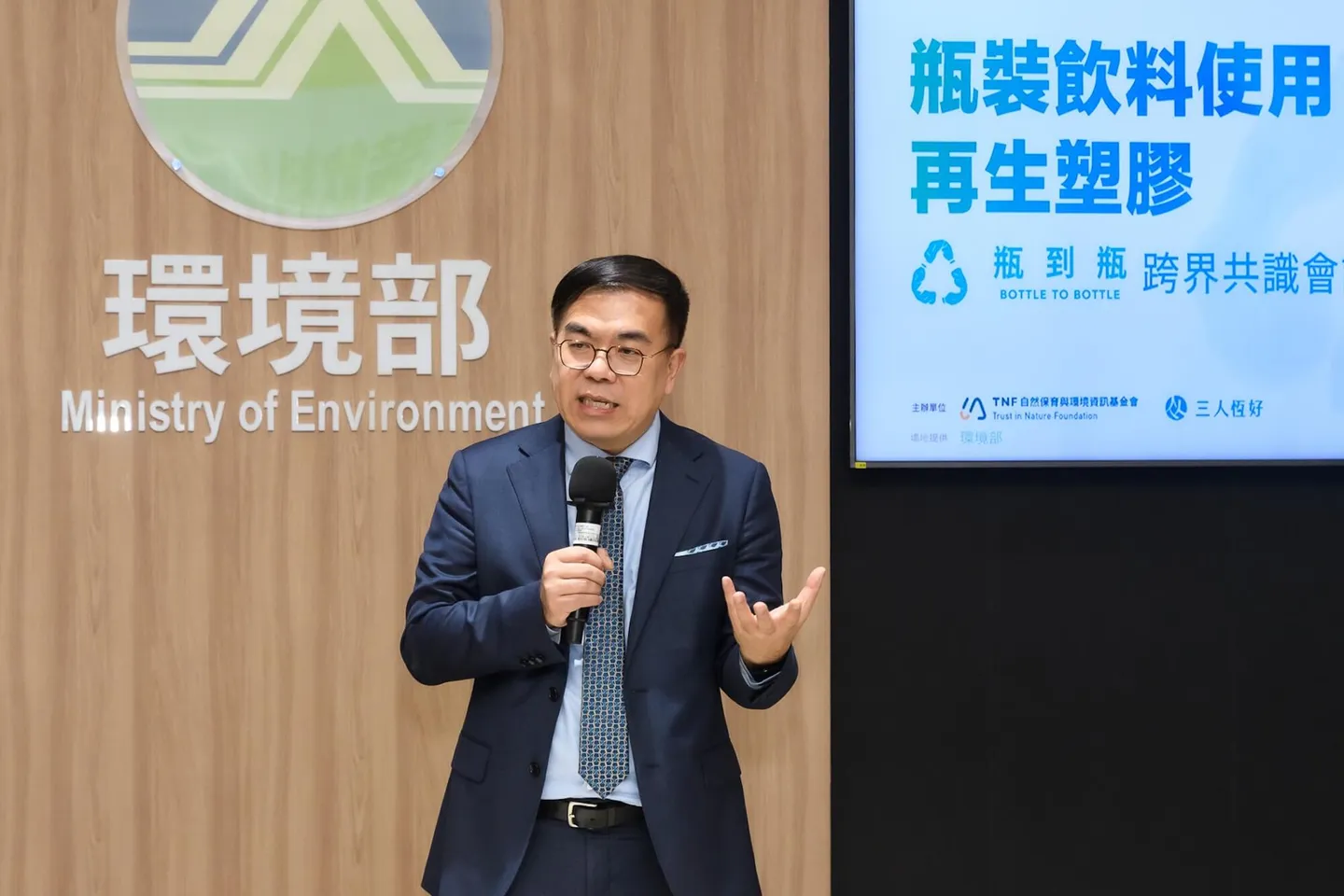
Minister Peng Chi-ming stated in his opening remarks: "Taiwan's PET bottle recycling rate has reached 95%, creating favourable conditions for promoting food-grade circular packaging. Through cross-ministerial cooperation and collaboration with civil society organisations, we hope to advance the 'Bottle to Bottle' initiative and establish a new model of sustainable action."
Minister Peng Chi-ming stated in his opening remarks: "Taiwan's PET bottle recycling rate has reached 95%, creating favourable conditions for promoting food-grade circular packaging. Through cross-ministerial cooperation and collaboration with civil society organisations, we hope to advance the 'Bottle to Bottle' initiative and establish a new model of sustainable action — one that achieves both environmental and economic benefits through a circular economy. The Ministry of Environment will also strengthen institutional support and clarify responsibilities through relevant regulatory amendments, helping all sectors collectively put the 'Bottle to Bottle' initiative into practice."
The "Bottle to Bottle Cross-Sector Consensus Forum" was structured around two major dialogue themes. In Dialogue One, rPET: Taiwan's Current Landscape, guests included Hsu Chih-lun, Deputy Director-General of the Environmental Protection Administration's Resources Circulation Administration; Chou Pei-ju, Senior Technical Specialist of the Ministry of Health and Welfare's Food and Drug Administration; and Peng Kuei-chih, Chairperson of the Homemakers United Foundation Consumer Co-operative. Together they examined policy formulation, food-grade safety standards, and brand application, offering a comprehensive analysis of the current state and challenges facing the promotion of food-grade rPET in Taiwan. Dialogue Two, Accelerating rPET in Practice, featured Su Hsiao-chen, Chief Sustainability Officer of Carrefour Taiwan; Chen Hui-lin, Executive Director of the Circular Taiwan Foundation; and Hsieh Ho-lin, Secretary-General of the Taiwan Watch Association. They shared how retail-channel implementation, advocacy strategies, and cross-sector collaboration can accelerate the real-world application of rPET in everyday consumer goods, building social consensus and an actionable roadmap for circular packaging development.
Taiwan Bottle to Bottle Annual Work Report Released — Two Key Milestones and Three Action Plans Unveiled
This year, Taiwan's Bottle to Bottle movement has already achieved two key milestones: first, the Homemakers United Foundation Consumer Co-operative launched Taiwan's first red oolong tea beverage to achieve a 30% rPET ratio, pioneering a demonstration of food-grade recycled plastic's potential in the tea beverage market; second, packaging manufacturer Honchuan International Group made a voluntary commitment to progressively increase the proportion of rPET used in bottles for its European and American brands between 2024 and 2028 — a development that highlights Taiwan's opportunity to build a food circular packaging industry system in Asia.
In 2023, Taiwan completed the establishment of food-grade rPET regulations, including the Ministry of Health and Welfare's announcement of approved food-grade rPET raw material suppliers, benchmarked against EU and US safety standards for food-contact packaging materials; the Ministry of Environment also published its management rules for recycling and reuse. Bottle to Bottle co-project lead Liu Hsiao-jung stated: "Civil society consensus requires continuous momentum. The Taiwan Bottle to Bottle Annual Work Report puts forward three key actions: holding 10 'Circular Gatherings' before the end of 2025, launching a seed teacher recruitment and touring education programme in Q3, and mobilising more civil society participants to sign the 'Bottle to Bottle' pledge" — laying a practical foundation for circular recycling.
Further Reading