Contents(3)
When I was learning to dive at Yachao Diving Club, they had set up a club structure where senior members and instructors would take us to explore different dive sites based on our level. For us, Mosquito Pit was just like the beginner's village in an online RPG — it's where we started fighting monsters (encountering marine life) and leveling up (training our neutral buoyancy).
About the Entry and Exit Points at Mosquito Pit
The site is located roughly halfway between Longdong South Mouth Park and the Hemei community, at the 83.9K marker. You can spot a gap in the guardrail on the left side of the road; head downhill to the T-junction, turn left and follow the road all the way to the nine-hole pool, which marks the entry point (geographic information sourced from Northeast Coast Divers Inn https://inn.divers.com.tw/hello-world/).
Mosquito Pit doesn't offer breathtaking underwater spectacles. What it does have are adorable Clownfish, common scorpionfish, and colorful schools of small fish. It distills the charming, small-scale marine life most commonly found in Longdong Bay into one compact, utterly endearing dive site. No matter when we dive here, the life we encounter is always vibrant and full of energy.
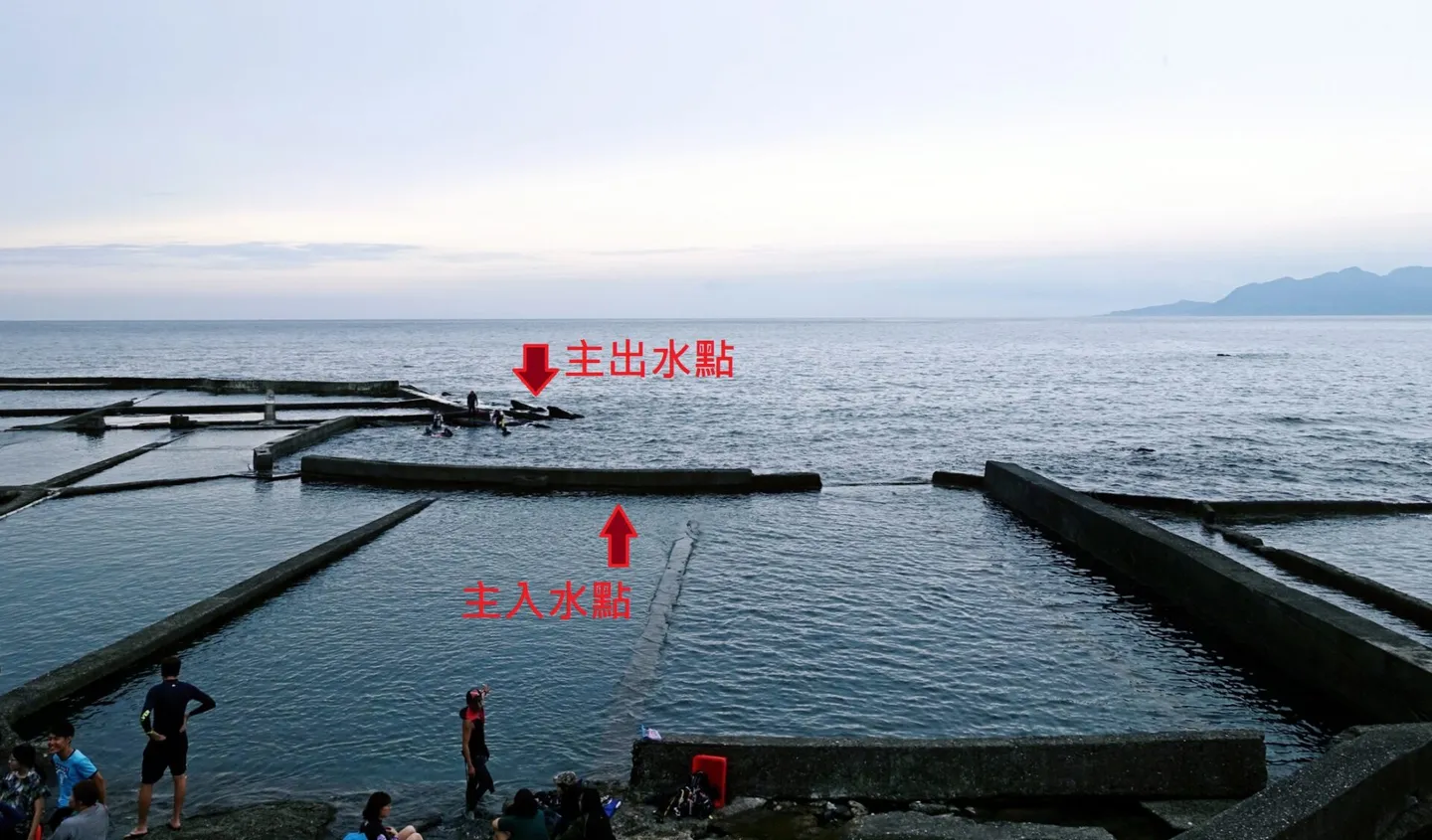
The entry and exit point at Mosquito Pit
Mosquito Pit has three dive routes. The photo above shows the main entry and exit point. For detailed route information, please refer to the map drawn by senior diver Ko Chuan: https://reurl.cc/mdeN5A
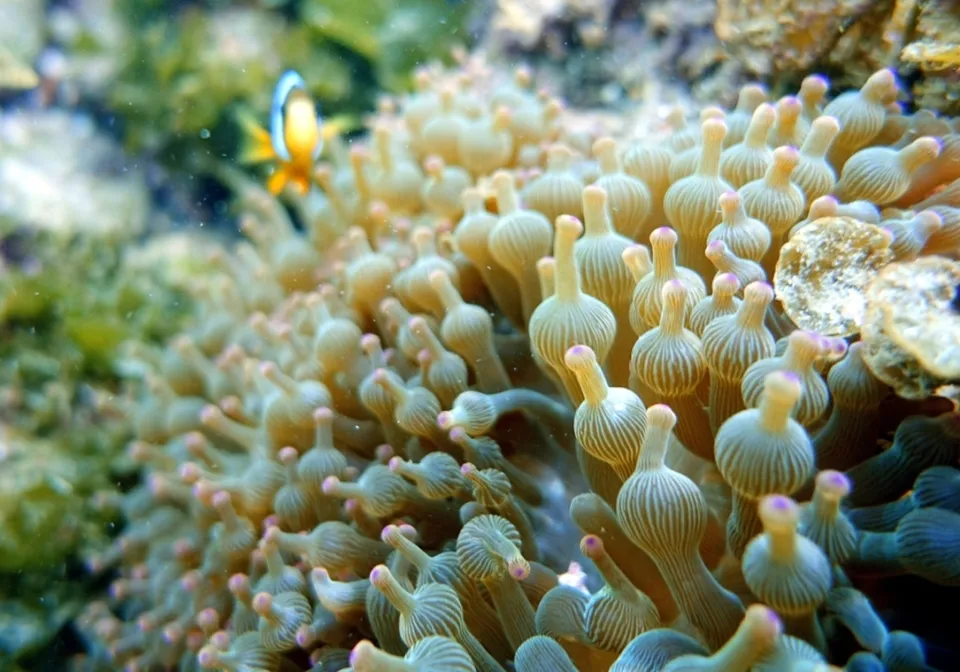
After entering from the main entry point and swimming in at a 120-degree bearing, you'll reach the site's most iconic feature — the "Fish Feeding Area." This is a large reef rock covered in coral, where colorful schools of fish of all kinds gather among swaying coral branches. And of course, the ever-popular Clownfish (Nemo) are there in abundance.
Whenever Instructor Ah-Da brought us newbies down to Mosquito Pit, his favorite move was to line us up along the reef — one person per spot, like radishes planted in a row — and take photos of us. It gave the whole thing a very "try dive" feel, with a kind of wholesome, first-timer naivety about it. And truthfully, we really were green back then. We didn't know a thing about marine life, and every skill was still a work in progress. Even so, the Fish Feeding Area was more than enough to blow my mind. I couldn't take my eyes off it every single time — I always wanted to stay a little longer, to watch how the Clownfish lived their lives there, and to find out what else was hiding beneath the sea anemones.
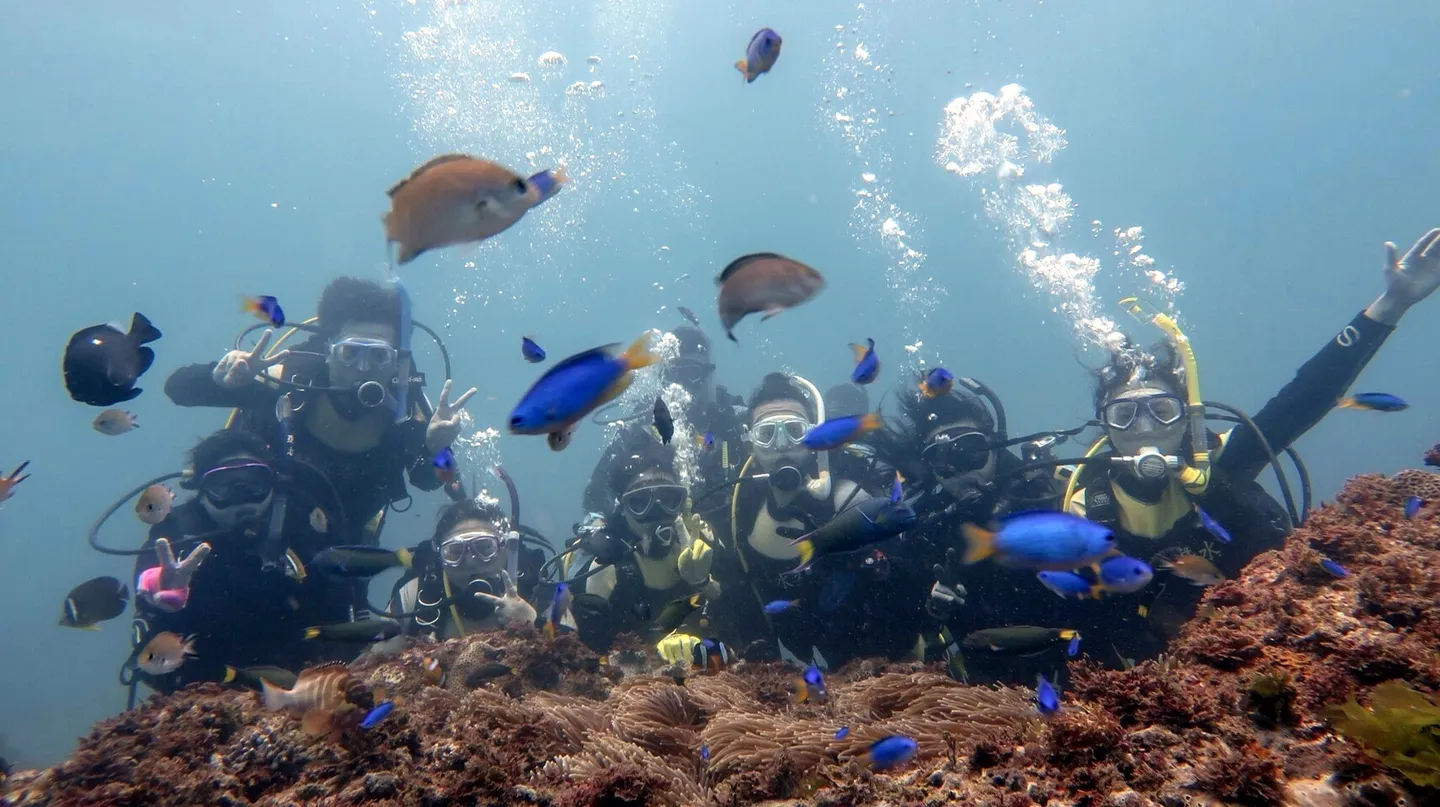
8 July 2018 — the instructor took a commemorative photo of us newbies at the Fish Feeding Area


Mosquito Pit: A Must-Visit Northeast Coast Dive Site for Beginners
Whether it's because I spent my beginner days here, or simply because Mosquito Pit is easier to enter and exit than most other sites — with a maximum dive depth of just over 10 m — diving here always feels especially reassuring. Even the marine life you encounter feels particularly approachable, and you get the sense that they feel the same way about you.
I remember once when the instructor took us to look for cleaner shrimp. One little creature actually hopped onto the instructor and started doing its cleaning work, then made its way along our outstretched arms one by one. Instructor Ah-Da told us: "Among all the cleaner shrimp at Mosquito Pit, this one is the least afraid of people. It'll groom you — you just have to find it first." That fearless little cleaner shrimp was already fascinating enough to me, but what I found even more remarkable was how Instructor Ah-Da could tell that particular cleaner shrimp apart from all the others… Because to me, every cleaner shrimp looks exactly the same!
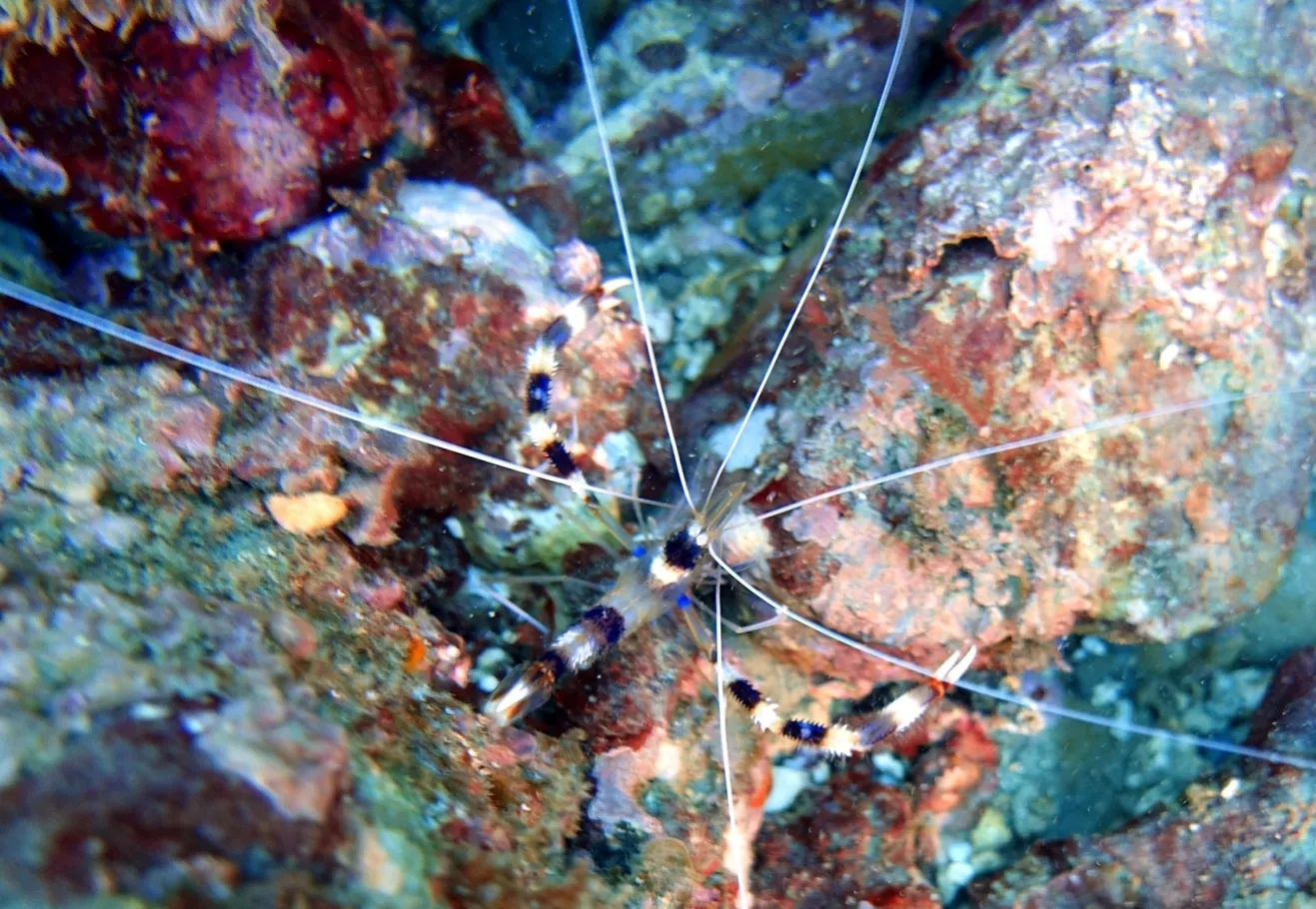
To me, every cleaner shrimp looks exactly the same
Same Mosquito Pit, Very Different Dive Guide Styles
Setting aside that unsolvable mystery — since many club members serve as dive guides at Mosquito Pit, we had the chance to dive with a range of different guides. Each brought their own style, and from each one, we learned and saw something different.
Take Instructor Ah-Da, for example. Whether on land or underwater, he constantly reminded us to refine our diving technique, maintain good neutral buoyancy, avoid disturbing the marine ecosystem, and always keep safety in mind — for us and for them. Through Ah-Da, I learned the art of diving in harmony with the ocean.
Eagle-Eye Ah-Jia had a knack for spotting marine critters that were doing an excellent job of hiding: camouflaged crabs tucked away in plain sight, Frogfish pretending to be rocks, and all manner of gorgeous nudibranchs. Through Ah-Jia, we discovered the sheer splendor of the underwater world.
Shell guru James made sure we never walked past something rare without noticing it. I remember a dive in 2018 when James was guiding. He pointed at a red coral and was very insistent that I look closely. I really gave it my all — stared with everything I had — but all I could see was red coral. I even thought maybe he wanted me to appreciate its structure and beauty.
Fortunately, James had his camera with him. Back on shore, he showed us the photos and explained: "This is a Mitra mitra (Episcopal Miter shell). It averages between 13 and 57 mm in size and lives at depths between 10 and 37 m. Finding one on coral at roughly 10 m depth here on the Northeast Coast — one measuring 50 mm long — is truly rare. Anyone who spotted it was very lucky." After hearing his explanation, I felt genuinely fortunate to have crossed paths with it. I'm so grateful to James for the commentary — without it, I would have blissfully missed such a rare ocean treasure. Thank you, James, for opening our eyes to the beauty and rarity of shells.
It's because of all these experiences diving with different guides that the most important lesson I learned in the "Beginner's Village" was this: in diving, the instructor matters — but so does the dive guide. Different guides lead you into different underwater worlds, and help you see the ocean's many distinct wonders.
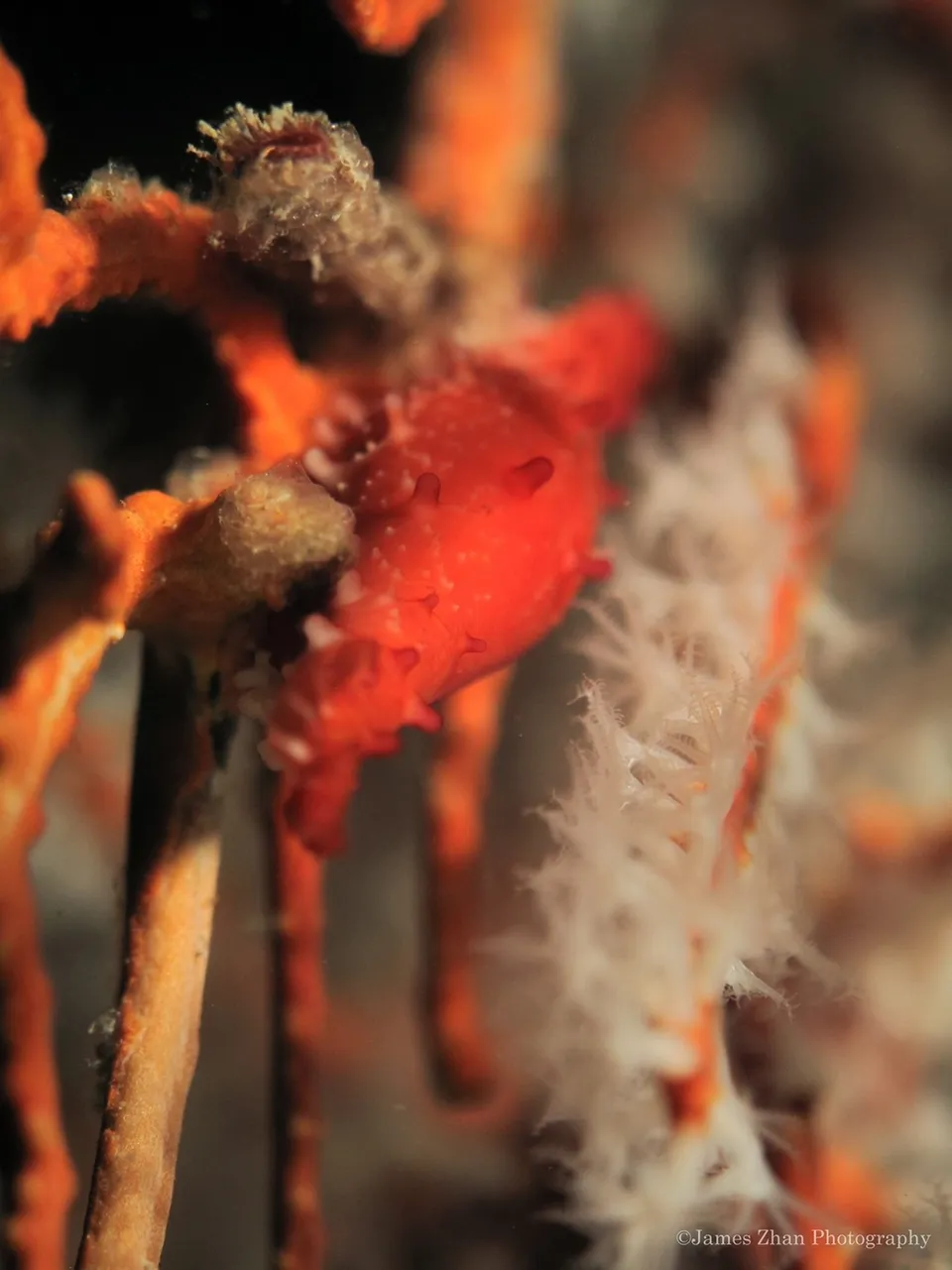
The Episcopal Miter shell photographed by James at approximately 13–14 m depth in Mosquito Pit in 2018
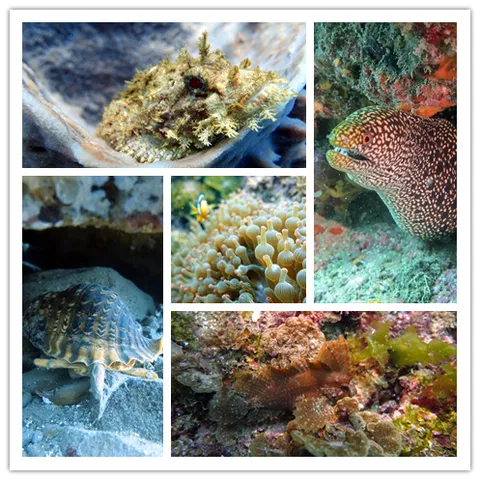
Mosquito Pit is home to all kinds of adorable marine critters
I love Mosquito Pit. It's a dive site that lets you truly unwind — much like returning to the beginner's village in an online game after you've leveled up high enough. Going back to fight the early small monsters again brings you right back to where it all began. So when you've grown a little weary chasing rare marine creatures, or you want to take a breather from exploring all those unusual dive sites, perhaps it's worth dropping into Mosquito Pit for a dip. Enjoy the ease of recreational diving, spend some time with those ordinary-yet-charming marine critters, and recapture the beautiful, wide-eyed wonder of when you first started diving.
And of course, if you're lucky enough, Mosquito Pit might have a big surprise in store for you — just like our dive buddy Pei-Pei, who encountered a magnificent baitball of tiny fish!
A baitball of small fish filmed by dive buddy Pei-Pei at Mosquito Pit in 2019 — and apparently, this was only half of it
Related links:
Frequently Asked Questions
How is a BlueTrend dive trip different from an unknown, no-name dive group?
Choosing us means full peace-of-mind protection and a smooth experience from start to finish. Every trip we run holds to three things.
First, full legal protection and a professional dive leader: we strictly follow Taiwan's travel regulations and provide complete travel-agency liability insurance, travel insurance, trip-inconvenience insurance and dive insurance. Every group is accompanied by a certified, foreign-language dive leader who joins you on both the dives and the land itinerary, liaising seamlessly with local dive shops and operators on your behalf to keep things running smoothly — the person our travellers trust most.
Second, fully licensed with secure payments: every payment goes into a licensed travel agency's account, with multiple safe payment channels (bank transfer, credit card and more) and a legal collect-and-remit receipt, so every transaction is open, transparent and protected, avoiding the fraud and dispute risks of transferring money privately to an individual.
Third, hand-picked quality we vet in person: every trip, dive site and partner shop is scouted on the ground by our own team, from the guides' professionalism and safety standards to the food, lodging, environment and service details on land, all vetted by us so you don't get caught out.
I want to sign up for a dive trip. Are there certification-level or logged-dive requirements?
Each dive site is different, so the entry bar varies. 'Bali Tulamben', for instance, is relatively beginner-friendly. 'Malapascua in the Philippines' is also beginner-friendly, but since thresher sharks tend to cruise between 20 and 30 metres, we recommend AOW certification with 20+ logged dives to enjoy this trip comfortably. For 'the Maldives' or 'Palau', we suggest AOW with 50+ logged dives for a more relaxed experience. If you're not sure whether your experience fits the trip you want, message us and our dive editors will assess it and help you find the trip you'll feel safest on.
Can I join if I'm signing up alone? How are rooms arranged?
Plenty of our travellers sign up solo! For rooms and beds, we prioritise pairing you with a same-gender traveller, and if you'd rather have your own space you can pay the difference to upgrade to a single room. For the diving, our professional leader will pair you with a suitable buddy, and with the happy vibe on our trips you'll quickly make a great group of dive friends. Many people sign up alone, make new friends, and end up organising the next trip together!
Does the trip fee include dive insurance, gear rental, taxes and instructor tips?
It depends on the trip, the destination's regulations and the local operators. Every BlueTrend dive trip has a detailed web page with a clear 'included / not included' list, transparent and with no hidden charges. All payments are collected by a licensed travel agency, with a standard-form contract for your protection.
I'm a new diver / haven't dived in a long time — will I fall behind the group?
Before you complete your booking, our team assesses a suitable trip based on your certification level and experience. Before departure, we strongly recommend taking time to refresh in Taiwan with an instructor, or a fun dive to get your feel back. On the trip itself, our professional dive leader groups and pairs everyone by experience, keeps a close eye underwater on travellers who need extra care, and steps in to help right away.
Will the photos and videos taken during the trip be shared with us?
During the dives, 'safety' is always the leader's top priority, so whenever it's suitable and safe the leader will capture great shots and record the best moments. During or after the trip, we compile a cloud album for all travellers to download, so you go home loaded with memories!
Besides your scheduled trips, can you arrange a private group charter or independent travel for me and my friends?
Absolutely! Besides group trips, we also arrange private group charters and independent travel. We can communicate, enquire and coordinate services with local operators based on your needs, saving you time and effort and taking the language barrier off your plate, to tailor the smoothest, most reassuring dive trip just for you. Contact our LINE support and our editors will arrange it for you!

![[Carol's Diving Diary] Love at First Sight with Taiwan's Northeast Coast Dive Sites — Where My Passion for Diving All Began](/_astro/20190901_081909-%E8%A4%87%E8%A3%BD_13yx9E.webp)
![[Carol's Dive Log] Northern Taiwan Dive Site – Yingge Rock: A Special Ocean Cleanup Dive to Remove Wooden Lures](/_astro/15763185497611382810092_mh1576321790031-%E8%A4%87%E8%A3%BD-1_Z1OUlvx.webp)