Contents(5)
- Seeing the Algal Reefs: A Bird's-Eye View of Taoyuan's Coastline
- A Half-Farming, Half-Fishing Economy: Coastal Wisdom That Sustains a Way of Life
- Protection and Stewardship: From a Protected Area to the Birth of Citizen Scientists
- Tourism in Transition: Ecotourism and the Community's Future
- Closing Thoughts
Seeing the Algal Reefs: A Bird's-Eye View of Taoyuan's Coastline
In 2013, director Chi Po-lin's documentary Beyond Beauty: Taiwan from Above brought the algal reefs along Taoyuan's coast to the attention of the general public. Through the lens, that expanse of reddish-brown, majestic reef stretching along the coastlines of Datan, Guanyin, and Xinwu emerged as one of Taiwan's most singular natural wonders — a landscape built from layer upon layer of time. At the same time, the camera also captured another face of Taiwan: environmental pollution flowing through rivers and across the land, woven into the fabric of coastal life, with the ocean ultimately bearing the weight of it all.
Residents of Yongxing Community have depended on this stretch of sea since childhood. In recent years, the nearby Datan Power Plant, Guanyin Industrial Zone, and Xinwu Industrial Zone have moved into the area, making industrial water use and wastewater discharge a growing concern for the marine ecosystem. Yet with the establishment of a protected area and the sustained efforts of relevant authorities — through monitoring and governance — the ecology has been able to recover, step by step.
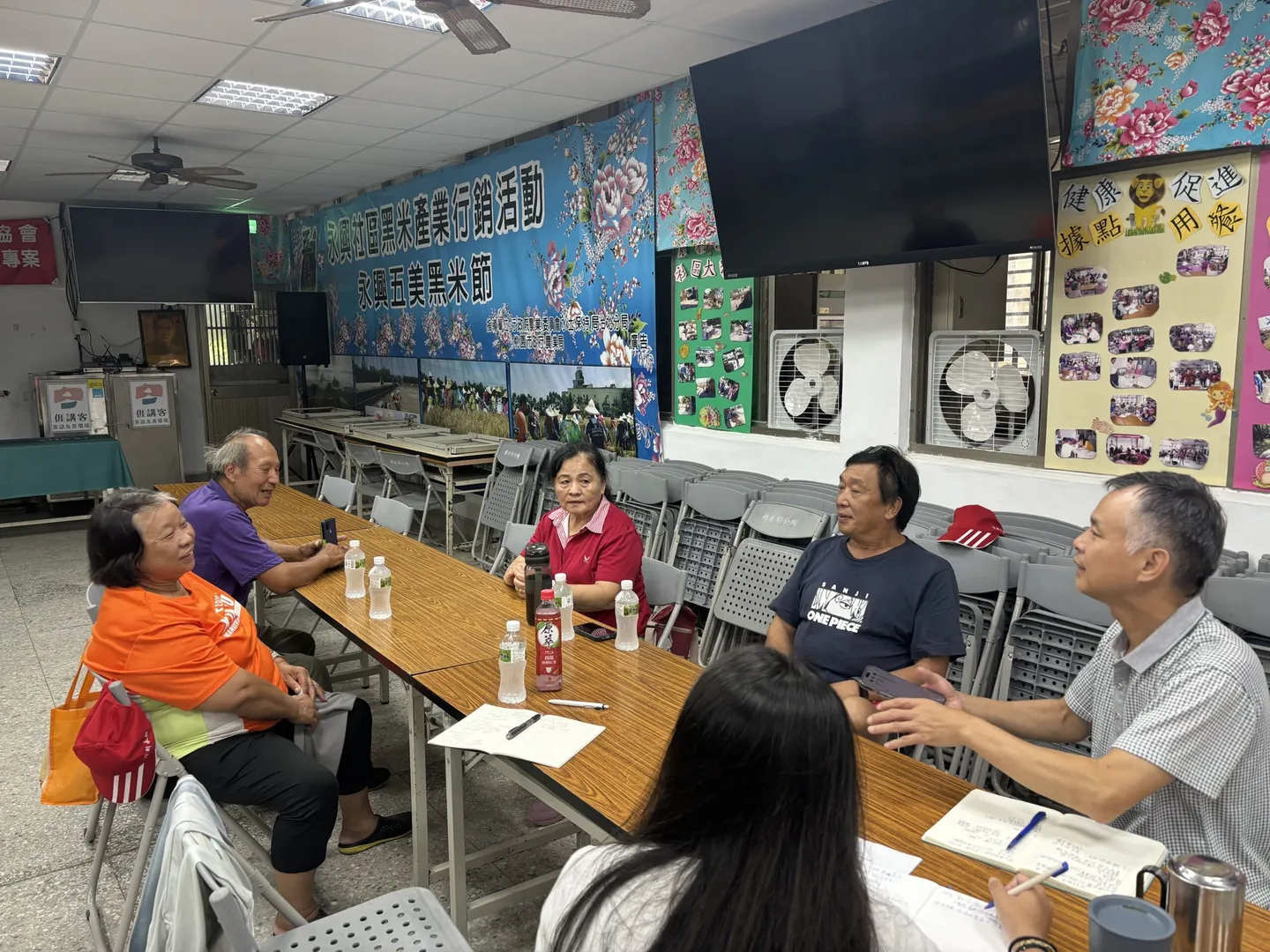
Interviewing community residents at the Yongxing Community Development Association.


A Half-Farming, Half-Fishing Economy: Coastal Wisdom That Sustains a Way of Life
Yongxing Community has long sustained itself through a "half-farming, half-fishing" model. The intertidal zones along the shore teem with life; residents recall how, in years past, "stepping into a tidal pool meant being surrounded by fish." Oysters, banded grunters, shrimp, and crabs were everywhere. Fifty years ago, the algal reef area functioned like a natural stone fish weir, offering outstanding fishing grounds and a nursery for marine life.
Spring is the busiest season. Each year from March to May, residents spend their days catching milkfish fry. After the second rice harvest, from November through to the Lunar New Year around February, they haul in grey mullet fry by day. From December, as the tide rises toward evening, they fish for eel elvers at river mouths — working through the night until the end of March. In good years, income from these fry alone accounts for around 80% of a farming household's earnings, a testament to the once-abundant intertidal resources. Marine worms were gathered as bait, seagrass was fed to pigs, and the wind-resistant, drought-hardy leaves of the screw pine became the most locally rooted material for traditional handwoven crafts.
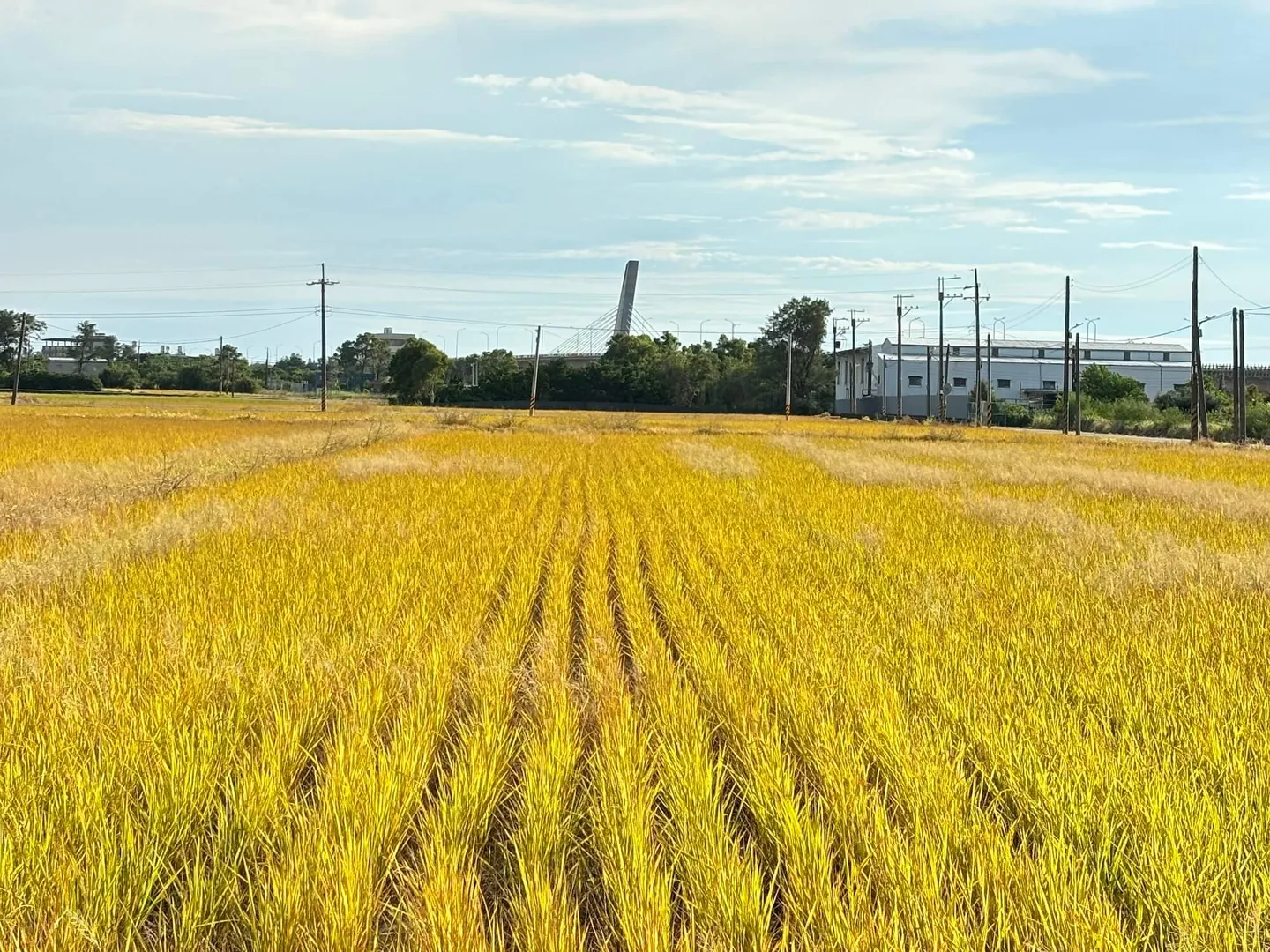
Golden rice paddies at the end of summer, bathed in the evening sun across the community.
Protection and Stewardship: From a Protected Area to the Birth of Citizen Scientists
In 2014, the Guanxin Algal Reef was designated a wildlife refuge under the Wildlife Conservation Act — a landmark decision that ensured the precious algal reef ecosystem would be preserved. For residents who had spent their whole lives here, however, the establishment of the protected area brought its own contradictions and challenges.
From childhood, locals had fished and gathered shellfish along this coast, their livelihoods intimately bound to the reef. After the protected area was established, some residents had to adapt their way of life. Even so, they understood that only through legislation and institutional frameworks could this coastline continue to carry the beauty they had known since childhood. Residents therefore called for more than mere zoning — they urged that pollution monitoring, patrol systems, and complementary policies be put in place alongside the designation, so that protection could be truly effective. In recent years, the city government and local community have worked together to strike a better balance between conservation and daily life.
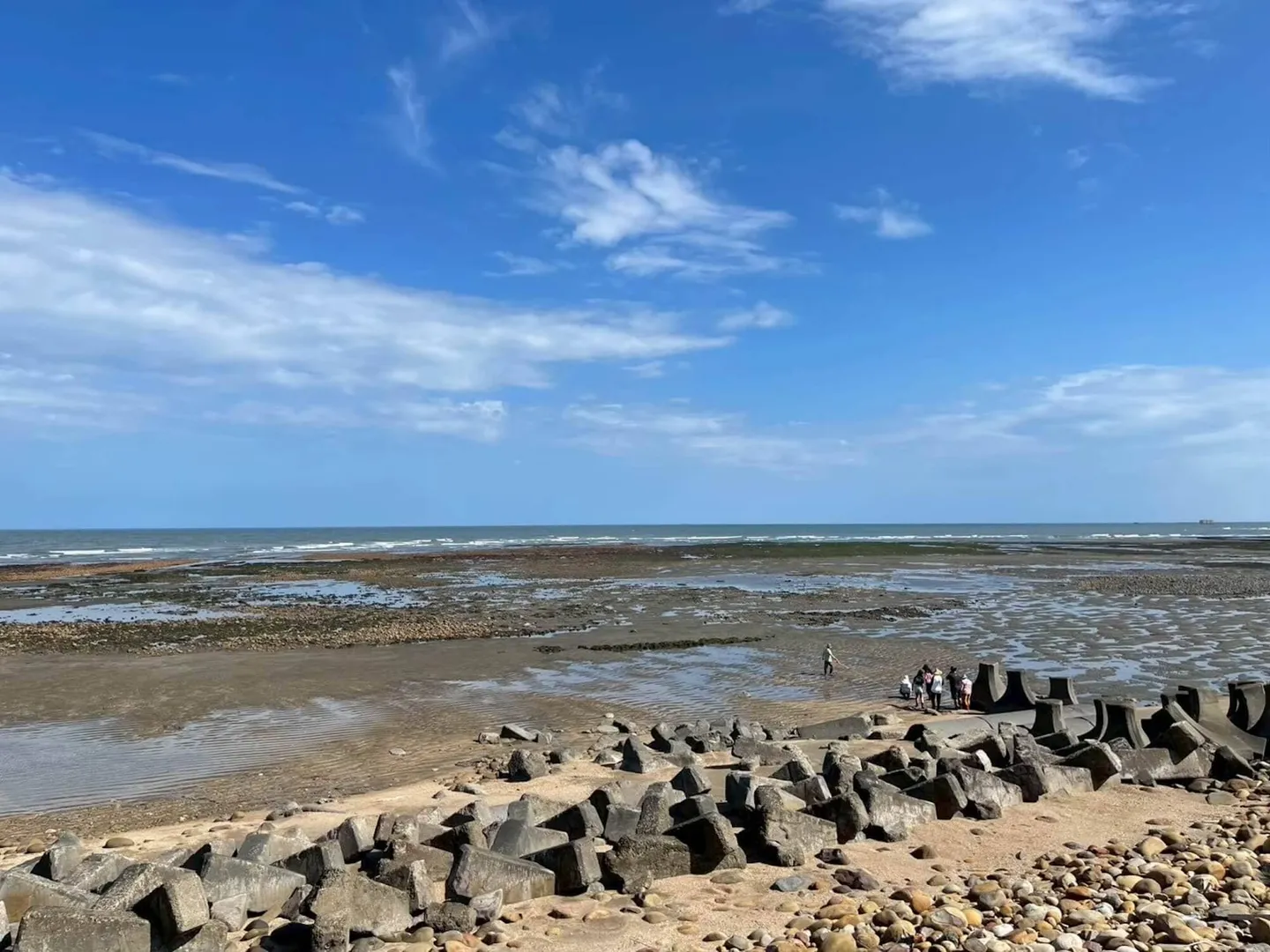
The coastal scenery along Yongxing Community's shoreline.
As fish catches declined year on year, residents of Yongxing Community came to recognise that traditional methods alone could no longer sustain a livelihood. In response to the ongoing changes in coastal ecology, the Community Development Association and local residents organised a "Coastal Patrol Team," taking on the day-to-day task of monitoring the algal reefs and surrounding shoreline. These residents are, in every sense, "citizen scientists" — though untrained in formal methods, their years of lived experience and local knowledge give them a sharp eye for change in the intertidal zone: which area's fish and shrimp populations are thinning, which species are appearing in unusual numbers. They are often the first to notice something is amiss, ahead of professional researchers. This year, the Taoyuan City Environmental Protection Bureau has also partnered with the community to promote ecological surveys and environmental education activities, enabling residents to become both participants in conservation and vital guardians of the local ecosystem.
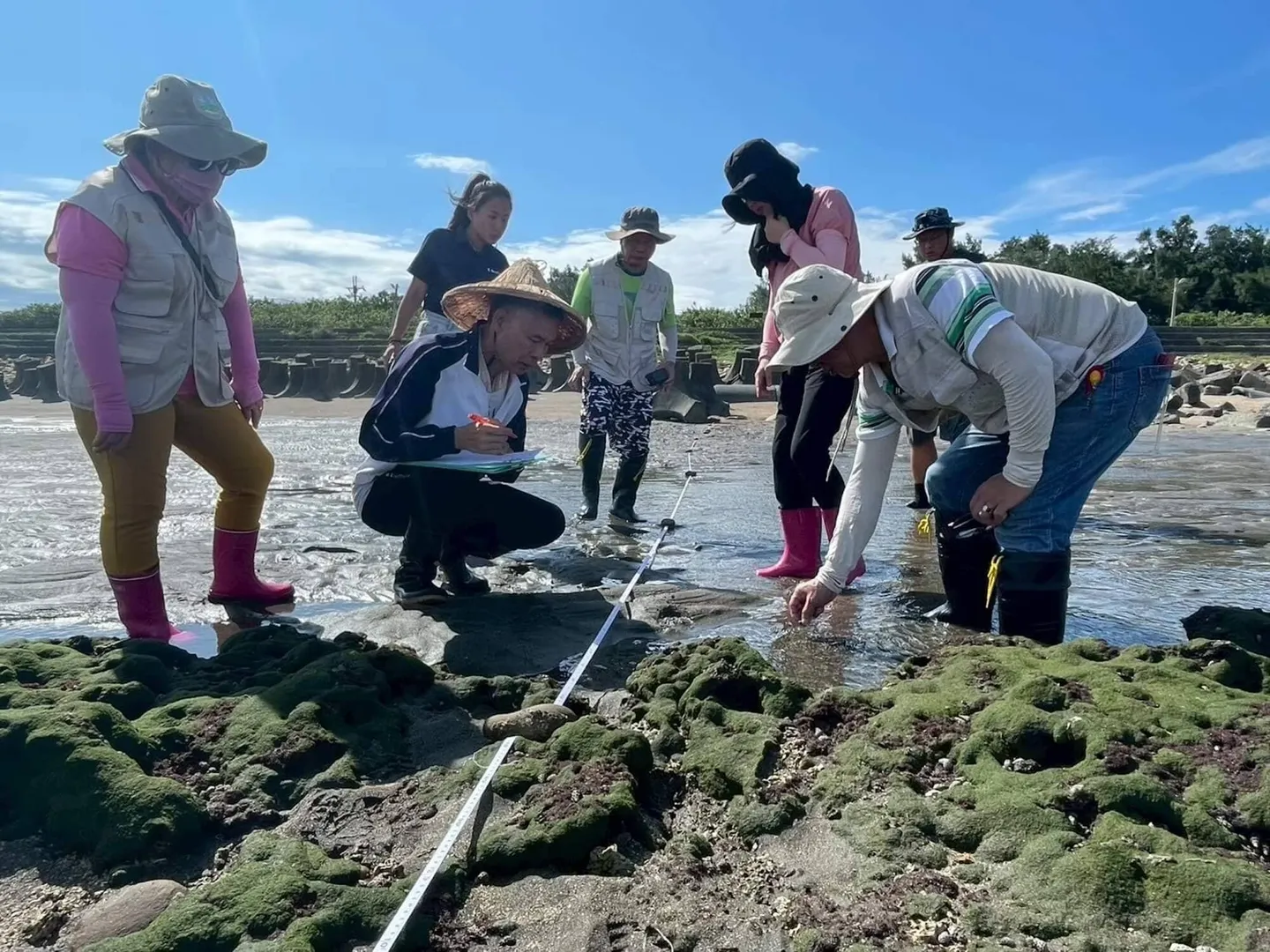
(Above) Species from the Guanxin Algal Reef photographed by community residents on their phones; (Below) Community residents taking part in conservation patrol work and conducting transect-based ecological surveys as citizen scientists.
Tourism in Transition: Ecotourism and the Community's Future
Facing the pressures of an ageing population and industrial restructuring, Yongxing Community has begun exploring tourism as a new path forward. In recent years, driven by rural regeneration programmes and environmental education policies, the community has combined its algal reef ecological classroom with experiences including intertidal zone guided tours, kayaking on Houhu Creek, community walks to the local earth-god temple, and traditional fishing culture activities. These offerings weave together local history, culture, and the natural environment into immersive experiences — allowing visitors to engage directly with the algal reef and estuarine wetland ecosystems, while transforming the wisdom of the "half-farming, half-fishing" way of life into educational content that keeps local cultural values alive. The community has also developed distinctive agricultural products such as "Yongxing Black Rice," blending tourism with agriculture to generate a new engine of economic vitality.
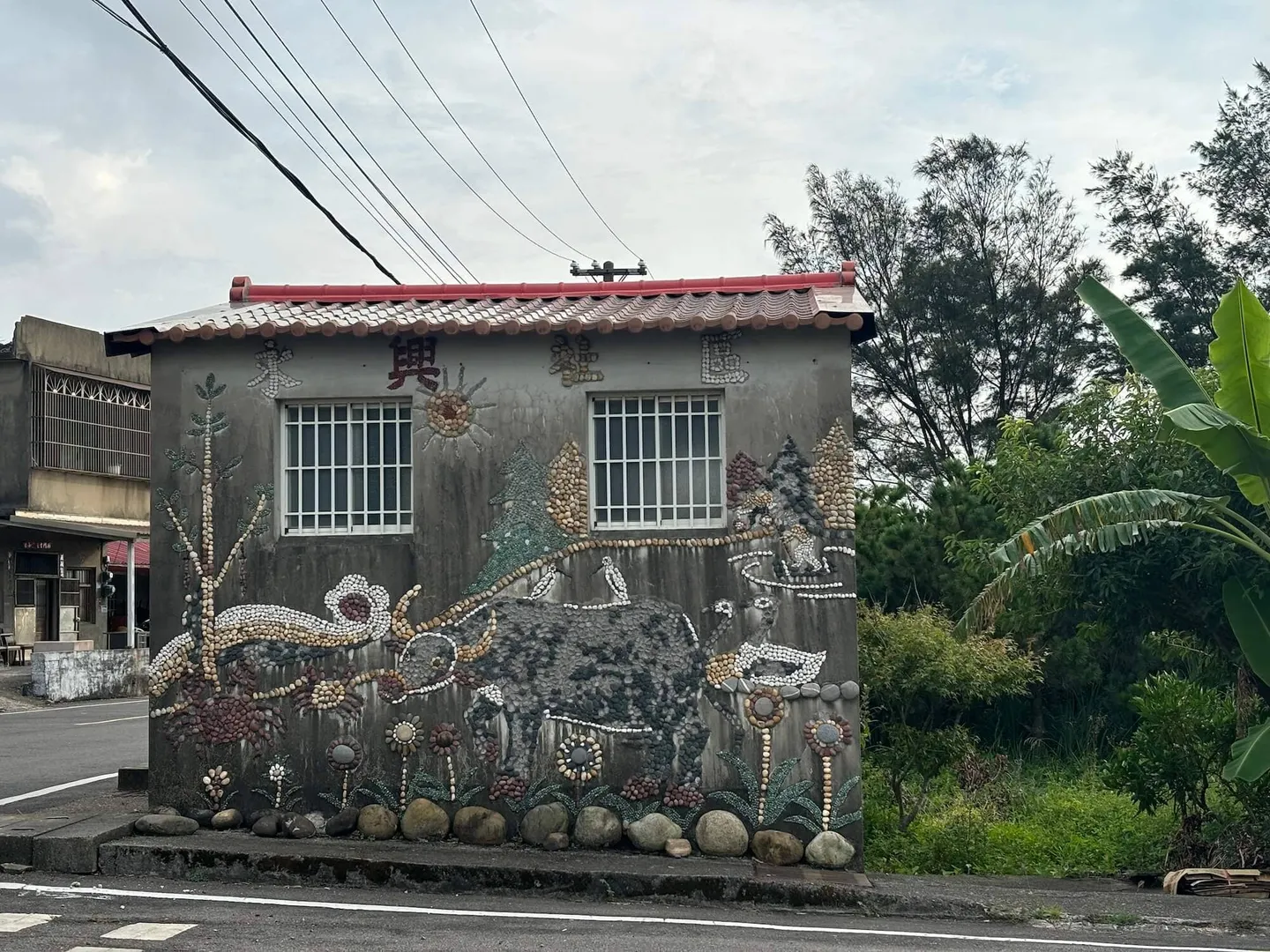
The iconic art mural wall within Yongxing Community.
Closing Thoughts
The story of Yongxing Community reflects a challenge shared by many coastal communities across Taiwan: under the overlapping pressures of industrial encroachment, uneven resource distribution, ecological protection, and industrial restructuring, how does a community find a path that both safeguards nature and sustains livelihoods? What residents long for, most of all, is simply to live in peace. They do not wish to return to the past — but they cannot bear to watch the environment deteriorate once more.
Through the combined efforts of government agencies and local residents, Yongxing Community has not only worked to protect its home, but has also gradually begun to explore new possibilities in ecotourism and distinctive local industries. This stretch of coastline, in the midst of its transformation, is moving toward a future of sustainability and coexistence.