Contents(5)
- First Encounter with Bahía Málaga: The Other Side of a Beautiful Shore
- Squeezed by Problems From Within and Without: How a Village Became a Final Resting Place for Garbage
- An Environmental Protection Model That Lives With the Village
- Giving Residents a Sense of Mission: Giving Plastic Waste a Second Life
- Further Reading
<Full article reprinted from the Environmental Information Center. Field correspondent Lin Ying-Zhen, reporting from Colombia. 2025.04.10>
When humpback whale breeding season comes to mind, most people picture Parque Nacional Natural Uramba Bahía Málaga on the eastern Pacific — a stretch of vivid blue ocean that should be just as stunning as the western Pacific where Taiwan sits. Yet when I wrapped up my itinerary at the United Nations Convention on Biological Diversity (COP 16) and finally set off on the whale-watching trip I had been longing for, the scene before me was a shock: an endless tide of trash and pollution, quietly eating away at this once-pristine coastline.
First Encounter with Bahía Málaga: The Other Side of a Beautiful Shore
Setting out from Cali, Colombia's third-largest city, I endured four hours of mountain-crossing roads followed by an hour and a half aboard a bone-rattling speedboat before arriving at the celebrated humpback whale breeding ground — Parque Nacional Natural Uramba Bahía Málaga. Disappointingly, overcast skies kept the whales out of sight, and only relentless, rough waves greeted me. So instead, I wandered into the local village at low tide.
What I saw was this: along the estuary, there was none of the picturesque scenery I had imagined. Garbage drifted in with the tides and spread across the beach, while children played among the heaps of waste. Plastic bottles, shattered toothbrushes, drifting cutlery, and tilted pieces of driftwood wove together a scene utterly unlike anything I had envisioned. This debris coexisted with the village residents, woven into the fabric of everyday life.
How did it come to this — trash as an ordinary part of daily existence in this village?
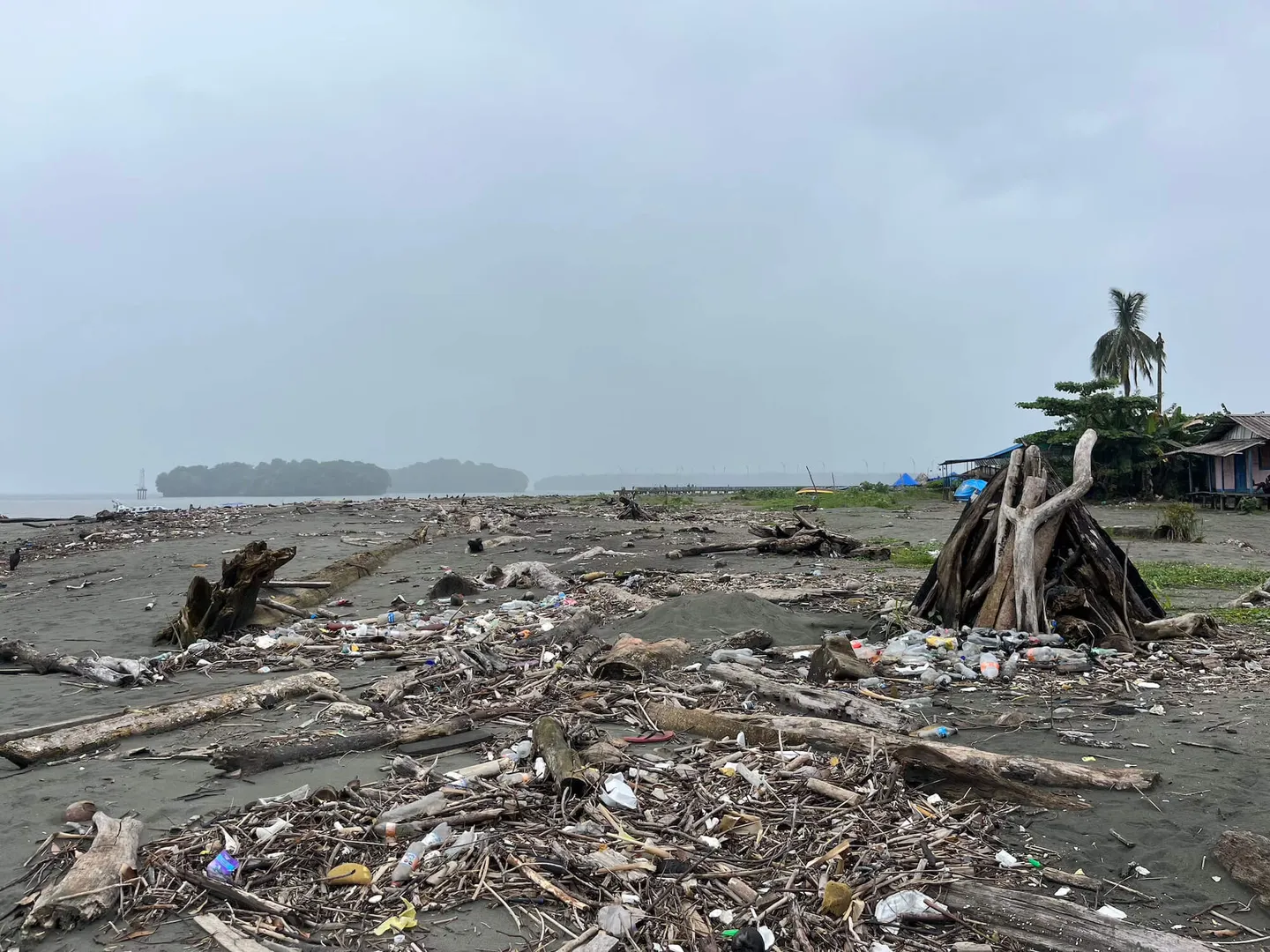
Living alongside marine debris is everyday reality in this East Pacific village. Photo: Lin Ying-Zhen


Squeezed by Problems From Within and Without: How a Village Became a Final Resting Place for Garbage
Rommy Schreiber, founder of Eco Pazifico — a non-profit organisation focused on marine debris in the Pacific — answered my questions during COP 16. She explained that the Pacific coastline is blanketed by jungle and mangroves, making access extremely difficult and the establishment of any waste-collection system nearly impossible. As a result, residents of stilt houses have grown accustomed to tossing rubbish directly out from their homes, while coastal communities tend to burn or bury waste on the beach.
Beyond the absence of a recycling system, the region's remoteness has made it a refuge for armed groups and drug traffickers, giving rise to illegal trade and fishing that take a serious toll on the local ecosystem. Even distant-water fishing vessels from Asia have dumped waste here.
Carried by ocean currents, all of that trash washes up along the eastern Pacific coast.
An Environmental Protection Model That Lives With the Village
To address these issues, the Colombian government launched the Zona Especialmente Protegida de Ambiente (ZEPA) programme in 2018. ZEPA places emphasis on the economic and cultural continuity of coastal villages alongside coastal ecology. It develops solutions rooted in the "village" as the basic unit, ensuring that local residents are involved throughout. Protection of the ecosystem is only part of the picture — the economic transformation of village communities is equally central to the programme. Eco Pazifico also works under the ZEPA framework to help tackle the marine debris problem along the Pacific coast.
The ZEPA zone spans the Pacific coast and the Caribbean coast. On the Pacific side, livelihoods once built on fishing have been severely disrupted by commercial overfishing and the influence of drug traffickers and armed groups, forcing residents to work for illegal organisations and further accelerating the destruction of the ecosystem. Illegal gold mining, for instance, has led to mercury contamination, river diversion, and excessive deforestation of the rainforest.
Since ZEPA came into effect in 2018, exclusive zones for traditional fishing methods have been established, barring commercial fishing vessels from entry. By last year, the protected area had grown 74% compared to the first year of the programme. Local organisations have also worked to revive traditional fishing practices — setting traps, hand-weaving fishing nets, and fishing from dugout canoes. To address the challenge of preserving the catch, the government has helped build cold-storage facilities and has further expanded sales outlets.
Crucially, local villages have participated in ZEPA discussions from start to finish, ensuring that front-line needs are met and that ocean conservation truly centres on the "village." The approach protects key marine ecological areas, improves the livelihoods of fishing communities to reduce illegal activity, and ensures that fishing village culture is preserved.
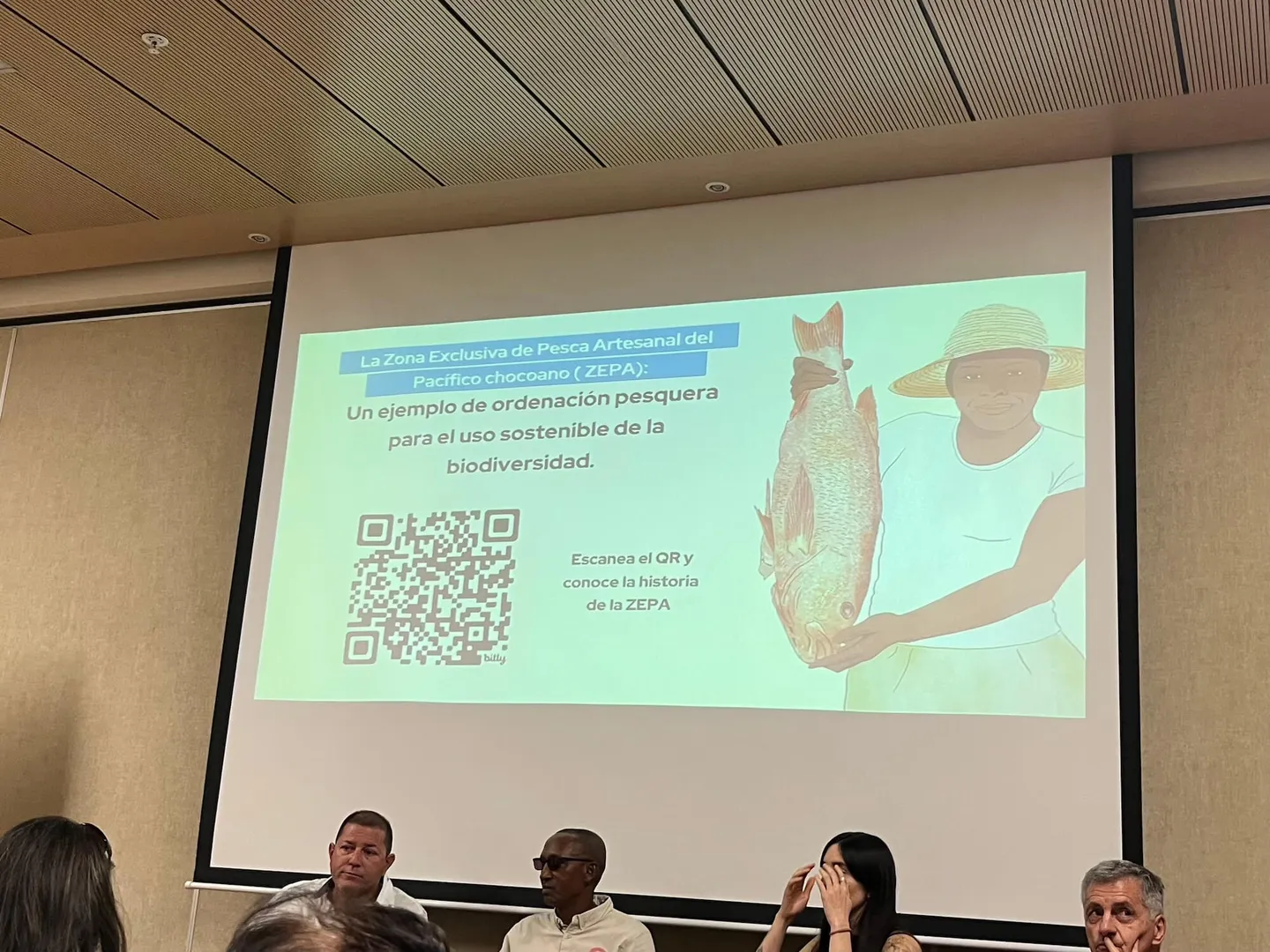
During COP 16, a number of sessions invited villages participating in the ZEPA programme to share their experiences. Photo: Lin Ying-Zhen
Giving Residents a Sense of Mission: Giving Plastic Waste a Second Life
Without recycling facilities or waste management systems, residents along the eastern Pacific coast have long resorted to burning and burying rubbish on the spot. Even tourists and cargo ships toss waste stuffed into plastic bags into the sea. Finding a way out of this waste-management dilemma has always been a daunting challenge.
Eco Pazifico formed a beach-guardian team composed primarily of local residents, responsible for gathering, collecting, washing, and sorting waste. Plastic waste makes up a substantial portion of what they handle. The organisation introduced solar-powered machines that shred and melt plastic, reforming it into plastic bricks. Those bricks are then used to build recycling stations, which in turn become platforms for educating the village on waste sorting and recycling.
There are now 18 recycling stations in operation, with remaining recyclables transported away with the assistance of the navy. Through door-to-door outreach, waste burning was reduced by 45% in 2023.
Schreiber also hopes that in the future these bricks can be sold to other companies, boosting the village's income and giving rise to a new business model. Plans are even underway to introduce glass crushers, expanding the range of materials that can be processed and repurposed locally.
Beyond direct action, education is a vital component. Local artists create artworks from waste materials, and these pieces have become important tools in outreach campaigns, conveying the importance of recycling to schools and community residents.
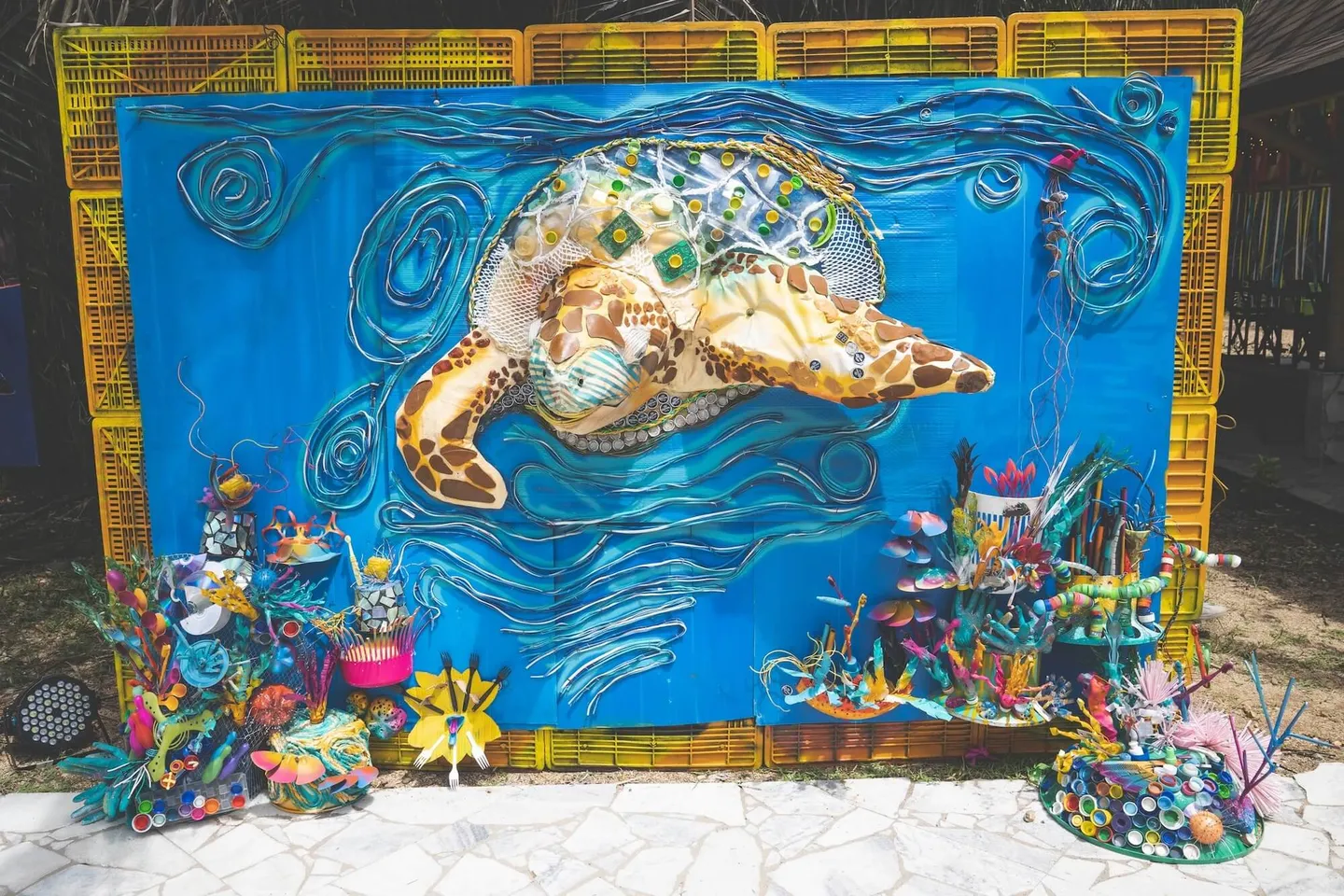
Using installation art for environmental education is also one of Eco Pazifico's initiatives. Image source: Eco Pazifico
Original article: Environmental Information Center - Encountering Marine Debris on Colombia's East Pacific Coast: A Village-Centred Approach to Environmental Protection
Further Reading