Contents(6)
- Beyond Strategy and Trade — Perhaps Cetacean Conservation Can Also Become an Advantage
- The Ocean Oasis — A Cetacean Conservation Initiative Built on Community Partnership
- Joining the Global Relay to Protect a Borderless Blue Corridor for Whales
- Protecting Whales and Dolphins Means Protecting Ourselves
- References
- Further Reading
The Editor says: Did you know? Taiwan's east coast is blessed with rich marine life thanks to the Kuroshio Current — but you may not know that human activities are threatening the survival of whales and dolphins. The latest reports from the United Nations and WWF highlight the urgency of expanding protected areas, and the Ocean Oasis Project is conducting in-depth surveys of spinner dolphins and Risso's dolphins while working to have this beautiful stretch of sea designated as an Important Marine Mammal Area. Want to know more? Join Blu in creating an ocean oasis for whales and dolphins! Full article reprinted from: Kuroshio Ocean Education Foundation.
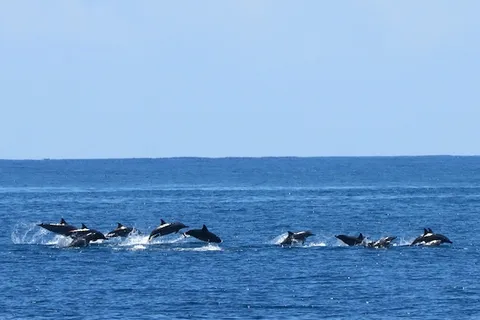
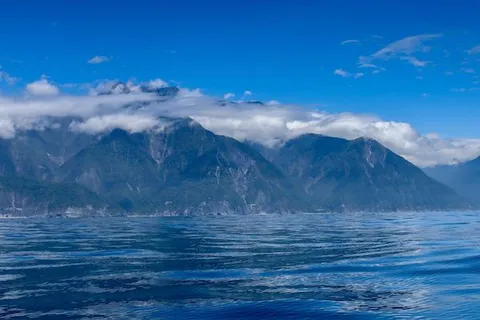
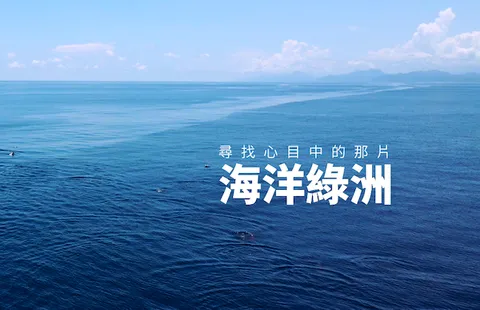
Our island — Taiwan — sits on the western edge of the Pacific Ocean, its eastern coastline running flush against the sea. The warm Kuroshio Current flows steadily and ceaselessly past, profoundly shaping the island's seasons: keeping its forests moist and deeply green. The island's beauty was once celebrated with the name "Formosa." Although scholars have since debated whether that name was truly meant for Taiwan, anyone who has had the chance to gaze back at the island from the sea will find that sense of wonder lingering in the heart long after.
Beyond Strategy and Trade — Perhaps Cetacean Conservation Can Also Become an Advantage
Sadly, when most people think of Taiwan's geographic position, the first associations are military strategy or maritime trade. Yet from the perspective of Earth's biosphere, Taiwan's location is critically — even irreplaceably — important to many species. Nevertheless, countless human activities have failed to account for environmental sustainability, and the whales and dolphins living in these waters now face a host of threats: climate change, fisheries, shipping, resource exploration and development — all of these are fragmenting cetacean habitats and filling them with peril.
In 2021, the United Nations Convention on Biological Diversity held its fifteenth Conference of the Parties in Kunming, explicitly underscoring the importance and urgency of expanding protected areas worldwide. A February 2022 report by the World Wildlife Fund (WWF), Protecting Blue Corridors, further documented how fisheries bycatch and fishing debris affect whales and dolphins across ocean basins around the globe.
Whales and dolphins may appear to roam a vast and boundless ocean, but in reality the areas where they hunt and migrate frequently overlap with fishing grounds — and harm follows as a result. Risso's dolphins, among the most commonly sighted cetaceans along the east coast, bear visible evidence of this: through photographic analysis of body scars, we can observe wounds from fishing line entanglement and hook injuries. On other cetaceans, we can see dorsal fins likely cut by lines or propellers, or animals entangled in fishing nets — all of it a reflection of the mounting threats facing the waters these animals call home.
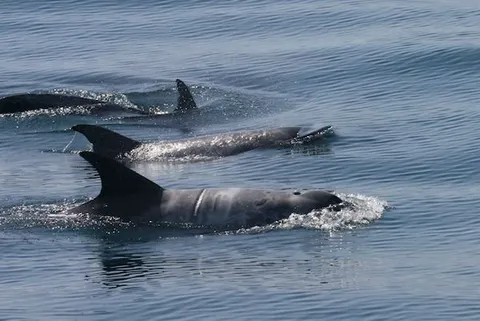
Rope-mark scars on a Risso's dolphin suggest the animal may have been entangled in fishing nets. (Photo|Yu Xin-Yi)


The Ocean Oasis — A Cetacean Conservation Initiative Built on Community Partnership
More than 20 species of whales and dolphins have been recorded along the east coast. Among them, spinner dolphins and Risso's dolphins are observed most frequently; pilot whales, false killer whales, sperm whales, and orca are seen periodically; and humpback whales pass through during their spring migration. Despite this impressive species diversity, our knowledge of the ecological habits of each cetacean species remains extremely limited.
For the rarer species, the low number of sightings makes it impossible to gather sufficient observational data to draw meaningful ecological conclusions — a challenge that demands longer-term data collection and accumulation. Yet even for the spinner dolphin (sighting rate in Hualien: 51.7%) and the Risso's dolphin (sighting rate in Hualien: 25.3%) — species that likely reside along the east coast and are commonly observed there — our understanding of their ecological habits goes little beyond sighting rates and behavioral records. In this situation, proposing proactive, science-based conservation strategies remains out of reach.
The Kuroshio Ocean Education Foundation therefore launched the Ocean Oasis Project: a three-year survey program focused on spinner dolphins and Risso's dolphins. Through long-term behavioral observation, the project aims to understand how these dolphins use the habitat around Hualien — where they might be feeding, where they rest, and where they nurse their young. If we can gain a clearer picture of the relationship between their critical life-cycle stages and the habitats they depend on, we will be in a far stronger position to propose meaningful conservation strategies.
Although spinner dolphins and Risso's dolphins are currently classified as Least Concern (LC) on the IUCN Red List at the global level, population status varies by location depending on local environmental conditions and human activities, meaning different populations face different degrees of threat. Local surveys and assessments are therefore essential for understanding and protecting their habitats. Protecting these habitats benefits not only the cetaceans that live here year-round, but also those that pass through or visit — making this effort significant on a much broader scale.
Joining the Global Relay to Protect a Borderless Blue Corridor for Whales
The Risso's dolphin, commonly seen off Hualien, may not turn heads at first glance — its appearance is understated, and it carries a composed, almost stately air reminiscent of the great whales. Yet what science has revealed about this species is remarkable: Risso's dolphins typically inhabit continental shelf edges and deep-water environments, and because they prey primarily on cephalopods, they regularly dive to depths of 200–1,000 m in search of food. The marine environment off eastern Taiwan happens to meet these conditions precisely — which is why Risso's dolphins can be frequently encountered on whale-watching trips that travel only a short distance from shore. Very few places in the world offer this combination of conditions, and it is a reminder of just how extraordinary Taiwan's geographic situation truly is.
In spring, humpback whales can be anticipated migrating past the east coast. Their stories have circulated widely around the world. While they do not reside in east coast waters, sightings were recorded as early as spring 2003, and in recent years reports have arrived almost every spring — from whale-watching vessels as well as observers on Orchid Island and Green Island. Each arrival builds anticipation, but also concern: in 2018, Kuroshio senior interpreter Jin Lei photographed a humpback whale calf with fishing net entangled around its mouth; in 2021, news reports covered an incident in which a dive boat carrying passengers chased a whale and attempted to enter the water to swim alongside it before being stopped by the Coast Guard. Both incidents underscore the environmental risks that remain and the gaps in existing conservation measures.
Whales and dolphins recognize no borders. Protecting them on an international scale requires nations to work in relay — managing migration corridors and activity areas to minimize potential threats. Taiwan's east coast is home not only to resident cetaceans, but also to oceanic and migratory species, and through our conservation actions we can connect with the global community and do our part.
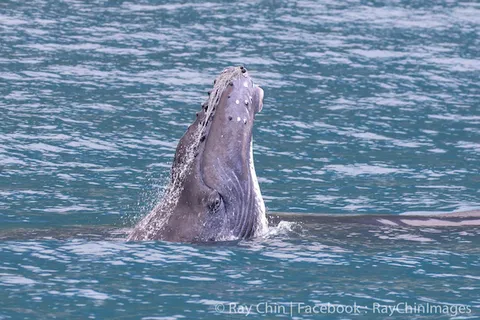
A humpback whale calf with fishing net entangled around its mouth. (Photo|Jin Lei)
Protecting Whales and Dolphins Means Protecting Ourselves
International organizations dedicated to marine mammal conservation began actively convening regional workshops in 2016 to promote the designation of Important Marine Mammal Areas (IMMAs) — working to identify the significance of marine environments around the world for cetaceans and other marine mammals. These designations provide a stronger scientific foundation for establishing marine protected areas (MPAs) and advance the goal of more effective global marine mammal conservation. Building on years of attention to Hualien's waters, the Ocean Oasis Project will analyze historical sighting records and relevant literature, conduct surveys on cetacean habitat use and potential threats, and work toward achieving IMMA recognition for this area.
We aspire to give more back to the ocean, and we hope to raise the quality of whale-watching experiences — realizing a vision of peaceful coexistence between people and the sea, between people and cetaceans. For cetacean conservation at the local scale to succeed, this Ocean Oasis vision will require the coordinated efforts of government agencies, fishing communities, industries (whale watching, marine recreation, etc.), the Coast Guard, the military, and every one of you who cares about the ocean environment and cetacean ecology — only together can we achieve this goal and join the global relay.
The first step may be difficult, but the ultimate beneficiaries of conservation action are not only the whales and dolphins themselves. When the ocean supports a healthy cetacean ecosystem, it helps keep the marine environment healthy overall — and in turn, that health comes back to us. As WWF's Chris Johnson put it: "Protecting the blue corridors of whales will help protect our oceans and ourselves." We hope that by bringing together the strength of more and more people, we can create an ocean oasis for whales and dolphins along Taiwan's east coast.
References
- The origin of "Formosa"
- World Wildlife Fund (WWF), PROTECTING BLUE CORRIDORS.
- International Union for Conservation of Nature (IUCN)
- Marine Mammal Protected Areas Task Force, IMMA website
- Original article reprinted from: Kuroshio Ocean Education Foundation【Joining the Global Effort to Create an Ocean Oasis for Whales and Dolphins on Taiwan's East Coast!】
Further Reading