Just like Taiwan, Japan is an island nation surrounded by the sea, with no shortage of dive sites. Today we'd like to introduce you to a creature well worth making the trip for: the lumpfish.
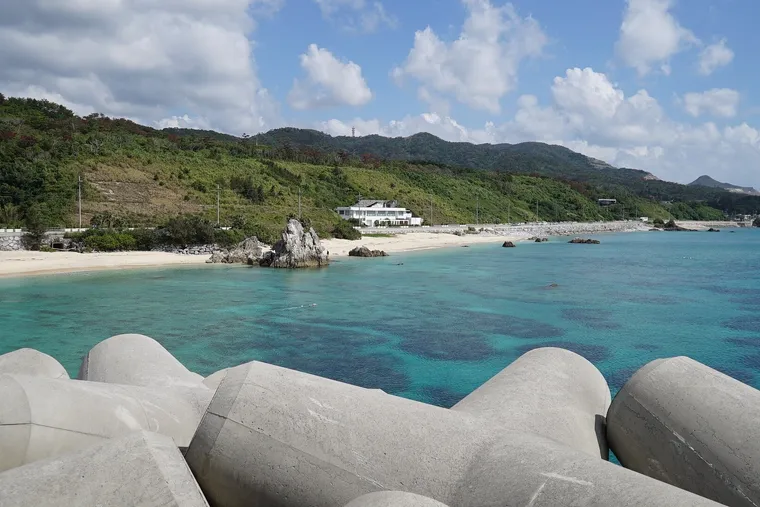
After careful consideration, we settled on T-style Diving Center. This dive shop is located in the Kansai region, at Takenohama Beach in Hyogo Prefecture — about two and a half hours by car from downtown Osaka. It's run by the earnest and straightforward Yosuke Tanaka and his charming wife Miki Koyama. The two of them wear many hats: dive guides, guesthouse hosts, and cooks all in one, which gives the whole experience a wonderfully personal, homey feel.
A Paradise for Lumpfish
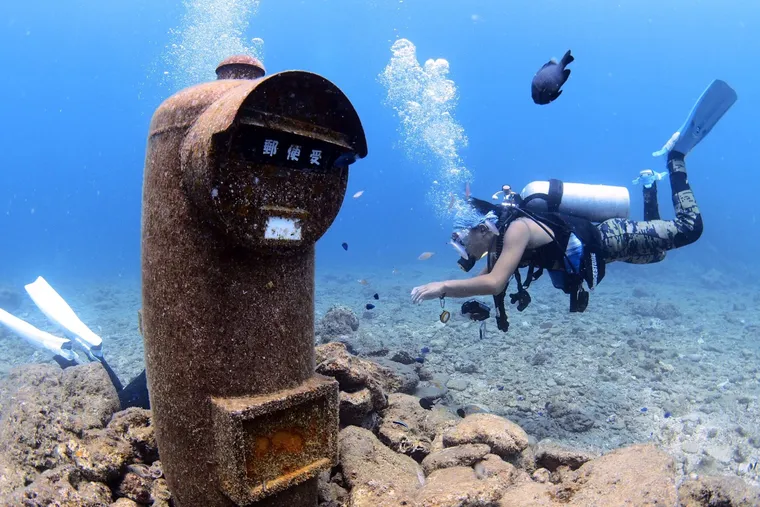
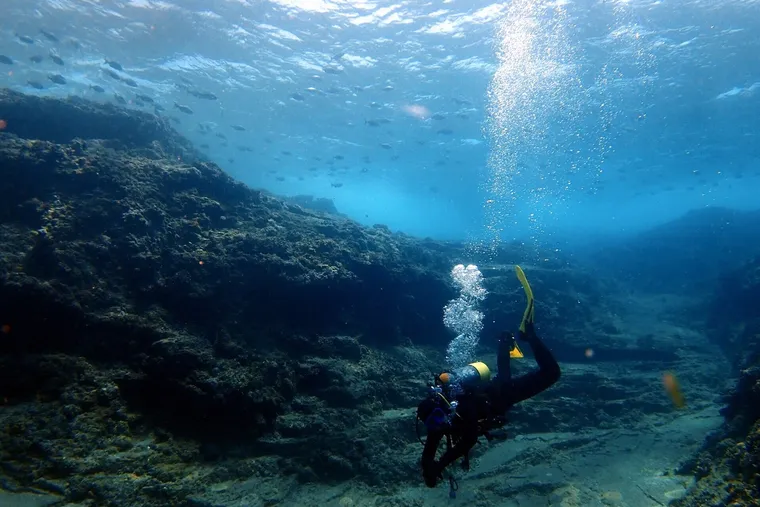
Only boat dives are offered here. Heading out from the harbor, about five minutes to the left, you'll encounter a dramatic cliff face that drops straight down to 15 meters underwater — we jokingly nicknamed it the "Wall of Contemplation." The reason? Lumpfish congregate here in numbers, and when shooting, you'd see underwater photographers kneeling perfectly still in front of the wall, camera in hand, looking for all the world like they were doing penance. Ha!


All About the Lumpfish
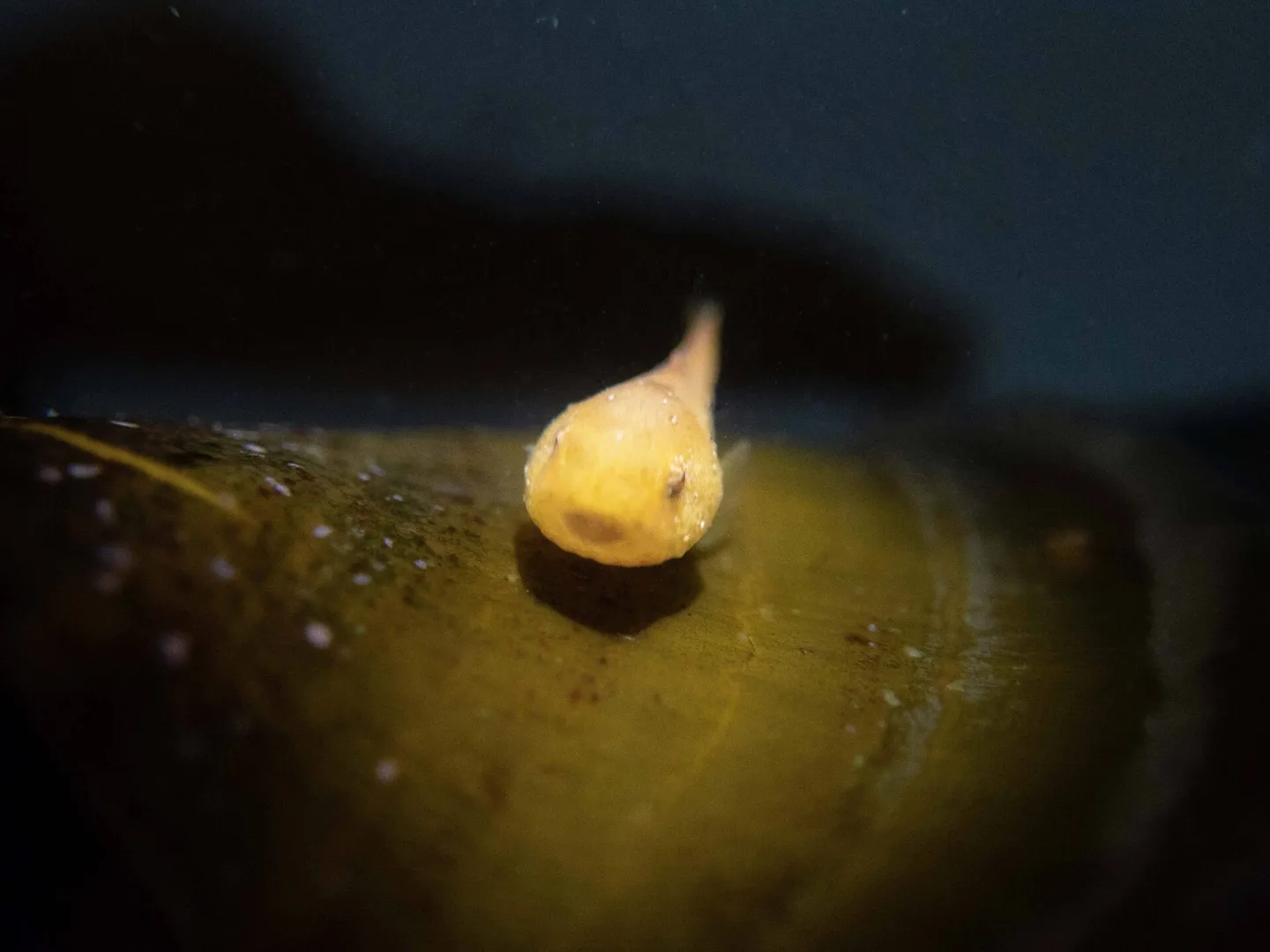
The lumpfish belongs to the family Cyclopteridae — known in English as Lumpsuckers or Lumpfish, scientific name Cyclopteridae, and called ダンゴウオ (Dango-uo, or "dumpling fish") in Japanese. They inhabit a type of seaweed called クロメ (Kurome), a variety of brown alga. Larger individuals are roughly the size of a fingernail; the tiny ones are barely the size of a sesame seed. They aren't fast swimmers, and the lumpfish here are fairly unafraid of divers — unless you startle them too much. That said, they're not easy to spot hiding among the seaweed, which is exactly where having a dive guide comes in handy.
For the best lumpfish experience, Tanaka-san recommends visiting during the spawning season in April. You won't just see the fish themselves — you may also find clusters of eggs waiting to hatch. He once photographed four lumpfish on the same frond of seaweed at the same time, looking just like Totoro waiting at a bus stop. The image became a local tourism icon — it's almost criminally cute. We weren't quite that lucky, finding only one per frond. During night dives, however, you can spot far more of them, and they're even less skittish.
Also hiding near the bases of the seaweed fronds is Liparis punctulatus (スナビクニン) — equally adorable. To find one, you have to peel back the seaweed leaf by leaf. But the moment light hits this shy little creature, it spirals up and down between the blade and stem as if riding a revolving door elevator — quite the entertaining spectacle.
During this same April–May window, you can also expect to encounter the goby Pterogobius zonoleucus (チャガラ) guarding its eggs. Usually a male and female pair will swim around near their spawning site in rock crevices; as long as you keep a safe distance, they'll go about their business naturally in front of your lens — and with patience, you might even catch them with their mouths open.
Another perk of diving with Tanaka and Miki is the food. Even in this quiet, off-the-beaten-path coastal town, you can pre-order fresh matsuba crab and the locally renowned Tajima beef. Delivered straight from the source, the seafood is so fresh you can eat it raw or flash it in a pot for just five seconds. This kind of culinary indulgence alongside a dive trip is nearly impossible to replicate in Southeast Asia — foodies, are you tempted yet?
After wrapping up our dives in Takeno and saying goodbye to the adorable lumpfish, we made a detour on our way back to Osaka to check out DIVING FES KANSAI 2018 — the largest dive expo in the Kansai region of Japan. This year's event was held on May 19 and 20 at ATC Hall, Osaka Nanko. Entry was ¥1,000, and since Tanaka-san had a booth there, we managed to snag complimentary tickets.
The moment you walk in, you're greeted by a stunning feature wall of works by celebrated underwater photographers. As many will know, Japanese underwater photography has a signature soft, dreamy, pastel aesthetic — and displayed against a matte black wall, the prints were absolutely eye-catching. You could get your photo taken with the masters right then and there, and pick up a signed copy of their books. Heading deeper into the hall, you'd find booths from dive shops all across Japan, each one eager to pitch the highlights of their home waters. A list of commonly featured Japanese dive destinations appears at the end of this article.
The main venue featured a large pool where guests could gear up on the spot and experience diving firsthand — easily one of the most crowd-pleasing attractions. While lucky-draw events ran on the main stage, major certification agencies including PADI (certification agency), SSI (certification agency), and NAUI (certification agency), alongside leading equipment brands such as Mares, TUSA, Mobby's, CASIO, and RICOH, were all busy promoting their latest offerings at their respective booths. There was also a research presentation by Kansai University on coral restoration efforts.
Afterword: This Japan dive trip was an absolute highlight from start to finish — both underwater and on land. Make sure your camera is ready: shoot lumpfish beneath the waves, and Black Kites soaring over coastal sunsets above. Don't forget to leave room in your luggage allowance — set aside a full day on your way back through Osaka for some serious shopping. The mic21 dive gear store is a must-visit; fair warning — you might not be able to drag yourself out. Ha!
Notes:
*CASIO's underwater communication device can now sync with select dive computer models from TUSA, BISM, and AQUA LUNG to send alert tones.
*RICOH's latest 360-degree camera can be paired with a VR headset for viewing — the immersive effect is remarkably realistic.
*There's a product called Magical Hot heat tablets, marketed as safe for both the human body and the environment. The tablets can be placed inside a wetsuit for warmth and may be a viable alternative to the hot spring tablets commonly used.
*Dive sites represented by exhibiting dive shops included: Ishigaki, Iriomote Island, Kume Island, and Miyako Island in Okinawa; Takeno on the Nekozaki Peninsula north of Osaka; Amami Oshima; Higashi-Izu and Ito on the Izu Peninsula; the Goto Islands; Hayama and Miura; Kouno Minamiechizen; Amakusa in Kumamoto; New Caledonia (a French territory northeast of Australia); Palau; and more.
*Water temperature in Takeno in April is approximately 15°C. Those who don't mind the cold can wear a 7mm wetsuit; otherwise a drysuit is recommended. T-style has rental gear available. Most dives here involve anchoring the boat at a fixed point — no fighting currents or surge — making for a pretty relaxed dive overall.
Related Links:
-
ダイブリゾートT-style Diving Center
Address: Takeno-cho Takeno 50-12, Toyoka-shi, Hyogo, Japan Official website: [http://www.takeno-diving.com](http://www.takeno-diving.com/) (fb:@TakenoStyle): [https://goo.gl/u8whHD](https://www.facebook.com/TakenoStyle/) -
Lumpfish: http://eol.org/pages/5144/details
-
Seaweed クロメ (Kurome): http://www.phycollab.org/2011/05/blog-post_18.html
-
【Osaka, Japan】A World-Class Giant Aquarium! Your Complete Guide to Osaka Aquarium Kaiyukan
Frequently Asked Questions
How is a BlueTrend dive trip different from an unknown, no-name dive group?
Choosing us means full peace-of-mind protection and a smooth experience from start to finish. Every trip we run holds to three things.
First, full legal protection and a professional dive leader: we strictly follow Taiwan's travel regulations and provide complete travel-agency liability insurance, travel insurance, trip-inconvenience insurance and dive insurance. Every group is accompanied by a certified, foreign-language dive leader who joins you on both the dives and the land itinerary, liaising seamlessly with local dive shops and operators on your behalf to keep things running smoothly — the person our travellers trust most.
Second, fully licensed with secure payments: every payment goes into a licensed travel agency's account, with multiple safe payment channels (bank transfer, credit card and more) and a legal collect-and-remit receipt, so every transaction is open, transparent and protected, avoiding the fraud and dispute risks of transferring money privately to an individual.
Third, hand-picked quality we vet in person: every trip, dive site and partner shop is scouted on the ground by our own team, from the guides' professionalism and safety standards to the food, lodging, environment and service details on land, all vetted by us so you don't get caught out.
I want to sign up for a dive trip. Are there certification-level or logged-dive requirements?
Each dive site is different, so the entry bar varies. 'Bali Tulamben', for instance, is relatively beginner-friendly. 'Malapascua in the Philippines' is also beginner-friendly, but since thresher sharks tend to cruise between 20 and 30 metres, we recommend AOW certification with 20+ logged dives to enjoy this trip comfortably. For 'the Maldives' or 'Palau', we suggest AOW with 50+ logged dives for a more relaxed experience. If you're not sure whether your experience fits the trip you want, message us and our dive editors will assess it and help you find the trip you'll feel safest on.
Can I join if I'm signing up alone? How are rooms arranged?
Plenty of our travellers sign up solo! For rooms and beds, we prioritise pairing you with a same-gender traveller, and if you'd rather have your own space you can pay the difference to upgrade to a single room. For the diving, our professional leader will pair you with a suitable buddy, and with the happy vibe on our trips you'll quickly make a great group of dive friends. Many people sign up alone, make new friends, and end up organising the next trip together!
Does the trip fee include dive insurance, gear rental, taxes and instructor tips?
It depends on the trip, the destination's regulations and the local operators. Every BlueTrend dive trip has a detailed web page with a clear 'included / not included' list, transparent and with no hidden charges. All payments are collected by a licensed travel agency, with a standard-form contract for your protection.
I'm a new diver / haven't dived in a long time — will I fall behind the group?
Before you complete your booking, our team assesses a suitable trip based on your certification level and experience. Before departure, we strongly recommend taking time to refresh in Taiwan with an instructor, or a fun dive to get your feel back. On the trip itself, our professional dive leader groups and pairs everyone by experience, keeps a close eye underwater on travellers who need extra care, and steps in to help right away.
Will the photos and videos taken during the trip be shared with us?
During the dives, 'safety' is always the leader's top priority, so whenever it's suitable and safe the leader will capture great shots and record the best moments. During or after the trip, we compile a cloud album for all travellers to download, so you go home loaded with memories!
Besides your scheduled trips, can you arrange a private group charter or independent travel for me and my friends?
Absolutely! Besides group trips, we also arrange private group charters and independent travel. We can communicate, enquire and coordinate services with local operators based on your needs, saving you time and effort and taking the language barrier off your plate, to tailor the smoothest, most reassuring dive trip just for you. Contact our LINE support and our editors will arrange it for you!