Thank you all for your continued support. The article A Premium Dive Computer from Taiwan — Deepblu COSMIQ, written back in July 2016, has been warmly received by so many of you. Without any special promotion, it has maintained a steady readership ever since (it actually gets more views than my other articles — I'm genuinely a little embarrassed...). Many friends also message me privately asking about their experience using Deepblu. Based on several months of use, I'd still wholeheartedly recommend it — especially the incredibly customer-friendly repair and return service. No need to waste time dropping it off at a dealer in person, no need to deal with grumpy repair staff. Any issue with the unit gets a brand-new replacement. That's just pure generosity!
Back to the main topic — this article is actually about the major update Deepblu rolled out a few months ago. Since it was a major update with quite a few new features, we'll go through it in sections.
Deepblu COSMIQ Platform Services
You may have quietly noticed an EXPLORE section appearing on the Deepblu website. Curious as I am, I had to click in and take a closer look. It turns out the multi-screen display feature has been realized — meaning your diving logs can now be enjoyed not just with a quick scroll on your phone, but also on a full-sized computer screen.
On the homepage, logs uploaded by divers from around the world are displayed in a waterfall-style layout. If you've had a particularly special dive or have some great underwater shots, remember to set your log to public and wait for it to make it onto the homepage for fellow divers worldwide to admire. Feature-wise, you can use tabs to switch between viewing logs from friends or curated dive highlights selected by Deepblu — a pretty handy information discovery feature for dive enthusiasts.
This update also introduced a community element — in short, you can now create your own groups and join groups you're interested in to interact with friends. After using it for a while, though, I feel the server performance and rendering speed could use some improvement, as loading times can sometimes be quite long. The feature also seems to overlap somewhat with social platforms like Facebook. Unless a genuinely innovative application emerges from it, it'll be hard to convince users to migrate to a new interface and service. Keep at it!
Hidden quite discreetly within the platform's updated features is one that truly impressed me: the ability to import logs from third-party dive computers. This suggests that Deepblu doesn't see itself as a single-brand hardware-software integrator, but rather as a comprehensive dive information service platform. Viewed through that lens, the reason for adding the community features mentioned above becomes self-evident.

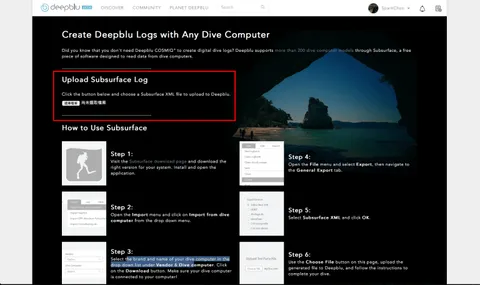
There is an UPLOAD 3RD PARTY FILE feature
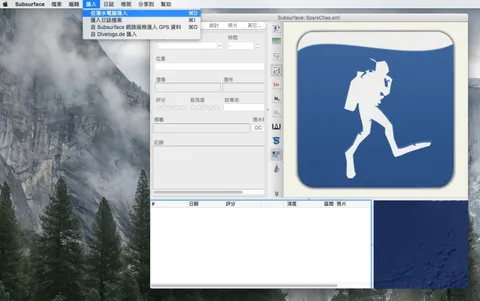
If you use another dive computer that can export log data to a computer, you can convert the files using the Subsurface software (download here). After downloading, click the import function and make sure your dive computer is connected to the computer.
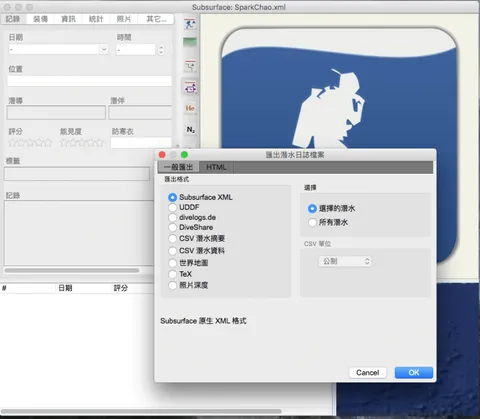
Once all the data has been imported, run the export function and select XML as the file format.
Then simply go back to the Deepblu platform and upload the file directly. Since I don't have another dive computer to test with (my other one flew off the roof of my car when I drove away — careless mistake), I wasn't able to verify whether the data format imports correctly or walk through the subsequent steps. That said, this feature does allow you to take logs accumulated on your existing dive computer, upload them to the platform, and edit them — turning your dive log into a wonderful record of your diving life.
On a personal wishlist note: I'd love for Deepblu to develop a feature that automatically compiles uploaded log information — including dive site details, timestamps, photos, and video — into an annual recap or a commemorative video of a specific dive trip. That would be absolutely fantastic!
Hardware:
Deepblu's unique OTA (over-the-air) update capability means we get to grow alongside the COSMIQ. Since last July, the COSMIQ has gone through approximately 8 updates of various sizes, reaching firmware version v1.4 (if you haven't updated yet, make sure to do so before your next dive). New features include an updated power management system, a low-battery management mode that allows you to complete one final dive, freshwater mode, high-altitude dive settings, and safety factor configuration. At this price point, you're essentially buying unlimited future expansion potential — who knows what incredible features the COSMIQ might gain one day, like underwater fish identification or automatic detection of underwater gold (now I'm just daydreaming...).
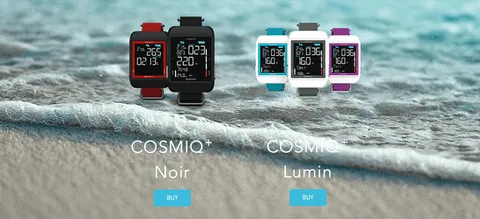
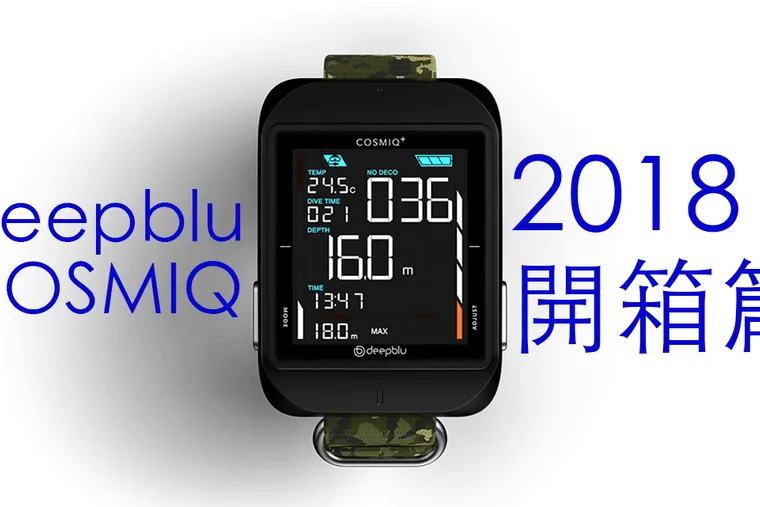
This hardware update also introduces three eye-catching color options for consumers to choose from. The hardware specs are identical across all colors — it's purely about satisfying the style preferences of discerning (or shall we say, fashionable) divers, allowing you to pair your watch face and strap color with your wetsuit. One wonders whether they'll ever combine 3D printing or inkjet technology to offer a custom watch face service someday.
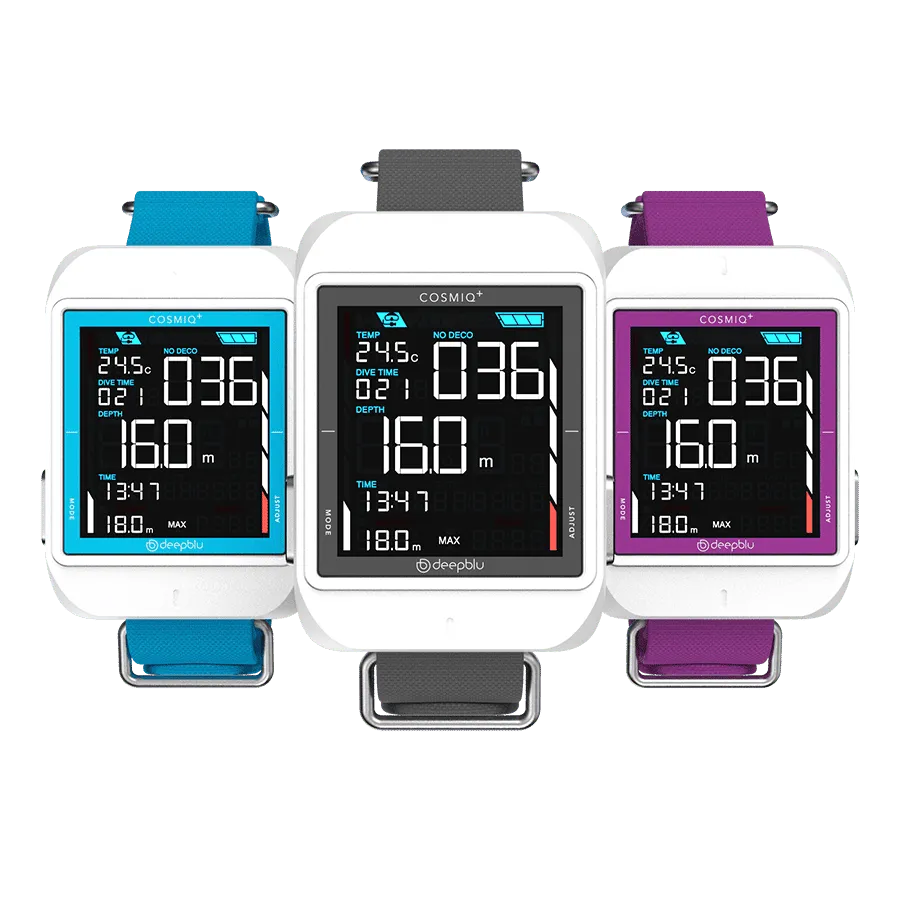
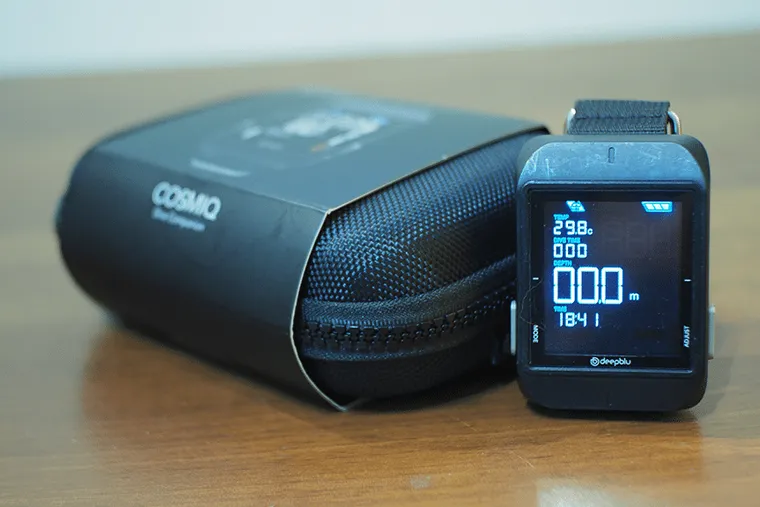
Coincidentally, I was heading to a Rescue Diver course and borrowed a low-key grey unit from a friend to check out the actual appearance. The outer shell has changed from the previous black to white, and combined with the screen bezel and strap, the overall feel is significantly elevated in quality. As for the question many people have about whether it picks up dirt or scratches easily — with normal use, some marks are inevitable. After all, we're rolling through waves and scrambling over rocks at the water's edge. Just take a look at the beat-up little black unit that's been used for six months sitting next to it. With that in mind, I'd recommend using the screen protector that comes in the box to prevent scratches. I've heard from quite a few perfectionists who wish the manufacturer would release a full protective case for the entire watch — that's up to whether the brand is listening. But since the COSMIQ is positioned as an entry-level dive computer at a very accessible price point, perhaps those concerns about accessories are less pressing than they might seem.
Drawbacks:
After covering so many positives, it's only fair to mention some drawbacks. In my view, the biggest issue with Deepblu is that full localization has not yet been achieved. While Taiwanese users generally have decent English skills, an international brand looking to break into local markets truly needs to put in the effort to complete localization in local languages. Some of my Japanese friends, for instance, are genuinely put off by the multi-screen and community interface that Deepblu touts so proudly.
As a dive computer brand, COSMIQ is precisely positioned and priced — using excellent value-for-money to swiftly carve out market share, creating quite a buzz. But if Deepblu aspires to expand into the social platform space, it will need to deepen its derivative features to boost user engagement with the app and website, and only then can it leverage traffic to create added value. I'm looking forward to seeing what bold new initiatives Deepblu will unveil as the 2017 Taiwan dive season gets underway — and that underwater gold detection feature, please make it happen (just kidding!).
A word on behalf of someone else:
Since I don't sell watches myself, if you'd like to inquire or take a closer look at one, please contact Coach Guo (zeta0301@gmail.com)!