Contents(4)
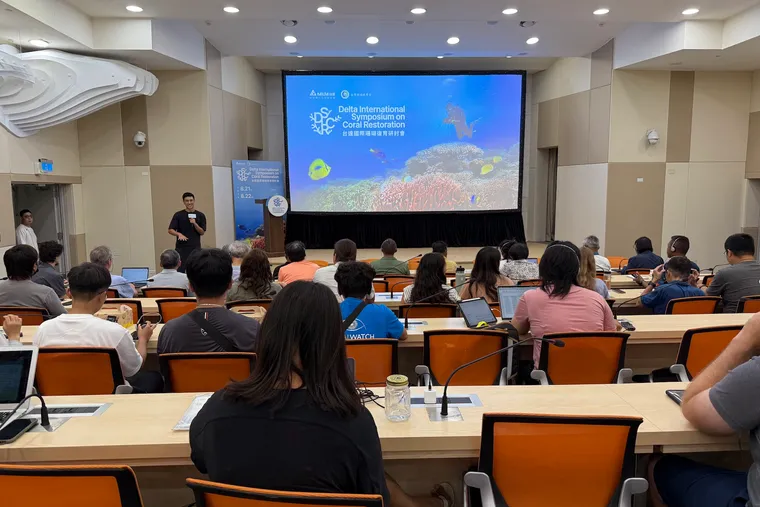
The Delta Electronics (台達電) Foundation held its inaugural "Delta International Coral Restoration Symposium" on August 21–22, 2025, drawing experts from Japan, Australia, the United States, Indonesia, Singapore, and beyond.
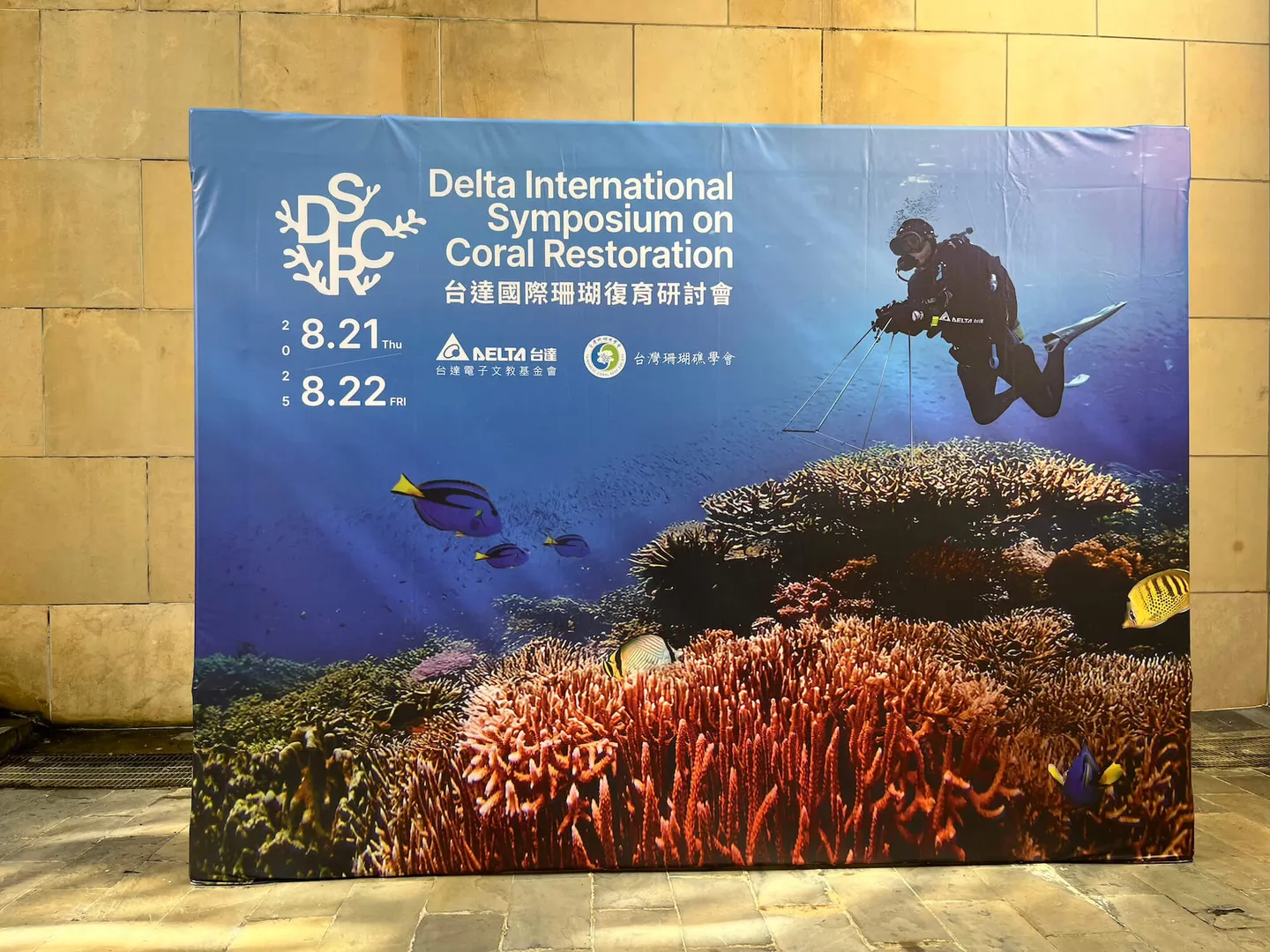
The inaugural symposium was held at the National Museum of Marine Biology & Aquarium in Pingtung.
The Foundation's coral restoration efforts were sparked in 2020, when volunteers were shocked to witness bleached coral during a dive. Since then, the initiative has grown significantly — more than 10,000 coral colonies have been restored to date, a "Tidal Boundary Coral Seed Conservation Center" has been established in partnership with the National Museum of Marine Science & Technology, and the Foundation has set an ambitious goal of preserving 300 coral species over the next five years.
BlueTrend was honoured to be invited to attend this event. Read on for highlights of the remarkable real-world case studies shared at the symposium!
Tailored Approaches: Coral Restoration Methods Vary Widely Around the World
Those who follow coral restoration efforts in Taiwan will know that even within the country, methods differ from region to region. For example, Penghu fixes corals onto specially designed restoration bricks; the Northeast Coast uses frames or rope systems; and in recent years, Xiaoliuqiu has experimented with adhering corals to wave-dissipating blocks.
Restoration techniques are often shaped by local environmental conditions, and this has led different countries to develop markedly different approaches.
In Onna Village, Okinawa, Japan, coral restoration has been underway for 25 years. Local practitioners observed that coral larvae thrived on the steel poles used to cultivate the local seaweed known as mozuku, and from this insight developed a method called "Habi-tate" — growing corals directly on these steel poles.
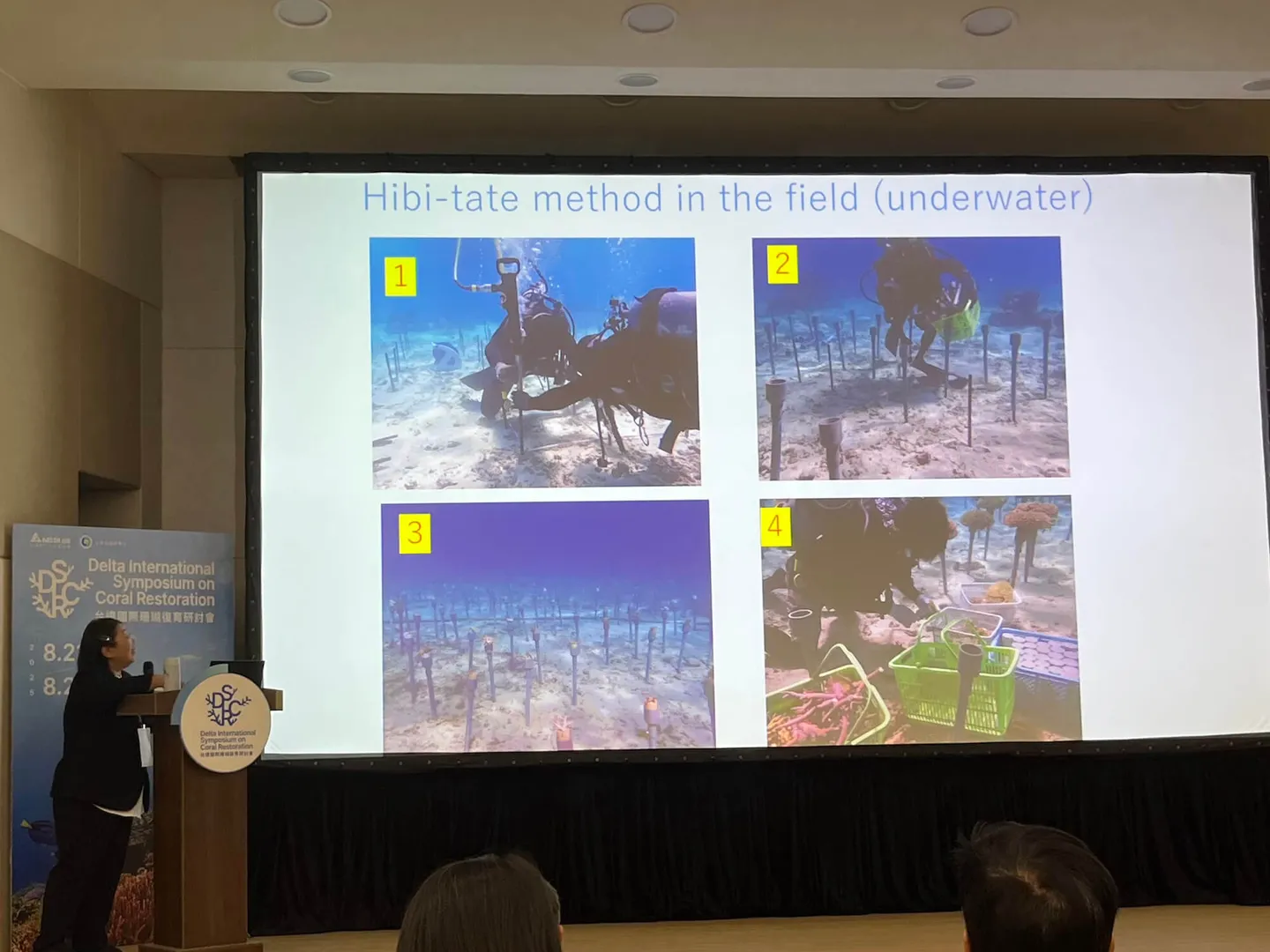
Onna Village plants corals on individual steel poles, an idea inspired by the cultivation of the locally renowned seaweed mozuku.
Indonesia's Coral Triangle Center promotes the MARRS (Mars Assisted Reef Restoration System) method, which uses sand-coated steel frames known as "coral stars" to which coral fragments are attached. This approach is particularly well-suited to rubble-bottom seabeds. The frames are simple to fabricate and low-cost, requiring nothing more than a small general workshop to produce.
The National University of Singapore has constructed the country's largest artificial reef — a multi-tiered structure standing 10 m tall that ensures corals at different depths all receive adequate sunlight, while simultaneously providing habitat and shelter for marine life. The reef has been installed on a sandy seabed off the coast of Sisters' Islands.
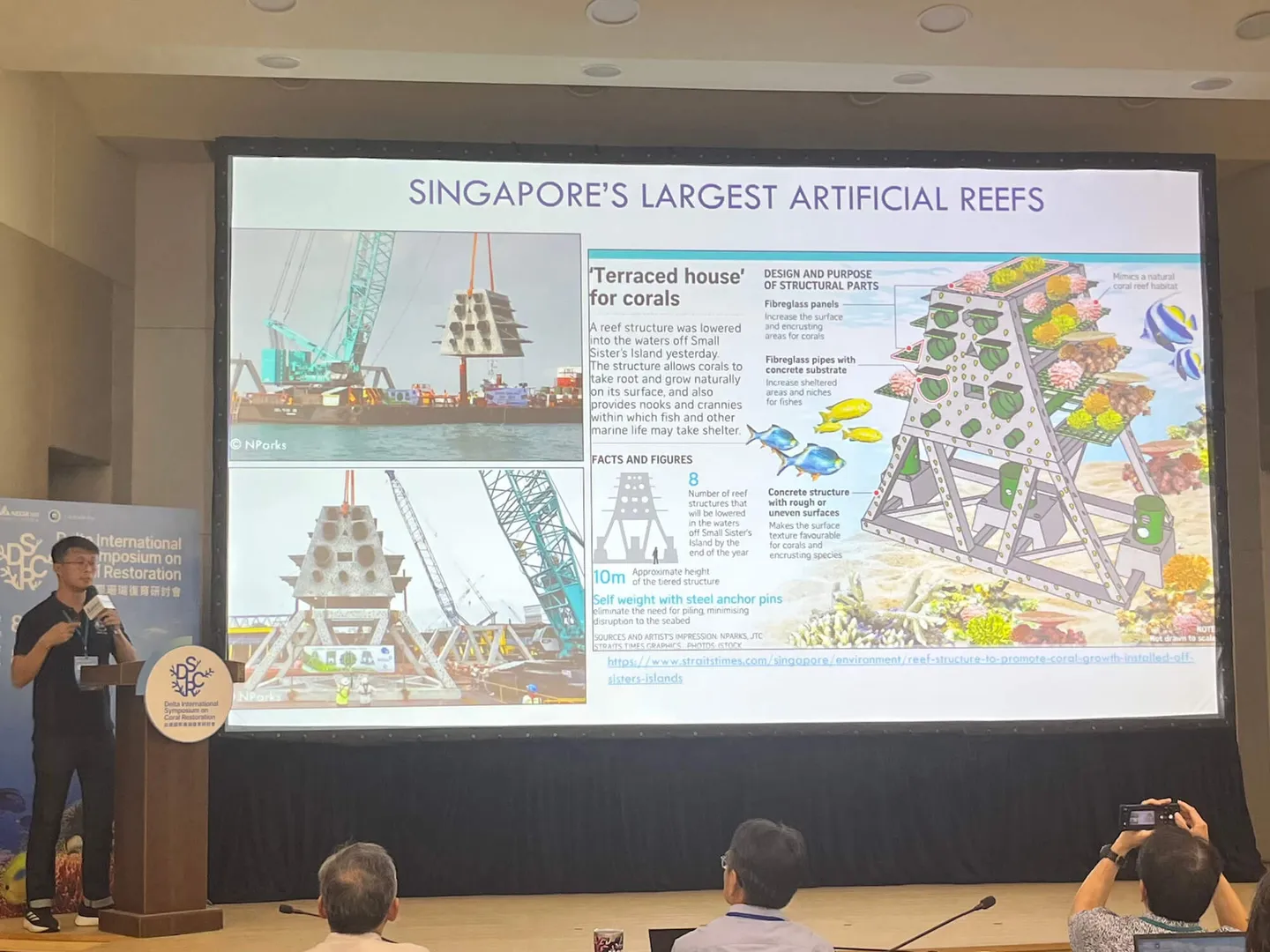
Singapore's coastal waters are chronically turbid due to busy nearshore economic activity, making light penetration a key design consideration for the artificial reef.


Planting Coral Isn't Enough — We Need to Cultivate "Super Corals" That Can Withstand Warming
As marine heatwaves grow ever more frequent, planting coral alone is no longer sufficient. We must also identify "super corals" capable of resisting the effects of climate warming. This is precisely the moment where science and technology come together — through research that identifies the stressors corals face, selects resilient strains, and creates environments that promote rapid coral growth.
A poster area adjacent to the main venue showcased research findings from institutions across Taiwan, including Academia Sinica, the National Museum of Marine Biology & Aquarium, the National Museum of Marine Science & Technology, National Sun Yat-sen University, and National Taiwan University. Delta Electronics (台達電) drew on its decades of expertise in the technology sector to design lighting spectrum and water quality management equipment purpose-tuned for coral growth. This technology has been deployed at the Tidal Boundary Coral Seed Conservation Center and, last year, was introduced in collaboration with Singapore's National Parks Board in support of the "100,000 Coral Restoration Initiative."
Beyond asexual reproduction, sexual reproduction is equally critical to improving coral survival rates. Australia's RRAP (Reef Restoration and Adaptation Program) employs innovative technology to collect coral eggs at land-based facilities and settle them onto tiles, which are then cut into small fragments, mounted on carriers, and released into the ocean — helping corals through their most vulnerable early stage. While most coral spawning is seasonal, the research team uses cryopreservation techniques to make these coral-laden tiles available year-round.
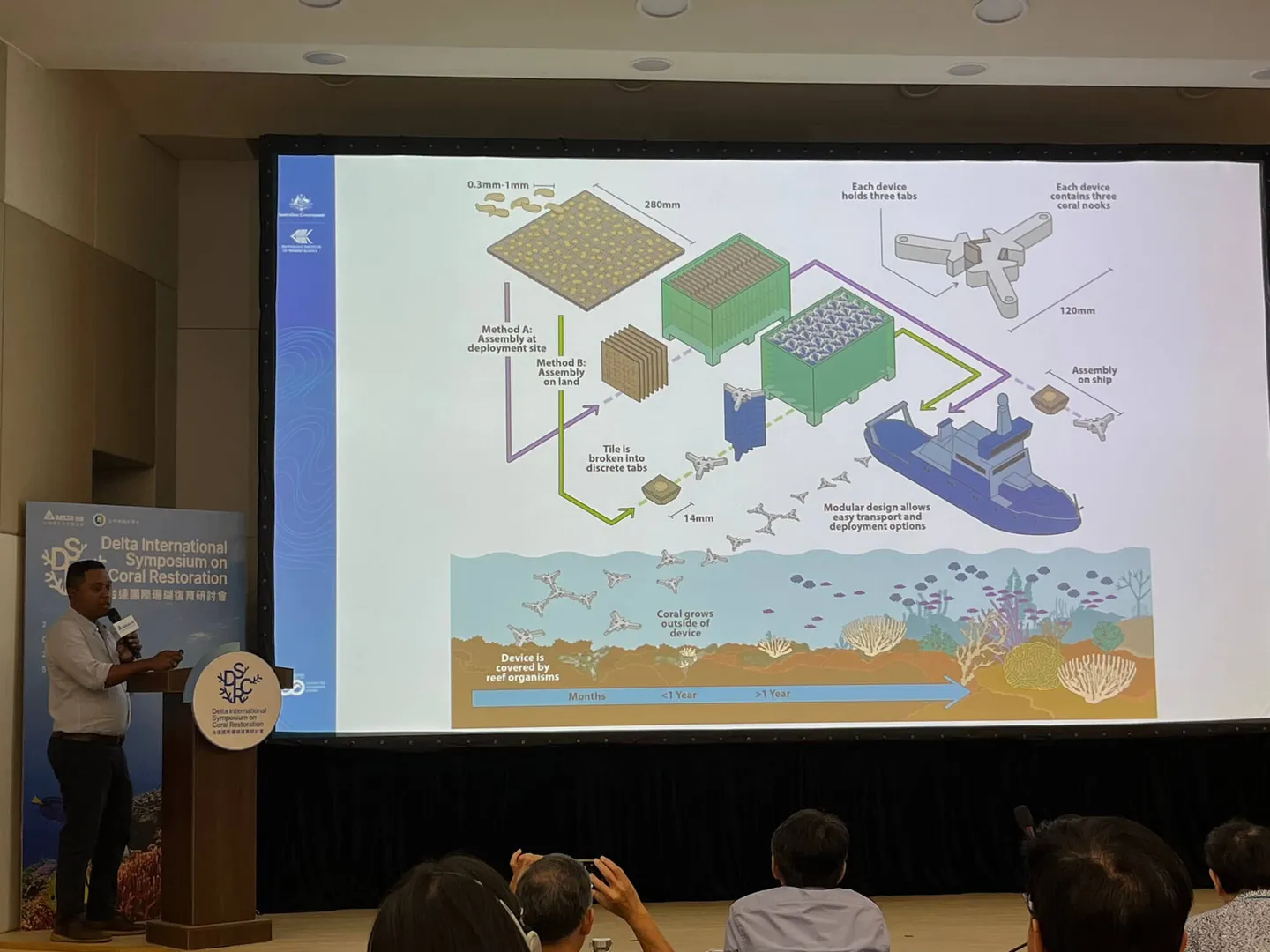
Australia uses aquaculture technology to improve the early-stage survival rate of coral polyps.
Meanwhile, the STAR (Species Threat Abatement and Restoration) metric, promoted by the International Union for Conservation of Nature (IUCN), can quantify whether conservation actions genuinely reduce the risk of species extinction. For coral restoration, this tool clearly illustrates how actions reduce threats and improve survival rates, while helping organisations compare the effectiveness of different strategies and ensure resources are directed toward the most critical and impactful measures.
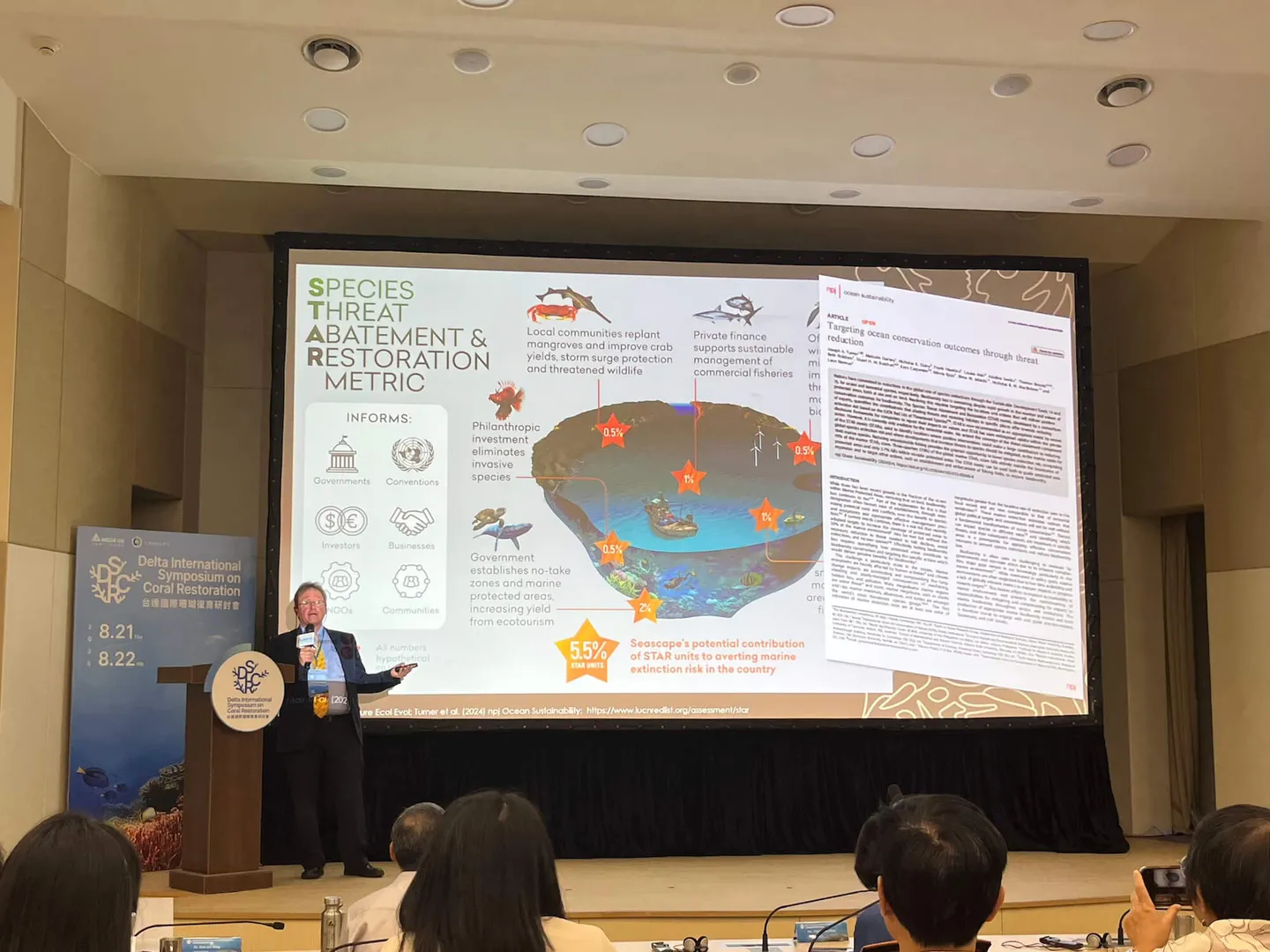
Quantifying restoration outcomes through metrics helps evaluate whether actions constitute effective measures.
Strength in Unity: Protecting Coral Requires Collective Action
Coral restoration is never a solo endeavour. Focusing solely on planting coral — without exchanging experiences or pooling resources — often yields limited results. Faced with rapidly warming oceans and escalating environmental pressures, cross-border learning and collaboration are the only path to accelerating the search for more effective solutions and collectively building ecosystem resilience.
In recent years, Delta Electronics (台達電) has not only invested resources in domestic coral restoration but has also actively extended its reach internationally, forging connections with organisations in other countries and exchanging expertise. It has become the first Taiwanese company to receive United Nations accreditation, attend the UN Biodiversity Conference, and host a side event there — a milestone that demonstrates corporate accountability in the conservation arena and brings Taiwan's efforts to the world's attention.
This symposium likewise provided an invaluable platform for Taiwanese academic institutions, NGOs, and other stakeholders to engage face-to-face with international experts, gaining insight into each other's challenges and breakthroughs in coral restoration. Most importantly, it created new connections and opportunities for collaboration. We look forward to a future in which Taiwan's experiences reach a wider global audience and contribute an even greater impact to conservation efforts worldwide!
Further Reading
- 2025 DISCR Delta International Coral Restoration Symposium
- Inaugural Delta International Coral Restoration Symposium Held — 12 Leading Global Conservation Organisations Participate; Delta Aims to Conserve 300 Coral Species in the Next Five Years
- Coral Triangle Center
- Reef Restoration and Adaptation Program
- IUCN Species Threat Abatement and Restoration (STAR) metric