![[Expert Dive Travel] Diving in Okinawa — Everything You Need to Know in Just 1 Article!](/_images/b89ef997ba9a-1440w.webp)
Contents(9)
- Without a second thought — less than 0.05 seconds of deliberation — my answer is always 『Okinawa』.
- Introduction to Okinawa:
- Eating in Okinawa:
- Diving in Okinawa
- Southern Dive Sites: Kerama Islands
- Central Dive Sites: Sunabe, Blue Cave, Manzamo
- Northern Dive Sites: Hedo Point, Nago Bay, Kouri Wreck, Sakimoto-bu
- Okinawa Outer Islands: Ishigaki
- Okinawa Outer Islands: Yonaguni
If you had to pick one overseas dive destination that's the most comfortable, fastest, and most convenient for Taiwanese travelers, what would it be?
Without a second thought — less than 0.05 seconds of deliberation — my answer is always 『Okinawa』.
Okinawa is so close to Taiwan that you'll barely have time to doze off on the plane before you're already landing. Flights are cheap, and everything from the food to the sightseeing is A++ quality. That's why so many people love going to Okinawa — whether it's a family trip, a company retreat, a dive trip, a shopping spree, or even just a day trip. People have gone so far as to call it "Taiwan's new backyard" and "Why bother going to Kenting when you can go to Okinawa?" — and now the bold "Okinawa day-trip" trend is taking off. That tells you just how insanely popular Okinawa has become!
Having worked at both a Japanese dive shop and a Chinese-speaking dive shop in Okinawa, I could talk about life there for three days and nights without running out of things to say. So in this article, I'll keep it concise and share "what makes Okinawa so great" — broken down into the following sections:
Introduction to Okinawa:
First of all, Okinawa is a remarkably unique island. Although it's part of Japan, the culture and vibe there feel nothing like mainland Japan. You won't find shrines around every corner — instead, you'll see plenty of tombs (because Okinawans consider it perfectly normal to live near their ancestors). Suited-up office workers are a rare sight; instead, the local formal wear is a distinctly flavored floral shirt. Okinawa is a blend of Ryukyuan, Taiwanese, Japanese, American, and Chinese cultures, giving it a style all its own. At any moment, you can experience the flavor of a different country — and that's one of the things that makes Okinawa truly special.
Okinawa is long and narrow in shape — you can drive from the southernmost tip to the northernmost point in just under three hours, roughly the same distance as Taipei to Miaoli. For travelers, this is fantastic news: you don't have to worry about spending huge amounts of time in transit between spots. That's one of my absolute favorite things about Okinawa!
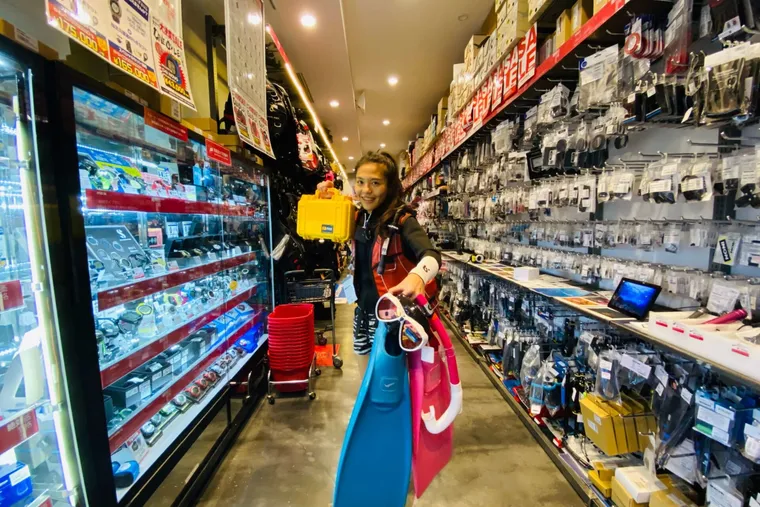
Most Southeast Asian dive destinations are raw and unspoiled — no urban development, no department stores, no outlet malls. Okinawa is a whole different story. After a dive, I can go eat yakiniku, browse department stores, shop for souvenirs and beauty products, or hunt for bargains at an outlet — all in one day! Isn't that amazing? The best thing about Okinawa is how seamlessly urban life and nature coexist. I can switch modes at will — flip-flops and boardshorts on the beach like a true ocean person, or jeans and boots strolling through town like a street-style trendsetter. I can also pop into "mic21", Japan's largest scuba diving equipment retailer (bonus tip: mic21 2020 Lunar New Year Limited Coupon).


Eating in Okinawa:
Food is always a top concern for travelers, and in Okinawa, whatever you're craving, you'll find it — izakayas, BBQ and hotpot, steakhouses, Chinese food, Western food, all of it. And it's genuinely hard to have a bad meal. Not only is the food delicious and diverse, it's also incredibly affordable and generously portioned. Okinawans feed you like they mean it — no dainty little bites here!
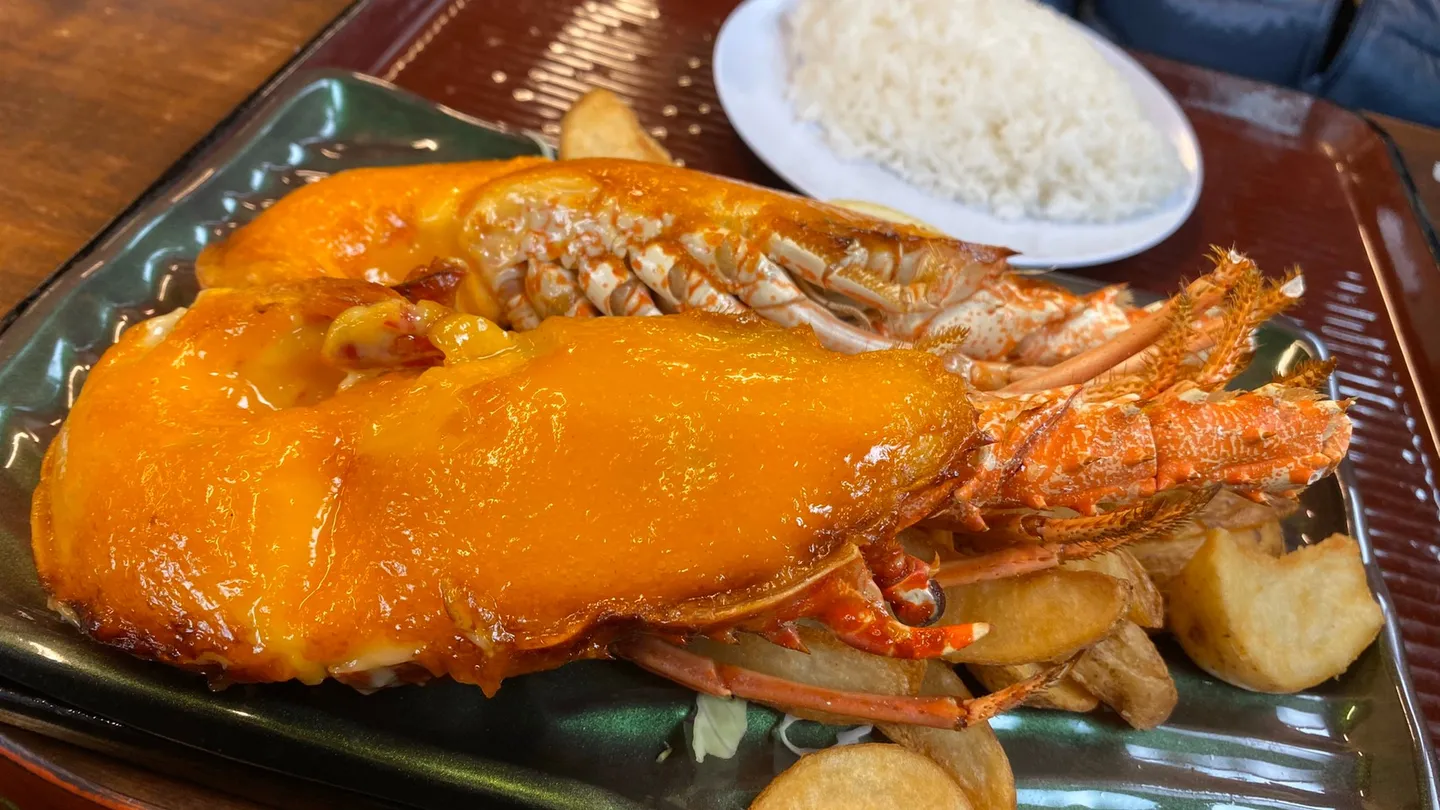
A lavish baked sea urchin and cheese lobster
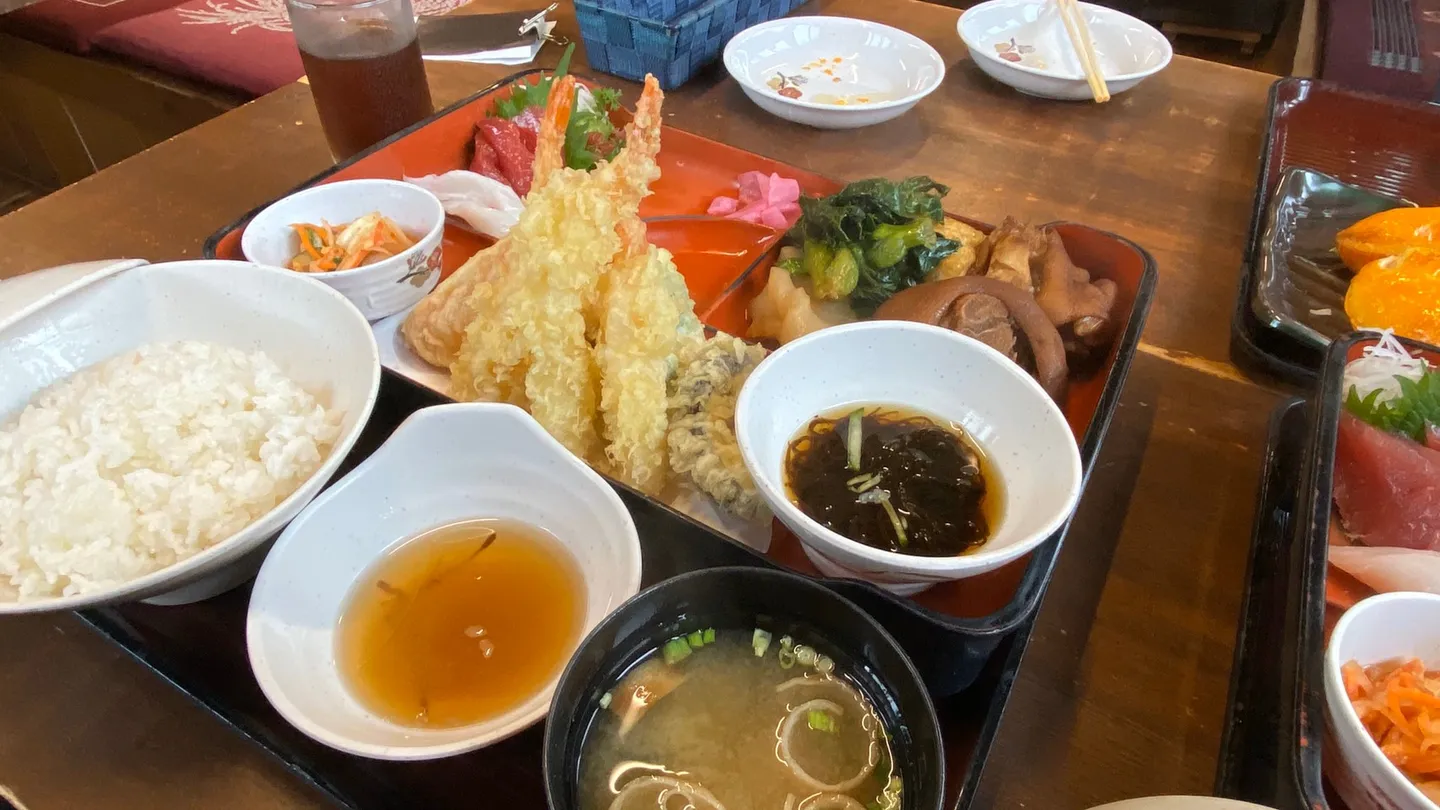
This tempura set meal (fried shrimp tempura, braised pork knuckle, sashimi, pickles, rice and soup) is only 1300 yen!! Incredibly affordable!
And then there's every diver's favorite post-dive reward — beer. Okinawa's very own local brew, "Orion", is super cheap and delicious. When you're here, there's really no reason to drink anything else. The brewery even offers free tours of the brewing process, and you get two free beers at the end! (Don't drink and drive. No alcohol for minors.)
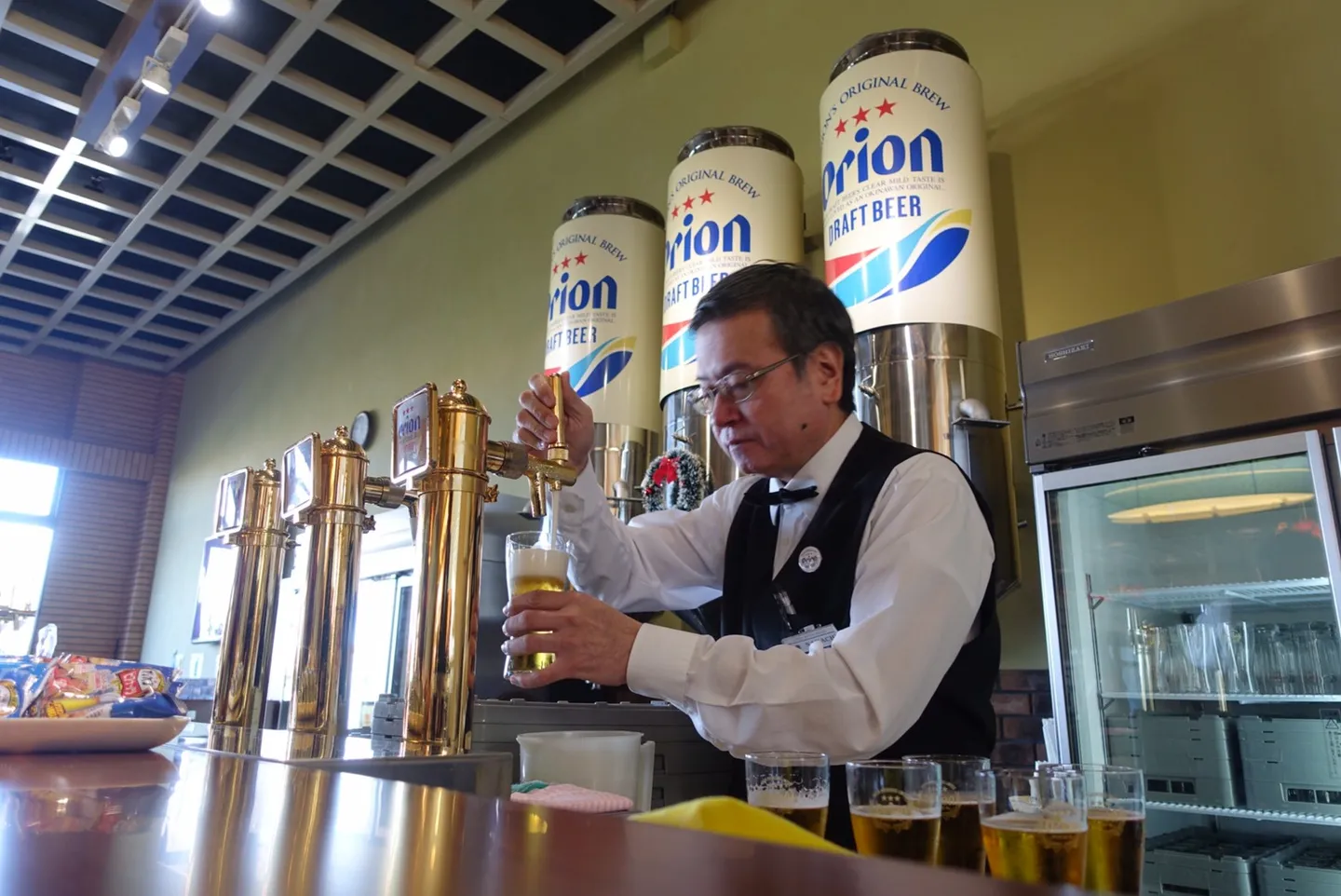
"Orion", Okinawa's very own local beer brand — affordable and delicious
Alright, I'll stop here on the food front and come back to the land activities later — otherwise we'll really go off track. It's time to talk diving. Don't go hitting that back button just yet~
Diving in Okinawa
Southern Dive Sites: Kerama Islands
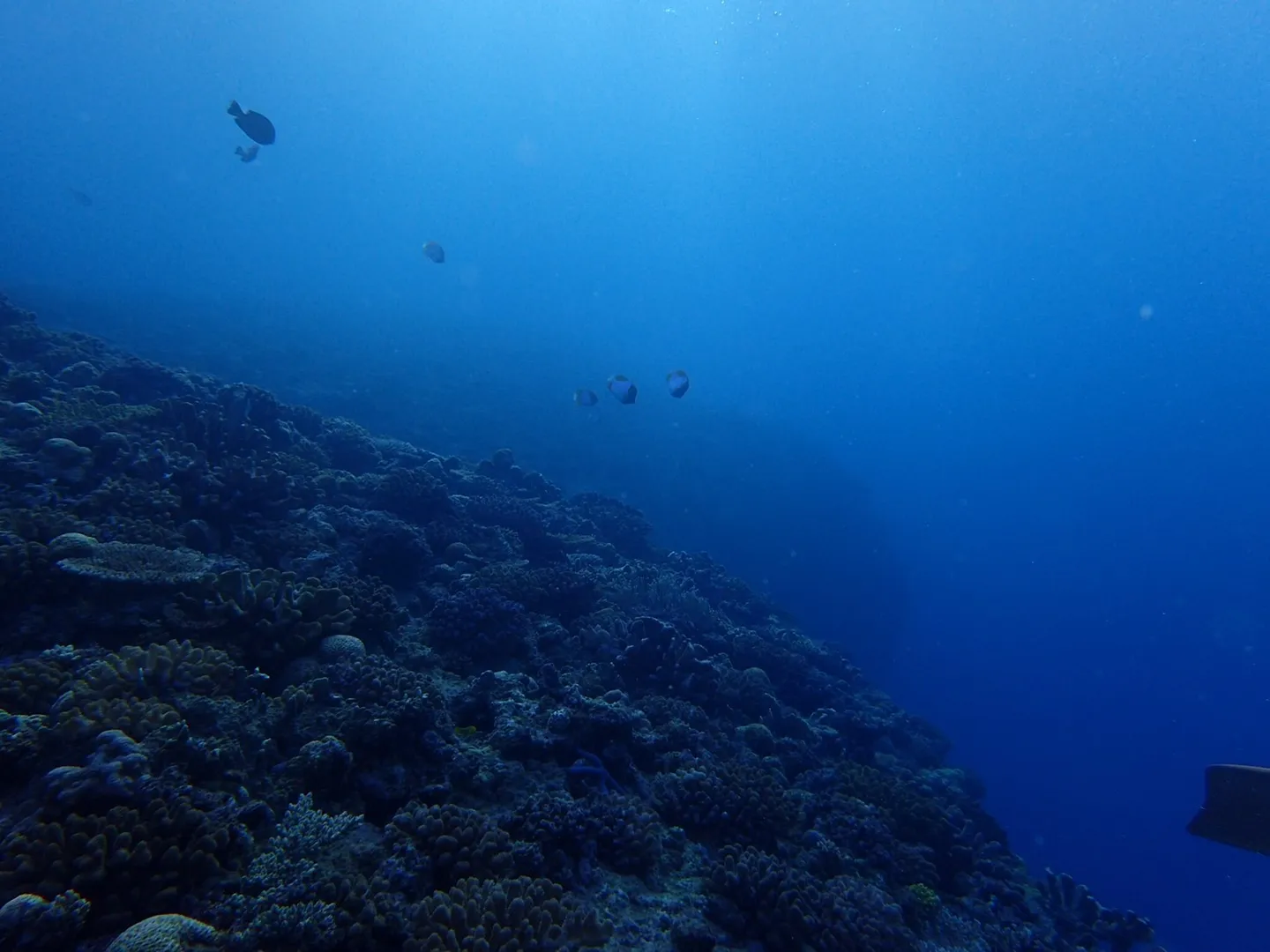
Okinawa's diving can be broadly divided into a few areas: the north, central, south, and the outer islands. The most famous dive destination in the south is without a doubt the crystal-clear sea of the Kerama Islands. Pristine water, white sand, and conveniently located right off the port of Naha — what more could you ask for? There are dive sites suited to every skill level, and you'll occasionally encounter iconic Okinawa megafauna like manta rays and Whitetip Reef Sharks. The marine ecosystem is in excellent shape, and the coral is healthy! With so many small islands, each one has its own unique dive sites and character.
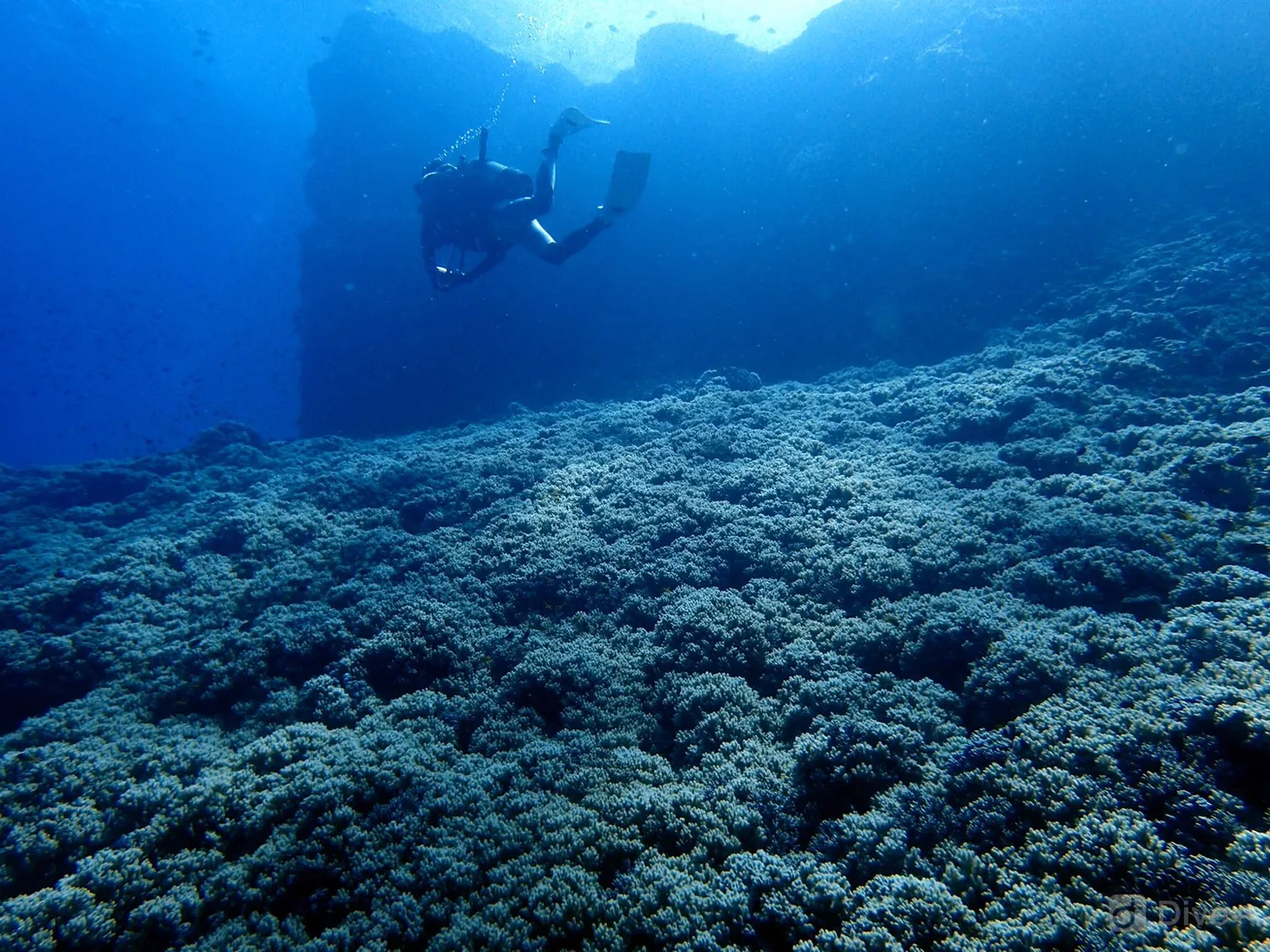
What you see below isn't reef rock — it's all healthy coral!
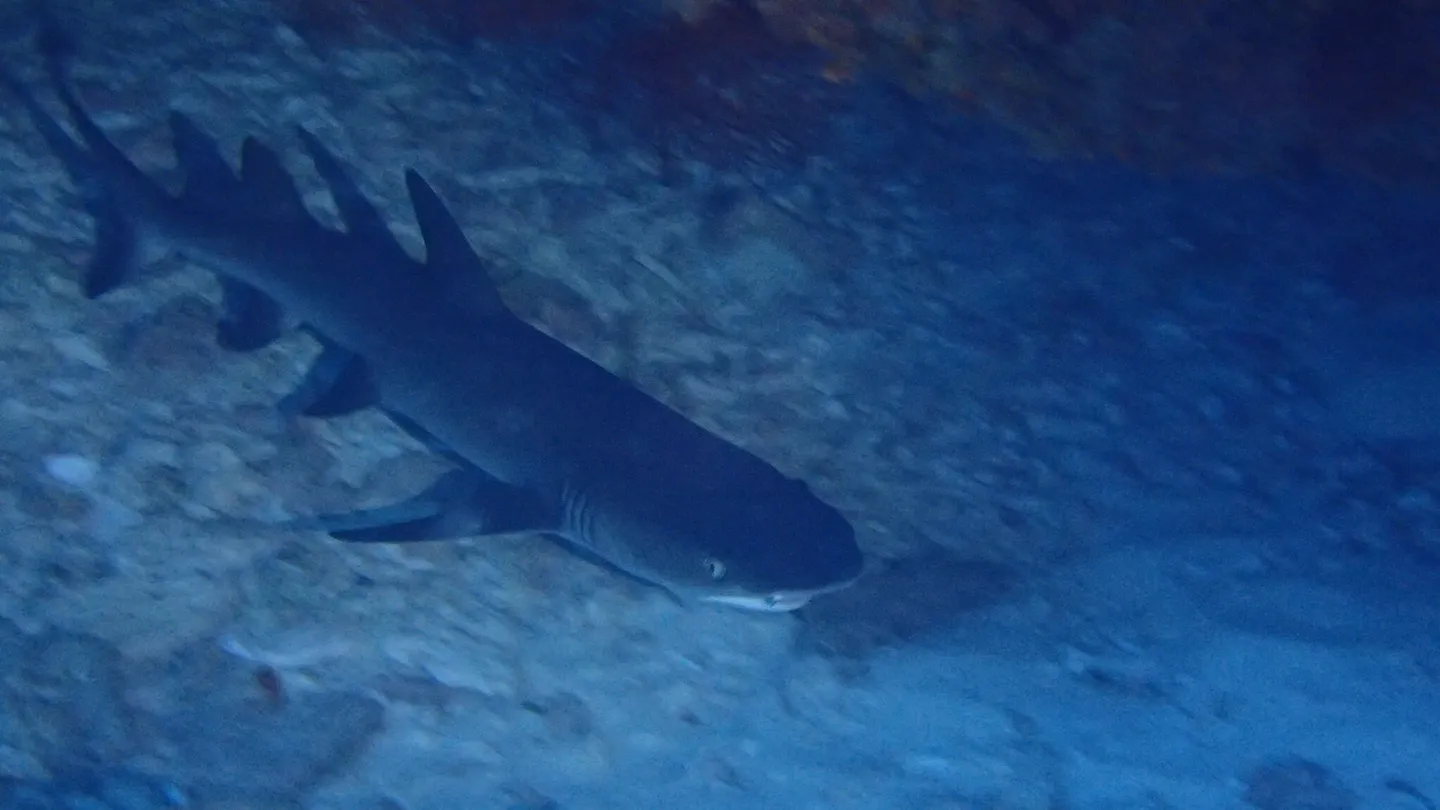
A Whitetip Reef Shark settled in a crevice
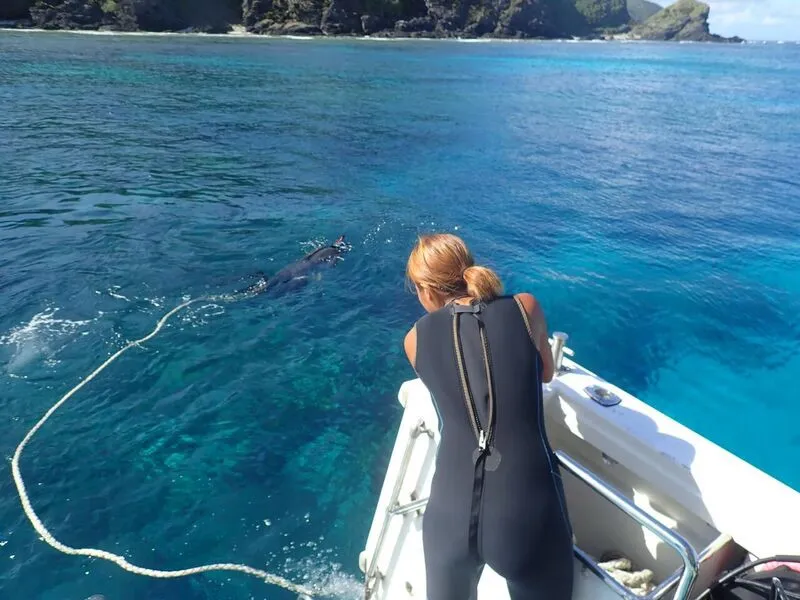
Something truly admirable: even anchoring requires a dedicated diver to go down and set it manually, to avoid damaging the coral
In winter, the Kerama Islands are also home to whale-watching boats. Apparently the chance of spotting a humpback whale is as high as 97%! Some operators even offer a full refund or a free repeat trip if you don't see one — that's how confident they are in the sighting rate. If you're interested, just search "Okinawa whale watching."
Central Dive Sites: Sunabe, Blue Cave, Manzamo
Central Okinawa is the most densely packed area for dive sites, with many dive shops concentrated here. Let's start with Sunabe. Sunabe is a dive site suited to divers of all levels — you enter via stairs off a sea wall. The main highlights include coral coverage of over 95%, denser than the Great Barrier Reef, and a charming traditional underwater mailbox. Simple, a little cute, and looking completely at home beneath the waves. Sea turtles and Whitetip Reef Sharks (they're everywhere in Okinawa) also frequent this spot.
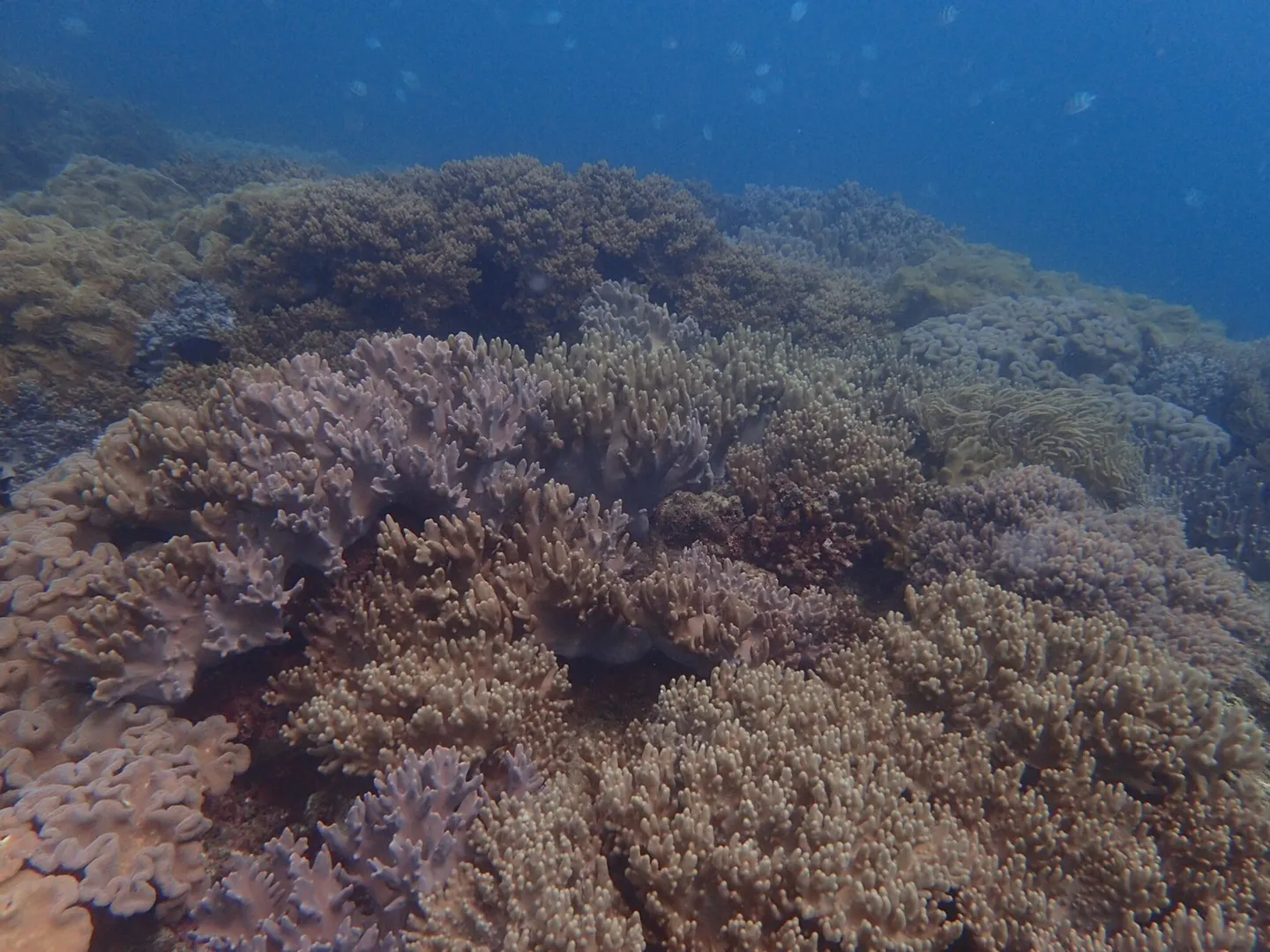
Incredible coral coverage
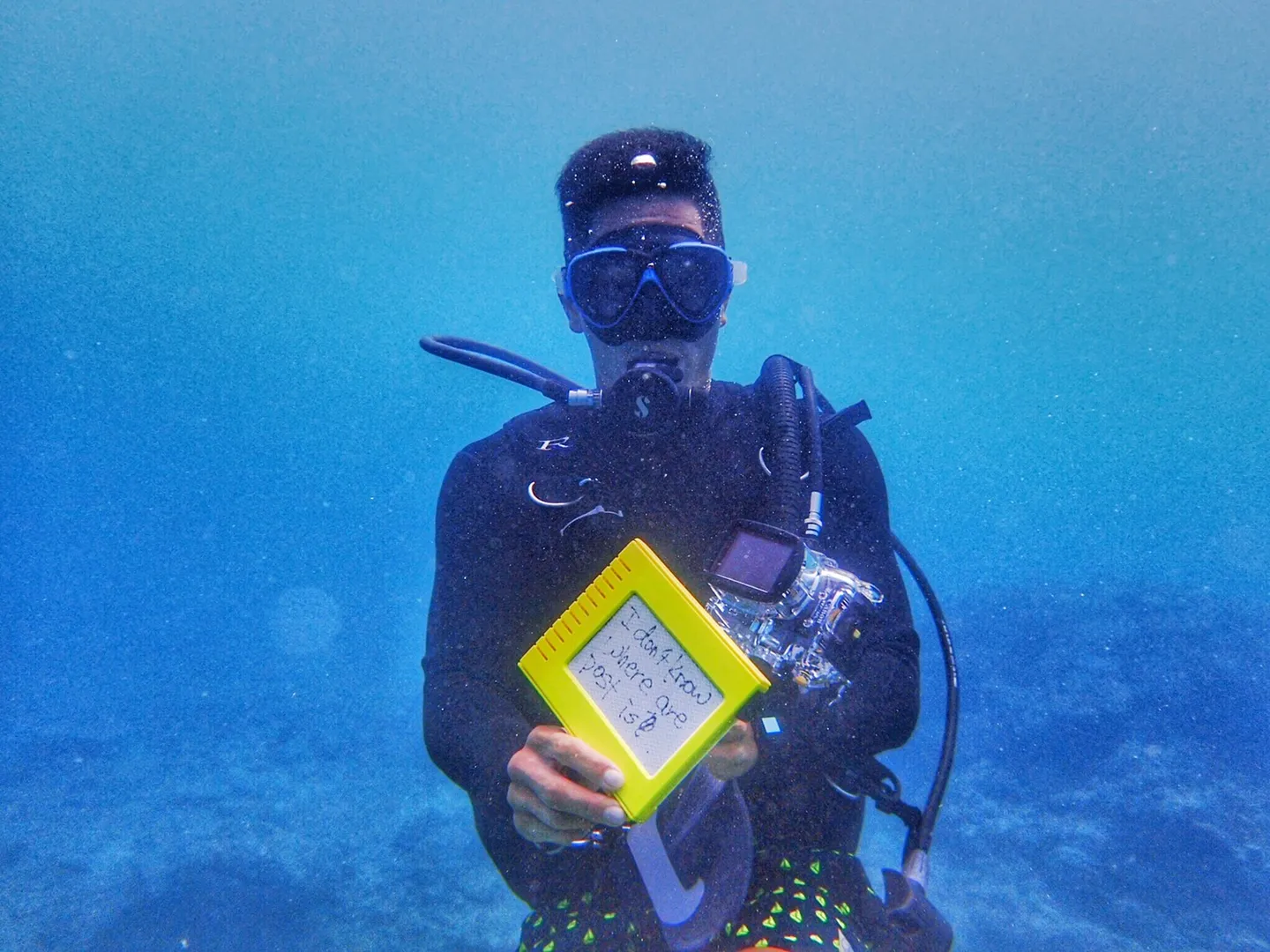
Almost missed the mailbox
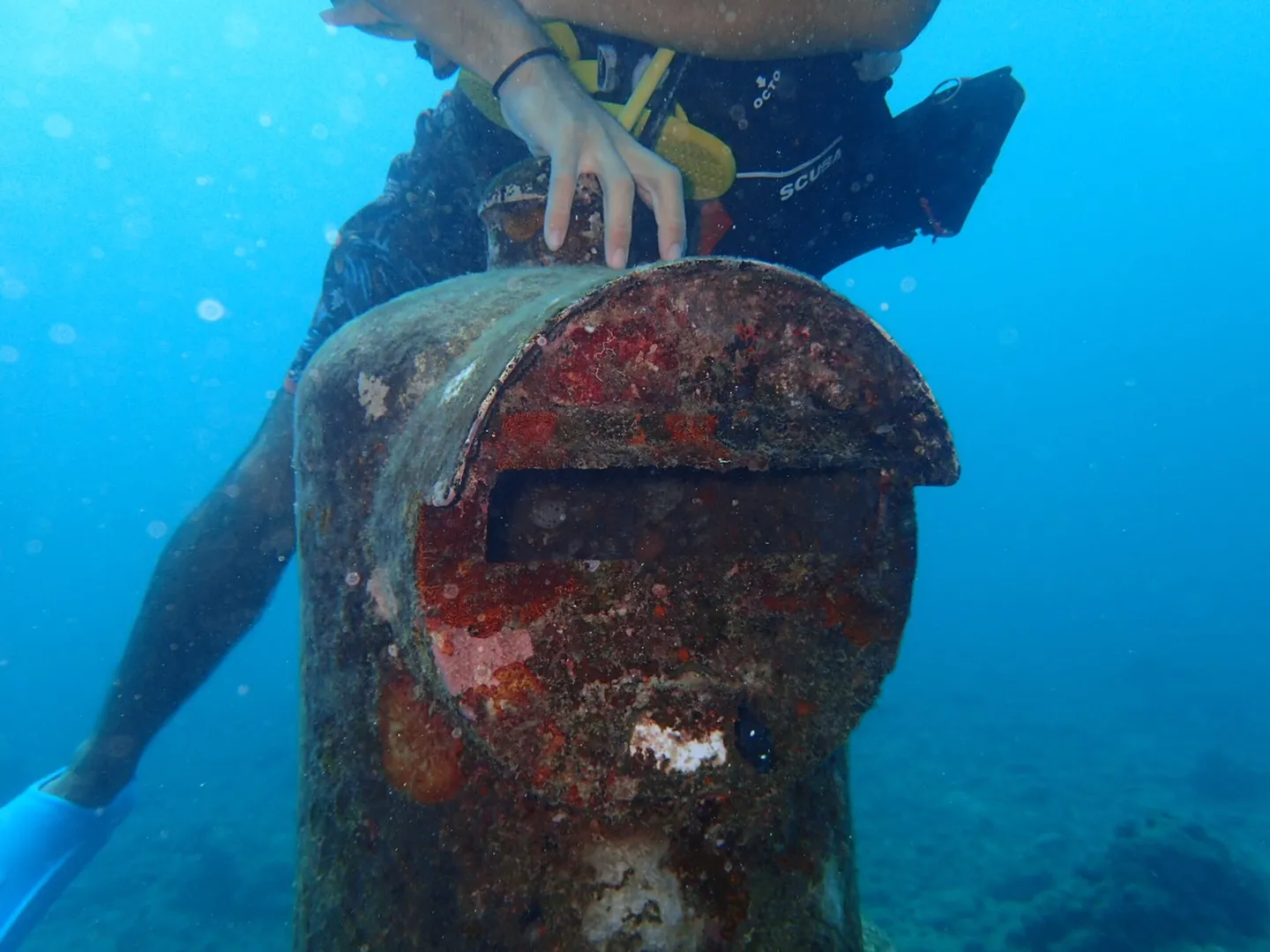
The mailbox itself has a wonderfully traditional Japanese character — simple and charming!
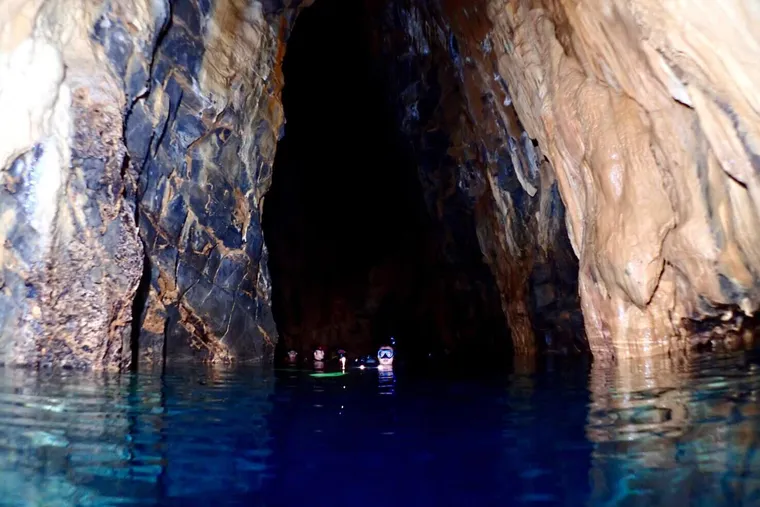
Moving a little further north, we arrive at the Blue Cave (Onna Village). It's hugely popular with tourists, yet dismissed by seasoned divers. But in truth, the Blue Cave is just a single cave — it doesn't represent everything that Maeda Point has to offer. Everyone says one visit to the Blue Cave is enough, but the surrounding dive sites are genuinely impressive. The Blue Cave area has left, right, and outer sections. The left side is rich in macro life — nudibranchs, shrimps and crabs, frogfish, crosshatch triggerfishes, octopus, and cuttlefish — all kinds of adorable critters can be found here! Drop below 30 m and you'll encounter plump nudibranchs and sweeping fields of garden eels!
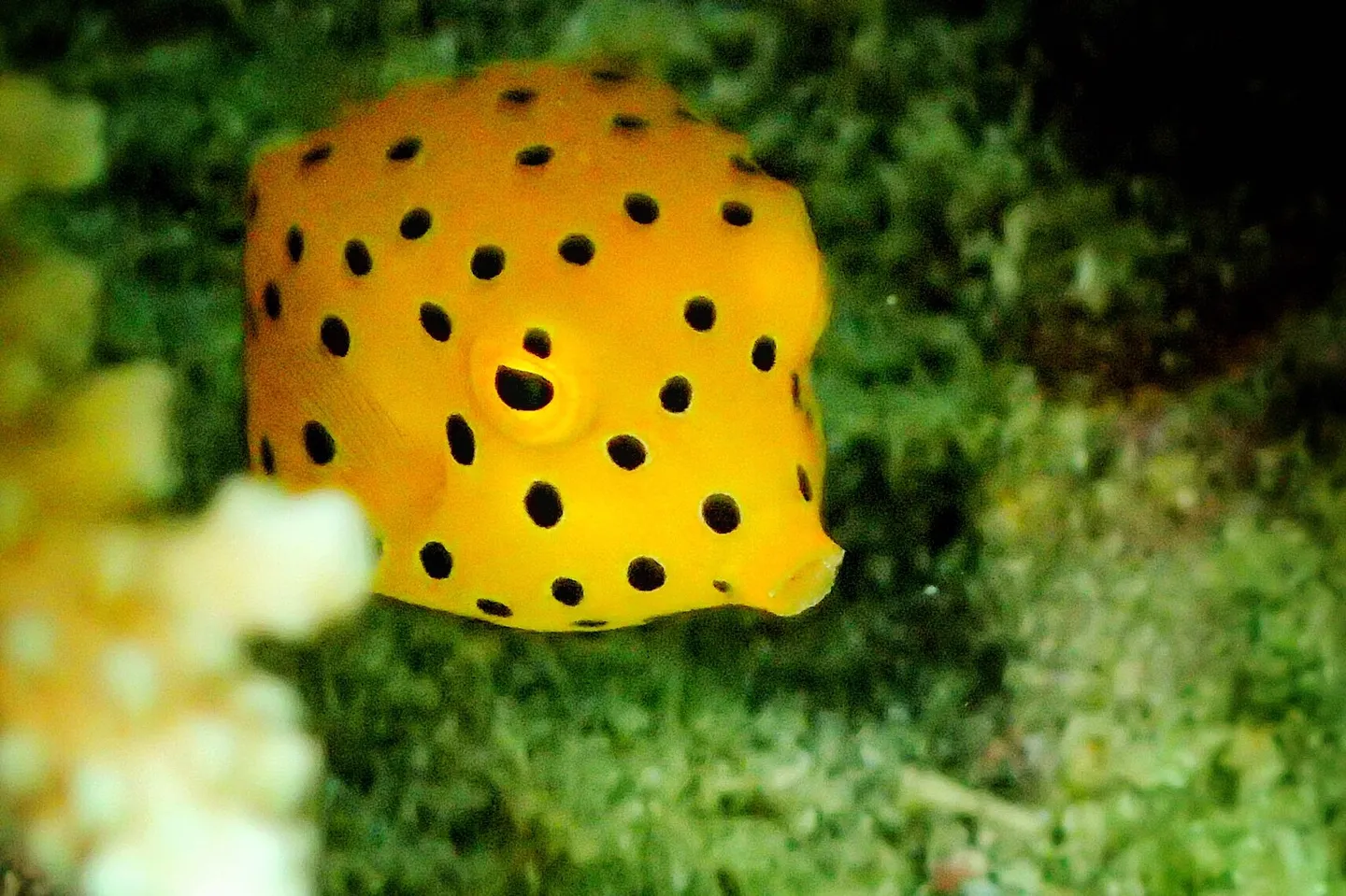
Rich macro life
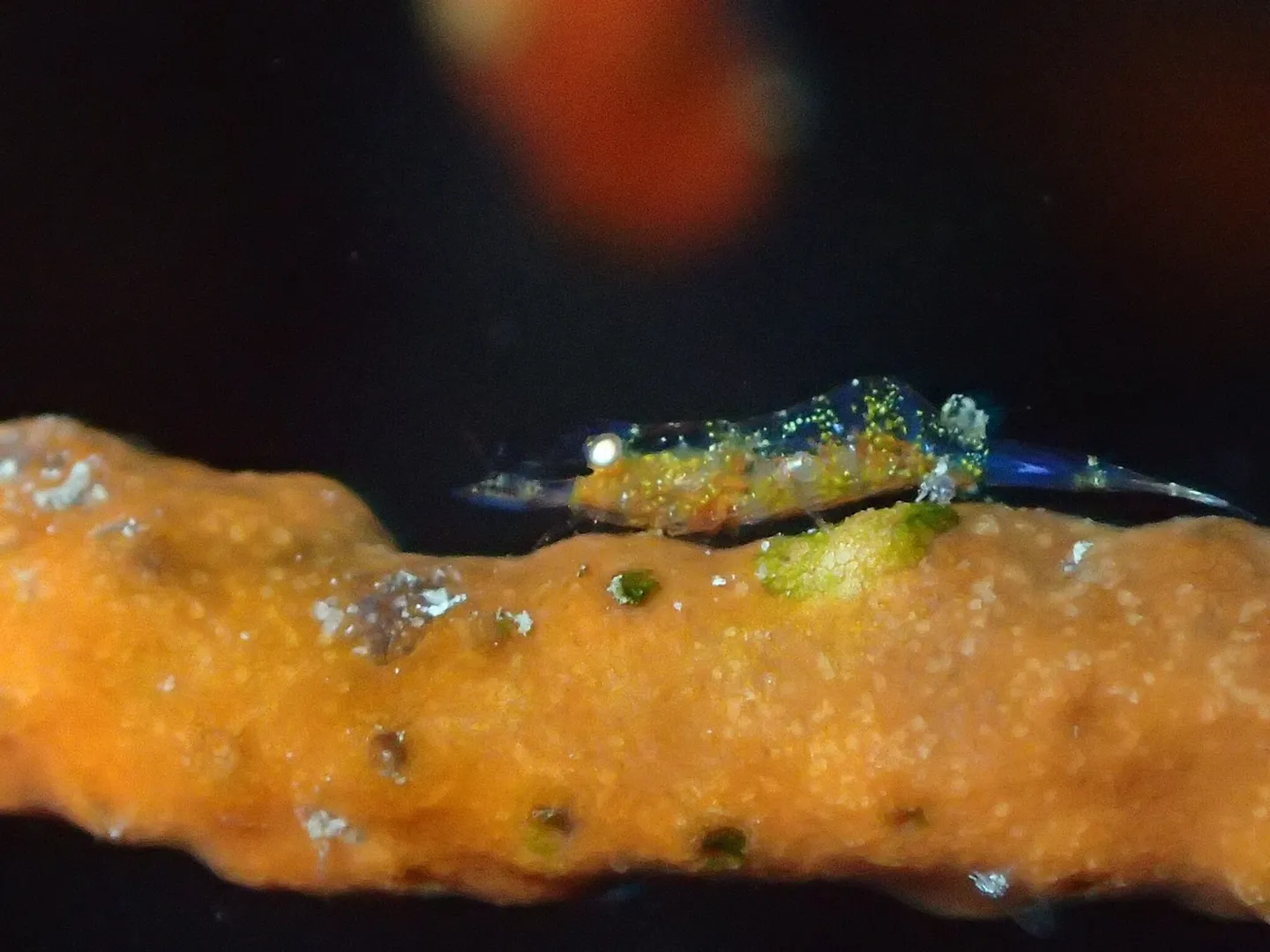
Rich macro life
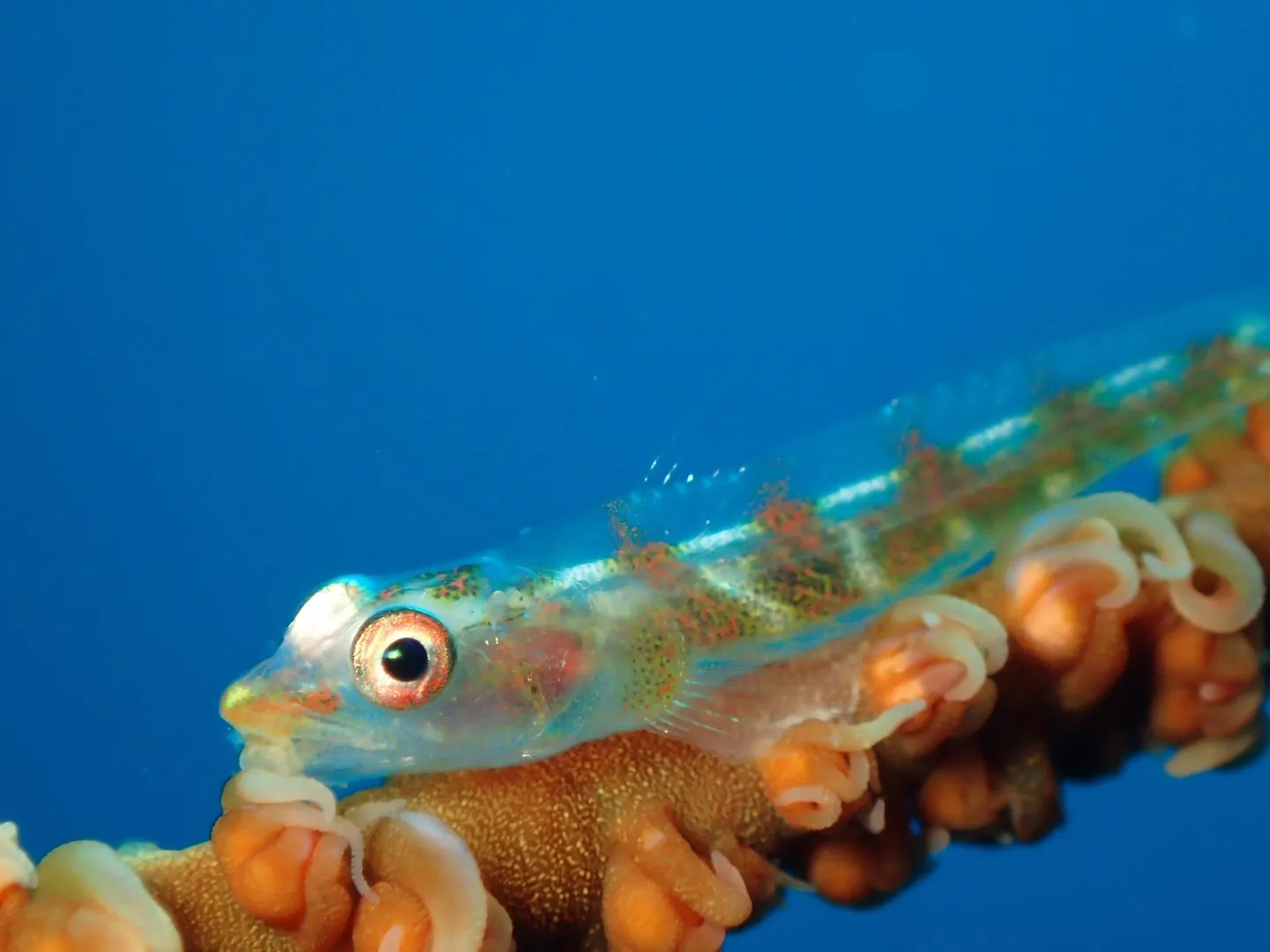
Rich macro life
The right side of the Blue Cave area offers the possibility of big-animal encounters. The very first time I dived the right side, I saw two Eagle Rays, and many dive shops have reported Manta sightings there as well!
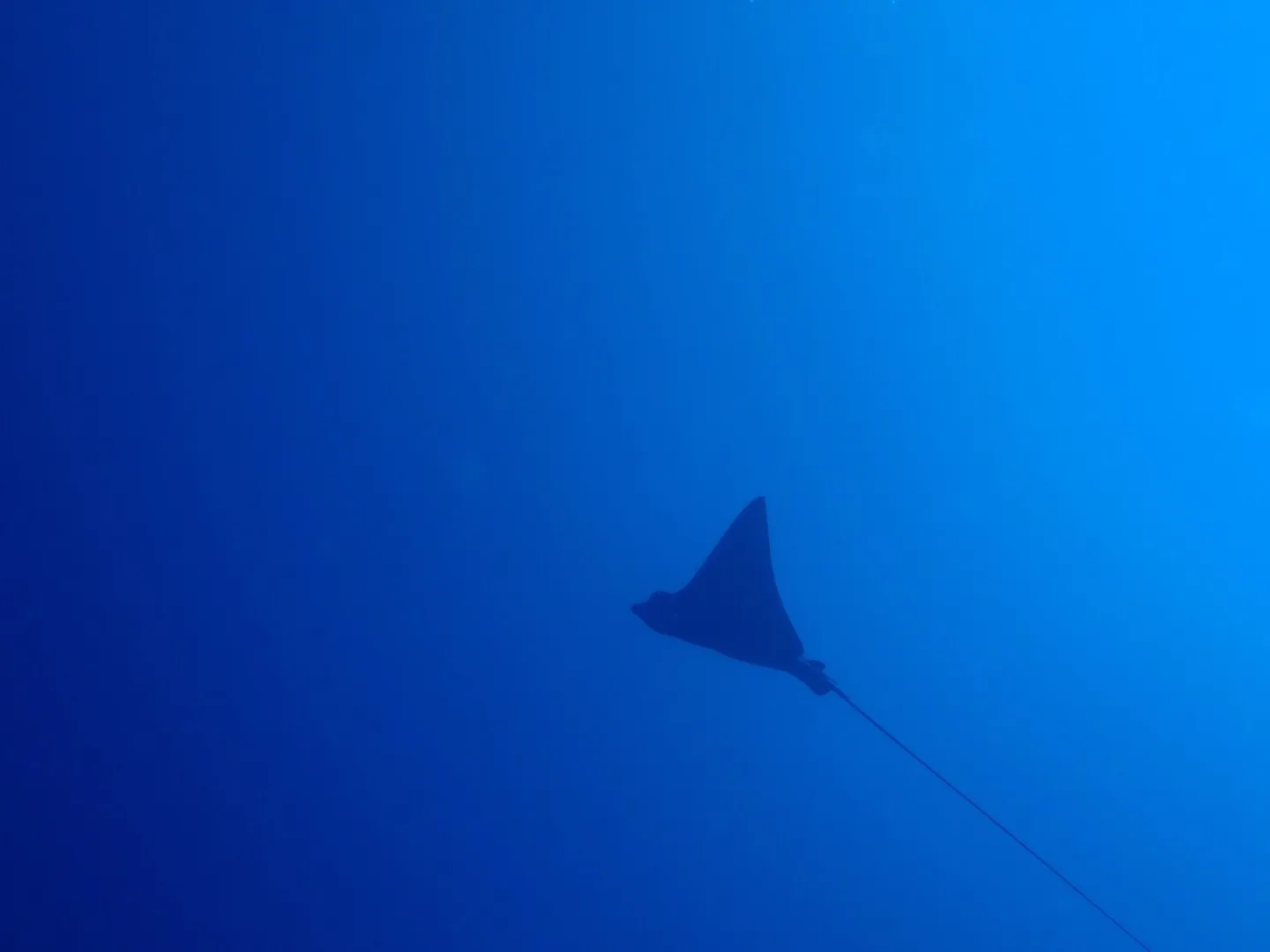
Rich underwater life — dream encounters pop up from time to time
As for the outer section of the Blue Cave area, besides a large school of batfish near the mooring (probably settled there because divers keep seasick-feeding them), there isn't much else of note — though the terrain itself is volcanic mountain topography.
Beyond these Blue Cave dive sites, there are many other nearby spots. Even if I get tired of the Blue Cave itself, I never tire of the surrounding sites. Plenty of Okinawa-based underwater photographers come here to shoot macro and blackwater subjects.
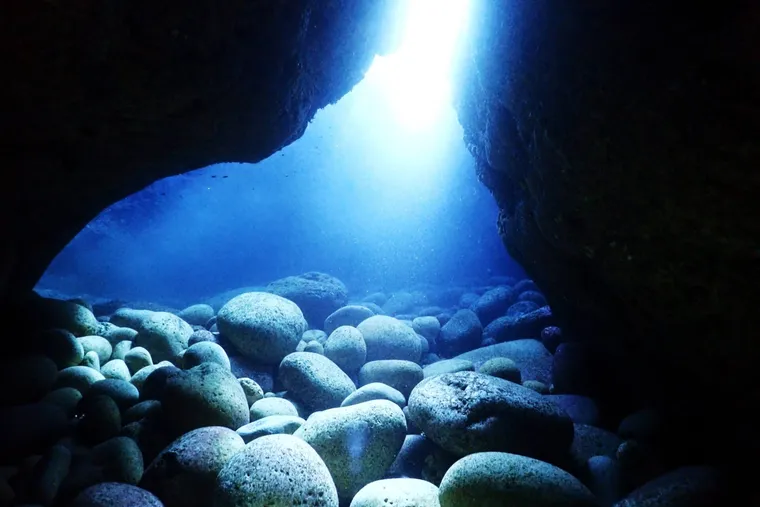
Now let me talk about my absolute favorite dive site — Manzamo. I call Manzamo the "Big-Animal Gacha Machine": every dive you get something different. Strong currents, significant depths — this one's for divers with a solid skill level. Let me share what happened the first time I dived here. I asked my Japanese colleague what we might encounter, and he said: sharks, Manta, and wild Whale Sharks — my three all-time favorites. I jumped in buzzing with excitement. At 20 m depth, my colleague signaled us to hold position, and I didn't question it. Two minutes passed, three minutes passed — nothing. Just as we were about to move on, an absolutely massive large Blacktip Shark weaved right through the four of us. I could feel its fin grazing my face. As it glided past my cheek, I even heard the whoosh of water it displaced. We bit down on our second stage regulators, eyes wide, screaming underwater (though only muffled "uuuuu" sounds came out — occasionally punctuated by what sounded like "FxxK"). It was a shark chasing a school of fusiliers, and in the blink of an eye it vanished without a trace. That dive site was the legendary "Horseshoe" — named for a cave opening that looks like a horseshoe when viewed from inside.
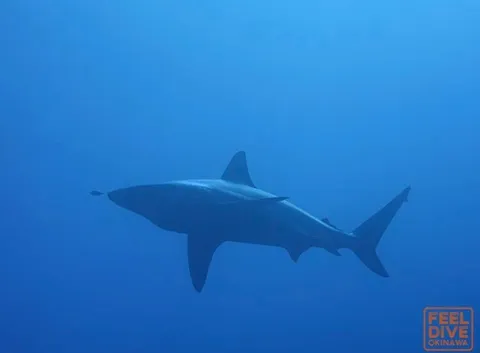
photo credit FEEL DIVE OKINAWA
Without a Torch, you really can't see a thing in there
Another dive site called "Dream Hole" is equally spectacular. As the name suggests, it features a beautifully dramatic cave. In Okinawa, wherever there's a cave, there are sharks — no exaggeration. There are also cathedral-light crevices and all sorts of terrain to weave through, making it a genuinely fun dive. Macro life is rich here too — spotting pygmy seahorses is surprisingly easy. Coral coverage is also excellent.
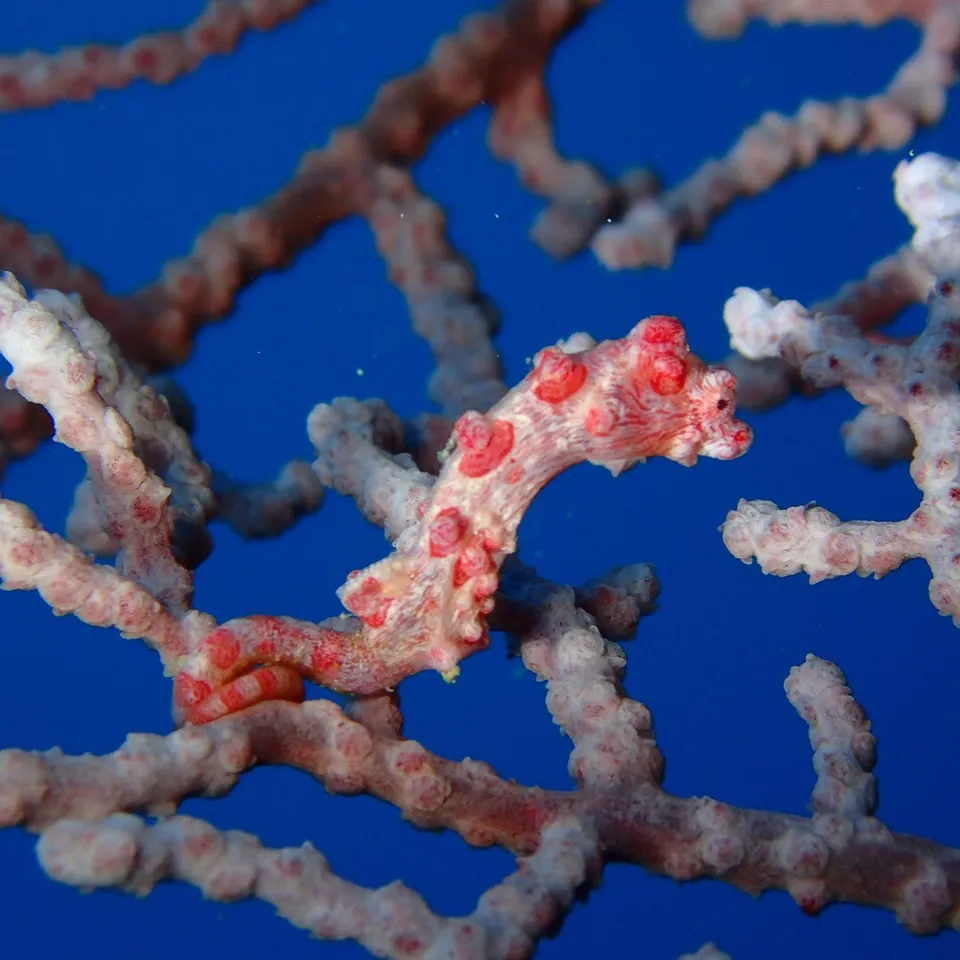
Pygmy seahorses are very easy to find here
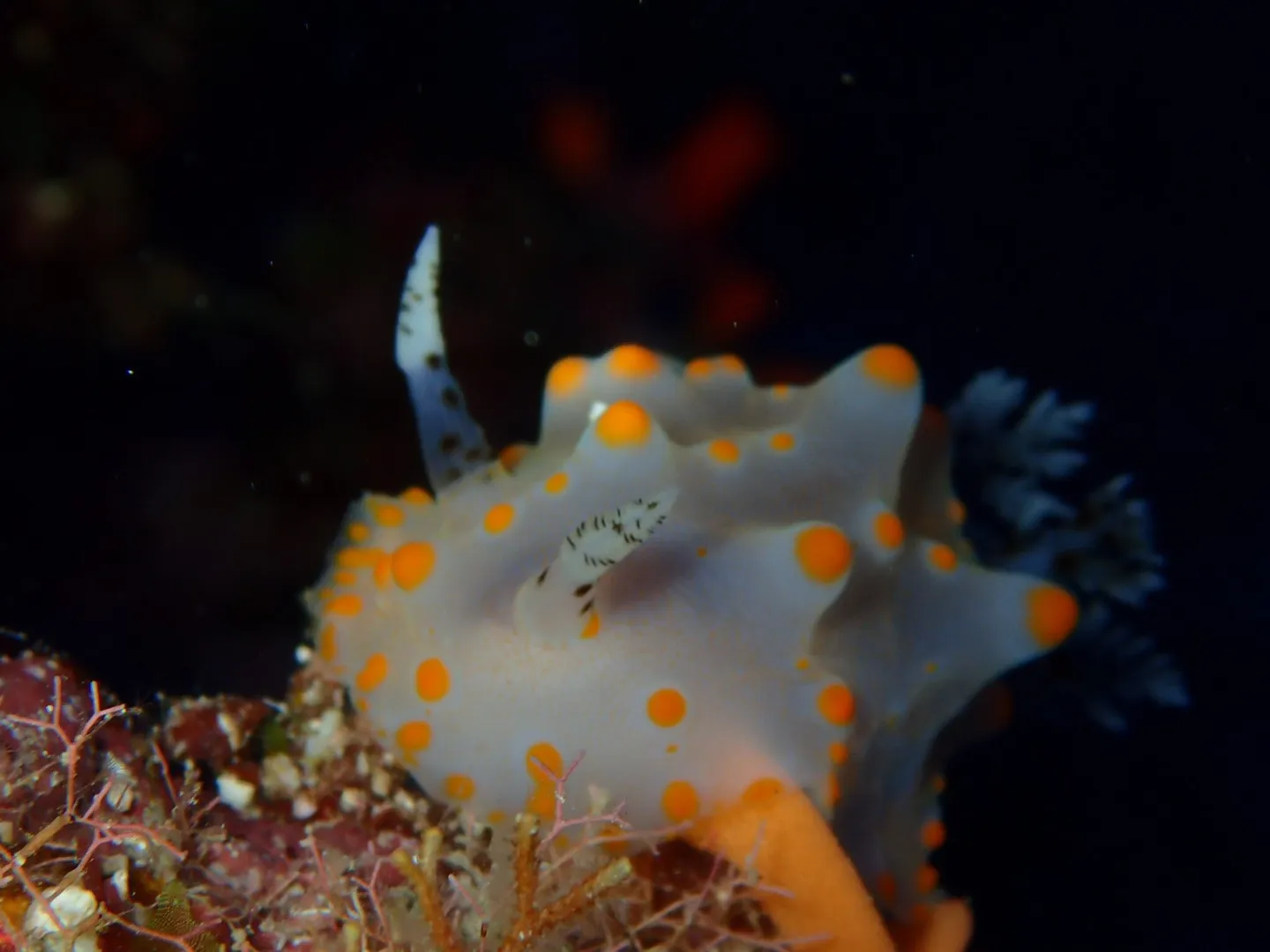
A wide variety of nudibranch species
Northern Dive Sites: Hedo Point, Nago Bay, Kouri Wreck, Sakimoto-bu
Due to my work schedule back then, I never got the chance to dive the northern sites. If you're really interested, I'd recommend seeking out "feeldive" on Instagram — Okinawan underwater photography master Yusuke Miyahara. His photos focus mainly on northern dive sites, and he also runs a dive operation in northern Okinawa. His Japanese-style imagery has captured my heart completely. I'll share a few of his photos below~
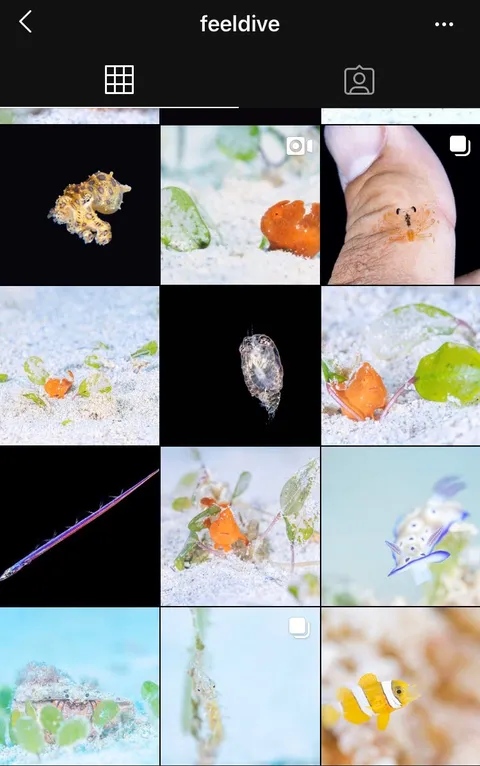
Underwater photography master Yusuke Miyahara's Instagram is filled with stunning Okinawa marine life photos
Hedo Point: Famous for the enormous Futamiwa Rock and caves reminiscent of the Blue Cave
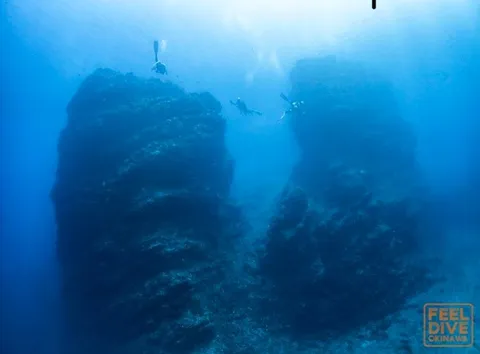
photo credit FEEL DIVE OKINAWA
Nago Bay: There are many dive sites in and around Nago, most of which are known for macro life. For night diving, the blackwater photography opportunities are remarkably rich — rare gobies, frogfish, juvenile fish of all kinds are all relatively easy to spot here!
Kouri Wreck: The seabed here is scattered with sunken relics, mostly American military vessels in surprisingly good condition. Propellers and other structural features remain intact, and you can even penetrate some of them!
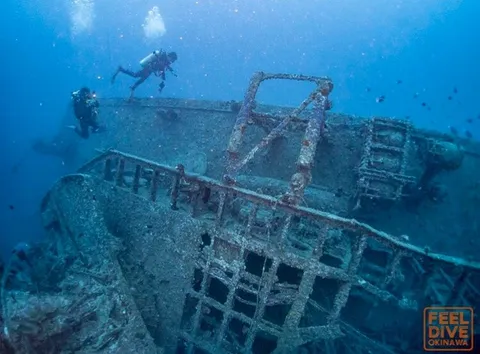
photo credit FEEL DIVE OKINAWA
Sakimoto-bu: Who says only Cebu has sardine runs? Okinawa has its own jaw-dropping sardine bait balls too!!!
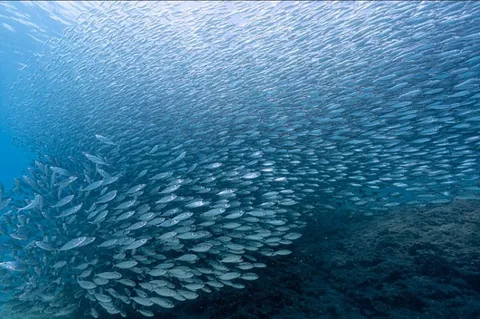
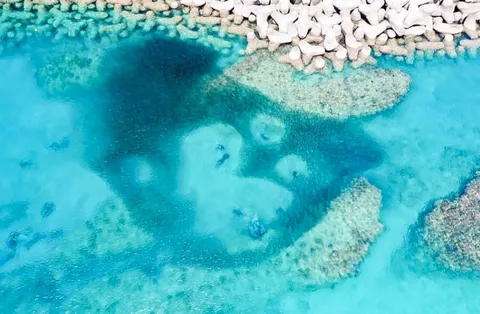
Okinawa Outer Islands: Ishigaki
Okinawa has many outer islands, but if you had to pick the most iconic one, it would undoubtedly be Ishigaki. Ishigaki is also my personal favorite dive destination — not just for the incredible underwater life, but for the scenery, the atmosphere, and honestly everything about it. The star marine life of Ishigaki is the magnificent "Manta Ray." Peak season runs from August to October, but in reality you can encounter them year-round. Ishigaki is often called the "poor man's Maldives" — though personally, I don't think that's fair. It doesn't feel poor at all, and it's a completely different experience from the Maldives — arguably even better and more laid-back. The crown jewel is the stunning Kabira Bay: calm, mirror-like waters that reflect the beautiful mountains and clouds of the Yaeyama Islands. The marine ecosystem here is rich and healthy, and the year-round superstar is the "Manta Ray (manta ray)." The mantas here are large and beautiful, and they'll actually approach divers. Paired with the crystal-clear water and brilliant sunlight, diving here is pure bliss~
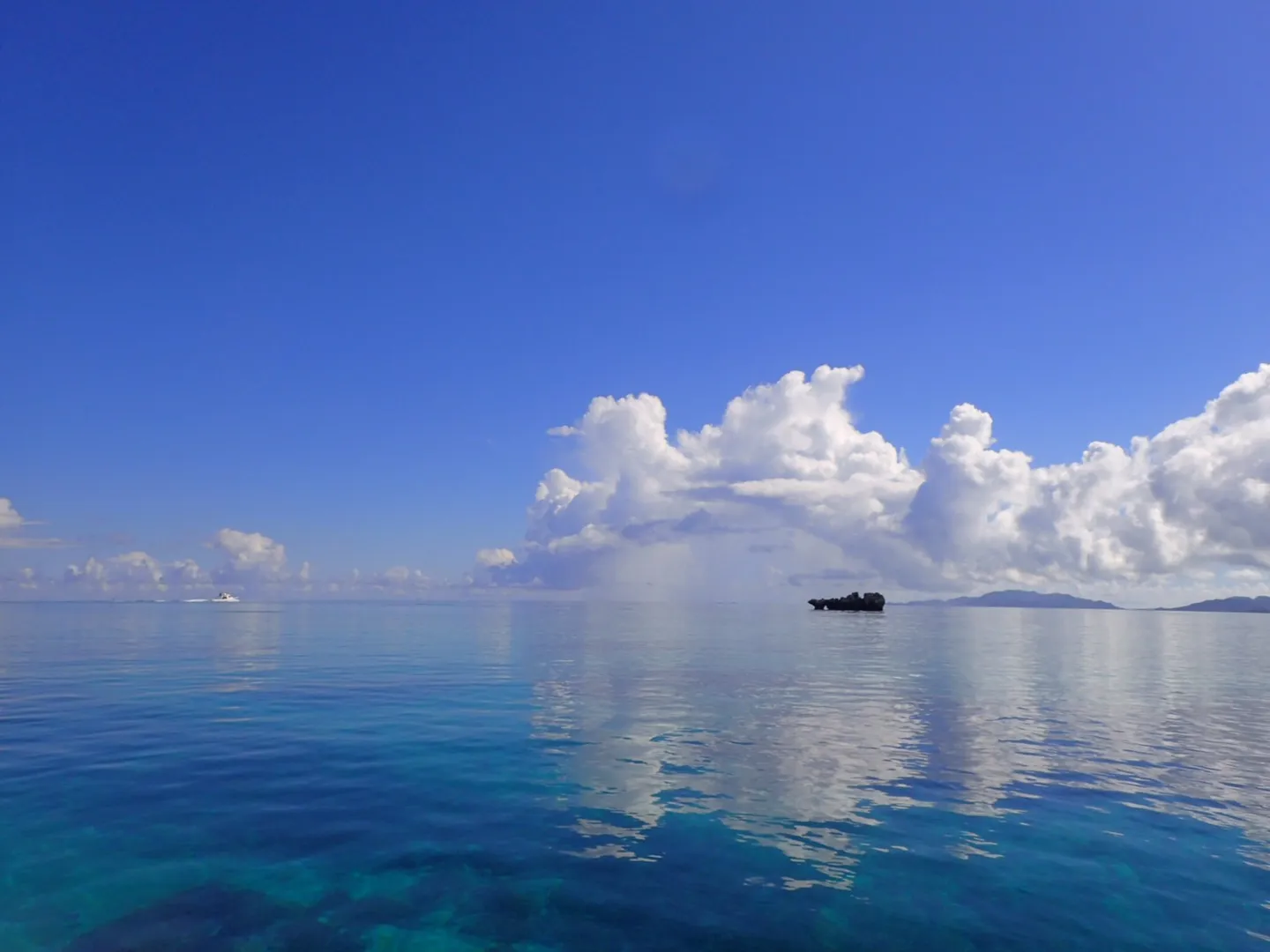
Water as smooth as a mirror
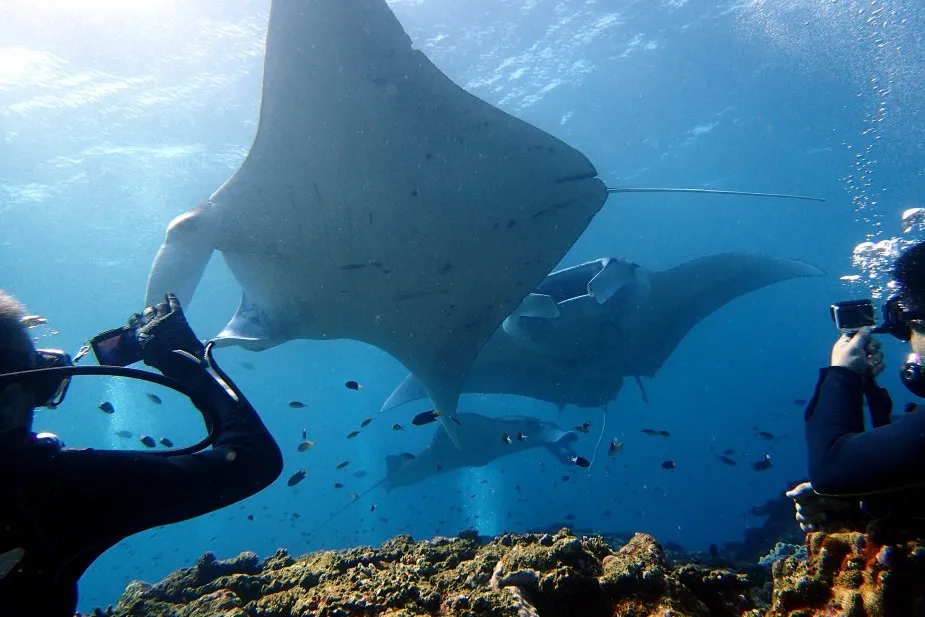
A breathtaking manta ray storm
Beyond the megafauna, Ishigaki is also one of Japan's most celebrated macro photography paradises. A wealth of tiny, adorable underwater creatures make their home here among healthy, colorful coral — making it the top dive destination for Japanese underwater photographers. Whatever your shooting style, you'll come away with stunning images.
What I love most about Ishigaki is how authentic and unhurried island life feels here — clean streets, traditional architecture, hibiscus blooming on every corner, crystal-clear ocean in every direction, and one characterful little shop after another. Wandering through town, you feel like a local. It's something you truly can't put into words until you've experienced it yourself. If you're looking for a stunningly beautiful and unique dive destination, Ishigaki should be your first choice. After your dives, treat yourself to some Ishigaki wagyu beef yakiniku! Sit by the roadside in the evening under a sky full of stars, cold beer in hand — it's the happiest moment of all.
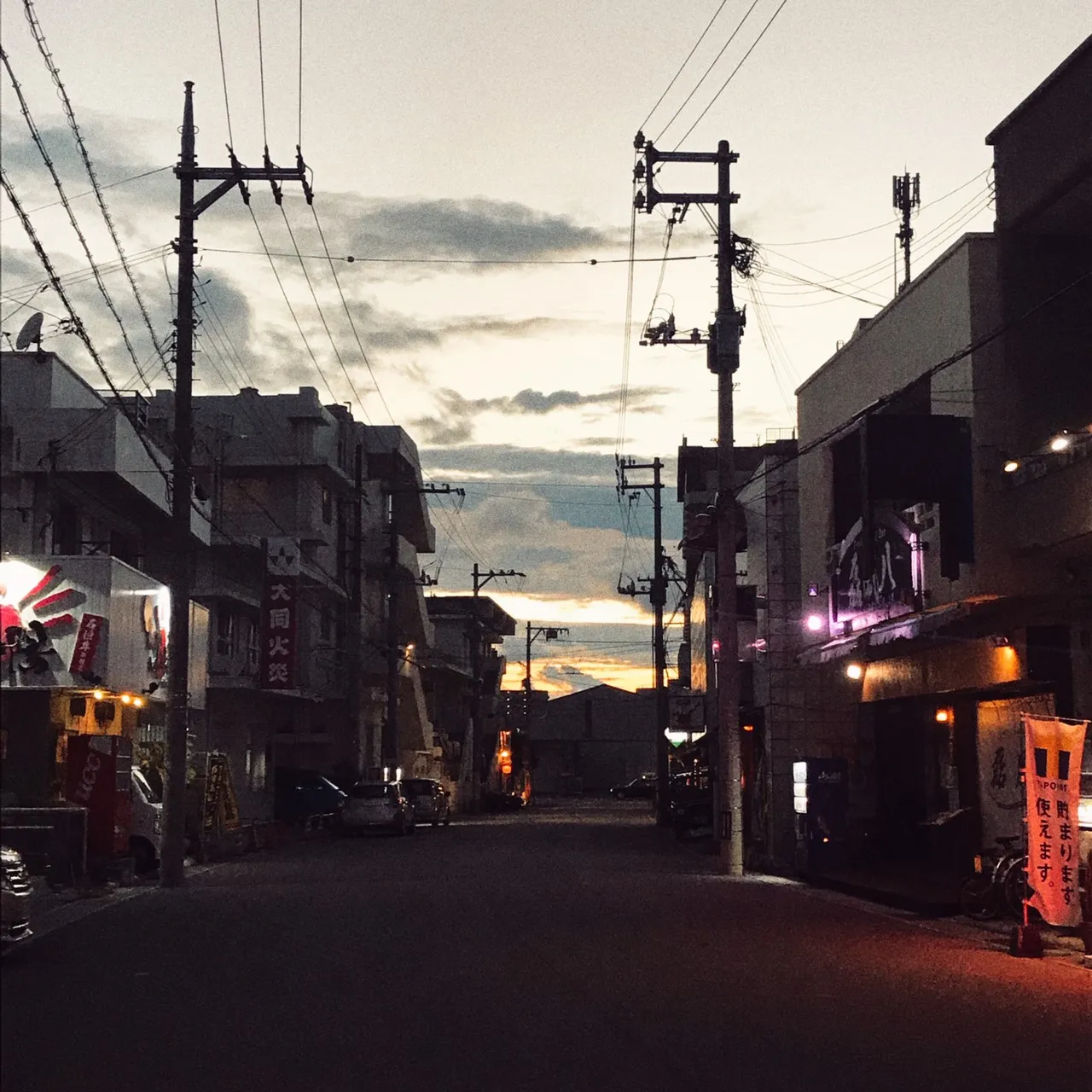
Ishigaki streets at dusk
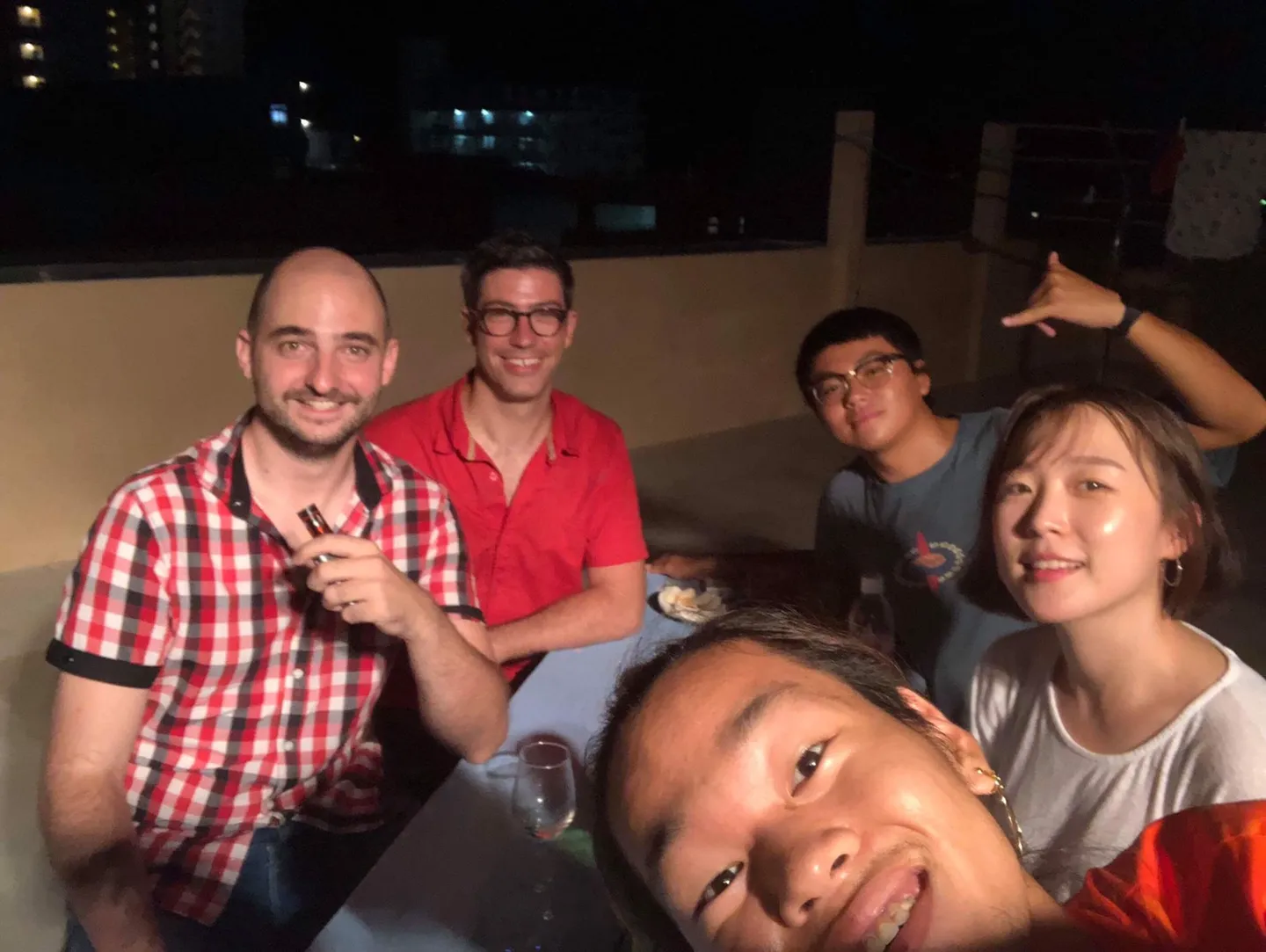
New friends made at the hostel — from France, Japan, and Korea. If you're traveling solo, staying at a hostel is a great way to save money and meet people.
Okinawa Outer Islands: Yonaguni
This is the westernmost island of Japan — and what's the closest place to Yonaguni? That's right — Taiwan. Yonaguni is just over 100 km from Taiwan, and the island is even sister cities with Hualien City. Yonaguni is best known for its awe-inspiring underwater world. The Kuroshio Current brings an abundance of migratory fish species — Whale Sharks, tuna, and the annual sailfish season are among the island's most celebrated marine highlights. But the most extraordinary of all: as the water cools each winter, the waters below 30 m begin to fill with schools upon schools of Hammerhead Sharks. Yes — counted in schools. The legendary "Hammerhead Shark storm" draws countless divers from around the world every year, with the Hammerhead Sharks — riding the Kuroshio — appearing in groups of hundreds, leaving every diver utterly awestruck. But don't think getting to this dive site is easy — it requires braving cold winds and powerful currents in deep, open blue water while scanning for their silhouettes in the distance. Without a solid level of experience, it can be overwhelming.
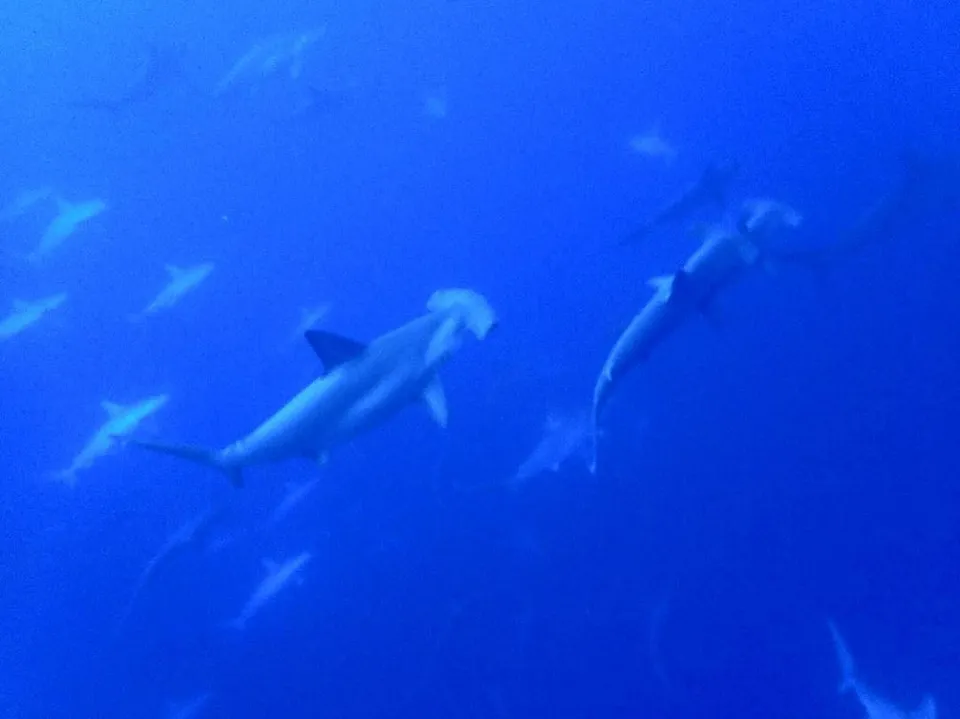
The Hammerhead Shark storm at Yonaguni
Then there are the world-famous Yonaguni Underwater Ruins — known in archaeological circles as the "Atlantis of Asia." Every edge and corner of these ruins is strikingly angular, with right-angle geometry that resembles an underwater pyramid. No — more mysterious than a pyramid. Even building such a structure on land would have been an extraordinary feat for ancient civilizations, let alone 30 m beneath the surface. This is also one of the filming locations for the freediving film "One Breath Around The World." If you want to do some underwater parkour, this might be the only place in the world to do it. Who could have built such an extraordinary underwater structure? It baffles me completely — or perhaps it's an ancient city swallowed by the sea?
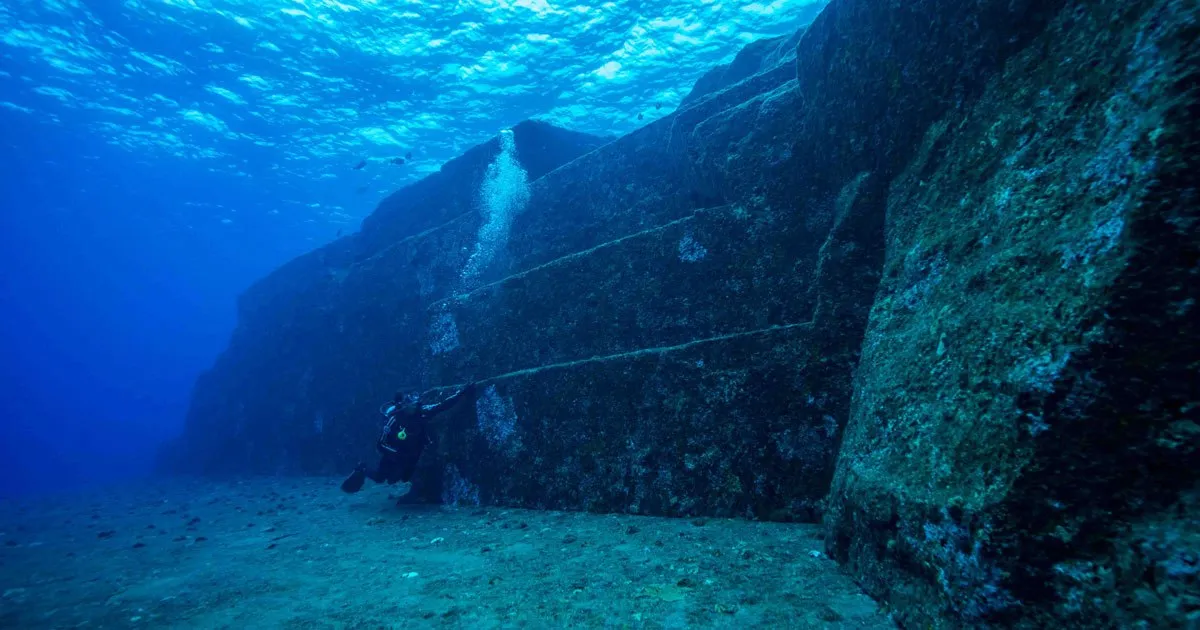
The Yonaguni Underwater Ruins — known as the Atlantis of Asia
There's so much to do and dive in Okinawa that I haven't even had time to cover the land activities~ If this article has sparked your interest, feel free to search for more information online, or just ask me! I hope you all get to experience Okinawa in person and fall in love with its irresistible island charm — I'm sure you will!
Related links:
Frequently Asked Questions
How is a BlueTrend dive trip different from an unknown, no-name dive group?
Choosing us means full peace-of-mind protection and a smooth experience from start to finish. Every trip we run holds to three things.
First, full legal protection and a professional dive leader: we strictly follow Taiwan's travel regulations and provide complete travel-agency liability insurance, travel insurance, trip-inconvenience insurance and dive insurance. Every group is accompanied by a certified, foreign-language dive leader who joins you on both the dives and the land itinerary, liaising seamlessly with local dive shops and operators on your behalf to keep things running smoothly — the person our travellers trust most.
Second, fully licensed with secure payments: every payment goes into a licensed travel agency's account, with multiple safe payment channels (bank transfer, credit card and more) and a legal collect-and-remit receipt, so every transaction is open, transparent and protected, avoiding the fraud and dispute risks of transferring money privately to an individual.
Third, hand-picked quality we vet in person: every trip, dive site and partner shop is scouted on the ground by our own team, from the guides' professionalism and safety standards to the food, lodging, environment and service details on land, all vetted by us so you don't get caught out.
I want to sign up for a dive trip. Are there certification-level or logged-dive requirements?
Each dive site is different, so the entry bar varies. 'Bali Tulamben', for instance, is relatively beginner-friendly. 'Malapascua in the Philippines' is also beginner-friendly, but since thresher sharks tend to cruise between 20 and 30 metres, we recommend AOW certification with 20+ logged dives to enjoy this trip comfortably. For 'the Maldives' or 'Palau', we suggest AOW with 50+ logged dives for a more relaxed experience. If you're not sure whether your experience fits the trip you want, message us and our dive editors will assess it and help you find the trip you'll feel safest on.
Can I join if I'm signing up alone? How are rooms arranged?
Plenty of our travellers sign up solo! For rooms and beds, we prioritise pairing you with a same-gender traveller, and if you'd rather have your own space you can pay the difference to upgrade to a single room. For the diving, our professional leader will pair you with a suitable buddy, and with the happy vibe on our trips you'll quickly make a great group of dive friends. Many people sign up alone, make new friends, and end up organising the next trip together!
Does the trip fee include dive insurance, gear rental, taxes and instructor tips?
It depends on the trip, the destination's regulations and the local operators. Every BlueTrend dive trip has a detailed web page with a clear 'included / not included' list, transparent and with no hidden charges. All payments are collected by a licensed travel agency, with a standard-form contract for your protection.
I'm a new diver / haven't dived in a long time — will I fall behind the group?
Before you complete your booking, our team assesses a suitable trip based on your certification level and experience. Before departure, we strongly recommend taking time to refresh in Taiwan with an instructor, or a fun dive to get your feel back. On the trip itself, our professional dive leader groups and pairs everyone by experience, keeps a close eye underwater on travellers who need extra care, and steps in to help right away.
Will the photos and videos taken during the trip be shared with us?
During the dives, 'safety' is always the leader's top priority, so whenever it's suitable and safe the leader will capture great shots and record the best moments. During or after the trip, we compile a cloud album for all travellers to download, so you go home loaded with memories!
Besides your scheduled trips, can you arrange a private group charter or independent travel for me and my friends?
Absolutely! Besides group trips, we also arrange private group charters and independent travel. We can communicate, enquire and coordinate services with local operators based on your needs, saving you time and effort and taking the language barrier off your plate, to tailor the smoothest, most reassuring dive trip just for you. Contact our LINE support and our editors will arrange it for you!