

Contents(3)
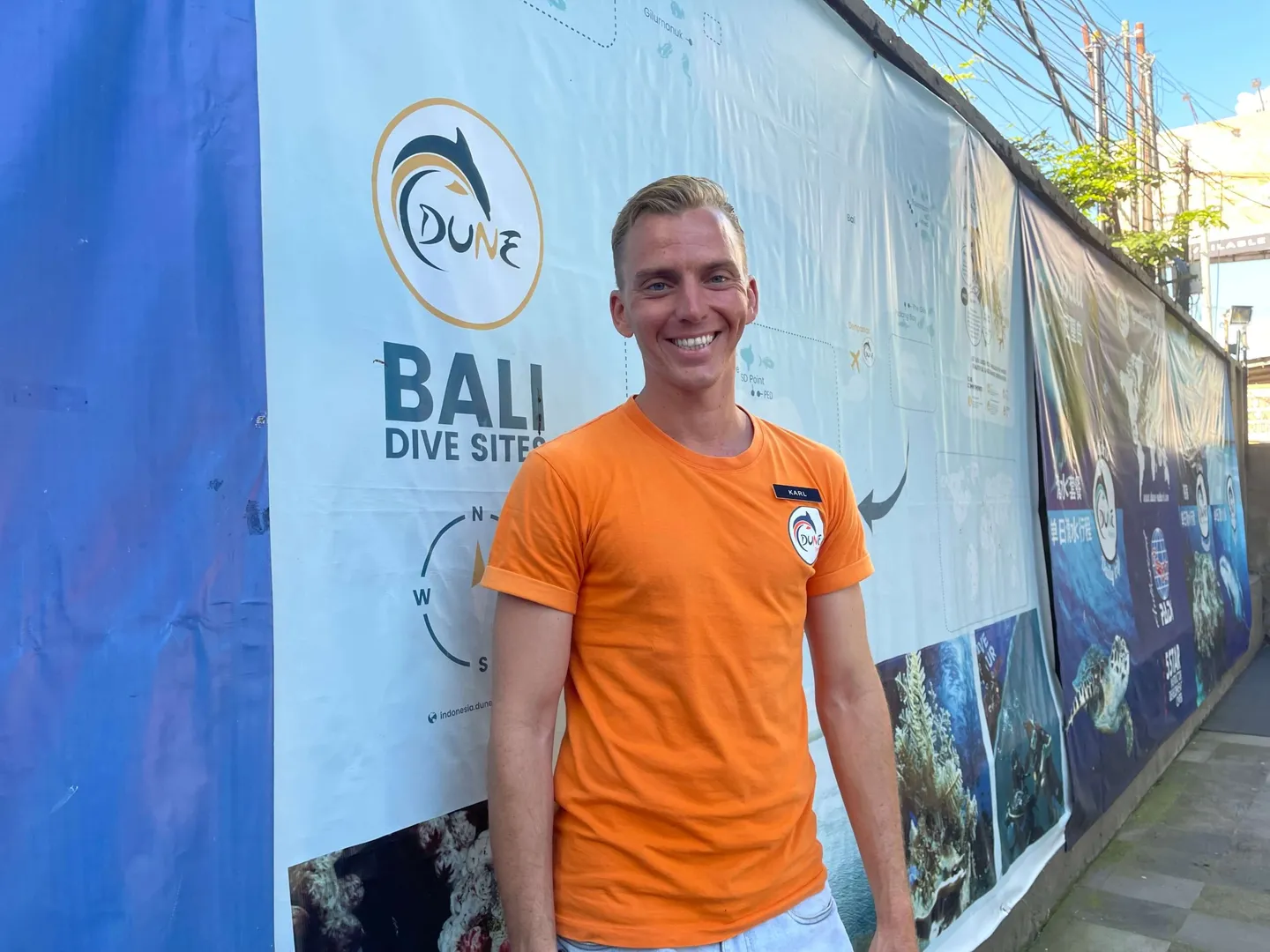
Many divers become instructors simply to make a living from a skill they love — but the Editor has also met friends who have used their dive instructor credentials to travel the world, not only drinking in the underwater scenery of country after country, but also immersing themselves in local cultures and, above all, making friends from every corner of the globe. What a rich and colourful life that must be! We are thrilled to have had the opportunity to invite Karl Singery — Bali Manager and Course Director for the French Dune diving group — to share his diving journey with us.
Q: Why Did You Choose Bali?
Karl has lived in Bali for more than ten years. He completed his Divemaster course at Dune in 2012, earned his dive instructor certification the following year, and has worked as an instructor at the Dune dive shop ever since. In 2019, at the remarkably young age of 29, he attained his Course Director rating, and two years later became the manager of Dune Group's Bali dive shop.
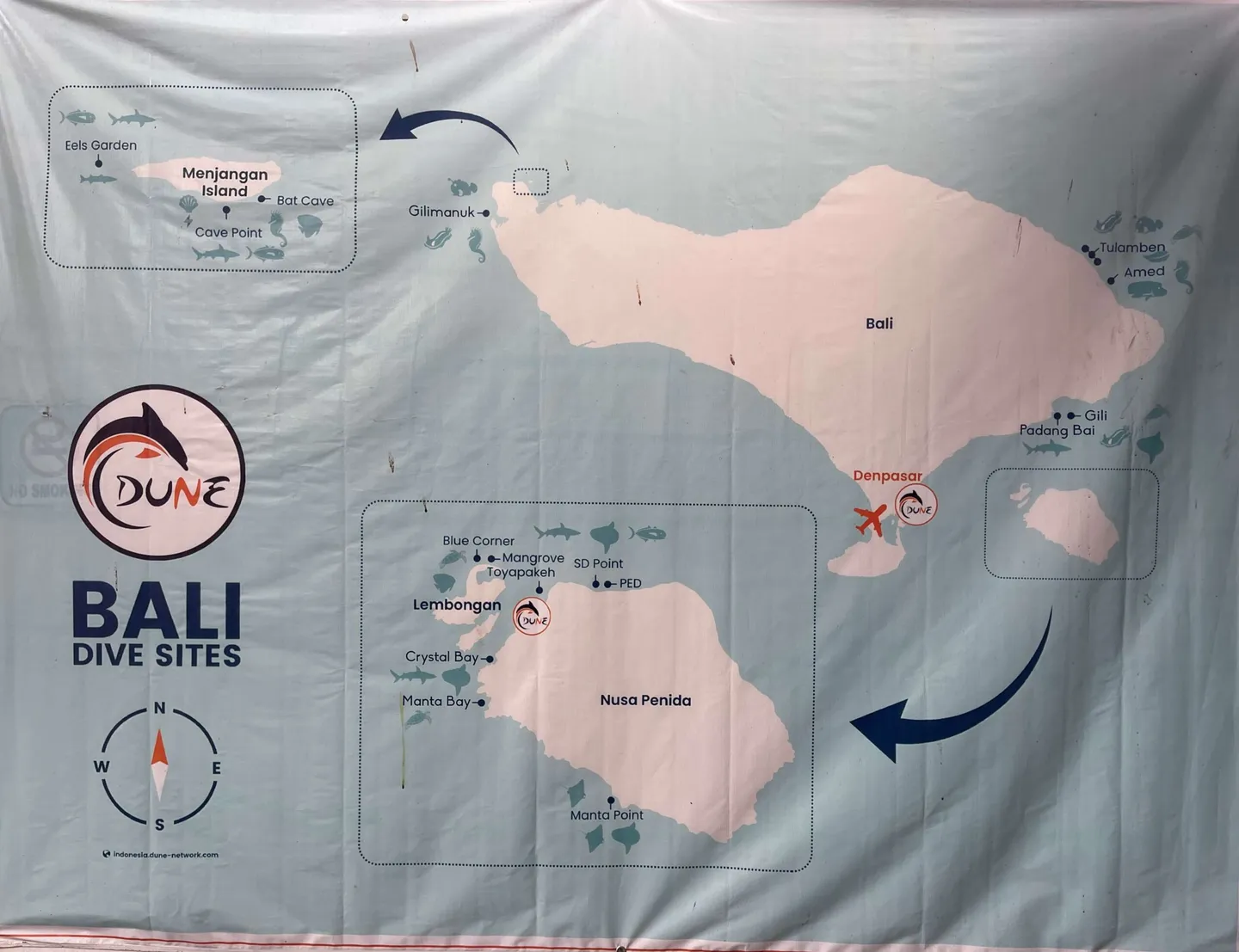
Dune's dive shop is located in southern Bali, with big-animal and macro dive sites radiating out in every direction
Why did Karl choose to settle in Bali? He believes the island offers a highly international environment, with infrastructure far more developed than most other Indonesian islands, and the local people are wonderfully welcoming. Most importantly, from Bali it takes only a very short time to reach big-animal dive sites such as Mola Mola and manta ray encounters. If you're a macro photographer, the nearby macro site of Tulamben enjoys world-class renown. Thrill-seekers can head to the Gili dive sites to experience exhilarating currents and chase Whitetip Reef Sharks. For all these reasons, Karl chose Bali as the launchpad for his diving career.
The advantage of basing the Dune dive shop in Sanur is that the furthest surrounding dive site is only a 2.5-hour drive away, while a speedboat to Nusa Penida to see the big animals takes just 40 minutes. For divers who want to experience multiple types of dive trips in a single visit, planning an itinerary simply couldn't be more convenient.
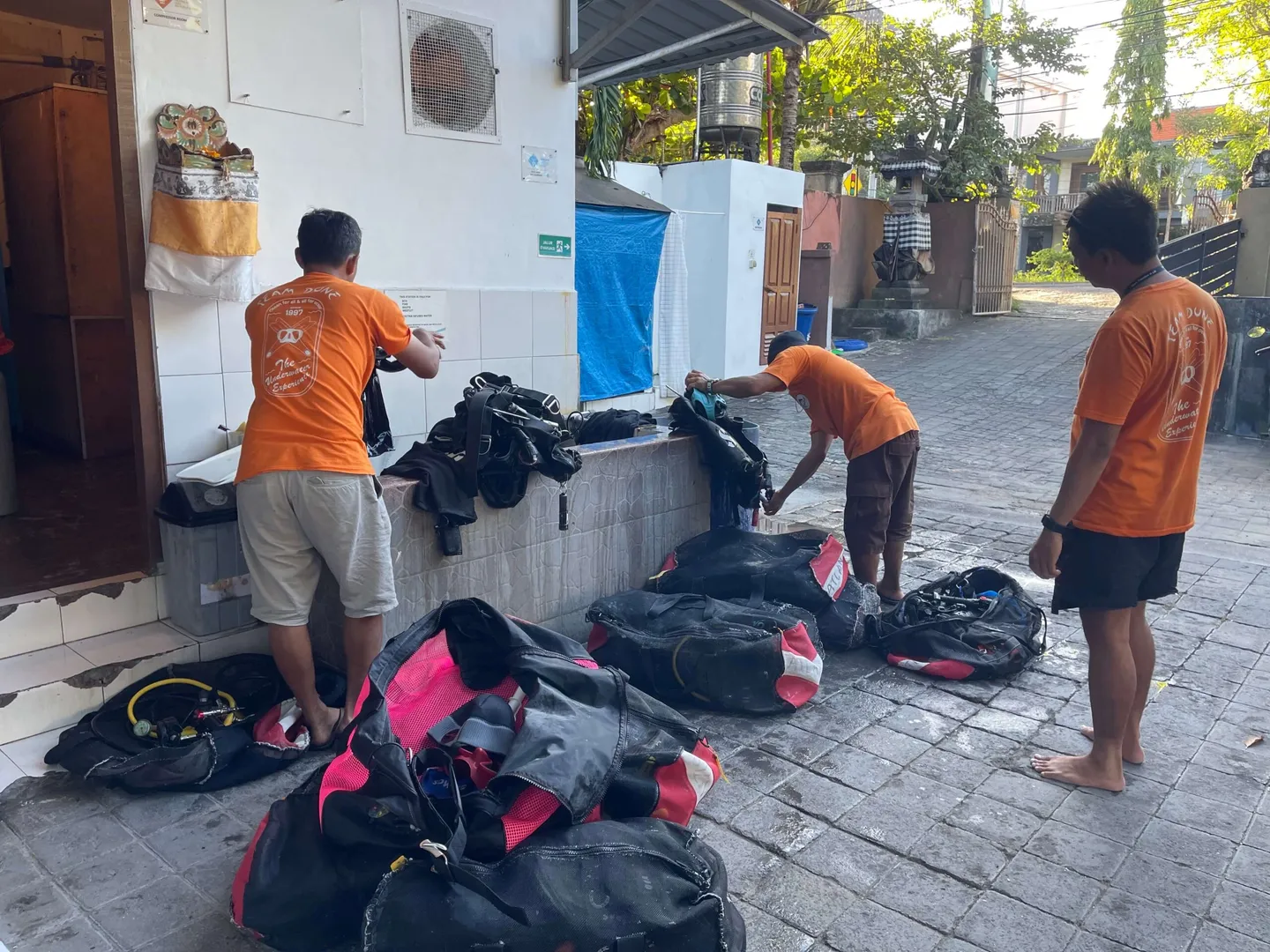
Systematic service processes have kept Dune competitive since its founding in Bali in 1996
Of course, as a world-class dive destination, Bali has an enormous number of dive shops — Nusa Penida alone has more than 20 dive operators, and the whole of Bali has over 50. How to differentiate and attract divers is a challenge Karl has been thinking through continuously with his team members and group executives since becoming shop manager. Given the high daily volume of guests, ensuring smooth operational flow is a fundamental requirement: from hotel pick-ups and risk-statement signing at the start, through equipment rental procedures and dive briefings, to gear check-in and cleaning at the end of the day — during our visit we got a thorough sense of just how systematically Dune operates.
The pandemic hit Bali's heavily tourism-dependent economy hard: the island was closed to foreign visitors from mid-2020 until early 2022. Even today you can still spot certain commercial areas where businesses have shuttered and have yet to recover.
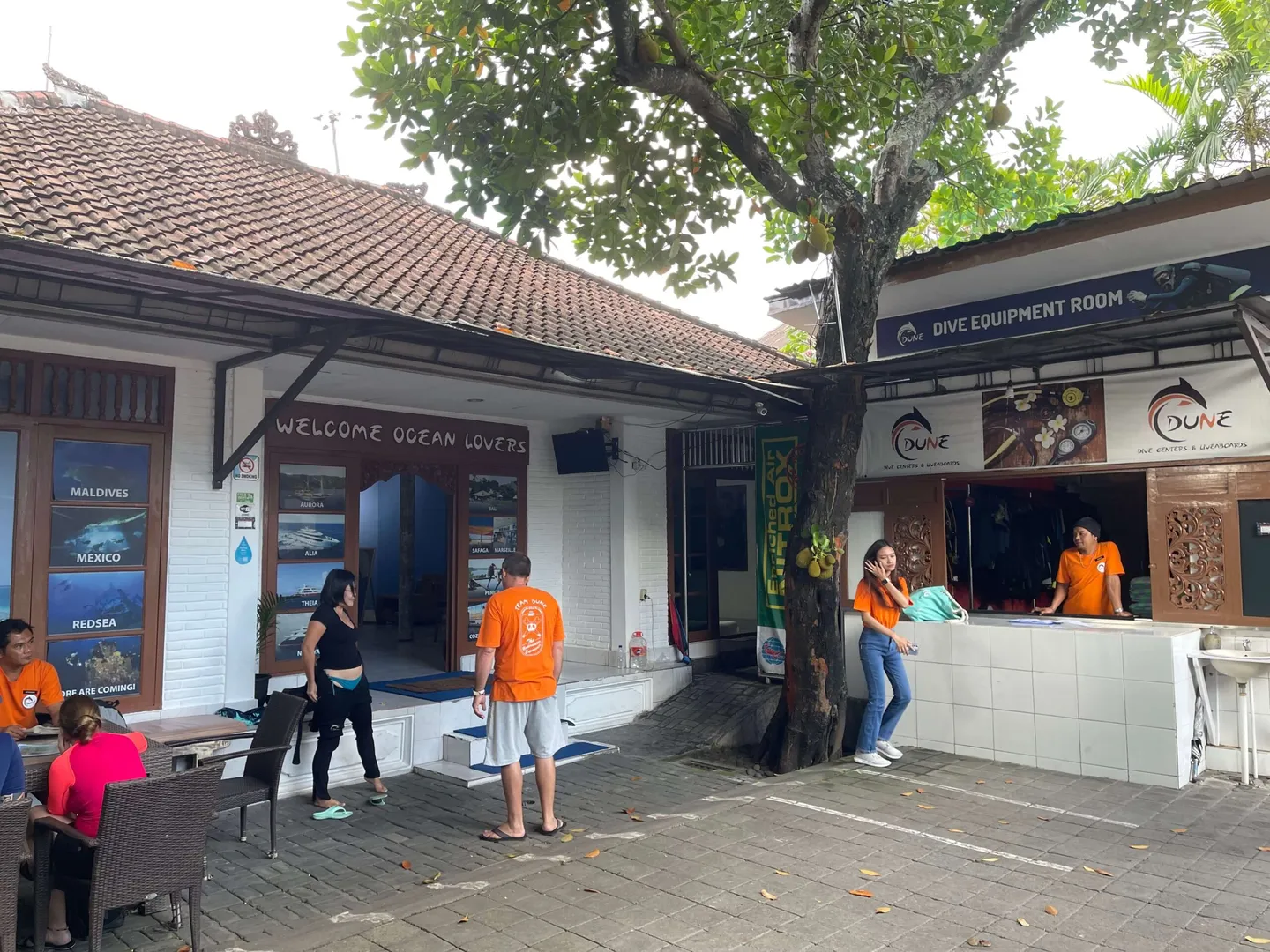
Dune, founded in 1996, offers comprehensive dive hardware support and the backing of experienced instructors
Karl believes Bali's dive industry was less affected by the pandemic than other regions of Indonesia, largely because Bali sits at the transportation hub of the Indonesian archipelago. During the pandemic, dive shops pivoted to serving domestic Indonesian tourists. This convenient geographic position, combined with Bali's rich and varied dive environments, provided a more stable customer base that kept the dive industry fundamentally operational. As a result, once travel restrictions lifted and the borders reopened, the local dive industry was able to welcome divers from around the world almost immediately.


Q: Besides Bali, What Other Dive Destination Would You Recommend?
The French Dune diving group has bases across the globe, including Bali in Indonesia, the Mediterranean, the Red Sea, and the Maldives. Karl's personal top recommendation — after Bali — is the Maldives. The Maldives is an archipelago of elongated islands scattered across the Indian Ocean like pearls; through Dune's premium liveaboard programme, you can arrange an 8–11-day dive trip to explore it at a leisurely pace. Depending on the season and route, Maldives liveaboards are divided into three itineraries: the South Atoll route, the Deep Blue route, and the North route, each offering different marine life encounters. Whale Sharks, Tiger Sharks, sharks, and manta rays are practically guaranteed sightings — Karl considers it an absolute must-visit destination for any diver!
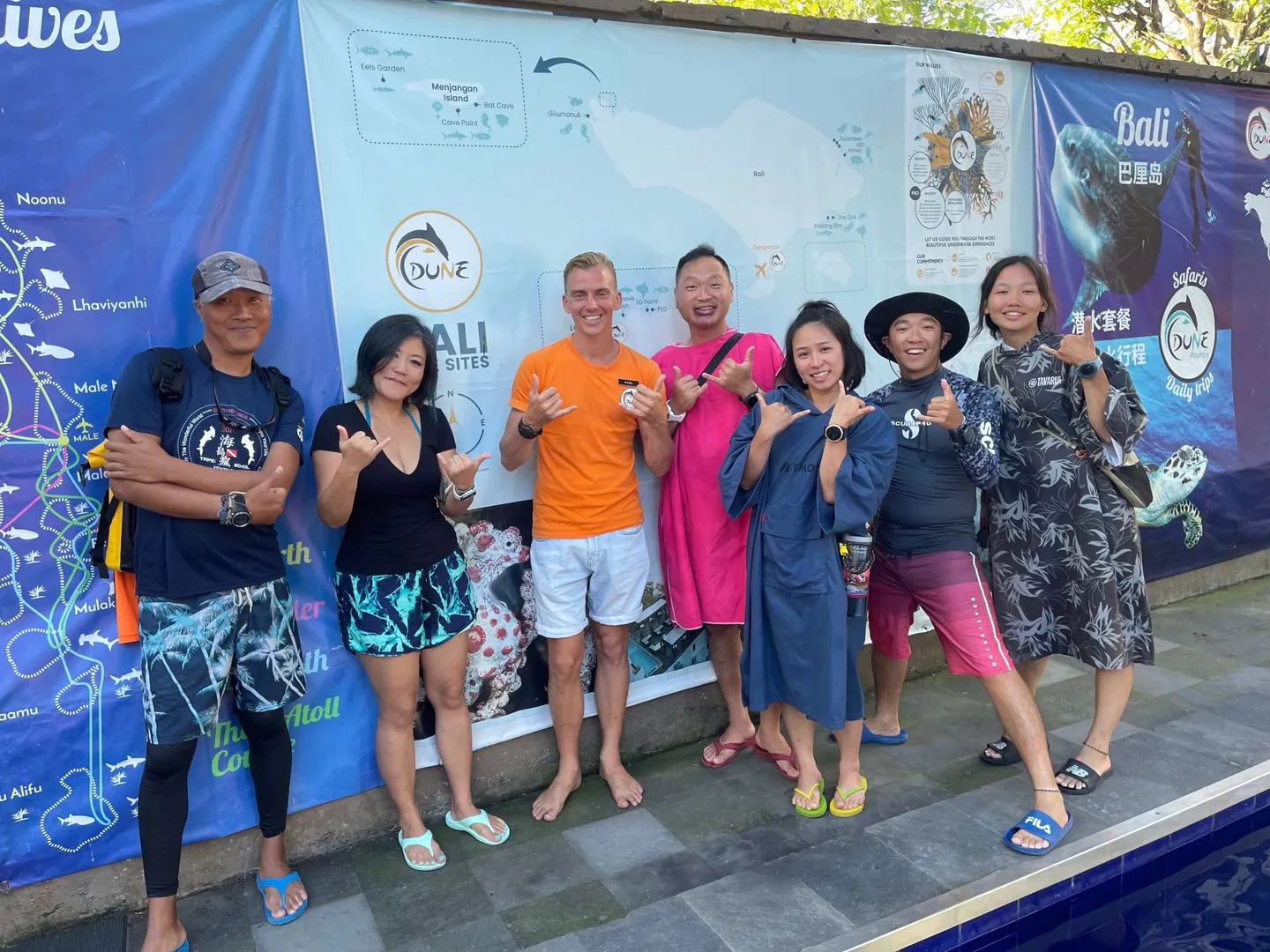
Karl found his life's direction and purpose in Bali, Indonesia — what about you?
Q: If I Want to Dive My Way Around the World, What Should I Do?
Karl started diving at age 12, and from an early age he loved travelling and living by the sea. Before becoming a dive instructor, Karl worked as a bartender in the south of France. He began thinking about how to find a job that would let him travel freely and keep him close to the ocean — and so he made the leap and became a dive instructor. Karl also encourages young people in Taiwan: after you graduate from university, take time to think about what you truly want from life. If your goal is a stable job, marriage, and starting a family, then pursue that wholeheartedly. But if you want to experience life while you're young and feel the impact of different cultures around the world, why not give yourself a few years (a Gap Year) to go out and explore? That journey will almost certainly become one of the most unforgettable experiences of your life.
Using working in Bali as an example, Karl explains that you first need to obtain an Indonesian work permit — managers and instructors generally find this quite easy to obtain. And since increasing numbers of Asian tourists are visiting Bali, instructors who can speak Chinese, Japanese, Korean, or other Asian languages are highly sought after. If you eventually want to work on a liveaboard in the Maldives, holding an instructor rating is the basic requirement — but Karl recommends advancing to a management or Course Director level, as this will help you stand out from the crowd of dive instructors and make your dream a reality!
Related links:
- Dune Atlantis Bali
- DUNE MALDIVES LIVEABOARDS
- 【Indonesia · Bali】 Crazy Water Temperatures from 21 to 29°C! Diving in Bali is All About the Manta and Mola Mola feat. 海島瘋
- 海島瘋 Enjoy Islands
- 海島瘋 Enjoy Islands Facebook Page
- Looking for Your Life's Purpose? Come Do an Unforgettable Dive Work-and-Travel Experience in Australia!
Frequently Asked Questions
How is a BlueTrend dive trip different from an unknown, no-name dive group?
Choosing us means full peace-of-mind protection and a smooth experience from start to finish. Every trip we run holds to three things.
First, full legal protection and a professional dive leader: we strictly follow Taiwan's travel regulations and provide complete travel-agency liability insurance, travel insurance, trip-inconvenience insurance and dive insurance. Every group is accompanied by a certified, foreign-language dive leader who joins you on both the dives and the land itinerary, liaising seamlessly with local dive shops and operators on your behalf to keep things running smoothly — the person our travellers trust most.
Second, fully licensed with secure payments: every payment goes into a licensed travel agency's account, with multiple safe payment channels (bank transfer, credit card and more) and a legal collect-and-remit receipt, so every transaction is open, transparent and protected, avoiding the fraud and dispute risks of transferring money privately to an individual.
Third, hand-picked quality we vet in person: every trip, dive site and partner shop is scouted on the ground by our own team, from the guides' professionalism and safety standards to the food, lodging, environment and service details on land, all vetted by us so you don't get caught out.
I want to sign up for a dive trip. Are there certification-level or logged-dive requirements?
Each dive site is different, so the entry bar varies. 'Bali Tulamben', for instance, is relatively beginner-friendly. 'Malapascua in the Philippines' is also beginner-friendly, but since thresher sharks tend to cruise between 20 and 30 metres, we recommend AOW certification with 20+ logged dives to enjoy this trip comfortably. For 'the Maldives' or 'Palau', we suggest AOW with 50+ logged dives for a more relaxed experience. If you're not sure whether your experience fits the trip you want, message us and our dive editors will assess it and help you find the trip you'll feel safest on.
Can I join if I'm signing up alone? How are rooms arranged?
Plenty of our travellers sign up solo! For rooms and beds, we prioritise pairing you with a same-gender traveller, and if you'd rather have your own space you can pay the difference to upgrade to a single room. For the diving, our professional leader will pair you with a suitable buddy, and with the happy vibe on our trips you'll quickly make a great group of dive friends. Many people sign up alone, make new friends, and end up organising the next trip together!
Does the trip fee include dive insurance, gear rental, taxes and instructor tips?
It depends on the trip, the destination's regulations and the local operators. Every BlueTrend dive trip has a detailed web page with a clear 'included / not included' list, transparent and with no hidden charges. All payments are collected by a licensed travel agency, with a standard-form contract for your protection.
I'm a new diver / haven't dived in a long time — will I fall behind the group?
Before you complete your booking, our team assesses a suitable trip based on your certification level and experience. Before departure, we strongly recommend taking time to refresh in Taiwan with an instructor, or a fun dive to get your feel back. On the trip itself, our professional dive leader groups and pairs everyone by experience, keeps a close eye underwater on travellers who need extra care, and steps in to help right away.
Will the photos and videos taken during the trip be shared with us?
During the dives, 'safety' is always the leader's top priority, so whenever it's suitable and safe the leader will capture great shots and record the best moments. During or after the trip, we compile a cloud album for all travellers to download, so you go home loaded with memories!
Besides your scheduled trips, can you arrange a private group charter or independent travel for me and my friends?
Absolutely! Besides group trips, we also arrange private group charters and independent travel. We can communicate, enquire and coordinate services with local operators based on your needs, saving you time and effort and taking the language barrier off your plate, to tailor the smoothest, most reassuring dive trip just for you. Contact our LINE support and our editors will arrange it for you!

![[Indonesia] Part 2: What to Do on the Neomi Cruise Premium Indonesia Liveaboard? Dugong, Hammerhead Shark & Sailfish Mega-Fauna Trip — An Exclusive Look at This Once-a-Year Transoceanic Itinerary](/_astro/%E6%88%AA%E5%9C%96-2023-10-31-00.13.58_132HxG.webp)