

Contents(12)
- Before Diving in Bali
- Diving in Bali
- Manta Point: Watch Out — A Manta Ray Is Right Next to You!
- Crystal Bay: Time to Test Your Luck — Come On Out, Mola Mola!
- SD Point & Mangrove: Drift Diving Like Flying a Kite — Walls of Fish and Coral Beyond the Frame
- Overall Dive Summary
- After Diving in Bali
- Recommended Activity: Local Indonesian Food — A Must!
- Recommended Activity: Massage — Cheap Massages — A Must!
- Recommended Activity: Pub — Experience the Western Party Vibe — A Must!
- Recommended Activity: Real White-Water Rafting — A Must!
- Recommended Activity: Waterbom — Billed as Asia's Largest Water Park — A Must!
After the Editor's last trip to the Philippines with Enjoy Islands, we barely caught our breath before diving headfirst into planning the next adventure. This time we once again teamed up with Enjoy Islands to visit Bali, Indonesia — a world-class holiday destination in the Southern Hemisphere and a mecca for big-animal diving. This is the place where you can have a chance encounter with the two most coveted stars of the underwater world: manta rays and mola mola/ sunfish. So how do you plan a Bali dive trip? Which divers are suited for big-animal diving? And why did we call this a "resort-style" diving experience? Read on to find out.
Before Diving in Bali
Bali is located in the Southern Hemisphere, roughly a 5-hour direct flight from Taiwan, with no time difference. As with any dive trip, you need to pay close attention to each airline's regulations when packing your dive gear and camera equipment. We flew EVA Air direct to Bali. At the time of our trip, EVA's outbound rules allowed only one 23 kg checked bag per person, with carry-on luggage limited to 7 kg (counter staff do weigh it — they may cut you some slack, but we still recommend not exceeding 10 kg). The 23 kg checked-bag limit was enforced very strictly: one of our bags hit 24 kg and we were charged an overweight fee on the spot. Make sure you sort out the weight distribution at home before you leave.
You can apply for an Electronic Visa on Arrival (e-VOA) online in advance — the process is very straightforward. As of mid-2023, no proof of vaccination is required upon entry. One thing worth noting: although Indonesia uses two-round-pin sockets, there is a round recess at the base of each outlet, which means some universal adapters won't fit directly — you may need to purchase a specific adapter. Also, Indonesia runs on 220V. While some devices such as laptops can handle dual voltage, we recommend running all appliances brought from Taiwan through a step-down voltage converter to avoid damage.
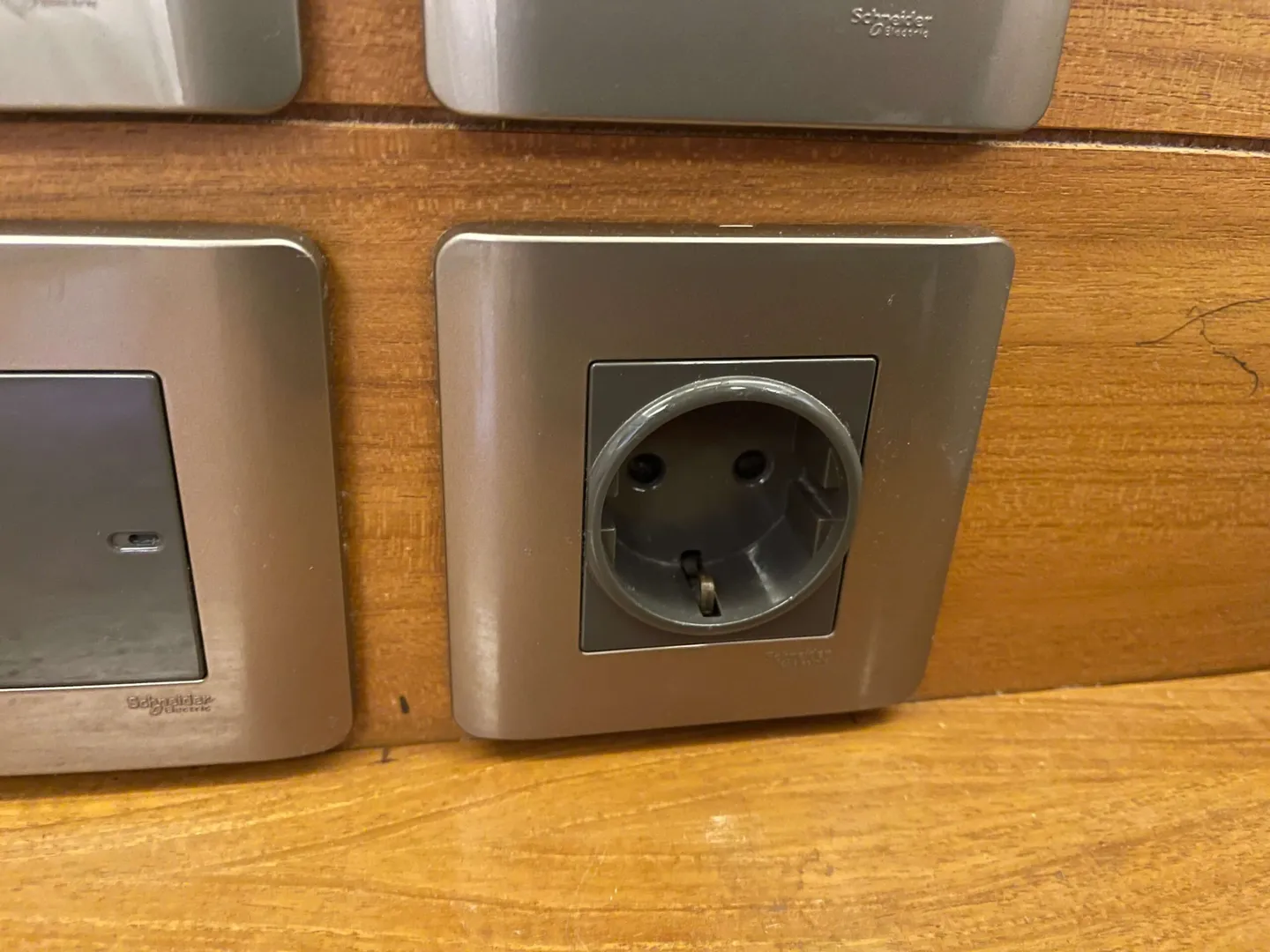
There is a round recess at the base of the socket
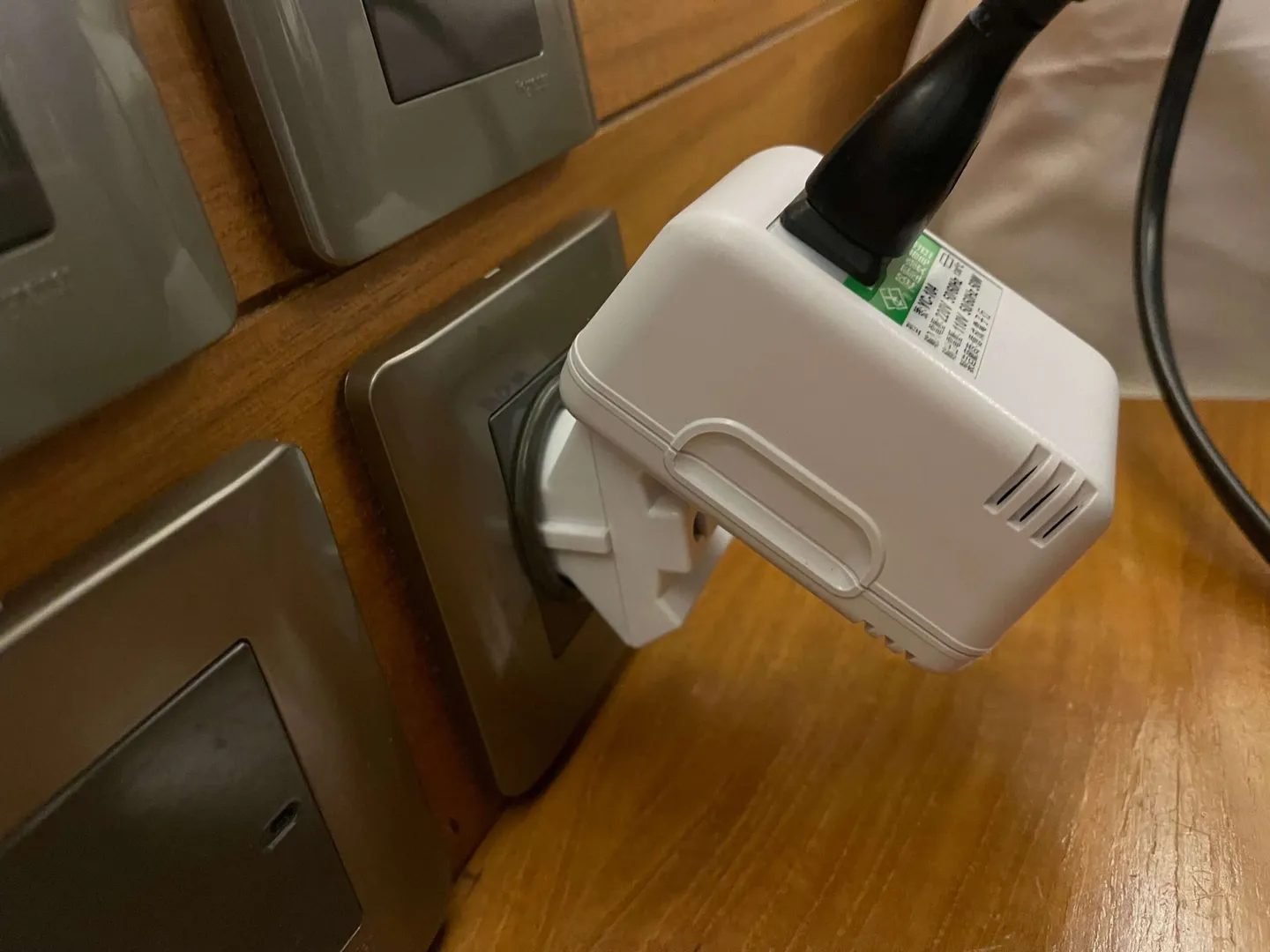
A step-down converter brings Indonesia's 220V down to the 110V that Taiwanese appliances require
We flew EVA Air BR255, departing Taoyuan at 10:00 and arriving in Bali at approximately 15:15. Our trip was five days in total, and here is how we structured the itinerary:
- Day 1: Travel day — check in to Sanur Swiss-Belresort Watu Jimbar
- Day 2: Three dives at Nusa Penida — stay at Swiss-Belresort Watu Jimbar, Sanur
- Day 3: Three dives at Nusa Penida — stay at Swiss-Belresort Watu Jimbar, Sanur
- Day 4: Telaga Waja River white-water rafting — check in to AMNAYA Resort Kuta, Kuta
- Day 5: Waterbom Bali water park, then EVA Air BR256 departing at 16:00 back to Taiwan
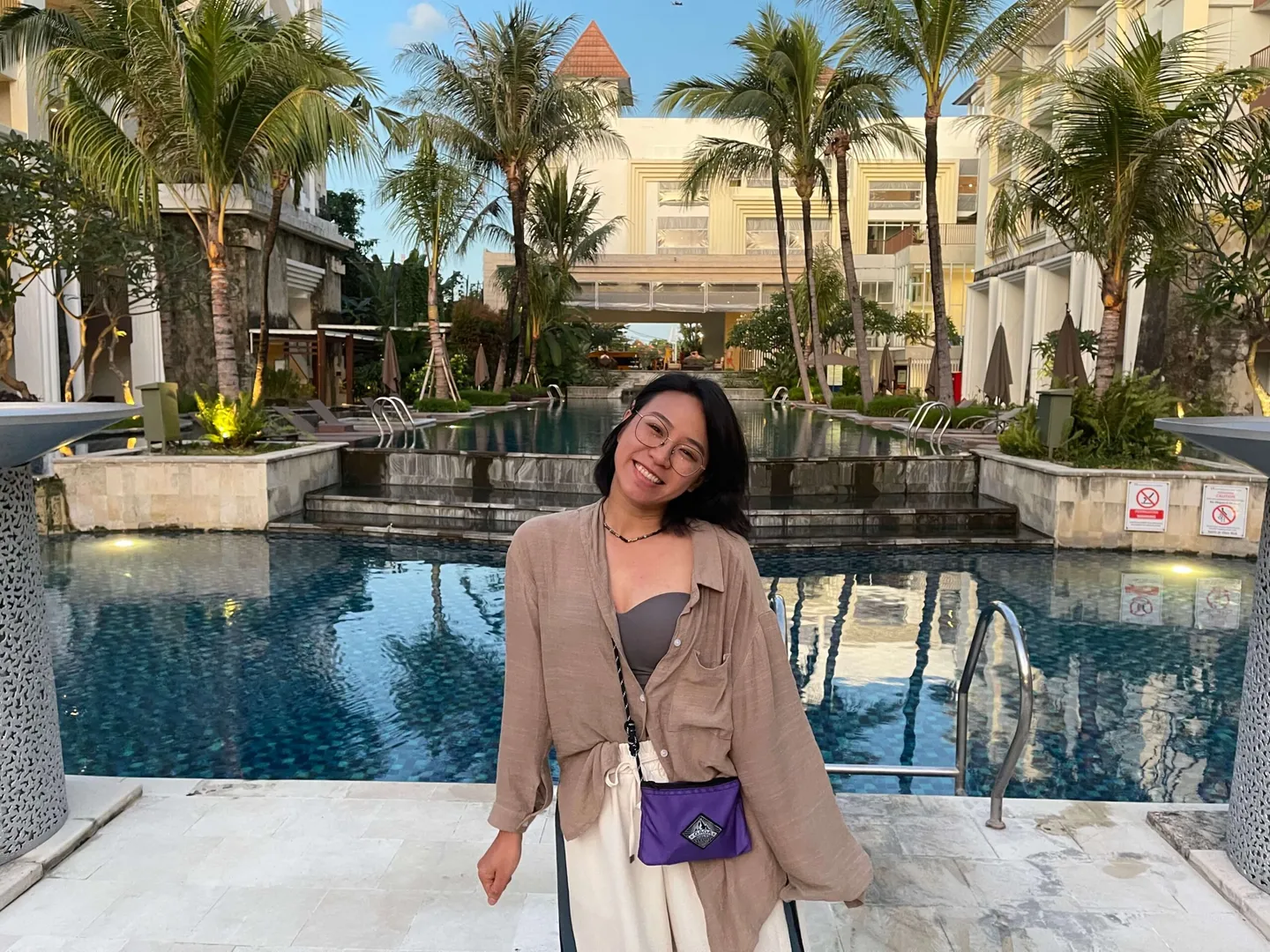
Swiss-Belresort Watu Jimbar, our home for the first two nights, is a four-star pool resort
Swiss-Belresort Watu Jimbar is located in Sanur, just a short 10-minute shuttle ride from the dive shop. The neighbourhood is less commercialised than Kuta and has a far more relaxed, holiday feel. Ask the hotel for a ground-floor room with an outdoor lawn — the oversized bathtub and private grass area are practically made for rinsing and drying dive gear!
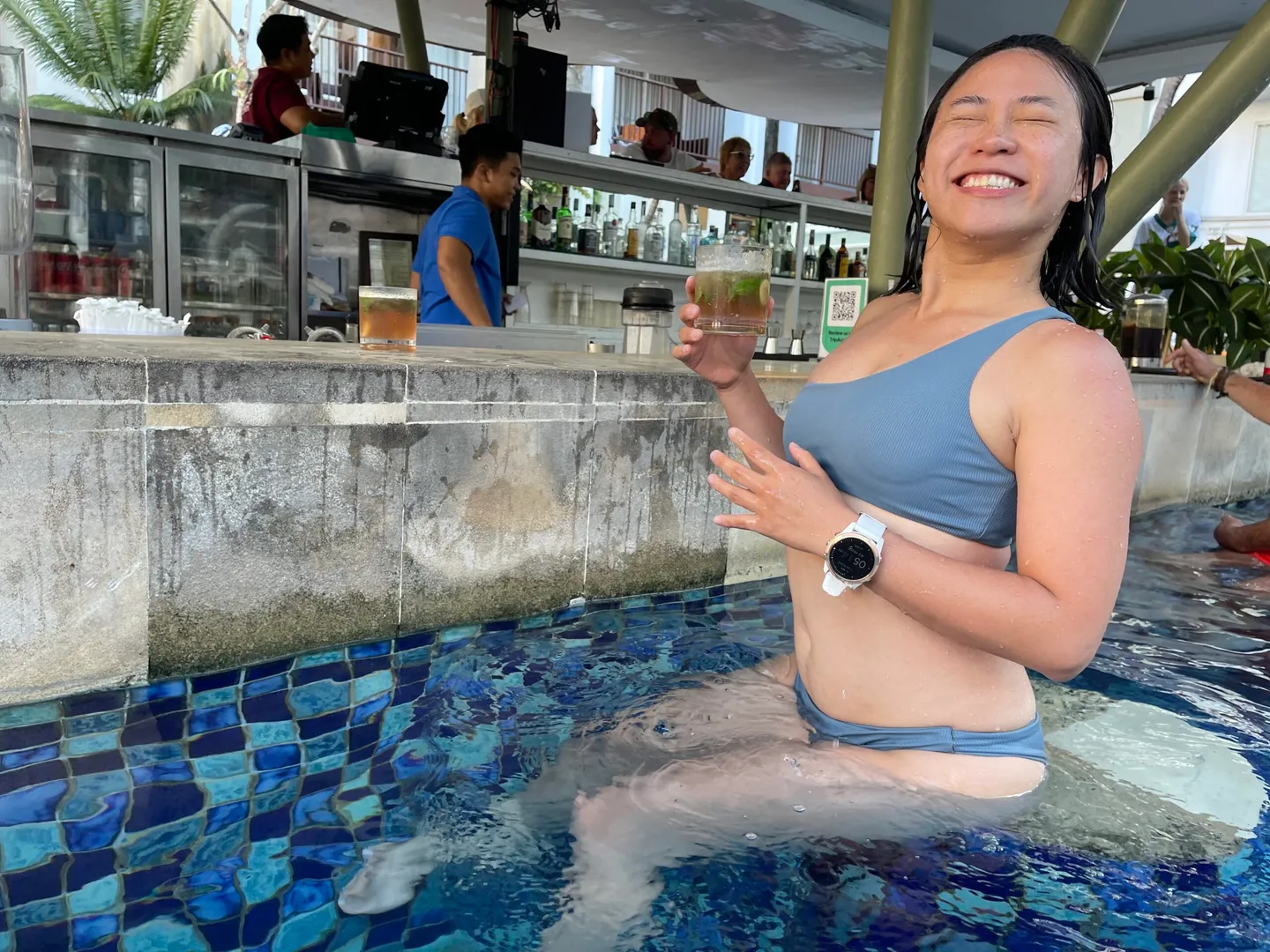
The resort's pool and poolside bar are there to be enjoyed to the fullest


Diving in Bali
From the very beginning, we made it clear to Enjoy Islands that we did not want a hardcore diving marathon. Instead, we put forward the following requests:
We want to see big animals, we want a laid-back holiday vibe, and we want to do non-diving outdoor activities while we're in Bali.
With that in mind, Enjoy Islands arranged two days of diving at Nusa Penida, primarily in hopes of getting face time with manta rays and mola mola/ sunfish. That said, many divers heading to Bali also plan visits to Tulamben for macro photography, or to Padang Bai to look for sharks and explore wrecks. One important thing to keep in mind: Bali is a large island. If you are staying in the Sanur area and want to dive Tulamben every day, you are looking at a 2.5-hour drive each way — starting very early in the morning — and that's before accounting for traffic. You may need to consider changing hotels to reduce commute fatigue. Of course, Enjoy Islands can customise a dive trip around whatever you have in mind!
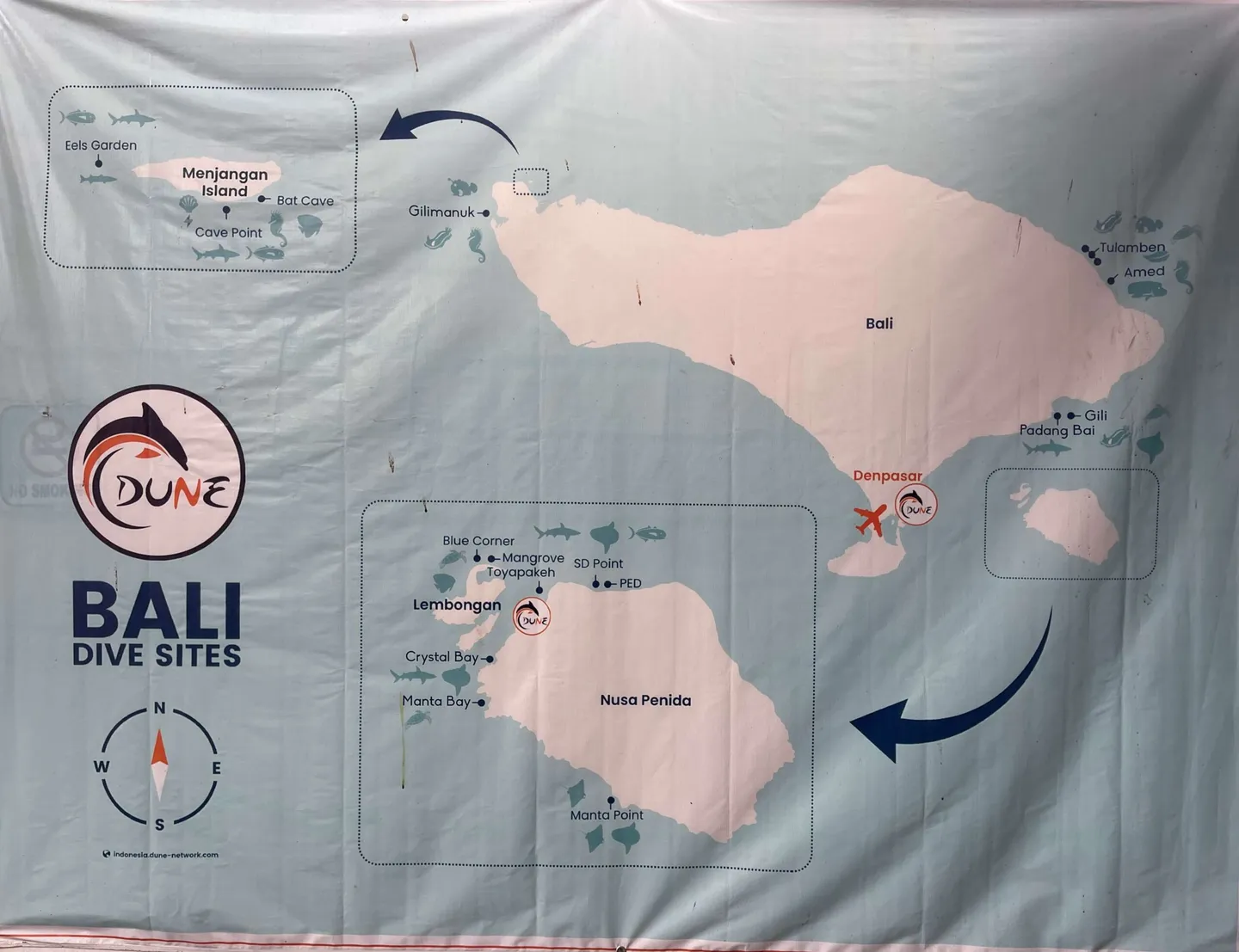
Bali has a huge number of dive sites, but the driving distances are considerable — careful planning before you go is essential
Staying in Sanur, we headed to the dive shop Dune Atlantis Bali at 7:30 — about a 10-minute drive away. After signing the liability waivers, we kitted up. The package includes full equipment rental; even if you bring your own gear you won't get a refund for unused rentals, so factor that in when deciding what to hire. That said, one item we strongly recommend renting is the 5mm wetsuit — you'll understand why in a moment.
Starting July 2023, anyone departing from Sanur Harbour for any water activity — scuba diving, snorkeling, freediving, and so on — is required to pay an environmental fee of IDR 100,000 per person per day. This fund goes toward the local government's marine protected area (MPA) initiatives.
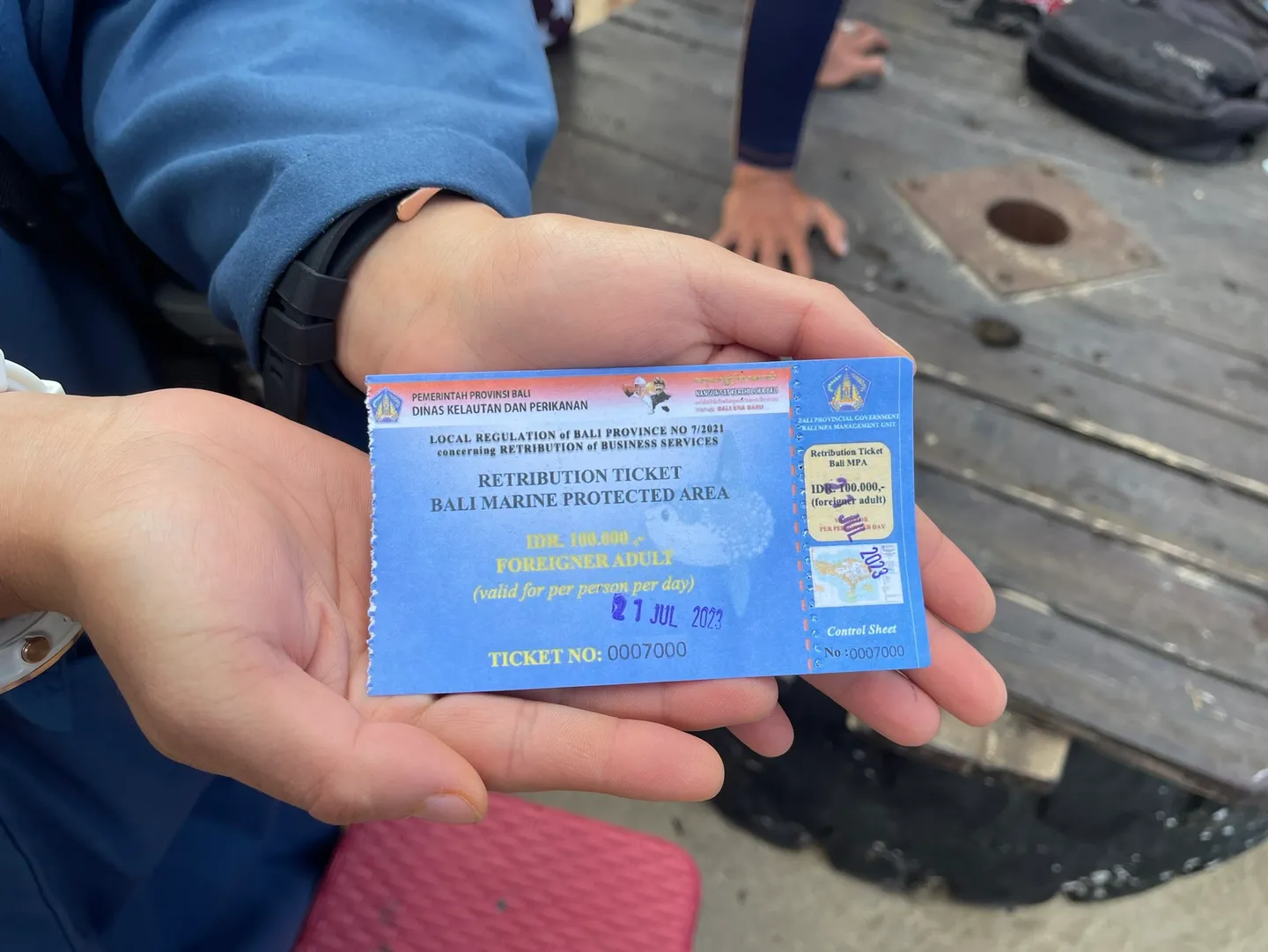
If you depart from Sanur Harbour for diving in Bali, you need to pay an environmental fee of IDR 100,000 each time
Manta Point: Watch Out — A Manta Ray Is Right Next to You!
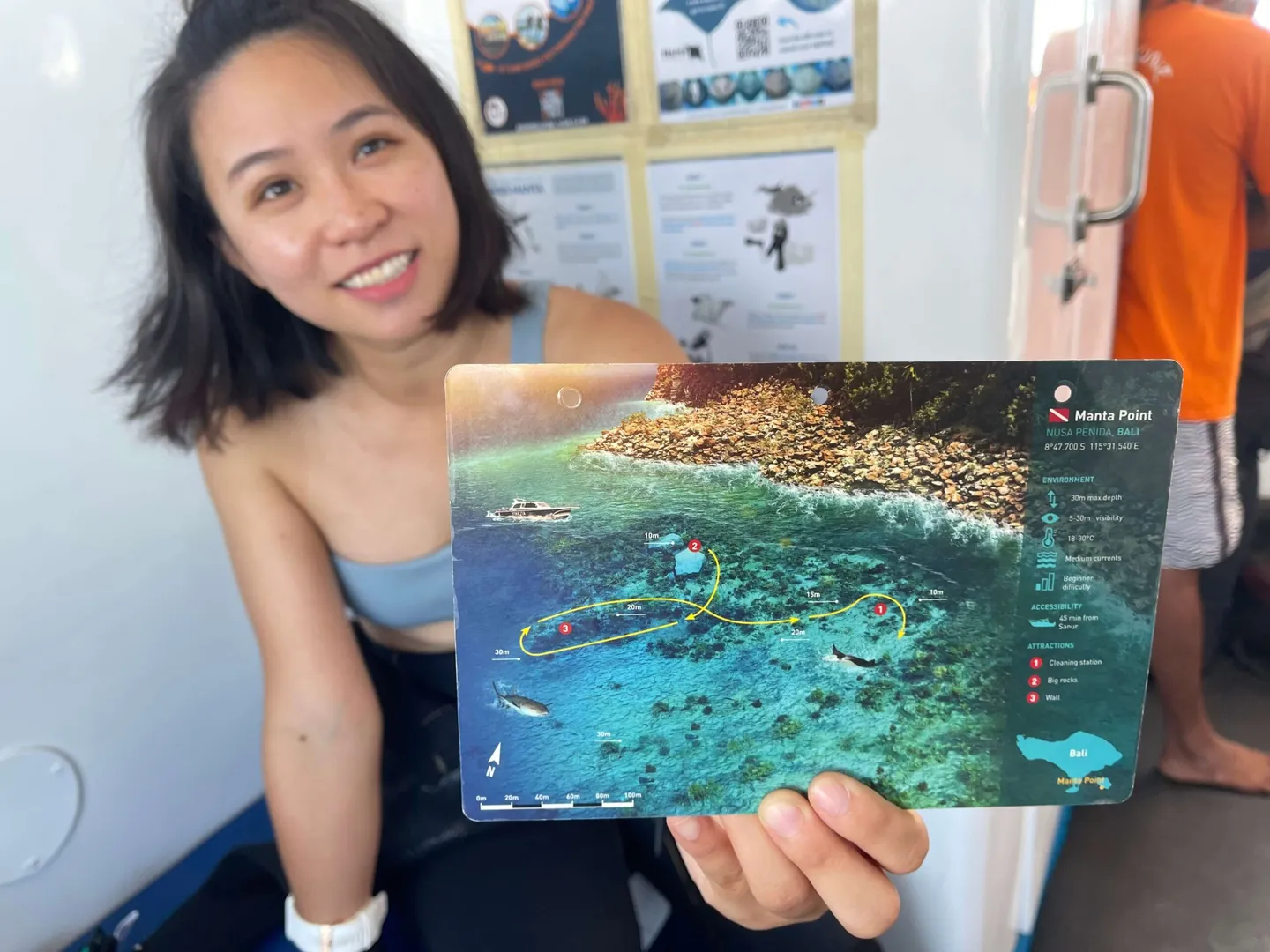
Besides manta rays, Manta Point also offers a chance to spot the bamboo shark — known locally as the "flat shark"
The speedboat ride from the dive shop to Nusa Penida takes 40 minutes, and the swells along the way are genuinely hair-raising — we highly recommend taking seasickness medication regardless of how strong your stomach usually is. The southwestern side of the island faces the Indian Ocean, and even though Manta Point is very close to shore with a depth of only 9–25 m, the waves that crash into the coastline pack a serious punch. Please pay close attention when entering and exiting the water.
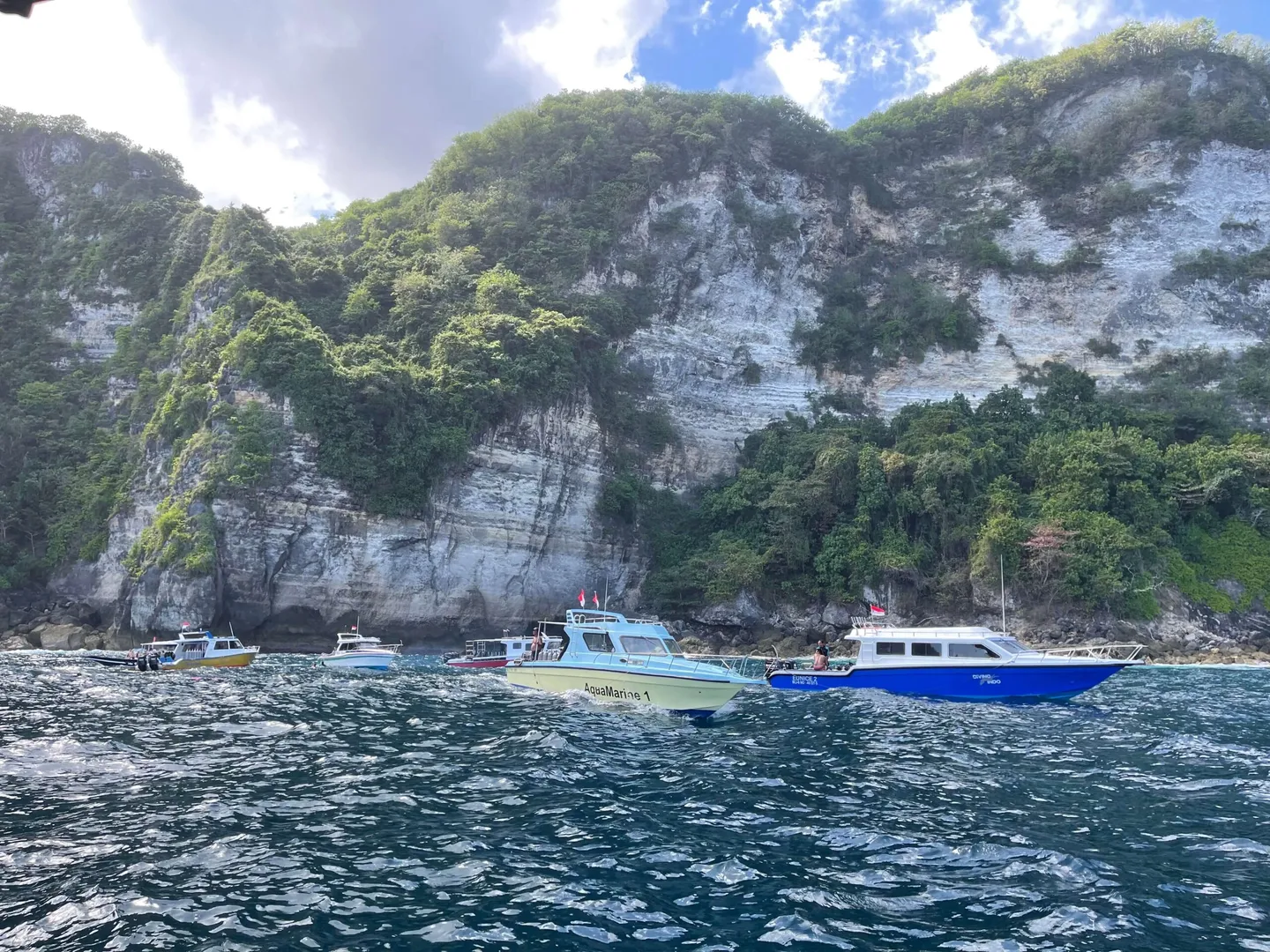
Surface conditions at Manta Point are rough — take extra care when getting in and out of the water
Rough surface? Just descend and you're safe, right? NO — NO — NO! On the way down, you'll be greeted by bone-chilling water at 21–22°C, and suddenly that 5mm wetsuit rental decision will make complete sense. On top of the cold, the churning surge dramatically reduces visibility to just 2–3 m, and in some spots a sudden sandstorm can drop it to as little as 50 cm. These are the challenges you face before you ever lay eyes on a manta ray.
Beep beep beep — why does it sound like a symphony orchestra underwater? Throughout the dive you'll hear a constant chorus of dive computer alarms going off all around you as the surge repeatedly triggers ascent-rate warnings. And we're not exaggerating: the surge at this site feels like diving in Taiwan on the eve of a typhoon. One wave rolls through and everyone gets swept sideways by tens of metres in an instant, sending ascent rates soaring and setting off alarm after alarm — a full underwater symphony.
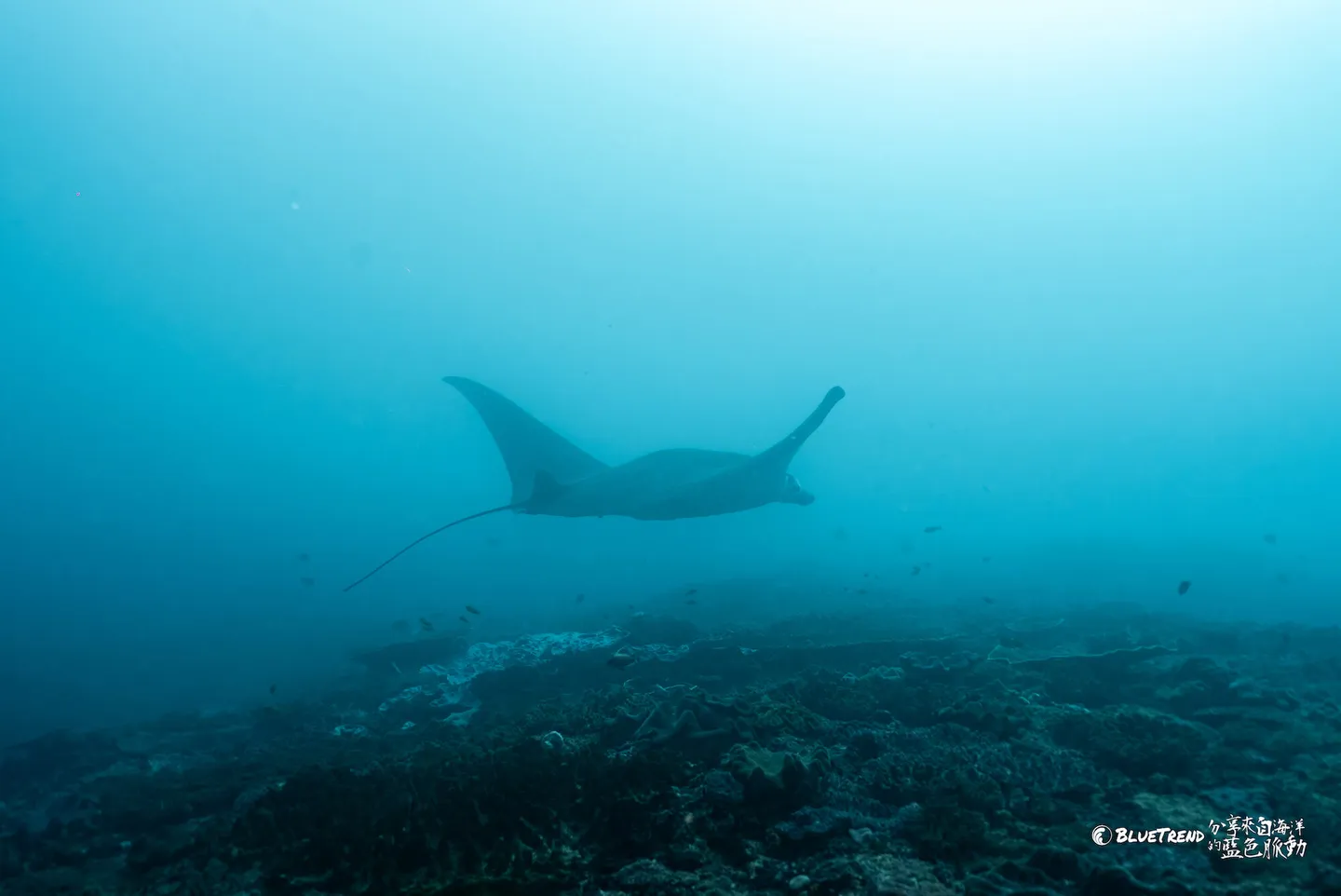
Manta rays appear and vanish without warning underwater
Because visibility is so poor, you need to stay alert to everything around you at all times. Sometimes a dark shape looms suddenly out of the murk and a manta ray materialises right beside you — before you even have time to react, it has already glided away. Whatever you do, don't chase them: in such low visibility you risk losing your dive buddy, and besides, the mantas circle the area and will come back on their own. Just stay calm and wait for the next surprise visit.
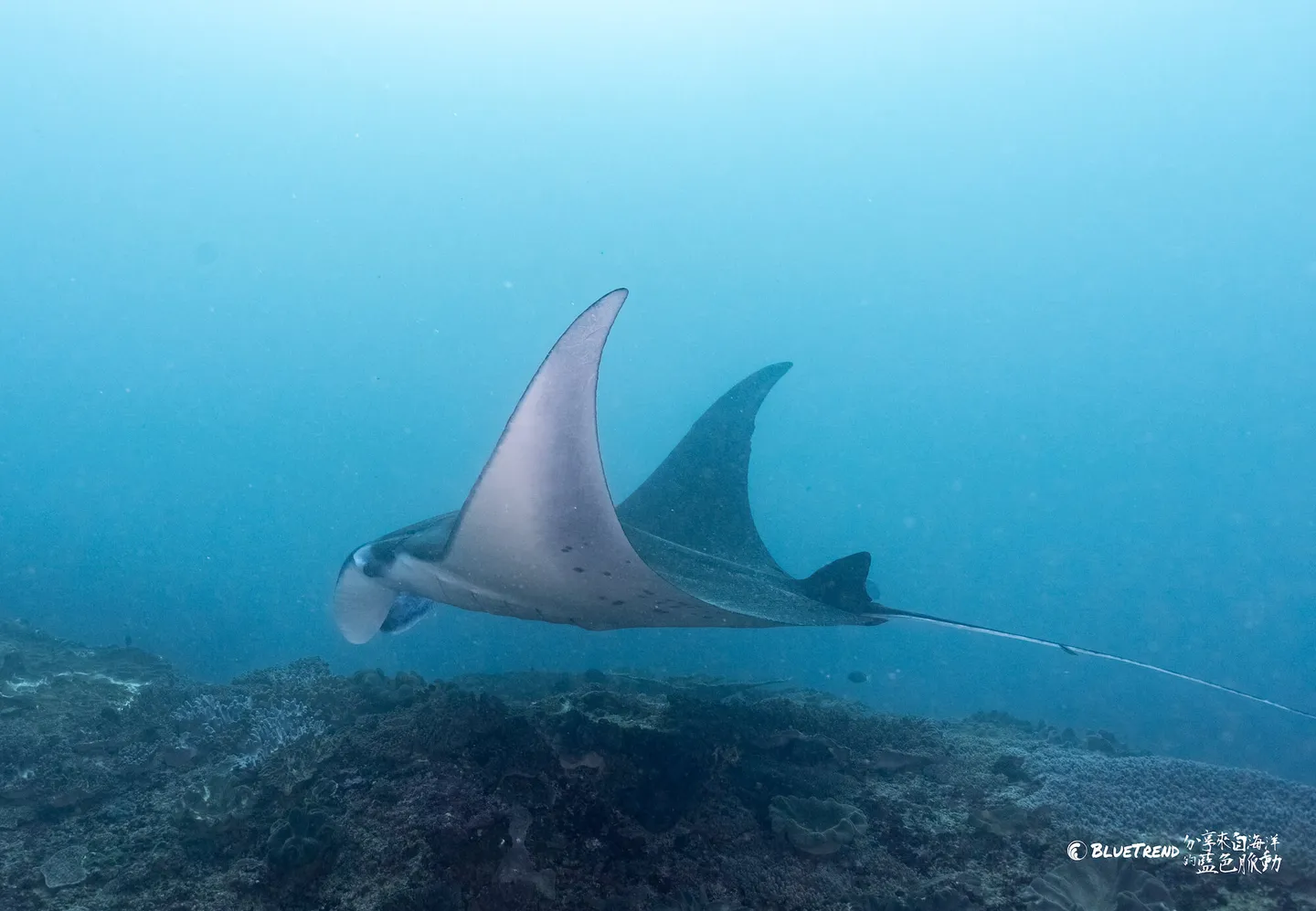
Encounters with manta rays here can be extraordinarily close — close enough to use strobes for photography
In all the Editor's years of diving, very few sites have allowed such close encounters with manta rays. The sighting probability here is 99%, you can use strobe lighting, and you can get genuinely close — making this an outstanding site for underwater photographers. That said, the conditions described above mean this site is not beginner-friendly. With the high density of dive boats on the surface, anyone with poor neutral buoyancy control or who cannot deploy a surface marker buoy (SMB) independently may face real risks. We recommend that divers with at least 50 Advanced Open Water Diver (PADI cert) dives come here — that way you'll be relaxed enough to truly appreciate these underwater giants.
- Recommendation: ★★★★★
- Difficulty: ★★★★☆
While you're here, don't just look up at the mantas overhead — keep an eye on the sandy bottom, where a chubby bamboo shark may pop up at any moment to join the party!
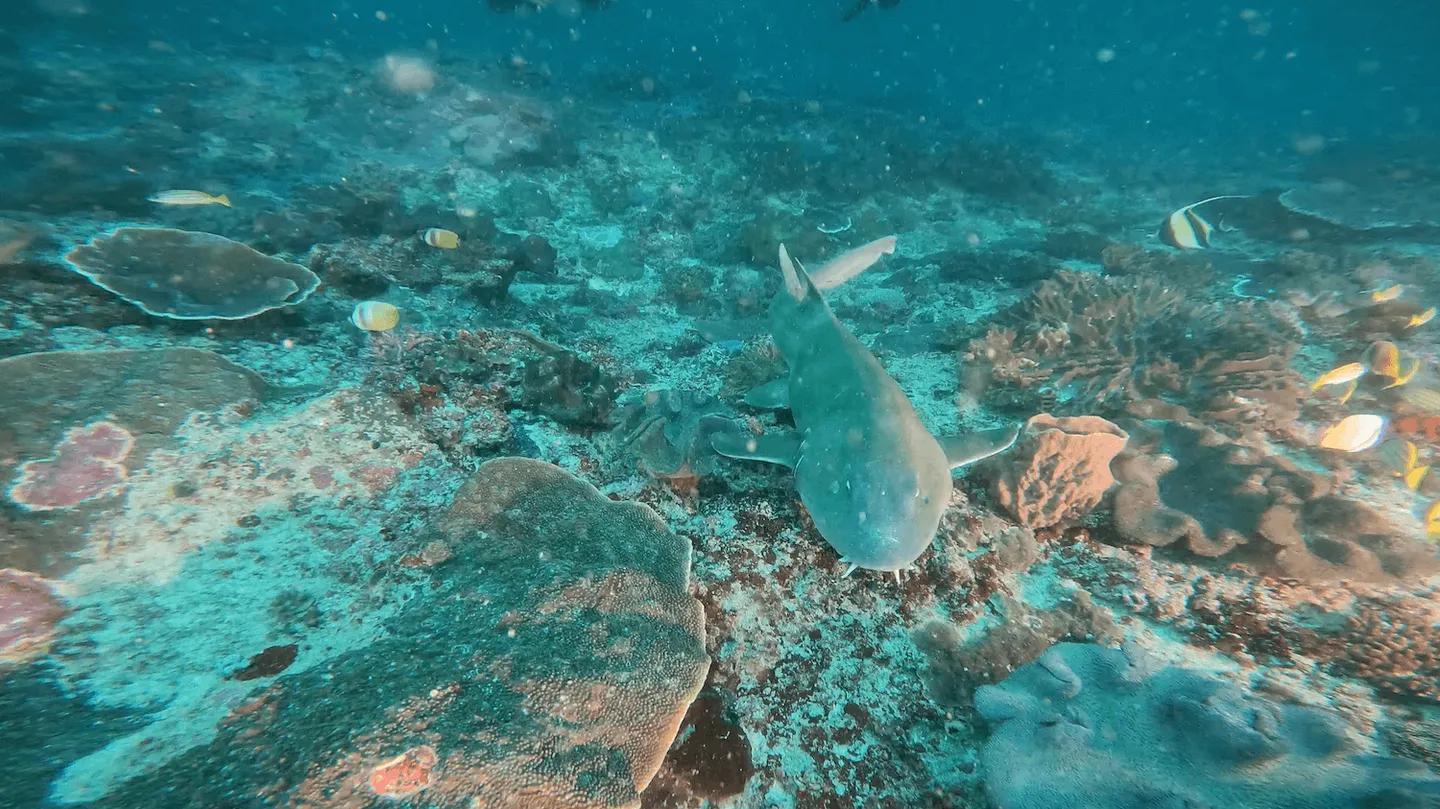
Bamboo sharks can often be found wandering along the bottom — spot one if you're lucky enough
Crystal Bay: Time to Test Your Luck — Come On Out, Mola Mola!
Visiting Nusa Penida during the Southern Hemisphere winter means one dive site is absolutely non-negotiable: Crystal Bay. There's only one reason everyone comes here — to try their luck with the mola mola/ sunfish.
Crystal Bay is one of the most popular local dive sites — everyone's here for the mola mola
Crystal Bay sits in a bay-like channel where cold, deep water from the Indian Ocean is funnelled upward by the topography and squeezed between two islands, creating a natural channel. Because it lies between two islands, strong currents during big tides are common, and powerful downcurrents are practically a daily occurrence given the local geography. On the upside, the islands shelter the bay from Indian Ocean swells, making surface conditions considerably calmer than at Manta Point, with visibility bouncing back to over 20 m. Mola mola/ sunfish prefer cooler water, so the window for sightings here coincides with the local winter, when water temperatures sit between 21–23°C — and occasionally plunge to a startling 18°C.
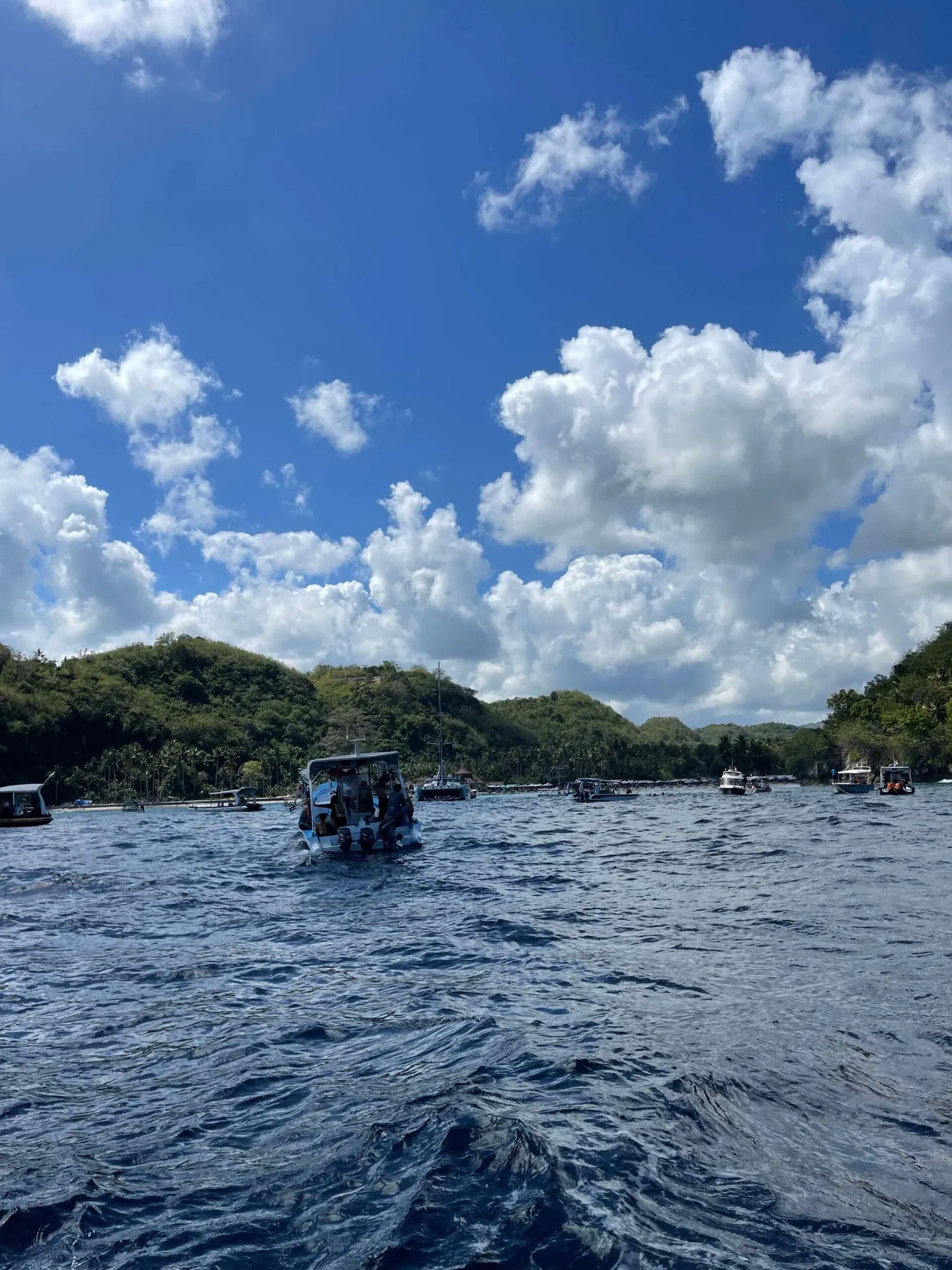
Crystal Bay offers a relatively sheltered entry and exit from the boat
After descending, the dive guide leads the group at a depth of 15–20 m, with the cliff wall on your right and the open blue on your left. Sometimes a mola mola/ sunfish appears suddenly in the distance and the whole group surges toward it — at that moment, watch your depth gauge carefully. In open water with no reference points, depth perception vanishes, and mola mola/ sunfish tend to descend deeper when a crowd approaches. You could easily find yourself following one down to 40 m, and if a downcurrent hits at the same time, the risk multiplies significantly. The dive guide will ask you not to stray too far from the cliff wall, because if a current kicks up in open water you may be unable to return to the designated boat pick-up point inside the bay.
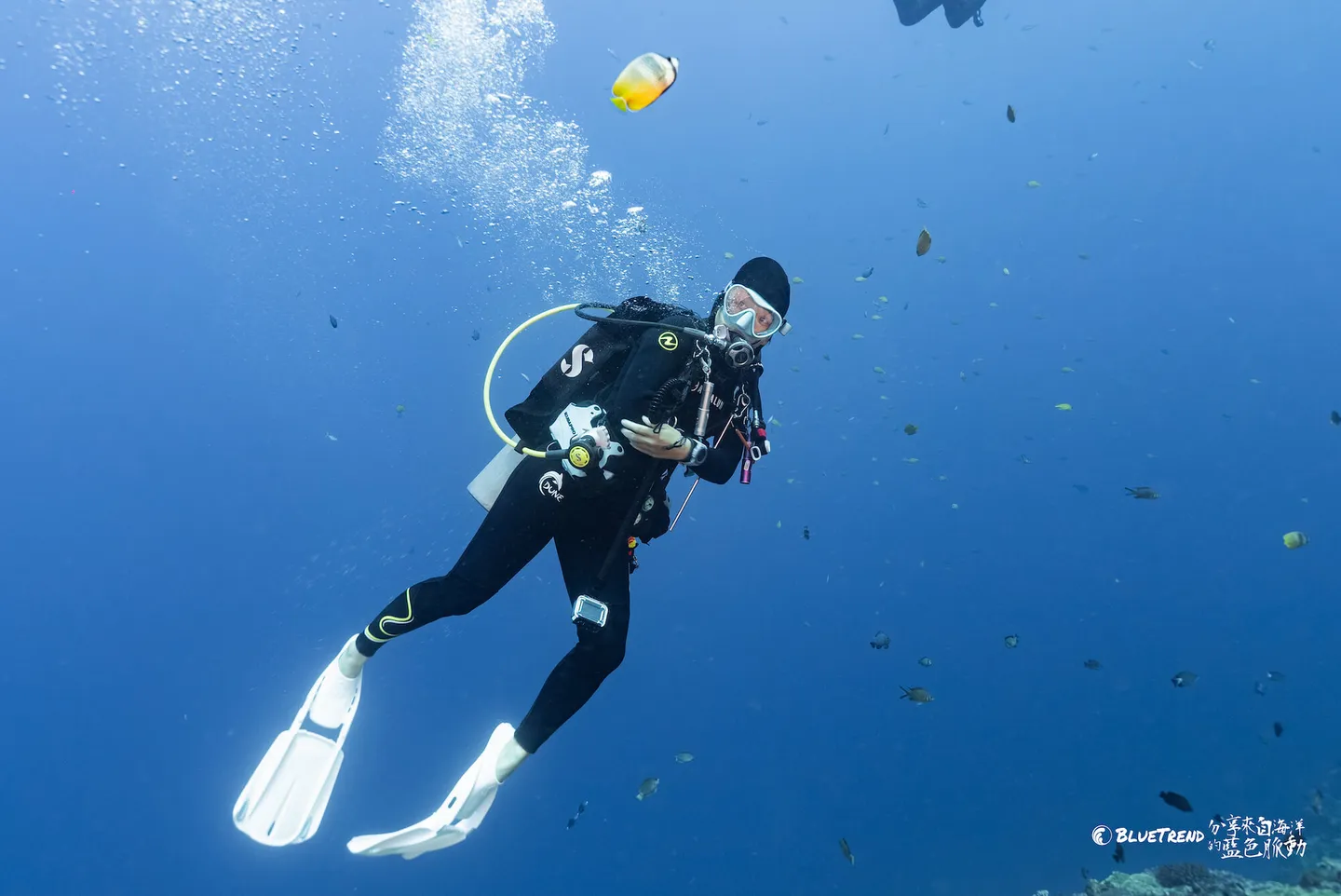
The open water drops to over 60 m — don't stray too far from the cliff wall
Why are there no photos of mola mola/ sunfish from us? Because our luck was absolutely terrible this trip. Someone on the same boat saw three mola mola/ sunfish, yet all four of us came up empty-handed on both days we dived. The lesson here: helping elderly grandmothers cross the road every day is very important.
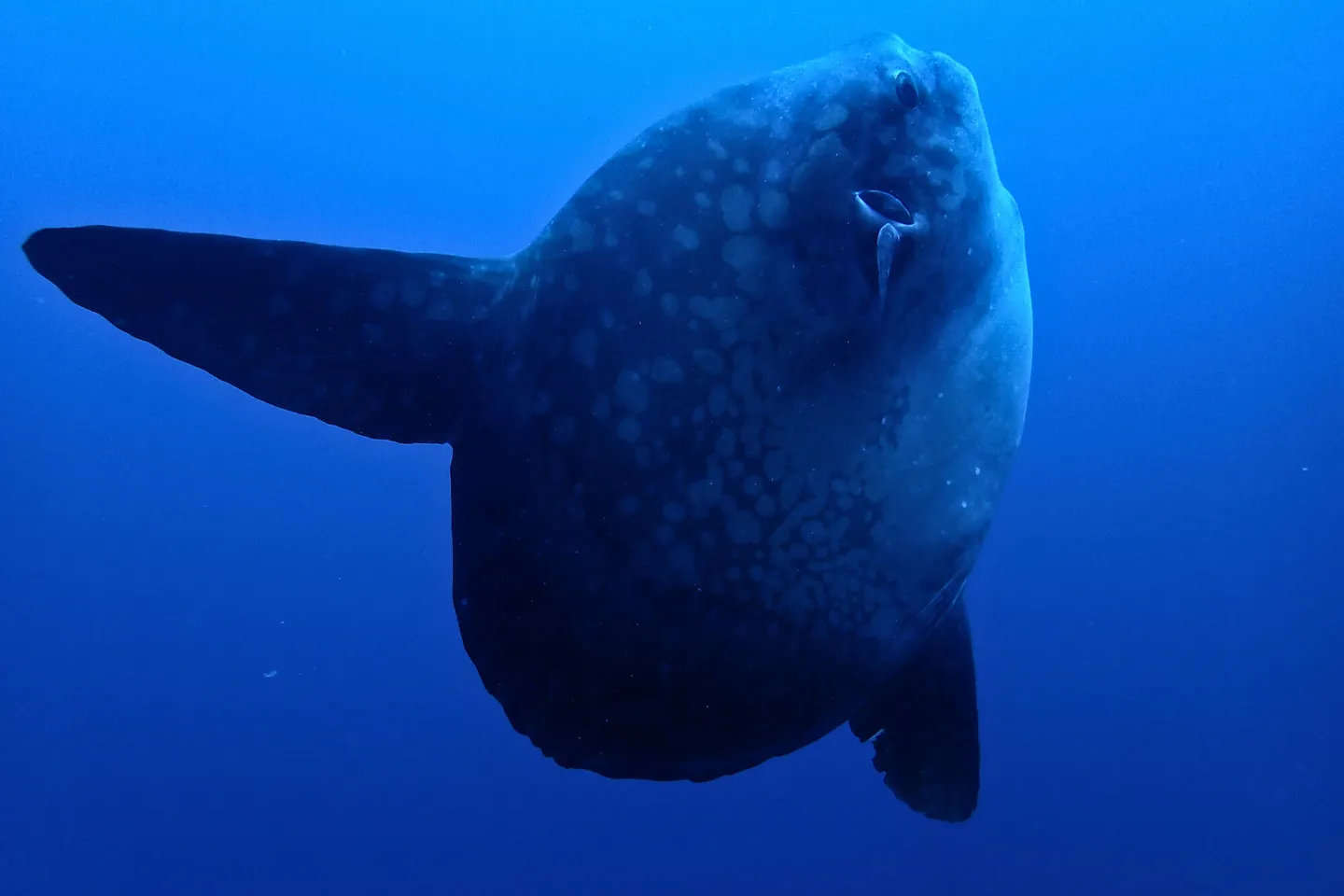
Many thanks to photographer Neko Wang for generously sharing her photos and soothing our bruised, mola-less souls
Recommendation: ★★★★★
Difficulty: ★★☆☆☆
SD Point & Mangrove: Drift Diving Like Flying a Kite — Walls of Fish and Coral Beyond the Frame
After the big-animal dives, the third dive of the day is usually something more relaxed — a drift dive. We headed to SD Point and Mangrove on the northern side of the island. Big-animal encounters are less likely here, but drifting along you'll be treated to enormous schools of fish and coral formations on a scale that made us joke after every dive: everything here is a supersized version of what we have back in Taiwan!
Because both sites are on the north side of the island, surface conditions are calm and the water temperature rises to a comfortable 28–29°C. Don't forget to take off that 5mm wetsuit before jumping in!
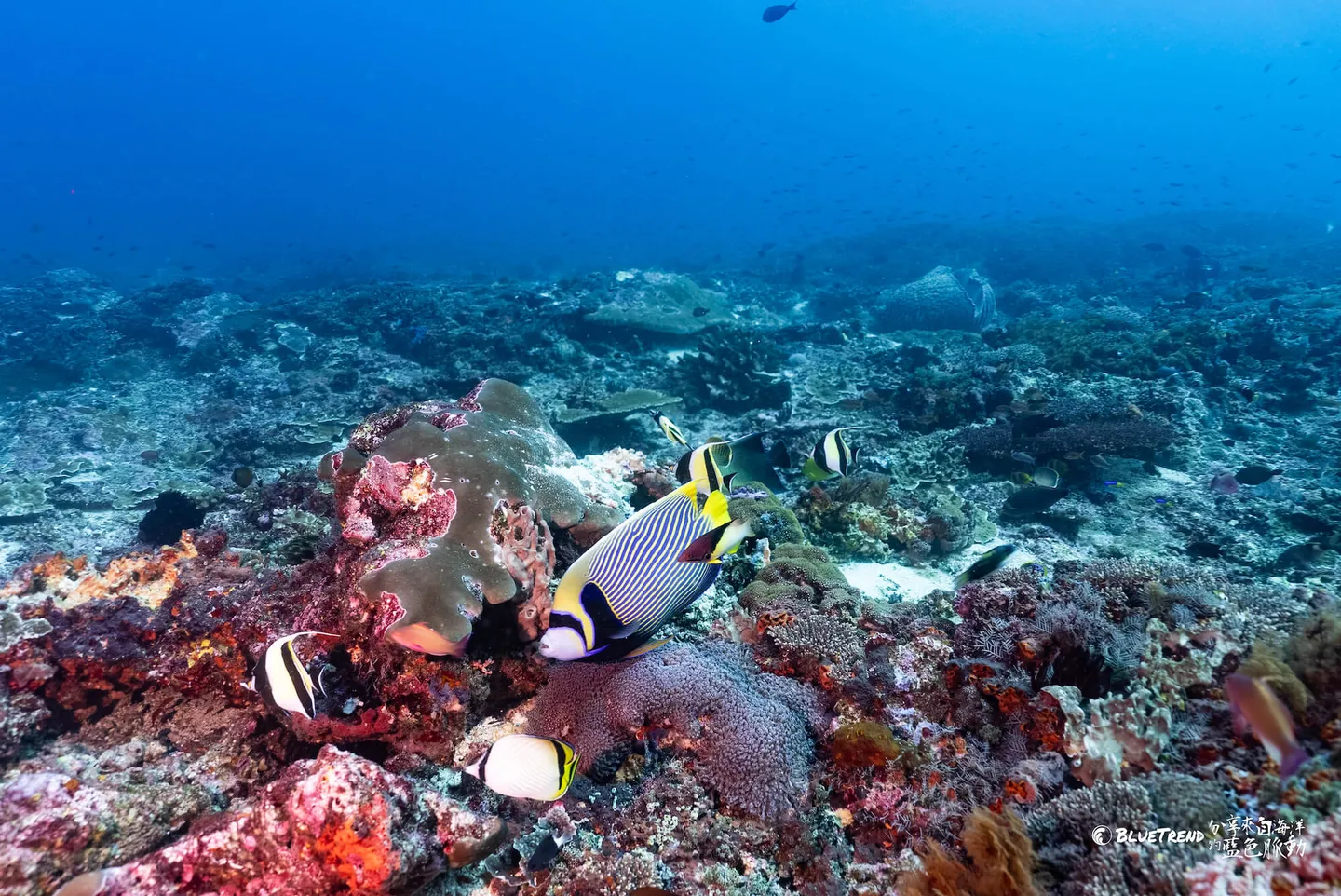
Reef fish species and numbers are staggering — many times larger in size than their Taiwanese counterparts
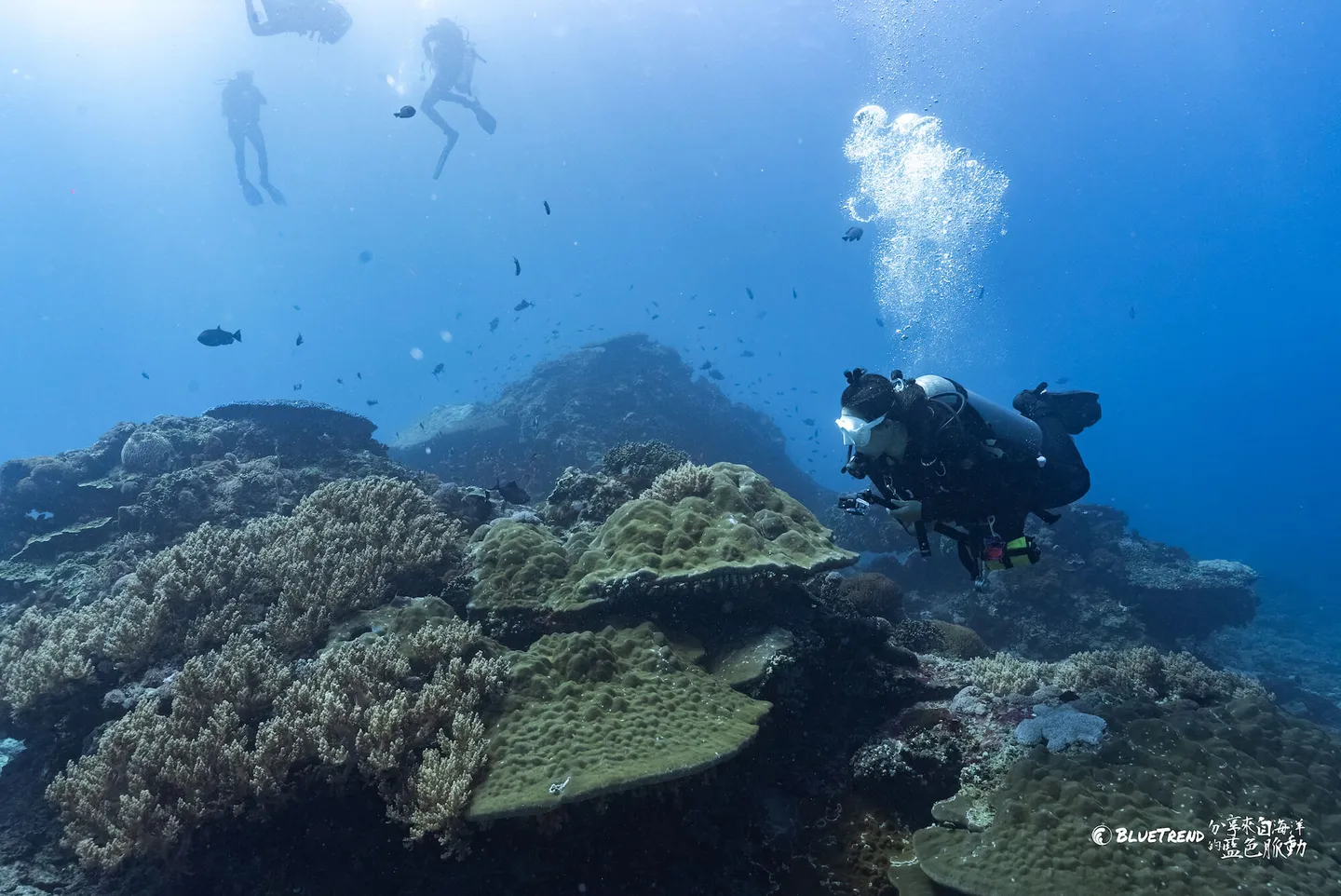
Drifting along, you're treated to spectacular coral scenery stretching as far as the eye can see
SD Point
Recommendation: ★★★★★
Difficulty: ★☆☆☆☆
Mangrove
Recommendation: ★★★☆☆
Difficulty: ★☆☆☆☆
Overall Dive Summary
Nusa Penida in Bali is an outstanding destination for any diver looking to tick the big animals off their bucket list — in a single day you can potentially encounter both manta rays and mola mola/ sunfish. The comfortable water temperatures and rich marine life at the drift dive sites make this a must-visit location for wide-angle underwater photographers as well.
That said, the demanding conditions at Manta Point mean we recommend it for more experienced divers. Some people do choose to come to Nusa Penida for their Advanced Open Water Diver (PADI cert) course and pick up a drift diving specialty while they're at it, but make sure your fundamental Open Water Diver (PADI/SSI cert) skills are solid before you show up. As for Crystal Bay, it is also used as an open-water training area — the dive shop told us that sometimes mola mola/ sunfish appear right in the middle of a student's ocean session. That kind of luck the Editor can only dream about.
If the thought of a 40-minute speedboat ride to Nusa Penida every day isn't appealing, ask Enjoy Islands about arranging accommodation on the island itself. That way you only need to stroll to the dock with your gear each morning. Just note that public ferry departure times will need to be factored in, and the ferry crossing takes longer, so you should budget an extra travel day on each end of the trip.
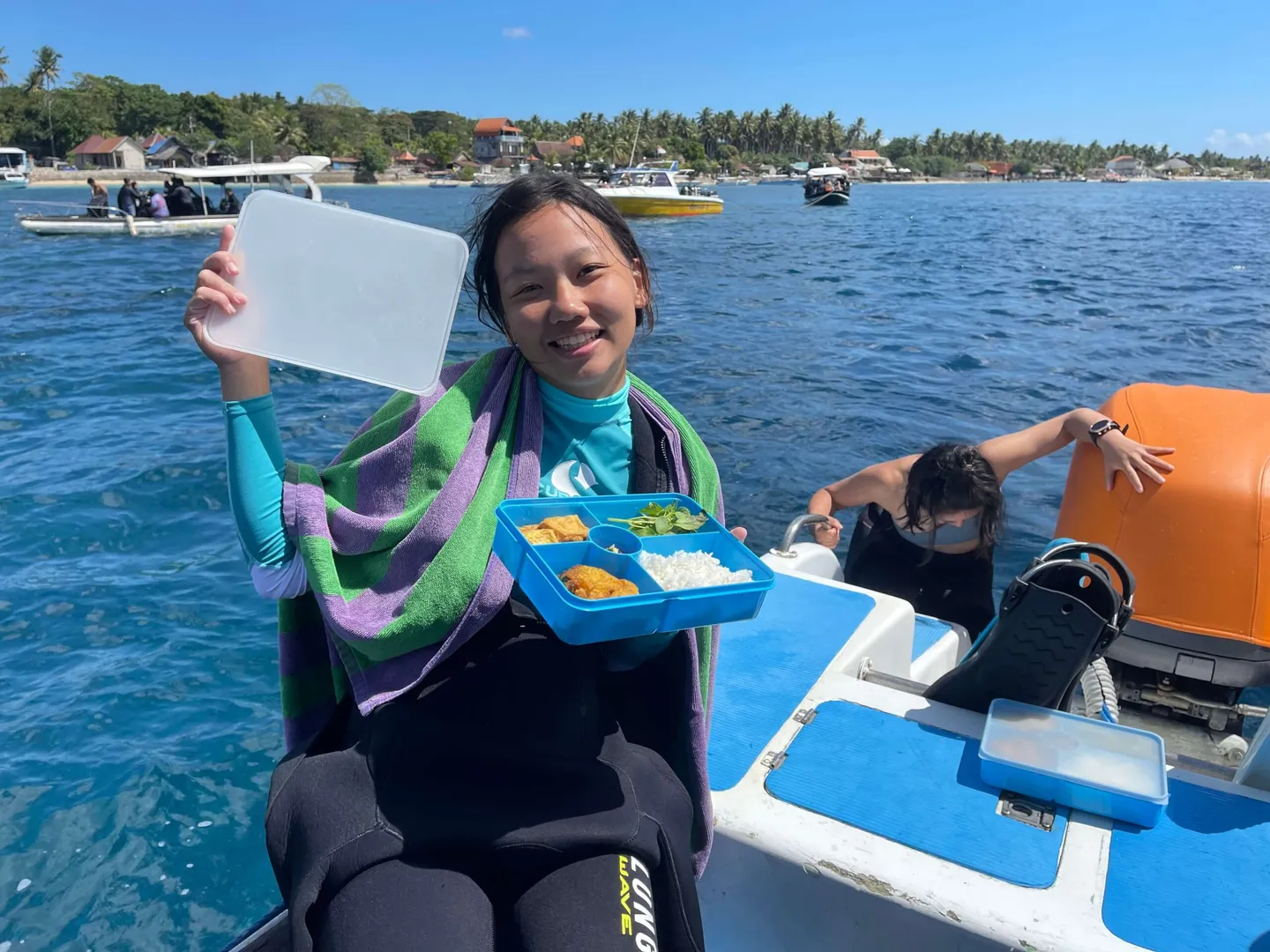
Three dives a day — the dive shop takes care of lunch
After Diving in Bali
Beyond the diving itself, soaking up the island holiday life was a major highlight of this trip. Here are a few activities we strongly recommend — though as decidedly non-Instagram-model travellers, the standard "aesthetic pose" sightseeing itineraries were a hard pass for us!
Recommended Activity: Local Indonesian Food — A Must!
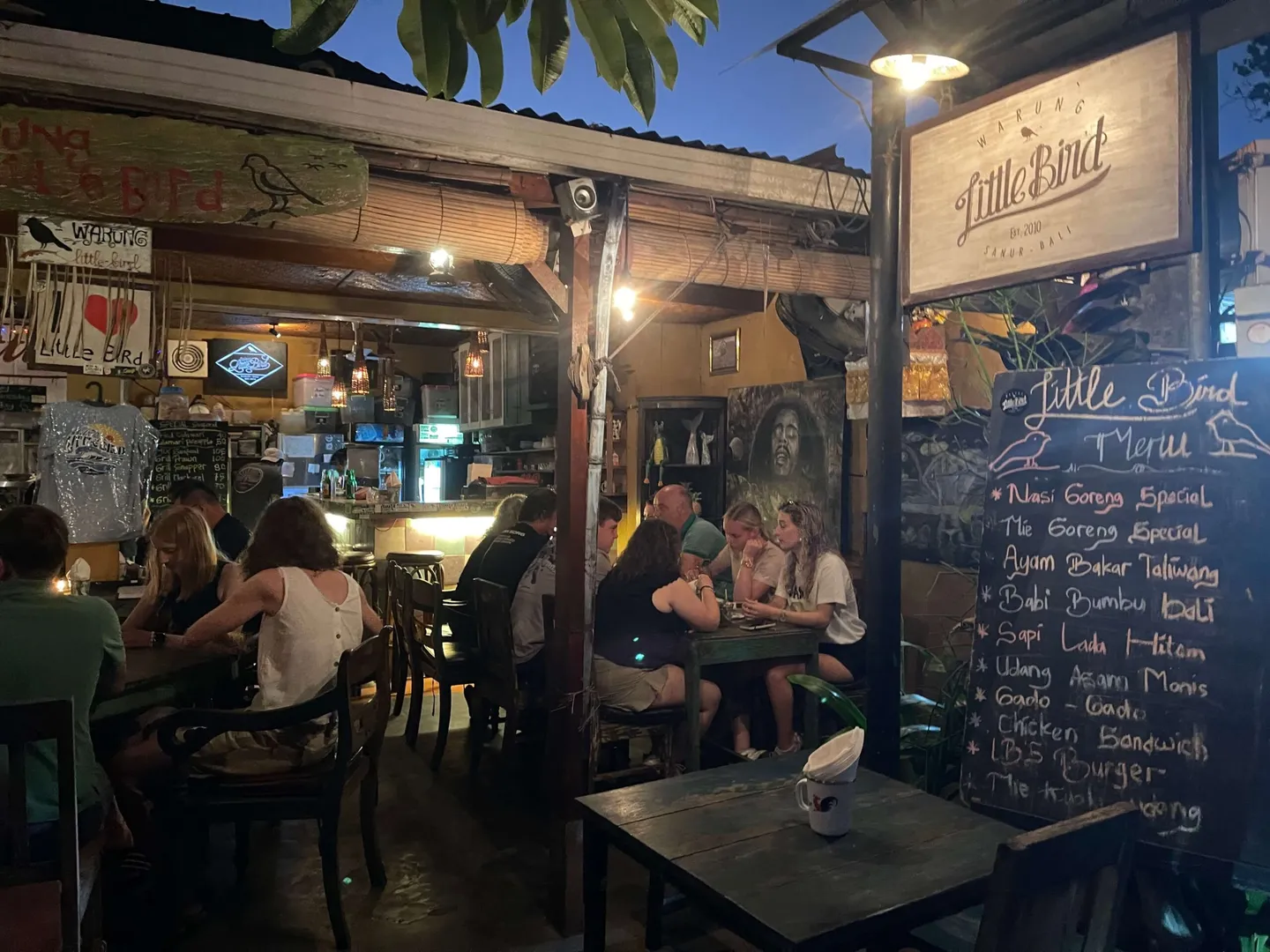
Bali is an internationally renowned resort destination where you can find cuisines from all over the world. The Sanur area where we stayed skews heavily toward Western restaurants, while Kuta offers a broader mix of Western, Japanese, and Chinese options. But since you've come all the way to Indonesia, sampling the local food is an absolute must. The Editor highly recommends Warung Little Bird in Sanur for authentic Indonesian cooking.
Recommended Activity: Massage — Cheap Massages — A Must!
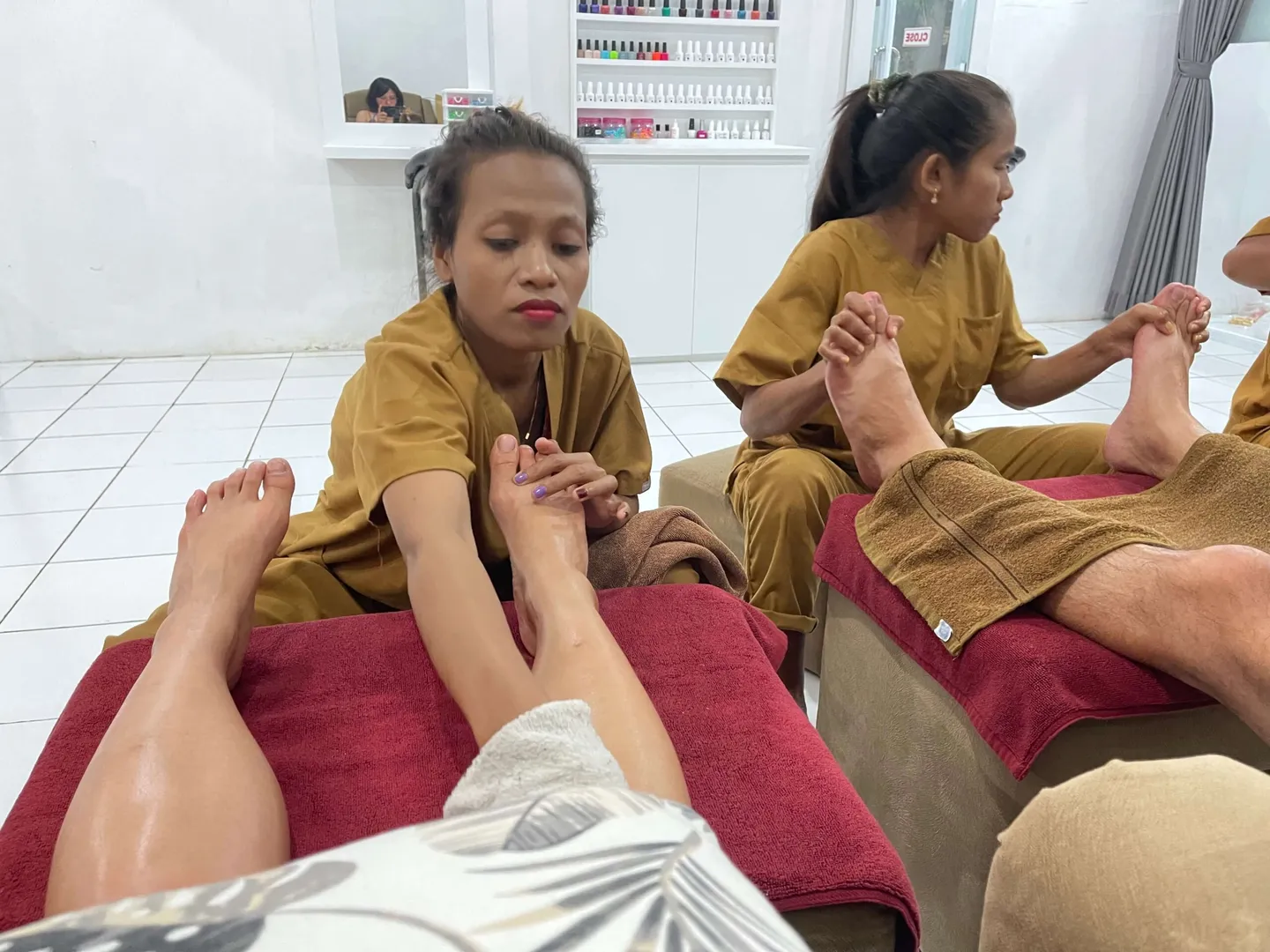
Bali is packed with massage parlours of every kind, all with clearly displayed prices. You can find a basic street-side shop for the equivalent of NT$200 per hour, or a more upscale, atmospheric studio for around NT$600 per hour. After a long day on your feet, ducking into a massage parlour to reward yourself is the perfect way to round off the day.
Recommended Activity: Pub — Experience the Western Party Vibe — A Must!
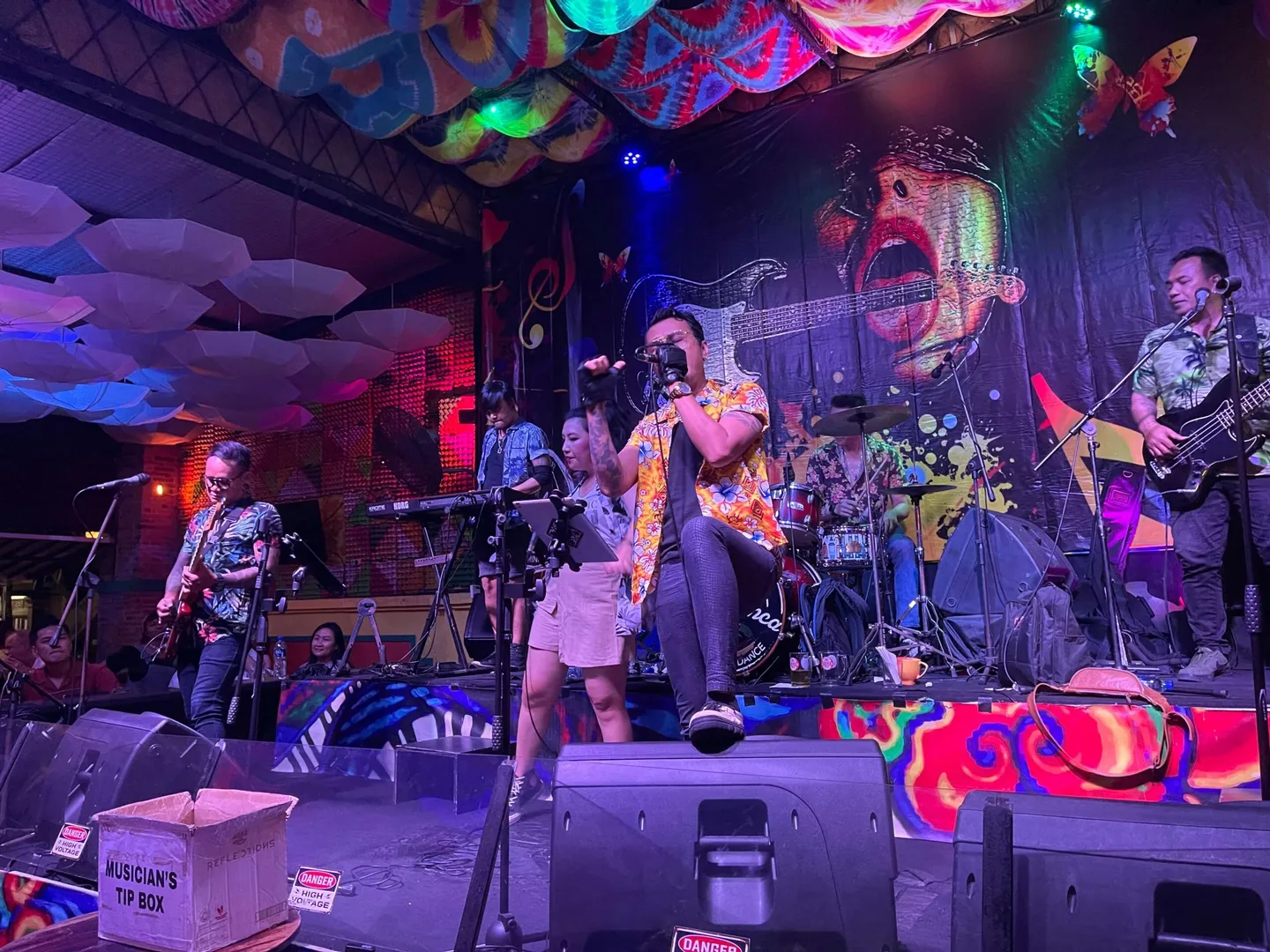
There are plenty of seriously rocking pubs around — head out for a nightcap and take in some Western rock music
The Sanur area is predominantly frequented by Westerners — scanning a crowd, we four Asians stood out as the lone exception, almost convincing ourselves we were somewhere in Europe or the Americas. If you enjoy a lively scene, find a pub for a drink or two and experience Western free-spiritedness up close. Some venues play classic Western rock, attracting an older crowd, and you might even catch a grandmother hitting the dance floor — a sight virtually unheard of in Asian social settings. We thoroughly recommend joining the dance floor yourself and feeling that uninhibited energy firsthand.

After all that walking in Kuta, you can always hop in a horse-drawn carriage back to the hotel!
Recommended Activity: Real White-Water Rafting — A Must!
We're not talking about a lazy river at a water park — we mean paddling furiously against a roaring current, slamming straight into a rock wall before bouncing back into the channel, getting wedged in the middle of the river with no way to move, shooting through waterfalls, and ducking flat under bamboo bridges. No exaggeration — this is the most exhilarating white-water rafting the Editor has ever done.
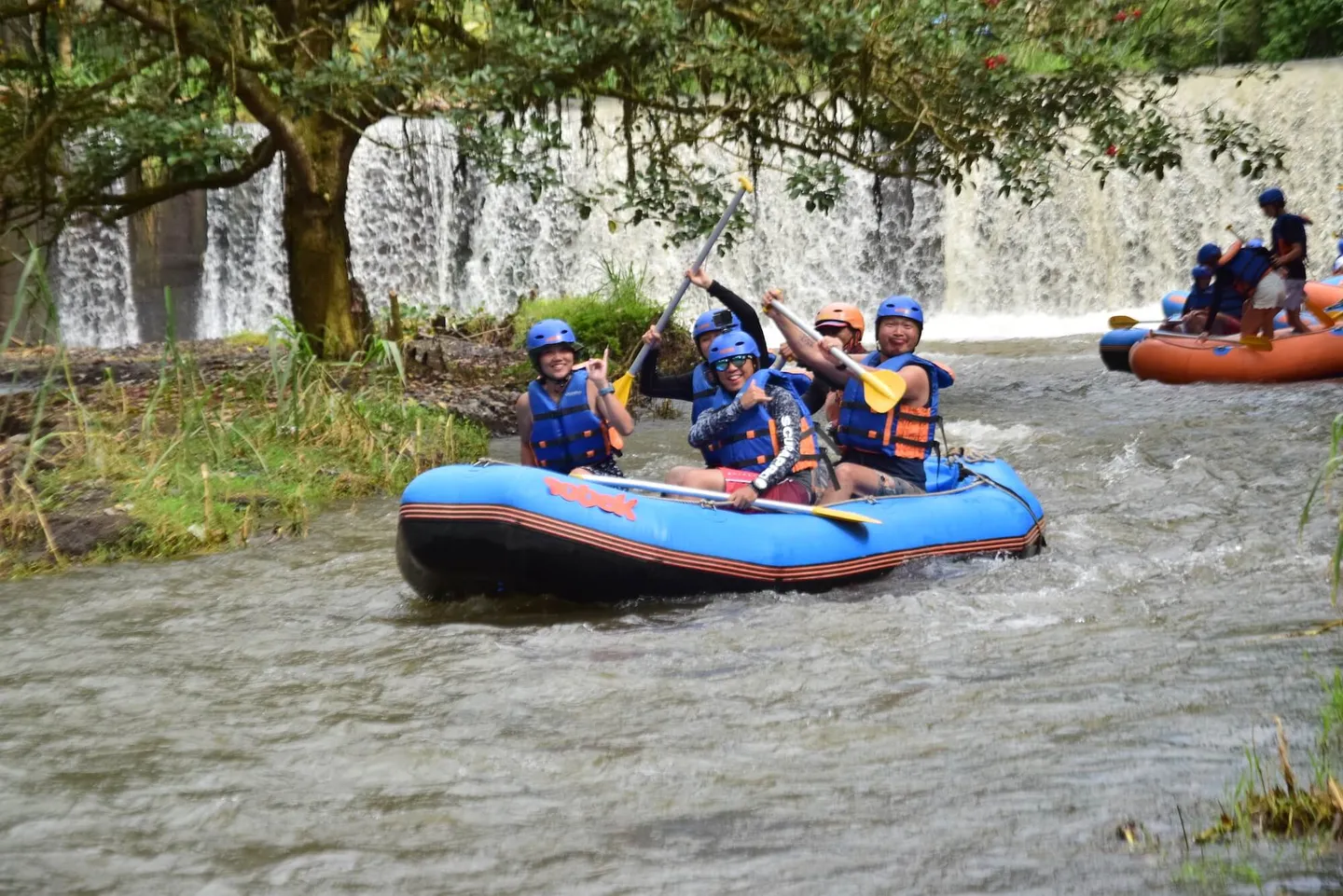
Geared up and ready to go — four clueless souls grinning away, blissfully unaware of what awaits them
Our rafting session started at 10:00, but since the river is about a 90-minute drive from Sanur — and Bali traffic can be unpredictable — make sure to arrange your pickup time with your driver in advance. The rafting itself takes about 120 minutes, with one rest stop along the way. Lunch is included at the end, and there are facilities for hot showers and changing clothes. Best of all, you can buy a memory card from the operator for the equivalent of around NT$500 and walk away with every single photo they took of you. Looking at our hilariously unflattering shots, we felt it was absolutely worth it.
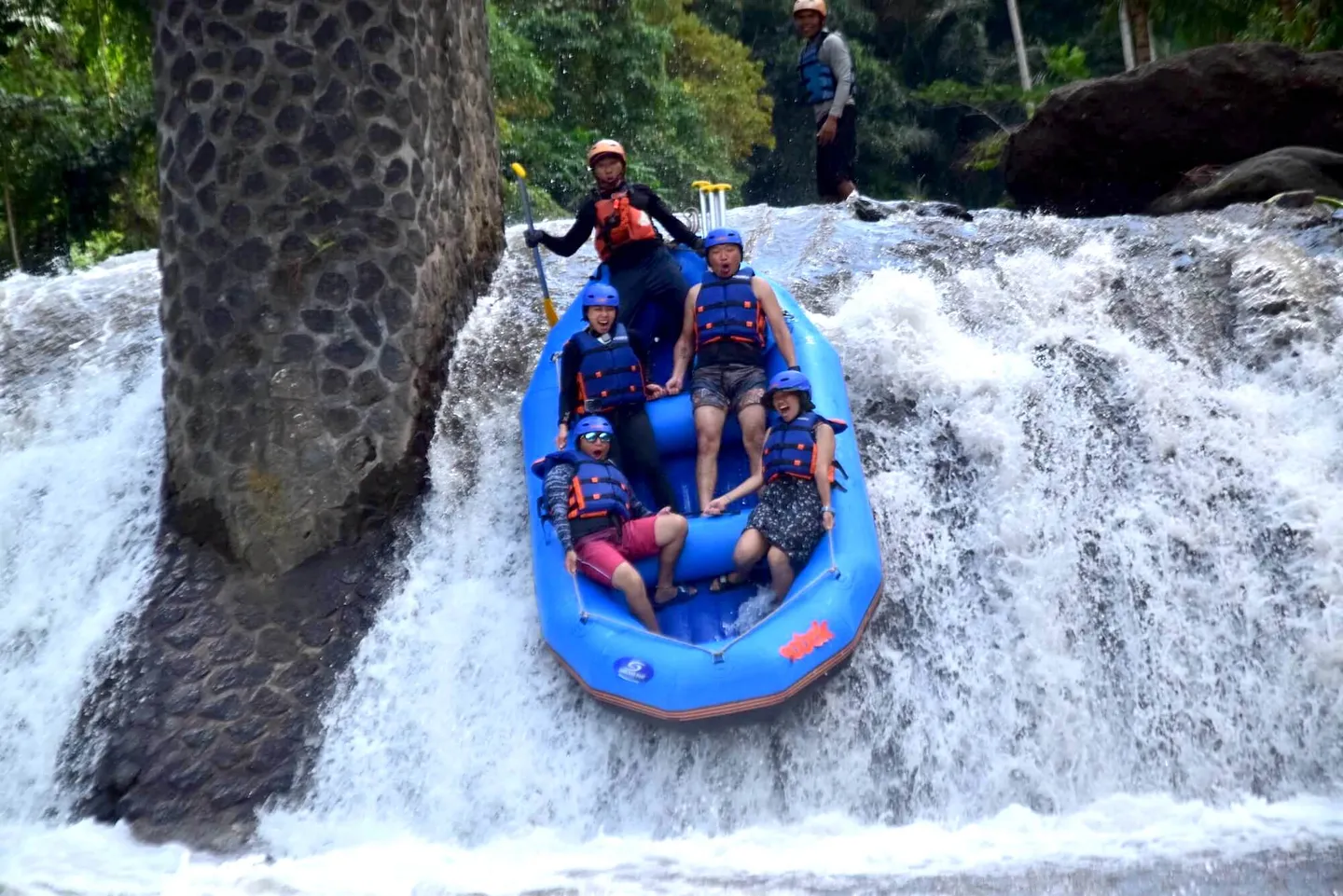
"Sliding" down a 4-metre waterfall — four faces registering maximum expression
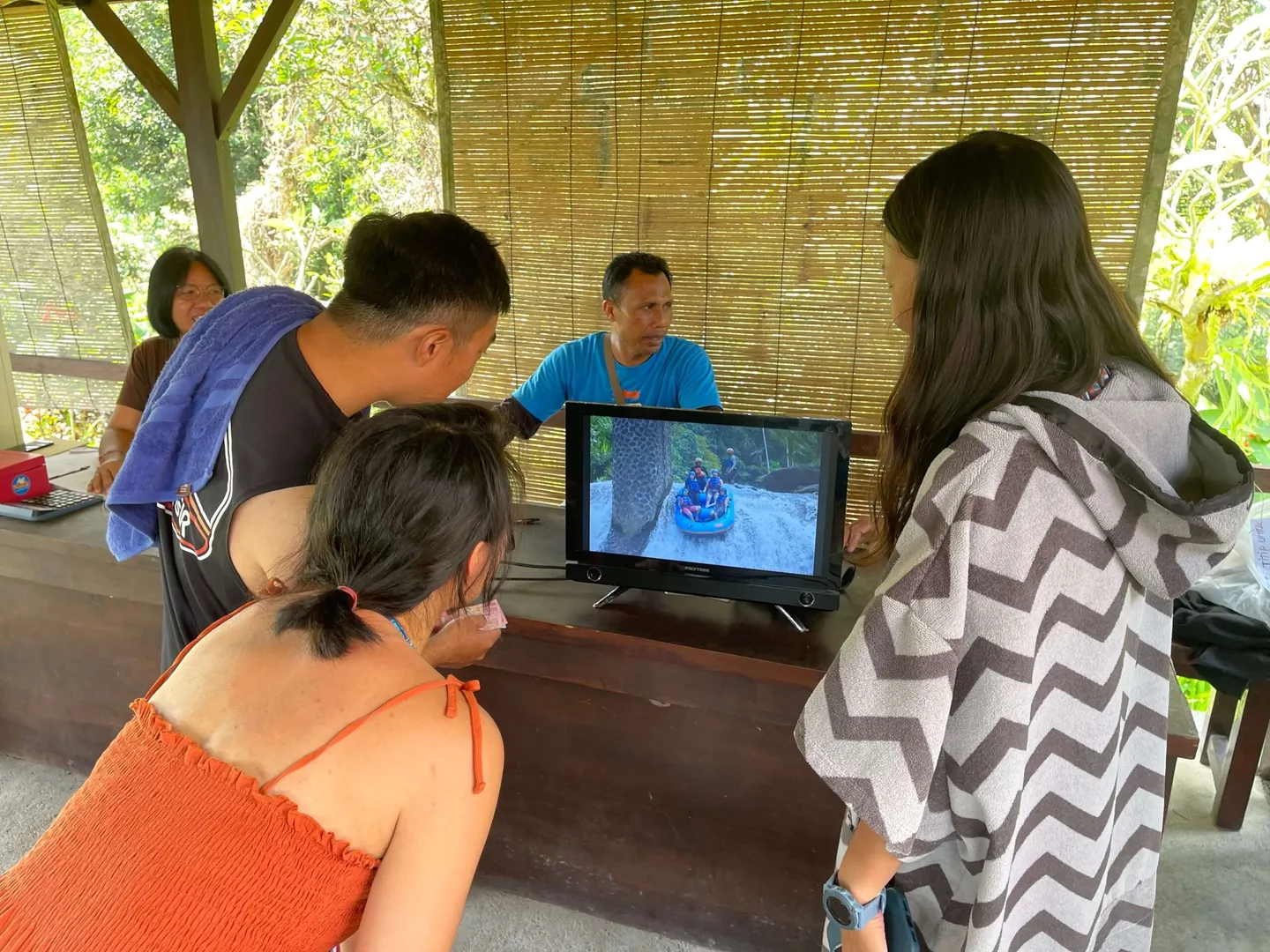
After the rafting, you can purchase a USB drive with all your photos packed on it to take home!
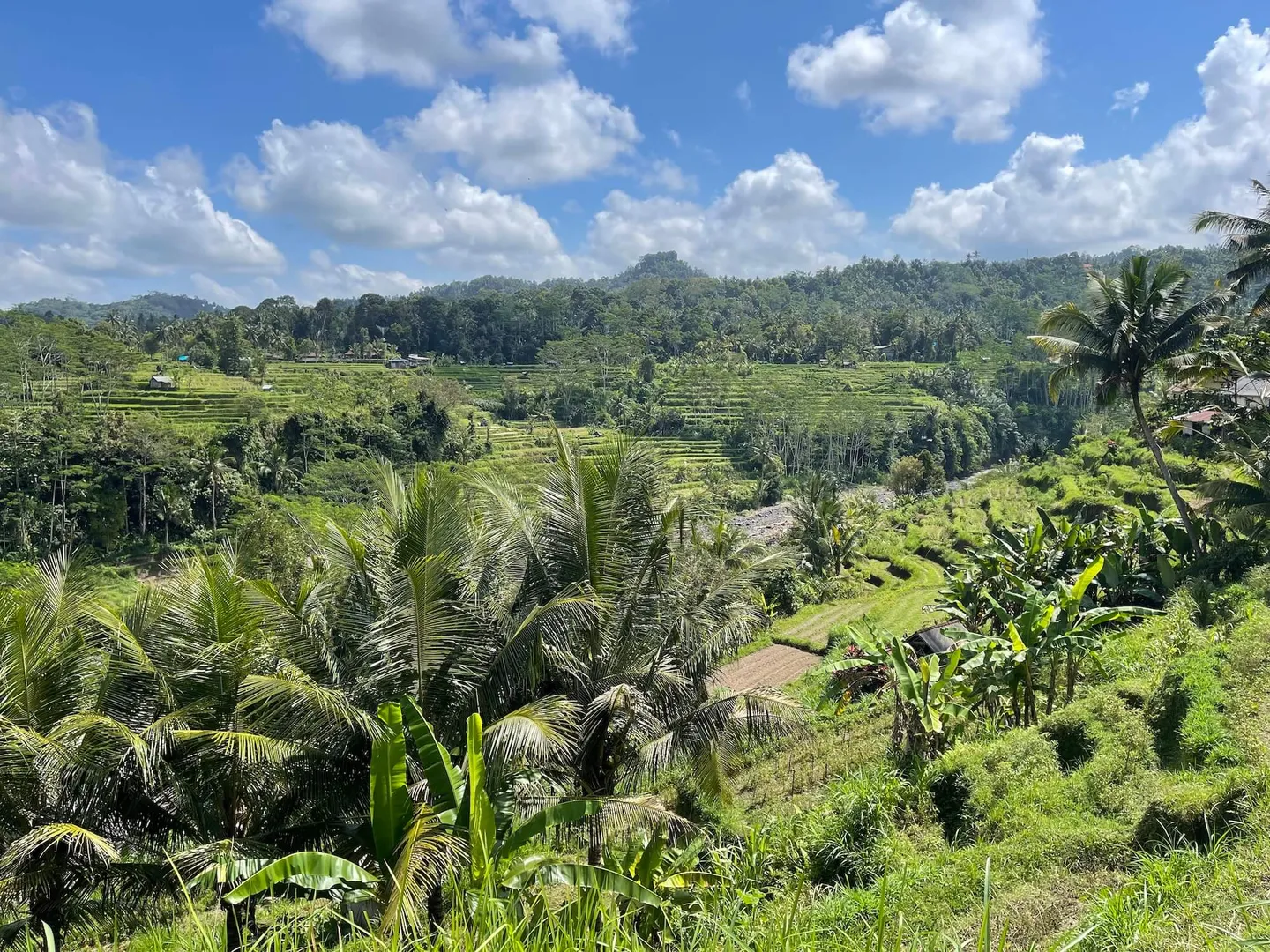
Along the way, you'll be treated to Bali's famous terraced rice field scenery
There are many local rafting operators in the area, and touts approach you along the roadside, but we recommend letting Enjoy Islands arrange the driver and booking for you — it takes the hassle out of it and ensures a smooth, enjoyable experience.
Recommended Activity: Waterbom — Billed as Asia's Largest Water Park — A Must!
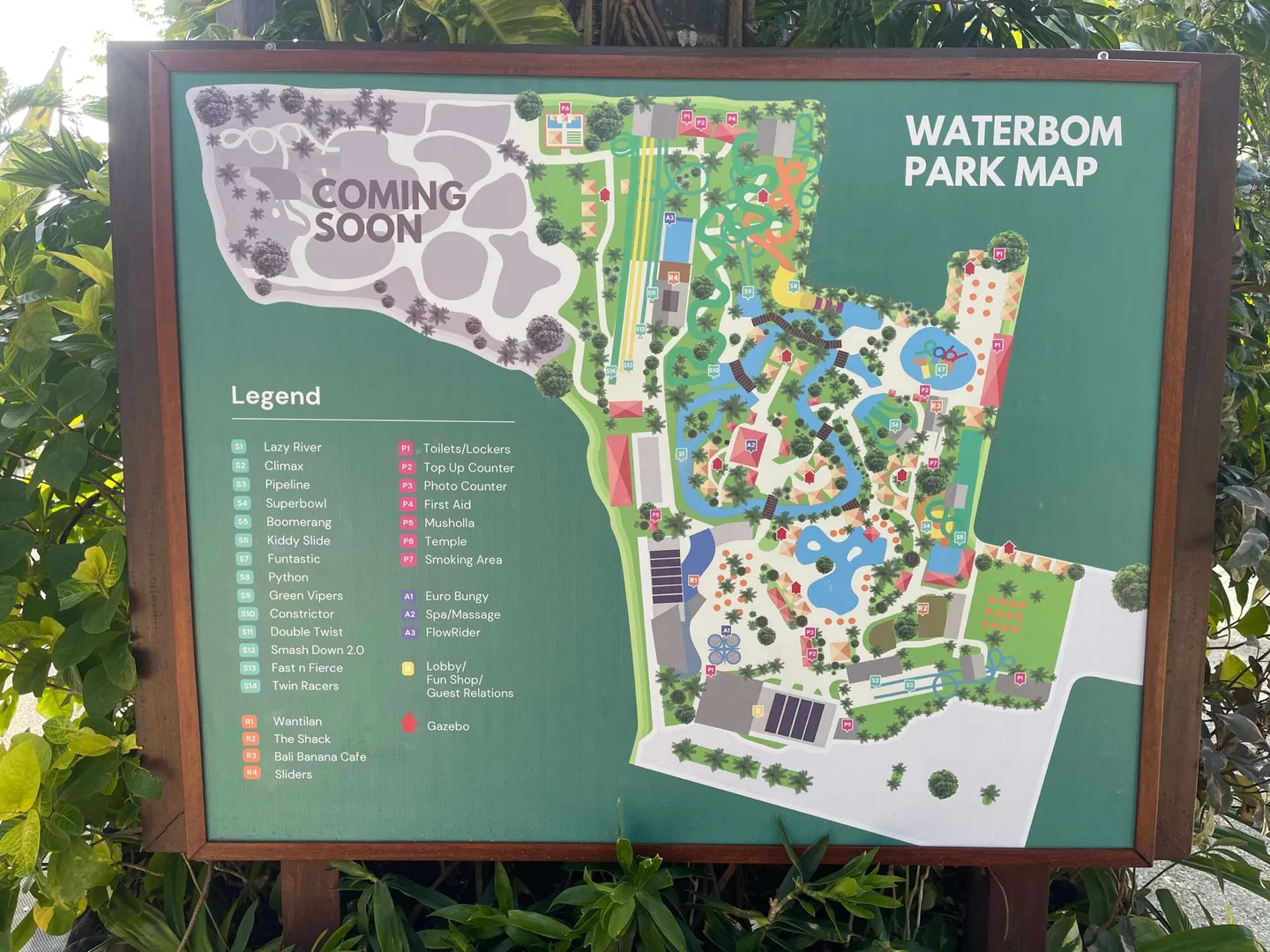
All kinds of thrilling water slides are waiting for you to conquer
Waterbom is located in the Kuta area in southern Bali, covering 32 hectares. Its claim to being Asia's largest water park is no empty boast — the lush tropical landscaping is beautifully done, and the variety of slides has visitors queuing up with enthusiasm. Waterbom opens at 9:00 every day, and the Editor personally recommends arriving right at opening time to buy your ticket and walk straight in, because from midday onward the crowds build up and you could easily be waiting 30 minutes per ride — far from ideal.
Related links:
- Enjoy Islands
- Enjoy Islands Facebook Page
- 【Philippines · Bohol】Taiwan's Top-Rated Trip! Exclusive Bohol Dive Site Insights Shared in Full feat. Enjoy Islands
- 【Philippines · Bohol, Balicasag, Panglao】World-Class Diving at Balicasag — Embraced by a Tornado of Jackfish feat. Enjoy Islands
- 【Philippines · BOHOL】18 Hours of Non-Stop Fun on Bohol! The Ultimate Bohol Attractions Guide feat. Enjoy Islands
Frequently Asked Questions
How is a BlueTrend dive trip different from an unknown, no-name dive group?
Choosing us means full peace-of-mind protection and a smooth experience from start to finish. Every trip we run holds to three things.
First, full legal protection and a professional dive leader: we strictly follow Taiwan's travel regulations and provide complete travel-agency liability insurance, travel insurance, trip-inconvenience insurance and dive insurance. Every group is accompanied by a certified, foreign-language dive leader who joins you on both the dives and the land itinerary, liaising seamlessly with local dive shops and operators on your behalf to keep things running smoothly — the person our travellers trust most.
Second, fully licensed with secure payments: every payment goes into a licensed travel agency's account, with multiple safe payment channels (bank transfer, credit card and more) and a legal collect-and-remit receipt, so every transaction is open, transparent and protected, avoiding the fraud and dispute risks of transferring money privately to an individual.
Third, hand-picked quality we vet in person: every trip, dive site and partner shop is scouted on the ground by our own team, from the guides' professionalism and safety standards to the food, lodging, environment and service details on land, all vetted by us so you don't get caught out.
I want to sign up for a dive trip. Are there certification-level or logged-dive requirements?
Each dive site is different, so the entry bar varies. 'Bali Tulamben', for instance, is relatively beginner-friendly. 'Malapascua in the Philippines' is also beginner-friendly, but since thresher sharks tend to cruise between 20 and 30 metres, we recommend AOW certification with 20+ logged dives to enjoy this trip comfortably. For 'the Maldives' or 'Palau', we suggest AOW with 50+ logged dives for a more relaxed experience. If you're not sure whether your experience fits the trip you want, message us and our dive editors will assess it and help you find the trip you'll feel safest on.
Can I join if I'm signing up alone? How are rooms arranged?
Plenty of our travellers sign up solo! For rooms and beds, we prioritise pairing you with a same-gender traveller, and if you'd rather have your own space you can pay the difference to upgrade to a single room. For the diving, our professional leader will pair you with a suitable buddy, and with the happy vibe on our trips you'll quickly make a great group of dive friends. Many people sign up alone, make new friends, and end up organising the next trip together!
Does the trip fee include dive insurance, gear rental, taxes and instructor tips?
It depends on the trip, the destination's regulations and the local operators. Every BlueTrend dive trip has a detailed web page with a clear 'included / not included' list, transparent and with no hidden charges. All payments are collected by a licensed travel agency, with a standard-form contract for your protection.
I'm a new diver / haven't dived in a long time — will I fall behind the group?
Before you complete your booking, our team assesses a suitable trip based on your certification level and experience. Before departure, we strongly recommend taking time to refresh in Taiwan with an instructor, or a fun dive to get your feel back. On the trip itself, our professional dive leader groups and pairs everyone by experience, keeps a close eye underwater on travellers who need extra care, and steps in to help right away.
Will the photos and videos taken during the trip be shared with us?
During the dives, 'safety' is always the leader's top priority, so whenever it's suitable and safe the leader will capture great shots and record the best moments. During or after the trip, we compile a cloud album for all travellers to download, so you go home loaded with memories!
Besides your scheduled trips, can you arrange a private group charter or independent travel for me and my friends?
Absolutely! Besides group trips, we also arrange private group charters and independent travel. We can communicate, enquire and coordinate services with local operators based on your needs, saving you time and effort and taking the language barrier off your plate, to tailor the smoothest, most reassuring dive trip just for you. Contact our LINE support and our editors will arrange it for you!

![[Indonesia] Part 2: What to Do on the Neomi Cruise Premium Indonesia Liveaboard? Dugong, Hammerhead Shark & Sailfish Mega-Fauna Trip — An Exclusive Look at This Once-a-Year Transoceanic Itinerary](/_astro/%E6%88%AA%E5%9C%96-2023-10-31-00.13.58_132HxG.webp)