

Contents(5)
- Kyo Liu — Underwater Photography Master
- the Editor: Is it true that diving in Japan is very expensive?
- the Editor: If you don't speak Japanese, is it really impossible to dive in Japan?
- the Editor: Are there specific diving etiquette points that Japanese divers are particularly strict about?
- the Editor: Beyond the Mikomoto Hammerhead Shark storm and swimming with dolphins at Mikurashima that we hear so much about, are there other unique diving experiences in Japan you'd love to do?
Who says you have to travel all the way to the Galápagos to witness a Hammerhead Shark storm?
Who says diving abroad means you can only head to Southeast Asia?
Did you know that Japan is home to a remarkable variety of diving ecosystems? That said, because Japanese and Taiwanese diving etiquette differ significantly due to cultural differences, knowing how to be a qualified diver — rather than a disgraceful one — in Japan is essential. Let's follow Kyo Liu's insights and learn more about the diving scene in Japan!
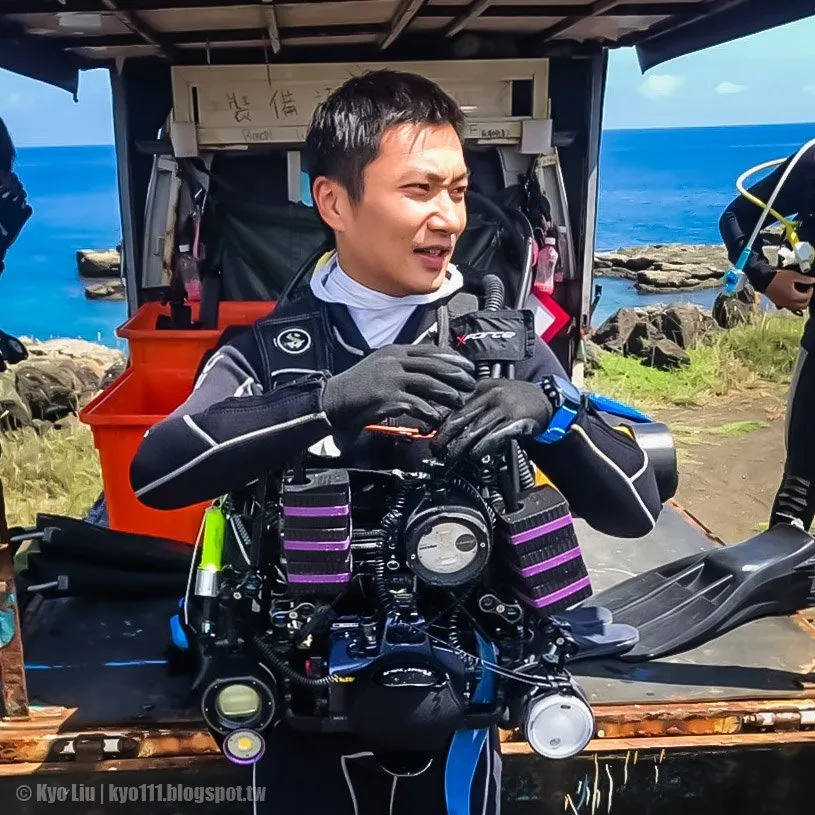
Kyo Liu — Underwater Photography Master
First, let us give a brief introduction to Taiwan's rising underwater photography talent, Kyo Liu. After taking up diving, Kyo began blending the extensive photography experience he had built on land into underwater photography, producing compositions and a visual style distinctly different from traditional photographers. In recent years, he has been invited to speak at major diving clubs and expos — including the 2019 Hong Kong DRT — sharing his body of work. Unlike many photographers whose portfolios are dominated by overseas shots, Kyo's work features a wealth of Taiwanese marine ecosystems. As a result, his signature pieces have been featured by Far Eastern Air Transport, the Keelung City Government, and other partner organisations — you may well have stopped to admire one of his photographs without even realising it! For a deeper look into Kyo Liu, the Cross-Strait Diving Development Alliance once conducted an in-depth interview tracing the origins of his photography journey. Click the link below to learn more: 潜盟專題/水下攝影達人-京太郎的故事!
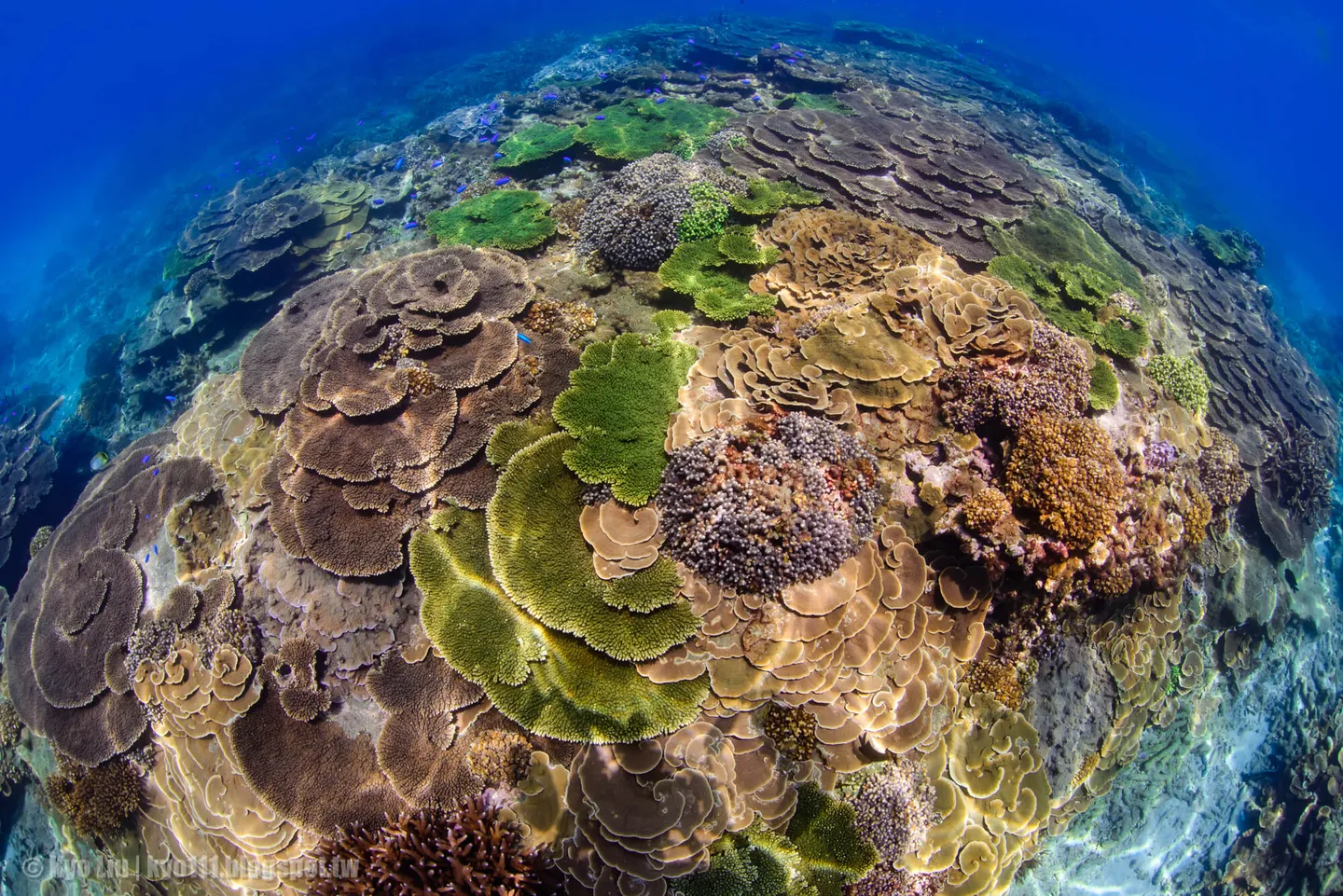
Taiwan — Penghu Nanfang Sida (South Penghu Marine National Park)
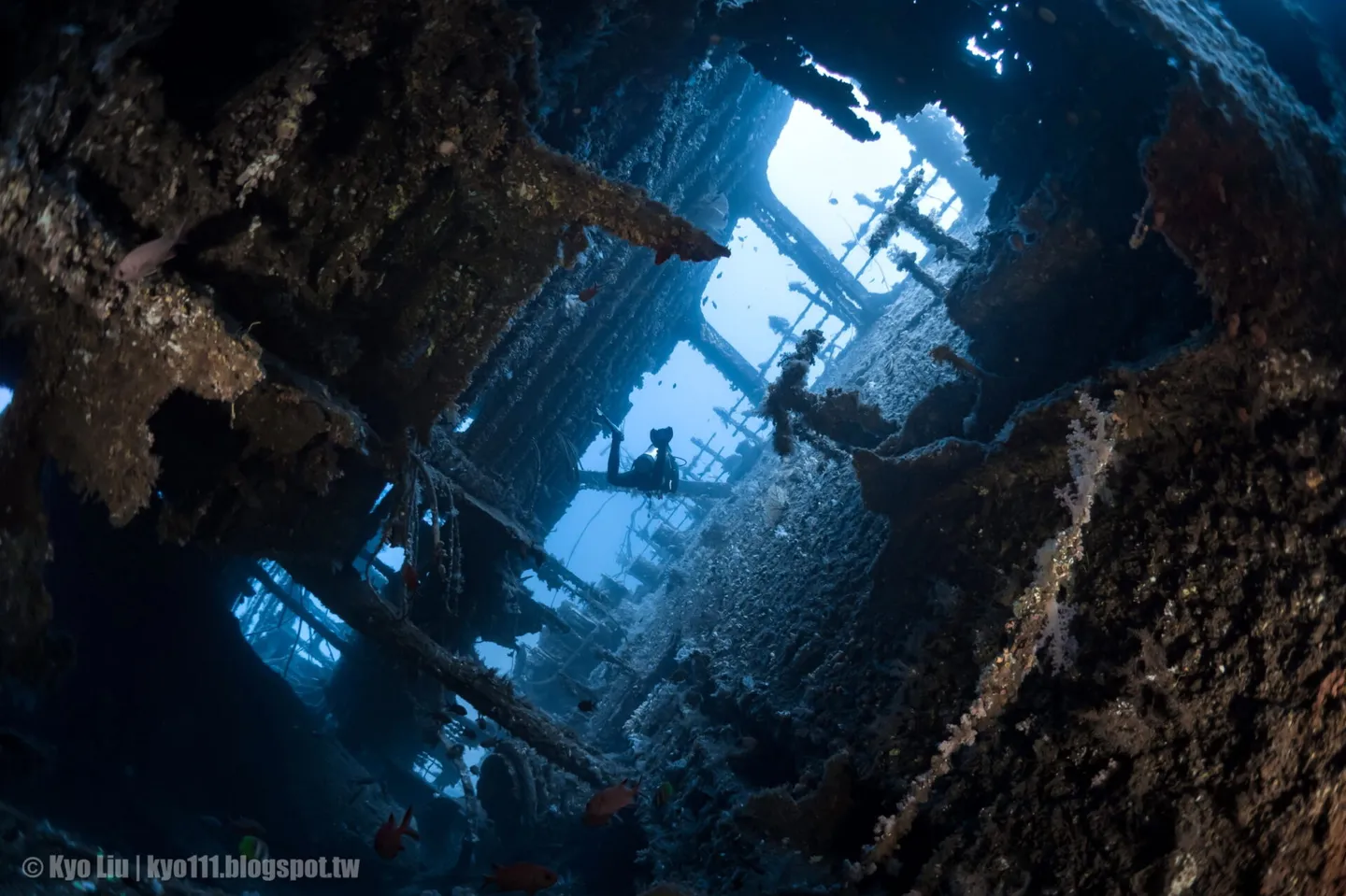
Taiwan — Orchid Island Badaiwan Shipwreck
Before he ever took up diving, Kyo Liu was a professional wedding photographer. When we discussed his philosophy on underwater photography, he drew on the conceptual difference between bridal portrait photography and wedding documentary photography to explain his approach.
Bridal portrait photography: Through extensive preparation and communication, following a near-formulaic shooting approach to capture the most perfect moments.
Wedding documentary photography: Constantly reading the environment — weaving together on-the-spot light, subjects, and surroundings to produce images with a uniqueness that can never be replicated.
Drawn to natural expression, Kyo gradually shifted toward wedding documentary work after turning professional — embracing spontaneity, variety, and authenticity. When he discovered underwater photography, he carried that same philosophy beneath the surface. Even at the same dive site, visibility, sunlight, and marine life are never the same twice; that constant variability pushes him to sharpen his command of camera settings and photographic theory in pursuit of the ideal shot.
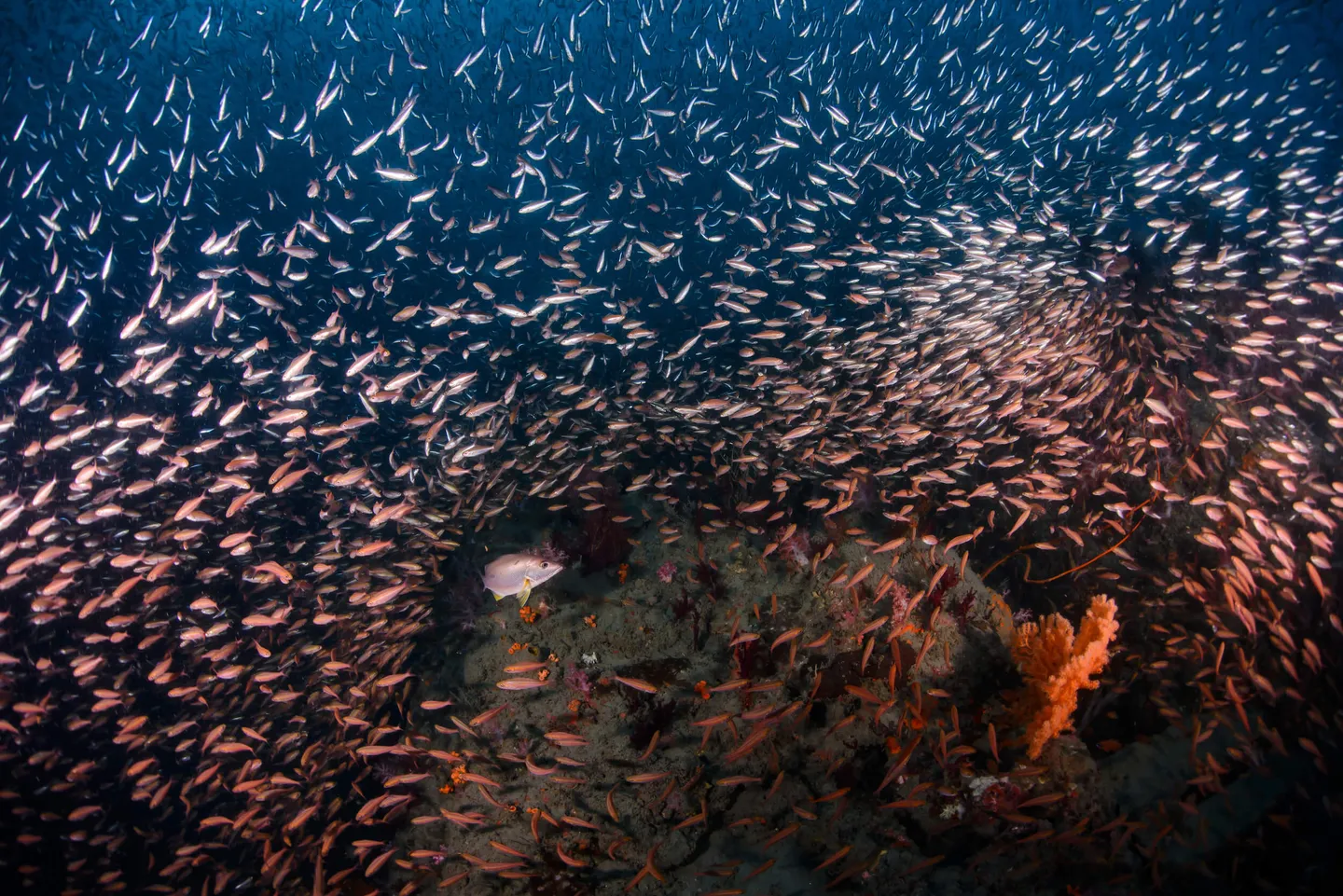
Taiwan — Northeast Coast
Having worked at a Japanese dive shop, Kyo Liu has a profound understanding of how Japanese and Taiwanese diving customs differ as a result of their respective cultures. He urges anyone planning a dive trip to Japan to pay attention to the small details, so as not to accidentally become a disgraceful traveller. Below, the Editor shares a few questions about diving in Japan:


the Editor: Is it true that diving in Japan is very expensive?
Kyo Liu: Japan's cost of living is several times higher than Taiwan's. If you factor in non-diving expenses such as transport, accommodation, and meals, the overall trip will inevitably cost more than a dive trip to Southeast Asia. That said, there is a real upside to diving in Japan: the country's tourism resources are far richer than most other dive destinations. I'd recommend planning 2–3 days of diving and using the remaining 2 days to explore the local area and soak up the distinctly Japanese atmosphere. For example, many divers who visit Shizuoka's Osezaki (Mikomoto) to watch the Hammerhead Shark storm will then spend another 3 days touring Tokyo or the Izu Peninsula — a very different model from Southeast Asia trips that are entirely dive-focused.
Most of us have experienced this: if you rent a car in Okinawa from a shop offering Chinese-language service, you'll pay several times more than you would at a Japanese-only shop. That's where the difference in tour package costs becomes very apparent.
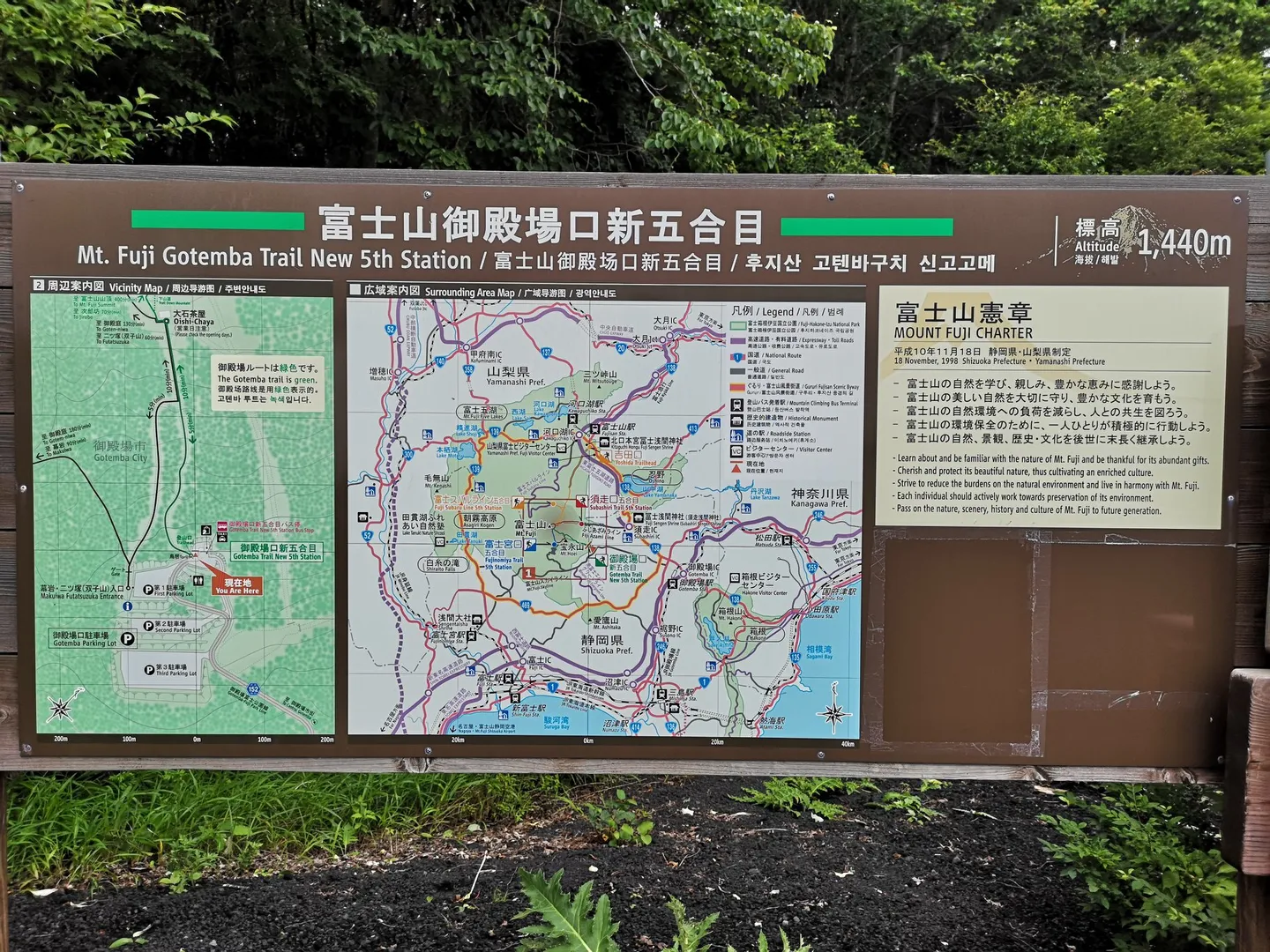
One of the great things about diving in Japan is the opportunity to plan diverse land-based activities alongside your dives
the Editor: If you don't speak Japanese, is it really impossible to dive in Japan?
Kyo Liu: Beyond Japanese, Taiwanese travellers generally have a reasonable level of English — but most of us have also had the experience of hitting a wall trying to use English in Japan. People tend to misread the situation: it's not that Japanese people don't want to serve English-speaking guests; it's that most of them feel that if they cannot provide complete and thorough service, they would rather not take on the job at all. So if the language barrier makes smooth communication impossible, how can they guarantee full service?
If you're not proficient in Japanese, a great option is to join a group led by a professional dive instructor who speaks Japanese. Not only can they handle basic translation, they can also brief the group on the subtle diving etiquette that matters in Japan — keeping everyone from becoming a disgraceful traveller.
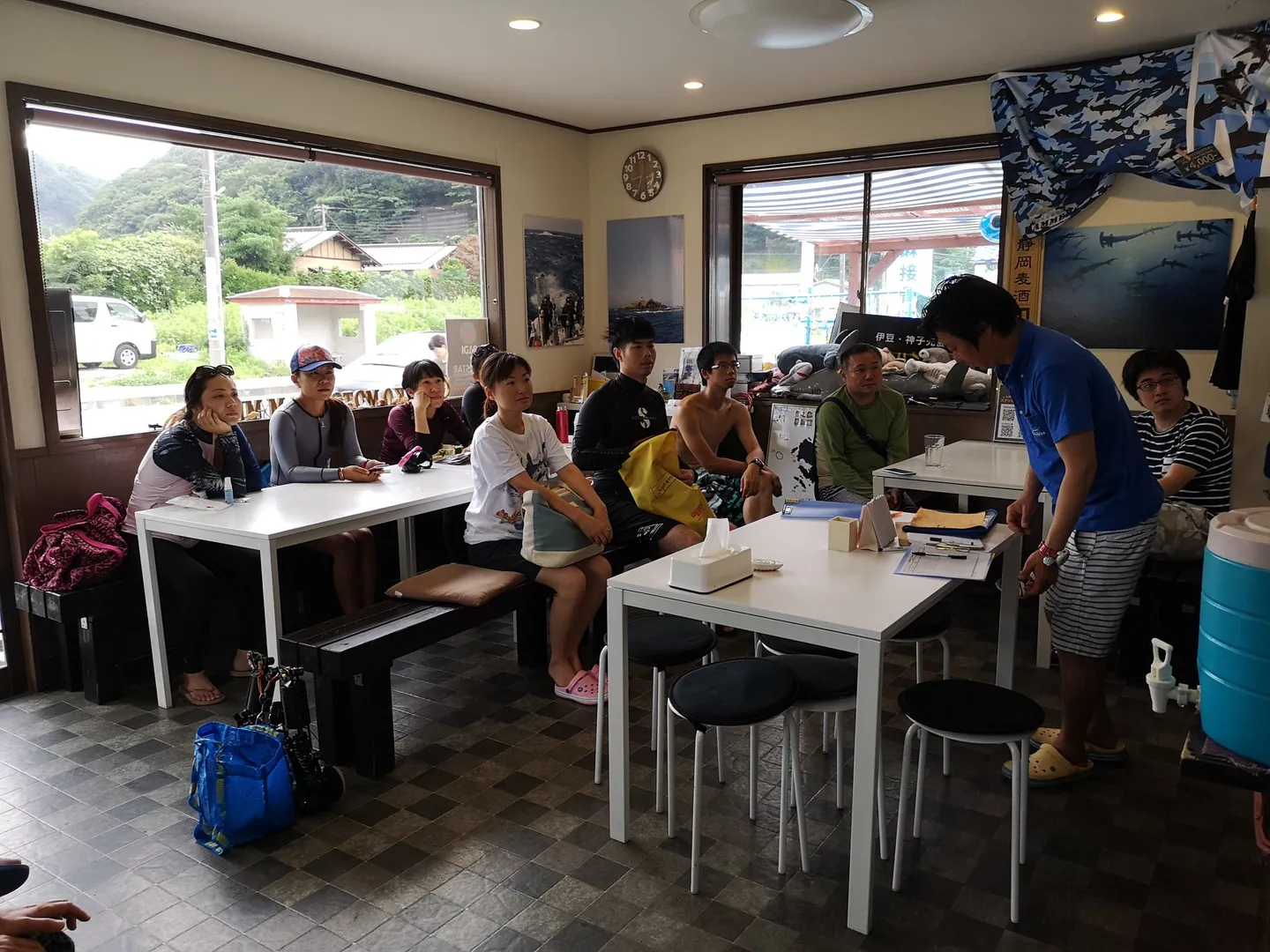
When you're on their turf, respect the Japanese way of doing things
the Editor: Are there specific diving etiquette points that Japanese divers are particularly strict about?
Kyo Liu: If you're working with a Chinese-speaking dive shop locally — where the owner and instructors may be Taiwanese or Hong Kongers — the customs won't differ much from what Chinese-speaking divers are used to. But if you're working with a purely Japanese operation, there are quite a few small details worth knowing, since the cultural differences between our two countries are very real.
-
Punctuality! Punctuality! Punctuality! If you've ever worked at a Japanese company, you'll know the expectation of being seated in the meeting room five minutes before your superior arrives. The same applies at Japanese dive shops. Whatever time is agreed for the meet-up, the dive briefing, or boarding the boat — never drift in fashionably late the way people often do in Taiwan or Southeast Asia.
-
Mind the local etiquette: The list of things to be aware of here is almost endless, since Japanese people are, comparatively speaking, far more meticulous than Chinese-speaking divers. For instance, Japanese divers are extremely thorough about sorting gear into the correct freshwater rinse tanks after a dive — every piece of equipment has its designated bin. Labour costs in Japan are also higher than in Taiwan, so at some sites after a boat dive, everyone spontaneously lines up on the boat and passes scuba tanks hand-to-hand up to the dock. Those of us accustomed to the more relaxed, all-inclusive style of Southeast Asian diving might easily overlook this kind of thing. This is another reason why having a group leader who truly understands Japanese culture is invaluable — they can warn you about these invisible tripwires before you set them off.
-
Be a self-sufficient diver! This is something Chinese-speaking divers tend to forget — perhaps because instructors from Chinese-speaking communities are so attentive and nurturing that divers become overly reliant on them. "Hey instructor, can you hold my camera?" "Hey instructor, can you carry my fins?" "Hey instructor, make sure to look after me underwater (and maybe check my pressure gauge too)!" In reality, anyone who has completed an Open Water Diver course should be fully capable of handling a dive independently. Sometimes an instructor or shop staff will help out, but never take that for granted. Beyond beginners, experienced divers often fall into a different trap: ignoring the local dive guide's instructions. If the dive guide says you must ascend when your tank reaches a certain bar, or after 40 minutes — follow those instructions. Chinese-speaking veterans, however, often let their ego get in the way and disregard guidance. Further reading: 【潛水員必看】你到處湊團都被嫌棄?!如何當一個有自理能力的潛水員
These three points are things every diver should already know — but under Japan's comparatively stricter cultural norms, any misstep is likely to be noticed and judged more harshly. If you keep stepping on landmines and get labelled a disgraceful traveller, you may quietly find yourself reassigned to the most uninteresting dive sites — or, in the worst case, turned away from diving altogether on your next visit.
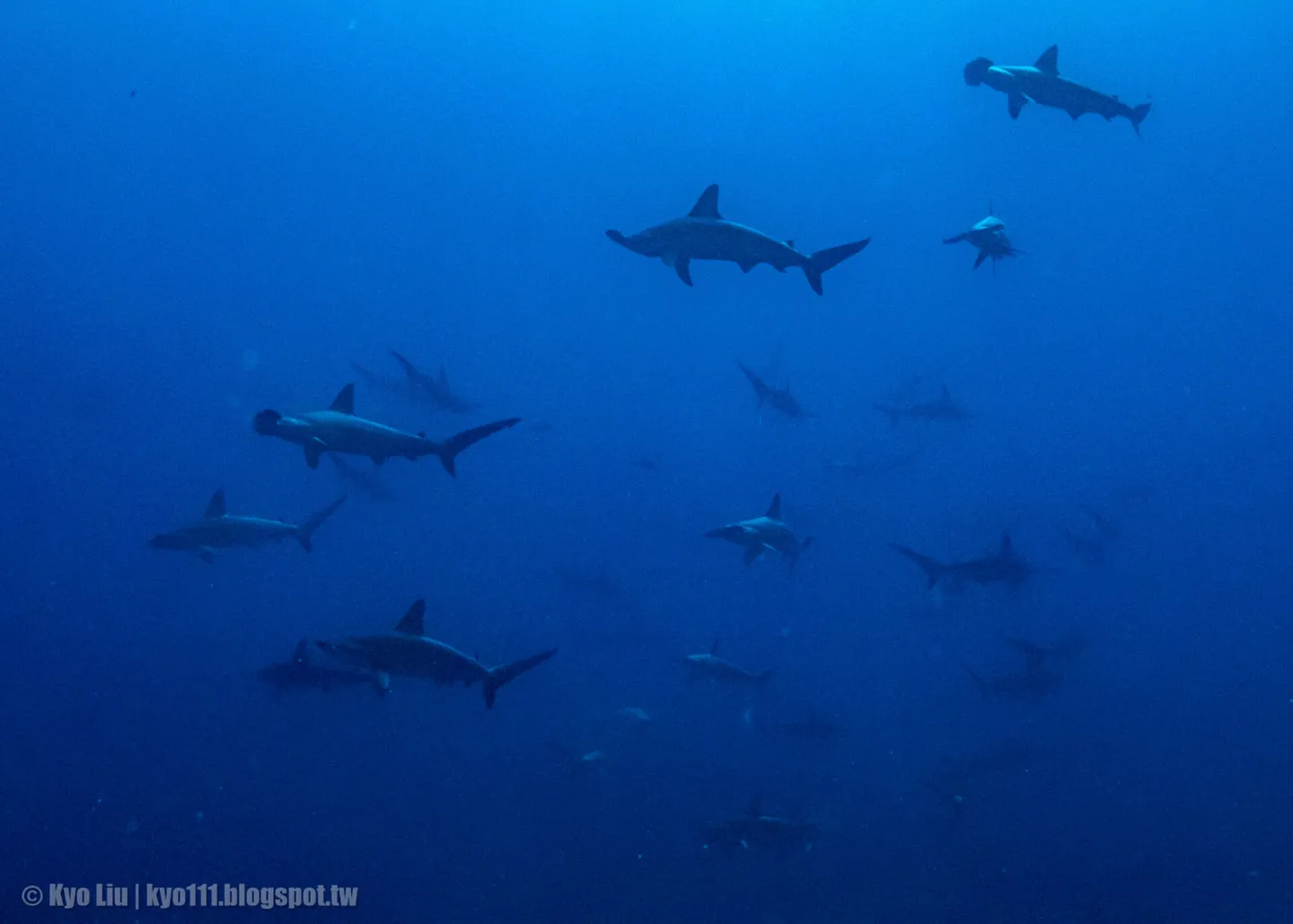
The Hammerhead Shark storm at Shizuoka's Mikomoto
the Editor: Beyond the Mikomoto Hammerhead Shark storm and swimming with dolphins at Mikurashima that we hear so much about, are there other unique diving experiences in Japan you'd love to do?
Kyo Liu: The Kuroshio Current flows along Japan's eastern coast, which means the dive season in certain areas starts about two months later than on Taiwan's Northeast Coast. Japan is also a vast country, and each region has its own distinctive marine life to discover — for example, the Hammerhead Shark storm at Yonaguni, sea lions off Shakotan in Hokkaido, and spider crabs in Wakayama. I hope that in the future I'll have the chance to bring more of Japan's extraordinary underwater world to people through my lens!
Further links:

![[Must-Read for Divers] Always Getting Turned Away When Joining Group Dives? How to Become a Self-Sufficient Diver](/_astro/71723046_2280349618943723_525180423337148416_o_aJHG.webp)
![Diving Abroad But Can't Speak Diving English? The Essential English Guide for Divers Part 3 — [Divemaster / Instructor Edition]](/_astro/mael-balland-4HGHduVeCNs-unsplash_2gDACr.webp)