![[Palau] First Dive in Palau — 3 Must-Dive Sites: Blue Hole, Blue Corner & German Channel, Warming Up for Spawn Diving](/_images/ab047a38042c-1440w.webp)
Contents(8)
Palau is the pearl God dropped into the Pacific —
a strand of pearls, brilliant and beautiful.
Have you seen God's pearls? Have you heard of the non-stinging Jellyfish Lake?
Have you heard of Blue Corner? Have you heard of Blue Hole? Have you heard of German Channel?
If not, why not come to Palau?
Seven of the world's greatest underwater wonders are right here in Palau.Internationally acclaimed underwater photographer Yorko Summer
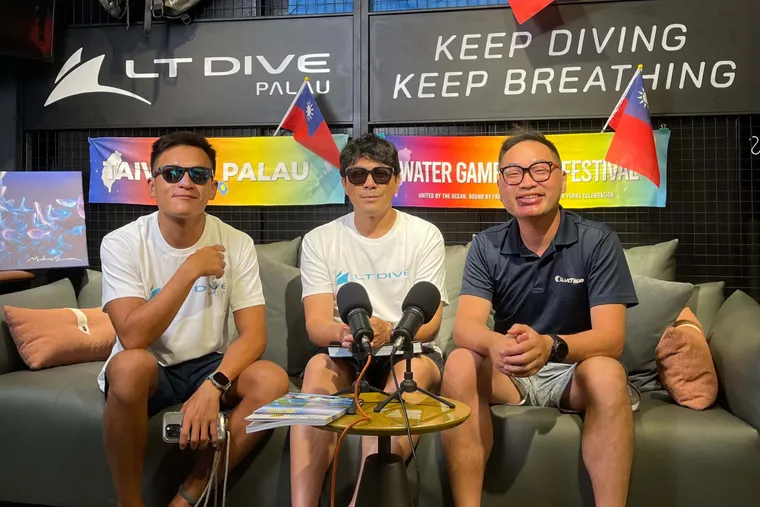
First Dive in Palau — 3 Must-Dive Sites: Blue Hole, Blue Corner & German Channel, Warming Up for Spawn Diving ft. LT Dive
On this trip, the Editor accepted an invitation from LT DIVE and visited Palau for the very first time. Having spent years as an ocean person, the Editor felt a little embarrassed to be making a first visit to one of the world's premier scuba diving destinations. Because the schedule was packed with other responsibilities, only a single day of 3 dives was arranged — so we went straight for Palau's three iconic dive sites to tick them off the bucket list. Were they as spectacular as everyone says? Read on to find out.
Palau Dive 1: Blue Hole
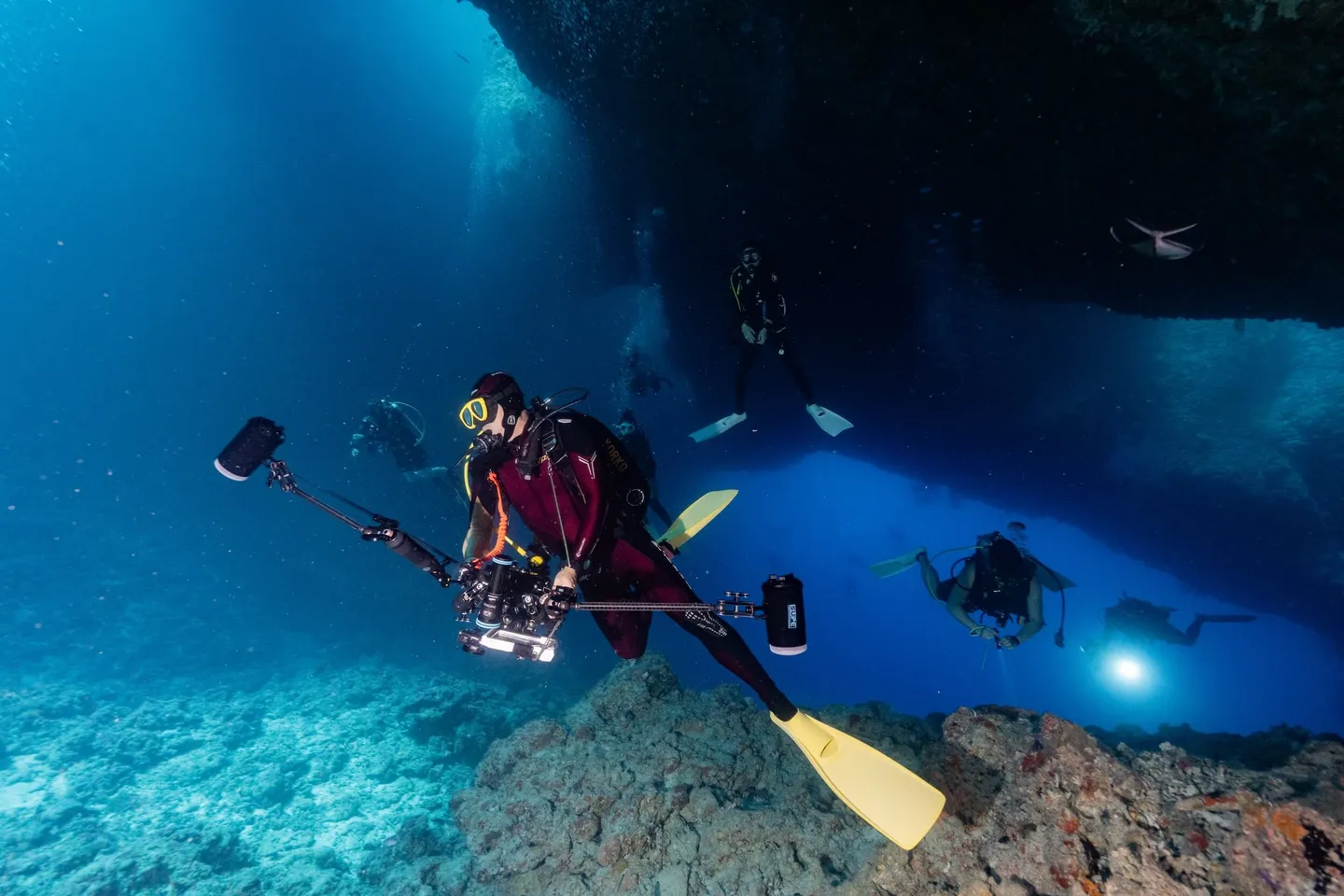
Yorko Summer descending into the Blue Hole — photo credit LT Dive
What Makes Blue Hole So Special? Even the Dive Guide Can't Stop Raving About It
What is it about Palau's Blue Hole that makes every diver who visits Palau mention it without fail? From the surface boat you can already see a deep-blue circle glowing beneath the water. Underwater, there are approximately 4 openings of varying sizes, and light streams down from the surface, layering and mingling with the light filtering through the cave walls. All manner of fish glide along the dome of the cavern — when you look up at the ceiling from below, the fish appear to be swimming upside down, a wonderfully peculiar sight. Reef sharks appear regularly among the reef rocks just outside the openings, and flame scallops are scattered across the rocky walls nearby; take a moment to stop and observe their remarkable bioluminescent display.
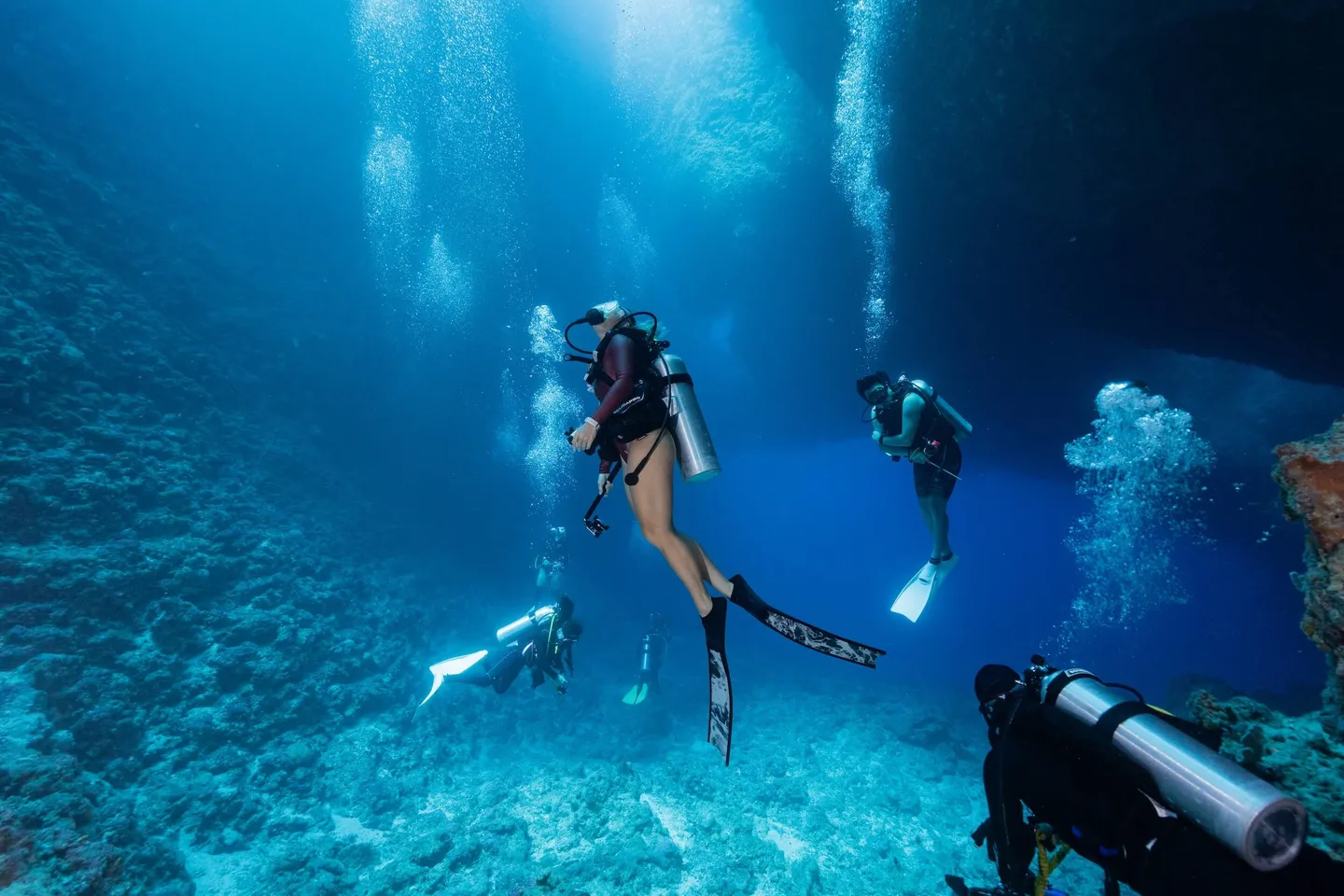
Recreational divers can explore the open sections of the cave — photo credit LT Dive
Blue Hole's Advanced Experience: A "Turtle Tomb" 30 m Inside a Cave Within a Cave
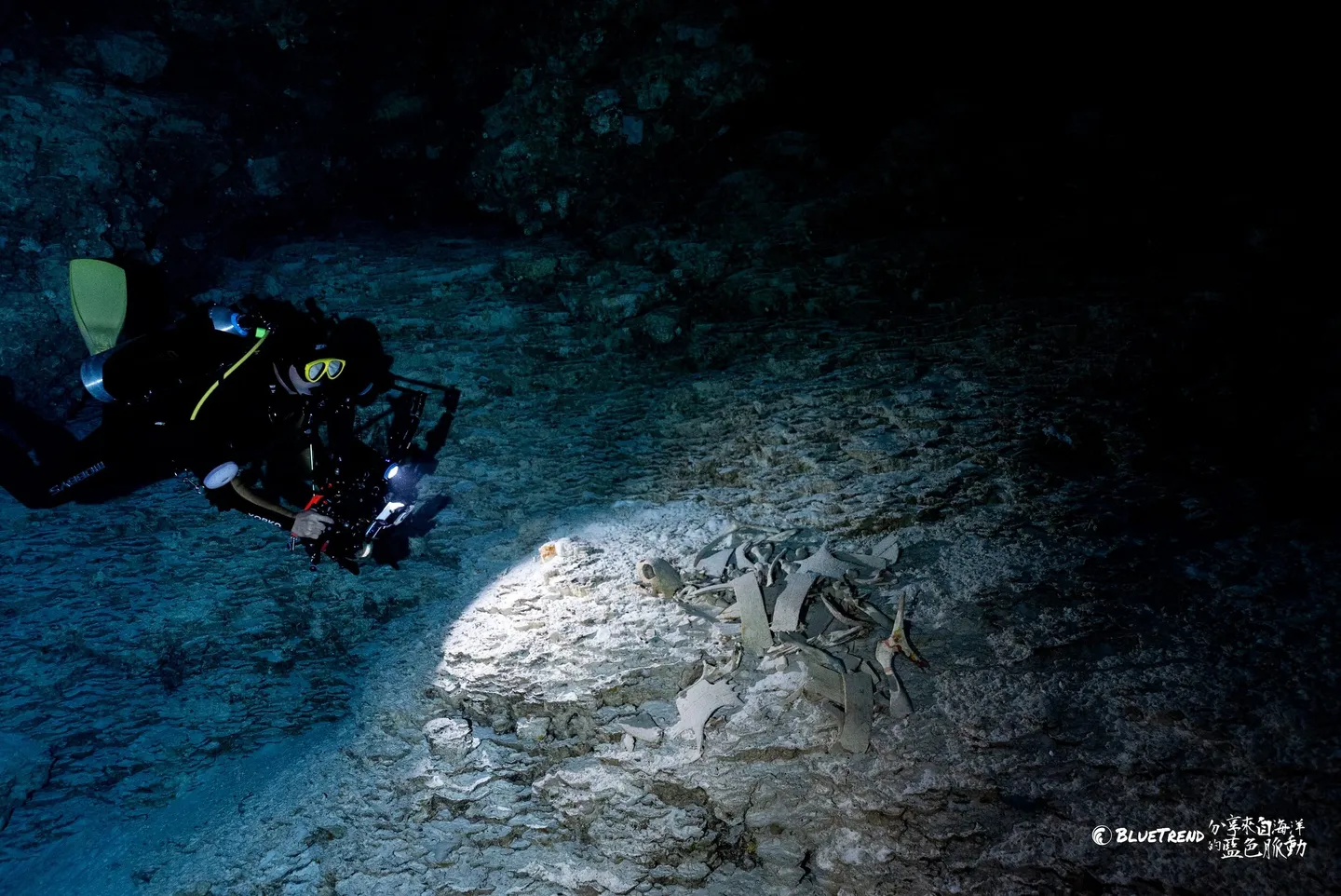
Two turtle tombs can be found inside the inner cave
A Heart-Pounding Blue Hole Experience
At around 25 m depth, there is an entrance to a cave within the cave. Once through the opening, you find yourself inside an enormous cavern. Because this is both a deep dive and a confined-space dive — with depths ranging from 25–30 m throughout the chamber — neutral buoyancy and pressure gauge (SPG) management are critically important, and your dive guide will only bring divers in who are deemed sufficiently capable.
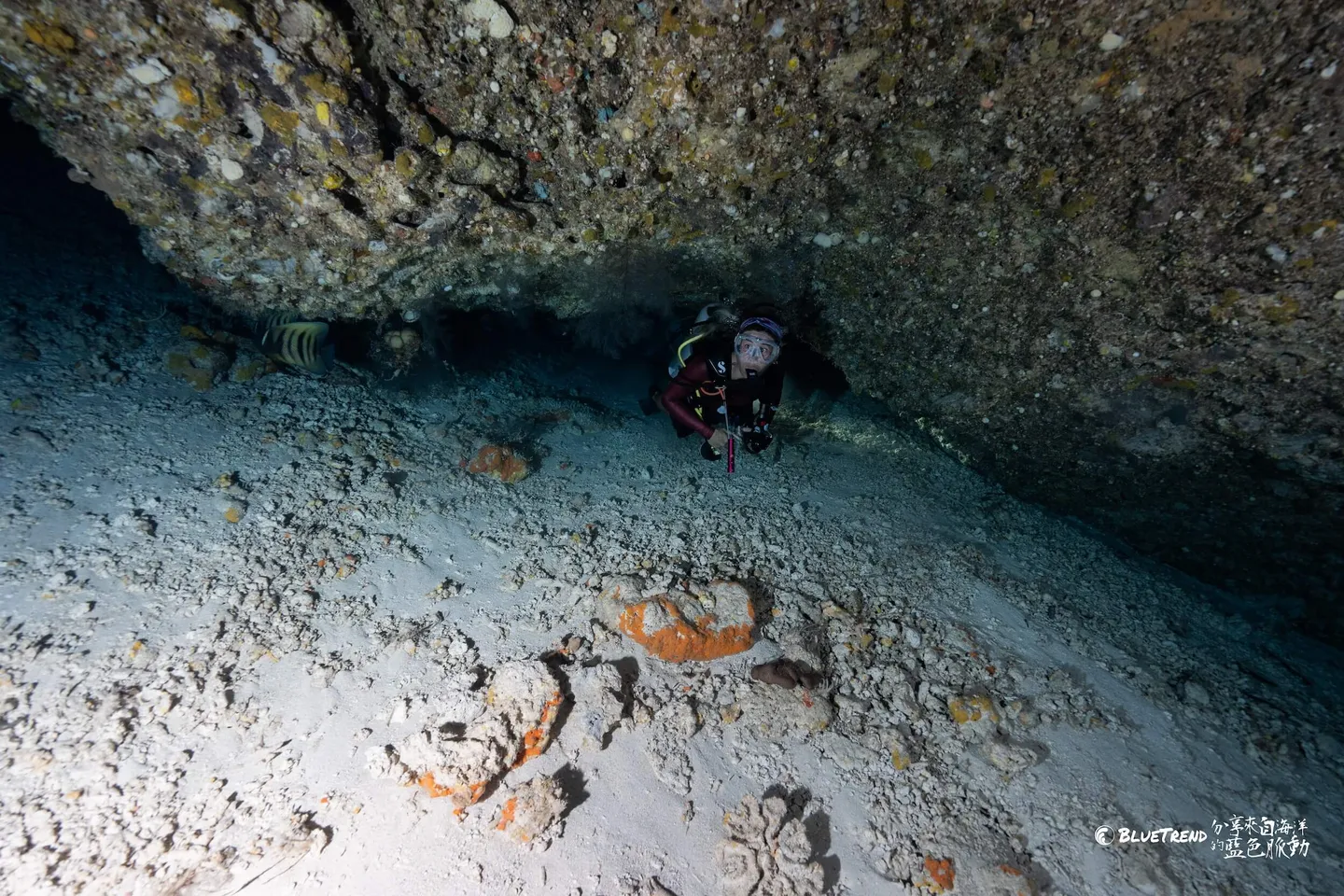
Enter through a narrow opening — be careful not to kick up silt
Before the dive, LT Dive's Lance gave a detailed dive briefing on what to expect inside the inner cave. Once inside, the darkness was complete. Two "turtle tombs" appeared in the beam of the Torch — the bones of Green Sea Turtles, perfectly intact but stripped of their shells, suggesting they had been resting there for a very long time. The presence of the "turtle tombs" serves as a quiet reminder of the dangers of cave diving.
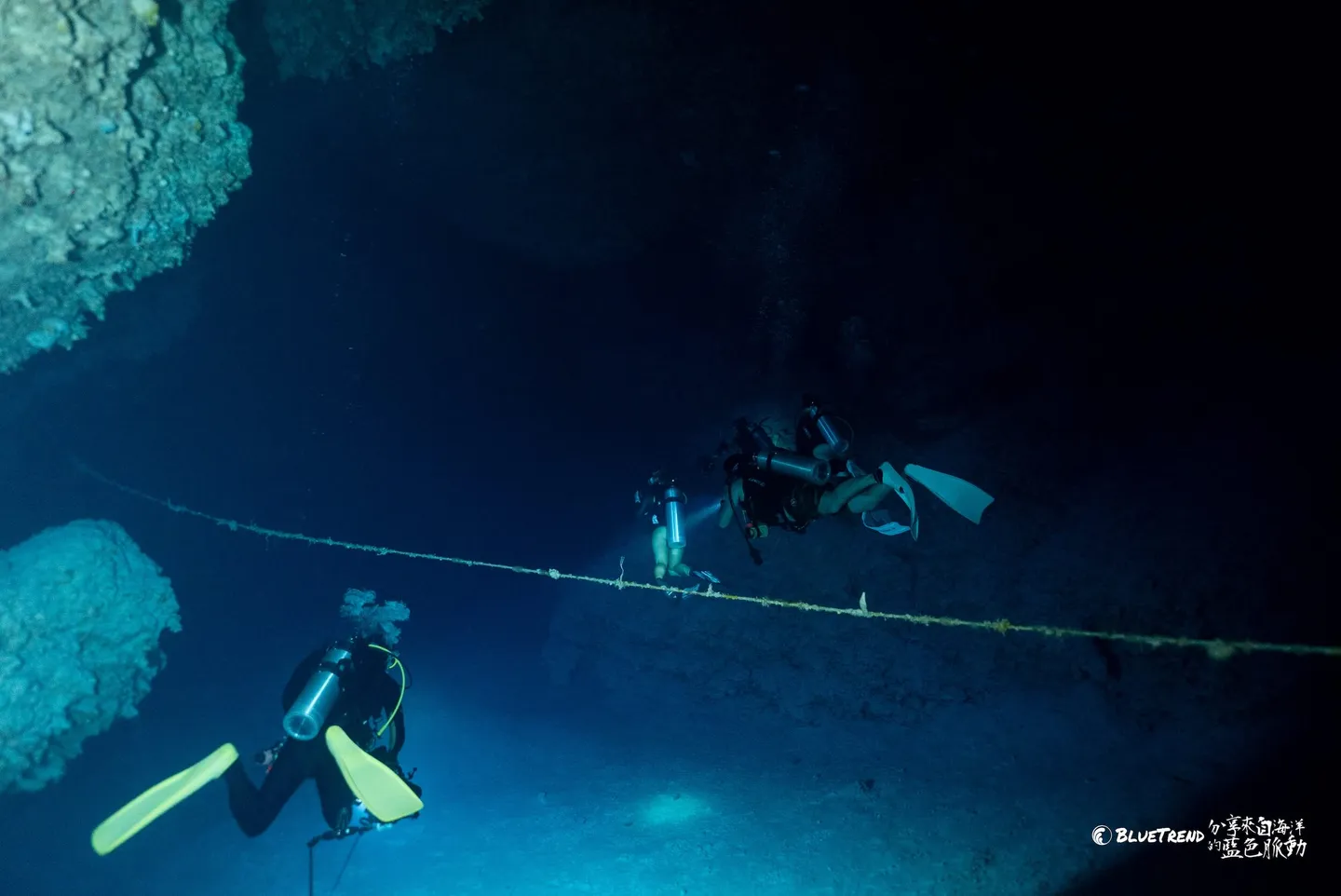
Please do not touch the guide line inside the cave
Slow your breathing, watch your pressure gauge (SPG), watch your depth — your dive computer really earns its keep here. Never kick up silt inside the cave; because the cavern is rarely visited, visibility is unusually crystal clear, giving the space an otherworldly, tranquil atmosphere, as though time itself has paused. A guide line runs through the cave: it is a vital lifeline that leads you back to the exit, and one of the most important tools in confined-space diving. Under no circumstances should anyone move or touch it.
Turn off your Torch. Let the faint blue light at the cave entrance guide you forward — like the light of life, pointing you in the direction of your journey.
LT Dive Lance
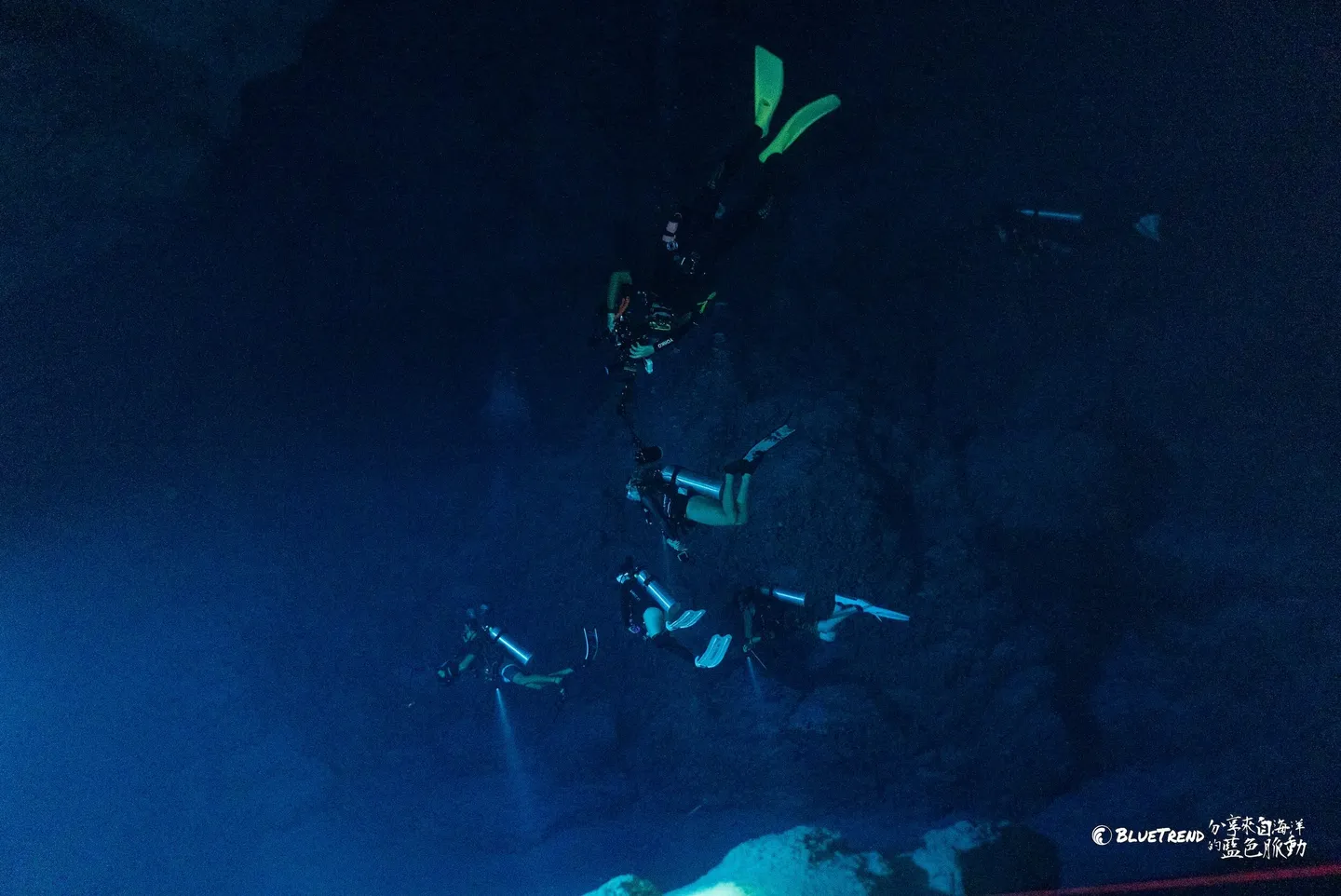
Switch off your Torch and feel the stillness of total darkness
Lance signalled everyone to turn off their Torches (this had been covered in the dive briefing). Looking from deep inside the cave toward the exit, a shaft of blue light appeared suddenly before us. Watching your dive buddy swim toward the opening felt like a scene from a film — mysterious and cinematic — made all the more evocative by Lance's pre-dive words about following the light of life.
And when you are ascending back to the surface at the end of the dive, don't forget to look up and marvel at the shafts of sunlight pouring down through Blue Hole's vast opening above. You will be awestruck by nature's artistry all over again.
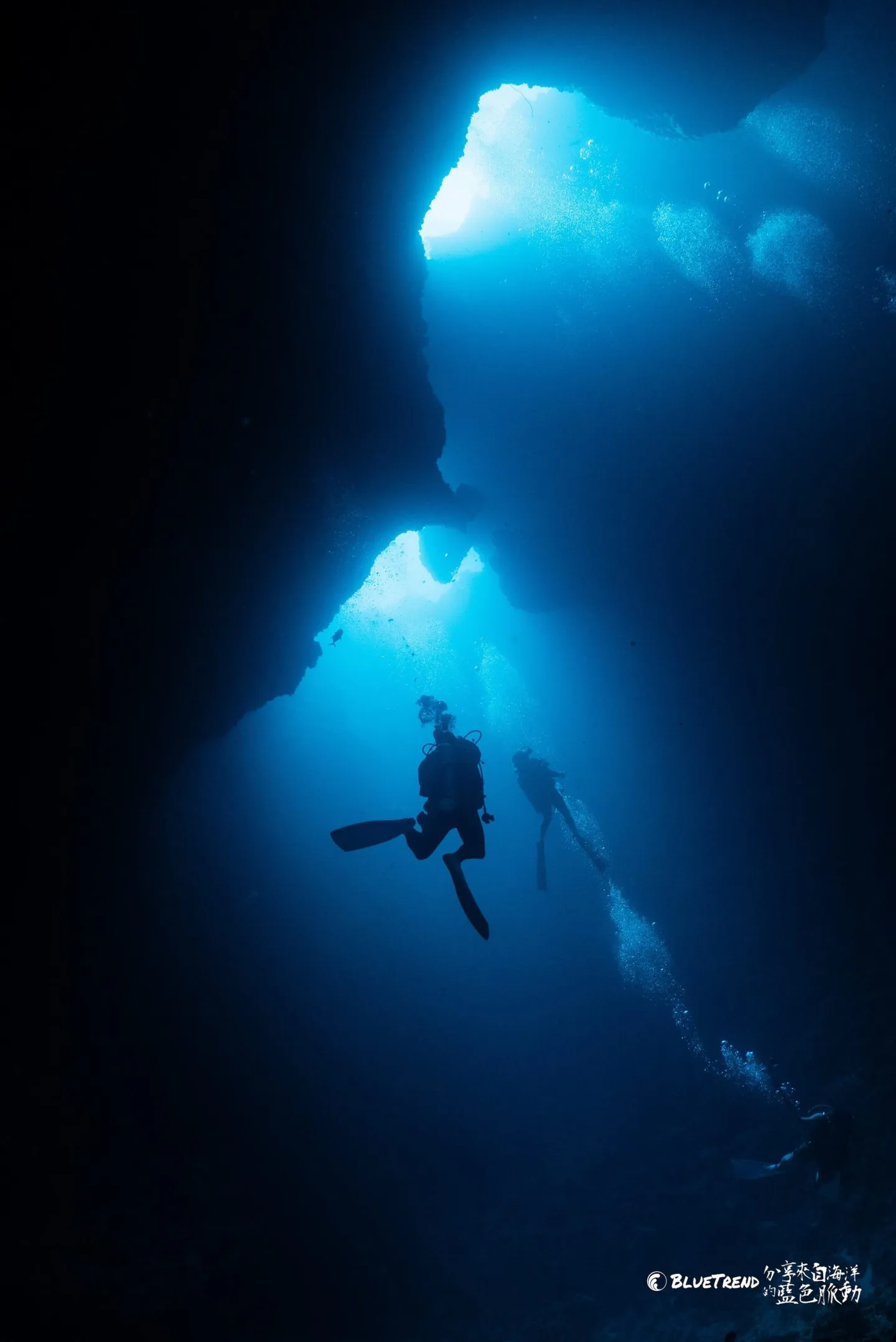
On your way back to the surface, don't forget to look up and enjoy the sunlight pouring in from above


Palau Dive 2: Blue Corner
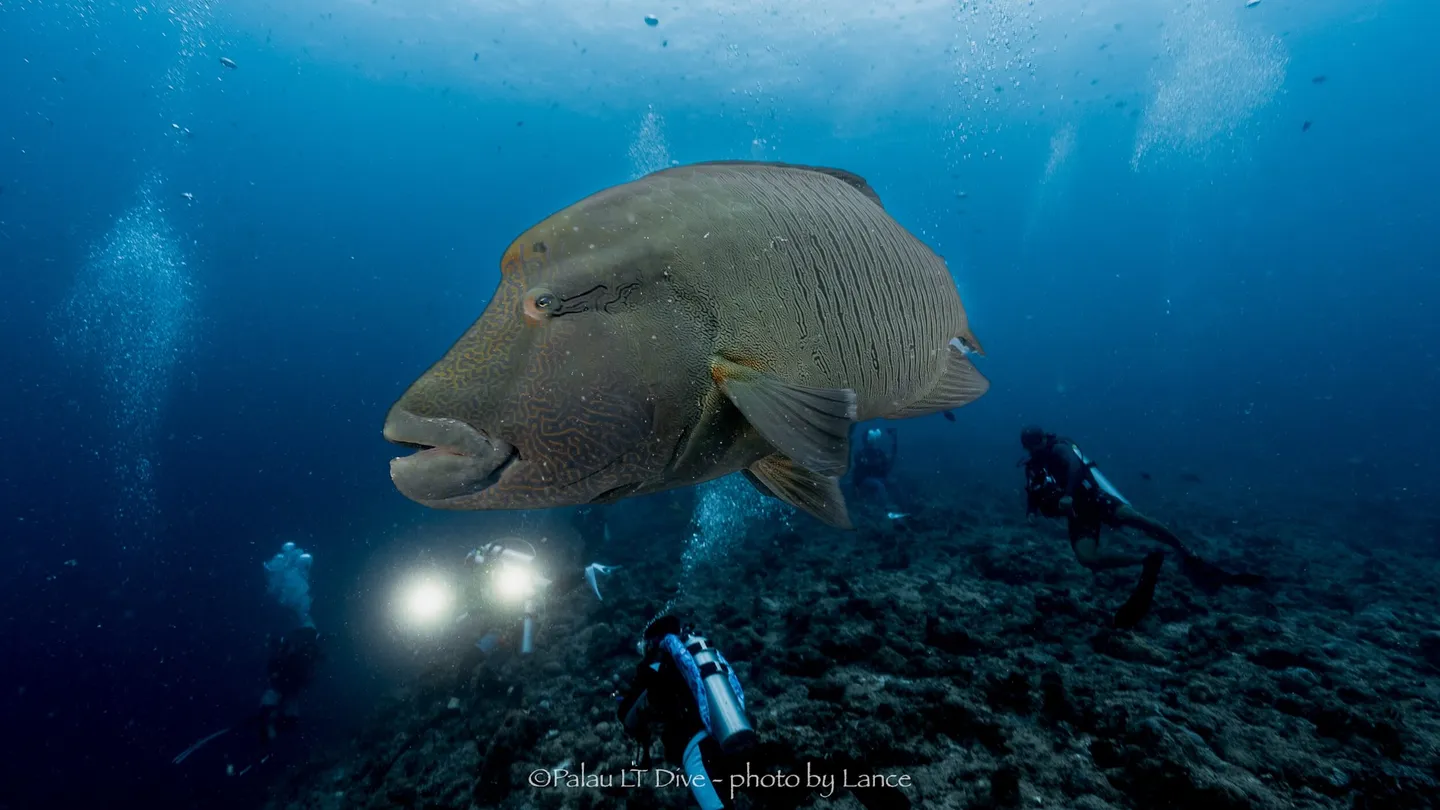
You may be lucky enough to spot a Humphead Wrasse at Blue Corner — photo credit LT Dive
Blue Corner ranks among the top three dive sites by logged dives for Yorko Summer. Beyond his deep familiarity and fond memories of this site, he is passionate about urging every diver to visit and experience its sheer power in person.
As the name suggests, Blue Corner is a protruding headland platform underwater, at roughly 25 m depth. On both the left and right flanks the platform drops vertically into 50 m of water. The powerful currents generated by the daily rising and falling tides attract an enormous variety of fish to feed here, producing a spectacular and vibrant underwater spectacle. When the current runs strong, your dive guide will signal you to deploy your reef hook, attaching yourself to the edge of the drop-off to watch the feeding frenzies and fish-chasing dramas play out before you.
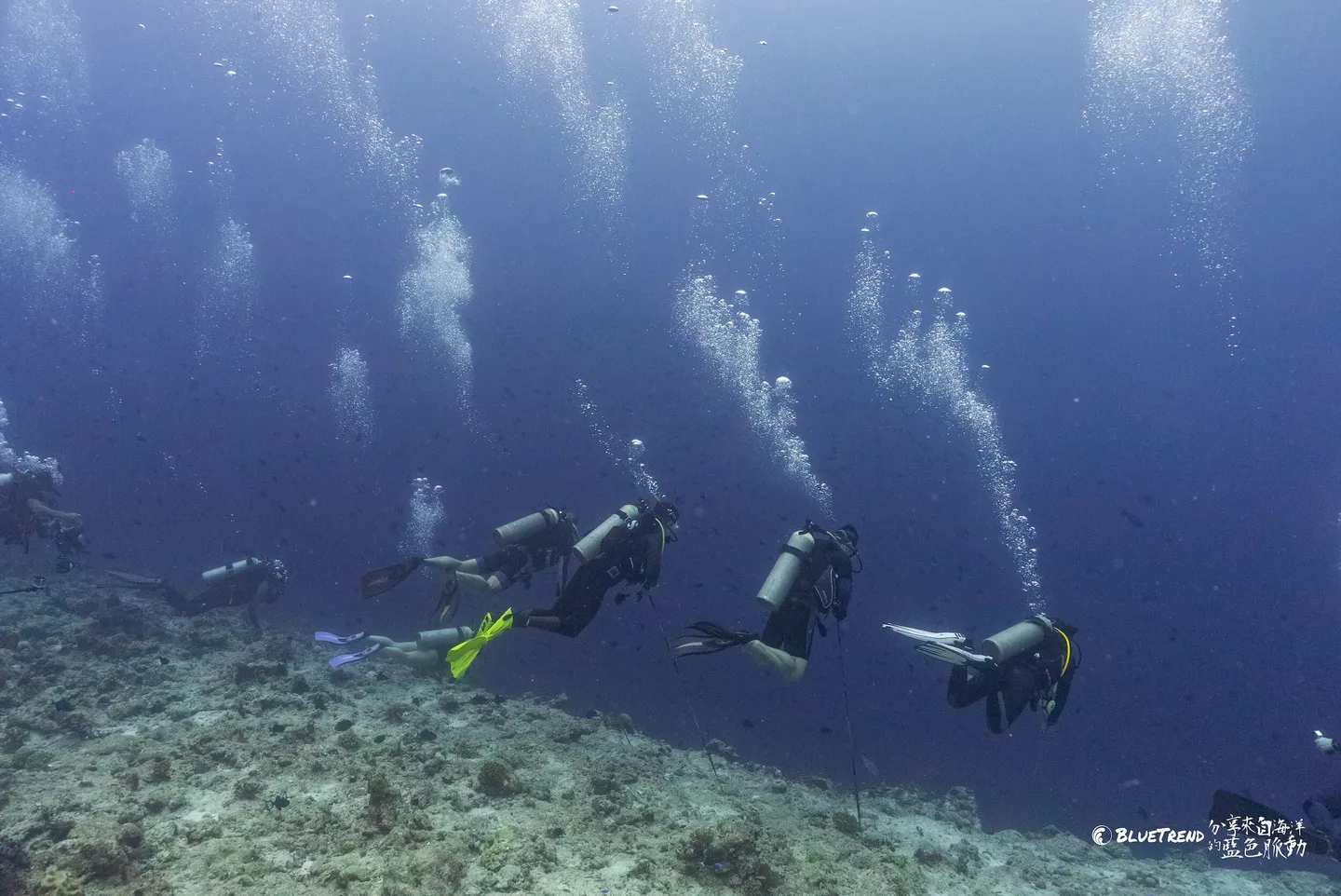
Near the drop-off, hook in and observe the marine life at leisure
At Blue Corner you can observe a rich diversity of life spread across different water layers. In the mid-water column, dense schools of jacks and barracuda surge past, and occasionally a spotted eagle ray glides by or lands on the bottom to feed. Turn around and you might catch a fleeting glimpse of a bumphead parrotfish or a Humphead Wrasse. In strong-current zones, groups of sharks are frequently seen cruising and feeding — a truly magnificent sight.
Incoming tide, outgoing tide, full moon, new moon, the month, the time of day — all these variables mean every visit to Blue Corner holds a new surprise.
LT Dive Lance
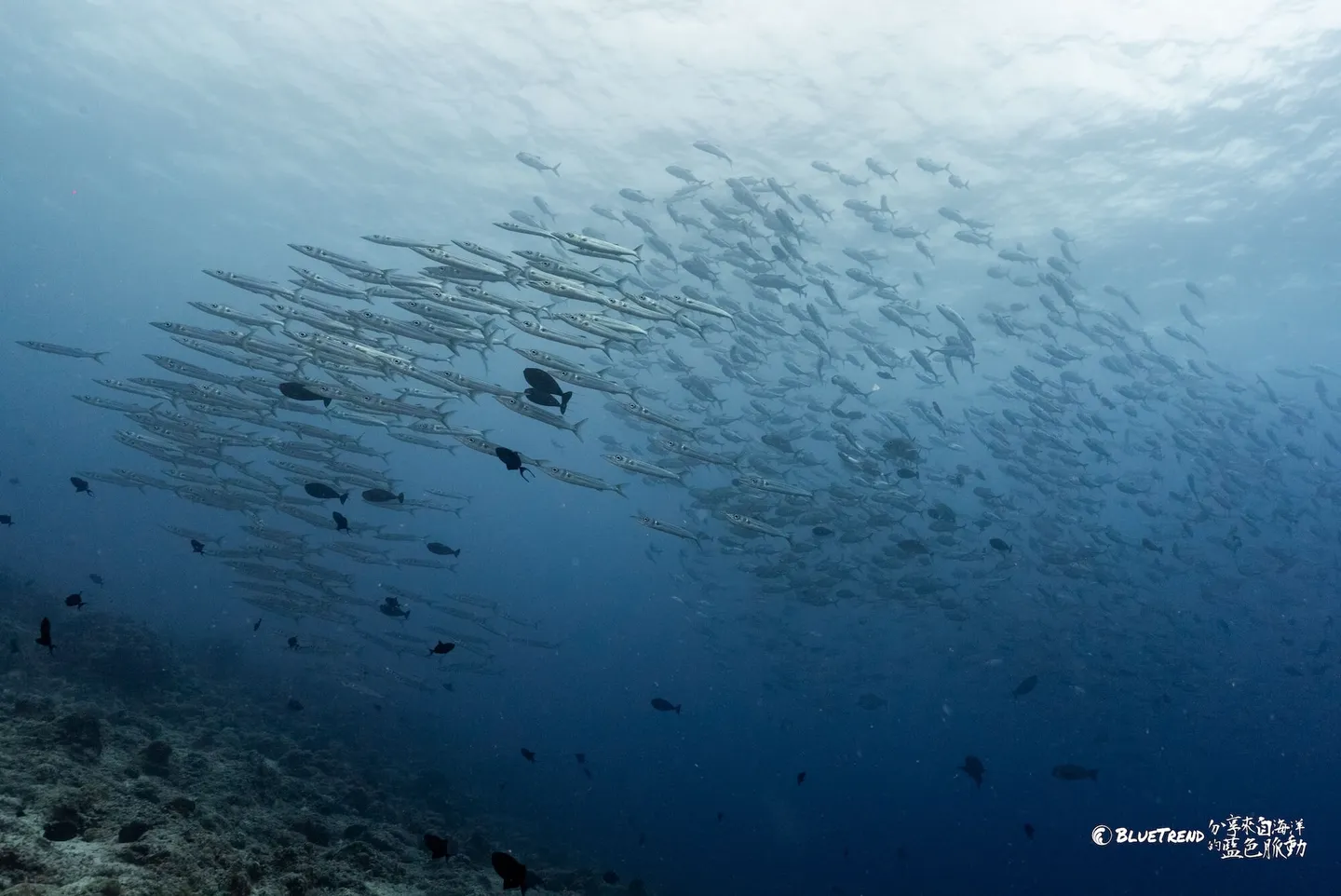
Tornadoes of jacks and barracuda are Blue Corner's guaranteed headline act
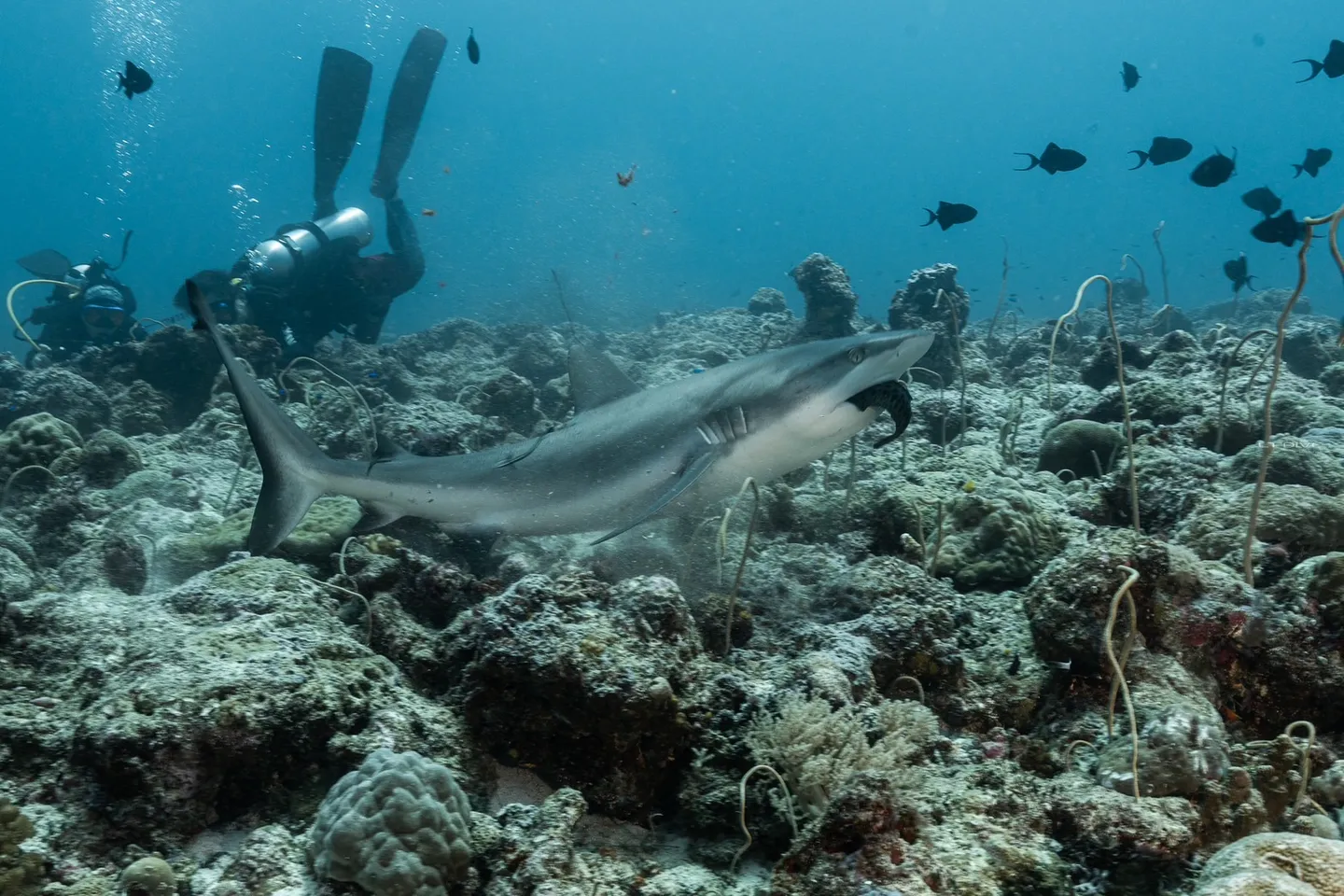
If you're lucky, you might witness a shark hunting show at Blue Corner — photo credit LT Dive
Palau Dive 3: German Channel
An Artificial Channel Blasted Out Before World War I
In 1911, Germany needed a faster route for cargo ships transporting mined phosphate between the islands, so they used explosives to blast a man-made channel approximately 360 m long through the shallow reef. German Channel is the gateway to the "Big Drop-Off," considered one of the Seven Underwater Wonders of the World, and the varied coral reef topography carved out by those blasts — combined with white sand and crystal-clear visibility — has earned the waters around German Channel the poetic nicknames "Seven-Color Sea" and "Seven-Color Channel."
At the junction where coral reef meets sandy seabed, sunlight falls across the reef platform. Cleaner wrasse congregate to form cleaning stations, attracting manta rays to gather.
Reading the Tides: Why the Dive Guide's Judgement Matters
German Channel was chosen as the site for our third tank, though it was not the original plan. During the first dive of the morning, dive guide Lance drew on his experience to assess the actual tidal conditions and currents for the day, and ultimately suggested swapping it to the third dive. After the second dive we returned to German Channel for lunch and to wait for the right moment. By then, several dive boats had already moored there. While giving us our dive briefing, Lance kept a close eye on the divers returning from other groups, reading small details in their body language and facial expressions.
Suddenly, Lance shouted: "Quick — get your gear on! Everyone in the water!" It turned out he had overheard divers on the neighbouring boat say they had spotted a Manta. Based on Lance's experience as a dive guide, Manta rays circle continuously, so entering the water at that moment meant an extremely high chance of an immediate encounter.
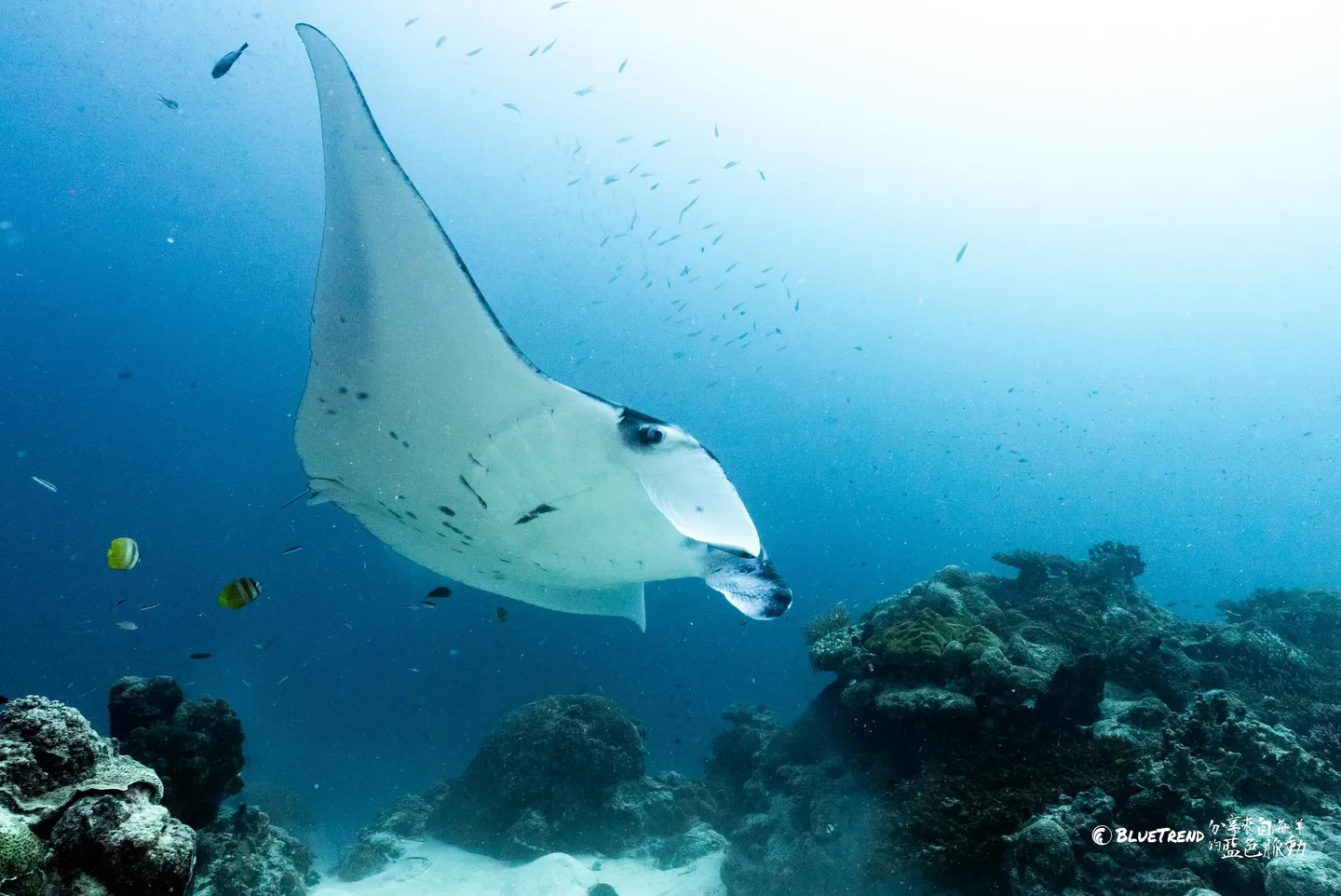
The highlight of German Channel is watching Manta rays up close
50 Minutes Swimming with Manta Rays
Sure enough — about 5 minutes into the dive, at roughly 15 m depth, a Manta ray appeared in everyone's field of vision. To avoid startling it, Lance positioned each of us behind a rock, using the reef as cover so we could photograph and observe without disturbing the Manta while it fed and was cleaned.
And so it went: thanks to Lance's perfectly timed entry, we spent a full 50 minutes watching a Manta ray circling the reef flat for its cleaning session. A second Manta joined partway through, and — most remarkably — the entire 50 minutes were enjoyed exclusively by our group. Even during our 3-minute safety stop at 5 m, both Manta rays continued to glide back and forth in the same spot. In the end, everyone reluctantly surfaced, bringing to a close an unforgettable third dive with the Mantas.
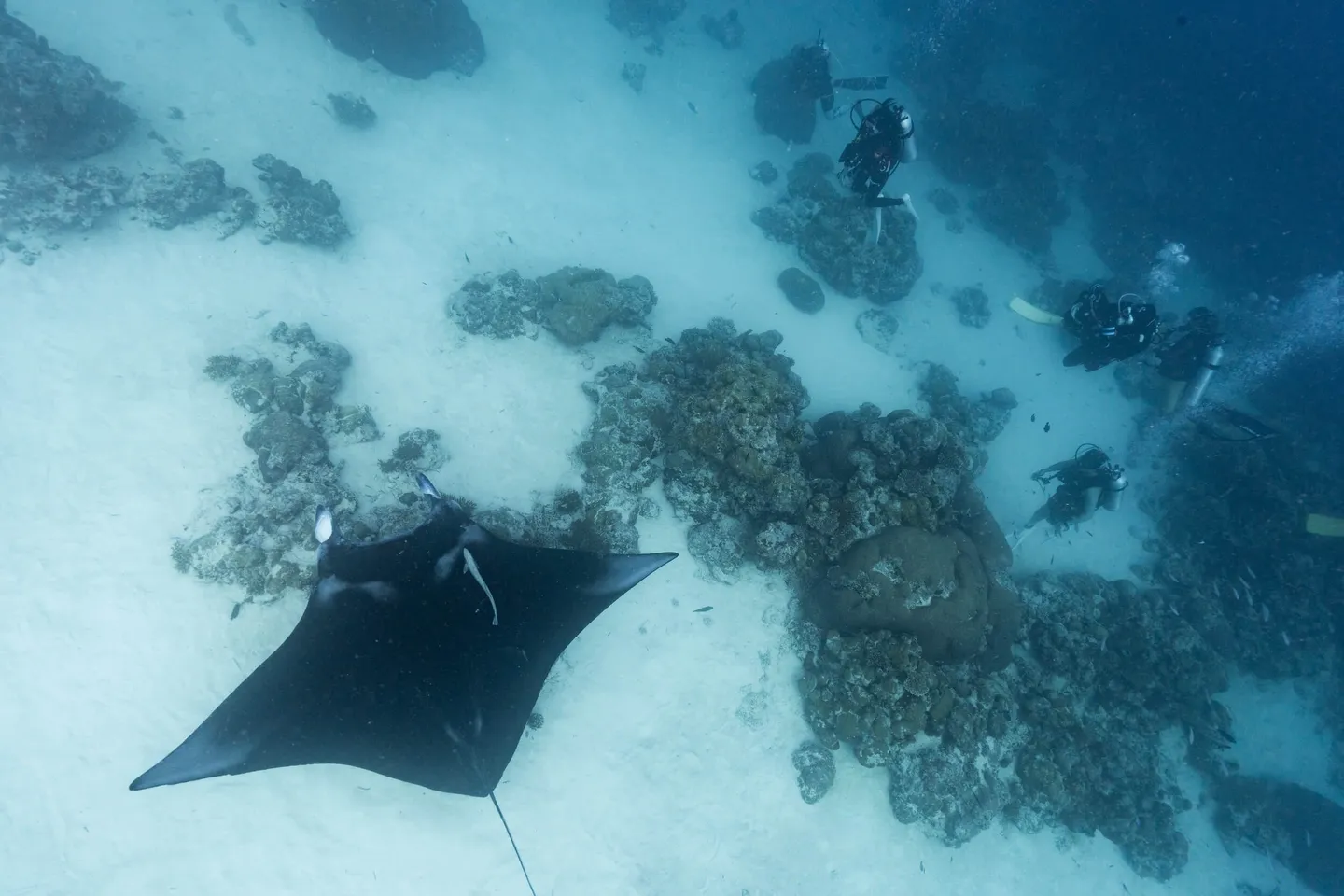
A full 50 minutes of close-up time with the Manta rays — absolutely thrilling — photo credit LT Dive
Palau Bonus Dive: Semi-Enclosed Stalactite Cave Diving
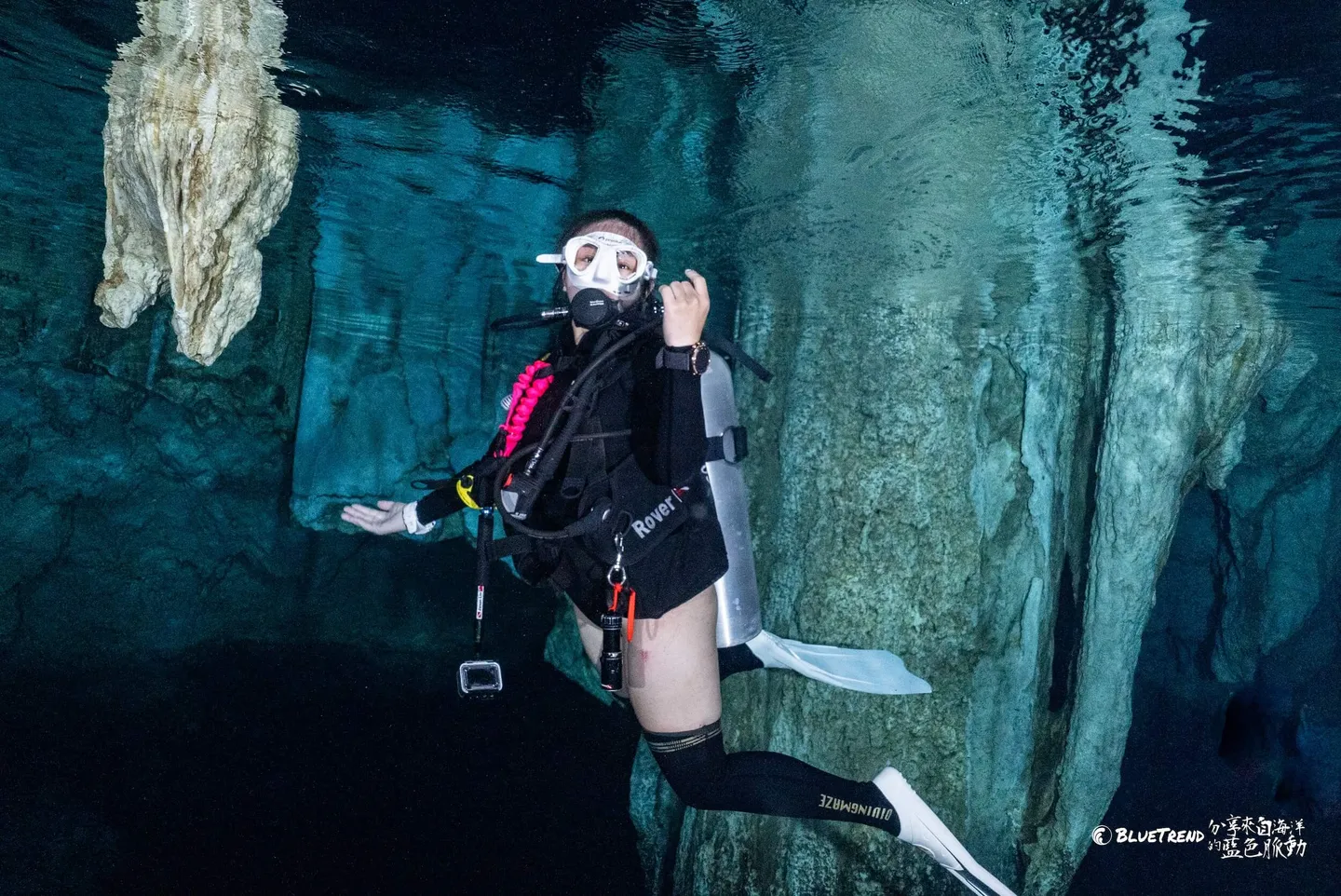
The stalactite cave makes for wonderfully atmospheric photographs
Compared to the cave diving experience at Blue Hole, this semi-enclosed stalactite cavern is far more suitable for beginner divers. Surrounded by islands on all sides, it also makes a great alternative when the weather turns or the swell picks up. So does that mean it's boring?
Far from it! Descend just 2 m and you can enter the cave system, which contains 4 stalactite chambers — none of them fully enclosed. That means you can surface inside the chambers to breathe at any time. This site is ideal for split-level photography, and shooting upward from beneath the waterline is equally dramatic.
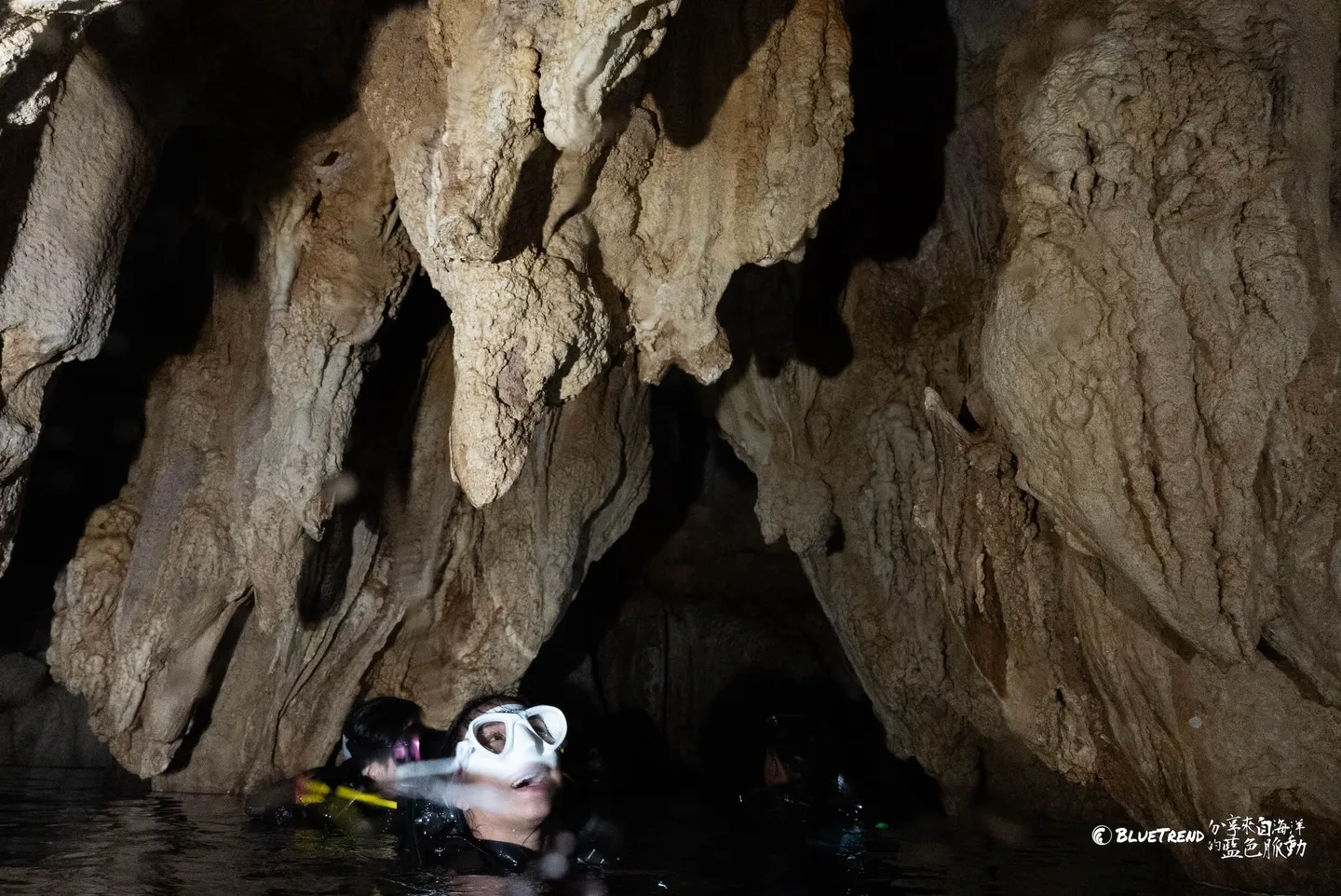
Diving inside an enclosed stalactite cave is a truly rare experience
First Impressions of Diving in Palau: Exceptional Value — Can't Wait to Come Back
Due to scheduling constraints, we had only one day available for diving on this trip. Palau's diving offers an extraordinary range: rich marine life including tropical fish, Humphead Wrasse, sharks, manta rays, giant clams... unique and varied stalactite and cave formations, plus wartime historical relics such as aircraft, tanks, wrecks, and cannons — the dive itineraries in Palau are genuinely diverse. If you worry about bad luck and missing out on rare creatures, the topographical and historical sites — which aren't going anywhere — will never disappoint.
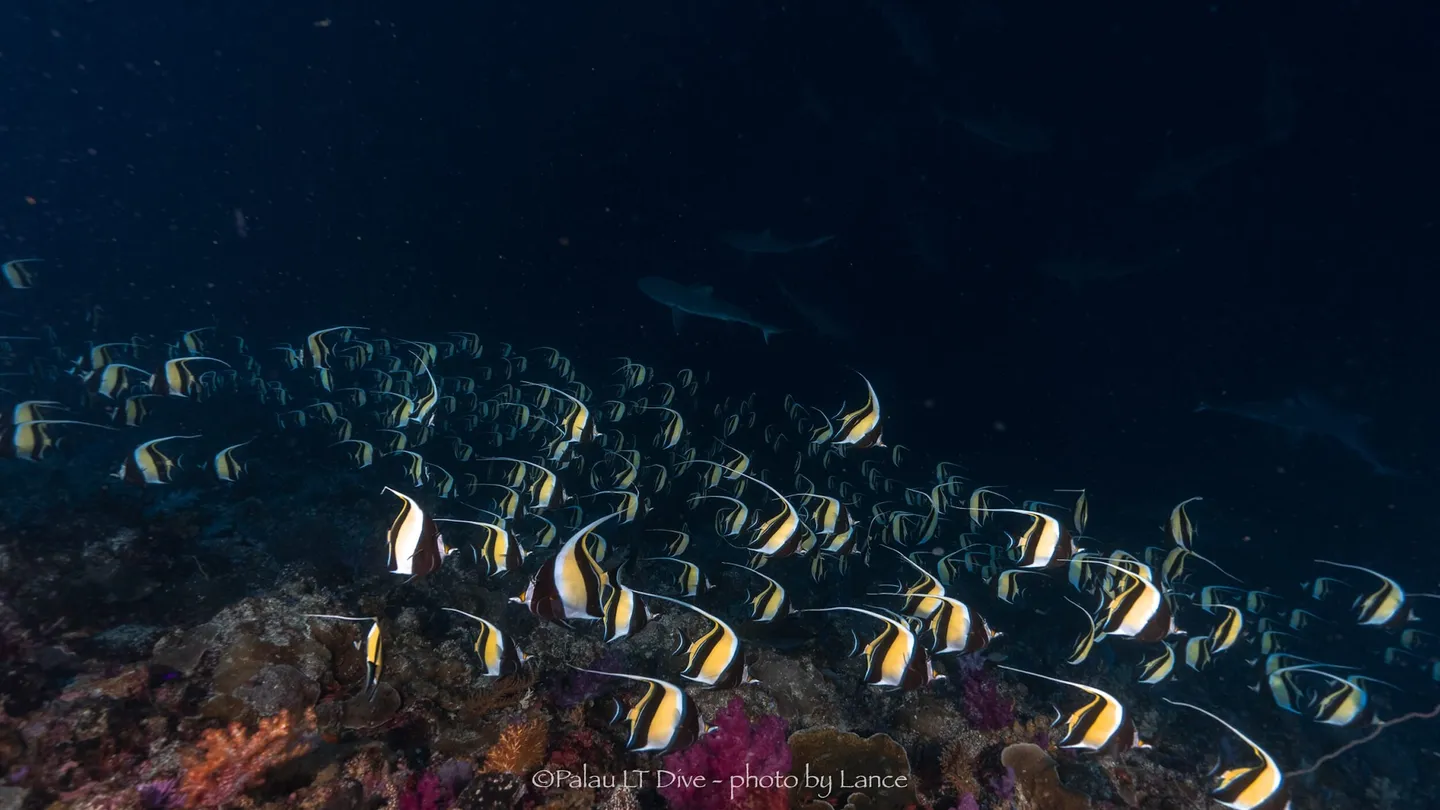
Angelfish and reef sharks at Siaes Corner — photo credit LT Dive
Palau also takes marine conservation extremely seriously — you will barely see any floating marine debris. The overall environment is free from overdevelopment, which makes the dive travel experience here wonderfully relaxed. If you are planning a dive trip to Palau, it is recommended to hold an enriched air nitrox (EANx) certification and an Advanced Open Water Diver certification, and to have logged at least 50 dives — because many of Palau's most famous dive sites require the use of a reef hook, or involve greater depth and higher difficulty. Beginners are of course welcome too, though the dive guide may assess your level and take you to more straightforward sites accordingly. After spending so much budget to get here, it would be a real shame to miss the classic dive sites, wouldn't it?
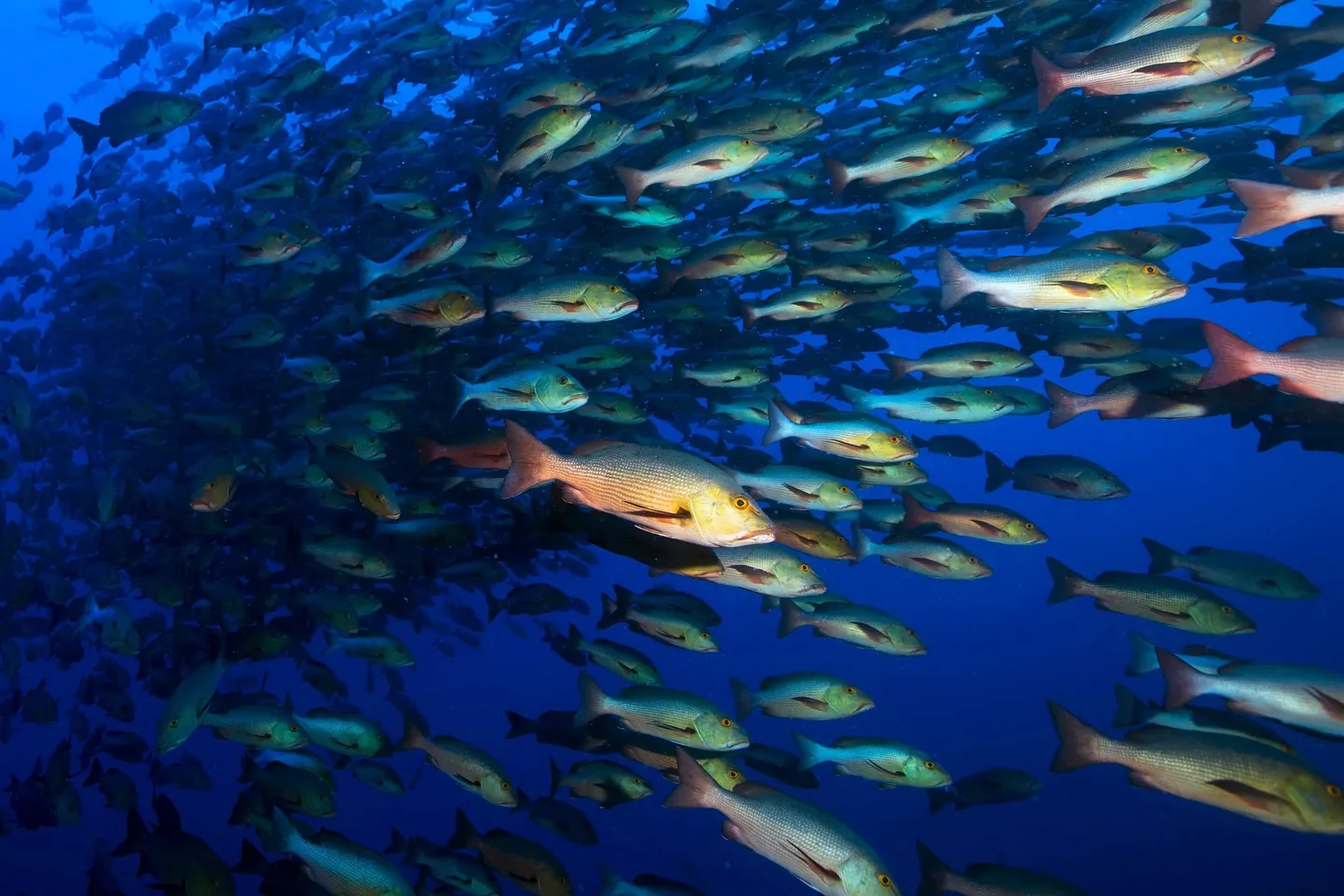
Yorko Summer shares footage of red snapper spawning in spectacular numbers
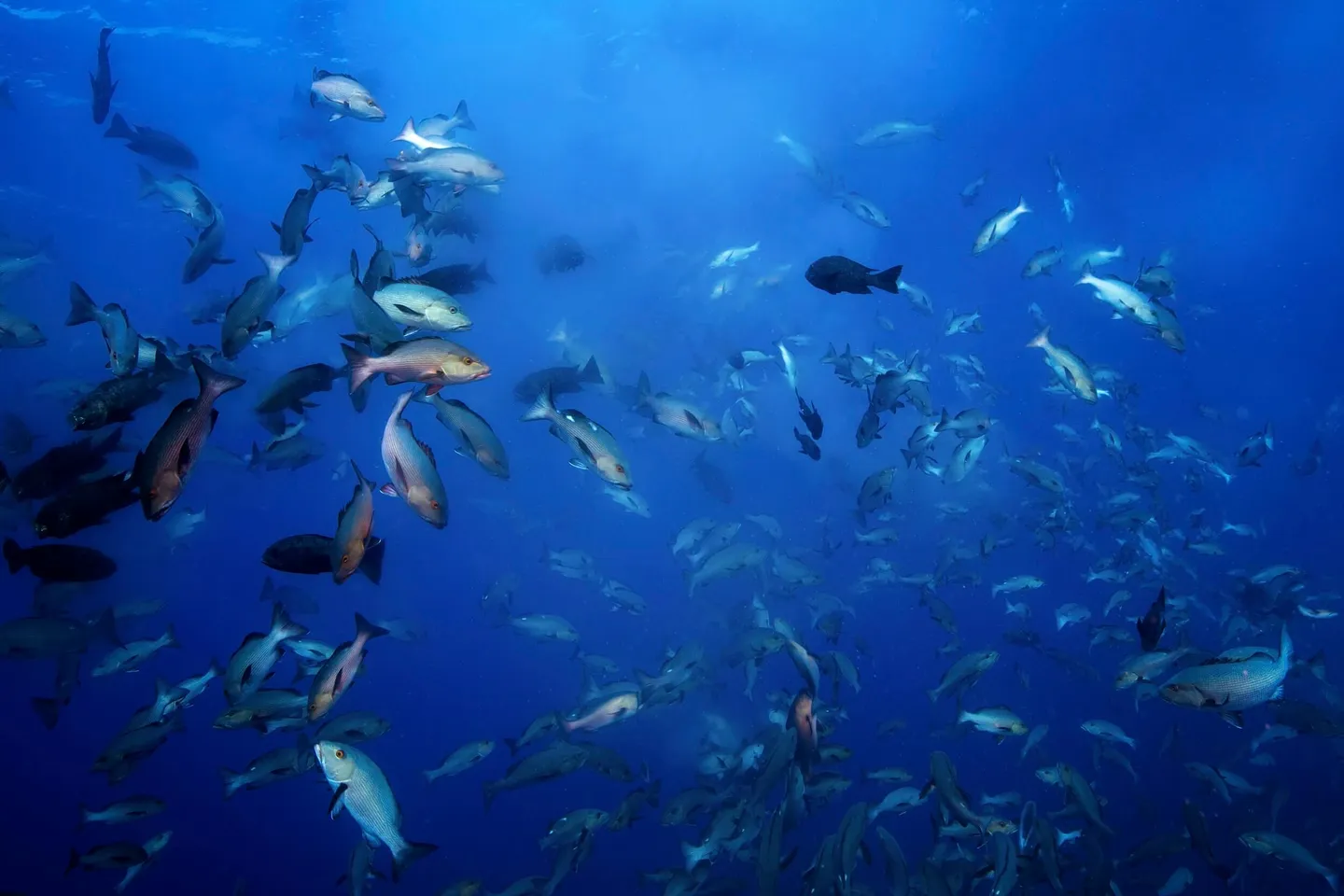
Yorko Summer shares footage of red snapper spawning in spectacular numbers
Moreover, due to the way this trip was scheduled, we were unable to witness Palau's famous Spawn Diving. Palau is one of the very few places in the world where the spawning behaviour of various species can be predicted with great accuracy. You can observe bumphead parrotfish and red snapper (Red snapper) spawning at close range, and during spawning season there is even a chance of encountering Bull Sharks and other large sharks drawn in by the activity.
Palau truly is a wild and magnificent diving holy grail!
EP3 (Part 1) — Diving in Palau Is Eye-Wateringly Expensive! Running a Dive Shop Is Gruelling? The Rocky Road to Living the Ocean Dream ft. LT Dive & Guest Yorko Summer
Related Links
More Palau Content
Further Reading
Frequently Asked Questions
How is a BlueTrend dive trip different from an unknown, no-name dive group?
Choosing us means full peace-of-mind protection and a smooth experience from start to finish. Every trip we run holds to three things.
First, full legal protection and a professional dive leader: we strictly follow Taiwan's travel regulations and provide complete travel-agency liability insurance, travel insurance, trip-inconvenience insurance and dive insurance. Every group is accompanied by a certified, foreign-language dive leader who joins you on both the dives and the land itinerary, liaising seamlessly with local dive shops and operators on your behalf to keep things running smoothly — the person our travellers trust most.
Second, fully licensed with secure payments: every payment goes into a licensed travel agency's account, with multiple safe payment channels (bank transfer, credit card and more) and a legal collect-and-remit receipt, so every transaction is open, transparent and protected, avoiding the fraud and dispute risks of transferring money privately to an individual.
Third, hand-picked quality we vet in person: every trip, dive site and partner shop is scouted on the ground by our own team, from the guides' professionalism and safety standards to the food, lodging, environment and service details on land, all vetted by us so you don't get caught out.
I want to sign up for a dive trip. Are there certification-level or logged-dive requirements?
Each dive site is different, so the entry bar varies. 'Bali Tulamben', for instance, is relatively beginner-friendly. 'Malapascua in the Philippines' is also beginner-friendly, but since thresher sharks tend to cruise between 20 and 30 metres, we recommend AOW certification with 20+ logged dives to enjoy this trip comfortably. For 'the Maldives' or 'Palau', we suggest AOW with 50+ logged dives for a more relaxed experience. If you're not sure whether your experience fits the trip you want, message us and our dive editors will assess it and help you find the trip you'll feel safest on.
Can I join if I'm signing up alone? How are rooms arranged?
Plenty of our travellers sign up solo! For rooms and beds, we prioritise pairing you with a same-gender traveller, and if you'd rather have your own space you can pay the difference to upgrade to a single room. For the diving, our professional leader will pair you with a suitable buddy, and with the happy vibe on our trips you'll quickly make a great group of dive friends. Many people sign up alone, make new friends, and end up organising the next trip together!
Does the trip fee include dive insurance, gear rental, taxes and instructor tips?
It depends on the trip, the destination's regulations and the local operators. Every BlueTrend dive trip has a detailed web page with a clear 'included / not included' list, transparent and with no hidden charges. All payments are collected by a licensed travel agency, with a standard-form contract for your protection.
I'm a new diver / haven't dived in a long time — will I fall behind the group?
Before you complete your booking, our team assesses a suitable trip based on your certification level and experience. Before departure, we strongly recommend taking time to refresh in Taiwan with an instructor, or a fun dive to get your feel back. On the trip itself, our professional dive leader groups and pairs everyone by experience, keeps a close eye underwater on travellers who need extra care, and steps in to help right away.
Will the photos and videos taken during the trip be shared with us?
During the dives, 'safety' is always the leader's top priority, so whenever it's suitable and safe the leader will capture great shots and record the best moments. During or after the trip, we compile a cloud album for all travellers to download, so you go home loaded with memories!
Besides your scheduled trips, can you arrange a private group charter or independent travel for me and my friends?
Absolutely! Besides group trips, we also arrange private group charters and independent travel. We can communicate, enquire and coordinate services with local operators based on your needs, saving you time and effort and taking the language barrier off your plate, to tailor the smoothest, most reassuring dive trip just for you. Contact our LINE support and our editors will arrange it for you!