Contents(12)
The Similan Islands liveaboard holds a special place in my heart — it was my very first job as a newly certified dive instructor, so those days living aboard the boat are unforgettable. There's already a wealth of information about the Similan Islands online — why they're called "Similan," dive site rundowns, and so on — so I won't go into all that here. This article is mainly intended as a practical reference for divers who are interested in a Similan liveaboard, covering how to choose a vessel, transportation, and more.
*All photos below were provided by fellow divers or official sources, because instructors are not allowed to bring cameras underwater 😭 — we have to keep our eyes on our guests at all times.
[caption id="" align="aligncenter" width="1278" class="snax-figure"]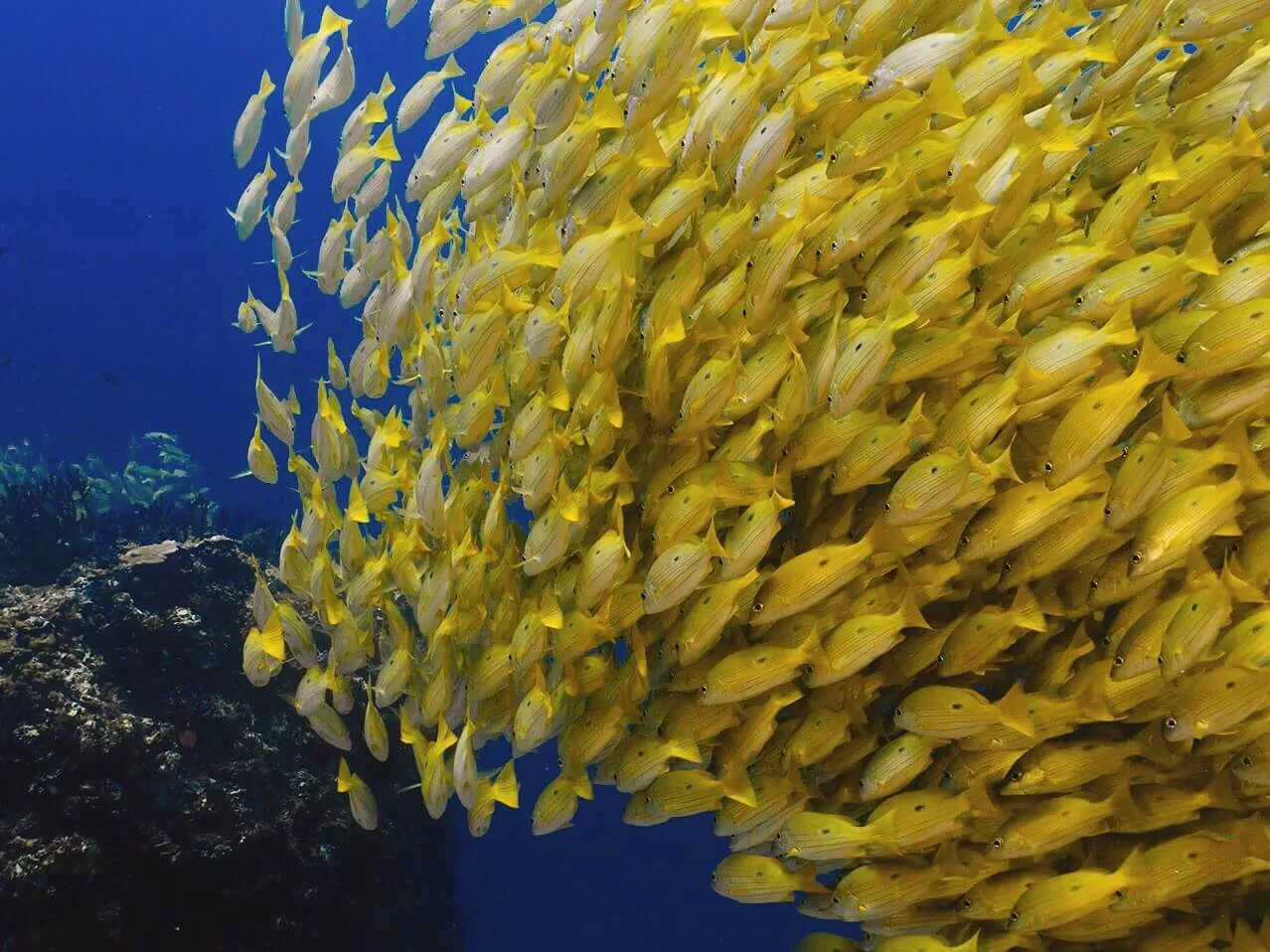 Photo by 中國潛友梧桐[/caption]
1) What Qualifications Do You Need?
In general, you need at least an entry-level Open Water scuba certification; otherwise, you can join as a snorkeler. The dive shop I worked for — KSA — used to offer Open Water courses aboard the boat, but that option has since been discontinued, so everyone who wants to scuba dive must hold a valid certification. Keep in mind that OW-certified divers are limited to a maximum depth of 18 m, yet the boulder formations and giant sea fans in the southern Similan Islands, as well as the most spectacular sites in the north, typically sit at average depths of 25 m or more — so coming with just an OW cert is really a shame! That said, virtually all liveaboards offer the option to combine your trip with an AOW course.
An enriched air nitrox (EANx) certification is not mandatory, but if you love underwater photography, nitrox lets you stay down longer — definitely worth considering. Whether you want to dive nitrox can usually be confirmed with the dive manager when you check in on boarding day.


2) Choosing a Boat
The most important factors are your budget and whether the trip dates fit your holiday. The Similan Islands are open every year from mid-October to mid-May; from May to October the area is closed to allow the environment to recover. That's exactly why the Similan Islands teem with marine life!!!
[caption id="" align="aligncenter" width="960" class="snax-figure"]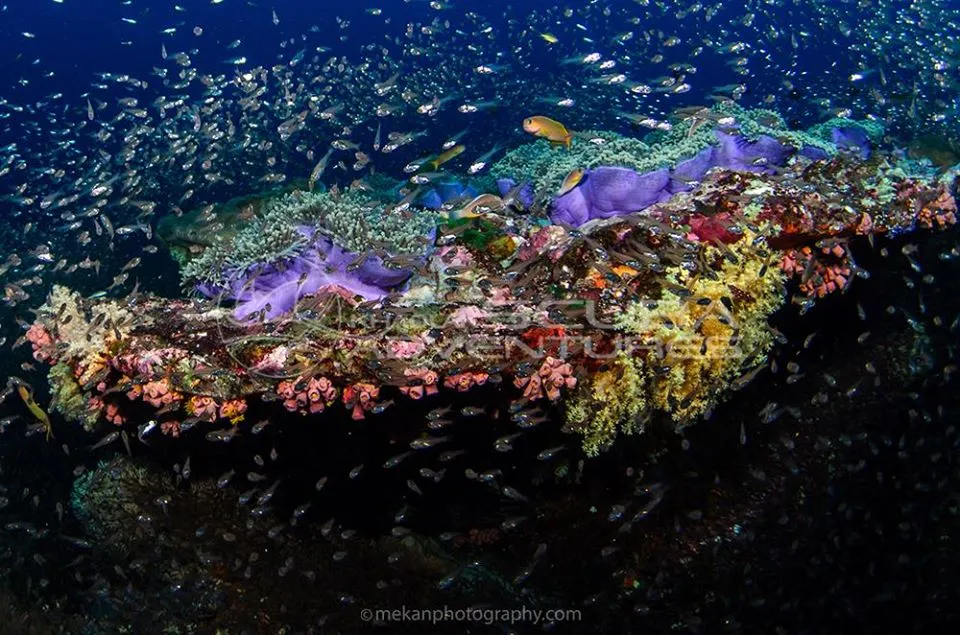 KSA official website[/caption]
[caption id="" align="aligncenter" width="960" class="snax-figure"]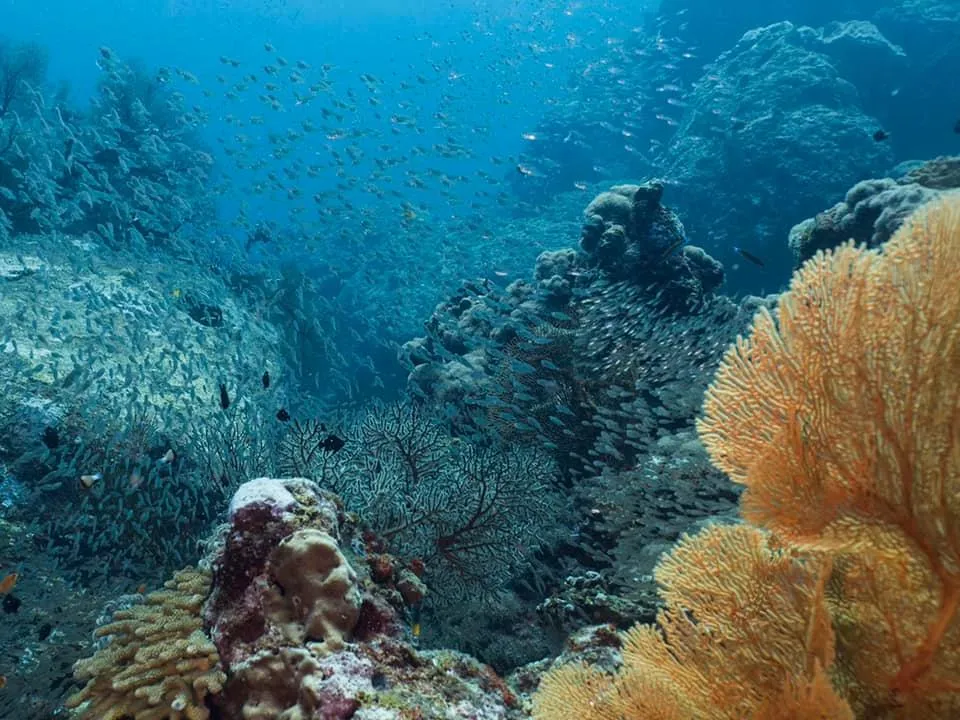 Photo by 中國潛友梧桐[/caption]
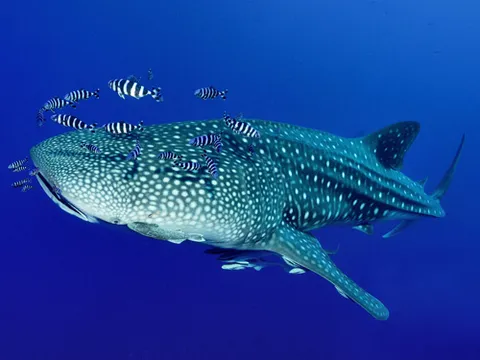
Personally, I most recommend going in March or April, when the chances of spotting wild Whale Sharks and wild manta rays are at their highest. Although the national park is open until mid-May, May marks the tail end of the season (starting late April 2018, almost every boat was seeing Whale Sharks virtually every trip), and the number of divers joining liveaboards is relatively lower than in the October–April peak. There is a real possibility that a trip with too few sign-ups will be cancelled and divers asked to reschedule — something worth noting, since getting time off work is never easy!
[caption id="" align="aligncenter" width="959" class="snax-figure"]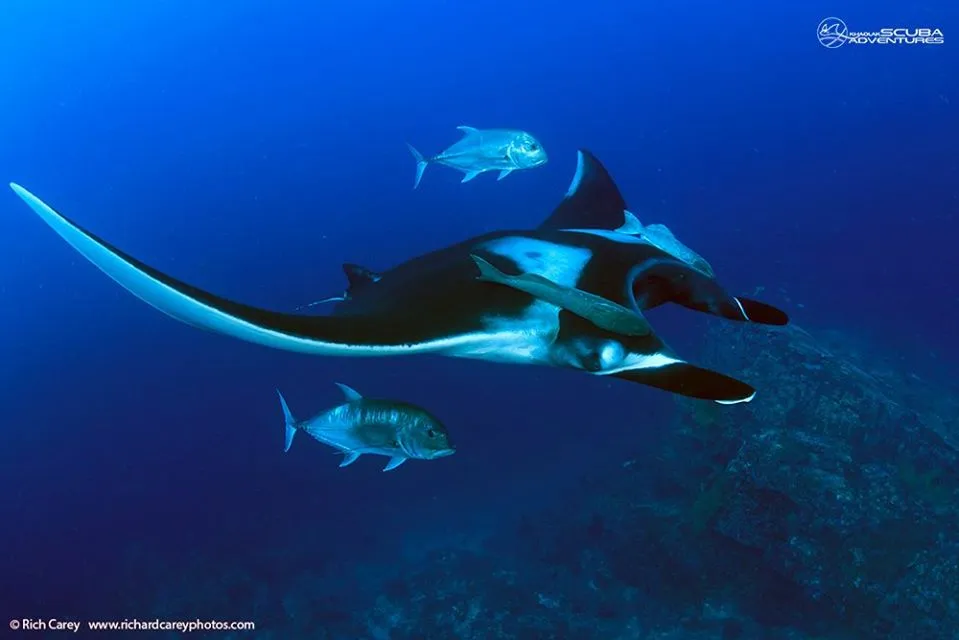 Mega-creatures spotted![/caption]
Regardless of the operator, while the final call on which sites to visit rests with the captain and dive manager, the general route and sites are pretty much the same across the board. Do be aware that some very cheap boats have a history of safety incidents — in diving, you really do get what you pay for! The most common itinerary is the four-night, four-day trip:
Day 1 – Similan Islands check dive + night diving (4 dives)
Day 2 – 1st or 2nd dive at a Similan Islands site → final 2 or 3 dives heading north toward Koh Bon (4 dives)
Day 3 – Koh Tachai and Richelieu Rock (4 dives)
Day 4 – 1st dive at Koh Bon or Hin Luang → begin return journey to Boonsung Wreck (3 dives)
When choosing a boat, the route itself doesn't need to be a major concern — just think about the level of comfort you want, the departure dates, and the operator's reputation.
[caption id="" align="aligncenter" width="875" class="snax-figure"]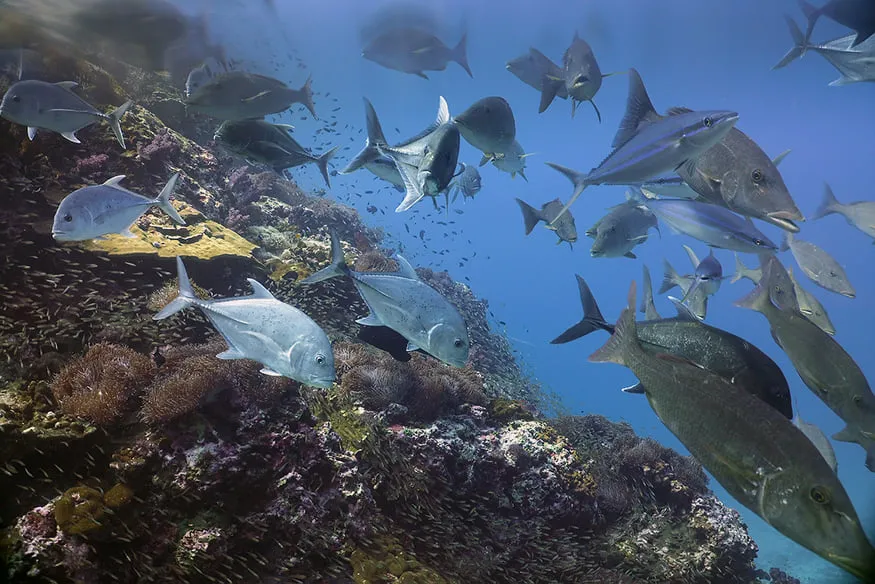 KSA official website[/caption]
Local insider picks — no secrets withheld: here are three operators I recommend!
-Budget-
Khao Lak Scuba Adventure's Manta Queen fleet:
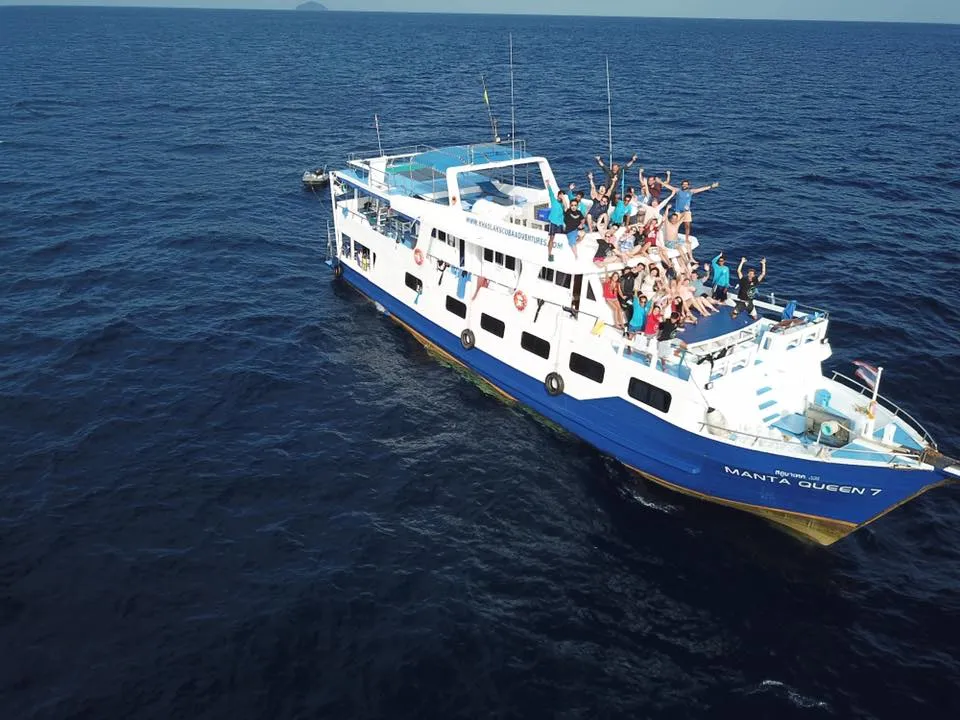
KSA is the dive shop where I worked in the Similan Islands. It bills itself as the largest liveaboard operator in the Similans (though the instructors' pay... shhh). The fleet consists of seven vessels: No. 2 runs three-night, three-day trips; Nos. 1, 3, 5, and 6 run four-night, four-day trips; and Nos. 7 and 8 run five-night, five-day trips.
The MQ-series cabins are on the smaller side and the vessels themselves aren't huge (the largest, No. 3, is 35 m long). But if all you need is a place to sleep aboard — or if you love sleeping out on the open deck (so many divers love wrapping themselves in blankets on the top deck, gazing at the stars, and chatting with fellow divers until they drift off) — an MQ boat will be a great fit.
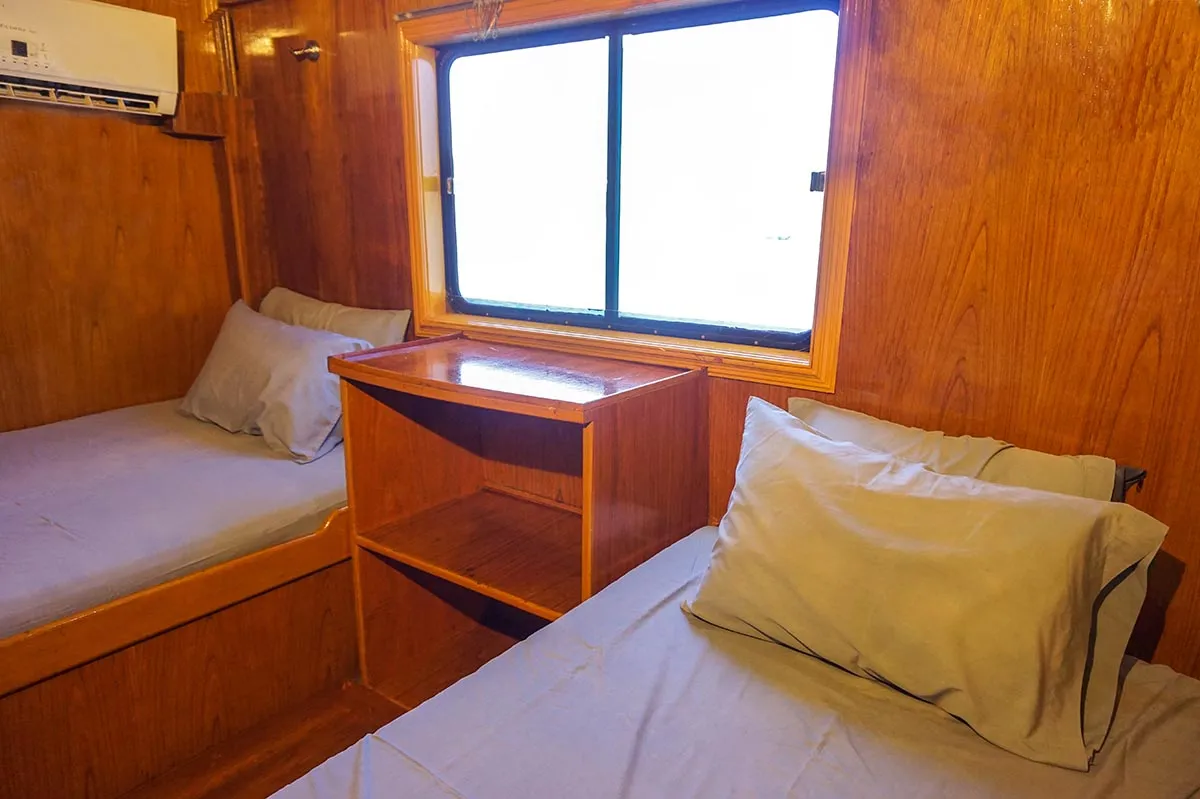
The interiors may be modest, but I think KSA's dive guides are genuinely excellent (yes, that includes me — heh... ahem?). Depth limits, decompression times, and emergency response protocols are all taken seriously. If you're travelling solo, don't worry — on Day 1 check-in, the dive manager will group you with a suitable dive buddy based on your experience level and estimated air consumption (guide-to-diver ratio: max 1:4). Once the diving program officially begins, all instructors gather for a debrief after the first dive and buddy pairings are reorganised as needed. Nitrox groups are kept separate from air groups.
As for the dive platform, MQ boats 1, 2, and 3 have the most spacious ones — right up my alley~
Below is KSA's official website for reference:
https://www.khaolakscubaadventures.com/
If your English isn't great, you can also check my website:
https://islandvibesstudio.weebly.com/similan-national-park.html
-Mid-Range-
West Coast Divers' MV Parawa and MV Sawasdee Fasai:
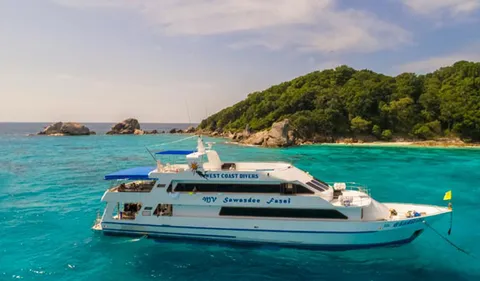
WCD is priced a bit higher than KSA, but the interiors are more spacious, and at night the edges of the boat are lined with neon lights — which is pretty cool haha!!!
The smaller details are also better catered for: shower gel and hair dryers are both provided, whereas on MQ boats you only get shower gel and there are no hair dryers.
Nitrox is also included in the trip fee, so if you hold a nitrox certification you can dive nitrox for free!
West Coast Divers:
https://www.westcoastdivers.com/
-High-End-
Tapana Liveaboard's MV Tapana and MV Tapana Catamaran:
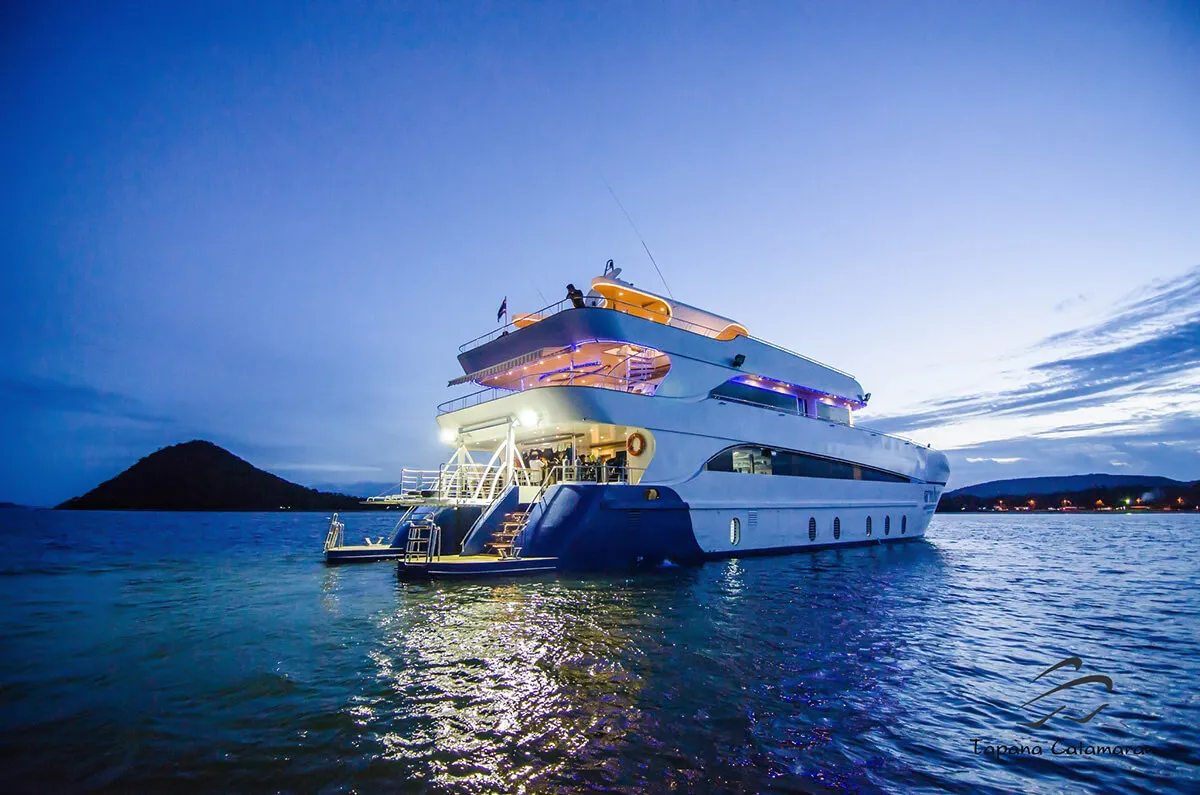
They operate two vessels, both with spacious, beautifully appointed cabins. The Tapana Catamaran even claims to be the only five-star lift-access dive vessel in the Similans — and it has a jacuzzi! Absolutely perfect if you want to travel in true luxury.
The premium price tag is enough to make a broke instructor shudder, though — one trip on their boat costs as much as a flight to the Red Sea...
Tapana Liveaboard: http://tapanaliveaboard.com/
3) Visas
Taiwanese divers:
- Single-entry tourist visa (valid for three months; maximum stay of 60 days)
Required documents:
- Original passport valid for at least 6 months
- Front and back photocopy of national ID
- One 2-inch colour passport photo with white background (taken within 6 months)
- Visa fee: NT$1,200
- Thailand Re-entry Permit
- Complete TM-8 form
- Single re-entry: 1,000 THB
- 2-inch passport photo
- Passport photocopy (ID page and the page showing your most recent Thai entry stamp)
- Visa on Arrival:
Application location: 2nd Fl. of Passenger Terminal
Required documents:
- Passport valid for at least 6 months
- Confirmed onward/return flight departing within 15 days of arrival in Thailand; completed Immigration Card (T.M.6)
- One 4×6 cm photo taken within the past 6 months
- Completed visa application form; fee of 2,000 THB (Thai baht only; currency exchange available near the counter). Applicants must show sufficient funds for their stay — at least 10,000 THB per person in cash, or at least 20,000 THB per family.
Hong Kong divers:
Single-entry tourist visa waived; permitted stay of 30 days.
Chinese divers:
- How to apply for a Thai single-entry tourist visa
- Through a Taobao agent or travel agency
- Prepare documents yourself and apply at the embassy
Documents required for a pre-departure Thai visa:
- Passport valid for at least 6 months
- One visa application form (downloadable from the Royal Thai Embassy website in China)
- A letter of guarantee issued by the applicant's Chinese work unit or relevant authority (in English or Thai), stating the applicant's name and purpose of travel to Thailand (Chinese citizens only)
- A time-deposit certificate showing at least RMB 10,000, valid for 6 months or more, or a current-account statement showing a balance of at least RMB 30,000
- A copy of round-trip airline tickets or confirmed booking
- 2 passport-size photos with white background
- Visa fee: RMB 230
*Travel agencies handling Thai visas generally only require a passport, a photocopy of your national ID, and 2-inch white-background photos. The fee is approximately RMB 250–280, with a processing time of around 5 working days.
- Thailand Re-entry Permit
- Complete TM-8 form
- Single re-entry: 1,000 THB
- 2-inch passport photo
- Passport photocopy (ID page and the page showing your most recent Thai entry stamp)
4) Buying Flights
The most convenient airport for reaching the Similan Islands is Phuket Airport.
From Taiwan, there are currently no direct flights (EVA Air plans to launch a direct route in April 2020). Most connections go through Malaysia, Bangkok, or Singapore. Cheaper options include AirAsia and Scoot, but I'd also like to recommend Malindo Air — a carrier positioned between a full-service and a budget airline, connecting via Kuala Lumpur, with meals and 20 kg of checked baggage included. From Hong Kong there are direct flights, making things much simpler.
Before booking your flights, make sure you've roughly confirmed your itinerary. If you plan to arrive in Thailand the day before boarding, that's no problem. But if you're flying into Phuket on the same day you board, be sure to verify the dive shop's transfer time and boarding time — and build in extra buffer for flight delays, long queues at the visa-on-arrival counter, and the like.
5) Getting to Khao Lak
There are currently only three ways to get to Khao Lak (using Phuket Airport as the starting point). Unlike the journey toward Phuket town, where cheap shared minivans are plentiful, the route from the airport to Khao Lak is reportedly monopolised by organised interests — so minivans can't operate on that stretch, leaving only taxis. The drive from Phuket town to Khao Lak is roughly 1.5–2 hours; from the airport it's about 1–1.5 hours, depending on traffic.
- Most recommended – Dive shop transfer
Most liveaboard operators offer transfers, either included in the trip price or for an additional fee of around 300–500 THB. These are generally shared minivans holding up to around 10 passengers. If you're taking the operator's transfer and arriving in Thailand on the day of boarding, make sure you arrive early — the shuttle runs on a fixed schedule and picks up multiple passengers, not just you.
- Most hassle-free – Taxi
You can hail one straight after clearing arrivals, though the fare may not be cheap — feel free to negotiate with the driver. A typical fare runs 1,000–2,000 THB per car, so if you're travelling with two or more people and want to avoid the hassle of matching the operator's transfer timing, a taxi is a solid option!
Cheaper than hotel: This is probably the cheapest taxi service in Khao Lak, with fares as low as 1,000 THB per car. You can book via their FB Fan Page (responses can be a bit slow...). Their bio also includes an email address for enquiries.
- Cheapest – Bus
If you're travelling light and feeling adventurous, you can walk about 10 minutes out to the main road outside the airport and catch a bus — basically any service heading toward Bangkok will pass through. However, since these long-distance buses originate in Phuket, there may be no seats left by the time they reach you. The single-fare ticket is around 150 THB. Also note that the last bus of the day departs at around 5 p.m.
5) Other Things to Note
- Water temperature at the Similan Islands and Surin Islands national park dive sites averages 28–29°C, though cold currents can cause sudden drops of 2–3°C. Most liveaboards provide 3 mm short-sleeved, short-legged wetsuits. Divers who run cold (or who are self-conscious...) are advised to bring their own stinger suit or long-sleeved wetsuit.
- Thai law prohibits bringing reef hooks and gloves underwater. A tank banger is permitted, but only for signalling your dive buddy or pointing things out. If a patrol ranger catches you bringing prohibited items down, you will be fined!
- Unlimited coffee, tea, and basic medicine are provided on board; beer and soft drinks are also available for purchase. However, due to VAT, prices on the boat are higher than on land, so it's worth stocking up on snacks and drinks you might want in Khao Lak town before you board.
- In Thailand, the use of drones requires prior government approval — please be aware of this.
6) This Is Important!
This point is important enough to deserve its own section: remember to tip the crew and your dive guides!
Tipping is standard international liveaboard etiquette, and Thailand in particular has a strong tipping culture. Never let the friendly, almost buddy-like relationship you develop with your dive guide make you feel awkward about handing over a tip. That's a very Chinese mindset! If you don't want your instructor to quietly resent you, please tip!! (Just kidding 🥺)
A general guideline is around 10% of the trip cost. On some boats, tips for crew and instructors are pooled together and divided equally; on others they are kept separate. KSA, for example, keeps them separate: crew tips are collected from the whole boat and split equally among the captain, cook, first mate, and all other crew members, while instructor tips go directly to your own dive guide (though you're welcome to tip a guide from another group if you particularly liked them — more is always welcome, greedy as that sounds!).
I always recommend tipping even if you weren't entirely satisfied with your dive guide (and please tip in banknotes — giving coins is more insulting than not tipping at all!). My standard advice to guests and students has always been at minimum 1,000 THB for the crew and 1,000 THB for the instructor.
7) Land Excursions
Since you've made the trip to Thailand, you might as well extend your holiday after the liveaboard and spend a few days in Phuket, Krabi, or nearby areas — it also gives you time to wait out the no-fly period. I personally quite like Phuket Town, which has a lovely old-world charm (please, please get a massage!!!). If you want to do some diving around Phuket, staying in Chalong is a good base; Old Phuket Town is another great option — convenient transport links and a relaxed atmosphere. If you're the type who wants to party every night, Patong is obviously the place (I've never actually been to Patong, but my Thai colleagues told me Patong Beach is basically just partying — said with a very deliberate eye roll 😂).
Renting a motorbike and exploring Phuket costs around 250–350 THB per day, not including fuel. I rented mine through the hostel I stayed at — super convenient.
Book a bed poshtel: I highly recommend this poshtel, which embodies the poshtel concept perfectly. Dormitory beds are under 400 THB a night, the location is great (close to the bus terminal and Old Town streets), the front desk staff are warm and helpful, and there's an Instagram-worthy pool with a slide!!
8) Bonus: Thai Language Tips
Full disclosure: this unworthy author has studied just a tiny bit of Thai 😎. Here's a quick-and-dirty, no-guarantees Thai language mini-lesson — a step beyond the usual Sa Wa Dee Ka (hello) or Kob Khun Ka (thank you):
Ex: How much to go to __ __?
Baiˋ __ __ tawˋ raiˇ
or Baiˋ __ __ tawˋ raiˇ naˊ
Ex: Is there a service to __ __?
Meeˇ baiˋ __ __ maiˊ?
or baiˋ __ __ maiˊ?
Baiˋ: go
tawˋ raiˇ: how much
Meeˇ: have (Maiˋ meeˇ: don't have)
maiˊ: (question particle)
naˊ: a soft, affectionate sentence-final particle
Bathroom: honˋ namˊ
Is that right?: chaiˊ maiˊ
I'm from Taiwan: ma jaiˇ tai wanˊ
You can add ka (used by women) or krab (used by men; close your mouth on the "b") to the end of sentences to sound more polite — though I think Thai people won't be too fussed about it from foreigners!
Related links:
- Blue Seas of Yaeyama — Manta Ray Encounters off Ishigaki, Japan
- Caves, Sharks, and Stunning Coral Reefs: Uncovering Okinawa's Hidden Dive Site — Cape Manzamo
- Step Out of Your Comfort Zone and Dive Your Way Around the World!
- Okinawa Diving Is More Than the Blue Cave! 5 Okinawa Diving Secrets You Need to Know
- The Most Complete Okinawa Diving Guide Ever — Stop Saying Diving in Japan Is Too Hard!
- Author: Erica on Pixnet
- Author's fan page: 小島日常-islandvibes studio
Frequently Asked Questions
How is a BlueTrend dive trip different from an unknown, no-name dive group?
Choosing us means full peace-of-mind protection and a smooth experience from start to finish. Every trip we run holds to three things.
First, full legal protection and a professional dive leader: we strictly follow Taiwan's travel regulations and provide complete travel-agency liability insurance, travel insurance, trip-inconvenience insurance and dive insurance. Every group is accompanied by a certified, foreign-language dive leader who joins you on both the dives and the land itinerary, liaising seamlessly with local dive shops and operators on your behalf to keep things running smoothly — the person our travellers trust most.
Second, fully licensed with secure payments: every payment goes into a licensed travel agency's account, with multiple safe payment channels (bank transfer, credit card and more) and a legal collect-and-remit receipt, so every transaction is open, transparent and protected, avoiding the fraud and dispute risks of transferring money privately to an individual.
Third, hand-picked quality we vet in person: every trip, dive site and partner shop is scouted on the ground by our own team, from the guides' professionalism and safety standards to the food, lodging, environment and service details on land, all vetted by us so you don't get caught out.
I want to sign up for a dive trip. Are there certification-level or logged-dive requirements?
Each dive site is different, so the entry bar varies. 'Bali Tulamben', for instance, is relatively beginner-friendly. 'Malapascua in the Philippines' is also beginner-friendly, but since thresher sharks tend to cruise between 20 and 30 metres, we recommend AOW certification with 20+ logged dives to enjoy this trip comfortably. For 'the Maldives' or 'Palau', we suggest AOW with 50+ logged dives for a more relaxed experience. If you're not sure whether your experience fits the trip you want, message us and our dive editors will assess it and help you find the trip you'll feel safest on.
Can I join if I'm signing up alone? How are rooms arranged?
Plenty of our travellers sign up solo! For rooms and beds, we prioritise pairing you with a same-gender traveller, and if you'd rather have your own space you can pay the difference to upgrade to a single room. For the diving, our professional leader will pair you with a suitable buddy, and with the happy vibe on our trips you'll quickly make a great group of dive friends. Many people sign up alone, make new friends, and end up organising the next trip together!
Does the trip fee include dive insurance, gear rental, taxes and instructor tips?
It depends on the trip, the destination's regulations and the local operators. Every BlueTrend dive trip has a detailed web page with a clear 'included / not included' list, transparent and with no hidden charges. All payments are collected by a licensed travel agency, with a standard-form contract for your protection.
I'm a new diver / haven't dived in a long time — will I fall behind the group?
Before you complete your booking, our team assesses a suitable trip based on your certification level and experience. Before departure, we strongly recommend taking time to refresh in Taiwan with an instructor, or a fun dive to get your feel back. On the trip itself, our professional dive leader groups and pairs everyone by experience, keeps a close eye underwater on travellers who need extra care, and steps in to help right away.
Will the photos and videos taken during the trip be shared with us?
During the dives, 'safety' is always the leader's top priority, so whenever it's suitable and safe the leader will capture great shots and record the best moments. During or after the trip, we compile a cloud album for all travellers to download, so you go home loaded with memories!
Besides your scheduled trips, can you arrange a private group charter or independent travel for me and my friends?
Absolutely! Besides group trips, we also arrange private group charters and independent travel. We can communicate, enquire and coordinate services with local operators based on your needs, saving you time and effort and taking the language barrier off your plate, to tailor the smoothest, most reassuring dive trip just for you. Contact our LINE support and our editors will arrange it for you!