The Editor says: Dive planning tables — most of you probably spent a good chunk of time during your Open Water certification trying to decode all those numbers. But once the card was in hand, you handed the planning over to your dive guide and your dive computer, and little by little, the term drifted further and further away. With winter bringing us into the off-season, we've republished this piece from ODYSSEY DIVERS instructor 奧之海, so you can brush up on why dive planning still matters. Extended link: 奧之海 Facebook Group.
ODYSSEY — the Odyssey — one of ancient Greece's two most celebrated epics, composed by the blind poet Homer. The word carries another meaning as well: a long journey of discovery, an epic quest. Every moment of learning, every departure, is a journey unto itself. Life is a journey, and so is every dive. That's why 奧之海 – Odyssey Divers came to be.
王煜竣 is a wandering dive instructor — teaching abroad in winter, returning to Taiwan only in summer. Penghu, Xiaoliuqiu, the Northeast Coast, Orchid Island, Green Island, Kenting, Koh Lanta, Sipadan, Tioman, Perhentian, Malapascua, Moalboal, Puerto Galera — these are the places where his footsteps and his life have left a mark. His favourite above all is Koh Lanta, a place he finds himself drawn back to every winter without fail.
What Is a Dive Plan?
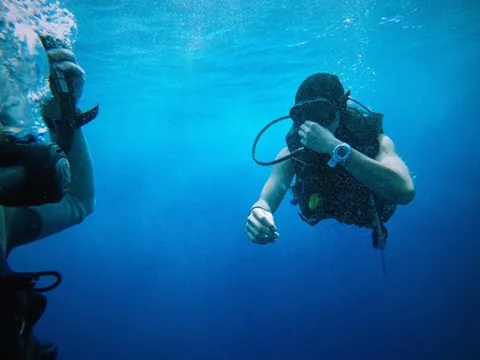
Dive planning — it's a term every beginner hears when they first start learning to dive. And even if you didn't catch the exact phrase, you surely remember your instructor walking you through the dive site briefing before every entry: entry method, route, maximum depth, dive time, the tank pressure at which to turn back, things to watch out for, possible situations underwater and how to handle them… right? No? Then either you weren't paying attention in class — or your instructor wasn't paying attention either.
During the Open Water course, instructors should cover all of this. A dive plan is critically important for every single dive — it's how everyone knows what to be aware of underwater. But how many people truly grasp why it matters?
In the beginning, most people probably understand the what without understanding the why. For a beginner, being able to go from zero experience to controlling their own ascents and descents within just four dives — learning to maintain neutral buoyancy, avoiding harm to marine life and to themselves, and handling basic situations without making things worse — is, in my view, a more fundamental skill than being able to fully understand and accurately execute a dive plan.
So in those early dives, the responsibility of executing the plan rests primarily with the instructor, not the student. It's no surprise, then, that relatively few beginners walk away with a real appreciation for what dive planning means. But as you continue joining dive trips, building experience, and growing more comfortable in the water, that's when you should start paying serious attention to your dive plan.
Conservative diving is always the most important thing. The ocean will always be there. You only have one life.
In the broadest sense, dive planning begins the moment you decide you're going diving. If you own your gear: is everything in order? Has it been too long since your last dive — does anything need servicing? How do you haul all that equipment to a dive site, at home or abroad? Is your body in a condition to dive? Is the weather at the site suitable for getting in the water? Do you have a backup site in mind? What's the quality of the local dive shop? The dive guide? Accommodation, transport, food and lodging — so many things, so much to think about.
In the narrower sense, a dive plan covers the conditions at the entry point (swell, current, visibility, etc.), how to enter and exit the water, the dive route, the objective of the dive, bottom time, maximum depth, the tank pressure at which to begin the return, the safety stop, decompression stops, the buddy system, what to do if buddies are separated, contingency scenarios, problem-solving procedures, and whether each buddy is in the right physical and mental state for the dive — and whether they fully understand and agree to the plan. In short, it's a full run-through of everything from the moment you enter the water, through the entire dive, all the way to surfacing safely and returning to the boat or shore. Everyone knows what to watch for and what they're responsible for — so that if something goes wrong, no one panics or freezes.
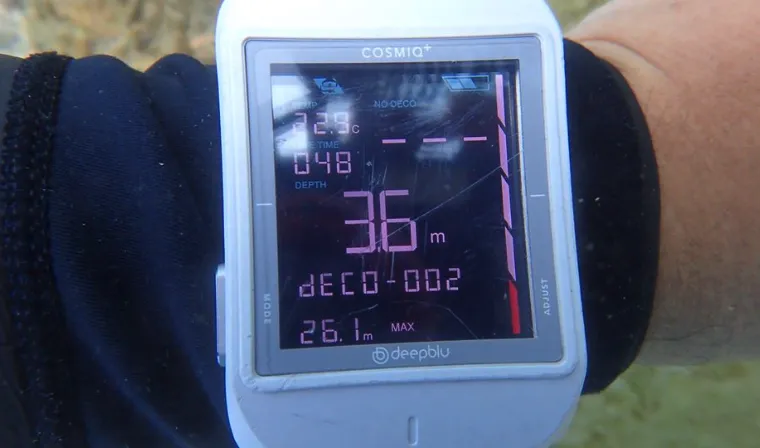
Before dive computers existed, divers used dive tables to calculate and plan their depth and time, and dives were relatively short as a result — because the no-decompression limits at any given depth couldn't be computed in real time underwater. Even if you tried, the results weren't precise. With the rapid advance of technology, recreational divers all know how important dive computers are, and most carry one. Watching your computer display maximum depth, current depth, dive time, and no-stop time makes every dive meaningfully safer.
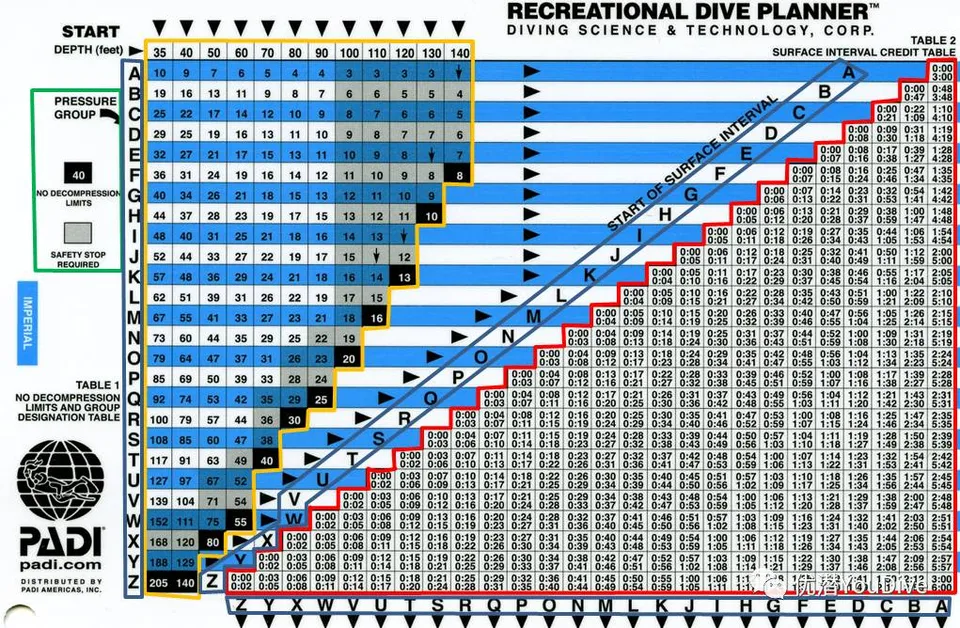
PADI Dive Planning Table
Today's dive computers calculate continuously as your depth changes, letting you know at any moment exactly how much no-stop time you have left at your current depth. But with that convenience comes a temptation: some divers push their computer's numbers to the absolute limit, reasoning that as long as they surface within the safe range, everything is fine.
Technically, if you end your dive within the computer's safe parameters, the computer will show you're in the clear. But does that guarantee your body is actually okay? In fact — and this is something covered even in the Open Water course — no existing dive model can guarantee your safety, even if you ascend or end your dive within the prescribed time and depth limits. What that's really telling you is: dive more conservatively. Dive safer.
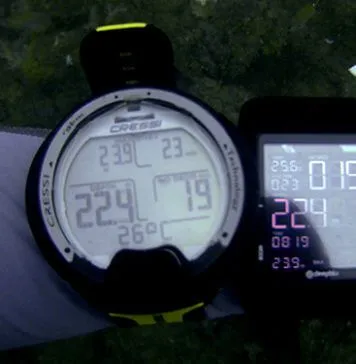
For recreational scuba diving, you should always plan for a no-decompression dive (if you've forgotten what that means, go back to your books or ask your instructor). Where possible, ascend to shallower depths earlier in the dive to give your body more time to off-gas excess nitrogen. Even on a recreational dive, planning your ascent to pass through different depths along the way — rather than shooting straight up at the end — is meaningfully safer. And before surfacing, you should always perform a 3-minute safety stop at 5 m — again, to allow your body to off-gas (except in genuine emergencies).
One more important reminder: after completing your safety stop, when you ascend from 5 m to the surface, you must carefully control your ascent rate. Think about it — which creates a greater pressure differential: ascending from 10 m to 5 m, or ascending from 5 m to the surface? I'm sure you all know the answer. Don't? Go ask your instructor — or ask me. This is exactly why I place so much emphasis on neutral buoyancy control in my courses, and why I'm always drilling my students on it.
A dive plan creates a space before the dive for the dive guide and divers to communicate, exchange essential information, and ensure everyone understands the site conditions and how the dive will unfold. It also gives the guide a chance to get a feel for each diver's condition through conversation — picking up on potential issues before anyone hits the water, so that problems which would be impossible to talk through underwater can be anticipated and avoided, and everyone comes back to the surface safely.
So — is dive planning important?
The video below is something I came across online. It contains a number of mistakes that could have been avoided. Does anyone know what they are?
Is neutral buoyancy important? Is controlling your depth and time important? Is monitoring your own and your buddy's tank pressure important? Is the buddy system important? Does the quality of your dive guide matter?
Does your own life matter?