Contents(5)
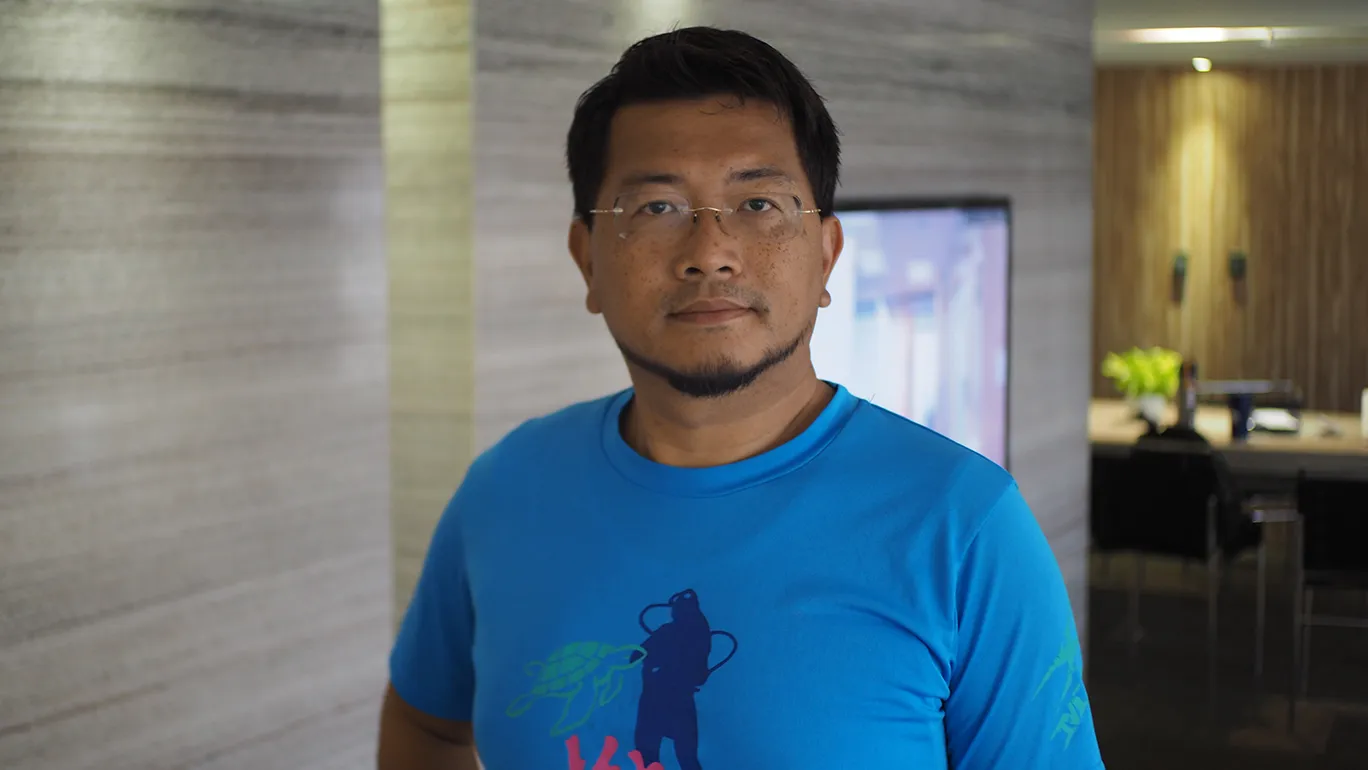
The Editor says: Taiwanese people live too far removed from the ocean — so far that many have forgotten what the sea truly looks like. Fortunately, around the Editor there is a group of wonderfully peculiar people, each with a remarkable story of their own. Despite their vastly different backgrounds, professions, and ages — sometimes spanning as much as six decades — they all share one unmistakable trait: a love for the sea. The Editor hopes to uncover the stories behind their devotion to the ocean, and inspire more people to rediscover and fall in love with it. For the very first installment of our "Lives Changed by the Ocean" series, we share the story of Lin Yu-Ping, the trash gardener of Keelung's Chaojing Wanghaijiang Bay.
A Day in the Life of a Keelung Chaojing Diver
On a scorching June afternoon in 2017, beside the famous "Hero's Slope" at the Secret Garden dive site in Keelung's Chaojing Park, a familiar figure rallied three or four burly men. They weaved past a line of divers shouldering scuba tanks and leapt without hesitation into a small cove. Just days earlier, a typhoon had swept a blanket of floating marine debris across the water's surface — not the large trash items we typically picture, but rather countless fragments of microplastics and broken styrofoam, endlessly churned against the shoreline by the waves. Some of the men wielded nets; others picked up the seemingly infinite sea of plastic fragments with their bare hands.
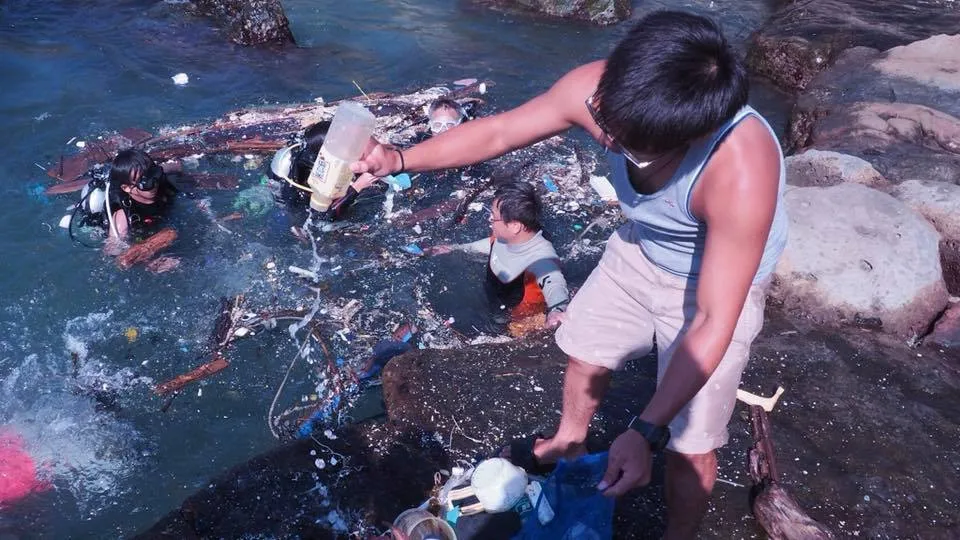
Cleaning up the trash at Keelung's Chaojing
That familiar figure called out to the group: "We divers come here to dive every single day — why don't we roll up our sleeves and make this place cleaner?" Those who know him call him the Trash Gardener of Chaojing Park — Lin Yu-Ping.
Those of a certain age will remember the golden era of internet cafés in Taiwan, when students would dash straight from school to their nearest one rather than cracking open a textbook. It was a time when the internet was booming, and Lin Yu-Ping found himself drawn into the world of tech by circumstance. After graduating, he dove headfirst into system integration projects for major internet café operators.


Finding His Way to the Sea
From his fresh-faced days at 24 after military service all the way to 40, Lin Yu-Ping spent his life surrounded by technology — rigid technical documents, cold server racks, and the relentless churn of the industry. Life seemed set to continue along that same track. But as technology evolved at breakneck speed, product cycles shortened dramatically. A new-generation product would barely reach mass production before the next generation was already being announced, forcing manufacturers to push inventory risks entirely onto system integrators. On top of that, PC specs were upgrading faster than ever, internet cafés were losing their appeal, and the rise of smartphones delivered the final blow to the industry. The idea of a mid-life career change quietly took root in Lin Yu-Ping's mind.
In 2013, at a friend's invitation and driven by sheer curiosity, Lin Yu-Ping signed up to learn scuba diving — and it turned into a thoroughly nerve-rattling wake-up call. The normal learning curve involves progressing steadily through theory and practical skills, especially for a student who isn't particularly comfortable in the water. But Lin Yu-Ping's experience was more like a rollercoaster. His first few open-water dives during his Open Water course were a struggle — poor neutral buoyancy, burning through air too quickly — yet the sensation of weightlessness underwater and swimming alongside fish captivated him completely. After accumulating around 20 dives, however, he ran into trouble: his original instructor placed heavy emphasis on a strict master-apprentice dynamic, which ultimately drove Lin Yu-Ping out of the group.
Now a diving orphan, he began diving with a handful of like-minded friends, and the LINE group "Divingmate" was born. As the group grew, he encountered divers from various certifying agencies — many of them at odds with their original instructors. This opened his eyes to how, despite diving being a knowledge-intensive activity, the industry was rife with opacity. Divers frequently complained about being pressured into buying gear from their instructors, being pushed to enroll in an Advanced Open Water course immediately after completing Open Water, or being scolded by their original instructor for diving with someone else. All of this convinced Lin Yu-Ping that he genuinely wanted to build a healthier diving community.
Divingmate
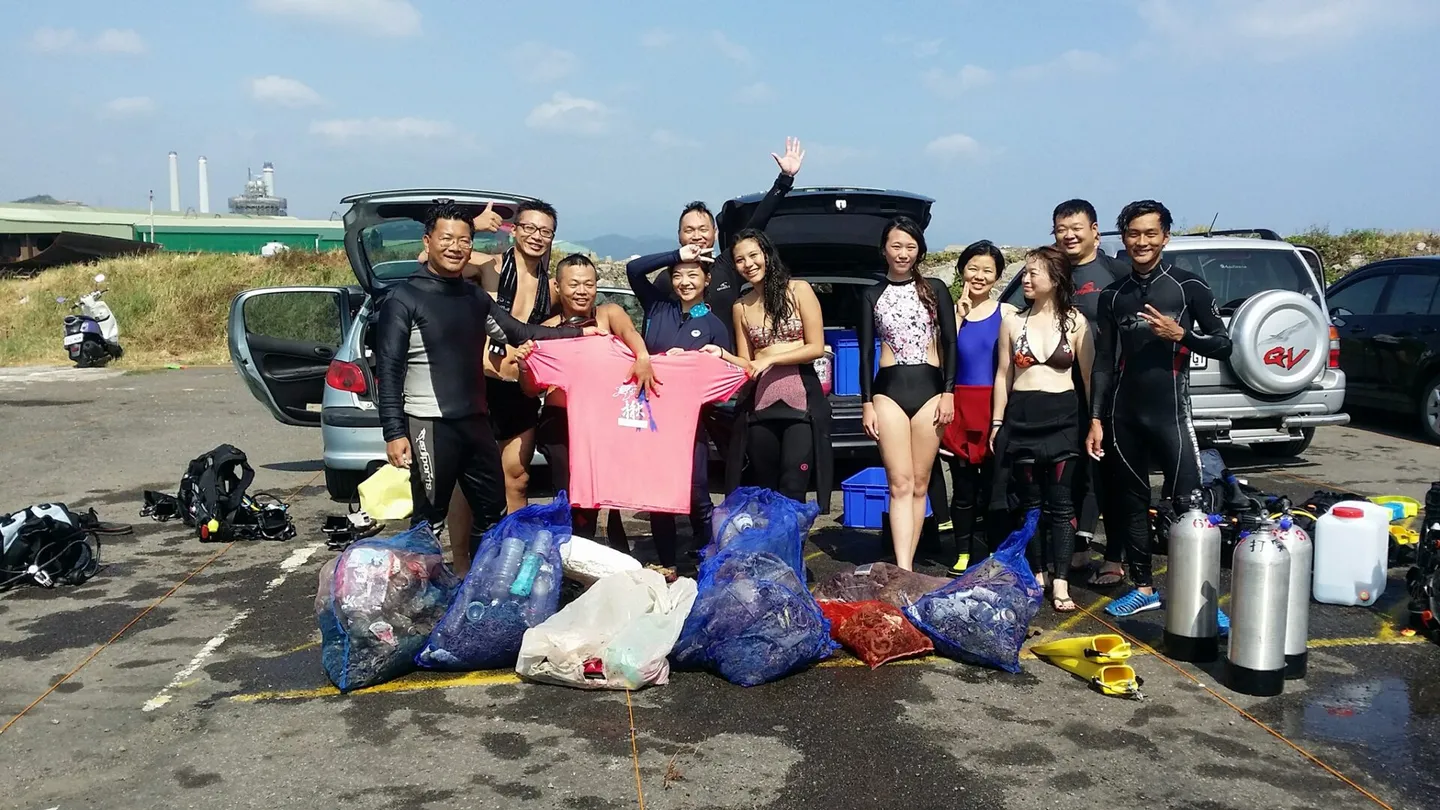
Rather than centering the group around gear sales or dive trip promotions, Divingmate rallied people together under the banner of picking up trash. From just three members in 2015, the main group has since grown to more than 130. The philosophy Lin Yu-Ping held onto was simple: because he didn't want to follow certain instructors' restrictive ways of doing things, he wanted to give more people a different opportunity to get close to the ocean. If you want to dive, the group will dive with you — and members freely share knowledge about dive sites, currents, and gear. As for why he decided to become a full-time instructor, the answer is almost defiant: at one ocean cleanup event, he was challenged by someone who questioned his right to organize activities since he wasn't a certified instructor. That stung him into resolving to earn his teaching certification. Perhaps it was that stubborn, competitive spirit that gradually set him on the path of the trash gardener.
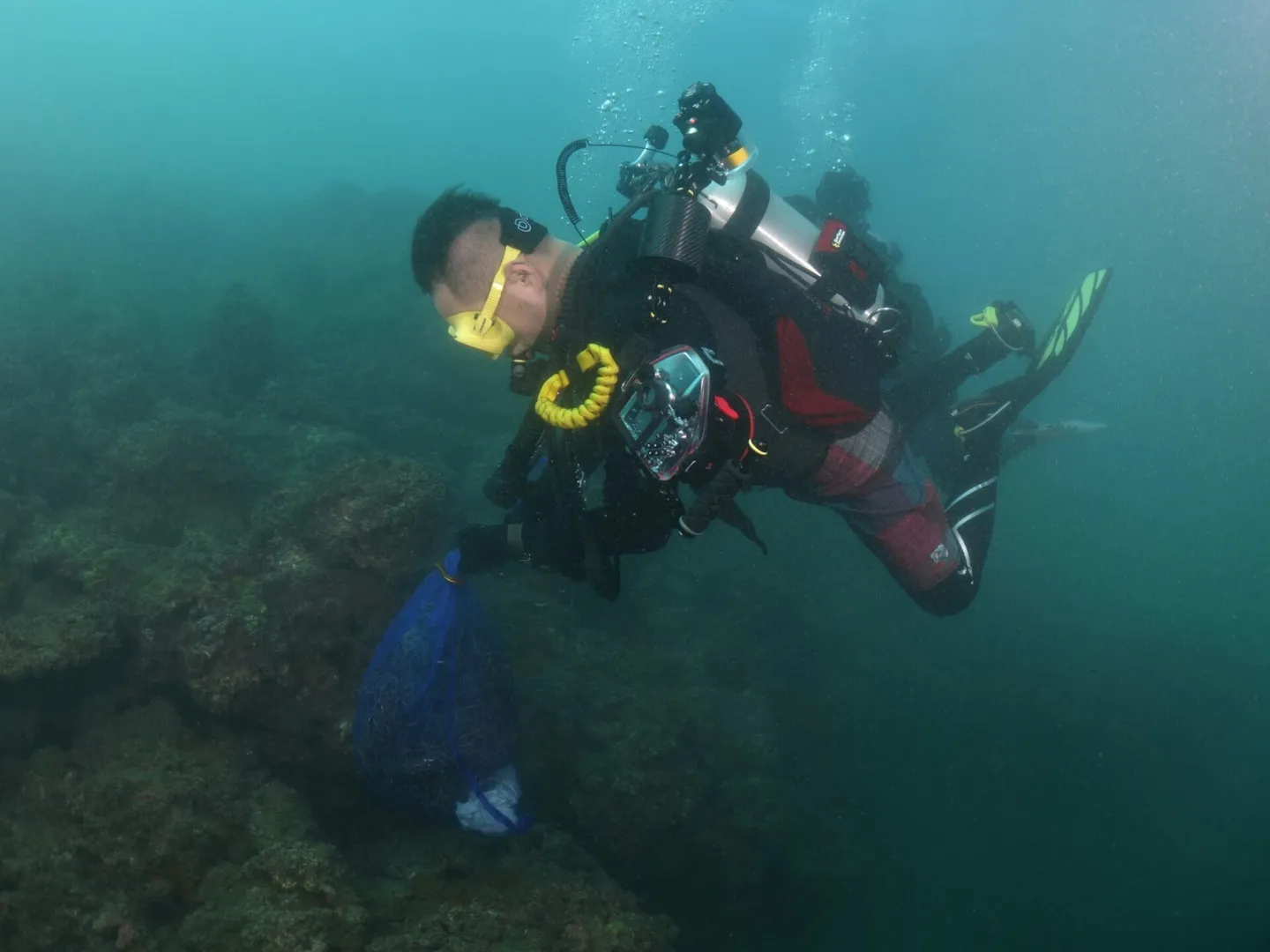
After officially obtaining his SDI (certification agency) instructor certification in 2015, he threw himself into organizing both dive activities and ocean cleanup events. In the early days, Keelung's Chaojing Park was littered with discarded fishing nets, plastic bottles, and cloth scraps tangled around coral. While the marine life at Chaojing is richer than at many other Northeast Coast sites thanks to its currents and topography, for Lin Yu-Ping and his Divingmate crew, that richness only made it more important to treat the environment with care. Every time he led a group underwater, he would remind everyone to bring an extra mesh onion bag and pick up any trash they spotted. This quiet habit began in 2015 and continued steadily for two years, gradually inspiring the divers around him.
The Rise of the Secret Garden
Perhaps because there was less trash, or perhaps because more divers were visiting Chaojing, underwater camera footage began pulling back the curtain on the Secret Garden's mysteries — revealing that just 40 minutes from Taipei, Keelung was hiding a breathtakingly beautiful dive site. Thanks also to the support of local dive instructors, the Keelung City Government, and the National Museum of Marine Science and Technology, Wanghaijang Bay — which falls within Chaojing Park — was designated a marine protected area (MPA) in May 2016, with strict enforcement beginning in August of that year. Locals jokingly call it the smallest MPA in Taiwan, yet the one with the strictest enforcement. And strict enforcement paid off: in just a few short months between the MPA's designation in 2016 and the end of the dive season in September, divers watched the sea bounce back with remarkable speed. Various species of snapper, moray eel, and sea urchin all returned. That same year, four Giant Grouper measuring a meter in length were discovered beneath the rocks of the Secret Garden — thrilling news in a Taiwanese diving landscape where big creatures are rarely seen.
Lin Yu-Ping's background in information technology had defined him until he hit 40, when the ocean suddenly reoriented everything. Through the sea he found a group of close friends, and what felt like a new sense of purpose. The spark for what came next was a fishermen's protest. In September 2016, a review forum was held for the Wanghaijang Bay conservation zone, where local residents and fishermen were invited to speak openly with government officials. That forum gave Lin Yu-Ping a vivid sense of just how difficult it is to drive the transformation of a fishing village. The government and divers hoped that the MPA's spillover effects could help slow the depletion of Taiwan's nearshore fisheries. But for fishermen who had worked the sea since childhood, fishing bans felt like a bone stuck in the throat — especially with inadequate government regulations and support measures in place. The forum ended without resolution.
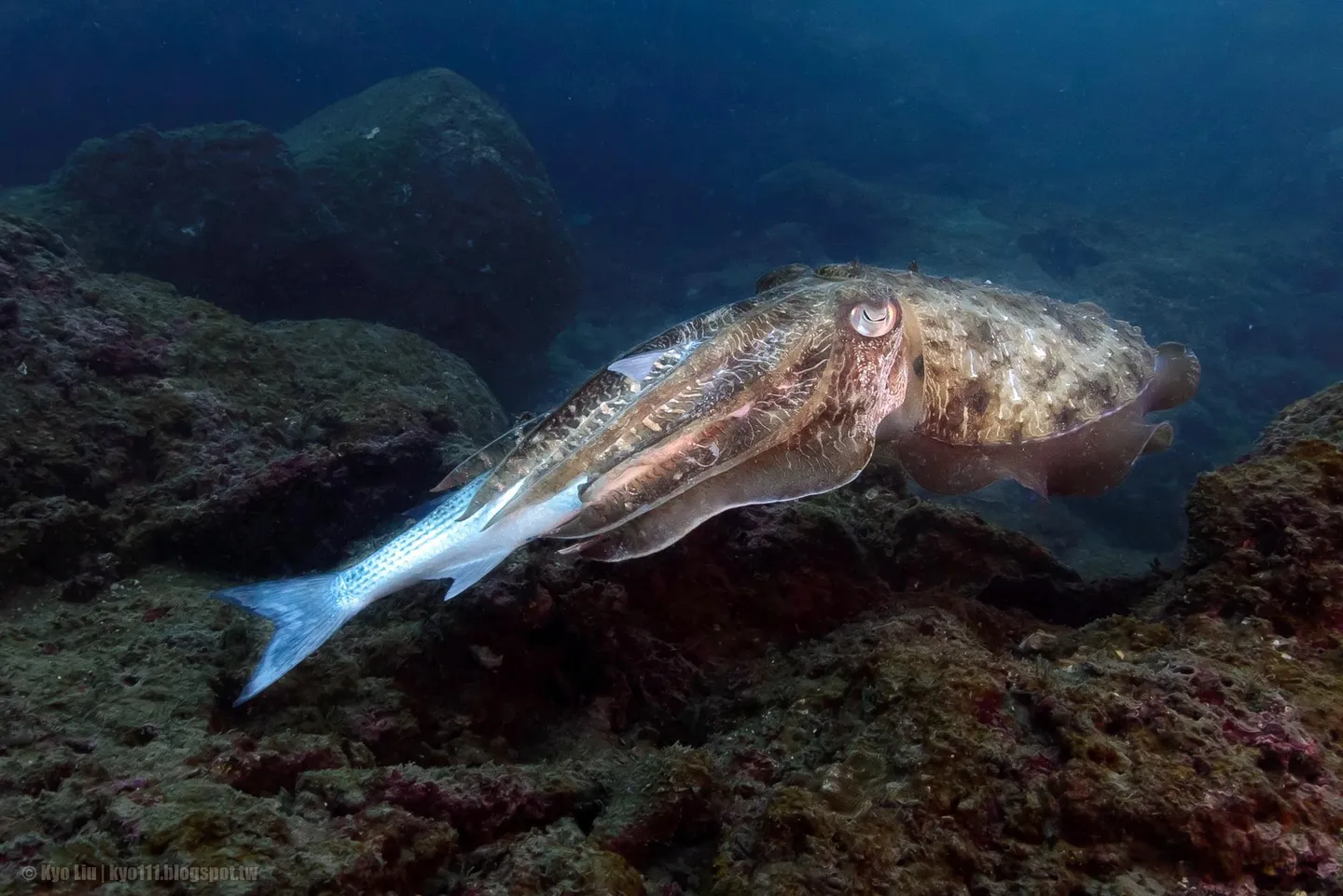
Wanghaijang Bay sees pharaoh cuttlefish spawning in April and May, but their value is perceived very differently by fishermen and anglers. Photo provided by Jingtairo.
A Stepping Stone for the Transformation of Taiwan's Fishing Villages
After the forum, Lin Yu-Ping found himself thinking: "Maybe these two sides have never really been on the same platform, talking to each other." Two parallel lines can never meet no matter how long they run — but if we could understand each other a little better, maybe something could change. So in 2017 he made a bold decision: to establish a base. During Chinese New Year of 2017, a group of Divingmate members rolled up their sleeves and, braving the biting northeast monsoon, began transforming what would become the Divingmate base — Chaojing Sky. By accounts from members who were there, the space was virtually derelict: a leaking roof, a mold-covered refrigerator, a rusted water heater, a broken air conditioner. With no real budget to speak of, everyone pushed forward on sheer enthusiasm and belief in a simple ideal.
Once the base was up and running, the dive season began to arrive, and Lin Yu-Ping started reaching out to local residents. He proactively partnered with them on scuba tank rentals, deliberately leaving more of the margin in their hands, and purchased a range of snorkeling gear to loan free of charge to local shops so they could try renting equipment to visitors. His logic was straightforward: if you want local residents to feel the benefit, you have to let them profit from marine tourism.
After a year of patient communication and relationship-building, local residents are now set to engage full-time in ocean-related industries — from scuba tank and snorkeling gear rental to intertidal zone guiding — all stepping stones toward fishing village transformation. Looking further ahead, Lin Yu-Ping hopes to train local residents to become snorkeling and dive instructors, so that the industry can truly put down roots in the community. Imagine a dive guide from the village itself telling visiting divers that 20-odd years ago, there were whales in Wanghaijang Bay — the impact would be profound, and it would drive home the importance of marine conservation far more powerfully than any slogan. Beyond rehabilitating the underwater habitat and supporting industrial transformation, Divingmate also counts a team of dedicated volunteers who contribute in countless ways to strengthen the whole ecosystem — drawing dive maps of Wanghaijang Bay, creating reminder signboards for the conservation zone, designing conservation zone stickers — all small efforts aimed at helping more people cherish this hard-won protected area.
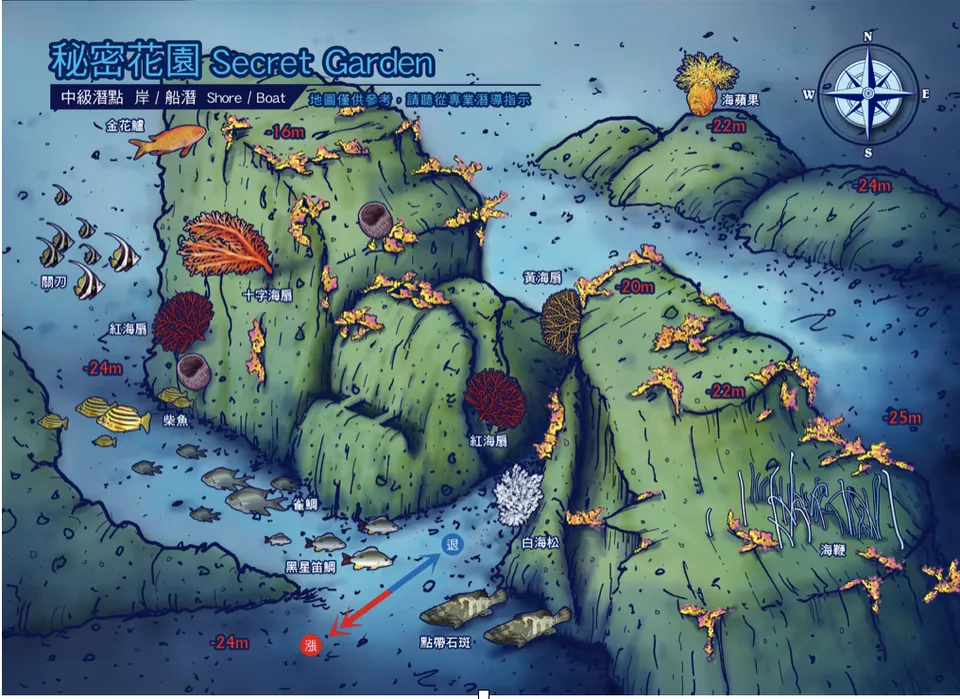
Drawing dive maps helps everyone better understand this stretch of ocean
Divingmate is still running at a loss (given his business logic, turning a profit anytime soon seems unlikely), yet even as this article was being written, Lin Yu-Ping had just purchased 10 more sets of full scuba gear. He hopes to collaborate with more independent instructors in the future — as long as they share a similar commitment to conservation, he is eager to work together and build a comprehensive, safe dive guide system. Ultimately, he believes that nurturing a locally rooted dive tourism industry means ensuring that residents and instructors earn a fair return — only then can the industry develop sustainably. The reality, of course, has been harsh. When he first started, many people poured cold water on his plans, and some took to the internet to label his motives as conspiratorial. But the only thing he can do now is hold on and refuse to give up, doing his part to support what may become the first fishing village in Taiwan to genuinely transform through the designation of a conservation zone.
For Lin Yu-Ping, diving is the embodiment of a philosophy. Beyond the underwater rules of not touching the bottom or the coral, every activity or dive trip he organizes comes with a standing request: members must bring their own reusable chopsticks and water bottles. People come to know the ocean through diving, and through diving they come to understand its condition. Picking up trash underwater is part of it — but even more important is living those values in daily life. As Lin Yu-Ping puts it: "As long as we keep building on positive things, the right culture will naturally take shape." When every instructor teaches students to cherish marine life, those who damage the ecosystem will naturally be called out. When every diver makes a habit of bringing a little trash to the surface, it becomes second nature to everyone — and little by little, isn't the ocean getting a bit cleaner?
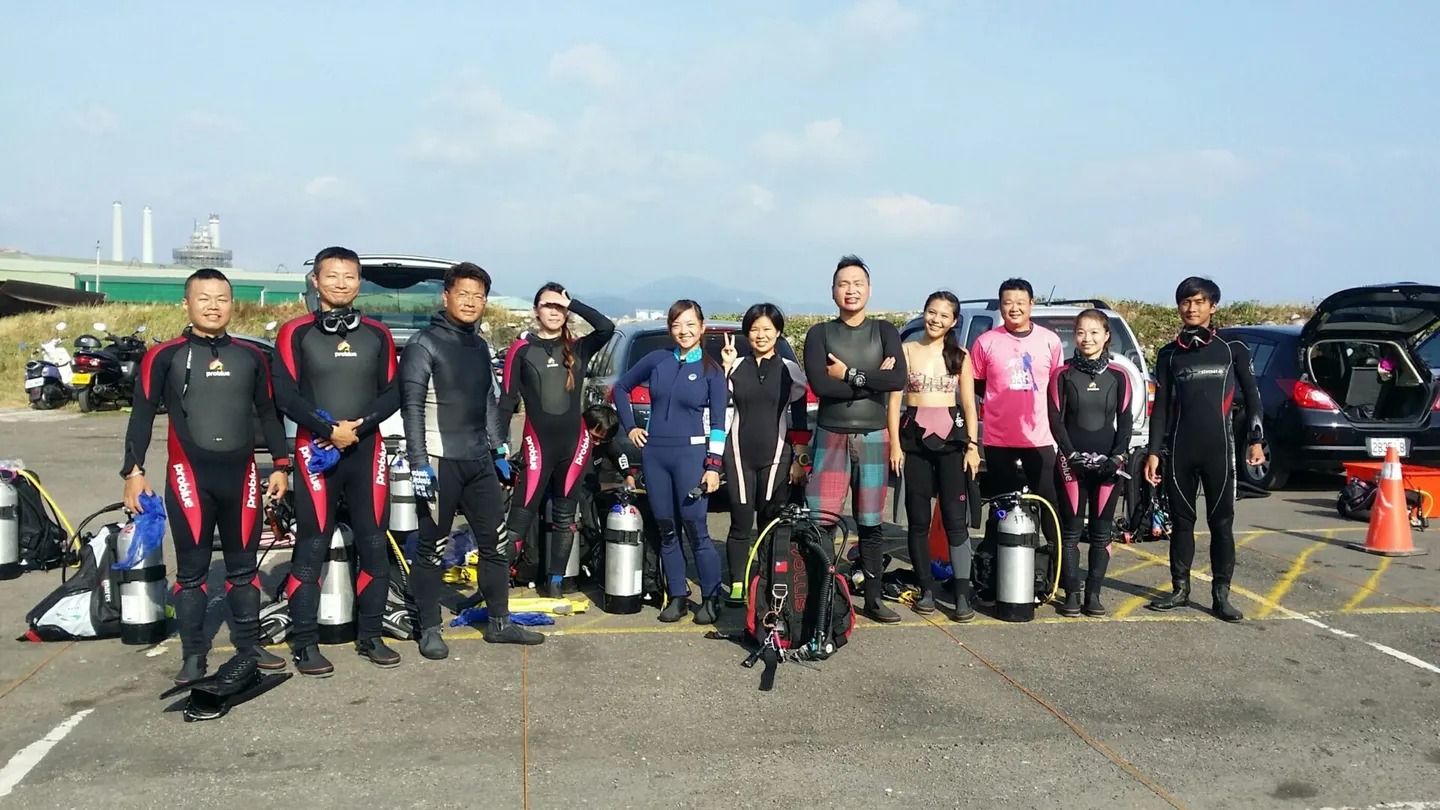
Ocean cleanups bring everyone's love for the sea together
Related links:
Further reading: