Contents(5)
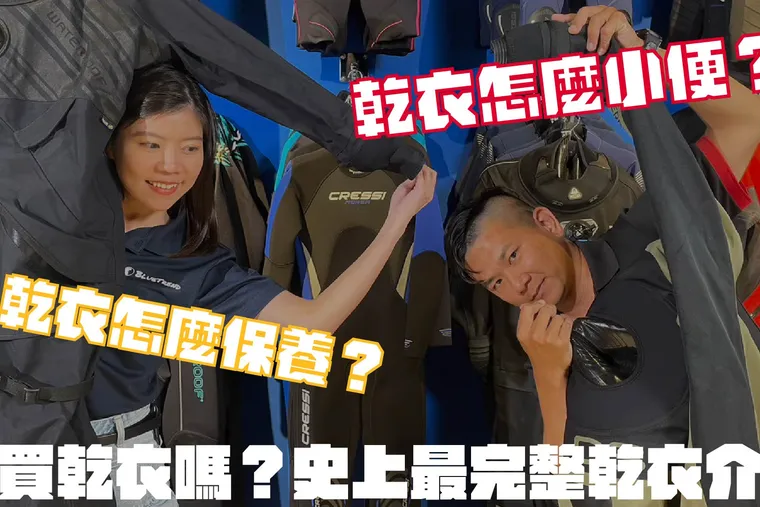
Before diving into this article, let's take a look at the piece shared by instructor 陳徵蔚: Can You Dive in Cold Winter Water? An Instructor Shares the Secret Weapon: The Drysuit. It gives us a solid foundation for understanding drysuits — and from there, we can bust the biggest myths one by one! First, check out the behind-the-scenes video of our drysuit experience below to whet your appetite!
Drysuit Myth #1: They're Expensive — NT$50,000–60,000 or More — Way Out of Reach
As instructor 陳 already mentioned in the article above, a drysuit's normal lifespan can exceed 10 years. If you're buying brand new at NT$50,000, consider this: a typical wetsuit lasts around three years before water pressure compresses and thins the neoprene, reducing its insulating ability. When you weigh it all up, a drysuit may actually hold its value far better!
On top of that, because water temperatures in Japan tend to be cold, many Open Water Diver (PADI/SSI cert) courses there are taught in conjunction with drysuit training — which means a lot of people buy drysuits. Naturally, the second-hand drysuit market is quite vibrant, and you can sometimes snag one at a quarter of the original price. Combined with the drysuit's long service life, there's a real chance of striking gold!
But… and this is a very important But — drysuits are extremely demanding when it comes to fit. Even a slight mismatch can cause leaks, and a suit that's too loose means too much air inside, making neutral buoyancy hard to control. For example, you and I might both be 180 cm and 75 kg, but if your neck is thicker, you might feel uncomfortable wearing the same size; too small a neck seal, on the other hand, can cause leaks. Height, weight, foot length, belly size — all of these physical variables can become the decisive factor in whether your drysuit feels uncomfortable or starts leaking. That's why many major international drysuit brands emphasise custom tailoring, aiming for the best possible fit for your body. Beyond fit, drysuits have many components, and each one is a factor worth considering. Buying a drysuit online without being able to try it on is, therefore, an extremely high-risk move.
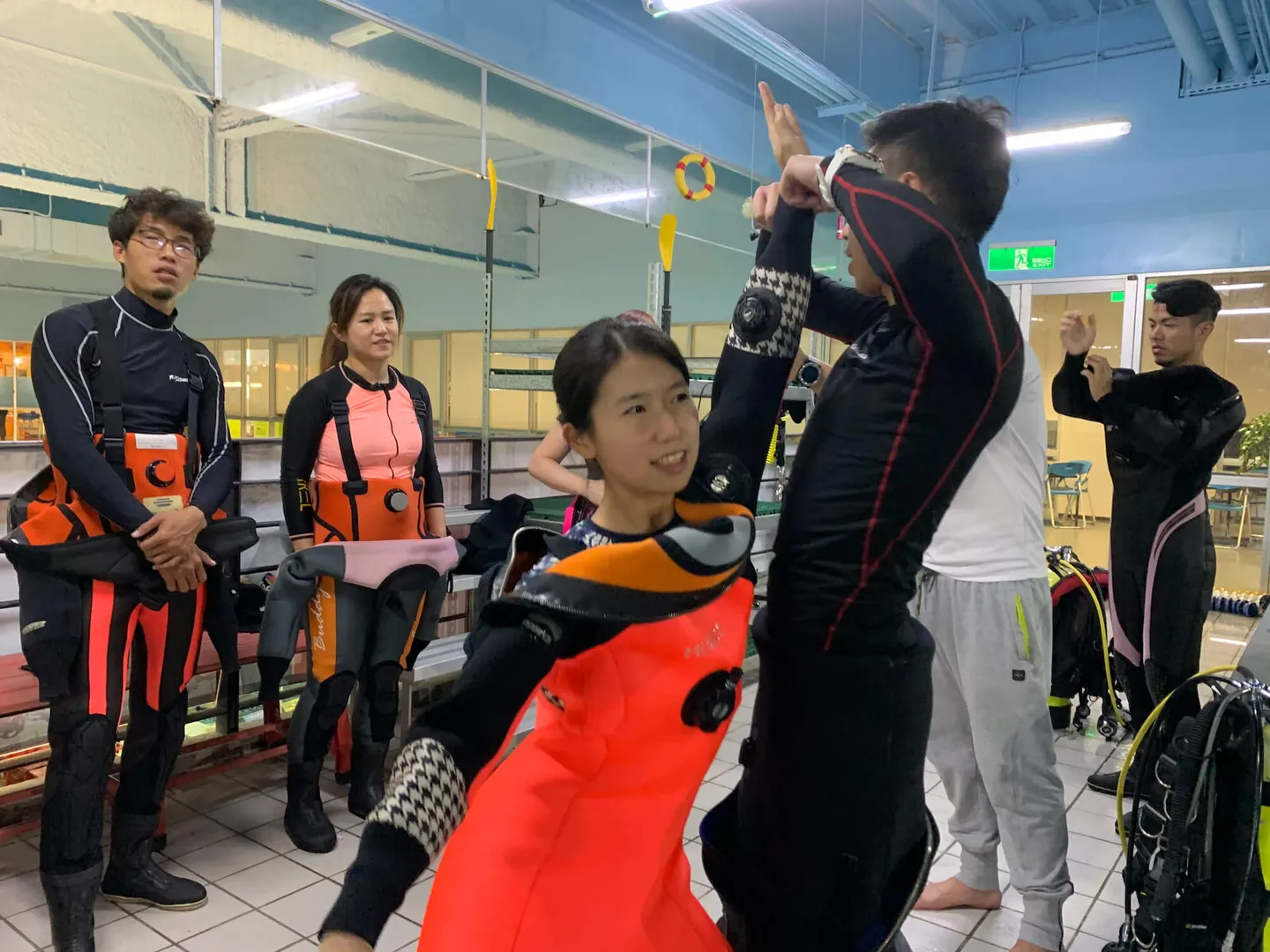
Putting on a drysuit is an art in itself


Drysuit Myth #2: You Only Need One in Cold Winter Water — There's No Point in Taiwan
Beyond keeping you warm by preventing water from contacting your body, another great benefit of a drysuit is that — precisely because it keeps water out — you step out of the water completely dry. That means no shivering on the surface. For instance, the Editor went diving in Green Island in April: the water temperature was a comfortable 26°C, but the air temperature onshore was only 21°C. Whether you're on a boat dive getting blasted by the wind or riding a scooter back to your accommodation, that kind of temperature gap is a serious test of your body's cold tolerance.
So you'll still spot instructors in Taiwan reaching for their drysuits whenever the weather turns a little chilly — it's a major win for anyone who hates the cold.
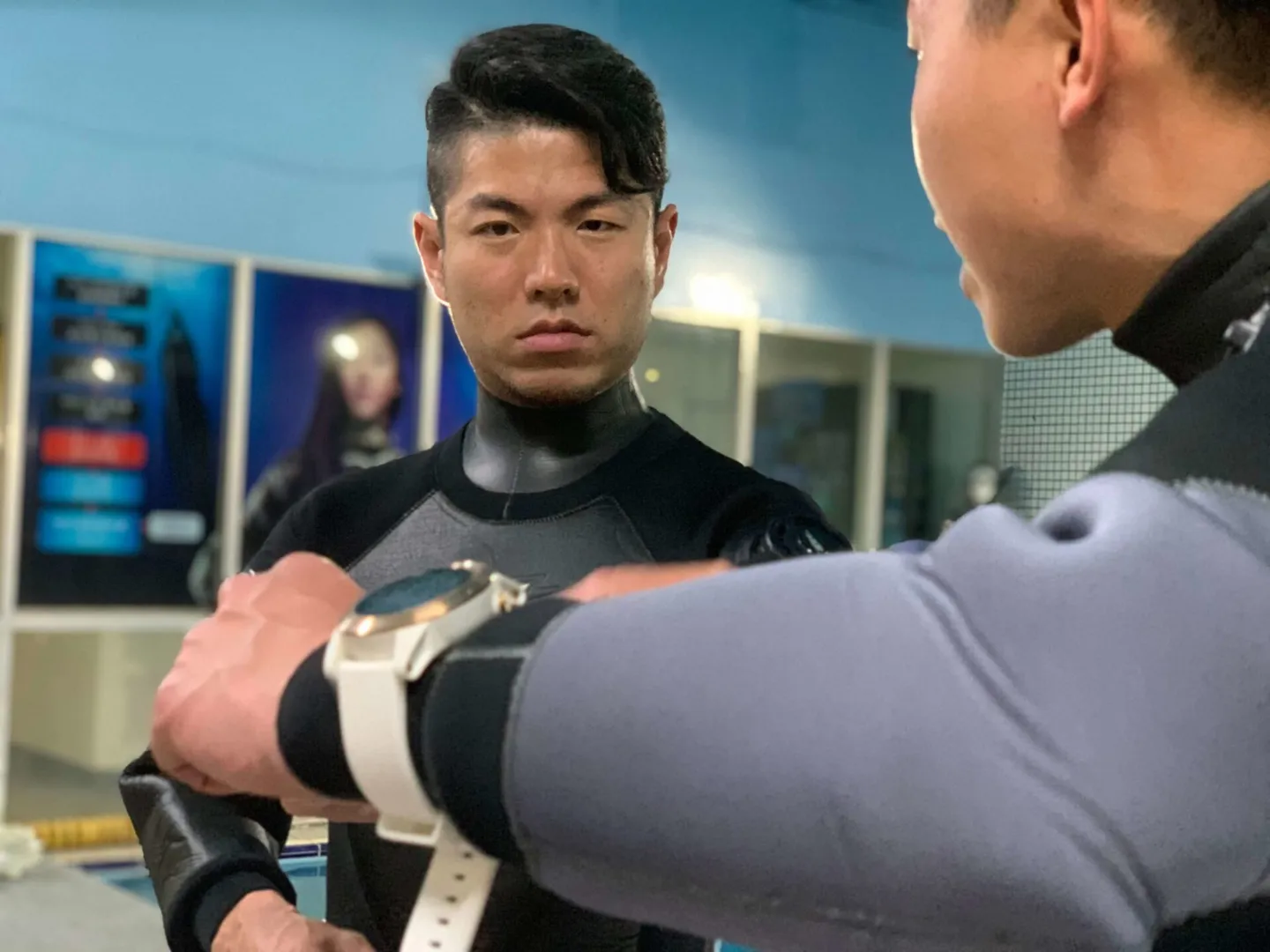
Don't forget to pair it with a stylish dive computer like the MISSION ONE
Drysuit Myth #3: What Do You Do When You Need to Pee?
Some drysuits are designed with a pee valve, and higher-end models even feature a zipper for more convenient relief — though the price tag goes up accordingly. Some experienced divers doing long drysuit dives even wear adult diapers for the occasion, which adds yet another invisible barrier to entry for drysuits.
But… and this is a very important But — the reason we feel the constant urge to urinate in a wetsuit is that contact with water triggers a chain of physiological responses in the body, such as the effects of water pressure and the body's reaction to cold water. Because a drysuit isolates you from the water entirely, the urge to urinate while wearing one is almost the same as on land. Unless you're a technical diver spending extended time underwater on decompression stops or long-duration dives, a single recreational scuba tank lasts at most 45 minutes — which really shouldn't have you frantically searching for an underwater toilet.
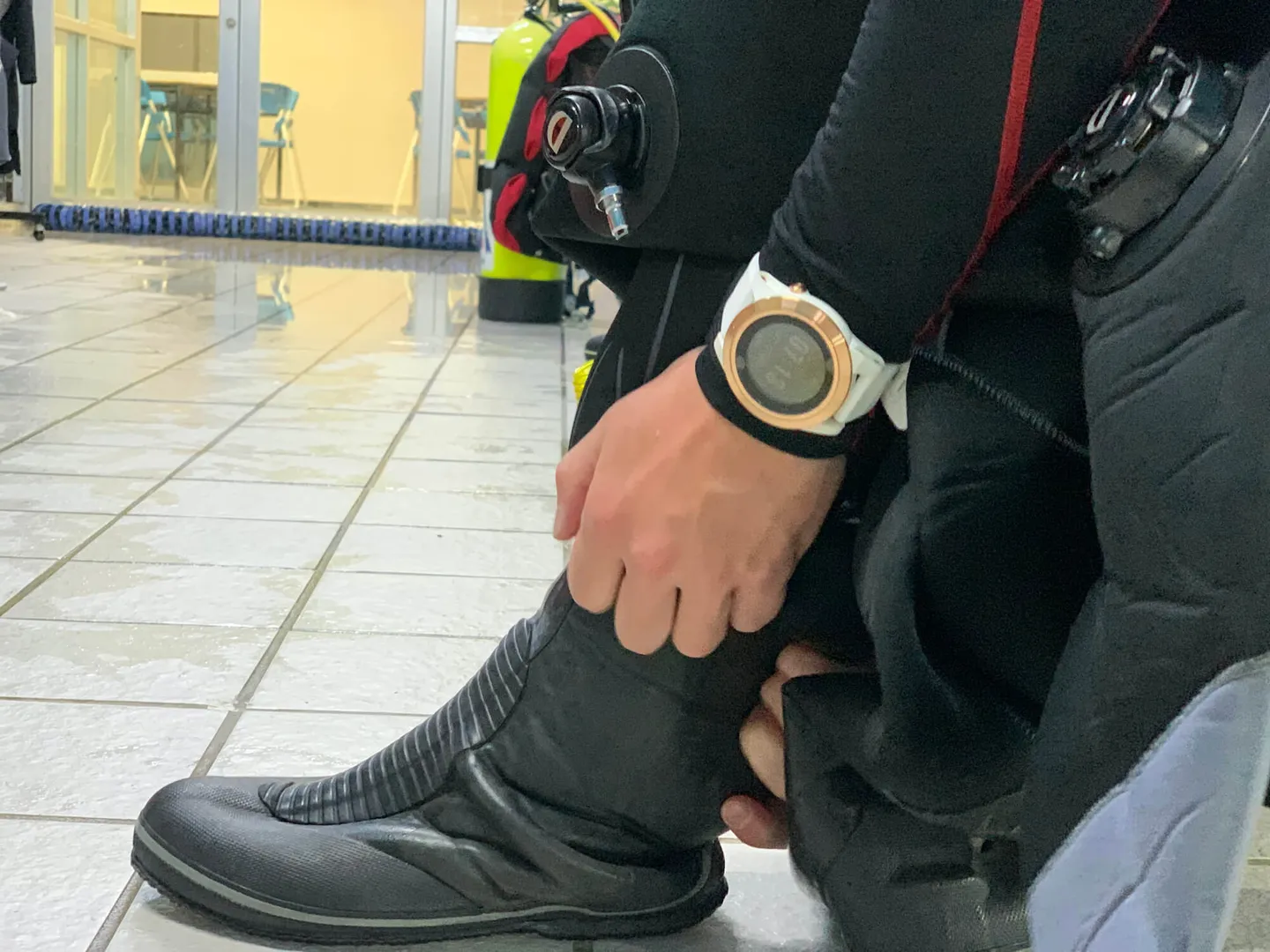
For sock-style drysuits, foot size is a key consideration when choosing
A Quick Word from Our Sponsor:
If you want to find out whether you're comfortable in a drysuit — how it feels to wear one and move around underwater — do you really have to grit your teeth and buy one just to find out? Divingmate has prepared a series of standard-sized neoprene drysuits for you to try out, so you can experience what a drysuit feels like before committing to a purchase. Drysuits don't have to feel so out of reach.
Drysuit Experience Course
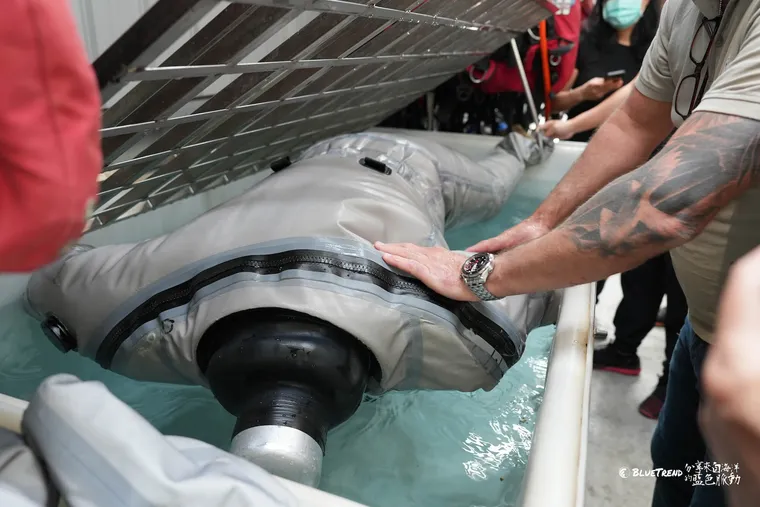
Before the hands-on portion of the drysuit experience, we cover the basics: how to put on and take off a drysuit, an overview of its key components, and — most importantly — the concepts behind underwater operation. After the briefing, everyone moves to the shallow pool. There, suited up in drysuits, participants run through a bubble test, practice rolling over and standing up in the water, and get a feel for the pressure the suit exerts. Of course, hands-on practice with the inflation and deflation controls is also part of the programme.
The biggest fear when wearing a drysuit underwater is air migrating to the legs and causing you to invert and float upside down. So in addition to adapting to neutral buoyancy (note: if you're wearing a neoprene drysuit, you may need to add up to 4 kg of extra weight), the most critical skill to practise is handling emergency situations.
Based on the Editor's own drysuit experience, underwater operation really isn't as difficult as it sounds. In fact, because the air distributes evenly across your back underwater, maintaining a perfect trim position becomes even easier. Want to experience that blissful dry feeling when you climb out of the water? Get in touch with Divingmate to arrange your drysuit experience!
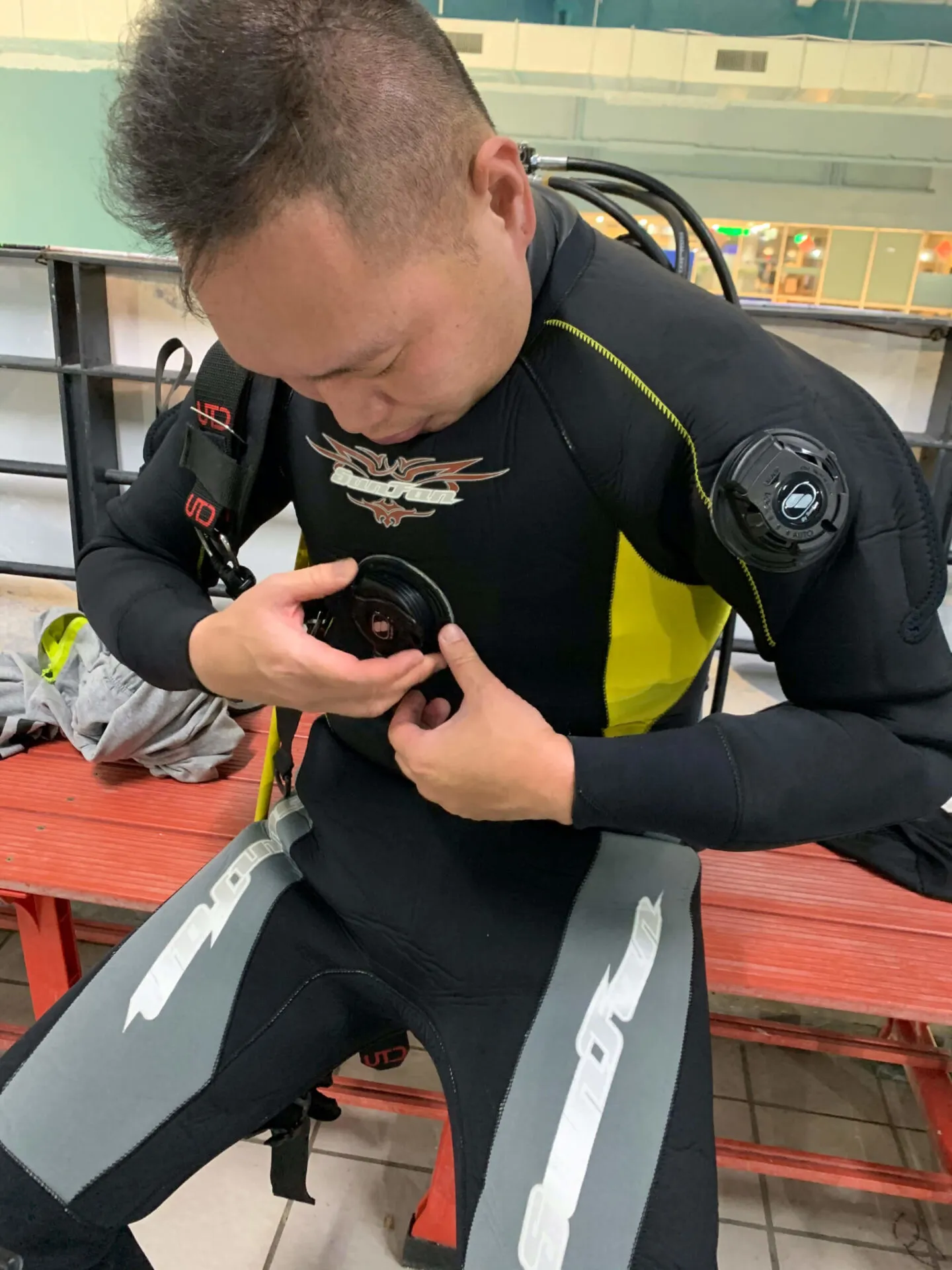
A drysuit extends your dive season — say goodbye to the cold
Divingmate Assistant Line@ Account

Divingmate Assistant Line@
Related Links: