

Contents(6)
The Editor says: As water activities grow increasingly popular, many people are changing career paths and choosing to become dive instructors. But before diving in headfirst, have you seriously considered the pros and cons of becoming a dive instructor? Here's some candid sharing from a dive instructor! Full article reprinted from Japon Chen's personal Facebook (PADI IDCSTAFF #435608)
Lately I've been asked way too often: How did you decide to become a dive instructor?
Is being a dive instructor good money? Is it hard work? Can you meet a lot of girls?
All kinds of questions — it seems people are pretty curious about what life as a dive instructor is like.
Today I'll lay it all out. The following is based on personal experience and may not apply to everyone.
Before becoming a dive instructor, I worked as a chef at an American restaurant. I took that job because I wanted to learn a practical skill —
something I could use to keep traveling abroad. Food is a universal need, and every country needs cooks.
One day, mid-vegetable-chop, I realized I'd been stuck indoors the whole time, feeling a little suffocated.
I really enjoyed cooking and loved seeing the happy expressions on customers' faces after a meal — incredibly satisfying!
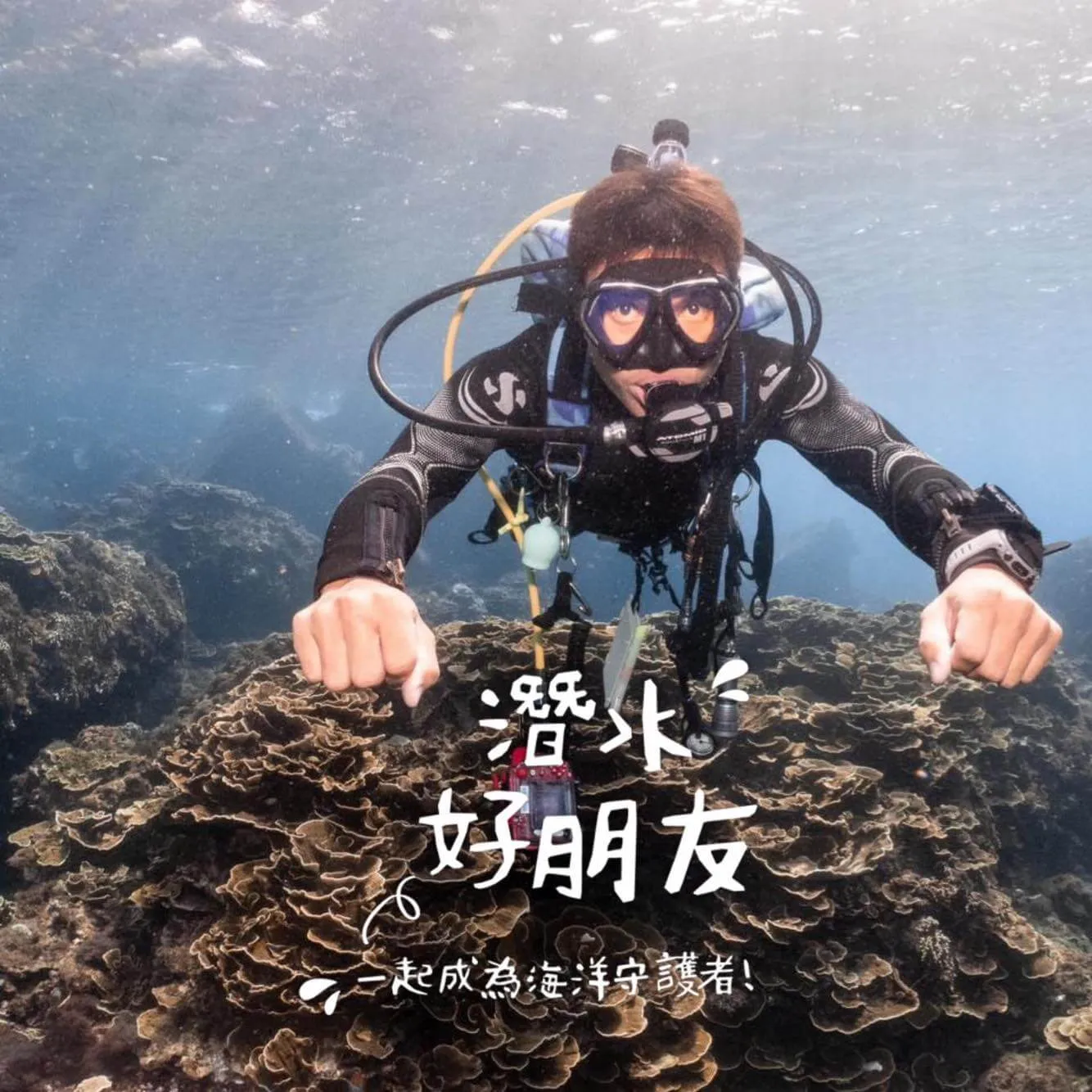
Article author Japon Chen
But I still felt like I needed to make a change.
At the time, I had just taken up scuba diving and was curious about the industry. After doing some research online,
I discovered that this career could also let me keep traveling while working.
So I reached out to the place where I'd learned my Open Water — the company I now work for: Taiwan Dive Center.
At first I came on as a helper, starting with cleaning toilets and tidying rooms.
I worked my way up through a work-for-certification arrangement, all the way to Rescue Diver. Just as I was about to move into the semi-professional Divemaster stage,
a senior instructor warned me to think carefully: diving for fun and taking people diving are two completely different things.
Because you are responsible for people's lives — and this is not a job that will make you rich!
A senior instructor warned me to think carefully: diving for fun and taking people diving are two completely different things, because you are responsible for people's lives. And this is not a job that will make you rich!
After looking at most instructors' salaries and the money needed to become one,
no matter how I calculated it, the return on investment seemed very low, and I was genuinely wavering at the time.
Just going from a beginner diver to a certified instructor costs around NT$200,000.
Add to that buying your own gear, ongoing continuing education, and equipment maintenance —
(wetsuits basically need replacing every one to two years)
And on top of all that, you have to pay PADI an annual membership fee of close to NT$10,000!
All these factors are enough to put a lot of people off.
So why did I ultimately decide to become a dive instructor?
-
I was already halfway there — might as well see it through.
-
Taking people into the world of mountains and sea has always been one of my favorite things to do. I'm a born enthusiast and love getting others hooked.
-
I love the feeling of weightlessness underwater, and every ever-changing moment beneath the surface.
-
I love the slow pace of life in Kenting, and I still want to travel abroad again.
-
Being a sea person is just cool!
Life needs a little adventure, right? XD


5 Pieces of Advice for Anyone Thinking About Becoming a Dive Instructor
-
You have to absolutely love diving. If you treat being a dive instructor as just a job, you lose what makes it so wonderful in the first place.
-
You need to have some savings — the more the better. Many dive shops may offer a work-for-certification arrangement, but the pay is generally very low, so you need money to ensure you're not living too rough. How much? Personally, I'd say at least NT$200,000, since that's roughly what it costs to get your instructor certification — and that doesn't even include what you'll invest in gear. Diving is a bottomless pit.
-
You need to be physically fit and tough. There are a lot of scuba tanks to carry, and being a dive instructor is an extremely physically demanding job. On Taiwan's main island, four dives a day during peak season is the norm; on the outlying islands, four dives is the baseline. I've heard of people doing ten dives in a day — I still can't imagine that.
-
You need sharp situational awareness. Diving for yourself means looking after yourself. Teaching others to dive is a completely different story. You will be responsible for other people's safety — even if they are certified divers, or even very experienced ones. By the book, a certified diver should be capable of looking after their own life, but you can never really know whether they actually can. One rule: never let a student disappear from your sight!
-
Stay humble and keep learning! Passing your instructor exam is one thing; being able to teach well and lead dives is another entirely. Learn from experienced instructors, start by observing and imitating how others teach, then work toward finding your own flow. Developing your own teaching style takes time and plenty of trial and error.
Common Questions About Becoming a Dive Instructor
The Pros of Being a Dive Instructor:
-
You get to dive all the time. When you're not teaching students, you can explore different dive sites and routes.
-
You easily meet friends from all over the world and from all walks of life. Each dive shop attracts a different type of clientele. Simply put: budget dive shops tend to attract more rough-and-tumble types; mid-to-high-end shops attract clients with a generally higher social standing. Divers choose their dive shop, and at the same time, a dive shop's positioning determines the kind of customers it draws.
-
You have the opportunity to work overseas using this skill — Australia, Thailand, the Philippines, Malaysia, Okinawa, Saipan, Palau, the Maldives. If you're someone who loves living in the countryside or by the sea, this can be an incredible life experience.
-
Life tends to be more relaxed. Compared to the city, it feels more like truly living, rather than merely surviving.
If anyone reading this thinks of more pros, feel free to add them! Now let's talk about the downsides.
The Cons of Being a Dive Instructor:
-
The diving rabbit hole is deep. The gear costs thousands to tens of thousands of dollars. To maintain teaching quality, you often need to pursue continuing education, which easily costs tens of thousands of NT dollars per course. It's easy to spend faster than you earn.
-
Your income depends on the weather. When a holiday season rolls around and you're ready to make money, a typhoon or a strong cold front can wipe out one or two weeks of business.
-
You can't afford to get sick. You need to take very good care of your physical condition. Being a dive instructor is essentially a no-work, no-pay job — there's rarely a fixed monthly salary. How much you earn depends on how many dives you do and what type of courses you lead.
-
You see too many girls in bikinis, and after a while the novelty wears off — suddenly one of life's little joys is gone. (This was actually mentioned to me by a student as one of the downsides of being a dive instructor XD)
Q&A: All About Being a Dive Instructor
-
Do dive instructors make a lot of money? On average, about US$20,000 a year. Strangely enough, I expected the salary to be much higher working in other countries, but after asking around, it turns out it's roughly the same figure. Is that a lot? Let me finish this instant noodle and get back to you.
-
Are there lots of romantic encounters? Is your personal life exciting? Honestly, I don't think it has much to do with the profession. If you're good-looking, fun, wealthy, and charming, the encounters will come flooding in regardless of your job title. Personal life depends entirely on the person — which is why you see groups online complaining about divers, pilots, flight attendants, waitstaff, civil servants, engineers, and teachers alike. Anyone can be a player, no matter what they do. Keep your eyes open and choose your company wisely XD
-
Is drinking a required skill? At our dive shop, quite a few instructors don't drink — but they're all great drivers and very considerate people.
-
Diving by day, cave diving by night? We generally don't go spelunking at night. According to PADI standards, during night diving we do not enter any area that doesn't allow for an immediate ascent — to ensure everyone dives under the golden rule: come home safely and dive happily.
-
Are dive instructors always happy? Absolutely — otherwise, so many people wouldn't be walking away from six-figure salaries to become one.
That wraps things up for now. This should answer some of the questions people have about pursuing an instructor certification. If it hasn't fully answered yours, come diving with us sometime and we'll talk more.
Cover photo credit: Photo by Sebastian Pena Lambarri on Unsplash
Related links:

![[Taiwan Diving · Dylan Chen Column] 4 Essential Courses You Must Know Before Becoming a Dive Instructor](/_astro/266148747_10227273814500185_2978007721351607424_n_2snj8L.webp)
![[Taiwan Diving – Dylan Chen Column] How to Deliver a Dive Briefing That Leaves Students Feeling Completely Clear](/_astro/pexels-mae%CC%88l-balland-3098932_2l8L2T.webp)