Contents(6)
Okinawa's Aguni Island & Kerama Open-Ocean Top Dive Sites
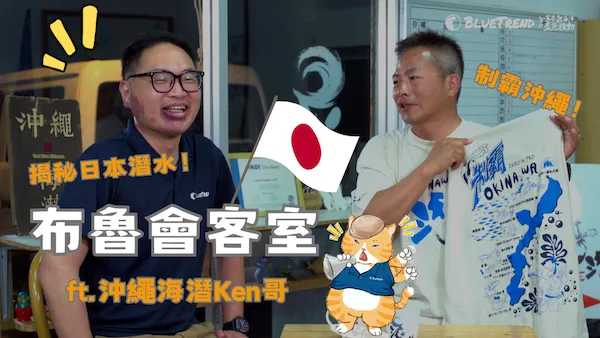
The Kerama Islands of Okinawa are renowned for their breathtaking marine ecosystems and exceptional diving conditions, making them a true paradise for diving enthusiasts. With crystal-clear waters and abundant marine life, this destination offers a uniquely immersive underwater adventure. On this trip, BlueTrend's editorial team originally planned to visit Aguni Island, but due to heavy swells on the day, we redirected to the Kerama Islands. The dive sites we visited included the well-known spots of Shimo-Sone, Kuroshima, and Kamiyama Island, each with its own distinct character. The experience gave the Editor a firsthand taste of the sheer power of Okinawa's open-ocean drift diving boats. If you're planning an open-ocean drift boat dive in the Kerama Islands or Aguni Island waters, this video and article are absolutely not to be missed!
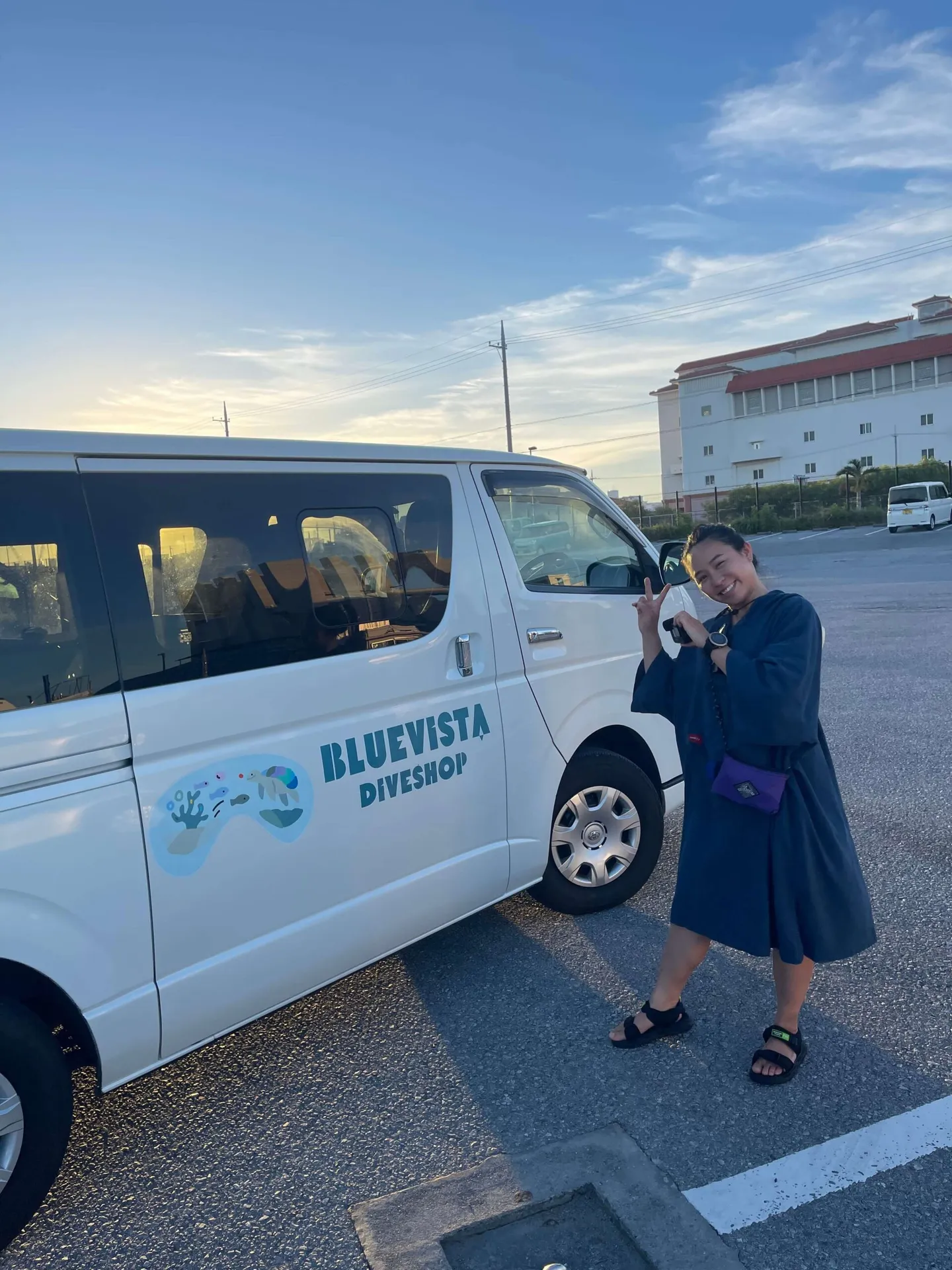
We coordinated our dive itinerary through BLUEVISTA on this trip.
Aguni Island Limited-Season Big-Animal Dive
Aguni Island lies roughly 40 km west of Okinawa's main island and is a beautiful, tranquil retreat. The island is surrounded by pristine natural scenery, azure waters, and spectacular coral reefs that create a superb diving environment. Because it sits well off the beaten tourist path, Aguni's waters remain in excellent ecological condition, offering divers an unspoiled underwater world.
Aguni's dive sites regularly yield sea turtles and a variety of large fish, and on a lucky day divers may even encounter manta rays and other magnificent marine life. In recent years, Aguni has become famous for its enormous schools of fusiliers that form breathtaking bait-ball formations, drawing countless divers to the island. However, its remoteness — a two-hour boat ride from Naha — means it is easily affected by the northeast and southwest monsoons, leaving only a limited window each year for visits.
On this particular trip, the seas were simply too rough for us to reach Aguni, so we redirected our drift diving activities to Kerama Shotō National Park instead.
Kerama Shotō National Park
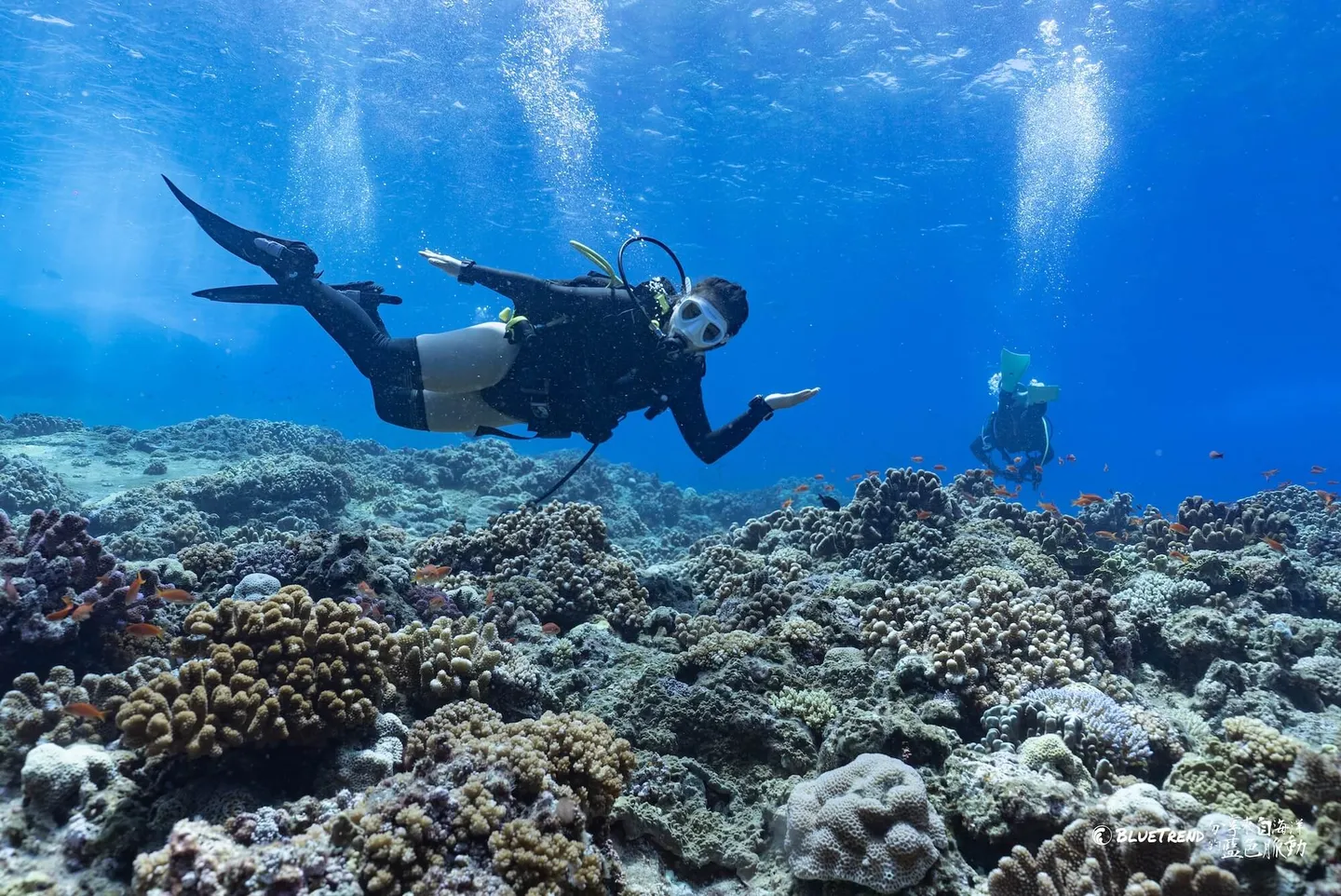
The coral reef ecosystem of the Kerama Islands is exceptionally intact.
The underwater ecosystem of the Kerama Islands is remarkably rich, featuring vividly coloured coral reefs alongside a wide variety of tropical fish. It is an ideal location for underwater photography and exploration. Divers can effortlessly come into contact with diverse marine life and even stand a chance of encountering large animals such as sea turtles and manta rays.
In addition, visibility at the Kerama dive sites is generally excellent — typically ranging from 20 to 30 m — making it perfect for photography and observation. Local dive operators in Okinawa provide highly professional services, allowing divers to rent all necessary equipment with ease. Our partner on this trip was BLUEVISTA, a Mandarin-speaking dive shop that opened in 2024.


Kerama Dive Site Highlights
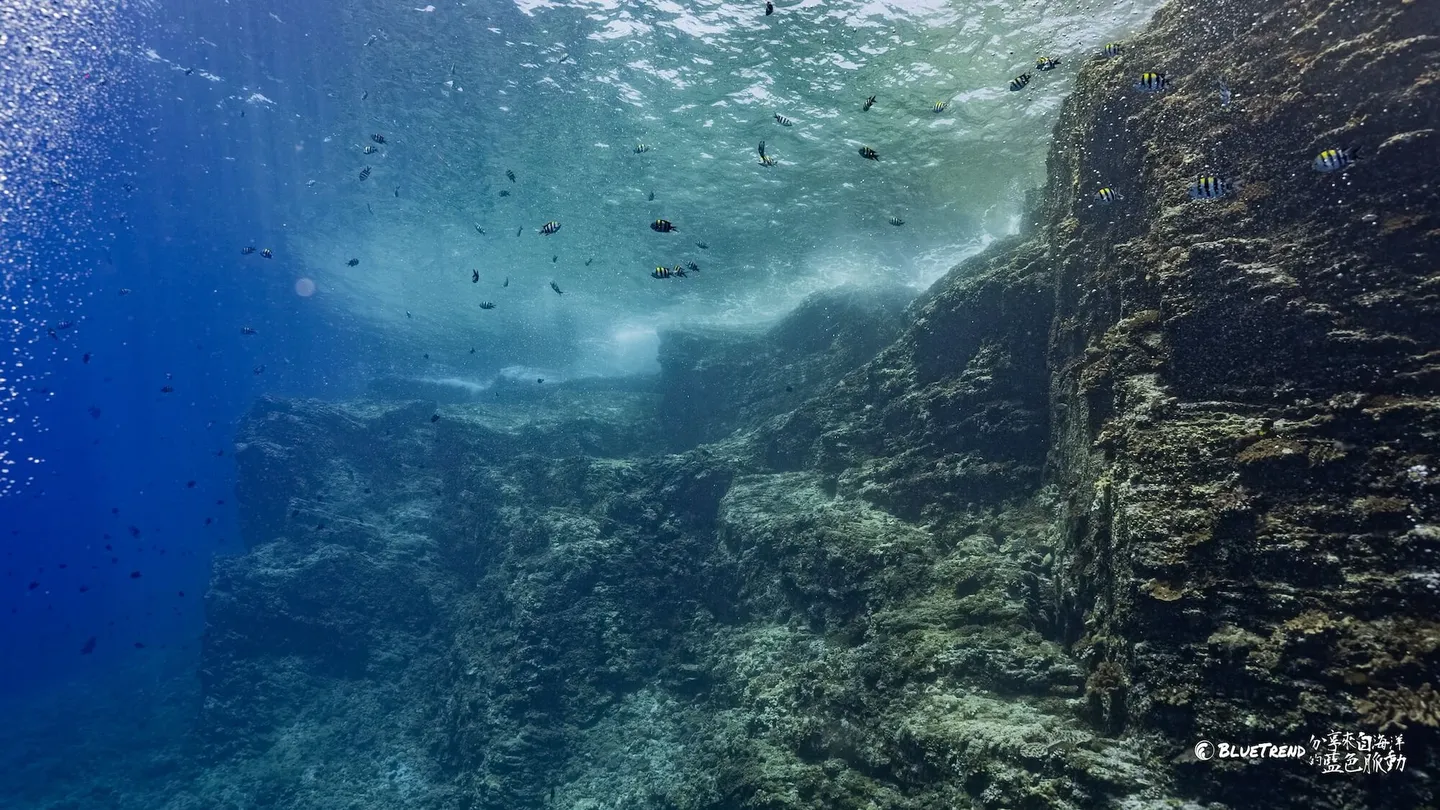
Kerama's open-ocean dive sites are celebrated for their dramatic topography and visibility.
Shimo-Sone (しもそね)
Shimo-Sone is an open-ocean dive site located in the southern part of the Kerama Islands at a depth of approximately 20 m. This site features a unique underwater topography — "sone" (曾根) means mountain range in Japanese — and is famed for its spectacular seabed scenery, making it a favourite challenge for experienced divers. Strong currents sweep through here, leaving relatively little coral attached to the reef structure. Yet it is precisely those powerful currents that attract large aggregations of Blue-Lined Snapper (Lutjanus kasmira), Giant Trevally, and Spanish Mackerel (known locally as "en-ya-tora") to the area. Atop the reef, sizeable numbers of Surgeonfish (Paracanthurus hepatus) can be seen actively holding station against the flow.
Kuroshima (くろしま)
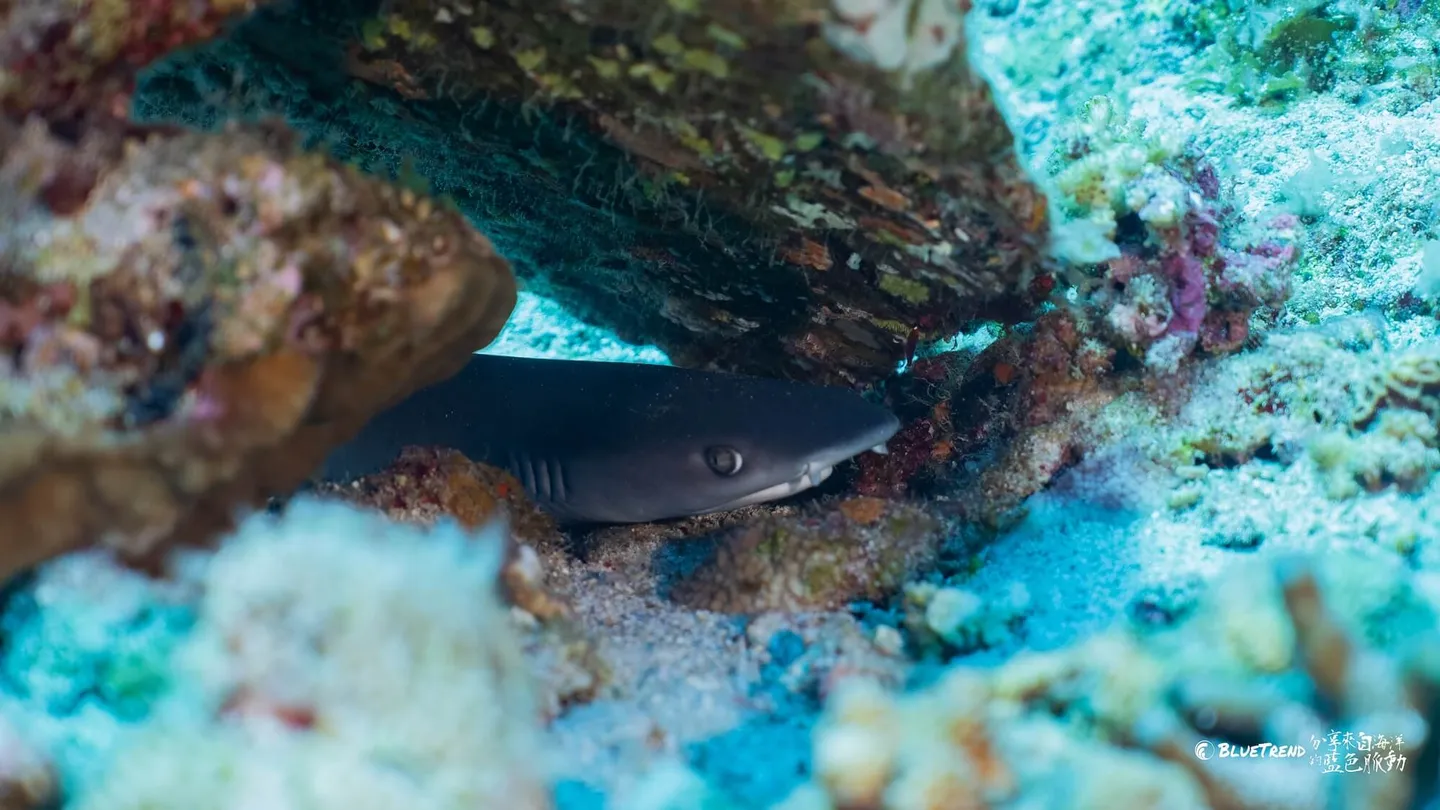
A baby shark (Triakis scyllium) hiding beneath the reef ledge.
Compared to Shimo-Sone, Kuroshima offers a much calmer diving environment and is an excellent site for beginners and recreational divers alike. The site is home to a thriving coral reef ecosystem where divers can effortlessly glide among schools of colourful fish. At Kuroshima you can simultaneously take in sweeping areas of both hard coral and soft coral — a scale and abundance rarely encountered in Taiwanese waters. Oh, and don't forget to peek under the reef ledges — you might just spot an adorable baby shark (Triakis scyllium) tucked away underneath!
Kamiyama Island (かみやま)
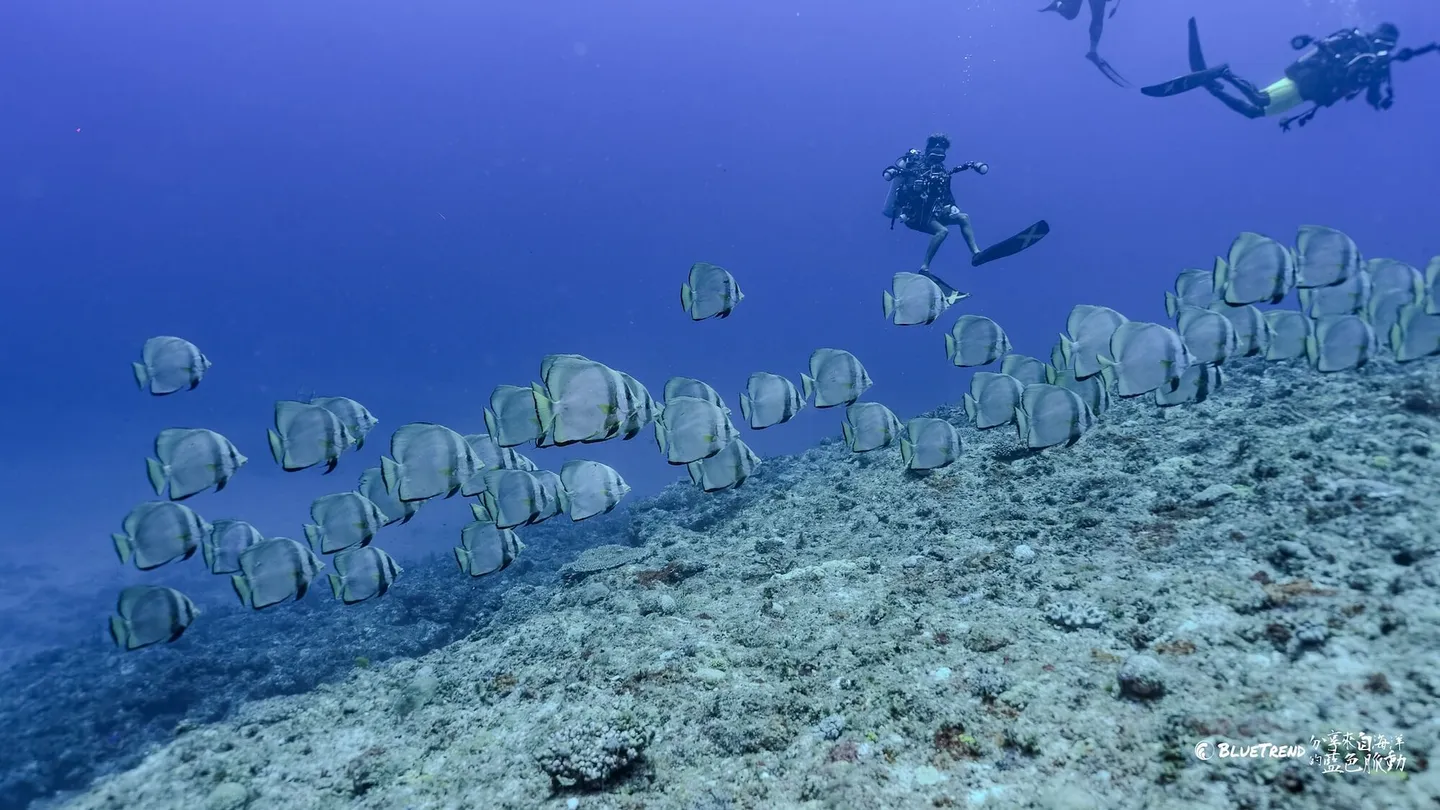
A lucky sighting of a school of Batfish underwater.
Kamiyama Island is the closest island to Naha, with a variety of dive sites spread along its coastline at depths of approximately 10 to 30 m. Here, divers have the opportunity to encounter numerous species of fish and stunning underwater scenery. The site we planned to visit on this trip was "Tachichū" — according to the dive briefing, it features a large underwater reef structure with caves to explore, as well as chances to witness schools of Batfish and other pelagic species passing through. Unfortunately, we were unable to reach the site on this occasion, and we hope to have the chance to visit next time!
An Unexpectedly Intense Drift Dive Experience!
For those of us accustomed to drift diving in Taiwan and Southeast Asia, "drift diving" typically conjures images of leisurely floating along with the current and deploying a surface marker buoy (SMB) at the end to ascend. Simple and relaxing.
But Okinawa's drift diving is a different story. Here, you are expected to be capable of exiting the boat rapidly, descending with negative buoyancy, finning against strong currents, and — critically — boarding the boat while still wearing your fins. If you lack any one of these skills, the local boat captain has every right to refuse you further dives on the trip! The Editor also noticed several unique drift diving requirements specific to this area, which are worth sharing.
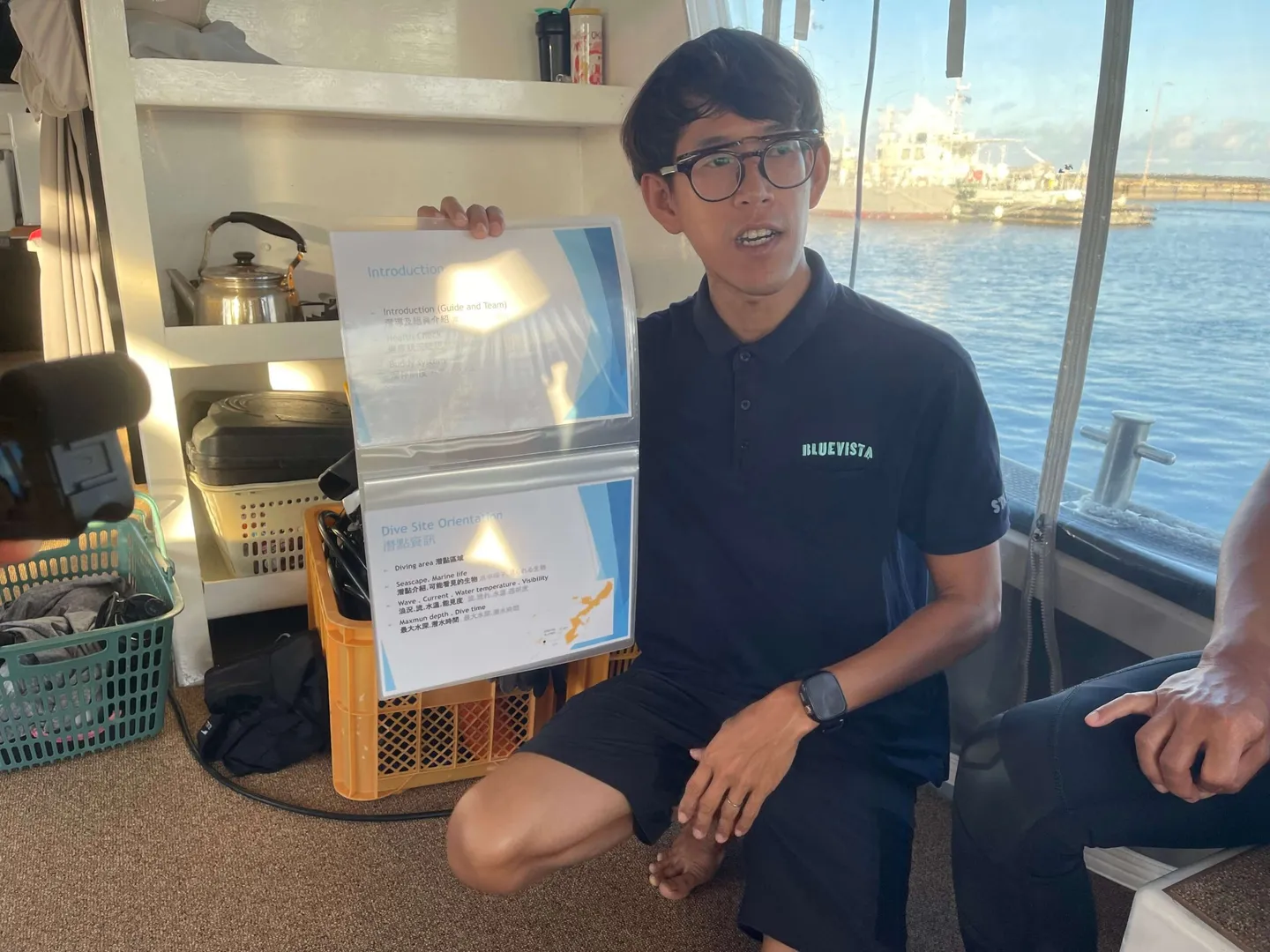
Always listen carefully to the dive briefing and follow your dive guide's instructions.
Rapid Entry
As explained at the start of the video, when you are aboard a drift boat, operators require that the moment the engine cuts out, everyone must enter the water immediately with their fins on. This means that while the boat is still manoeuvring to find the entry point, the dive guide will urge you to get your gear on, fins on, queue up, and wait for the signal the instant the engine shuts off.
Negative-Buoyancy Descent
Most drop points used by drift boats are advanced open-ocean sites where large swells and strong currents are the norm. As a result, all divers are required to descend with negative buoyancy and regroup underwater, minimising the risk of being swept apart while waiting at the surface. Divers who have difficulty with ear equalization need to take extra care in these conditions.
Powerful Finning Against the Current
Because the currents are so strong, it is sometimes impossible to reach the intended dive site immediately after descending, requiring divers to fin against the current to locate it. Finning upcurrent to find marine life at open-ocean sites is also a common occurrence. For this reason, bringing a high-quality pair of fins is strongly recommended to avoid exhausting yourself — and burning through your air supply — during the dive.
Additionally, Aguni Island has a regulation stipulating that vessels from non-local dive shops may only deploy their surface marker buoys (SMBs) and ascend from designated zones. In other words, even after completing your drift, you still have to fin upcurrent back to the designated ascent point. No wonder every diver who has visited Aguni comes back with impressively strong legs! Of course, you can also choose to fly to Aguni and stay on the island — diving with a local shop there makes the whole experience considerably more relaxed.
Boarding the Boat While Wearing Fins
Because these are purpose-built drift boats, the deck sits unusually low to the water and the boarding ladders are extra wide. Divers simply walk back onto the boat — fins and all. For those of us lugging large camera systems, this was a surprisingly refreshing and convenient experience.
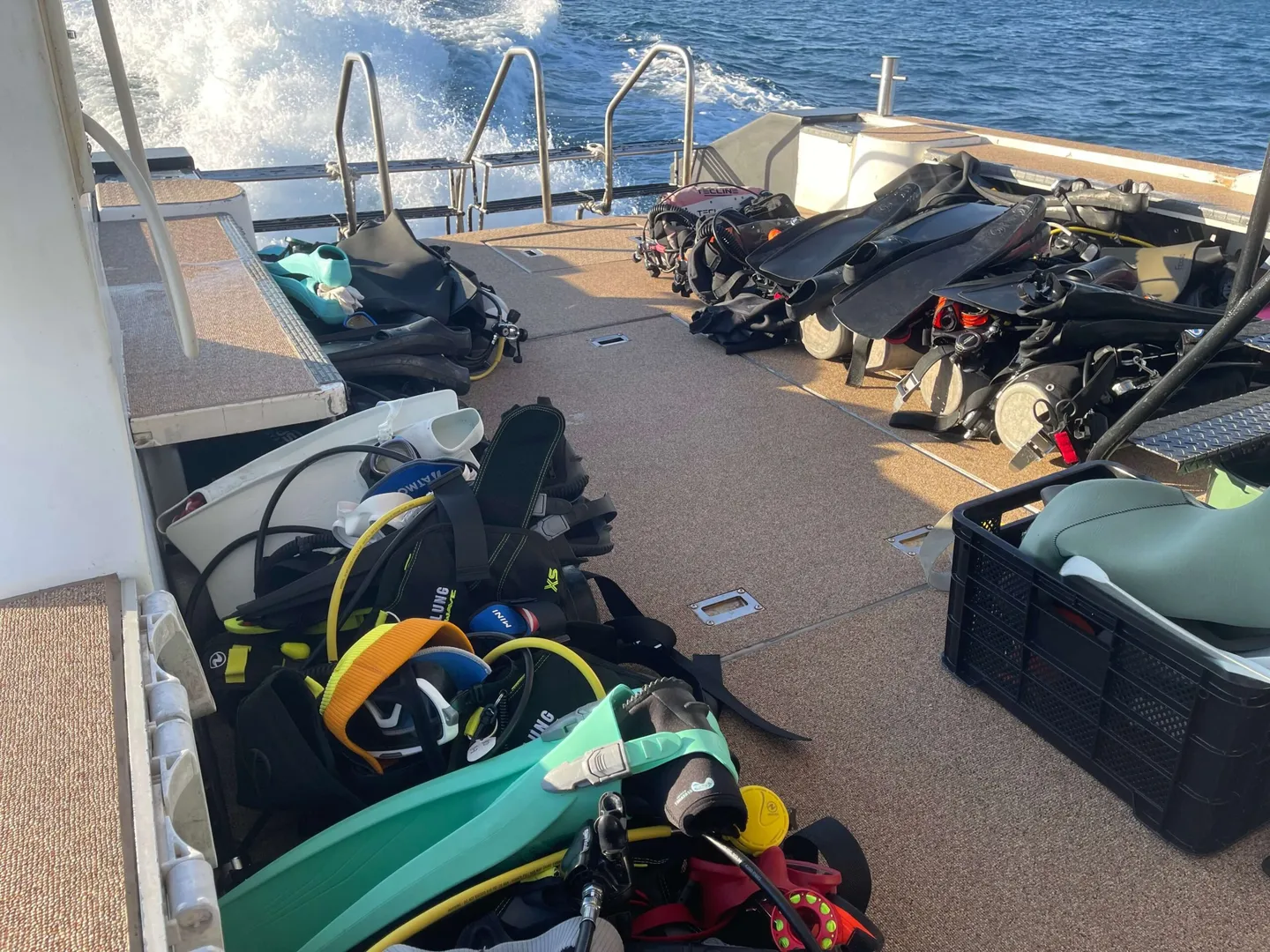
Drift boats feature a lower deck and wider boarding ladders — all part of a uniquely specialised diving system.
A Rare and Unforgettable Okinawa Drift Diving Experience
Drift diving in the Kerama Islands of Okinawa is a feast for both the eyes and the soul. Whether it is the vivid tapestry of marine life or the awe-inspiring underwater landscapes, there is always something compelling to explore. With a well-planned dive itinerary and guidance from professional dive instructors, you will leave this beautiful stretch of ocean with memories that last a lifetime.
We recommend this experience for Advanced Open Water Divers with at least 50 logged dives who can meet the skill requirements outlined above. That said, the Kerama Islands also offer more relaxed dive trips for those who prefer calmer conditions — dive sites are simply chosen within the sheltered waters between the islands, where swells and currents are comparatively gentle. The trade-off, naturally, is a lower chance of encountering large pelagic animals. For more information on Okinawa dive itineraries, we highly recommend reaching out to BLUEVISTA for comprehensive assistance — and best of all, they offer services in Mandarin, English, Japanese, Cantonese, and even Taiwanese Hokkien!
Related Links
- BLUEVISTA Official Website
- BLUEVISTA Facebook Page
- A Diver with Disabilities Chasing a Dream — BLUEVISTA Transcends Language and Physical Barriers, Letting the Blue of Okinawa's Kerama Islands Heal the Heart
Further Reading
Frequently Asked Questions
How is a BlueTrend dive trip different from an unknown, no-name dive group?
Choosing us means full peace-of-mind protection and a smooth experience from start to finish. Every trip we run holds to three things.
First, full legal protection and a professional dive leader: we strictly follow Taiwan's travel regulations and provide complete travel-agency liability insurance, travel insurance, trip-inconvenience insurance and dive insurance. Every group is accompanied by a certified, foreign-language dive leader who joins you on both the dives and the land itinerary, liaising seamlessly with local dive shops and operators on your behalf to keep things running smoothly — the person our travellers trust most.
Second, fully licensed with secure payments: every payment goes into a licensed travel agency's account, with multiple safe payment channels (bank transfer, credit card and more) and a legal collect-and-remit receipt, so every transaction is open, transparent and protected, avoiding the fraud and dispute risks of transferring money privately to an individual.
Third, hand-picked quality we vet in person: every trip, dive site and partner shop is scouted on the ground by our own team, from the guides' professionalism and safety standards to the food, lodging, environment and service details on land, all vetted by us so you don't get caught out.
I want to sign up for a dive trip. Are there certification-level or logged-dive requirements?
Each dive site is different, so the entry bar varies. 'Bali Tulamben', for instance, is relatively beginner-friendly. 'Malapascua in the Philippines' is also beginner-friendly, but since thresher sharks tend to cruise between 20 and 30 metres, we recommend AOW certification with 20+ logged dives to enjoy this trip comfortably. For 'the Maldives' or 'Palau', we suggest AOW with 50+ logged dives for a more relaxed experience. If you're not sure whether your experience fits the trip you want, message us and our dive editors will assess it and help you find the trip you'll feel safest on.
Can I join if I'm signing up alone? How are rooms arranged?
Plenty of our travellers sign up solo! For rooms and beds, we prioritise pairing you with a same-gender traveller, and if you'd rather have your own space you can pay the difference to upgrade to a single room. For the diving, our professional leader will pair you with a suitable buddy, and with the happy vibe on our trips you'll quickly make a great group of dive friends. Many people sign up alone, make new friends, and end up organising the next trip together!
Does the trip fee include dive insurance, gear rental, taxes and instructor tips?
It depends on the trip, the destination's regulations and the local operators. Every BlueTrend dive trip has a detailed web page with a clear 'included / not included' list, transparent and with no hidden charges. All payments are collected by a licensed travel agency, with a standard-form contract for your protection.
I'm a new diver / haven't dived in a long time — will I fall behind the group?
Before you complete your booking, our team assesses a suitable trip based on your certification level and experience. Before departure, we strongly recommend taking time to refresh in Taiwan with an instructor, or a fun dive to get your feel back. On the trip itself, our professional dive leader groups and pairs everyone by experience, keeps a close eye underwater on travellers who need extra care, and steps in to help right away.
Will the photos and videos taken during the trip be shared with us?
During the dives, 'safety' is always the leader's top priority, so whenever it's suitable and safe the leader will capture great shots and record the best moments. During or after the trip, we compile a cloud album for all travellers to download, so you go home loaded with memories!
Besides your scheduled trips, can you arrange a private group charter or independent travel for me and my friends?
Absolutely! Besides group trips, we also arrange private group charters and independent travel. We can communicate, enquire and coordinate services with local operators based on your needs, saving you time and effort and taking the language barrier off your plate, to tailor the smoothest, most reassuring dive trip just for you. Contact our LINE support and our editors will arrange it for you!