![[Learn to Dive the Easy Way] Graceful Diver Claire Takes the Plunge with Open Water Scuba Certification](/_images/13841c2af72a-1440w.webp)
Contents(8)
- So Many Dive Certifications — Which One Is Right for Me?
- What on Earth Are PADI (certification agency), SDI (certification agency), SSI (certification agency), and CMAS?
- Is Recreational Diving Just About Chilling Out Underwater?
- Are There Any Restrictions for Recreational Diving? I've Heard It Can Be Dangerous!
- Tuition Prices Vary So Much — I'm Worried About Getting Ripped Off!
- So What Exactly Do You Learn in an Open Water Diver Course?
- What Level of Certification Should I Actually Aim For?
- Earning your certification is just the beginning — only by diving consistently will you truly improve, and in doing so, discover all the wonders the ocean has to offer!
(Don't forget to click below to watch the video!)
(Don't forget to click above to watch the video!)
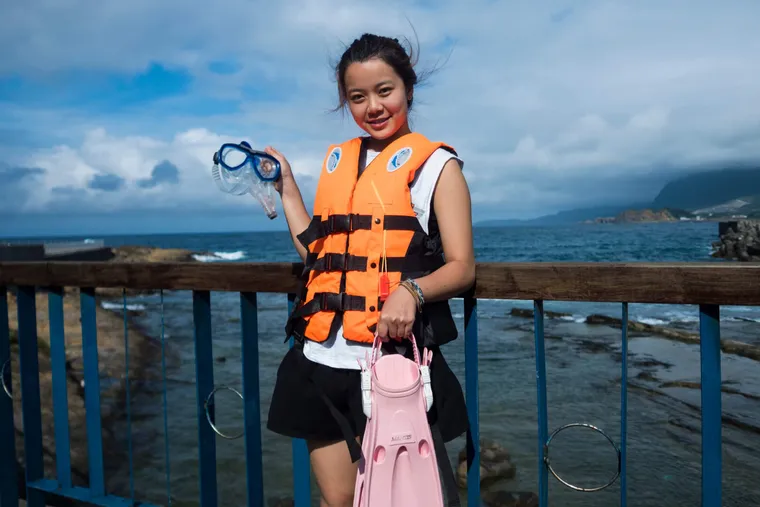
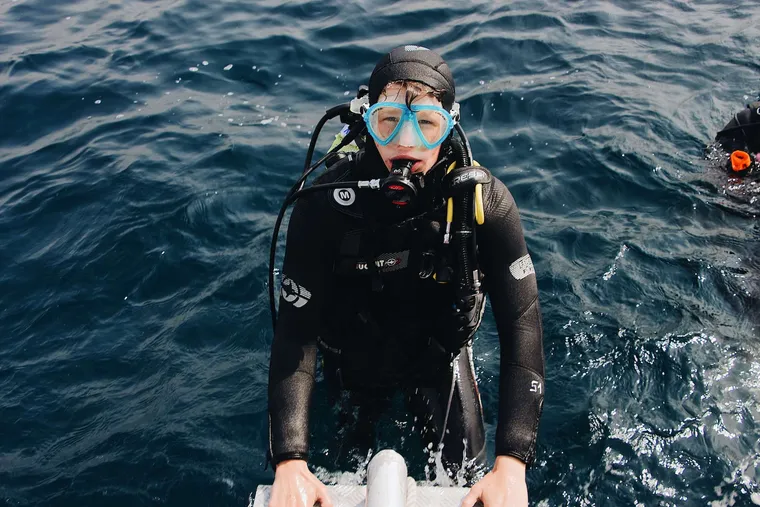
Graceful diver Claire was convinced by dive sweetheart Albee to take the plunge, and successfully earned her Open Water scuba diving certification in the summer of 2018. Scuba diving really isn't that difficult — as long as you have the heart for it, you can fall in love with this sport right alongside us. Next time, look forward to seeing where graceful diver Claire and dive sweetheart Albee take us!
Before reading any further, let's revisit the article we shared earlier: Your First Step to the Ocean: Snorkeling, Scuba & Freediving Explained, which gives you a solid introduction to snorkeling, freediving, and scuba diving. In this article, the Editor is going to share everything about the most foundational scuba diving certification — the Scuba Diving Open Water Certificate (Open Water Diver) — including what you need to prepare beforehand so you can safely and happily take your first step into the deep blue.
So Many Dive Certifications — Which One Is Right for Me?
Let's take it step by step. Dive certifications are named differently depending on the certifying agency, but the general progression for recreational diving goes something like this:
-
Open Water Diver
-
Advanced Open Water Diver
-
Rescue Diver
-
Divemaster
If you're a complete beginner ready to step into inner space, there's no question about it — earning your Open Water Diver certification is the one and only place to start, after which you can work your way up according to your own goals.


What on Earth Are PADI (certification agency), SDI (certification agency), SSI (certification agency), and CMAS?
The above are some of the most common international dive certification agencies. In terms of market share, PADI (certification agency) is the largest card-issuing organization in the world. That said, from the Editor's personal experience, the agency itself isn't the most important factor — the instructor who guides you into the sport is. As the saying goes: "A great instructor takes you to paradise; a bad one takes you somewhere else entirely." Each agency has its own subtle differences in teaching approach. If, like the Editor, you happen to have trained across multiple agencies over the years, you'll be able to compare the differences firsthand.
Is Recreational Diving Just About Chilling Out Underwater?
No, no, no, dear. Recreational diving is a term used in contrast to technical diving. Within the recreational diving framework, entering decompression mode is not encouraged — meaning you don't need to complete the more complex decompression procedures and can ascend directly to the surface. We know that probably sounds like gibberish right now, but the bottom line is: as long as you follow recreational diving guidelines, you are very safe. Of course, you can always choose to venture into the world of technical diving — including cave diving, wreck diving, deep diving, and multi-cylinder diving — but that naturally depends on the depth of your wallet!
Are There Any Restrictions for Recreational Diving? I've Heard It Can Be Dangerous!
Every agency has its own rules regarding scuba diving eligibility, covering factors such as age and medical conditions. Check with your nearest dive shop for complete details. As for the dangers of diving — it's much like driving a car. Driving school teaches you not to drink and drive and not to run red lights. If you insist on doing both anyway, don't be surprised when things go wrong. Recreational diving is an incredibly safe sport, as long as you apply what you've learned in the course and follow your instructor's guidance. We're confident you'll quickly find yourself floating weightlessly in the deep blue of inner space.
Tuition Prices Vary So Much — I'm Worried About Getting Ripped Off!
Many beginners make price their top priority, but as the old saying goes: "You get what you pay for." When shops slash prices to attract students, they may be cutting corners on your safety, or operating with a "they'll never come back anyway" attitude and rushing through the course. Before signing up, do your research online or ask friends, family, or acquaintances if they have an instructor they'd genuinely recommend.
In Taiwan, an Open Water Diver certification typically costs between NT$11,000 and NT$18,000, and usually includes all equipment rental and scuba tank fees for the certification dives. Some shops even offer special packages that include accommodation or a complimentary gear set, so it's worth comparing your options carefully. Teaching quality is another key factor: some lower-priced courses are taught in larger groups, while pricier ones emphasize small-class instruction. Be sure to ask about this before you enroll.
So What Exactly Do You Learn in an Open Water Diver Course?
This is important! A complete Open Water Diver course should include academic learning (written exam), confined water skills, and open water ocean dives.
Academic Learning (Written Exam): This covers the fundamental knowledge you need to dive safely, including decompression theory, air management, and ocean hazards. It's not overly complex — think of it as sitting back in a middle or high school classroom listening to the teacher.
Confined Water Skills: This portion takes place in a relatively controlled environment — typically a swimming pool in urban areas, or a harbor at some island dive shops. Here you'll practice basic skills and learn how to assemble your equipment. If your dive shop skips the confined water sessions and takes you straight into the ocean to complete everything, that's a serious red flag for the quality and safety of their instruction.
Open Water Ocean Dives: Once you've completed your confined water practice, it's time to move to open water for your ocean dives. Here you'll encounter ocean swells, reduced visibility compared to the pool, and the challenge of managing buoyancy at greater depths — all of which tend to leave a lasting impression on first-timers. Depending on the agency's standards, you should complete at least four open water dives, during which you'll repeat all the skills learned in confined water, this time in the real ocean.
The exact requirements vary slightly between agencies, but the typical skills covered in an Open Water Diver course include the following. If your course seems suspiciously brief, take a second look at whether your tuition is well below the going rate:
- Equipment assembly
- mask clearing
- Sharing air with your dive buddy
- Second stage regulator recovery
- BCD auto-inflate situation management
- Controlled emergency swimming ascent
- Establishing positive buoyancy at the surface by orally inflating the BCD
- Achieving neutral buoyancy underwater
What Level of Certification Should I Actually Aim For?
Completing your Open Water Diver certification is just the beginning — you're still a diving newbie at this stage. Under the rules, your maximum depth is limited to 18 m, and you're not permitted to do specialty dives such as night diving. If you're planning to travel abroad and swim with Whale Sharks, the Editor strongly recommends going on to earn your Advanced Open Water Diver certification. With it, you'll unlock specialties like deep diving, night diving, navigation, and boat dives — all essential for anyone who scrimps and saves to travel overseas and truly experience the wonders of nature. Otherwise, you might find yourself stuck at 18 m watching everyone else dive down to 28 m to visit pygmy seahorses while you stare at their fins from above (true story from the Editor).
In addition, the Enriched Air Nitrox (EANx) Diver certification is an absolute must. Diving with enriched air nitrox (oxygen concentration above 21%) means you can stay underwater longer and enjoy a greater no-decompression limit (NDL). Oh — I forgot you probably have no idea what any of that means right now. But rumor has it that breathing nitrox makes your skin glow, sharpens your mind, and guarantees top marks on every exam. Surely that irresponsible pitch is enough to make you call your instructor right away!
Earning your certification is just the beginning — only by diving consistently will you truly improve, and in doing so, discover all the wonders the ocean has to offer!
Well, after all that rambling from the Editor, your head is probably spinning. Click the links below to find the dive shop nearest to you and go in for a consultation. Once you've caught the diving bug, all that's left is to sign up (and pay up)!
Further Reading: