Contents(7)
I'm Ishino, an Underwater Photographer from Japan
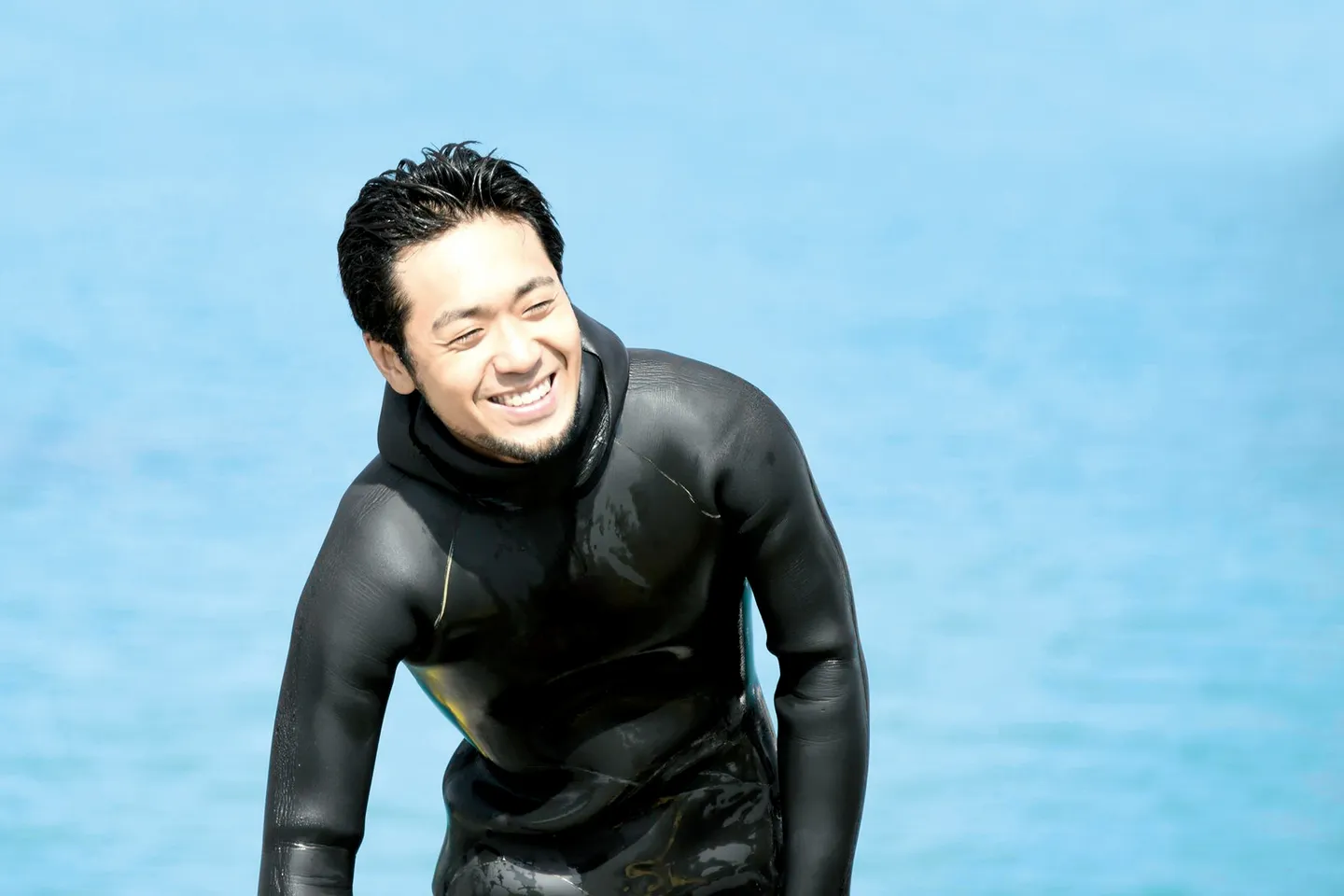
My name is Ishino, and I'm an underwater photographer. I first got into diving during my university years, and after graduating I moved to Hachijojima, a remote island in Tokyo. My experience working as a dive instructor there led me to focus on underwater photography. I currently live in Onna Village on the main island of Okinawa, where I photograph the various ecological behaviors of fish and invertebrates I encounter in Okinawan waters. Through this series of articles about what I see, hear, and feel while diving around Japan, I'd like to introduce you to the Japanese sea.
The first article is about my encounter with a manta ray in Ishigaki in January.


Ishigaki — One of Japan's Best Dive Destinations
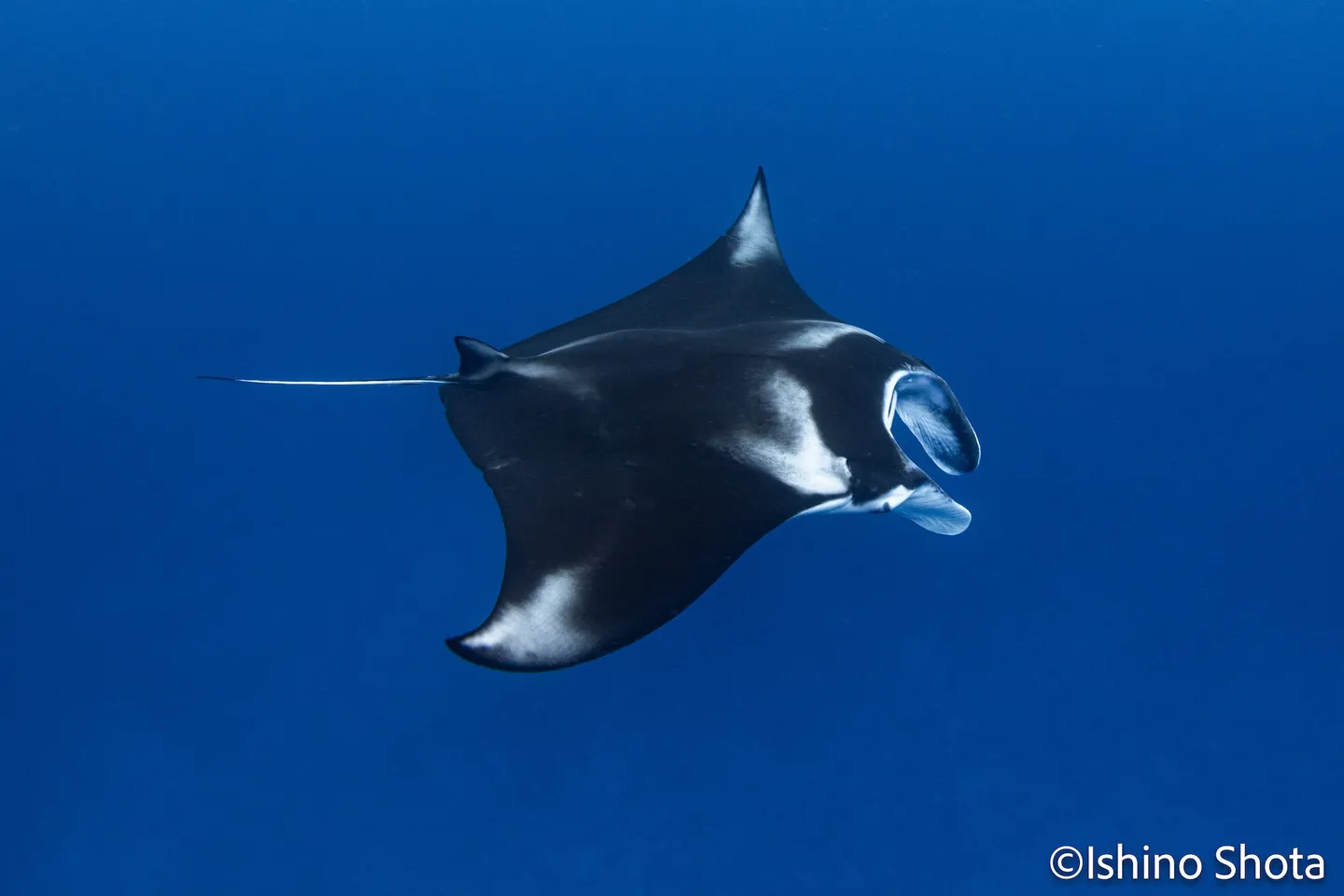
A manta ray glides gracefully through the waters of Ishigaki
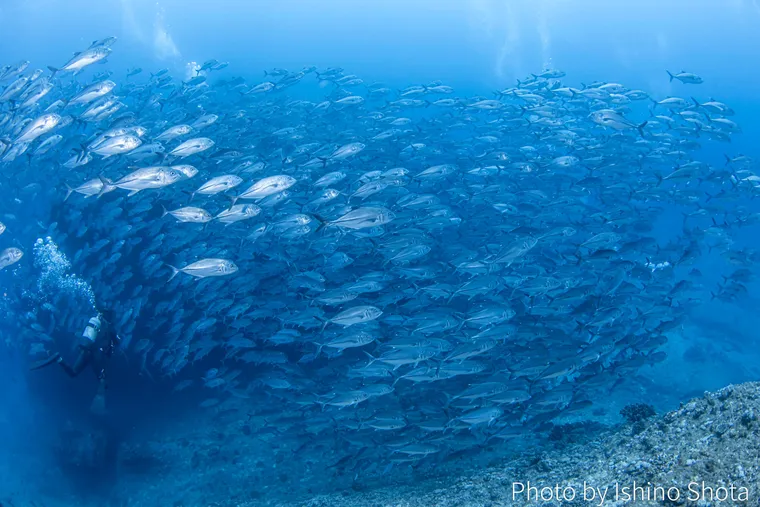
The Nansei Islands stretch across the southwest of the Japanese archipelago, with Ishigaki at their heart. It is the third-largest island in Okinawa Prefecture, yet the waters surrounding it are far more than just a holiday retreat. Ishigaki boasts a remarkably diverse range of environments — tidal flats, mangroves, calm inner bays, powerful open-ocean currents, coral reefs, and rocky outcrops — all of which support a rich ecosystem. As a result, the island offers an extraordinary variety of dive sites: places teeming with vast schools of fish, spots where large schools of trevally congregate, locations where rare gobies can be spotted, and countless other unique settings. This is truly a paradise for divers.
Ishigaki is one of Japan's most popular dive destinations, drawing visitors from all over the world. In particular, the dive sites known as Manta Scramble and Manta City are renowned as cleaning stations frequented by manta rays, where divers can observe them at close range. Manta rays can be seen year-round and are one of Ishigaki's most iconic sights. On my very first visit to these sites, I too encountered a manta ray. I was utterly captivated by the sight of that enormous manta ray swimming majestically above me while small fish busied themselves cleaning it. I remember losing all track of time as I gazed at the scene before me.
I could never forget the excitement of that moment, and every year I return to Ishigaki in search of another encounter.
Ishino
I had visited the island in summer and autumn — the prime diving seasons — but this was my first time coming in January. The reason was that a local nature guide had told me that winter is actually the best time to see large numbers of manta rays, which truly surprised me.
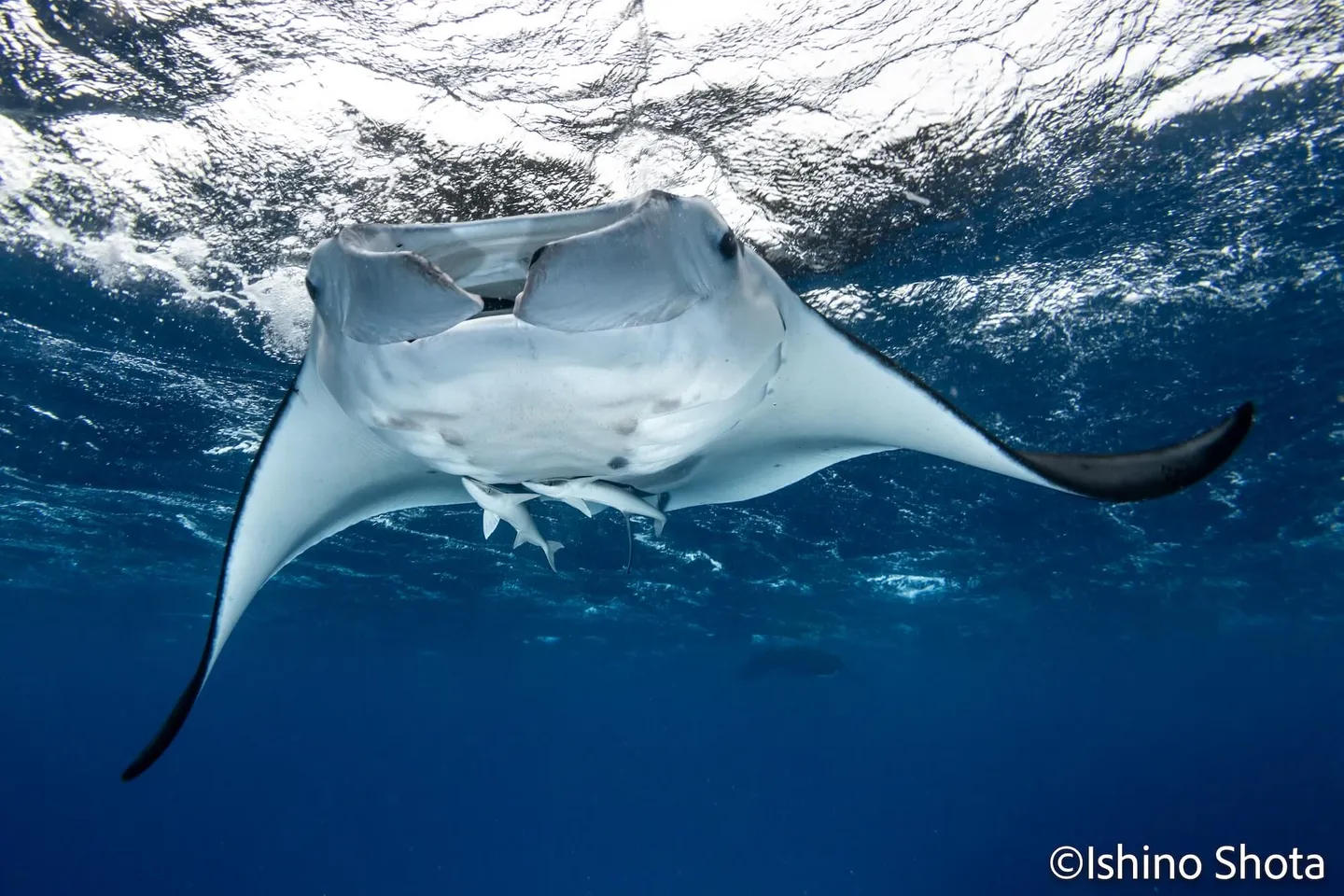
Manta rays attract many divers
Plankton — The Key to Spotting Manta Rays
Different marine life can be observed on Ishigaki in each season. Winter is a wonderful time to pay attention to plankton. The word "plankton" derives from the Greek word planktos and is a collective term for organisms that drift through the water.
Plankton encompasses a wide variety of microorganisms, including phytoplankton, zooplankton, and even fish larvae and crustacean larvae. These organisms are tiny and difficult to see with the naked eye, yet they are in fact critically important in sustaining the marine ecosystem.
Phytoplankton carry out photosynthesis near the ocean surface, producing oxygen and organic matter in the process. Zooplankton feed on phytoplankton and other microorganisms. The energy generated by phytoplankton is passed through zooplankton to smaller fish, and then on to larger fish and great marine mammals. Plankton form the very foundation of the ocean food chain.
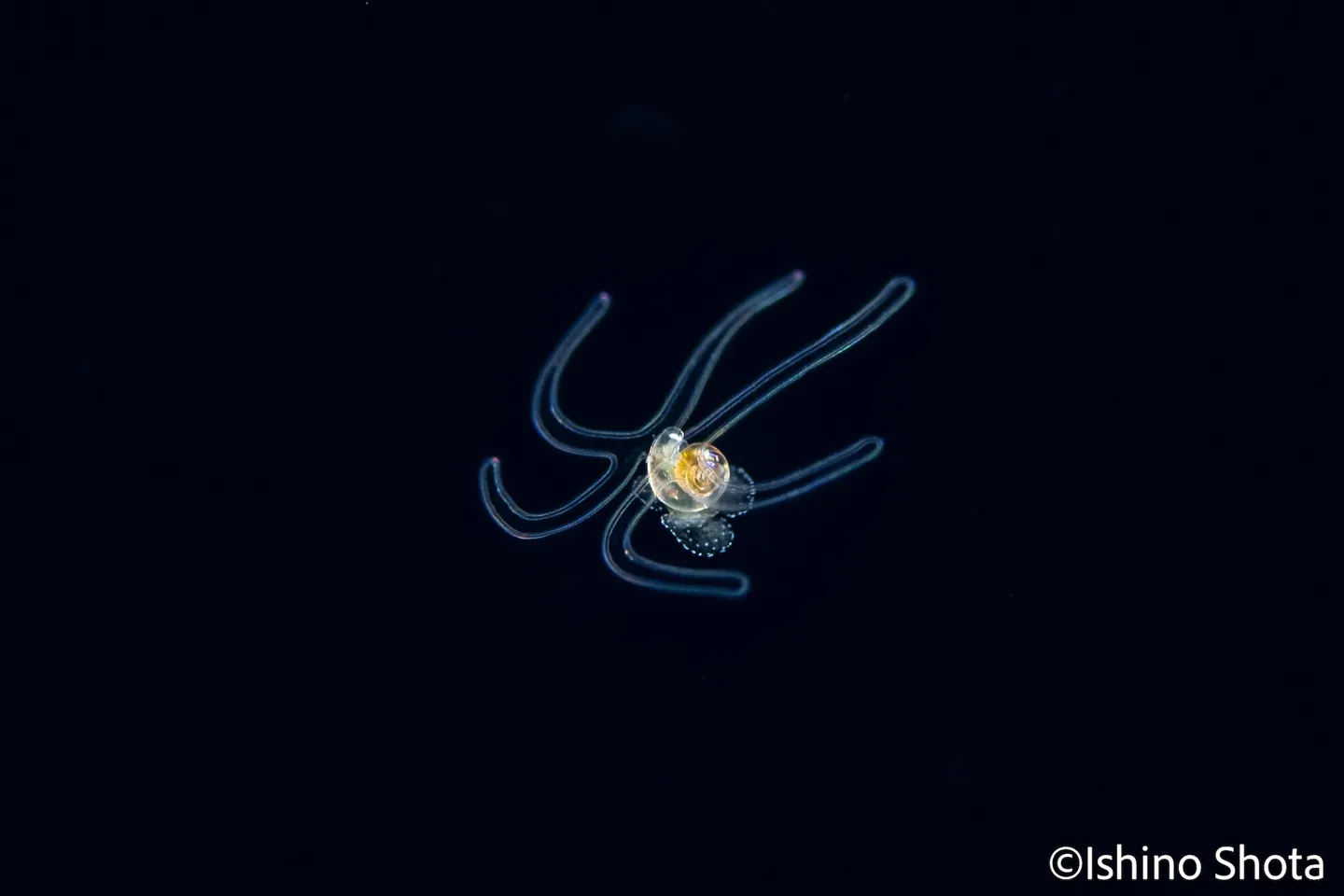
A conch shell larva discovered in waters where manta rays feed on plankton
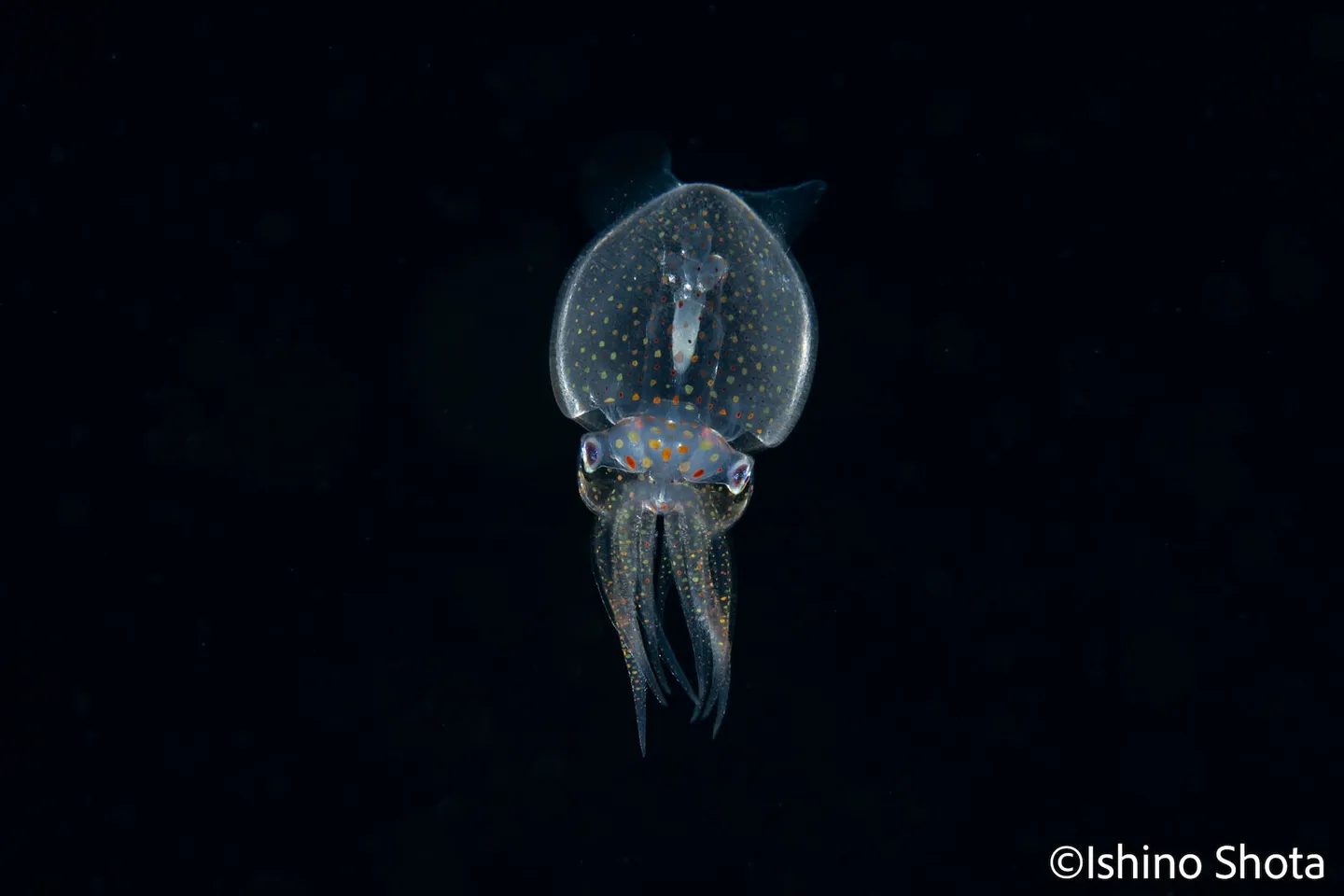
A beautiful juvenile diamond cuttlefish — itself a form of plankton
Manta rays feed on vast quantities of this plankton. It is therefore well known that they undertake long migrations in pursuit of it. Plankton drifts with the currents and can sometimes concentrate in one area depending on ocean currents, wind direction, and tides. The mass aggregation of plankton and the subsequent gathering of manta rays drawn by their instinct to sense it is nothing short of one of nature's miracles.
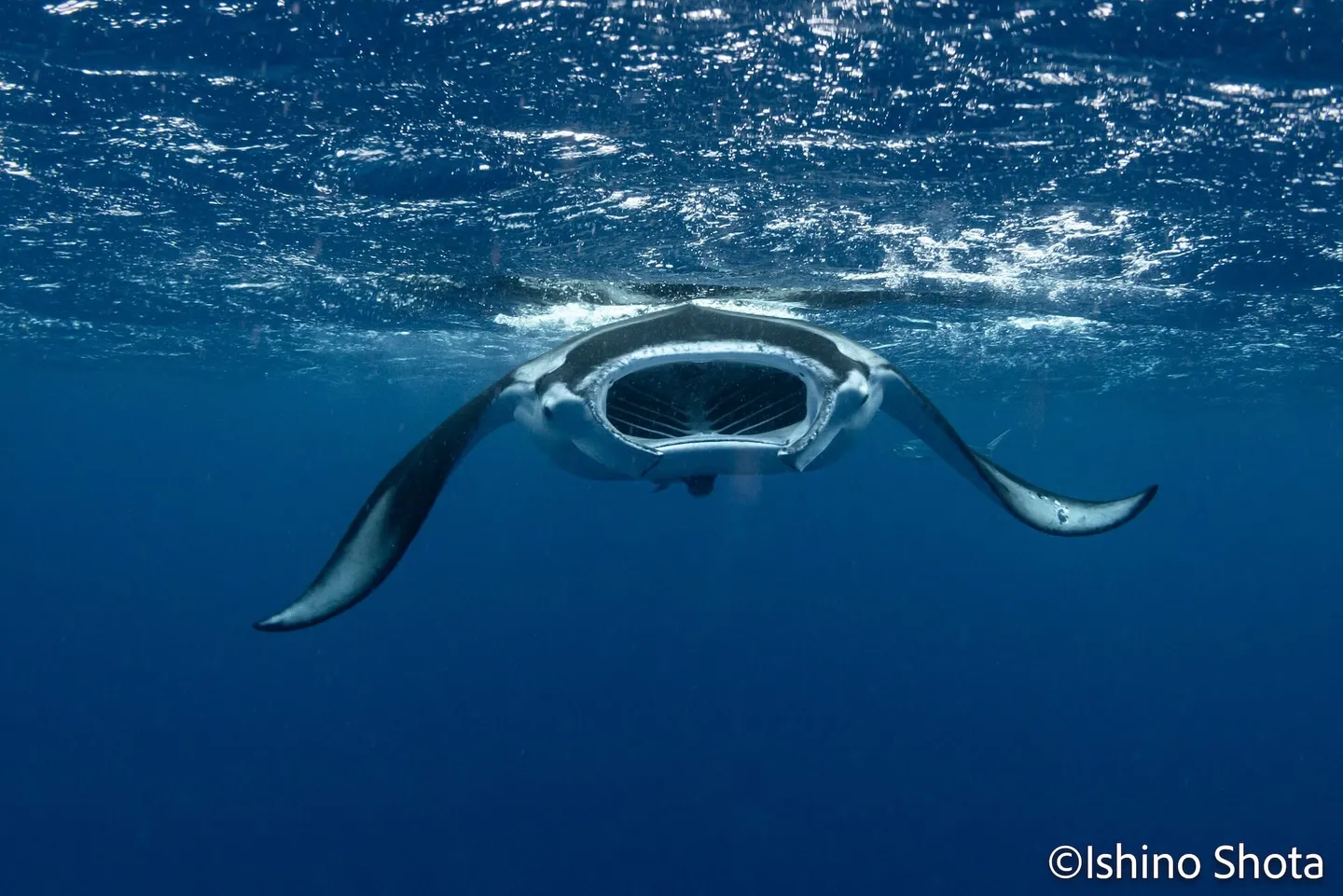
A manta ray feeding on plankton concentrated at the surface
Winter Is the Best Time to See Manta Rays Gathering at the Surface
There is one area where plankton is especially prone to accumulating — particularly in winter. That place is Kuroshima, a small isolated island located approximately 20 km to the southwest of Ishigaki.
On the day I visited Kuroshima, the weather was sunny and windy. Several manta rays, drawn by the plankton gathered on the western side of the island, were swimming across a wide area. It is said that manta rays have congregated around Kuroshima for such long periods that there is even a local legend claiming "you could ride a manta ray to the next island."
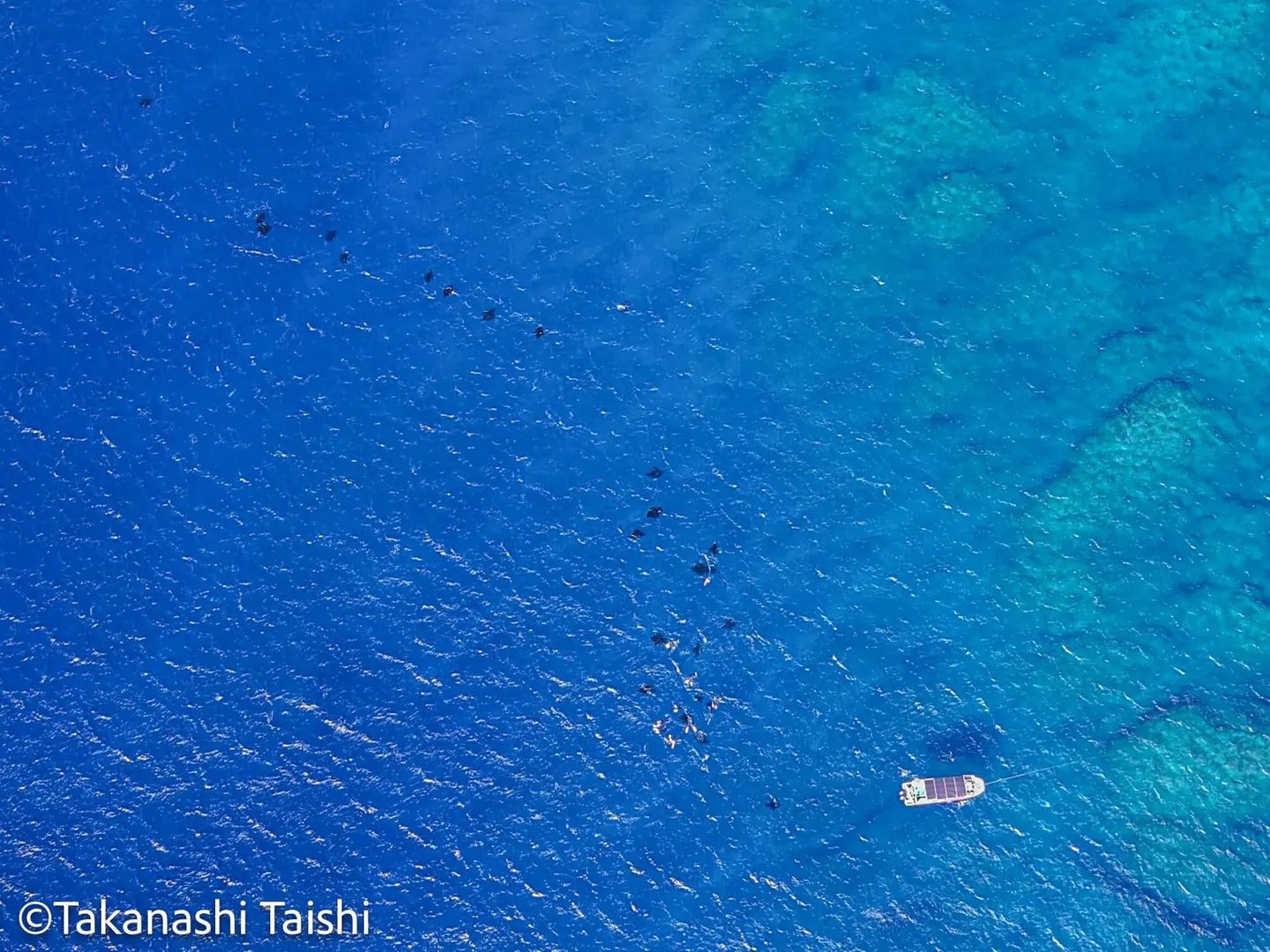
Manta rays gathering in search of plankton
At Kuroshima, multiple manta rays were on the move, attempting to feed on plankton. I excitedly trained my camera on them. If I chased too hard, a manta ray would quickly change direction and swim away. However, if I simply held my position and watched without pursuing them, they would approach me with total absorption. As long as I didn't chase them, the magical moments would last for a very long time.
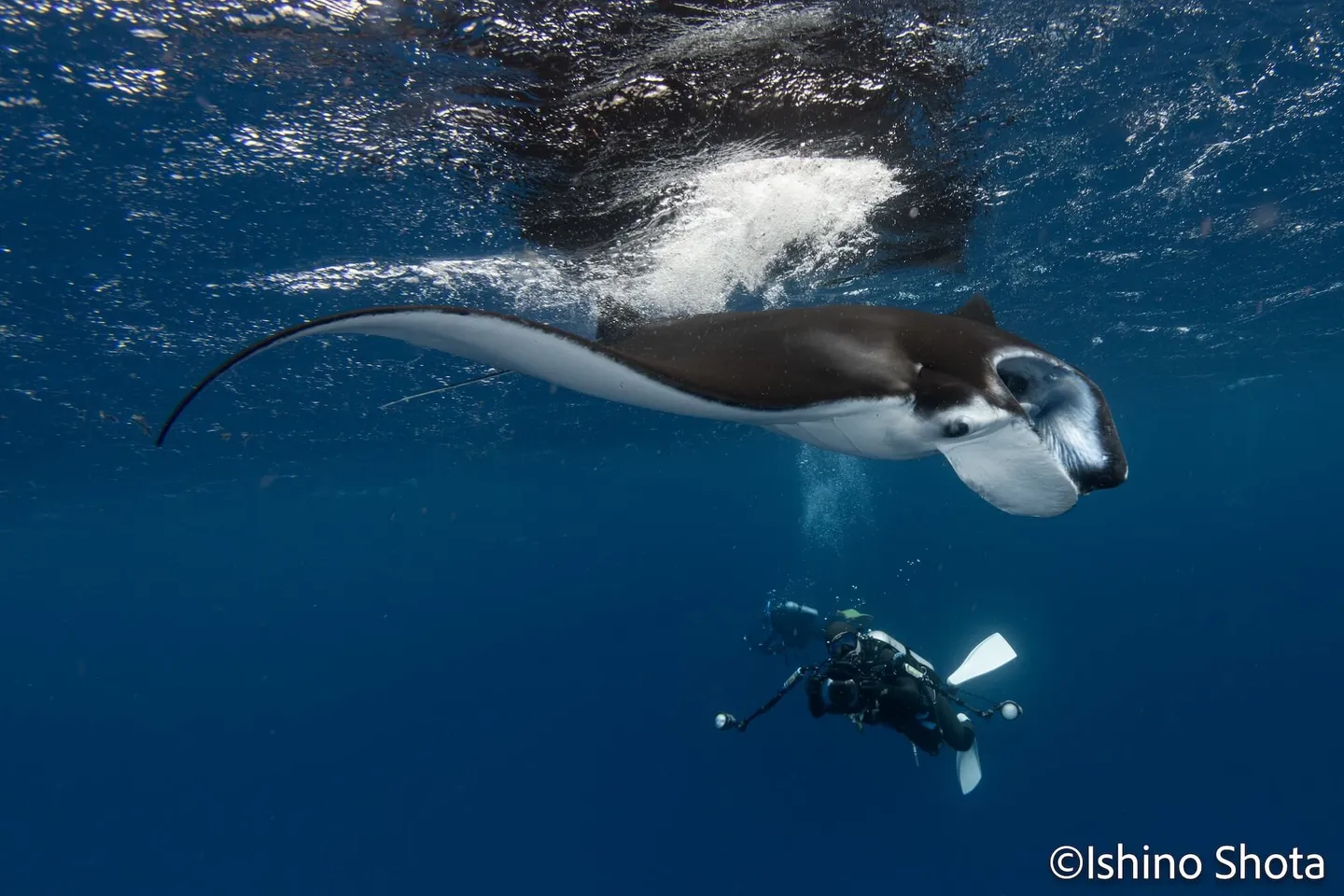
If we don't chase them, the manta rays will swim right up to us
The "Surface Manta Ray Dive" — an experience that allows you to observe the relationship between manta rays and plankton up close — is truly invaluable, filling me with excitement at the countless secrets the ocean still holds that humankind has yet to discover.
Important Notes on Manta Ray Diving
Ishigaki belongs to the Yaeyama region, which is home to the Yaeyama Diving Association. Approximately 80 dive operators are registered with the association, providing safe and sustainable services. Manta rays are an extraordinarily precious part of Ishigaki's natural heritage, and their observation is governed by strict rules.
In recent years, the number of manta ray sightings on Ishigaki has been declining due to an increase in visitors and operators who do not follow the rules. Please come to Ishigaki with respect for marine life, so that you too can encounter manta rays — an experience that will become a cherished memory for years to come.
Japan Underwater Odyssey will continue to share these incredible stories from the sea with you. Stay tuned!
Travel and photography cooperation: Diving shop POLARIS
Related Links
- Shota Ishino on Instagram: shota_gorillahouse
Further Reading
Frequently Asked Questions
How is a BlueTrend dive trip different from an unknown, no-name dive group?
Choosing us means full peace-of-mind protection and a smooth experience from start to finish. Every trip we run holds to three things.
First, full legal protection and a professional dive leader: we strictly follow Taiwan's travel regulations and provide complete travel-agency liability insurance, travel insurance, trip-inconvenience insurance and dive insurance. Every group is accompanied by a certified, foreign-language dive leader who joins you on both the dives and the land itinerary, liaising seamlessly with local dive shops and operators on your behalf to keep things running smoothly — the person our travellers trust most.
Second, fully licensed with secure payments: every payment goes into a licensed travel agency's account, with multiple safe payment channels (bank transfer, credit card and more) and a legal collect-and-remit receipt, so every transaction is open, transparent and protected, avoiding the fraud and dispute risks of transferring money privately to an individual.
Third, hand-picked quality we vet in person: every trip, dive site and partner shop is scouted on the ground by our own team, from the guides' professionalism and safety standards to the food, lodging, environment and service details on land, all vetted by us so you don't get caught out.
I want to sign up for a dive trip. Are there certification-level or logged-dive requirements?
Each dive site is different, so the entry bar varies. 'Bali Tulamben', for instance, is relatively beginner-friendly. 'Malapascua in the Philippines' is also beginner-friendly, but since thresher sharks tend to cruise between 20 and 30 metres, we recommend AOW certification with 20+ logged dives to enjoy this trip comfortably. For 'the Maldives' or 'Palau', we suggest AOW with 50+ logged dives for a more relaxed experience. If you're not sure whether your experience fits the trip you want, message us and our dive editors will assess it and help you find the trip you'll feel safest on.
Can I join if I'm signing up alone? How are rooms arranged?
Plenty of our travellers sign up solo! For rooms and beds, we prioritise pairing you with a same-gender traveller, and if you'd rather have your own space you can pay the difference to upgrade to a single room. For the diving, our professional leader will pair you with a suitable buddy, and with the happy vibe on our trips you'll quickly make a great group of dive friends. Many people sign up alone, make new friends, and end up organising the next trip together!
Does the trip fee include dive insurance, gear rental, taxes and instructor tips?
It depends on the trip, the destination's regulations and the local operators. Every BlueTrend dive trip has a detailed web page with a clear 'included / not included' list, transparent and with no hidden charges. All payments are collected by a licensed travel agency, with a standard-form contract for your protection.
I'm a new diver / haven't dived in a long time — will I fall behind the group?
Before you complete your booking, our team assesses a suitable trip based on your certification level and experience. Before departure, we strongly recommend taking time to refresh in Taiwan with an instructor, or a fun dive to get your feel back. On the trip itself, our professional dive leader groups and pairs everyone by experience, keeps a close eye underwater on travellers who need extra care, and steps in to help right away.
Will the photos and videos taken during the trip be shared with us?
During the dives, 'safety' is always the leader's top priority, so whenever it's suitable and safe the leader will capture great shots and record the best moments. During or after the trip, we compile a cloud album for all travellers to download, so you go home loaded with memories!
Besides your scheduled trips, can you arrange a private group charter or independent travel for me and my friends?
Absolutely! Besides group trips, we also arrange private group charters and independent travel. We can communicate, enquire and coordinate services with local operators based on your needs, saving you time and effort and taking the language barrier off your plate, to tailor the smoothest, most reassuring dive trip just for you. Contact our LINE support and our editors will arrange it for you!