Contents(10)
- Approximately 1,200 Metric Tons of "Ghost Nets" Lost in Waters Near Taiwan Each Year
- Where Does Marine Debris Go? How Is Taiwan Boosting Its Abandoned Fishing Gear Recycling Rate?
- Increasing Incentives and Encouraging Recycling
- Establishing the Marine Debris Recycling Alliance to Foster Supply Chain Collaboration
- Adding Value to Marine Debris Recycling
- Addressing Abandoned Fishing Gear Requires International Cooperation
- Prevention and Recovery of Abandoned Fishing Gear
- Marine Debris Recycling and Reuse
- Related Links
- Further Reading
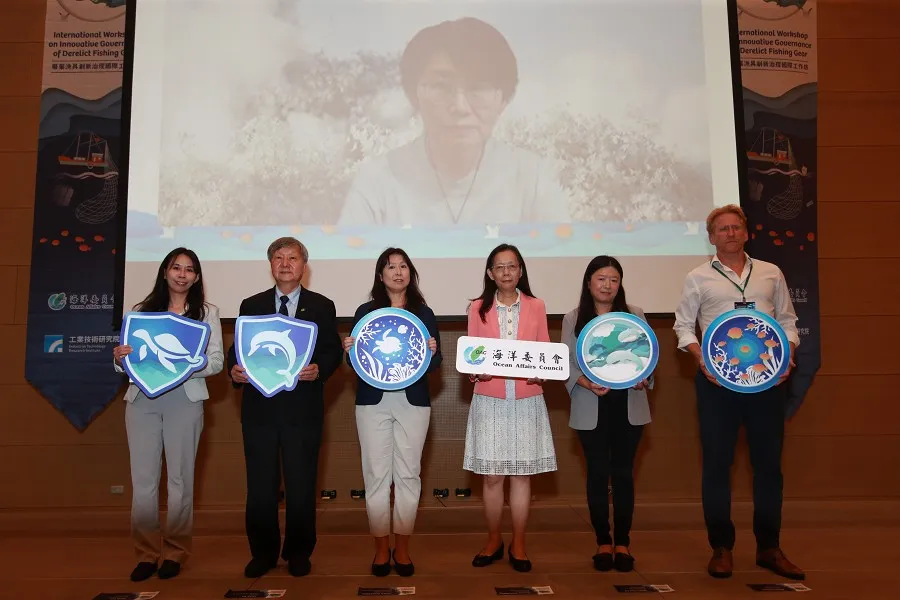
Every year, 640,000 metric tons of abandoned fishing gear become marine debris worldwide. Faced with this complex global challenge, the Ocean Affairs Council hosted the "International Workshop on Innovative Governance of Abandoned Fishing Gear," inviting domestic and international representatives from industry, government, and academia to share and exchange ideas. Experts and scholars from the United States, Japan, and South Korea gathered together, hoping to find solutions to the global marine debris problem through innovative technologies and international cooperation.
Approximately 1,200 Metric Tons of "Ghost Nets" Lost in Waters Near Taiwan Each Year
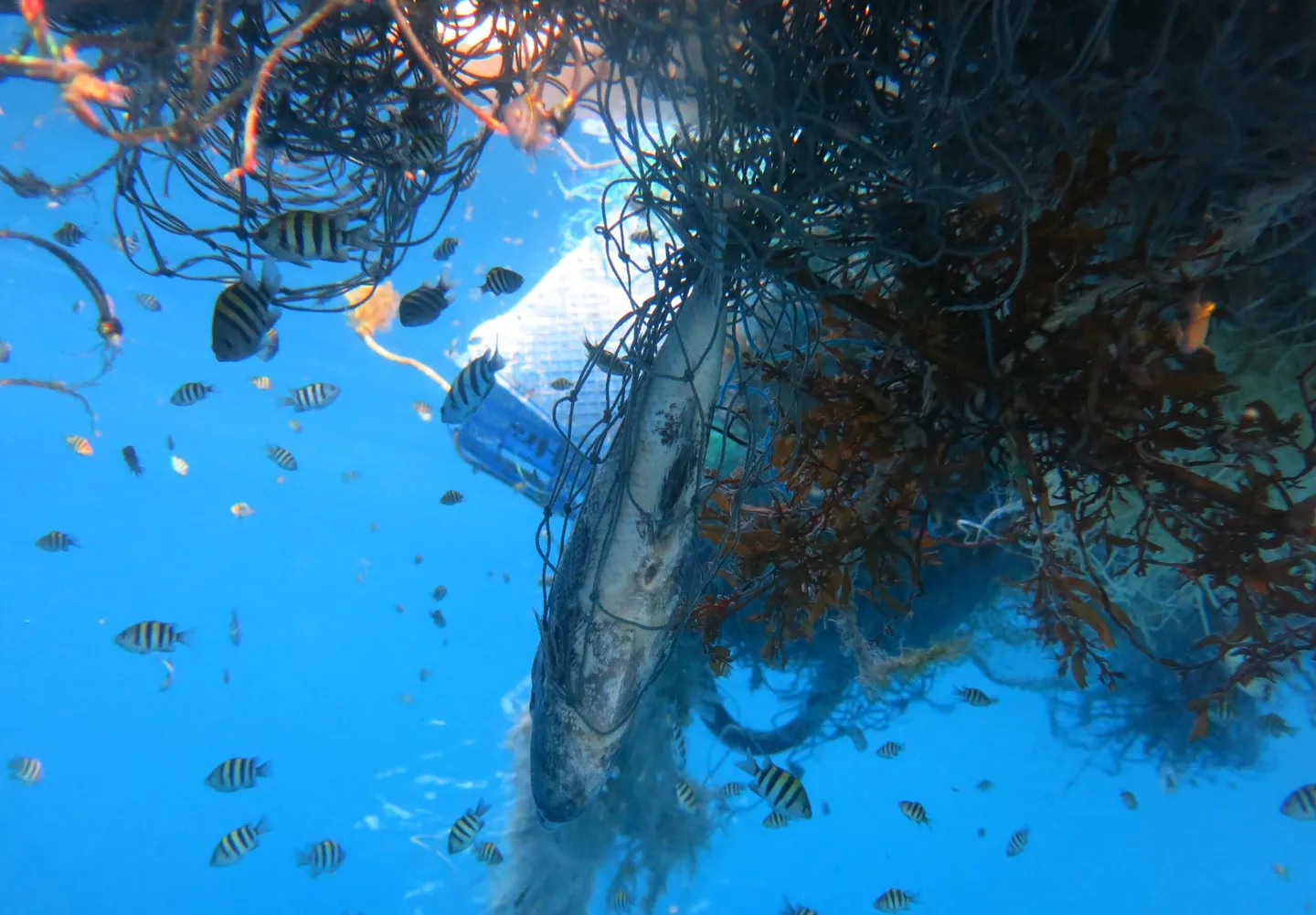
Abandoned fishing gear, commonly known as ghost nets, not only generates a massive marine debris problem but also causes habitat destruction. Matt Classen, Executive Director of The Maritime Alliance BlueTech (TMA BlueTech), pointed out that approximately 1,200 metric tons of fishing gear are lost in waters near Taiwan each year, contributing to a 50% degradation of coral reefs in the Asia-Pacific region. He further noted that this also reduces fish catches by 10–15%, adding that "the estimated cost of removing abandoned fishing gear alone is NT$100 million," underscoring that ghost nets impact not only the environment but also the economy.
By Mstelfox - Self-photographed, CC BY-SA 4.0, Link


Where Does Marine Debris Go? How Is Taiwan Boosting Its Abandoned Fishing Gear Recycling Rate?
Statistics from the Ocean Affairs Council show that abandoned fishing nets account for nearly 90% of the total weight of underwater marine debris cleaned up in Taiwan each year. Given the complex composition of discarded fishing nets, they represent a key focus of Taiwan's marine debris management efforts. Director-General Lu Xiaoyun of the Ocean Conservation Administration (OCA) shared Taiwan's current approach to abandoned fishing gear governance, covering stages from gear collection and sorting to processing and product manufacturing.
")
To expand business participation in marine debris recycling and upcycling, the Ocean Conservation Administration of the Ocean Affairs Council has promoted the establishment of the "Marine Debris Recycling Alliance."
Increasing Incentives and Encouraging Recycling
Director-General Lu Xiaoyun cited how the government has raised the buyback price of abandoned fishing gear to increase fishers' willingness to participate in recycling programs. In 2023, more than 6,000 metric tons of marine debris were recycled and reused. In addition, the OCA published a Fishing Gear Recycling Reference Manual to promote widespread knowledge of abandoned fishing gear recycling and reuse, with the aim of advancing circular economy development.
Establishing the Marine Debris Recycling Alliance to Foster Supply Chain Collaboration
The OCA established the Marine Debris Recycling Alliance in 2021, with more than 60 businesses participating. The alliance not only connects recycling, manufacturing, and R&D players in the supply chain, but also incorporates upstream and downstream industries such as marketing, culture, and creative sectors, creating a more complete value chain for marine debris recycling. The OCA has hosted numerous workshops and seminars and participated in overseas exhibitions, continuously developing new technologies to ensure better prospects for abandoned fishing gear recycling and reuse.
Adding Value to Marine Debris Recycling
Up to 55 types of eco-friendly products are currently being produced using recycled marine debris materials, including sunglasses, recycled-material backpacks, and functional apparel. Director-General Lu Xiaoyun said: "Consumers are not just buying a product — they are buying the values behind it. They are willing to pay more because it is more eco-friendly or ocean-friendly." For businesses, using recycled marine debris materials also helps reduce carbon emissions and build a positive brand image.
Director-General Lu Xiaoyun mentioned that the OCA will also prioritize a "recycling and reuse matchmaking platform" going forward, allowing supply and demand to be matched effectively, improving market transparency, and helping to stabilize material prices and quality.
Addressing Abandoned Fishing Gear Requires International Cooperation
At the International Workshop on Innovative Governance of Abandoned Fishing Gear, experts and scholars from various countries shared experiences on the prevention and recovery of abandoned fishing gear, as well as marine debris recycling.

All speakers participate in the panel discussion on "Integrated Strategies for Abandoned Fishing Gear Management and Innovative Technologies."
Prevention and Recovery of Abandoned Fishing Gear
Junko Toyoshima, Research Manager at the Institute for Global Environmental Strategies (IGES) in Japan, pointed out that Japan produces approximately 20,000 metric tons of fishing gear per year, accounting for only about 14% of all plastic product output. "But if you go to a beach in Japan, fishing gear makes up 60% of beach litter," highlighting how a relatively small production volume can still cause serious environmental harm. Research collecting and analyzing approximately 1,200 pieces of fishing gear found that 72% bore Chinese characters; combined with ocean current computer simulations, the gear is estimated to have originated from China or Taiwan. Junko Toyoshima stressed that addressing the abandoned fishing gear problem requires international cooperation, tackling it from the angles of labeling, management, and recycling.
Dr. Sung-Yun Hong, founder of the Ocean and Sea Environment for Advocacy Network (OSEAN) in South Korea, highlighted the impact of abandoned fishing gear on navigational safety, noting that each vessel experiences an average of 2–3 entanglement incidents per year.
TMA Executive Director Matt Classen shared several innovative technologies for preventing and recovering abandoned fishing gear, such as using smart buoys and acoustic instruments linked to satellite transmission to identify and track fishing gear, as well as underwater drones for deep-sea recovery. Matt said: "In areas like the North Sea, this has been very successful; approximately 3,000 metric tons are recovered annually. These drones work like underwater robots, allowing us to restore marine habitats."
Marine Debris Recycling and Reuse
Local Taiwanese business leader Ko Han-Che, Chairman of Fusheng Textile, introduced the company's experience in developing eco-friendly materials and circular economy practices. Proprietary patented technology converts waste into recycled fiber and eco-friendly fabrics, which are widely applied across a range of products and have received strong recognition in Asian, European, and American markets. Chairman Ko particularly noted that recycled nylon made from abandoned fishing nets, compared to conventional nylon, reduces CO₂ emissions by 57,000 metric tons per year and saves 70,000 barrels of crude oil annually, cutting the global warming impact by 80% — addressing environmental trends while also enhancing market competitiveness.
Beyond fishing gear recycling, a technology that converts oyster shells into plastic pellets also piqued the curiosity of Dr. Sung-Yun Hong, who raised specific questions about it. Chairman Ko generously shared the process: oyster shells are repeatedly washed and sun-dried, then sintered at high temperatures to form a powder, which is processed using nano-grinding technology and added to recycled PET bottle pellets for spinning — converting the shells into reusable plastic particles.
In addition to marine debris recycling, Dr. Sung-Yun Hong also shared South Korea's experience of improving fishing gear materials at the source, reducing the use of EPS floats (expanded polystyrene buoys), which have a greater environmental impact, and introducing more durable floats to help reduce pollution.
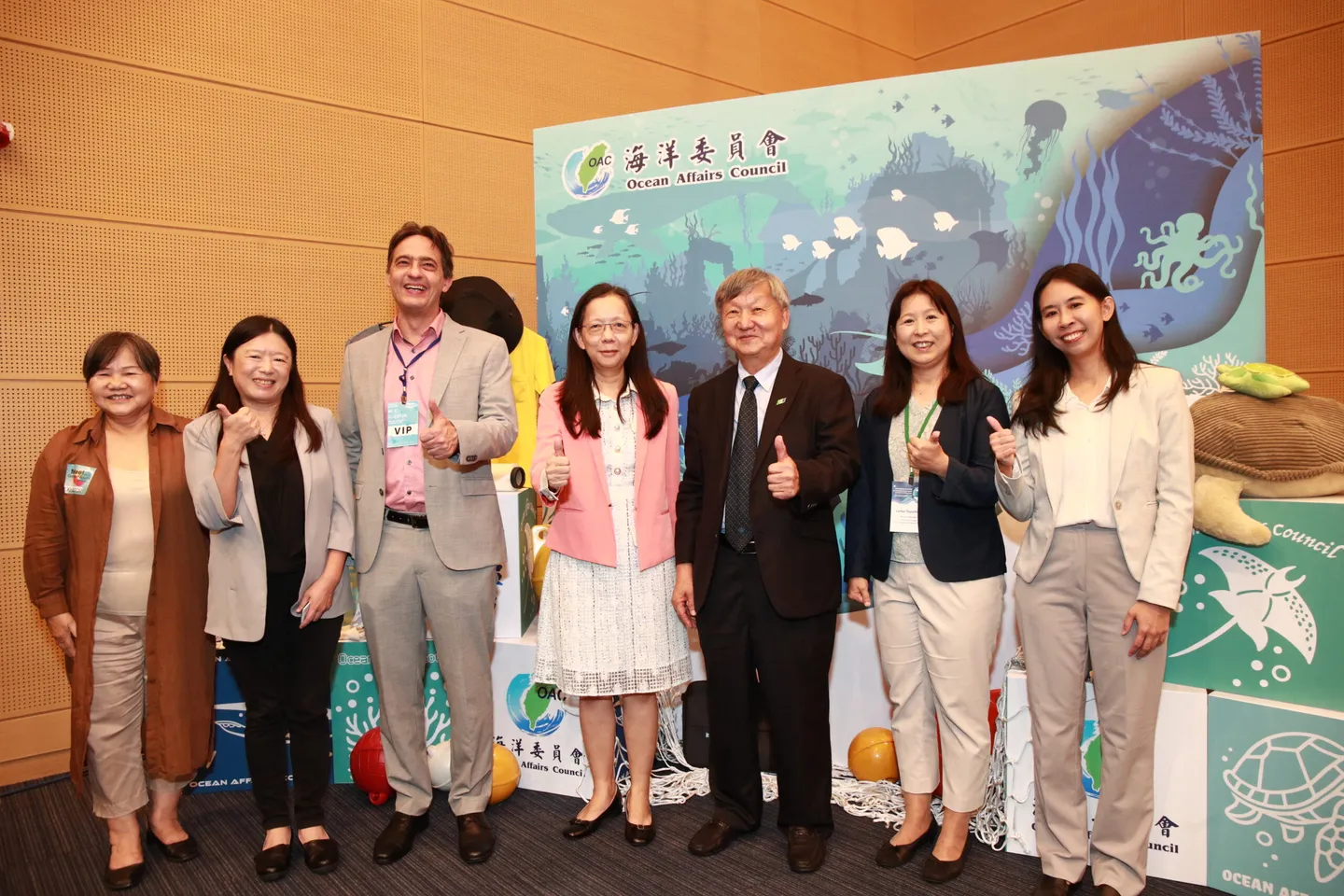
At the close of the workshop, a panel discussion moderated by Yen Ning, Executive Director of Clear Ocean Environmental Consultants, brought together experts from all countries to exchange views on "Integrated Strategies for Abandoned Fishing Gear Management and Innovative Technologies." Connecting stakeholders and fostering communication and collaboration was a key point unanimously emphasized by all the experts!
TMA Executive Director Matt shared Blue Ocean View as a successful case study. He noted that this company's original goal was to address "ghost nets," and it was only as the technology developed that it was discovered that the tracking devices could not only locate abandoned fishing nets but also collect a wider range of ocean data — including sea temperature and offshore storms. Matt mentioned that TMA's role is to build bridges among people from different fields, connecting them together so as not only to solve immediate problems but also to expand the scope of applications.
OSEAN founder Dr. Sung-Yun Hong emphasized that government-driven policy plays a crucial role: putting forward appropriate measures and actively communicating with grassroots stakeholders is the only way to find a compromise solution that is both environmentally sound and acceptable to fishers. Furthermore, Dr. Hong stressed the importance of public engagement: OSEAN has cultivated approximately 36,000 citizen scientists who, in turn, serve as seeds to reach more students and members of the public, working to raise awareness of ocean issues.
The international panel discussions not only demonstrated the necessity of cross-sector collaboration among industry, government, academia, and civil society, but also underscored that abandoned fishing gear is a shared global challenge — one that requires regional cooperation among Taiwan, Japan, South Korea, and other nations to exchange innovative technologies and share experiences, with the collective hope of improving the marine debris problem.
Related Links
Further Reading