

Contents(7)
- The goal of this article is not to place blame on anyone involved, but to encourage reflection on how to reduce the likelihood of accidents — and how to respond appropriately if one occurs.
- Your dive buddy would rather be embarrassed than afraid of making a wrong rescue call
- Your dive buddy is not only your partner underwater
- Follow the buddy system strictly
- If you love the ocean, let go of vanity
- The availability of safety equipment at the venue
- Don't crowd around to watch — leave that precious space for the professionals
The Editor says: Freediving is becoming increasingly popular, but accidents continue to occur — and BO (Shallow Water Blackout) is among the leading causes of freediving incidents. Just like accidents in scuba diving or general water recreation, we cannot completely eliminate the possibility of accidents, but we can minimise the risk through adopting the right mindset both before and after entering the water. This article is adapted from 簡姿馨's personal Facebook page. Drawing on a real BO incident, it invites us to reflect on how we can reduce risk before every dive — and what the right approach is when an accident does happen, to minimise harm.
The goal of this article is not to place blame on anyone involved, but to encourage reflection on how to reduce the likelihood of accidents — and how to respond appropriately if one occurs.
On that day there were two groups in the session: one was me and my dive buddy, three people in total; the other was the woman who experienced the BO and her dive buddy, three (or four) people in total. The water was warm that day (around 30°C), comfortable enough to dive without a wetsuit.
-
1:40 PM
My dive buddy and I had already finished our practice for the day, and with a bit of time to spare, we were casually blowing bubbles in the 5-metre zone. I noticed that the other group wasn't wearing fins, and appeared to be standing upright on the pool floor without floating up (possibly using half-lung technique). The two groups were about 15 metres apart.
Around 1:50 PM
I was about to do my last dive. After blowing bubbles on the pool floor, I turned to kick back up. At that moment, I saw the woman lying face-down on the pool floor, with her dive buddy beside her — their positions looked very much like a static apnea (STA) (AIDA discipline) practice and buddy watch on the surface, except they were on the pool floor. I thought it was a bit strange — with her face so close to the bottom, could the buddy even see her expression? But I didn't kick over to check. Just as I was nearly back at the surface, I glanced over in their direction again and saw her dive buddy kicking furiously, bringing her upward. I froze for a moment. When I surfaced, I looked to my right and saw my two dive buddies had both surfaced already; I looked to my left and saw her dive buddy and an instructor pulling her to the side of the pool. From a distance, her body looked completely limp — no movement at all. I pulled off my fins and rushed over. Even at that point, I still wasn't sure whether this was a real BO or a rescue drill.
-
Then I saw her lying on the ground — the palest face I have ever seen in my life. White with a tinge of purple. Her lips were dark purplish-black. Her eyes were slightly open, her eyeballs protruding and threaded with red. Her entire body was drained of colour — ghostly pale. The extremities and the inner sides of her joints were also purple. She was completely unresponsive, but she had a pulse.
The pool's lifeguard and my dive buddy, seeing what was happening, ran over. The instructor, students, and instructor from the next session also arrived just then — one of them was a doctor. The instructor placed the woman in the recovery position (lying on her side); the doctor and I took over to ensure the airway was not obstructed. Once on her side, we noticed her upper limbs were very rigid. Over the next minute or two, the instructor called an ambulance. The doctor asked the dive buddy to bring a towel and asked a staff member to fetch an oxygen cylinder (they only brought something resembling a small portable hiking-type oxygen canister). One instructor asked the dive buddy for her name; everyone kept calling out, "Bunny (pseudonym), come back! Breathe!" — but there was no response. I held the towel and cradled her head on my knees as I knelt beside her. For a moment, the thought crossed my mind that she might not wake up at all. But her lips gradually regained a little colour, though her face remained pale and her breathing was still very faint. Her eyes were more open than when she first came out of the water — even more protruding — and each eye had two or three red blood spots.
Over the next three minutes, the woman began showing signs of response — though not a return of consciousness. It started with her tongue extending outward involuntarily and with force. I don't know how to describe it or why it happened, but it resembled the movements seen in adults with athetoid cerebral palsy. Then she expelled the first mouthful of water — just a little, and the water was fairly clear.
After that, she began a series of cries — loud and harrowing. The only words I can use are "screaming" or "wailing." It seemed completely involuntary, as though she was in tremendous pain. It was truly frightening. (I'm sorry to say it so bluntly.) As she screamed, her body, head, and neck contracted with tremendous force. All I could do was try to support her so she wouldn't hit her head.
Everyone was uncertain whether this was an LMC, a seizure, an attempt to expel water, a belief that she was still underwater, or simply a response accompanying regaining consciousness. To contact her family and ask about her medical history, her dive buddy brought her phone and tried to unlock it with a fingerprint — but it was Face ID, and her eyes couldn't focus at all; the phone wouldn't unlock. Eventually I ran out of strength and handed over to another person, who later described how exhausting it was to protect her head without pressing too hard and risking a neck injury.
I stepped back and, following others' directions, found a moment to grab fins and fan air toward her, hoping she could get enough fresh air. She continued to thrust her tongue outward involuntarily. She then expelled a second and third mouthful of water. The second was also fairly clear, with a slight brownish-red tint. I didn't see the third, but someone said it had some pinkish foam — which suggested lung injury. (The first two mouthfuls may have come from the stomach.)
After expelling the water, her breathing became noticeably more prominent. Everyone kept calling, "Bunny! Breathe!" — until the instructor asked, "Bunny, are you back with us?" and she answered, "Yes." Only then did everyone begin to feel some relief. The doctor and instructor continued to guide her: "Bunny, listen to us, follow along — inhale, exhale, inhale, exhale…" They also asked whether she could recite a family member's phone number from memory.
The paramedics then arrived. They first put a portable-tank oxygen mask on her, then measured her blood pressure and blood oxygen. Her blood pressure was slightly elevated. The blood oxygen reading was impossible to obtain from her fingers or toes because all of her nails were painted with white-grey nail polish. Finally, she was lifted onto a stretcher and taken to hospital in a seated position.
Follow-up: After contacting the instructor afterwards, it was confirmed that the diver was doing well and had no serious injuries.
-
At dinner that evening, we also discussed a few ideas that might be worth advocating in the future:


Your dive buddy would rather be embarrassed than afraid of making a wrong rescue call
Looking back at what happened, I had two moments when something felt off — once when I saw the woman lying face-down on the pool floor, and once when I saw her being pulled out — yet my reaction was still not fast enough.
From now on, no matter the situation, the moment something seems even slightly wrong, act immediately and call out for help from others.
Your dive buddy is not only your partner underwater
Even in a swimming pool, it may be worth exchanging emergency contact information, medical history, and other details before getting in the water — it's simply a more careful approach.
Follow the buddy system strictly
In any setting — a regular pool, a 5-metre pool, a freediving cube, or the open ocean. Thoughtfully plan, communicate, discuss, and adhere to your dive plan.
The woman that day was fortunate — her dive buddy was able to bring her up from the bottom of the 5-metre pool without fins. Going forward, even if a dive is planned without fins, at least one buddy should always be wearing fins for the watch.
If you love the ocean, let go of vanity
Please remove nail polish before diving. Aside from protecting the ocean, certain nail polish colours can prevent clip-type pulse oximeters from accurately measuring the concentration of oxygenated haemoglobin in the blood (blood oxygen levels).
The availability of safety equipment at the venue
It's unclear whether the pool had portable oxygen cylinders on hand. For swimming or any other aquatic activity, oxygen cylinders are, I would argue, an essential piece of emergency equipment. (The Editor chimes in: Some dive shops are equipped with an AED (Automated External Defibrillator) and portable oxygen cylinders. While the investment is costly and may never seem to pay off, in the moment an accident occurs, these pieces of equipment could save a life. When joining a group or planning your own dive trip, it may be worth asking the dive shop in advance whether they have this equipment — and using it as one of your criteria for choosing a shop.)
Don't crowd around to watch — leave that precious space for the professionals
In cases of hypoxia combined with water inhalation, fresh air and drainage are critical. During an emergency response, please keep space clear for air exchange and avoid clustering. Remember the recovery position (lying on one's side) — it prevents chest compression and tongue blocking the airway, and helps expel vomit or bloody fluid.
All in all, it was a hard and forceful lesson. Here's hoping there is no next time — and if there ever is, I hope I can do better. Thank you also to my dive buddy for the help and comfort. We will all be more careful from now on.
I'll add more thoughts if anything else comes to mind. Dive safe, everyone!
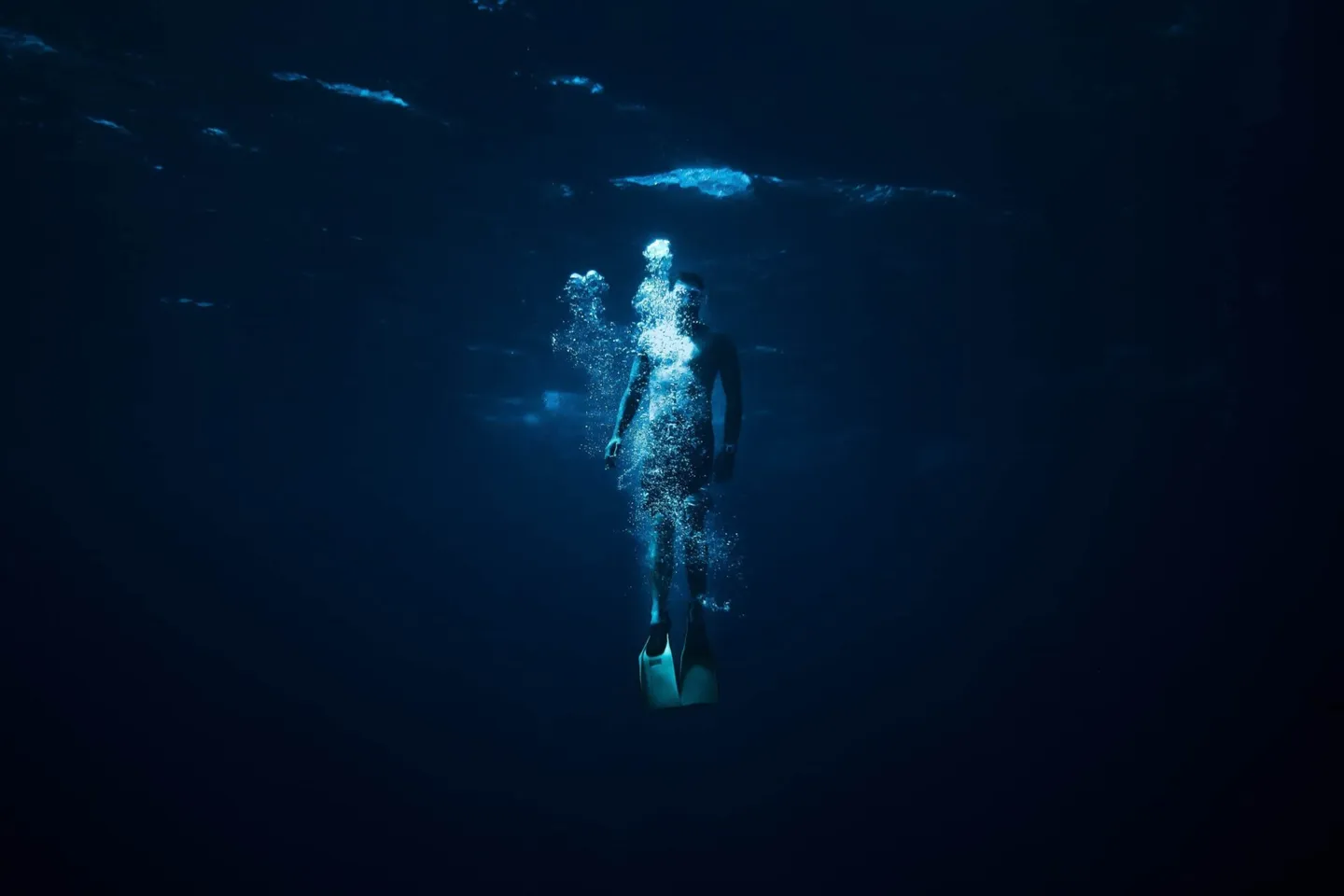
Cover photo credit: Photo by Jeremy Bishop on Unsplash
Personal Facebook: 簡姿馨

![[Freediving] Someone Almost Died in the Ocean](/_astro/%E8%87%AA%E7%94%B1%E6%BD%9B%E6%B0%B4bo-scaled_2ms8Tx.webp)
![[Ocean Field Guide (Northern Taiwan)] Errata Notice 2020/09/25](/_astro/%E5%B7%A5%E4%BD%9C%E5%8D%80%E5%9F%9F-1@1920x_Z23dcVA.webp)