Contents(4)
The Editor says: As children of the sea, it is only after learning to dive that we truly understand how breathtaking and enchanting the underwater ecosystem is. Yet as tourism develops, that ecosystem is directly impacted. Keeping this beauty alive requires all of us working together, so that nature and human activity can continue to coexist. In recent years, many divers have launched beach cleanup and ocean cleanup initiatives, rallying people from all walks of life to pay attention to this environmental issue. So how exactly does freediving fit into ocean cleanup? Follow along with the Editor to find out!
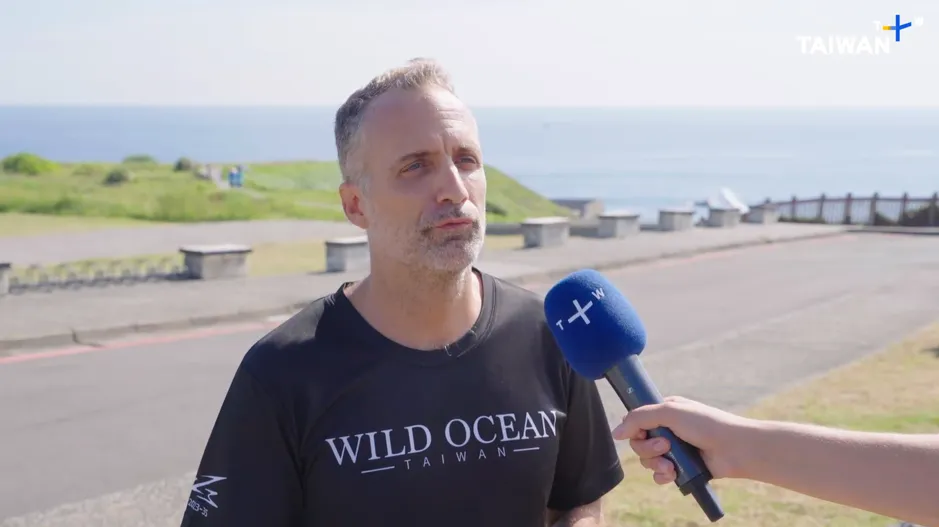
A-Yong, a chef from the French Alps, followed a Taiwanese girl named Sigo to Formosa 17 years ago — and never went back. The unique culture of Taiwan and the stunning diversity of its natural environment mean that every time A-Yong returns to France for a two-week family visit, he soon starts longing for Taiwan again.
Four years ago, the two of them discovered freediving and fell in love with the intimate feeling of merging with the ocean. Every single dive deepens their gratitude for everything the sea gives us. However, every dive site they visited was marred by marine debris — and even ghost nets, still drifting through the water, entangling the animals and plants below. So in 2022, A-Yong founded a small group called Ghost Net Taiwan, inviting like-minded dive companions to join him in removing underwater ghost nets and marine debris.
The Rise of Freediving
In recent years, freediving has become an enormously popular sport among young people in Taiwan. During the pandemic in particular, with overseas travel off the table, many people headed to the outlying islands and took up scuba diving or freediving. But as island tourism boomed, the marine ecosystem bore the brunt of that rapid growth — and environmental awareness didn't seem to grow along with it. A-Yong lamented that in Taiwan, freedivers seem to simply jump in, snap some beautiful photos, and leave — turning a blind eye to the marine debris and fishing nets right beside them. A-Yong decided to establish an NGO — Wild Ocean Taiwan — inviting ocean-conservation-minded dive buddies to tackle marine debris and abandoned fishing nets in a more organised way, and to show other freedivers in Taiwan that "Freediving Can Help!" His hope is even to engage the general public and government in taking this issue seriously.
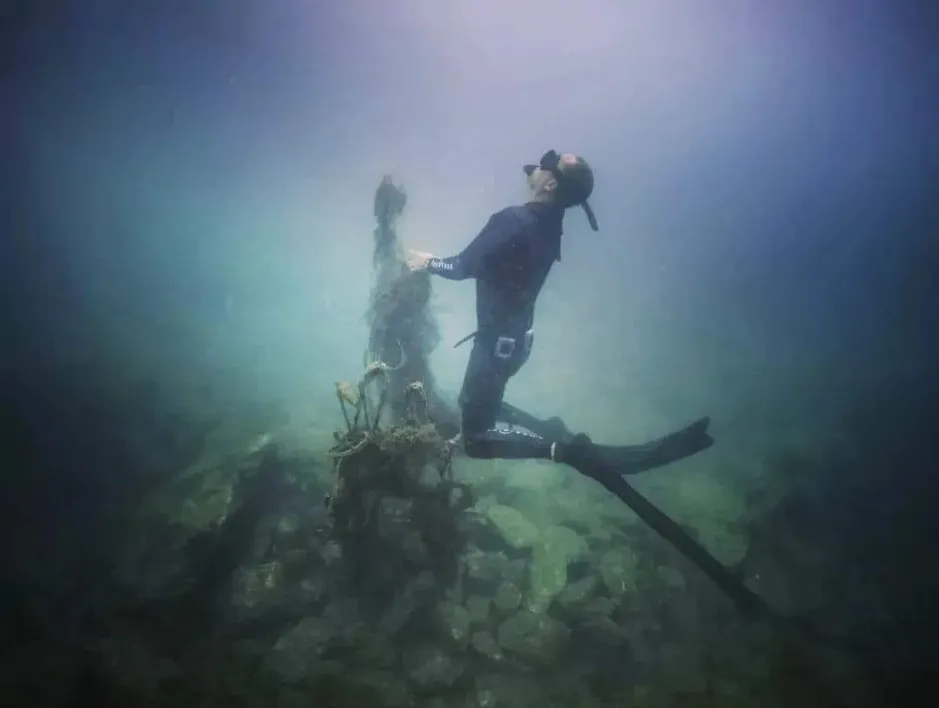
Source: A Yong's Ghost Net Hunting and Ocean Conservation
On September 17th, under a blazing sun and with excellent sea conditions at Chaoching Park, Wild Ocean Taiwan and VD freediving successfully hosted this freediving ocean cleanup event.
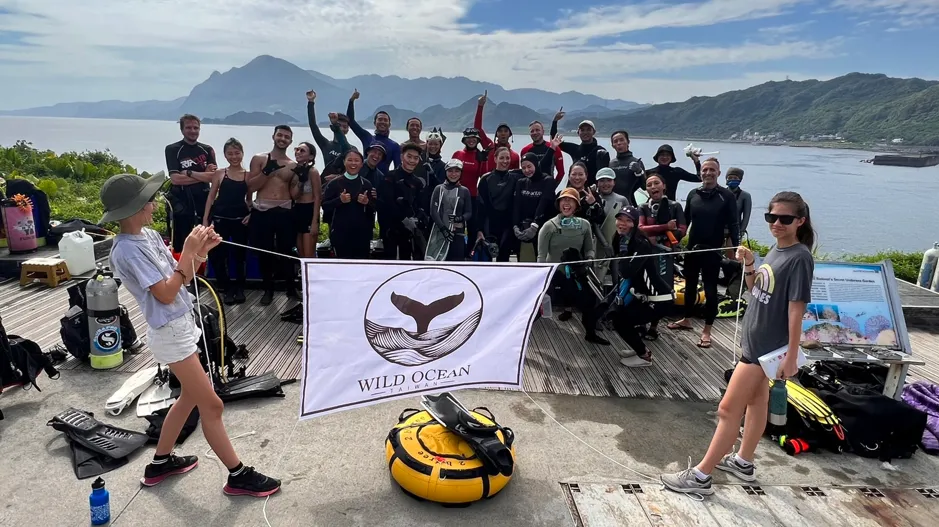
Source: Sigo/Wild Ocean Taiwan


Event Rundown
At the start of the event, A-Yong briefed participants on the day's operational area at the steps of Chaoching Park. Participants split into groups, each led by one of VD freediving's two instructors — Jia-Yin and Anthony — or by Taiwanese freediving champion Huang Hua-Yang. Each group was assigned a buoy float and focused mainly on the left rear side of the marine reserve. Three SUPs were arranged to assist with safety patrol and transporting marine debris, including SUP instructor Sun Chong-Shi. A-Yong and Gweno, an instructor from Gweno Diving-Taiwan, patrolled and monitored the safety of every group.
A-Yong explained that marine debris and ghost nets not only harm the environment — waves and currents drag them onto the shore or onto coral reefs, where they are ground down into smaller and smaller particles, ultimately becoming microplastics, which pose a serious threat to the ecosystem.
Source: Taiwan Plus
How Do Freedivers Pick Up Marine Debris?
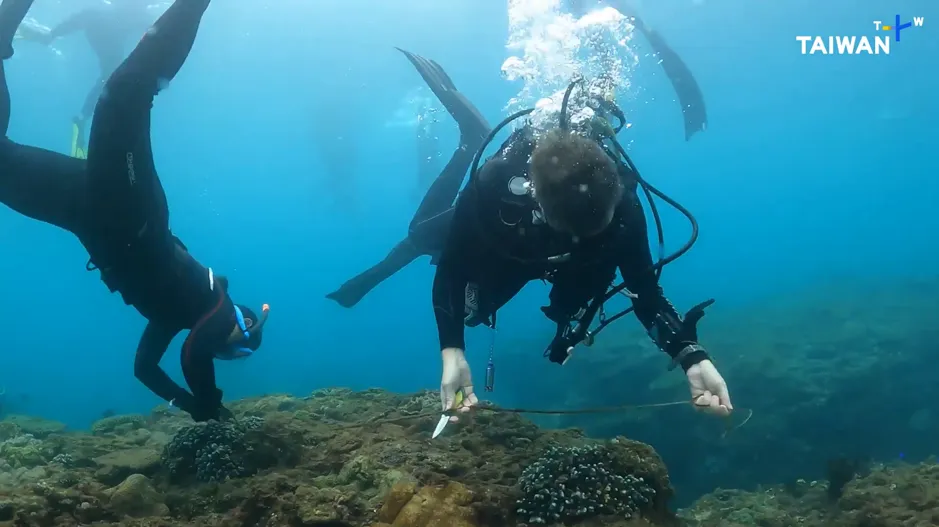
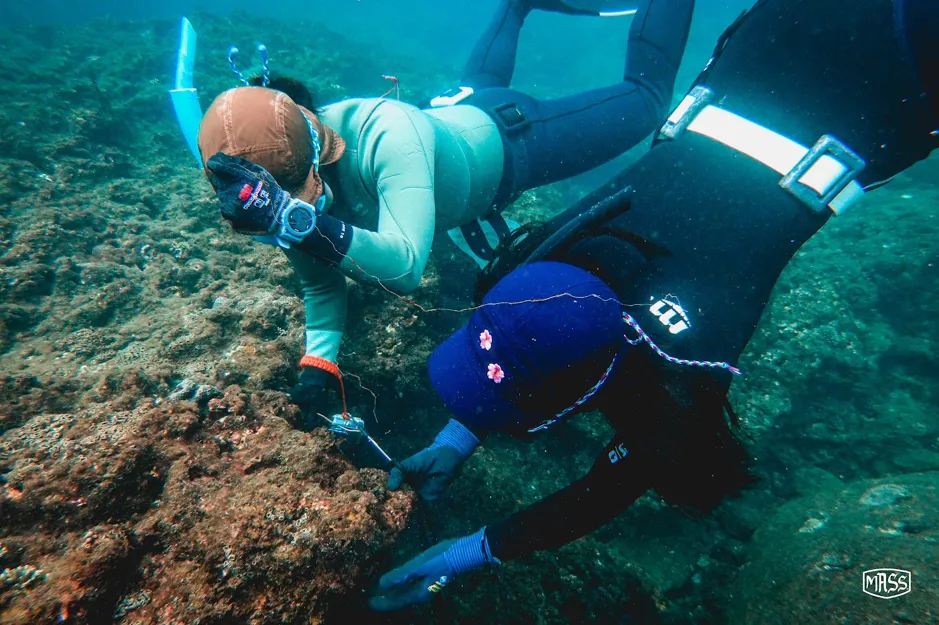
It's all about teamwork — when you run out of breath, I take over. Under the guidance of the instructors, each group dived down to collect marine debris and fishing nets, with coral reefs entangled in ghost nets given top priority. Plastic marine debris was brought to the surface and placed into the buoy floats. Everyone came equipped with scissors, and working together, they carefully cut away the tangled nets — avoiding pulling them out directly so as not to damage the coral.
Source: Taiwan Plus
Source: Wild Ocean Taiwan
Nurturing Citizen Scientists to Build a Stronger Marine Research Database
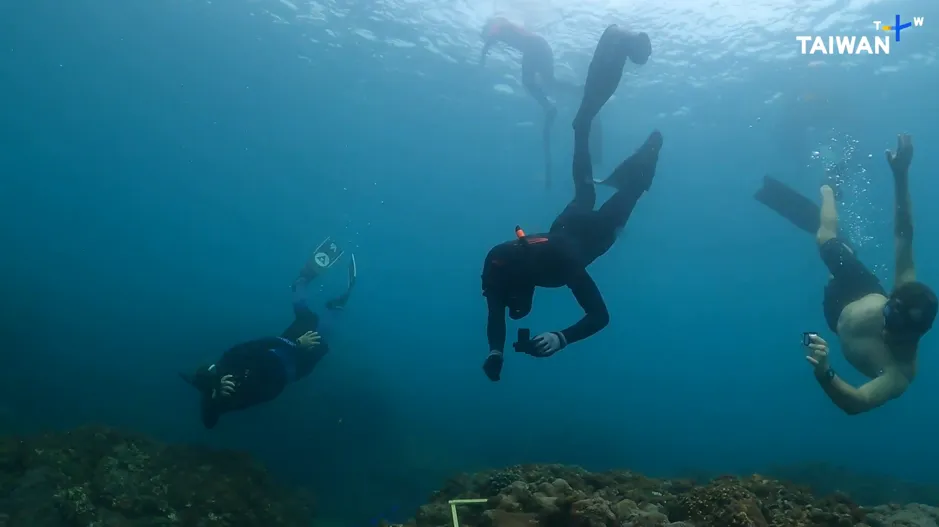
This event also welcomed members of Wild Ocean Taiwan's Scientific Council: Associate Professor Vianney Denis (單偉彌) from the Institute of Oceanography at National Taiwan University, and postdoctoral researcher Aziz Mulla from Université Côte d'Azur (Nice, France). They taught participants how to photograph coral reefs underwater and build 3D models, and encouraged divers to become citizen scientists by taking photos and uploading them to help build the research database.
Source: Taiwan Plus
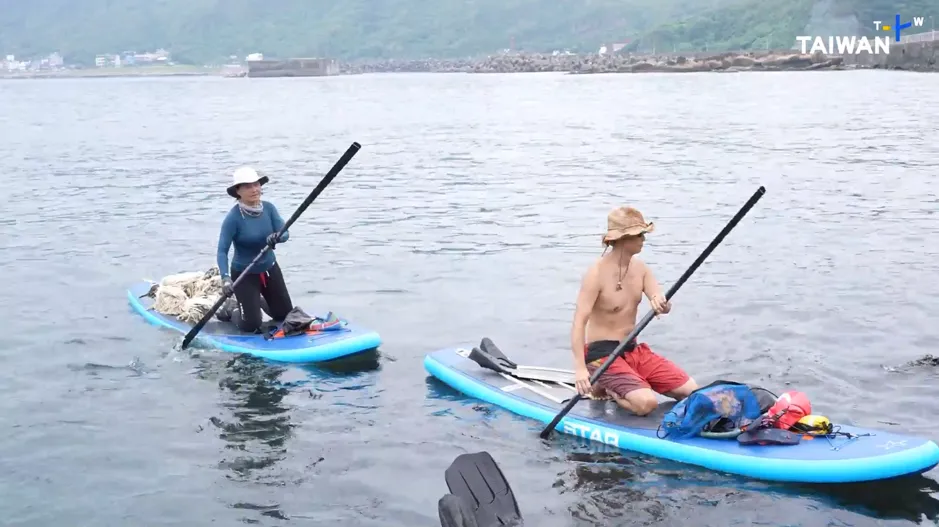
After all the divers took their turns diving down, each one brought up a significant amount of marine debris, which the SUPs helped ferry back to shore. Source: Taiwan Plus
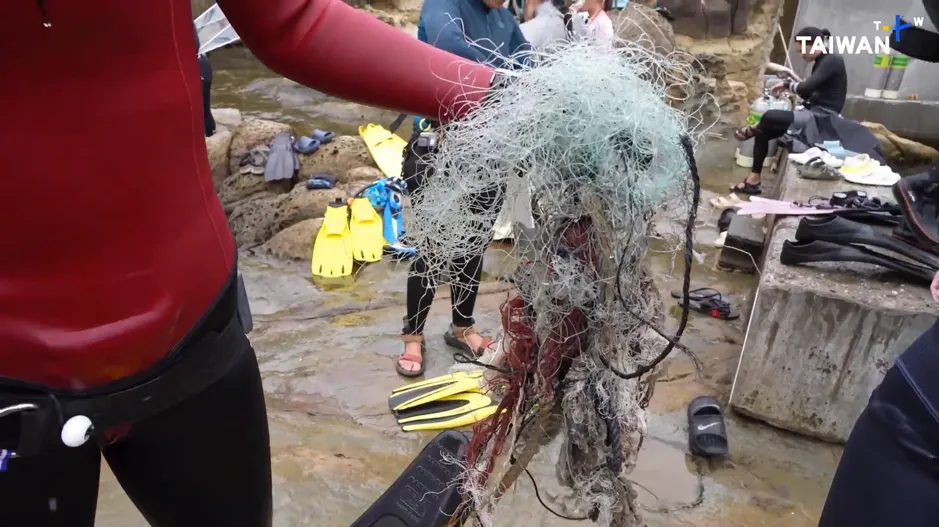
Among the ghost nets retrieved, some marine creatures were found inside — any still alive were promptly released back into the sea. Source: Taiwan Plus
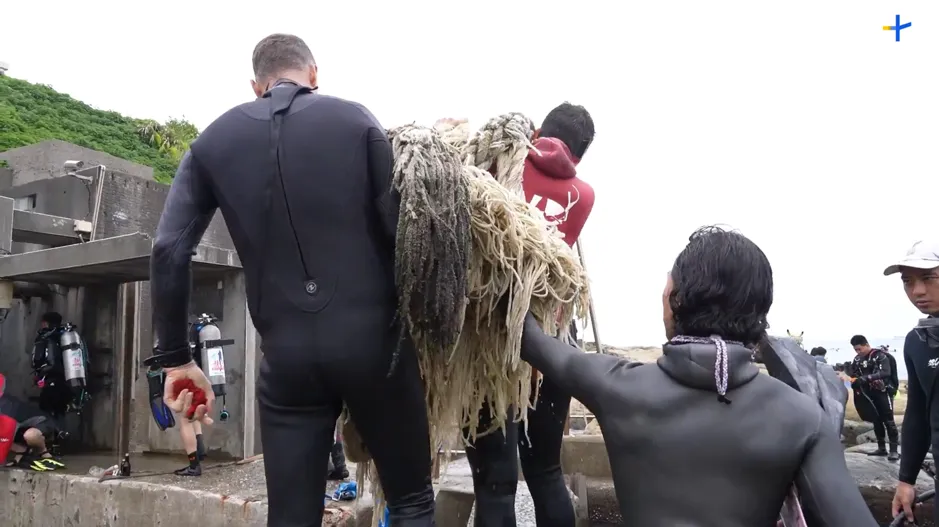
On the way back to shore, volunteers found a large amount of waste at the water entry point as well, and tirelessly carried it all up the steps. Source: Taiwan Plus
By the end of the day, volunteers had collected approximately 90 kg of marine debris in total.
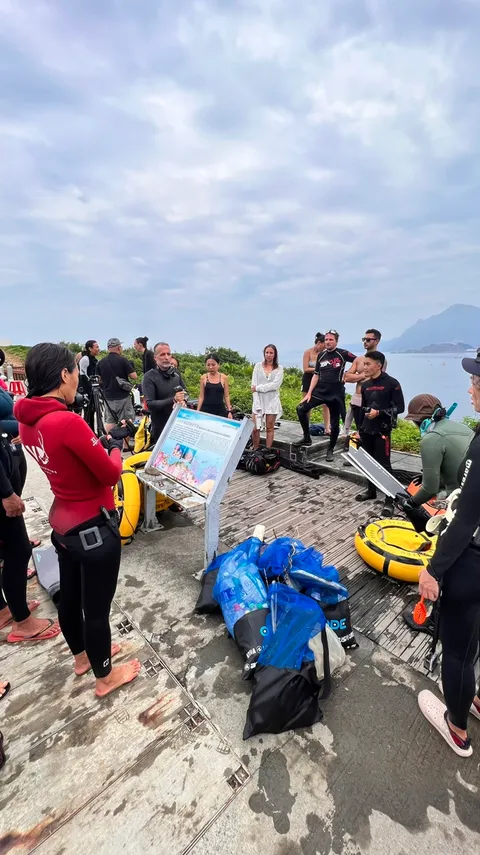
Source: Sigo/Wild Ocean Taiwan
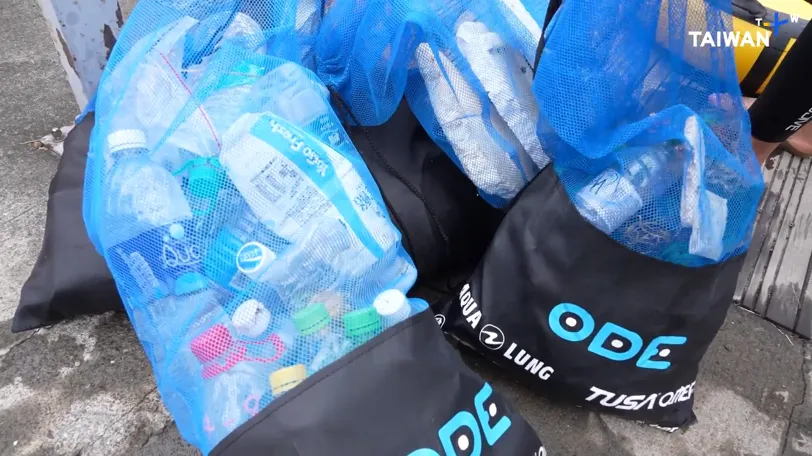
Source: Taiwan Plus
Volunteers then sorted the marine debris and recorded the quantities, which included plastic PET bottles, styrofoam blocks, tin cans, glass jars, and fragments of all kinds of other waste. The data was entered into ICC forms and uploaded to the Wild Bird Society of Taiwan (Ocean Love Little Journey) for the annual marine debris statistics.
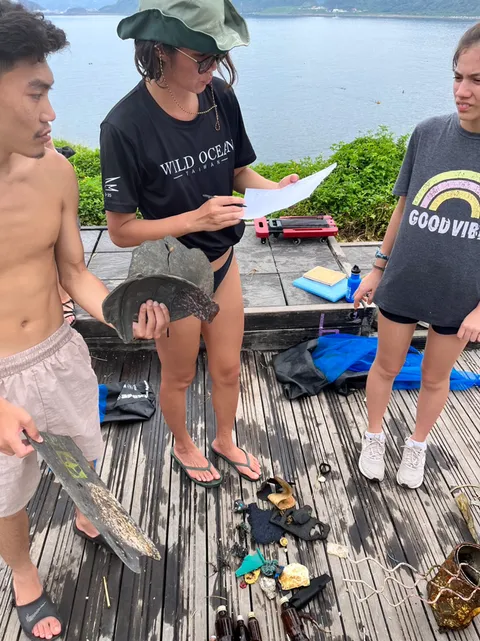
Source: Gweno/Wild Ocean Taiwan
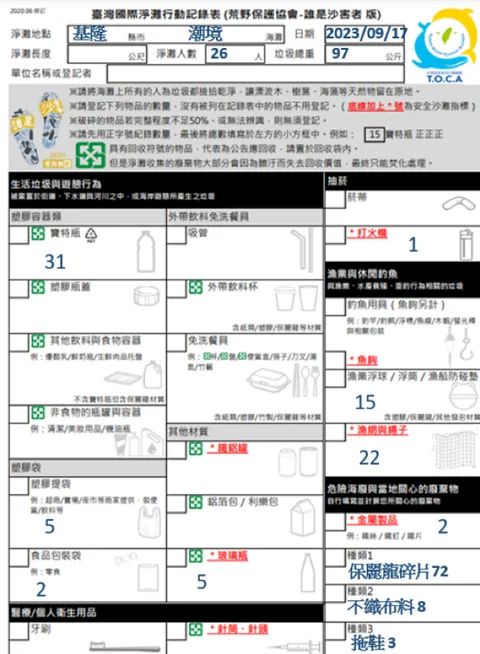
Source: Sigo/Wild Ocean Taiwan
Wild Ocean Taiwan's event brought together everyone who loves the ocean, united in doing their part for the sea.
Once the NGO is formally established, they will continue to organise regular freediving and scuba diving cleanup outings to collect marine debris and ghost nets. Divers who are interested are very welcome to join.
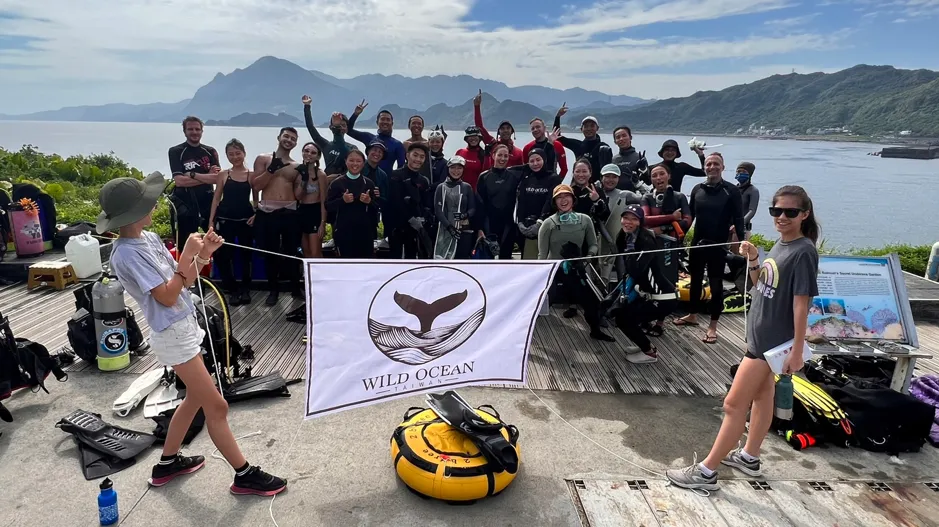
Source: Sigo/Wild Ocean Taiwan
Further Reading: