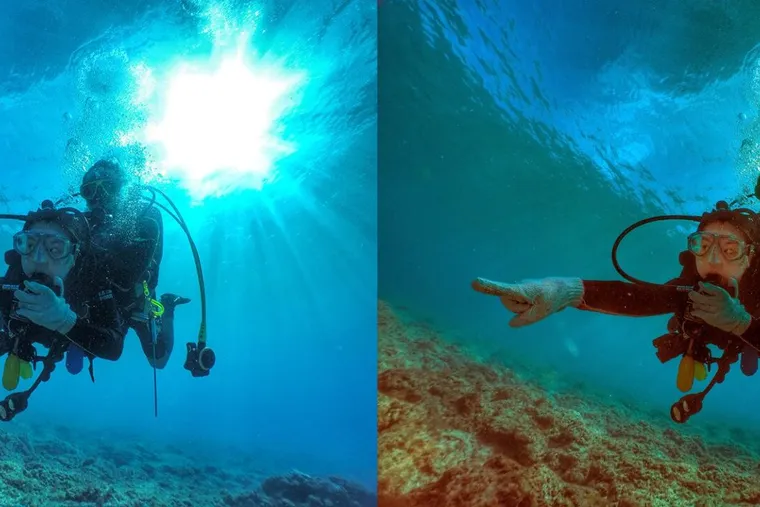
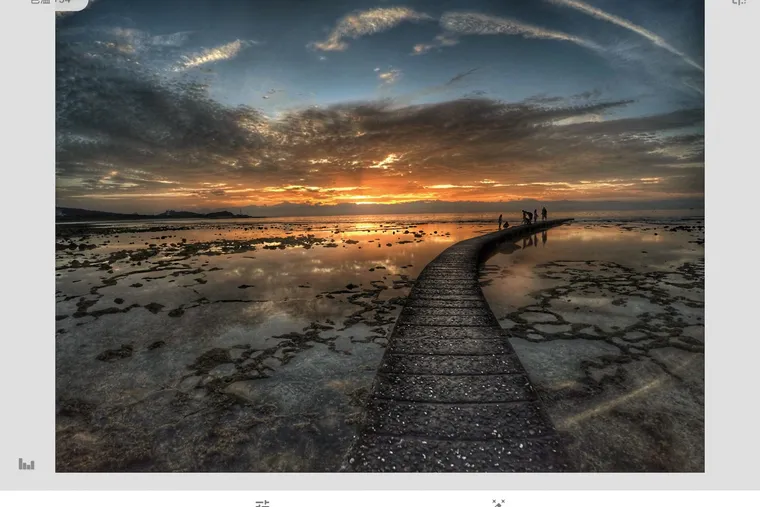
Underwater photography is increasingly becoming a major pursuit, with more and more divers choosing to bring cameras beneath the surface. But right from the start, it's worth asking yourself: is your goal purely to document your dives, or do you want to become a serious enthusiast — or even a professional underwater photography master? Different goals lead to different levels of investment (and yes, that includes how deep your pockets go... wink). But who says you need a DSLR to capture stunning underwater shots? Let's hear from accomplished underwater photographer Violet Ting 丁珮, and learn how she used a single G12 to shoot award-winning, high-quality images!
About the Author

Violet Ting 丁珮
Links: violettp (IG), Facebook, Website
Underwater photography experience: 3 years
Underwater Photography Gear:
- May 2014 – January 2015: Canon G12 compact camera with Canon OEM housing, Subsee +10 wet macro lens, one external strobe Sea&Sea YSD1.
- January 2015 – May 2015: Canon G12 compact camera with Canon OEM housing, Subsee +10 wet macro lens, two external strobes Sea&Sea YSD1.
- May 2015 – present: Nikon D610, Sea&Sea Housing, 60mm macro lens, 16mm Fisheye wide-angle lens, SMC1 wet macro lens, two external strobes Sea&Sea YSD1, Fisheye 800 focus light, Snoot, INON LF800N torch.
Specialties: Light, shadow, and composition — with a focus on capturing the most beautiful moment of a subject's movement.
Awards & Recognition
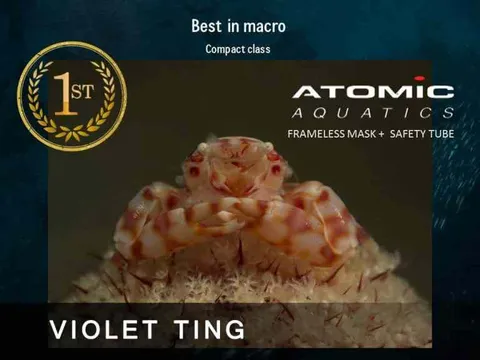
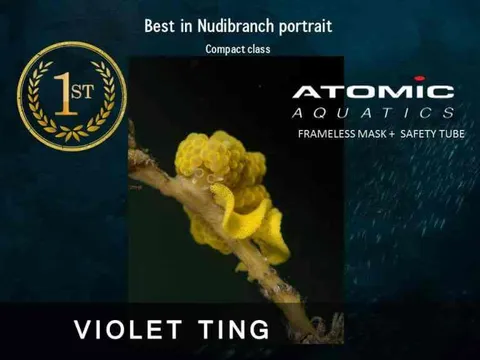
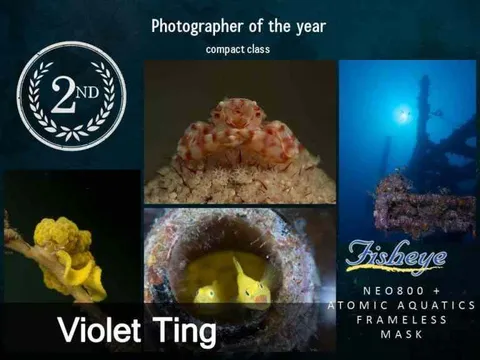
- 2015 — 5th Philippine SNUPS No-Edit Underwater Photography Competition (Compact Camera Category): 1st place, nudibranch portrait category; 1st place, macro category; runner-up, Photographer of the Year.
- 2016 — Awards from European underwater photography website Scubashooter, Chinese underwater photography website, and Underwater Macro Photography.
- 2017 — Invited to join MTOL (Meet The Ocean Ladies), an international group of professional and influential female underwater photographers from around the world.
- February 2017 — Featured in Malaysia's China Post.
- March 2017 — Cover feature in Issue 25 of European underwater photography magazine Scubashooter.
- May 2017 — Invited to speak at Thailand Dive Expo (TDEX).
- February 2018 — Invited to speak at Malaysia dive expo DRT.
- March 2018 — Invited to speak at Singapore dive expo DRT.
- June 2018 — Invited to speak at Taiwan dive expo DRT.
In the beginning, achieving focus could take tens of seconds. I started out with a misconception — I thought getting as close as possible to the subject would make focusing easier. In reality, you can't always push right up to your subject; sometimes you need to pull back a little, and the focus becomes sharper and more accurate. When I first started shooting, I only had one external strobe, the YSD1. Experienced mentors taught me to shoot in manual mode with fixed settings of F8, 1/400, ISO100, and to position the strobe above the subject. Even so, I would adjust the strobe's brightness and angle myself depending on the situation. As a general rule, don't concentrate all the strobe's light directly onto the subject — that causes overexposure. Just a hint of spill light reaching the subject is enough.
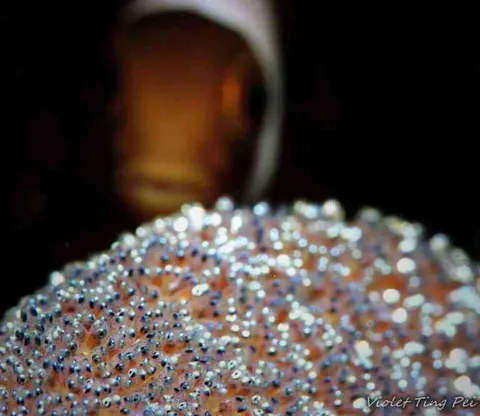
Clownfish with eggs | F8 | 1/400 | ISO100
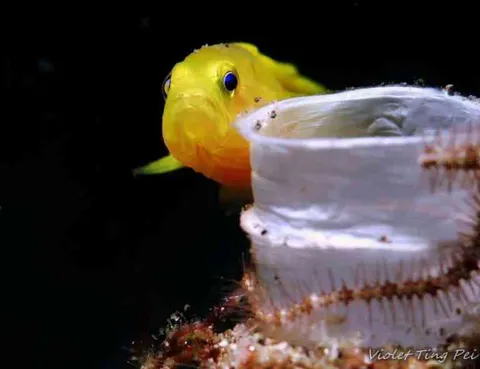
Golden shrimp goby | F8 | 1/400 | ISO100
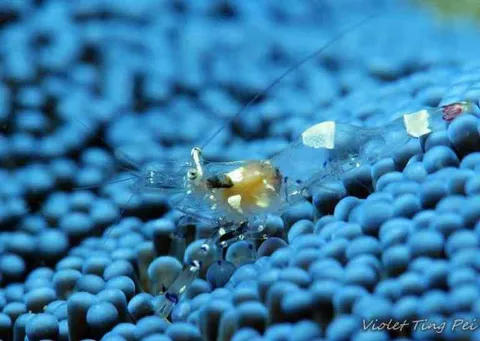
sea anemone shrimp | F8 | 1/500 | ISO100
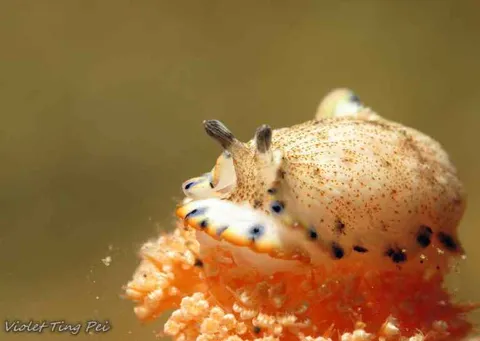
nudibranch Armina Californica | F8 | 1/400 | ISO100
Playing with Wide Apertures
On my fourth macro dive trip, I decided to experiment with wider apertures. Focusing at wide apertures is significantly more challenging, so it requires even more patience. The goal of shooting wide open is to achieve a blurred background — so you don't need to worry about achieving a black background. My initial wide-aperture settings were F4, 1/400, ISO100.
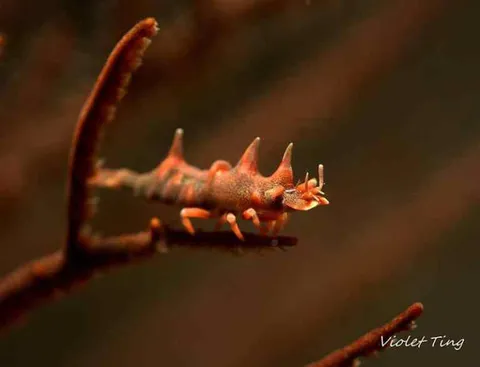
Lobster (Miropandalus Hardingi) | F4.5 | 1/400 | ISO80
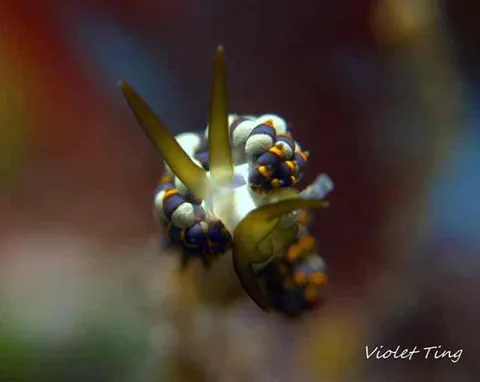
nudibranch (Trinchesia Yamasui) | F4.5 | 1/400 | ISO100
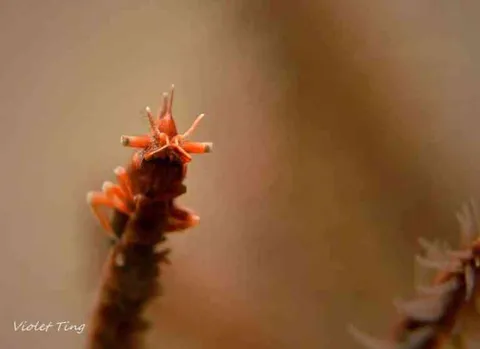
Lobster (Miropandalus Hardingi) | F4.5 | 1/400 | ISO80
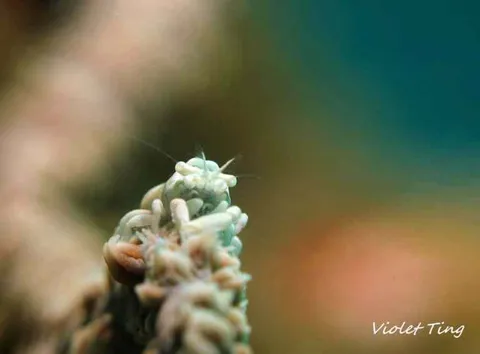
Zanzibar Shrimp | F4.5 | 1/400 | ISO100
External Strobes and Snoots
Starting in February 2015, I began using two YSD1 external strobes. Two strobes definitely make it easier to achieve a black background: position them facing each other and pointing toward the lens, using the side-spill light from both flashes, paired with a small aperture of F8. (F8 is the minimum aperture on the G12.) Shutter speed at 1/400 or 1/500.
For snoot shots, I used one strobe and adjusted its brightness according to the situation, ensuring the light coming through the snoot was soft and not overexposed.
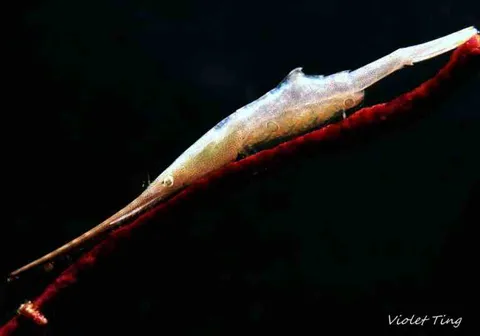
Saw-blade shrimp | F4.5 | 1/400 | ISO100 | with snoot
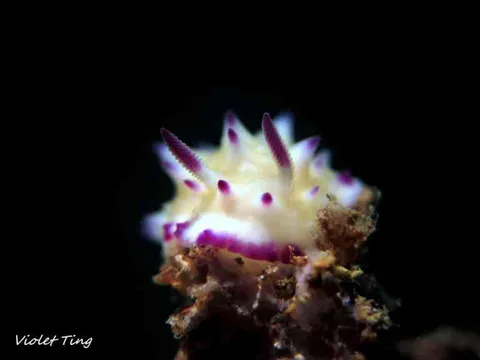
nudibranch (Mexichromis multituberculata) | F4.5 | 1/400 | ISO100 | with snoot
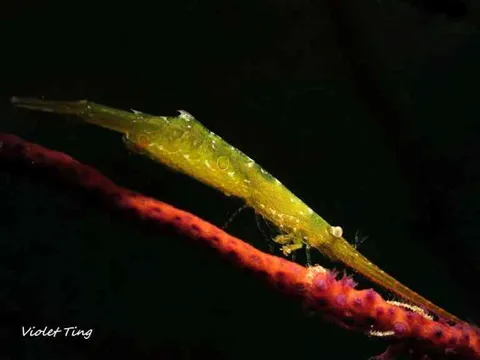
Saw-blade shrimp carrying eggs | F4.5 | 1/400 | ISO100 | with snoot
Care and Maintenance
Every experienced underwater photographer I've spoken to has told me the Canon G12 is a fantastic camera. Many people opt for the official clear OEM underwater housing. Based on my own experience, by the eighth month of use — with fewer than fifty dives logged — some buttons became unresponsive below roughly 20-something metres, only returning to normal at around 18 m. I later heard from others who had used the G12 that almost everyone who used this housing long-term eventually encountered this issue. By the ninth month, it had become severe enough that below 12 m, most buttons were non-functional. A friend eventually told me that spraying D40 solvent onto the button O-rings would fix the problem — and it did. If you're using the OEM housing, please pay close attention to regular maintenance and care.
Award-Winning Work
2015 5th SNUPS Competition — no post-processing allowed; all entries must be submitted in original file format.