Contents(7)
The Editor says: In recent years, environmental awareness in Taiwan has been on the rise. Beyond individuals voluntarily reducing their waste, the government has also begun pushing forward plastic-reduction legislation. But changing people's established habits always comes with challenges — and the most common argument people make is: "I put my trash in the bin, so I'm not hurting the ocean." However, Ariel Wu, who works at the Ocean Citizens Foundation, lets the data speak for itself, revealing the truth of the matter. So yes — reducing waste is the real answer!
This article is adapted from Ariel Wu's Facebook. Because the Editor has previously worked at a company researching plastic pyrolysis technology, supplementary notes from the Editor are included to provide context on the current state of the industry.
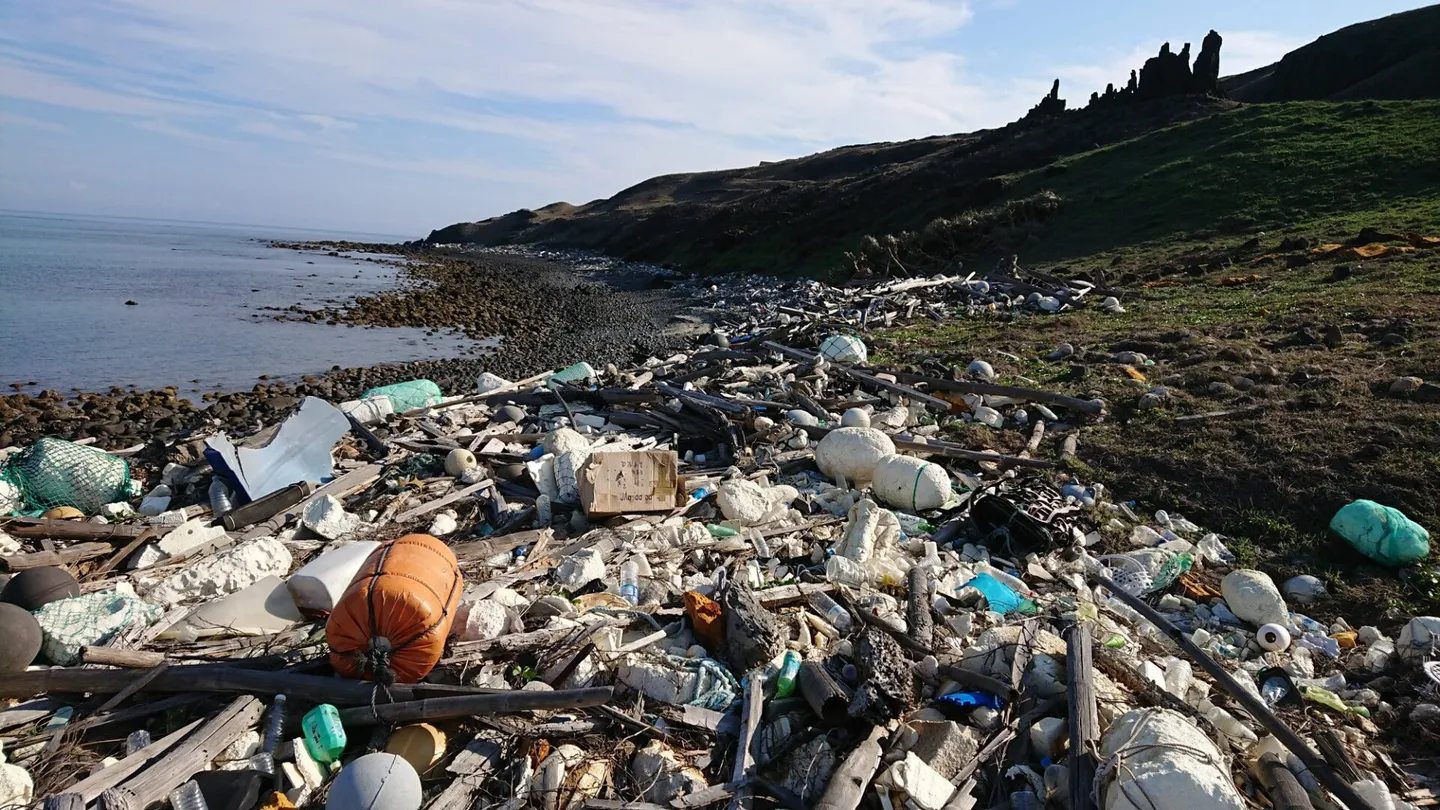
I came to Penghu last October
Because I'm responsible for beach cleanup and marine debris-related work
I've visited many "secret marine debris spots" XD
This is the Penghu I've seen over the past six-plus months
There are no overflowing wave-dissipating blocks or concrete seawalls here
If those piles of garbage could just be Photoshopped out
It would truly deserve the title of one of the world's most beautiful bays
Penghu is actually gorgeous  <3
<3
▍Further Reading: 『Diving Taiwan』Penghu — A Captivating Collision of Cultural Heritage and Natural Landscape, an Outlying Island Full of Surprises
Who Is Harming Our Ocean Environment?
When I give talks, I start by showing photos I've taken myself
And ask the audience whether what they see matches the beaches they're used to seeing
"Before we discuss who is littering, have you ever thought about where the trash we produce every day actually goes?"
"Once you throw something in the bin, does it simply vanish from the face of the Earth?"
The ways humans currently handle garbage can be broadly divided into recycling, landfilling, and incineration
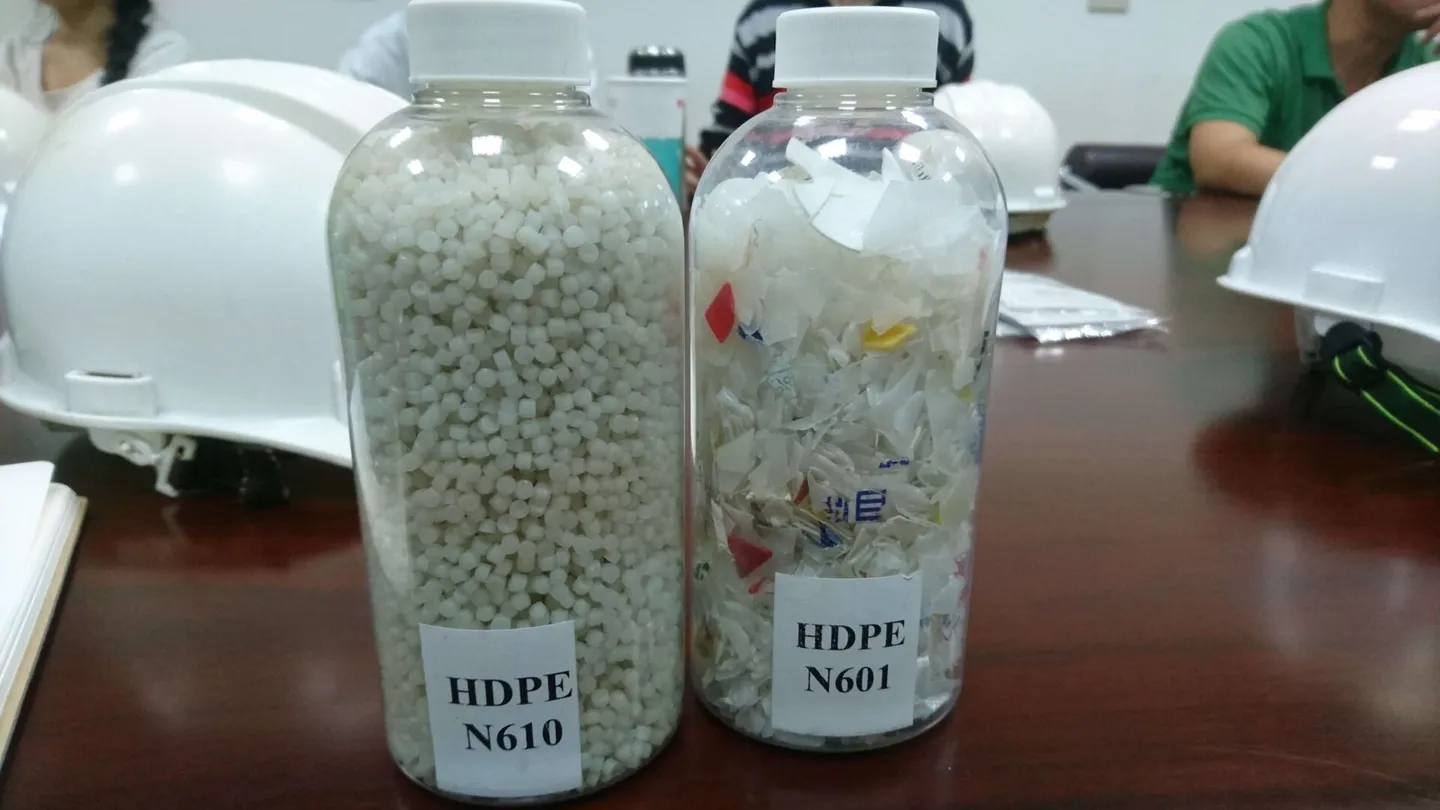
Recycled plastic pellets vs. shredded plastic


What Do You Think of When You Think of Recycling?
【Recycling】
Generally considered the gold-standard solution — as if tossing a PET bottle into the recycling bin means it can be endlessly reused and turned into a brand-new bottle, making it the seemingly perfect approach. But did you know?
Recycled material cannot match the quality of virgin material, and can only be used to manufacture lower-grade products — a process known as downcycling. Take PET bottles, which have Taiwan's highest recycling rate, as an example: due to food safety regulations, recycled material cannot be remade into PET bottles (food packaging must use virgin material only).
Having actually visited a recycling facility and watched these bricks of PET bottles go through manual sorting, shredding, density separation, washing, dewatering, packaging, and pelletizing — just to become usable plastic material — it's clear that the labor, water, and electricity consumed in this process represent yet another form of drain on the planet. Not to mention the wastewater generated from washing the bottles: is it treated to regulatory standards, or is it quietly discharged into rivers through hidden pipes?
For PET bottles, which command a better recycling price, the system is relatively functional. But for other items on the officially mandated recycling list, it's another story — if the processing cost exceeds the profit, those "recyclable" materials may simply end up in the incinerator anyway.
Editor's note: The PET bottles we typically collect during beach or ocean cleanups are generally not accepted by regular recycling facilities. The sand, seaweed, and other matter clinging to them drives up processing costs and can even cause machinery to malfunction — so recyclers want nothing to do with them. Also worth noting: bottle caps cannot be recycled, and any PET bottle that isn't pure white cannot be recycled either!
【Landfilling】
To me, landfills are essentially an out-of-sight, out-of-mind solution — bury all the garbage, and once you can't see it, the problem is "solved." But that garbage, especially plastic, can persist for hundreds of years. How can we guarantee that over those centuries, landfills won't be compromised by typhoons, earthquakes, aging infrastructure, or other natural and man-made disasters — sending that waste tumbling into the sea?
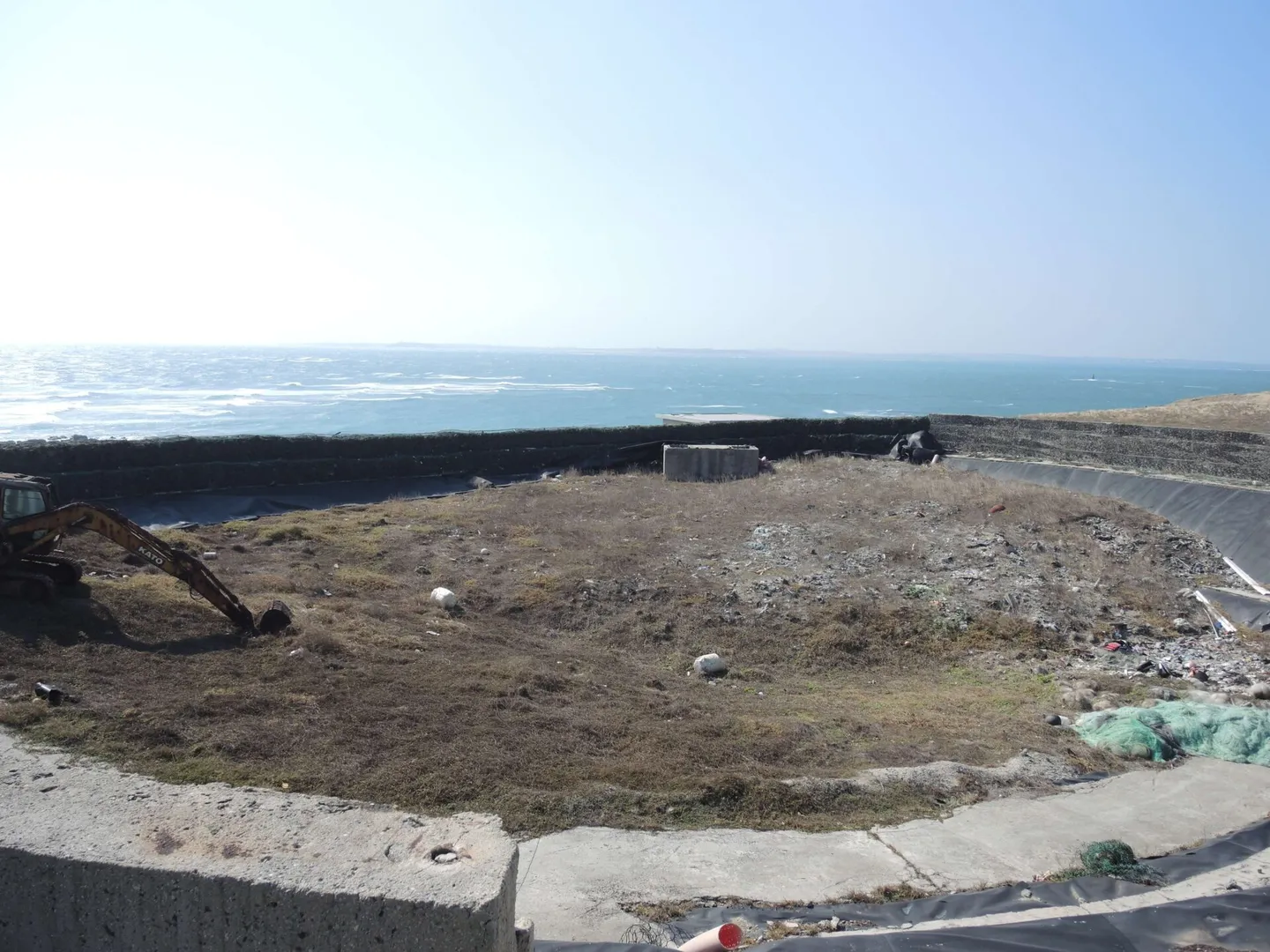
Taiwan's landfills are often sited on remote coastlines
The world's first plastic was produced just over a hundred years ago, yet plastic can last 400 to 600 years — meaning that very first piece of plastic ever made may still be largely intact today.
What's more, plastic does not "decompose" in the natural environment — it "fragments." It keeps breaking into smaller and smaller pieces until they're invisible to the naked eye, but they never truly disappear. These microplastics can then re-enter the human body through the food chain.
Editor's note: Scientists refer to these tiny plastic fragments as microbeads. Their greatest danger lies in their ability to adsorb lipophilic chemical compounds from seawater — such as bisphenol A (BPA) and polychlorinated biphenyls (PCBs) — which then enter the human body through the food chain. These chemicals are linked to modern-day conditions such as infertility and developmental abnormalities in infants.
【Incineration】
Incineration might seem like a once-and-done solution, but the garbage doesn't simply disappear when it enters the furnace. Beyond the potential for air pollution when furnace temperatures aren't high enough, the bottom ash that remains creates a whole other set of problems.
Penghu, unable to process its own waste, must ship the majority of its garbage to incinerators in Kaohsiung. In addition to the considerable transport costs, as a condition of having Kaohsiung accept its waste, Penghu must in turn handle bottom ash at a ratio of 1:1.67 — meaning for every 100 tonnes of garbage we send for incineration, we must manage 167 tonnes of bottom ash. The same issue affects other outlying islands such as Kinmen and Lienchiang County.
And on top of all that: after a fire at a Kaohsiung recycling facility in April of this year, Penghu has had nowhere to send its garbage for the past two months, resulting in an accumulation of more than 3,000 tonnes…
Editor's note: Taiwan's incinerators are aging across the board. Not only is their combustion efficiency declining (the boiler walls accumulate residue from incompletely burned plastic over time, further reducing heat transfer efficiency), but the carbon dioxide emissions and bottom ash they produce have also increased. Yet Taiwan, hamstrung by populist sentiment, cannot build new incinerators — the old ones are simply being pushed past their limits.
As mentioned above, PET bottles can be recycled, but the labels on those bottles cannot — and those labels are a prime culprit in causing incinerators' boiler walls to clog. So even if a recycling facility offers above-market rates for processing, incinerators refuse to handle them. It's reported that a recycling unit in Yunlin County has accumulated massive piles of PET bottle labels with absolutely no way to process them.
200,000,000 takeaway drink cups used every year
8,000,000 plastic straws used every day
Though scientists around the world are working hard to develop various methods of dealing with plastic — including biodegradation and pyrolysis-based recovery technologies — these approaches are still far from commercial-scale viability. Until that changes, the best way to handle garbage is simply to not produce it in the first place. This ocean, this planet, simply cannot keep up with the speed and volume at which we generate waste.
Editor's note: The fierce debate this year over how to enjoy bubble tea under a plastic restriction is rooted in human laziness. Single-use plastics are cheap, have a fleeting lifespan of utility, yet inflict lasting harm on the planet. While technology has yet to offer an effective solution to the plastic problem, top-down government restrictions on plastic use may be the most meaningful response we can give the Earth right now.
▍Further links: