![[BlueTrend Classroom] Toxic — Don't Touch! The Drifting Dream Blue Angel — Glaucus Nudibranch](/_images/282cdac95461-1440w.webp)
Contents(7)
- Introduction to the Dream Blue Angel: The Glaucus Nudibranch
- What Do Glaucus Nudibranch Eat?
- The Glaucus Nudibranch's Party Trick? The Backstroke
- How to Tell the Two Species of Glaucus Nudibranch Apart
- Blue Glaucus Glaucus atlanticus
- Diminutive Blue Dragon Glaucilla marginata
- When and Where to Find Glaucus Nudibranch
The Editor says: Most people are familiar with nudibranch — a group of shell-less gastropods — but did you know there's a group of nudibranch that spend their entire lives floating on the surface of the open ocean, never touching the seafloor? This fantastical nudibranch is today's subject: the Glaucus nudibranch, a dream creature that every ocean lover wants to see but rarely gets to. And the Glaucus nudibranch isn't just remarkable in appearance — it has a host of peculiar habits and secrets. What are they? Follow BlueTrend and get to know this dream blue angel!
Introduction to the Dream Blue Angel: The Glaucus Nudibranch
The Glaucus nudibranch, which inhabits the surface of the open ocean, is a small creature — most are only 1–3 cm in length. It has three clusters of cerata extending outward on each side, like a pair of beautiful wings, which is why its common names include "blue angel" and "blue dragon." Its body is white with blue stripes, covered in a silvery-white metallic sheen. It cleverly uses countershading: while floating in the water, it keeps its belly — marked with vivid blue patterns — facing upward, blending perfectly with the blue light reflected up from the deep sea. Its silver-grey dorsal side faces downward toward the sea floor, making it match the sunlight shining down on the ocean surface when predators below look upward for prey. This smart camouflage helps it evade predators and improve its chances of survival — pretty impressive!
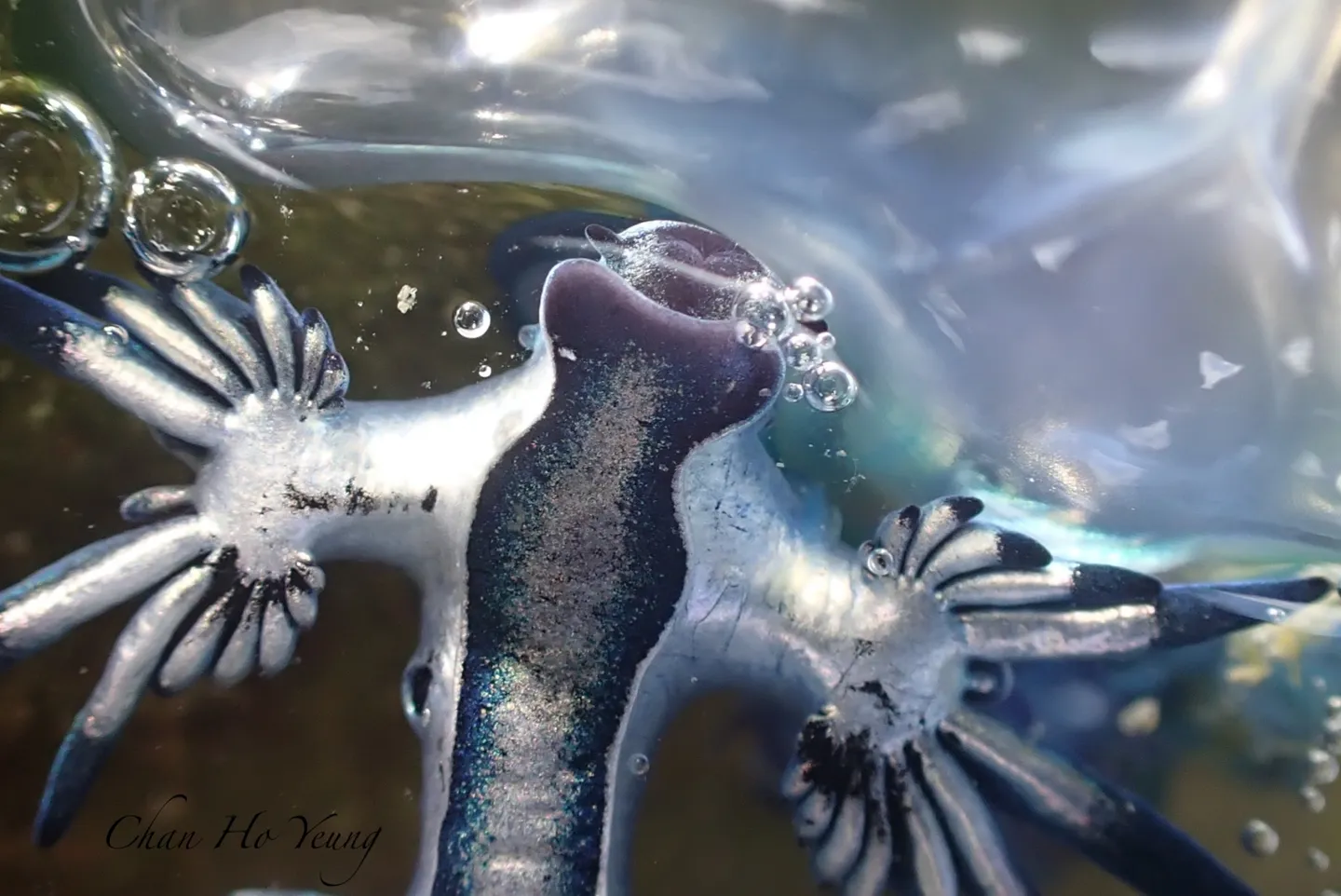
A Glaucus atlanticus feeding on a jellyfish. photo credit:Chan Ho Yeung。
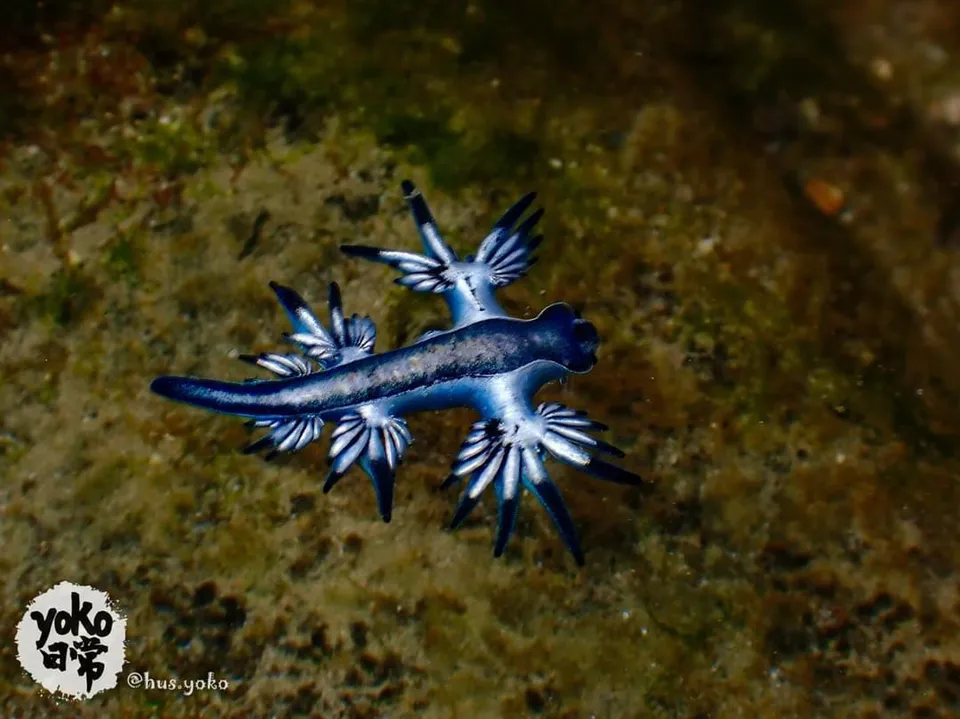
2023/11/21 — spotted at Chaoching (潮境). photo credit:Yoko。
Glaucus nudibranch typically inhabit the open ocean and rarely approach the coast, but occasionally, when the monsoon shifts or ocean currents change, they are swept ashore — and that is when people get the rare chance to spot them.


What Do Glaucus Nudibranch Eat?
The Glaucus nudibranch may look delicate, but it is actually a tiny apex predator of the ocean surface. Its favourite food is jellyfish — especially porpita (button jellyfish) and the Portuguese man o' war (Physalia physalis), which drift on the same surface layer. Completely unintimidated by the potent venom in jellyfish tentacles, the Glaucus nudibranch approaches and consumes them directly. Not only does it get a full meal from the hunt, but — even more impressively — it stores the nematocysts (stinging cells) from the jellyfish tentacles, transporting them through its digestive tract to the tips of its cerata, where they become a venomous weapon against predators.
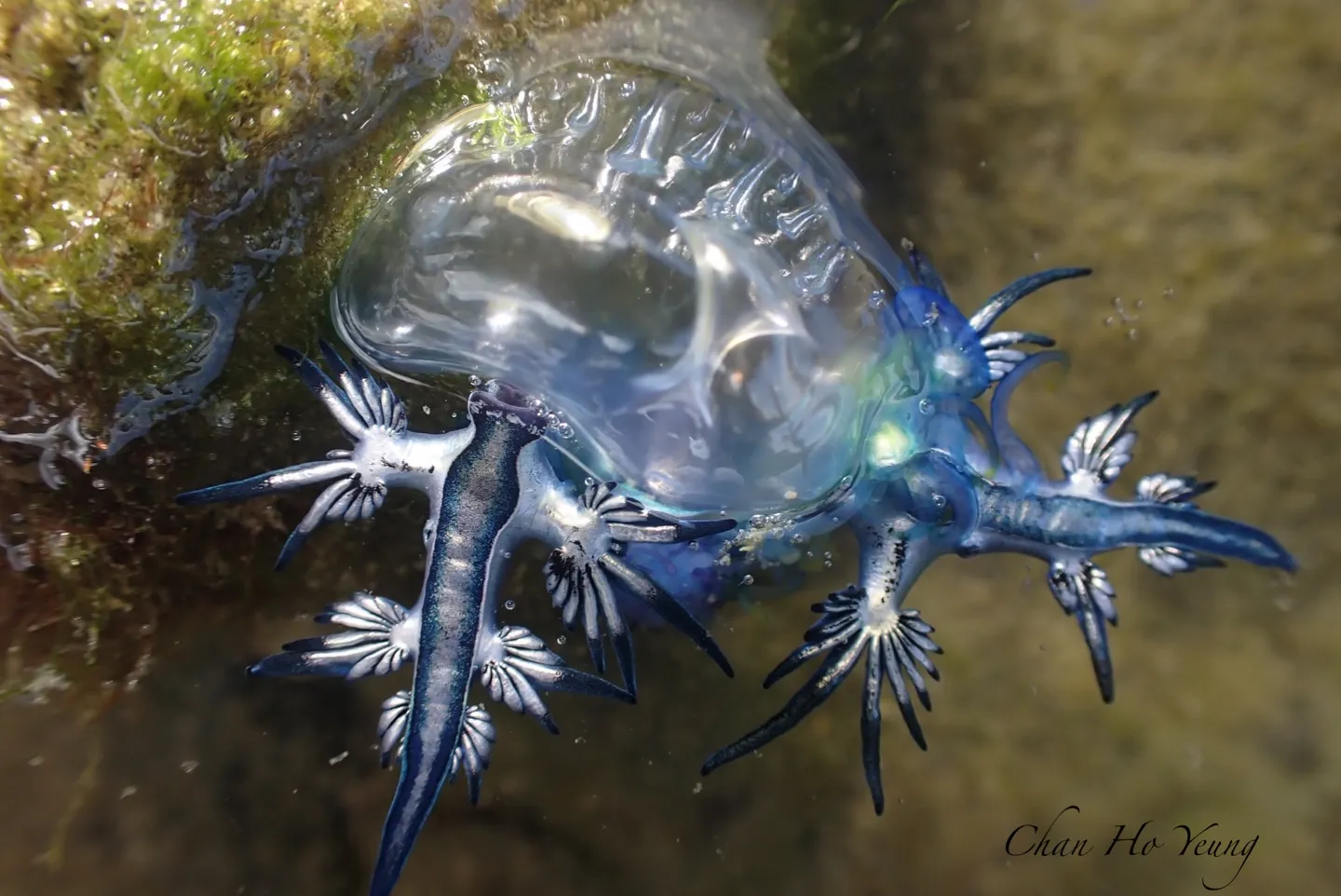
A Glaucus atlanticus feeding on a Portuguese man o' war. photo credit:Chan Ho Yeung。
P.S. If you spot a beautiful Glaucus nudibranch, remember — never touch it!
The Glaucus Nudibranch's Party Trick? The Backstroke
Common nudibranch slowly crawl across reef surfaces, but the Glaucus nudibranch doesn't get around by crawling. It has a unique internal organ that stores air, which it uses to regulate its buoyancy by controlling the size of the air bubble; it then moves along the ocean surface by undulating its cerata. Although capable of self-propulsion, the Glaucus nudibranch spends most of its time drifting leisurely, passively carried by wind and ocean currents to conserve energy. When you spot a Glaucus nudibranch from the surface, it is actually floating on its back — with its foot-side facing upward — like a perpetual backstroke swimmer. So the vivid blue colour you see pointing skyward is actually its belly!
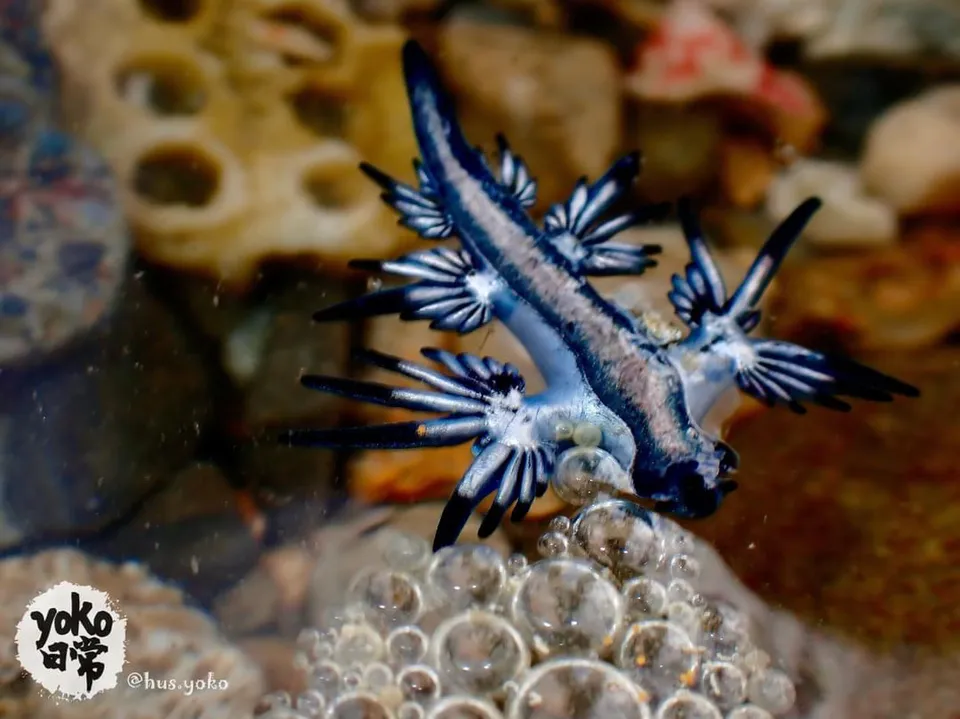
Its signature move: the backstroke! photo credit:Yoko。
How to Tell the Two Species of Glaucus Nudibranch Apart
Don't assume that anything blue and "winged" is the same species — did you know there are actually two species of Glaucus nudibranch? Although they look and behave similarly, a closer look reveals that their cerata are quite different. Let's take a look!
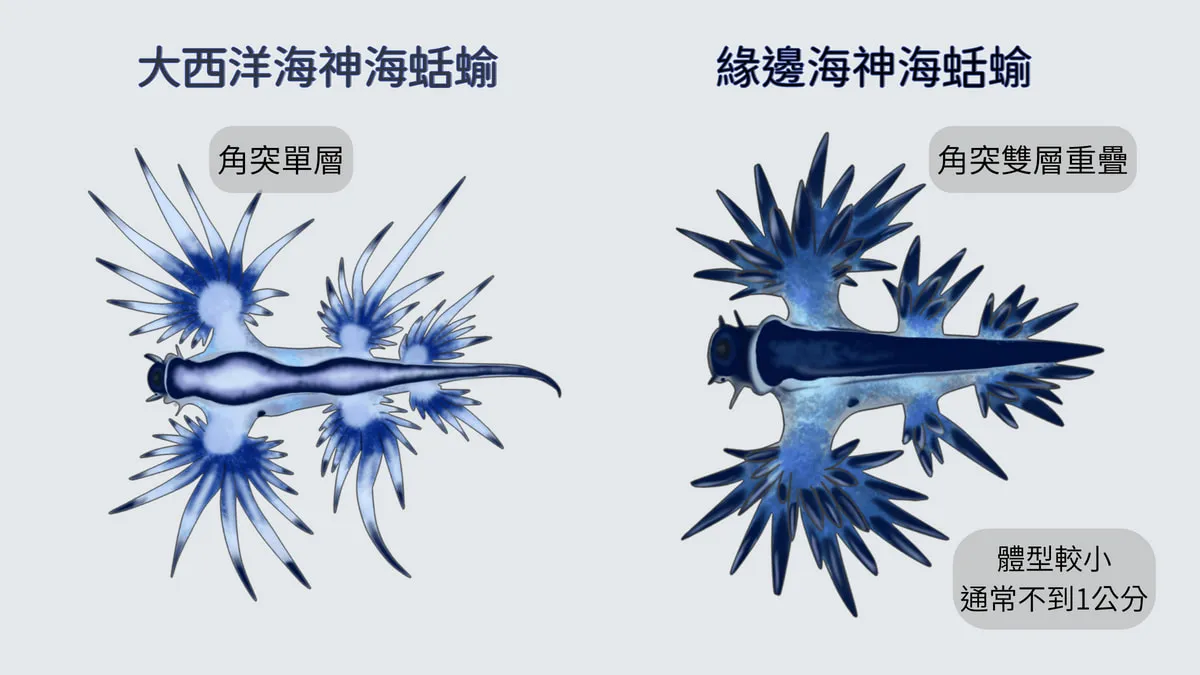
Blue Glaucus Glaucus atlanticus
This species is the more commonly encountered of the two. It tends to be swept ashore with jellyfish swarms during monsoon transitions. Its body is slender and silvery-white with a metallic sheen. Its cerata are arranged in a single layer in the same plane, forming the characteristic wing-like structure.
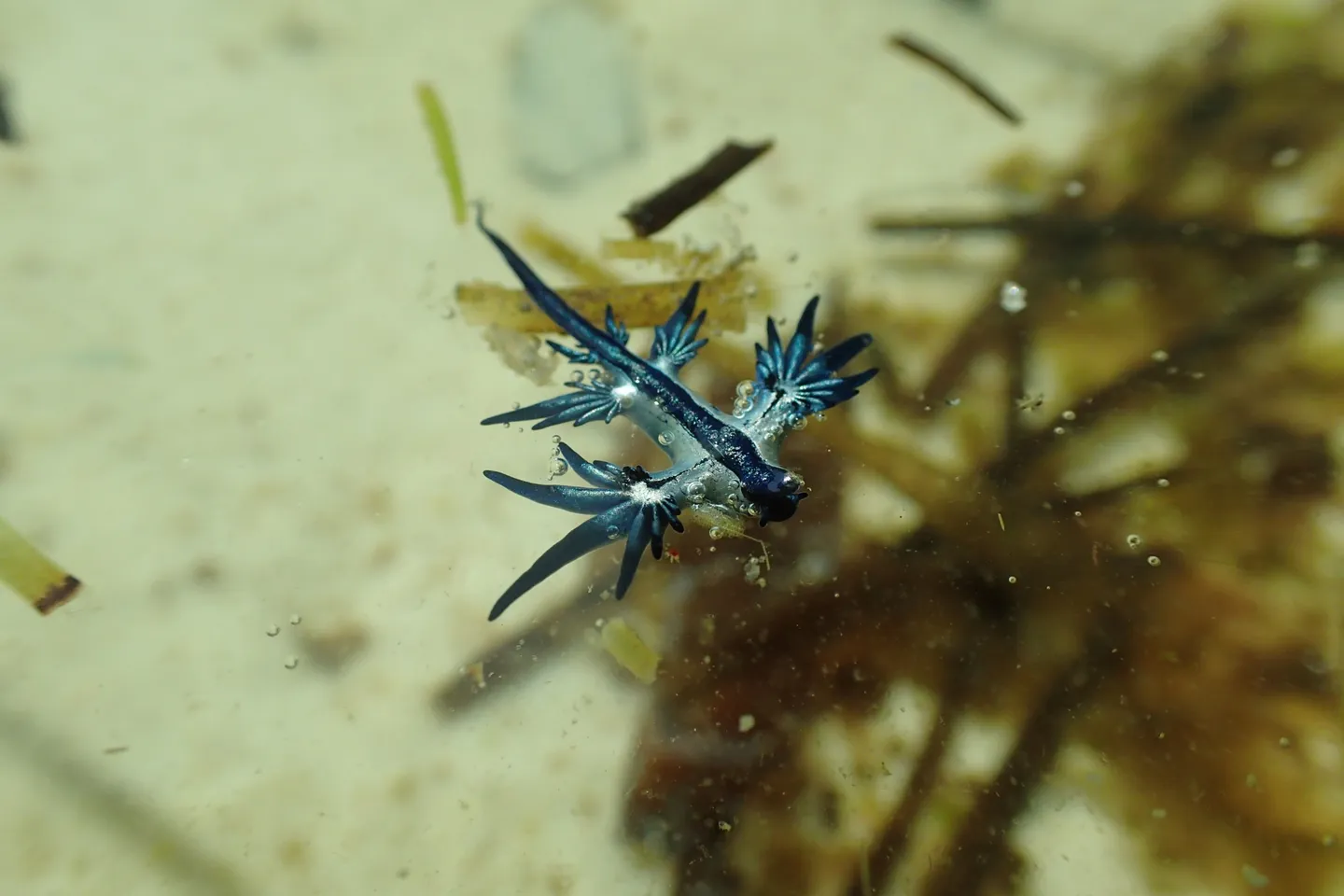
Glaucus atlanticus. photo credit:Wox Lee。
Diminutive Blue Dragon Glaucilla marginata
This species is smaller than Glaucus atlanticus, with a body length typically under 1 cm. Its cerata are arranged in a double layer, giving this pair of "wings" a more three-dimensional appearance.
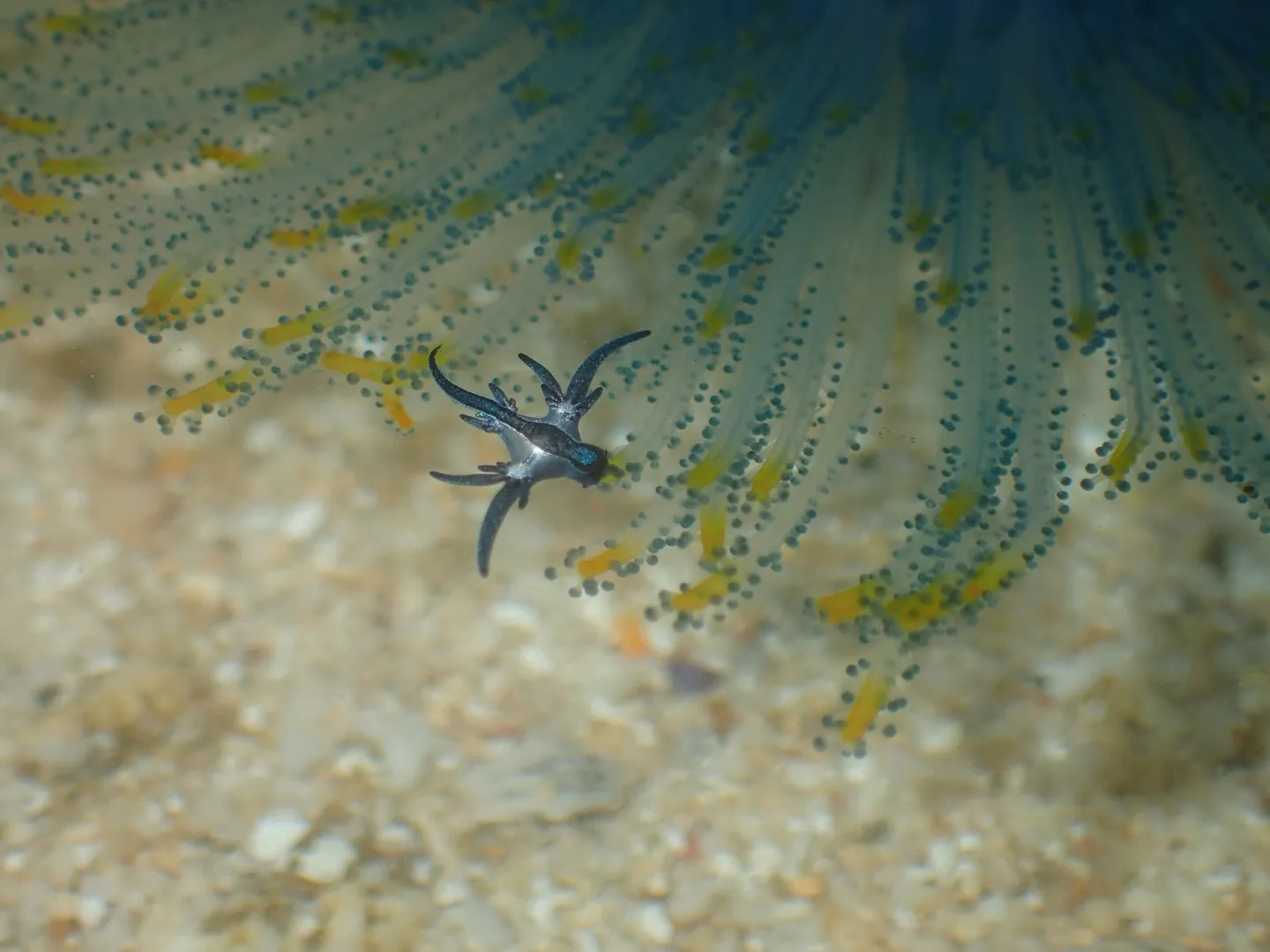
Glaucilla marginata. photo credit:Wox Lee
When and Where to Find Glaucus Nudibranch
The sprite-like Glaucus nudibranch is a long-dreamed-of treasure for many divers. The moment word gets out that one has appeared, people rush to catch a glimpse. But the Glaucus nudibranch is fleeting — here one moment, gone the next — appearing in sudden bursts and vanishing just as quickly. BlueTrend has a few tips to help you maximise your chances of meeting this lovely blue angel at the right time and place!
The Glaucus nudibranch — like a little angel. photo credit:Yoko。
-
During seasonal transitions, e.g. the autumn-to-winter changeover period.
-
When sea conditions and wind direction shift, e.g. a change in wind direction can carry drifting objects (including jellyfish) toward shore, and Glaucus nudibranch — chasing their floating food — are swept ashore along with them.
In Taiwan, the most recorded sightings of Glaucus nudibranch washing ashore have been in Keelung, Kenting, Xiaoliuqiu, and Green Island. Most occurrences fall in spring or autumn, when the climate is beginning to change — these are your best windows. Even so, encountering them still involves a great deal of luck, so you'll need to make frequent trips to the coast and try your chances. We hope every ocean lover has the good fortune to witness these dream angels of the sea with their own eyes.
Much remains unknown about the reproduction and life cycle of the Glaucus nudibranch, which means every sighting record is a valuable piece of ecological data. If you happen to encounter a Glaucus nudibranch at the beach, don't forget — after excitedly snapping your photos — to upload your images to the marine life database, so we can accumulate more data to record and analyse these remarkable creatures!
P.S. The Editor quietly reminds you: in an age when information is at everyone's fingertips, pay special attention to accuracy! There is a vast amount of content online, but where does it come from? When looking for articles or literature, try to refer to sources with relevant academic credentials to avoid picking up incorrect information!
Biology consultant: Wox Lee
Editor-in-charge: Jenny Tsai
Further reading:

![[BlueTrend Mini Classroom] Stressed Out and Dropping Limbs? The Sea Star Is the Ocean's Most Dramatic Creature — and Its Biggest Enemy Might Surprise You!](/_astro/004_%E5%B8%83%E9%AD%AF%E5%B0%8F%E6%95%99%E5%AE%A4_vivipic_Z2g4jPr.webp)
![[BlueTrend Classroom] The Most Beautiful Sea Cucumber — The Sea Apple Is Actually a Hidden Underwater Bomb?](/_astro/004_%E5%B8%83%E9%AD%AF%E5%B0%8F%E6%95%99%E5%AE%A4_vivipic_Z1c6nxu.webp)