

Contents(5)
Dive season is here again, and I always receive a flood of calls asking about diving.
The most common question: "Hi, do you offer scuba diving lessons there?"
I smile and reply: "Yes, we do — what would you like to know?"
The caller continues: "How much does your course cost?"
I keep smiling and reply: "Our beginner scuba diving course takes three days and costs NT$13,000."
The caller then asks, with a proud tone: "Can you give us a discount? We're a big group — there are two of us!"
(I could practically feel the overflowing pride radiating through the phone.)
I put my smile away, kept my tone calm, and replied firmly: "I'm sorry, that is our set price — however, if you're coming as a pair, we can offer a NT$500 discount."
The caller, sounding a little dismissive, said: "But other shops are cheaper! Can't you match their price?"
My inner voice said: "Then why don't you go there?" — but I still replied calmly and firmly: "You're welcome to shop around, and feel free to ask us any questions anytime!" (The final word was delivered at least eight tones higher than the rest of the sentence.)
I might receive hundreds of calls like this over a single summer. Since I'm also a consumer myself, I completely understand that price is absolutely the top priority for most people.
But beyond price, when it comes to learning to dive, I really hope you'll take the time to compare what makes each dive shop different.
There is no single "best" dive shop. The options are incredibly diverse, and beyond price, when planning a dive trip, you should pay attention to these three key dimensions: "Dive, Life, Style". This will help you decide whether every dollar you spend is truly worth it in your own mind. I'm confident that by asking around and having a few conversations, you will find the dive education centre that fits you best.
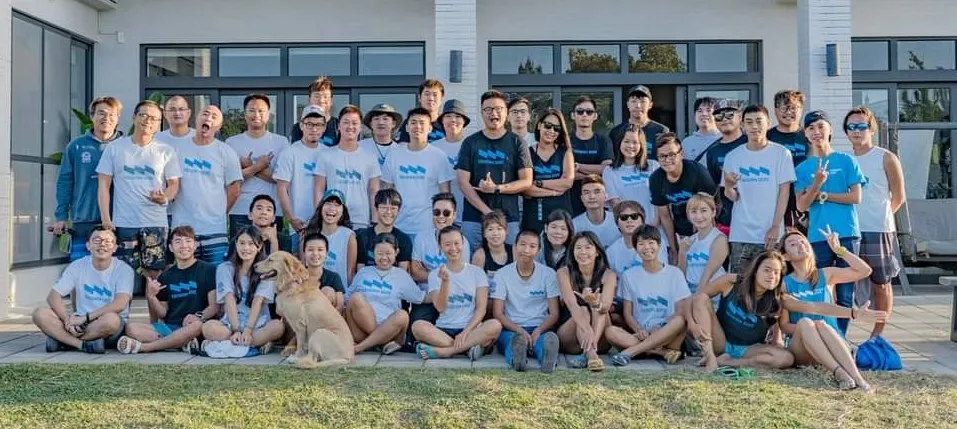
3 Dimensions for Planning a Dive Trip
1. "Dive": Diving Itself
There are 3 things you must pay attention to when it comes to diving fundamentals:
A. Certification System
Which dive certification agency does the shop use?
The cost difference can be significant (NT$1,000–1,500). Currently the highest market share belongs to PADI (certification agency), with other systems such as SSI (certification agency) / SDI (certification agency) / CMAS and more. Different systems have different teaching methods and rules, but they all ultimately aim to teach you to dive — a bit like language proficiency tests (IELTS, TOEFL, TOEIC), which all ultimately measure your English ability.
Each system has its pros and cons, so choose based on how you intend to use your certification. Also consider: is the certification fee included in the course fee? Does obtaining the certification follow a standardised set of teaching standards?
Normally, a certification system will require each student to complete one confined water session
(a pool or calm water environment) and four open water dives (in the actual ocean).
In short, you will use at least five scuba tanks / cylinders, plus complete a set of required skill demonstrations.
B. Instructor-to-Student Ratio
How many students does one instructor take? I think this is the most important question — and the very first one you should ask.
PADI (certification agency) teaching standards allow a maximum of eight students per instructor, but only under the condition that their confined water training has been excellent and the ocean conditions on the day are extremely calm.
One instructor managing eight students is extremely challenging, so each shop adjusts the ratio according to their own shop's characteristics. At our company, one instructor is required to take no more than two students; if the number exceeds that, we choose not to accept the booking.
If one instructor takes four students and one of them falls behind, the other three have to stop and wait. Of course, a one-on-one setup is the ideal scenario, though the cost will naturally be higher.
Another thing to pay attention to is whether the instructor will change during the course. It is best to have the same instructor for all three days; outside of special circumstances, we do not recommend switching instructors.
The instructor knows your learning progress best. If you switch to a different instructor, they have to adapt to you and you have to adapt to them — which can significantly reduce the overall efficiency of learning.
C. Dive Equipment
The first lesson in learning to dive is familiarising yourself with the equipment, so you should first find out what gear is included — (light gear: mask, snorkel, fins, wetsuit, booties / heavy gear: regulator, BCD, scuba tank / cylinder, weight system). Also, does the shop provide a dive computer and a surface marker buoy (SMB)? (The latest PADI (certification agency) curriculum includes instruction on using a dive computer and a surface marker buoy (SMB), so these two items can help you assess whether a shop is using the updated curriculum.)
How many days does the equipment rental cover (normally 3 days)? What is the rate for additional days? (For example, for make-up lessons.) (The going rate for a full set of equipment rental is NT$1,000 per day.)
2. "Life": Travel Experience
I often say that diving is not just about diving — it is also about experiencing a different way of life and a style of holiday. That is why the travel elements are something students care deeply about.
A. Meals
Everyone travels differently. For me personally, food is a big deal.
A great meal can make me happy for a long time and adds a lot of value to the whole trip.
So you can ask the shop whether meals are included. At our company, we provide lunch during training days, and if you are staying with us, breakfast is also provided.
For dinner, an instructor will take you out to explore different local eateries (at your own expense).
B. Accommodation
Although most of your time when learning to dive is spent at or under the sea, having good quality accommodation is also very important for learning effectiveness.
Most dive shops by the sea offer accommodation — en-suite rooms, or shared-bathroom rooms and dormitory-style beds. Some dive shops include accommodation in the course fee, so be sure to ask about this upfront.
C. Other (Transport, Insurance)
For transport, there are two parts to understand clearly:
First: how do you get from where you live to the dive shop? (For example, if you live in Taipei, how do you get to Kenting?)
Second: how is transport arranged during the training period after you arrive at the dive shop? (For example, how do you get to dinner after class?)
For insurance, besides standard travel insurance, is there dedicated dive insurance? After all, diving is considered an activity that carries some risk.
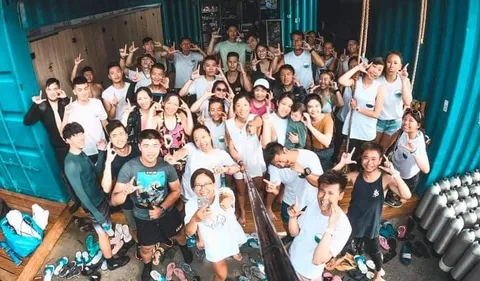
3. "Style": Dive Shop Character
Diving is an activity with a very strong human element, so I strongly encourage you to chat with your instructor before the course begins and get a feel for how the dive shop operates. You will definitely be able to find the teaching style that suits you best.
A. Part-Time Solo Instructor vs. Established Dive Shop
You don't have to look for a large dive shop to learn diving.
The advantage of an individual instructor is that they can give students plenty of practice time, the course content is more flexible, and the overall experience tends to feel more personalised. However, compared to a business, the logistical resources aren't as extensive, and they may not operate 365 days a year. Many things need to be discussed and coordinated with the instructor directly, and a fair amount of mutual flexibility may be required.
So if your schedule isn't very flexible, you may find yourself somewhat constrained. In that case, finding a larger dive shop with more solid logistics and systems in place would be a better fit.
B. City Shop vs. Seaside Shop
City-based dive shops typically use 3–4 weekday evenings for pool sessions and classroom instruction, then head to the ocean for open water training on weekends. Their advantage is a richer selection of travel and dive equipment, and you can also drop by the shop for a chat and socialise anytime — the bond between instructor and student tends to be quite warm.
Seaside dive shops have been opening more and more in recent years, typically offering a three-to-four-day full-day course. The advantage is the holiday-like atmosphere and the convenience of being right by the ocean.
C. Style and Personality
This last factor is, in my opinion, the most important of all. Every shop and every instructor has a different teaching style and a different set of strengths. For example, some instructors specialise in freediving, others in technical diving or sidemount diving — the skills and knowledge you can pick up will vary accordingly. Some are excellent at photography or videography. These are things that no amount of price comparison can tell you.
Take a little time to chat with the dive shop you're considering. I'm confident that through conversation, you'll be able to tell whether that instructor is the right fit for you. After all, when the person is right, everything falls into place; when they're not, everything feels a little off.


When Planning a Dive Trip, the Most Important Thing Is Finding the Dive Shop You Love Most
Diving truly is an activity that can change you. So before you start learning to dive, take a moment to look at information online, and make sure to ask any questions you have before you set off — this will help you avoid any misunderstandings. Save all your energy for facing the ocean itself.
Take a good look at the three dimensions — "Dive, Life, Style" — and you will definitely find the dive education centre that is most suited to you. They will lead you to discover the beauty of the sea, and you'll fall madly in love with the ocean.
Related Links:

![[Taiwan Diving – Dylan Chen Column] How to Deliver a Dive Briefing That Leaves Students Feeling Completely Clear](/_astro/pexels-mae%CC%88l-balland-3098932_2l8L2T.webp)
![[Taiwan Diving – Dylan Chen Column] 3 Essential Qualities of a Competent Divemaster Assistant Instructor (The Second-in-Command)](/_astro/0503_Z1EK3hU.webp)